184 Results for "

Dimerization

" in MedChemExpress (MCE) Product Catalog:
Products (184)

184 Results for "Dimerization" in MCE Product Catalog:

Art. -Nr.: HY-P11498
Forschungsgebiete:  

Infection

Cyclomarin monomer-2 (Compound 10), a cyclomarin monomer, is a pre-dimerization precursor that can form Homo-BacPROTACs targeting the degradation of ClpC1. Cyclomarin monomer-2 binds to the Mtb ClpC1 protein with a KD of 4.0 nM. The MIC of Cyclomarin monomer-2 against the Mtb H37Rv standard strain is 3.1 μM. Cyclomarin monomer-2 can be used as a key intermediate in the development of Homo-BacPROTACs .
loading...
    loading...
Art. -Nr.: HY-W004078R
CAS. Nr.: 696-60-6
4-Hydroxybenzylamine (Standard) is the analytical standard of 4-Hydroxybenzylamine (HY-W004078). This product is intended for research and analytical applications. 4-Hydroxybenzylamine is a dimerizer and precursor. 4-Hydroxybenzylamine forms cyclic dimers stabilized by O-H/N hydrogen bonds and π-stacking interactions in solution. 4-Hydroxybenzylamine undergoes condensation with formaldehyde to form a 12-atom azacyclophane, facilitated by pre-organization into cyclic dimeric templates .
loading...
    loading...
Art. -Nr.: HY-121833
CAS. Nr.: 286935-60-2
Reinheit:  95.76%
Target:  

Trk Receptor Akt ERK

Forschungsgebiete:  

Neurological Disease Cancer

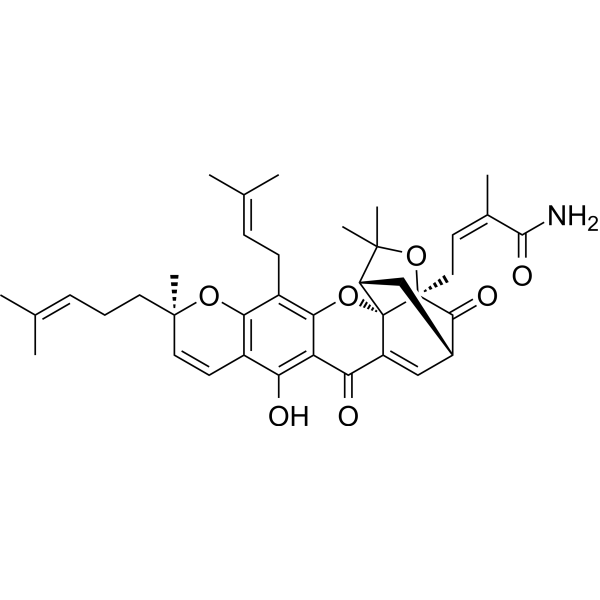
Gambogic amide is a potent and selective agonist of TrkA and also induces its tyrosine phosphorylation and activation of downstream signaling, including Akt and MAPK. Gambogic amide specifically interacts with the cytoplasmic juxtamembrane domain of the TrkA receptor and triggers its dimerization, leading to activation. Gambogic amide has neuroprotective activity preventing glutamate-induced neuronal cell death. Gambogic amide has improved efficacy in a transient middle cerebral artery occlusion model of stroke and could be used to study neurodegenerative diseases and stroke .
loading...
    loading...
Art. -Nr.: HY-15148S2
CAS. Nr.: 1126619-17-7
Synonyms: PNU-140690-d5
Tipranavir-d5 (PNU-140690-d5) is the deuterium labeled Tipranavir (HY-15148). Tipranavir (PNU-140690) inhibits the enzymatic activity and dimerization of HIV-1 protease, exerts potent activity against multi-protease inhibitor (PI)-resistant HIV-1 isolates with IC50s of 66-410 nM . Tipranavir inhibits SARS-CoV-2 3CL pro activity .
loading...
    loading...
Art. -Nr.: HY-183988
Forschungsgebiete:  

Infection

OICR409946 is a self-dimerization-induced proximity-targeting chimera (SDIPTAC) targeting DCAF1, with a Kd value of 6200 nM. OICR409946 binds to DCAF1, induces head-to-tail homodimerization, sterically blocks the Vpr binding interface, prevents the recruitment of Vpr to the CRL4DCAF1 complex, and inhibits Vpr-dependent HIV replication. OICR409946 can be used in studies related to HIV infection (DCAF1 ligand: (HY-169390); Linker: (HY-130659)) .
loading...
    loading...
Art. -Nr.: HY-P10319
Target:  

PKA

Forschungsgebiete:  

Cardiovascular Disease Cancer

RI-STAD-2 is a high-affinity interfering peptide that regulates the subunit RI of protein kinase A (PKA). RI-STAD-2 interferes with the binding of AKAPs and PKA-RI by simulating the interaction between AKAPs' α-helix domain and PKA-RI's dimerization/anchoration (D/D) domain, thereby affecting PKA activity and intracellular localization. RI-STAD-2 can be used to study the role of AKAPs interaction with PKA-RI in pathological processes such as cardiovascular disease and cancer .
loading...
    loading...
Art. -Nr.: HY-W035137
CAS. Nr.: 22112-89-6
Synonyms: 5,15-DPP
Target:  

STAT

Forschungsgebiete:  

Cancer

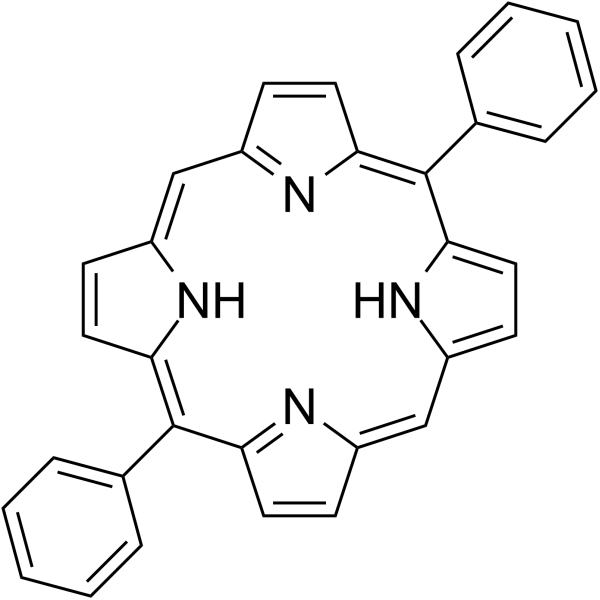
5,15-Diphenylporphyrin (5,15-DPP) is an inhibitor of the oncogenic transcription factor STAT3. 5,15-Diphenylporphyrin specifically binds to the SH2 domain of STAT3, blocking the pTyr-SH2 interaction, thereby inhibiting the dimerization, nuclear translocation and DNA binding activity of STAT3, and ultimately inhibiting the expression of cancer cell-related genes. 5,15-Diphenylporphyrin can be used in research fields related to the development of anticancer drugs[1][2].
loading...
    loading...
Art. -Nr.: HY-170951
CAS. Nr.: 3068489-78-8
Target:  

Androgen Receptor

Forschungsgebiete:  

Cancer

AR antagonist 10 (Compound Y5) is potent and orally active androgen receptor (AR) antagonist with an IC50 of 0.04 μM. AR antagonist 10 demonstrates dual mechanisms of action, antagonizes AR by disrupting AR dimerization, and induces AR degradation via the ubiquitin-proteasome pathway. AR antagonist 10 exhibits excellent activity against variant drug-resistant AR mutants. AR antagonist 10 effectively suppresses the tumor growth of the LNCaP xenograft. AR antagonist 10 is potential to be used for drug-resistant prostate cancer .
loading...
    loading...
Art. -Nr.: HY-176205
CAS. Nr.: 3024588-48-2
Synonyms: AB801
Target:  

TAM Receptor

Forschungsgebiete:  

Cancer

Ligritinib (AB801) is an orally active AXL receptor tyrosine kinase inhibitor, with a IC50 of 1.8 nM, Ki of 0.024 nM, and Kd of 0.093 nM against human targets. It exhibits broad selectivity against the human kinome, including high selectivity for MERTK and TYRO3. Ligritinib blocks the AXL signaling pathway independent of dimerization inducers, and acts as both a tumor growth inhibitor and an AXL inducer. Ligritinib can be used in research related to clear cell renal cell carcinoma, advanced solid tumors, and non-small cell lung cancer .
loading...
    loading...
Art. -Nr.: HY-185701
CAS. Nr.: 951968-89-1
Target:  

CD73

Forschungsgebiete:  

Cancer

W-GTF01 is a MGAT1 inhibitor. W-GTF01 blocks the MGAT1-catalyzed glycosylation of CD73, and inhibits CD73 dimerization, membrane translocation and adenosine production. W-GTF01 restores the function of IFNγ-producing CD8 + T cells, enhances tumor infiltration and activation of CD8 + T cells, and suppresses tumor growth. W-GTF01 can be used in research related to triple-negative breast cancer .
loading...
    loading...
Art. -Nr.: HY-P3051A
CAS. Nr.: 162873-95-2
Target:  

Drug Derivative

Forschungsgebiete:  

Infection Inflammation/Immunology

CKS-17 (dimer) is the dimer of CKS-17 (HY-P3051). CKS-17 (dimer) can be prepared by introducing a naturally occurring cysteine at the carboxyl terminus and dimerizing via a cysteine-disulfide bond. CKS-17 is a synthetic retroviral envelope peptide. CKS-17 has a highly conserved amino acid sequence present in the transmembrane envelope proteins of numerous animal and human retroviruses. As an immunomodulatory epitope, CKS-17 exhibits inhibitory properties on a variety of immune functions .
loading...
    loading...
Art. -Nr.: HY-121817
CAS. Nr.: 95-05-6
Reinheit:  96.35%
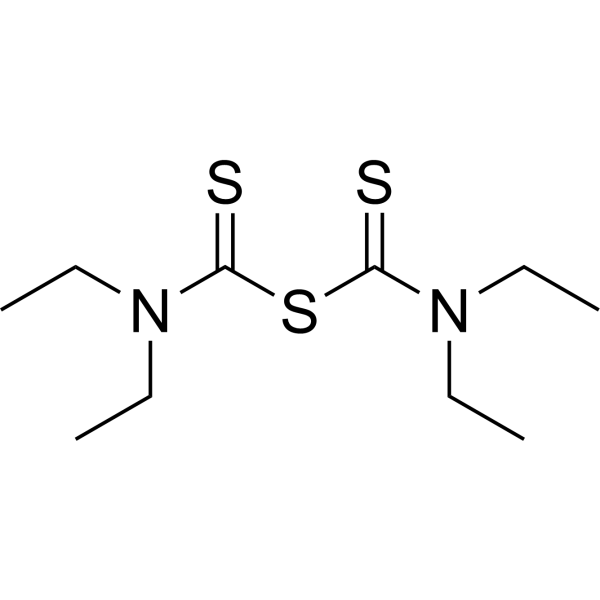
Sulfiram is a very weak aldehyde dehydrogenase (ALDH) inhibitor, with an IC50 value of 413 μM against Saccharomyces cerevisiae ALDH. As a photochemical precursor, Sulfiram undergoes photoconversion to form Disulfiram (HY-B0240), a potent ALDH inhibitor. Sulfiram inhibits the dimerization of the extracellular domain fragment (amino acid residues 230-624) of amyloid precursor protein (APP), alters the monomer-dimer equilibrium, induces conformational changes in the fragment, and enhances the production of sAPPα via α-cleavage of APP. Sulfiram can be used in research related to scabies and Alzheimer's disease .
loading...
    loading...
Art. -Nr.: HY-173353
CAS. Nr.: 420106-23-6
Target:  

Huntingtin

Forschungsgebiete:  

Neurological Disease

ATXN1-MED15 PPI-IN-1 (compound 5755483) is an inhibitor of ATXN1/MED15. ATXN1-MED15 PPI-IN-1 binds to ATXN1 residues 99-163 and inhibits both the interaction between ATXN1 and MED15, as well as the dimerization of polyQ-expanded ATXN1. ATXN1-MED15 PPI-IN-1 can be used for study of Spinocerebellar ataxia type 1 .
loading...
    loading...
Art. -Nr.: HY-175435
CAS. Nr.: 3094183-98-6
Target:  

PROTACs Raf ERK

Forschungsgebiete:  

Neurological Disease Cancer

CST905 is a potent BRAF-V600E PROTAC degrader with a DC50 of 18 nM. CST905 recruits the VHL E3 ligase to form a ternary complex, mediating the degradation of BRAF-V600E via the ubiquitin-proteasome pathway. The ligand of CST905 disrupts the RAF dimerization interface, thereby preventing the aberrant activation of the harmful MAPK/ERK pathway in RAS-mutated cells while degrading the target protein. CST905 can be used in studies related to malignant melanoma and neuroblastoma .
loading...
    loading...
Art. -Nr.: HY-178148
CAS. Nr.: 3064715-04-1
Target:  

Androgen Receptor

Forschungsgebiete:  

Endocrinology Cancer

AR antagonist 17 is a selective, orally active, low brain-penetrant Androgen Receptor (AR) antagonist (IC50 = 0.010 μM), effectively blocking AR dimerization and nuclear translocation, and demonstrating potent efficacy in several castration-resistant prostate cancer (CRPC) cells. AR antagonist 17 showed superior efficacy against variant drug-resistant AR mutants. AR antagonist 17 can inhibit tumor growth in an LNCaP xenograft model without apparent toxicity. AR antagonist 17 can be used for the study of castration-resistant prostate cancer (CRPC) .
loading...
    loading...
Art. -Nr.: HY-179078
CAS. Nr.: 1996636-69-1
Target:  

OLIG2 Apoptosis Caspase PARP

Forschungsgebiete:  

Neurological Disease Cancer

CT-179 is a brain-penetrant and orally active OLIG2 inhibitor with a human IC50 of 1250 nM. CT-179 disrupts OLIG2 dimerization, phosphorylation, and DNA binding, blocking OLIG2-driven transcription. CT-179 induces G2/M phase arrest and increases G0 population. CT-179 induces apoptosis by reducing anti-apoptotic proteins and increasing cleaved caspase-3 and cleaved PARP. CT-179 can be used for the research of subgroup medulloblastoma .
loading...
    loading...
Art. -Nr.: HY-184734
Target:  

STAT NF-κB

Forschungsgebiete:  

Cancer

STAT3/NF-κB-IN-2 is a dual STAT3/NF-κB inhibitor that exhibits antiproliferative, antimigratory and anti-invasive activities in cancer cells. STAT3/NF-κB-IN-2 inhibits the transcriptional activities of NF-κB and STAT3, binds to the STAT3-SH2 domain, and blocks STAT3 dimerization. STAT3/NF-κB-IN-2 can be used in studies related to triple-negative breast cancer .
loading...
    loading...
Art. -Nr.: HY-W004606
CAS. Nr.: 6267-02-3
Synonyms: DM-AD
Forschungsgebiete:  

Others

9,9-Dimethyl-9,10-dihydroacridine (DM-AD) is an electron-donating group with hole transport mobility, which serves as a building block for the synthesis of organic semiconductors and light-emitting emitters. 9,9-Dimethyl-9,10-dihydroacridine can form donor-acceptor-donor type thermally activated delayed fluorescence emitters. 9,9-Dimethyl-9,10-dihydroacridine undergoes oxidation to form radical cations, which further participate in dimerization or oligomerization reactions .
loading...
    loading...
Art. -Nr.: HY-W014223R
CAS. Nr.: 131-56-6
Synonyms: Ultraviolet absorber UV-0 (Standard)
2,4′-Dihydroxybenzophenone (Standard) is the analytical standard of 2,4′-Dihydroxybenzophenone. This product is intended for research and analytical applications. 2,4′-Dihydroxybenzophenone (Ultraviolet absorber UV-0) occupies the hydrophobic pocket of MD2 and blocks the dimerization of TLR4. 2,4′-Dihydroxybenzophenone inhibits the LPS induced mtROS production, and LPS induced inflammatory response by downregulating pro-inflammatory mediators and decreasing the expression of MyD88, p-IRAK4, and NF-κB. 2,4′-Dihydroxybenzophenone is also a UV absorber .
loading...
    loading...
Art. -Nr.: HY-122582
CAS. Nr.: 2229037-04-9
Reinheit:  98.06%
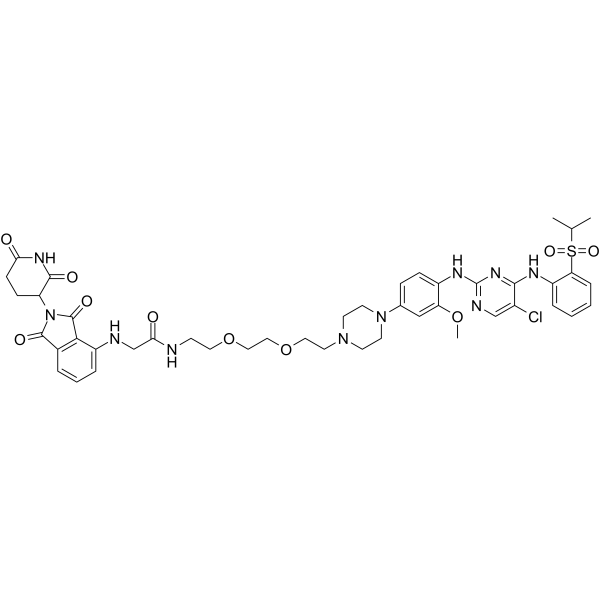
TL13-12 is a CRBN-recruiting ALK PROTAC degrader, with a DC50 of 10 nM in H3122 cells. TL13-12 induces dimerization of CRBN and truncated ALK, which brings the DNA-binding domain and transactivation domain into close proximity, thereby activating the expression of downstream reporter genes, while exhibiting extremely low leaky expression under non-inducing conditions. TL13-12 serves as a tool molecule for the orthogonal PROTAC-CID system, and is applied in research on non-small cell lung cancer, anaplastic large cell lymphoma, and neuroblastoma .
loading...
    loading...

