167 Results for "

intercalator

" in MedChemExpress (MCE) Product Catalog:
Products (167)

167 Results for "intercalator" in MCE Product Catalog:

Cat. No.: HY-106991AR
CAS No.: 210584-54-6
Synonyms: S-303 dihydrochloride (Standard)
Research Areas:  

Infection

Amustaline (dihydrochloride) (Standard) is the analytical standard of Amustaline (dihydrochloride). This product is intended for research and analytical applications. Amustaline (S-303) dihydrochloride, a nucleic acid-targeted alkylator, is an efficient pathogen inactivation agent for blood components containing red blood cells. Amustaline dihydrochloride has three components: an acridine anchor (an intercalator that targets nucleic acids non-covalently), an effector (a bis-alkylator group that reacts with nucleophiles), and a linker (a small flexible carbon chain containing a labile ester bond that hydrolyzes at neutral pH to yield non-reactive breakdown products) .
loading...
    loading...
Cat. No.: HY-13552
CAS No.: 80841-48-1
Synonyms: CI-921 isethionate; NSC 343499 isethionate
Asulacrine isethionate (CI-921 isethionate) is a derivative of Amsacrine (HY-13551), a Topoisomerase II inhibitor and an anticancer agent. Asulacrine isethionate binds to DNA via intercalation, forming stable complexes with long residence times at DNA sites. Asulacrine isethionate mediates DNA breakage and DNA-protein cross-linking. Asulacrine isethionate exhibits anticancer activity against leukemia or lung cancer. Asulacrine isethionate can be used in research related to breast cancer, lung cancer, mouse solid tumors and leukemia .
loading...
    loading...
Cat. No.: HY-151453
CAS No.: 2860554-26-1
Target:  

Topoisomerase Apoptosis

Research Areas:  

Cancer

Topoisomerase IIα-IN-4 (F2) is a non-intercalative ATP-competitive human DNA topoisomerase II inhibitor with an IC50 value of 3.8 and 10.1 μM for TopoIIα and TopoIIβ, respectively. Topoisomerase IIα-IN-4 shows potent potency in apoptosis induction and cell cycle arrest in HepG2 cells. Topoisomerase IIα-IN-4 exhibits strong antitumor activities against human cancer cell lines, it can be used for the research of cancer .
loading...
    loading...
Cat. No.: HY-173192
Target:  

Bacterial

Research Areas:  

Infection

Antibacterial agent 272 (Compound Z22) is a potential antimicrobial agent targeting DNA and the DNA-topoisomerase II (DNA-Topo II) complex, exhibiting MIC values of 1 μg/mL against Staphylococcus aureus 25923 and 29213, 2 μg/mL against Staphylococcus epidermidis 12228, 2-4 μg/mL against Enterococcus faecalis, and 4 μg/mL against Pseudomonas aeruginosa 9027 and 27853, demonstrating potent antibacterial activity. This compound functions by intercalating with DNA base pairs to disrupt normal bacterial DNA function, making it suitable for research on bacterial infectious diseases .
loading...
    loading...
Cat. No.: HY-B1099A
CAS No.: 23255-93-8
Hycanthone mesylate is an apurinic/apyrimidinic endonuclease 1 (APE1) inhibitor, DNA intercalator and Antischistosomal agent, with an IC50 of 80 nM against APE1. Hycanthone mesylate irreversibly inhibits thymidine incorporation into DNA in adult sensitive *Schistosoma mansoni*, while exerts weak inhibitory effects on uridine and leucine incorporation. Hycanthone mesylate reduces influenza virus-induced interferon production. Hycanthone mesylate exhibits mutagenic effects in various organisms, shows teratogenicity in mice and rabbits, and induces neoplastic liver lesions in partially hepatectomized mice. Hycanthone mesylate can be used in research related to schistosomiasis and cancer .
loading...
    loading...
Cat. No.: HY-N8470
CAS No.: 54526-94-2
Synonyms: NSC 204855; U 40615
Target:  

Bacterial

Research Areas:  

Infection

Steffimycin B is an anthracycline bacterial metabolite originally isolated from Streptomyces. It binds to DNA, preferentially intercalating at sites containing cytosine and guanine.2 Steffimycin B is cytotoxic to MCF-7, KB, NCI-H187, and Vero cells (IC50s=3.5, 6.75, 3.28, and 10.5 μM, respectively). It is active against M. tuberculosis (MIC=5.2 nM), B. cereus (MIC=1.56 μg/mL), and P. falciparum (IC50=2.19 μM).
loading...
    loading...
Cat. No.: HY-B1099B
CAS No.: 64265-18-5
Hycanthone ethansulfonate is an apurinic/apyrimidinic endonuclease 1 (APE1) inhibitor, DNA intercalator and Antischistosomal agent, with an IC50 of 80 nM against APE1. Hycanthone ethansulfonate irreversibly inhibits thymidine incorporation into DNA in adult sensitive *Schistosoma mansoni*, while exerts weak inhibitory effects on uridine and leucine incorporation. Hycanthone ethansulfonate reduces influenza virus-induced interferon production. Hycanthone ethansulfonate exhibits mutagenic effects in various organisms, shows teratogenicity in mice and rabbits, and induces neoplastic liver lesions in partially hepatectomized mice. Hycanthone ethansulfonate can be used in research related to schistosomiasis and cancer .
loading...
    loading...
Cat. No.: HY-D0162R
CAS No.: 2437-29-8
Synonyms: MCCK1 (Standard)
Malachite green hemioxalate (Standard) is the analytical standard of Malachite green hemioxalate (HY-D0162). This product is intended for research and analytical applications. Malachite green hemioxalate is a triphenylmethane dye which can be used to detect the release of phosphate in enzymatic reactions. Malachite green hemioxalate has antimicrobial activity, which is attributed to inhibition of intracellular enzymes, intercalation into DNA, and/or interaction with cellular membranes. Malachite green hemioxalate is also a potent and selective inhibitor of IKBKE, and inhibits its downstream targets such as IκBα, p65 and IRF3. Malachite green hemioxalate exhibits antitumor activity in vitro and in vivo.
loading...
    loading...
Cat. No.: HY-D3195
CAS No.: 2028316-19-8
CDr15 is a deep-red fluorescent probe (Ex=733 nm) that can selectively intercalate into and label bacterial extracellular DNA (eDNA). CDr15 exhibits extremely high specificity for biofilm imaging and cannot effectively bind to mammalian nuclear DNA. CDr15 enables real-time visualization of the microcolony structure and developmental process of three-dimensional *Pseudomonas aeruginosa* biofilms, and accurately localizes biofilm-forming regions of microorganisms in a mouse corneal infection model. With low background interference signals, CDr15 serves as an ideal diagnostic tool for research fields including bacterial biofilms and corneal infections .
loading...
    loading...
Cat. No.: HY-DY2020
Target:  

Fluorescent Dye

Research Areas:  

Others

Neutral Red Staining Solution (for Live Cells) is a vital stain used for vital staining of peripheral blood cells, and it can also be used for staining other living cells or tissues. Neutral Red Staining Solution (for Live Cells) accumulates in cytoplasmic vacuoles, lysosomes of living cells, as well as plant/fungal vacuoles. It binds to anionic sites, suberin, lignin, cell walls, DNA and phenolic substances, and can intercalate into DNA. Neutral Red Staining Solution (for Live Cells) stains the cytoplasm of specific phytoplankton and estuarine zooplankton, while dead cells are not stained, enabling viability determination of such organisms .
loading...
    loading...
Cat. No.: HY-144255
Research Areas:  

Infection

Antibacterial agent 70 is an antibacterial agent that interacts with DNA, with a MIC value of 0.5 μg/mL against K. pneumonia and A. baumanii. Antibacterial agent 70 exhibits rapid bactericidal activity, low cytotoxicity to mammalian cells, and low tendency to induce drug resistance. Antibacterial agent 70 intercalates into DNA, disrupts bacterial membrane integrity, increases intracellular ROS production, reduces GSH activity, regulates membrane depolarization, enhances outer membrane permeability, and induces inner membrane damage. Antibacterial agent 70 can be used in studies related to multidrug-resistant bacterial infections and infections caused by drug-resistant Gram-negative pathogens .
loading...
    loading...
Cat. No.: HY-170557
Research Areas:  

Cancer

Topoisomerase IIα-IN-10 (Compound 13r) is an inhibitor of Topoisomerase IIα. It binds to the active site of DNA when complexed with Topoisomerase IIα, and this binding is stabilized through interactions with DNA base pairs and amino acid residues. Topoisomerase IIα-IN-10 can induce Apoptosis by intercalating DNA and inhibiting Topoisomerase IIα, thereby disrupting the mitochondrial membrane potential and inhibiting the growth of HCT116 cell lines, with an IC50 of 4.37 μM against HCT116 cells. Topoisomerase IIα-IN-10 can be used for research in the field of cancer treatment .
loading...
    loading...
Cat. No.: HY-184514
Research Areas:  

Cancer

TPA (bi (Tos))-γ-Glu (PEG23)-Glu-Val-Cit-PAB-PNU-159682 is a cleavable linker-payload conjugate, in which the payload is PNU-159682 (HY-16700) and the linker is TPA (bi (SH))-γ-Glu (PEG23)-Glu-Val-Cit-PAB (HY-184515). TPA (bi (Tos))-γ-Glu (PEG23)-Glu-Val-Cit-PAB-PNU-159682 is used to generate L1CAM-targeted antibody-drug conjugates (ADCs). TPA (bi (Tos))-γ-Glu (PEG23)-Glu-Val-Cit-PAB-PNU-159682 can be used in the research of metastatic triple-negative basal breast cancer and lung adenocarcinoma .
loading...
    loading...
Cat. No.: HY-162819
Target:  

Apoptosis

Research Areas:  

Cancer

Apoptosis inducer 26 (compound [AgCl(dap2SH)(PPh3)2]) is an autophagy inducer based on mononuclear Ag(I) ligands, with antibacterial and anticancer activities against a variety of bacterial strains and cancer cell lines. Apoptosis inducer 26 can effectively inhibit the growth of both Gram(+) and Gram(-) bacteria by causing the accumulation of Ag(I) ions in the bacterial periplasm. Apoptosis inducer 26 can intercalate between base pairs of CT DNA and induce apoptosis in A549 cells. Apoptosis inducer 26 also has the ability to scavenge free radicals, which can protect against oxidative stress .
loading...
    loading...
Cat. No.: HY-B1099R
CAS No.: 3105-97-3
Hycanthone (Standard) is the analytical standard of Hycanthone (HY-B1099). This product is intended for research and analytical applications. Hycanthone is an apurinic/apyrimidinic endonuclease 1 (APE1) inhibitor, DNA intercalator and Antischistosomal agent, with an IC50 of 80 nM against APE1. Hycanthone irreversibly inhibits thymidine incorporation into DNA in adult sensitive *Schistosoma mansoni*, while exerts weak inhibitory effects on uridine and leucine incorporation. Hycanthone reduces influenza virus-induced interferon production. Hycanthone exhibits mutagenic effects in various organisms, shows teratogenicity in mice and rabbits, and induces neoplastic liver lesions in partially hepatectomized mice. Hycanthone can be used in research related to schistosomiasis and cancer .
loading...
    loading...
Cat. No.: HY-184284
CAS No.: 2798832-23-0
Antibacterial agent 351 is a broad-spectrum antibacterial agent. Antibacterial agent 351 binds to the allosteric site of PBP2a, induces conformational changes, and reduces the level of PBP2a in MRSA. Antibacterial agent 351 acts as a DNA intercalator to interfere with bacterial DNA function. Antibacterial agent 351 disrupts bacterial redox homeostasis via excessive production of ROS and RNS, depletes intracellular GSH, induces lipid peroxidation, and triggers bacterial cell death. Antibacterial agent 351 enhances the activity of Metronidazole (HY-B0318) against anaerobic bacteria and extends the antibacterial spectrum of Metronidazole to aerobic bacteria. Antibacterial agent 351 can be used in the research of bacterial infections (including MRSA infections) .
loading...
    loading...
Cat. No.: HY-D0920
CAS No.: 166196-17-4
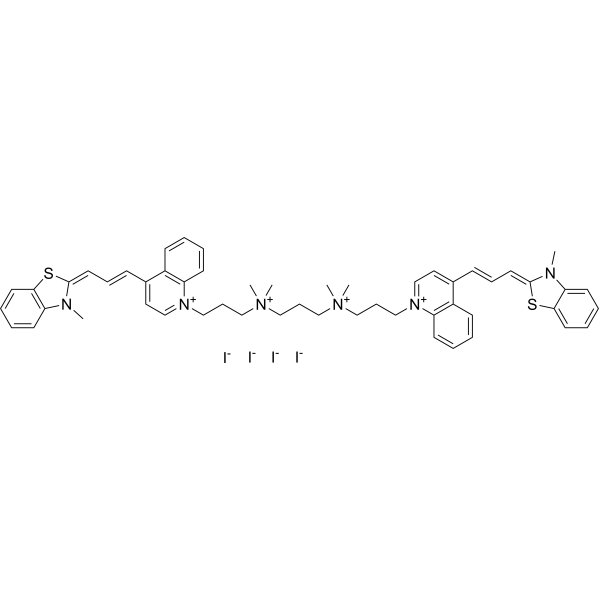
TOTO-3 is a cyanine nucleic acid intercalating fluorescent probe that binds to both RNA and DNA (Ex=642 nm, Em=660 nm). TOTO-3 cannot enter intact cells, but can penetrate cells with permeabilized plasma membranes, staining cytoplasmic RNA and nucleoli to distinguish intact cells from damaged ones. TOTO-3 is taken up by macrophages in an ultrasound-independent manner. TOTO-3 accumulates in tumor cells via ultrasound-mediated enhancement of plasma membrane permeability. TOTO-3 supports optical imaging for real-time assessment of plasma membrane integrity, nucleic acid detection, and monitoring of ultrasound-mediated intracellular delivery processes. TOTO-3 is applicable to studies related to rectal cancer .
loading...
    loading...
Cat. No.: HY-D3404
CAS No.: 169454-13-1
BODi-1 is a fluorescent modulator targeting dsDNA, which binds to dsDNA via a bis-intercalation mechanism (Ex=465 nm, Em=490 nm). BODi-1 exhibits a fluorescence enhancement effect upon binding to nucleic acids, but its fluorescence intensity, anisotropy and average lifetime decrease at higher dye/DNA ratios. When BODi-1 binds to DNA in liposome complexes, it also shows red-shifted emission spectra, along with reduced quantum yield and average lifetime. BODi-1 does not induce significant DNA conformational changes when the dye/DNA ratio is below 0.01. BODi-1 can be used as a fluorescent probe for the characterization of liposome complexes and FRET studies at this ratio .
loading...
    loading...
Cat. No.: HY-U00265
CAS No.: 20073-24-9
Synonyms: 3-Carbethoxypsoralen; 3-Ethoxycarbonylpsoralen
Target:  

Bacterial

Research Areas:  

Infection

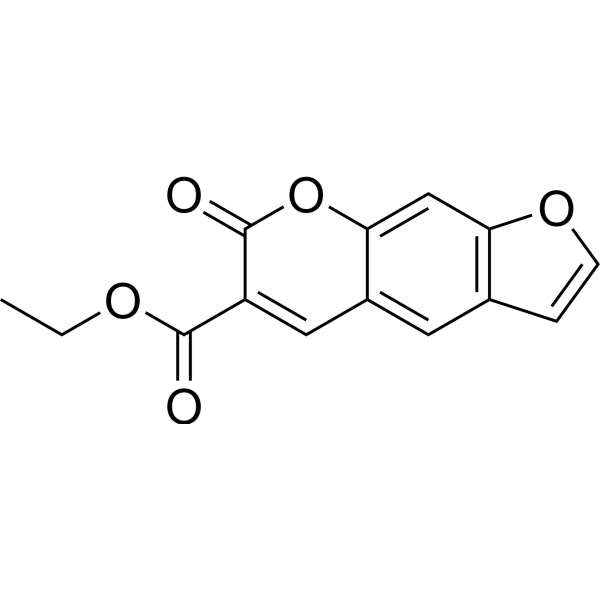
3-CPs is a monofunctional furanocoumarin and a photoprotective agent targeting Staphylococcus aureus DNA, possessesing anti-UVB lethal activity. 3-CPs competitively intercalates into DNA, forming exclusively 4',5'-furan-side mono-adducts upon UVB irradiation, and irreversibly inhibits the formation of cyclobutane pyrimidine dimers. 3-CPs prevents UVB-induced DNA damage by preferentially binding to strong (AT)n sites within the DNA, without inducing lethal interstrand DNA cross-links; the limited number of mono-adducts it induces can be efficiently repaired by bacteria. 3-CPs holds potential for use in the development of photoprotective formulations for skin diseases, as well as in studies investigating bacterial DNA photodamage repair mechanisms and the optimization of photochemotherapy safety .
loading...
    loading...
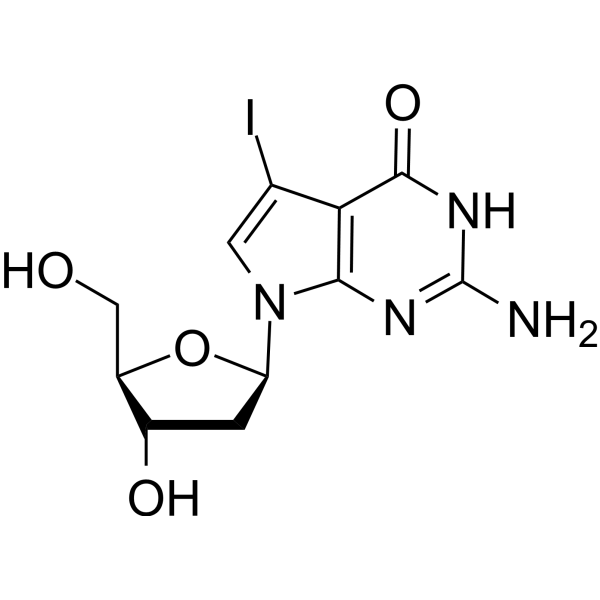
Cat. No.: HY-W048492
CAS No.: 172163-62-1
Synonyms: 7-Deaza-7-Iodo-2'-deoxyguanosine
7-Iodo-7-deaza-2'-deoxyguanosine (7-Deaza-7-Iodo-2'-deoxyguanosine) is a modified deoxyguanosine nucleoside. 7-Iodo-7-deaza-2'-deoxyguanosine is used in DNA synthesis and sequencing reactions .
loading...
    loading...

