156 Results for "

RNA-binding cleft

" in MedChemExpress (MCE) Product Catalog:
Products (156)

156 Results for "RNA-binding cleft" in MCE Product Catalog:

Cat. No.: HY-P702827
Purity:  ≥ 90%, as determined by reducing SDS-PAGE.
Synonyms: ELAVL1; Embryonic Lethal, Abnormal Vision, Drosophila, Homolog-Like 1; Prev. HUR; Human Antigen R; HuR; Hu Antigen R; MelG; Hu-Antigen R; Hua; ELAV1; ELAV (Embryonic Lethal, Abnormal Vision, Drosophila)-Like 1 (Hu Antigen R); ELAV Like RNA binding Protein
Species:  
Human
Source:  
E. coli
loading...
    loading...
Cat. No.: HY-P0112
CAS No.: 1027141-02-1
Target:  

Deubiquitinase

Research Areas:  

Neurological Disease Cancer

Z-VAE (OMe)-FMK is a selective inhibitor of UCHL1, with better selectivity over UCHL3 and UCHL5. Z-VAE (OMe)-FMK binds to the active site cleft, covalently modifies the active site cysteine C90 to form a thioether bond, binds to inactive UCHL1 with a misaligned catalytic triad, and acts via a two-step addition-folding/migration/displacement mechanism. Z-VAE (OMe)-FMK stabilizes interactions through hydrogen bonding with oxyanion hole residues and van der Waals interactions with surrounding residues. Z-VAE (OMe)-FMK can be used in research related to colorectal cancer, lung cancer, pancreatic cancer, and Alzheimer's disease .
loading...
    loading...
Cat. No.: HY-W278867R
CAS No.: 21956-56-9
Synonyms: trans-Pinosylvin dimethyl ether (Standard)
trans-3,5-Dimethoxystilbene (Standard) is the analytical standard of trans-3,5-Dimethoxystilbene (HY-W278867). This product is intended for research and analytical applications. trans-3,5-Dimethoxystilbene (trans-Pinosylvin dimethyl ether) is a natural stilbenoid metabolite. trans-3,5-Dimethoxystilbene acts as an acetylcholinesterase inhibitor with a IC50 of 9 μM against Electrophorus electricus acetylcholinesterase. trans-3,5-Dimethoxystilbene binds to acetylcholinesterase and blocks acetylcholine hydrolysis, thereby increasing acetylcholine levels in the cholinergic synaptic cleft. trans-,5-Dimethoxystilbene can be used in the research of neurodegenerative diseases such as Alzheimer's disease .
loading...
    loading...
Cat. No.: HY-W380450
CAS No.: 46817-91-8
Synonyms: Viloxazin; Emovit
Target:  

5-HT Receptor

Research Areas:  

Neurological Disease

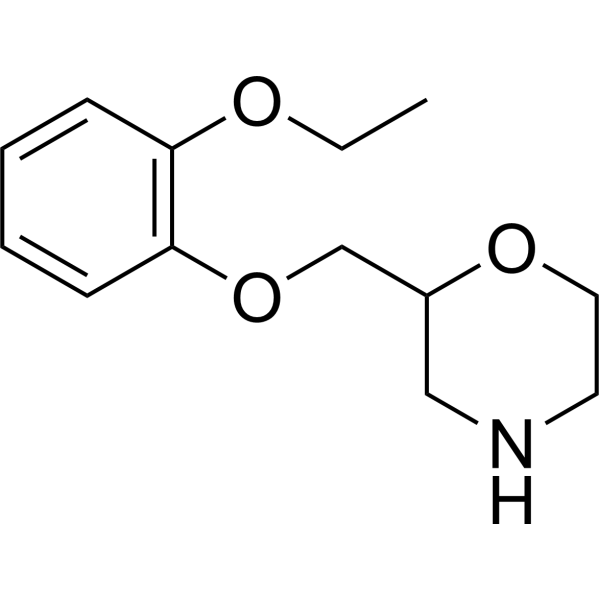
Viloxazine is a non-brain-penetrant, selective norepinephrine transporter (NET) inhibitor (IC50= 0.26 μM) and 5-HT receptor modulator. Viloxazine antagonizes 5-HT2B receptors (Ki=4.2 μM) and agonizes 5-HT2C receptors (EC50= 32 μM), respectively, and enhances 5-HT neurotransmission by modulating 5-HT2B/C receptors. Viloxazine also competitively inhibits NET from increasing NE and DA levels in the synaptic cleft, and can be used in the study of attention deficit hyperactivity disorder (ADHD) .
loading...
    loading...
Cat. No.: HY-W380450R
CAS No.: 46817-91-8
Synonyms: Viloxazin (Standard); Emovit (Standard)
Research Areas:  

Neurological Disease

Viloxazine is a non-brain-penetrant, selective norepinephrine transporter (NET) inhibitor (IC50= 0.26 μM) and 5-HT receptor modulator. Viloxazine antagonizes 5-HT2B receptors (Ki=4.2 μM) and agonizes 5-HT2C receptors (EC50= 32 μM), respectively, and enhances 5-HT neurotransmission by modulating 5-HT2B/C receptors. Viloxazine also competitively inhibits NET from increasing NE and DA levels in the synaptic cleft, and can be used in the study of attention deficit hyperactivity disorder (ADHD) .
loading...
    loading...
Cat. No.: HY-125784
CAS No.: 35604-67-2
Purity:  98.94%
Synonyms: Viloxazin hydrochloride; Emovit hydrochloride
Target:  

5-HT Receptor

Research Areas:  

Neurological Disease

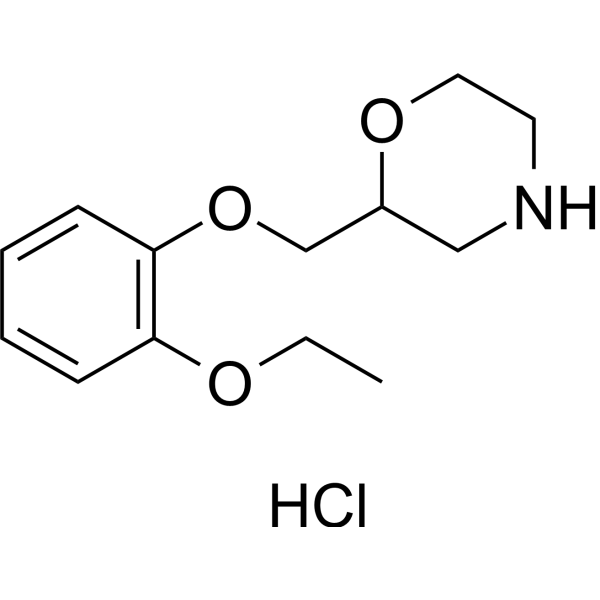
Viloxazine hydrochloride is a non-brain-penetrant, selective norepinephrine transporter (NET) inhibitor (IC50=0.26 μM) and 5-HT receptor modulator. Viloxazine antagonizes 5-HT2B receptors (Ki=4.2 μM) and agonizes 5-HT2C receptors (EC50=32 μM), respectively, and enhances 5-HT neurotransmission by modulating 5-HT2B/C receptors. Viloxazine also competitively inhibits NET from increasing NE and DA levels in the synaptic cleft, and can be used in the study of attention deficit hyperactivity disorder (ADHD) .
loading...
    loading...
Cat. No.: HY-182372
CAS No.: 1638153-78-2
Target:  

Epoxide Hydrolase

Research Areas:  

Neurological Disease

SH-11037 is a potent inhibitor of soluble epoxide hydrolase (sEH) and docks to the substrate binding cleft in the sEH hydrolase domain. SH-11037 dose-dependently suppresses angiogenesis in the choroidal sprouting assay ex vivo and inhibited ocular developmental angiogenesis in zebrafish larvae. SH-11037 reduces choroidal neovascularisation lesion volume in the laser-induced CNV mouse model. SH-11037 synergises with anti-VEGF treatments in vitro and in vivo. SH-11037 induces G2/M phase blockade and retains retinal endothelial cell viability at active concentrations without overt toxicity. SH-11037 can be used for the research of retinal neovascularization and ocular neovascularization .
loading...
    loading...
Cat. No.: HY-P990716
CAS No.: 2648346-74-9
Synonyms: AZD7789

Target:  

PD-1/PD-L1 Tim3

Research Areas:  

Inflammation/Immunology

Sabestomig (AZD7789) is a monovalent bispecific antibody targeting PD-1 and TIM-3. Sabestomig binds to PD-1 and an epitope in the TIM-3 IgV domain outside the phosphatidylserine-binding cleft, thereby precisely regulating immune responses. Sabestomig promotes IL-2 production, efferocytosis and cross-presentation of tumor antigens, and enhances the release of anti-tumor T cell cytokines, cytotoxicity, and secretion of IFN-γ. Sabestomig inhibits the growth of solid tumors, prolongs the duration of tumor suppression, and significantly enhances anti-tumor responses following anti-PD-1 therapy. Sabestomig has been used in studies related to non-small cell lung cancer and classical Hodgkin lymphoma .
loading...
    loading...
Cat. No.: HY-P72180
Purity:  ≥ 90%, as determined by reducing SDS-PAGE.
Synonyms: ELAVL4; ELAV-Like Protein 4; Prev. HUD; ELAV (Embryonic Lethal, Abnormal Vision, Drosophila)-Like 4; PNEM; ELAV-Like Protein; ELAV (Embryonic Lethal, Abnormal Vision, Drosophila)-Like 4 (Hu Antigen D); Hu-Antigen D; ELAV Like Neuron-Specific RNA binding P
Species:  
Human
Source:  
E. coli
loading...
    loading...
Cat. No.: HY-187442
Research Areas:  

Infection Cancer

TDI6245 is a Aurora kinase A (AURKA) inhibitor with an IC50 value of 21.64 nM against AURKA. TDI6245 also inhibits the β5 subunit of the 20S proteasome from Plasmodium falciparum (Pf 20S), with IC50 values of 0.11 μM, 31.1 μM and 6.8 μM against Pf 20S β5, human constitutive proteasome β5c and human immunoproteasome β5i subunits, respectively. TDI6245 binds to the AURKA pocket and the substrate cleft of Pf 20S β5 via antiparallel β-sheets and hydrogen bonds. TDI6245 inhibits the growth of Plasmodium falciparum. TDI6245 can be used in research related to triple-negative breast cancer and malaria .
loading...
    loading...
Cat. No.: HY-P78939
Purity:  ≥ 95%, as determined by reducing SDS-PAGE.
Synonyms: SSB; Sjoegren Syndrome Type B Antigen; Small RNA binding Exonuclease Protection Factor La; Sjogren Syndrome Antigen B; Lupus La Protein; La Ribonucleoprotein; La Autoantigen; SS-B; La/SSB; Sjogren Syndrome Antigen B (Autoantigen La); LARP3; Lupus La Antigen; La; SS-B/La Protein; La Ribonucleoprotein Domain Family, Member 3; Autoantigen La
Species:  
Others
Source:  
E. coli
loading...
    loading...
Cat. No.: HY-P1609
CAS No.: 105116-61-8
Target:  

Renin Enteropeptidase

Research Areas:  

Cardiovascular Disease

CP-69799 is an azahomostatine-containing oligopeptide transition-state analogue inhibitor with a hog renin IC50 of 6e-9 M, human plasma renin IC50 of 3e-7 M and Ki of 0.310 μM, and endothiapepsin Ki of 0.27 μM. CP-69799 binds endothiapepsin’s active site cleft in extended conformation, fills S4 to S3' pockets, displaces native solvent molecules, induces domain rotation, and reduces thermal mobility of endothiapepsin’s flap and helix regions. CP-69799 acts as a transition-state analogue inhibitor of hog renin and human plasma renin. CP-69799 contains a polar lysine residue at the P2' position, with a nitrogen atom replacing the P1' Cα atom of the hydroxyethylene dipeptide isostere. CP-69799 can be used for the research of hypertension .
loading...
    loading...
Cat. No.: HY-172885
Research Areas:  

Cancer

TRBP-IN-1 (Compound 13j) is an orally active TAR RNA binding protein 2 (TRBP) inhibitor (IC50: 12.72 μM). TRBP-IN-1 has significant anti-hepatocellular carcinoma (HCC) activity and can inhibit the proliferation and metastasis of HCC cells (HCCLM3 cells (IC50: 18.96 μM); SK-Hep-1 cells (IC50: 16.45 μM)). TRBP-IN-1 regulates miRNA biogenesis and inhibits oncogenic miRNA expression by targeting TRBP. TRBP-IN-1 induces apoptosis and pyroptosis in HCC cells by inhibiting the level of miRNA. TRBP-IN-1 can be used for targeted therapy research of HCC .
loading...
    loading...
Cat. No.: HY-L942
1,626 compounds

Unlike highly conserved orthosteric sites, allosteric sites exhibit low conservation, high hydrophobicity, weak polarity, confined geometry, and dynamic cryptic properties. Rather than rigid keyhole-like cavities, they typically appear as flexible grooves, subunit interface clefts, or shallow depressions formed by protein conformational changes.

Based on the dynamic, hydrophobic, and elongated nature of allosteric pockets, MCE has carried out targeted fragment modification and screening under strict physicochemical criteria: MW 120–280 Da, HBD ≤ 2, HBA ≤ 3, PSA 30–80 Ų, rotatable bonds ≤ 2, cLogP 1–3.5. High 3D diversity was further ensured by PMI analysis, yielding fragments with excellent shape complementarity to allosteric pockets.

This library contains 1,800 structurally diverse, drug-like fragments, this library supports allosteric drug development and pocket optimization. It significantly improves screening hit rates and enables efficient, precise early-stage R&D of allosteric drugs.

Cat. No.: HY-B0527AR
CAS No.: 549-18-8
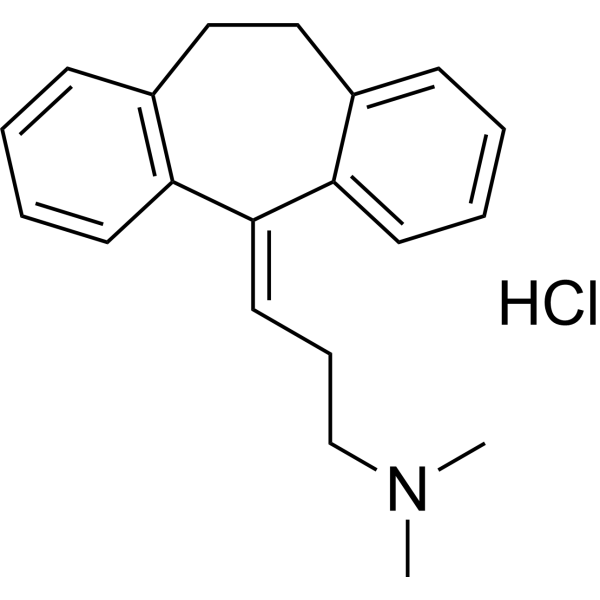
Amitriptyline hydrochloride (Standard) is the analytical standard of Amitriptyline hydrochloride (HY-B0527A). This product is intended for research and analytical applications. Amitriptyline hydrochloride is an orally active tricyclic antidepressant (TCA). Amitriptyline hydrochloride mainly exerts its antidepressant effect by blocking SERT (Ki = 3.45 nM) and NET (Ki = 13.3 nM), thereby increasing the concentrations of 5-hydroxytryptamine (5-HT) and norepinephrine (NE) in the synaptic cleft. Amitriptyline hydrochloride is also an agonist at α2A and TrkA/TrkB receptors, thereby exerting analgesic and neurotrophic activities (inhibiting cell apoptosis). Amitriptyline hydrochloride can reduce inflammation, angiogenesis and fibrosis. Amitriptyline hydrochloride binds to DAT (with Ki = 2.58 μM). Amitriptyline hydrochloride has high affinity for a series of receptors and can antagonize muscarinic cholinergic receptors (M1/M2/M3/M4/M5 receptors) (Ki = 11-24 nM), H1 receptors (Ki = 0.5-1.1 nM), adrenergic α1 receptors (Ki = 4.4 nM), etc., resulting in a series of side effects. Amitriptyline hydrochloride can block sodium channels and hERG potassium channel (IC50 = 4.78 μM) and it has cardiotoxicity.
loading...
    loading...
Cat. No.: HY-B0527AS
CAS No.: 203645-63-0
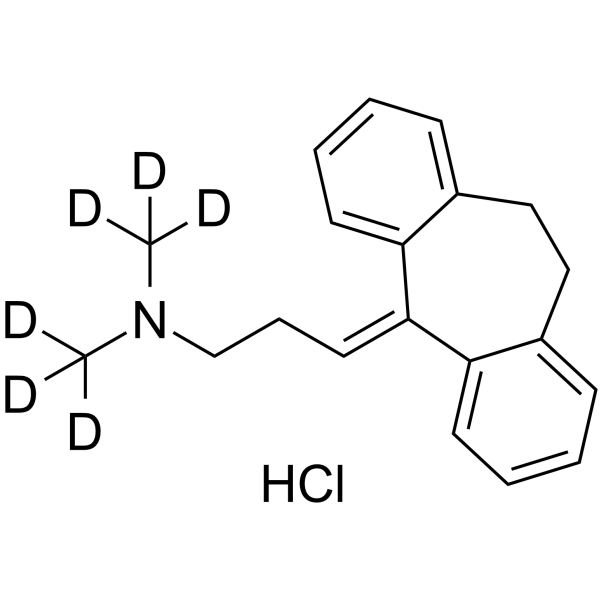
Amitriptyline-d6 hydrochloride is the deuterium labeled Amitriptyline hydrochloride (HY-B0527A). Amitriptyline hydrochloride is an orally active tricyclic antidepressant (TCA). Amitriptyline hydrochloride mainly exerts its antidepressant effect by blocking SERT (Ki = 3.45 nM) and NET (Ki = 13.3 nM), thereby increasing the concentrations of 5-hydroxytryptamine (5-HT) and norepinephrine (NE) in the synaptic cleft. Amitriptyline hydrochloride is also an agonist at α2A and TrkA/TrkB receptors, thereby exerting analgesic and neurotrophic activities (inhibiting cell apoptosis). Amitriptyline hydrochloride can reduce inflammation, angiogenesis and fibrosis. Amitriptyline hydrochloride binds to DAT (with Ki = 2.58 μM). Amitriptyline hydrochloride has high affinity for a series of receptors and can antagonize muscarinic cholinergic receptors (M1/M2/M3/M4/M5 receptors) (Ki = 11-24 nM), H1 receptors (Ki = 0.5-1.1 nM), adrenergic α1 receptors (Ki = 4.4 nM), etc., resulting in a series of side effects. Amitriptyline hydrochloride can block sodium channels and hERG potassium channel (IC50 = 4.78 μM) and it has cardiotoxicity.
loading...
    loading...

