

188 Results for "

biodegradable

" in MedChemExpress (MCE) Product Catalog:
Products (188)

188 Results for "biodegradable" in MCE Product Catalog:

Cat. No.: HY-158227A
Synonyms: DexMA (MW 500000)
Dextran Methacryloyl (MW 500000) is a methacryloyl dextran that converts into cell matrix gels. Dextran Methacryloyl (MW 500000) formed gels that had no cytotoxic effects on fibroblasts, but cells adhered only inefficiently in long-term experiments . Dextran Methacryloyl (MW 500000) needs to self-assemble into fibrous hydrogel under the action of photoinitiator LAP (HY-44076), and target bioactive adhesion sites, play an inherent supporting role for tissue cells and biodegradable activity.
Application: cell culture, biological 3D printing, tissue engineering, etc.
loading...
    loading...
Cat. No.: HY-158228
Synonyms: PLMA
Poly-L-lysine Methacryloyl (PLMA) is methacrylated polylysine. When Poly-L-lysine Methacryloyl is cross-linked on polyetheretherketone (PEEK) through UV-induced cross-linking, it can improve the hydrophilicity of PEEK and retain its own degradation bioinertness . Poly-L-lysine Methacryloyl needs to self-assemble into fibrous hydrogel under the action of photoinitiator LAP (HY-44076), and target bioactive adhesion sites, play an inherent supporting role for tissue cells and biodegradable activity.
Application: cell culture, biological 3D printing, tissue engineering, etc.
loading...
    loading...
Cat. No.: HY-B2221S
U- 13C Cellulose high DP from potato is the 13C labeled Cellulose (HY-B2221). Cellulose (Pectin glycosidase) is a natural high molecular weight polysaccharide found in many plants and organisms. It is widely used in manufacturing industries, such as in paper making, textiles, food and medicine, etc. As a renewable resource, Cellulose is biodegradable and sustainable, and can also be used to manufacture chemicals such as Cellulose Esters, Cellulose Acetate and Cellulose Nitrate. In addition, Cellulose is often used as a food additive to increase the stability and quality of food .
loading...
    loading...
Cat. No.: HY-B2221S3
U- 13C Cellulose high DP from maize is the 13C labeled Cellulose (HY-B2221). Cellulose (Pectin glycosidase) is a natural high molecular weight polysaccharide found in many plants and organisms. It is widely used in manufacturing industries, such as in paper making, textiles, food and medicine, etc. As a renewable resource, Cellulose is biodegradable and sustainable, and can also be used to manufacture chemicals such as Cellulose Esters, Cellulose Acetate and Cellulose Nitrate. In addition, Cellulose is often used as a food additive to increase the stability and quality of food .
loading...
    loading...
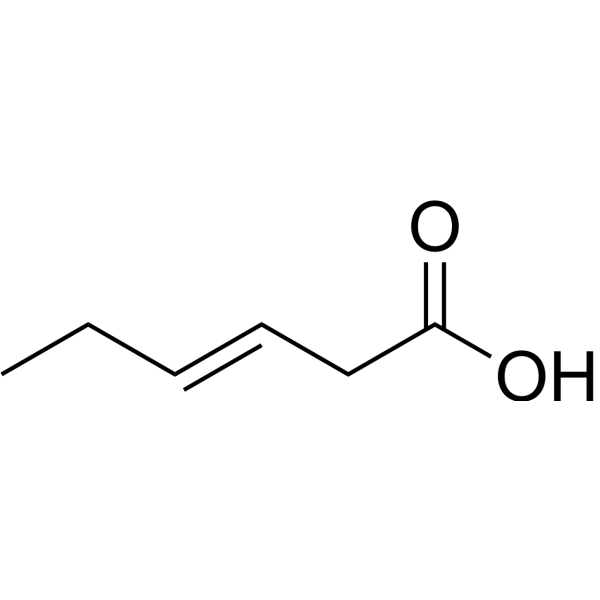
Cat. No.: HY-W010532
CAS No.: 1577-18-0
Synonyms: (E)-Hex-3-enoic acid
(E)-Hex-3-enoic acid is an unsaturated organic compound. It is commonly used as a fragrance ingredient in a variety of products, including food, beverages, and personal care products, and it can also be used as a starting material for the synthesis of various organic compounds, including pharmaceuticals and agrochemicals. In addition, (E)-Hex- 3-enoic acid has been investigated for its potential use as a biobased solvent due to its low toxicity and biodegradability, as well as its potential antibacterial and antifungal properties, which may make it useful for developing new Antibacterial agents.
loading...
    loading...
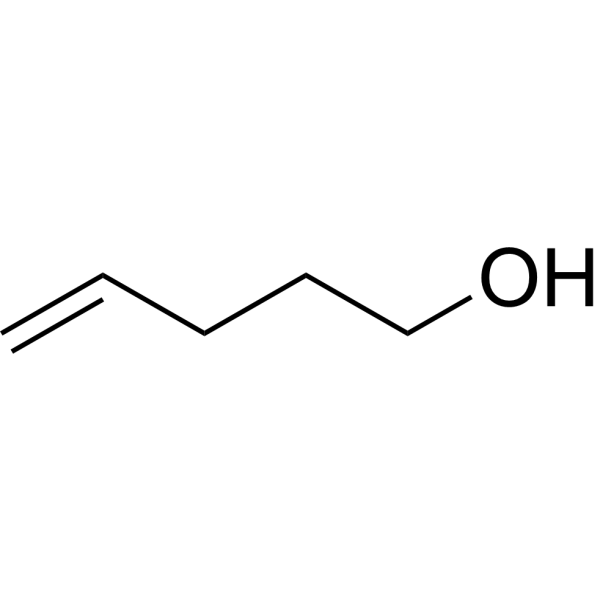
Cat. No.: HY-W010639
CAS No.: 821-09-0
Synonyms: Pent-4-en-1-ol
4-Penten-1-ol is commonly used as a flavor ingredient in various products, including food, beverages, and perfumes, and can also be used as a starting material for the synthesis of various organic compounds, including pharmaceuticals and agrochemicals. In addition, 4-Penten -1-ol has been investigated for its potential use as a biobased solvent due to its low toxicity and biodegradability, and its antimicrobial properties against certain bacteria and fungi, which may make it useful for developing new Antibacterial agents.
loading...
    loading...
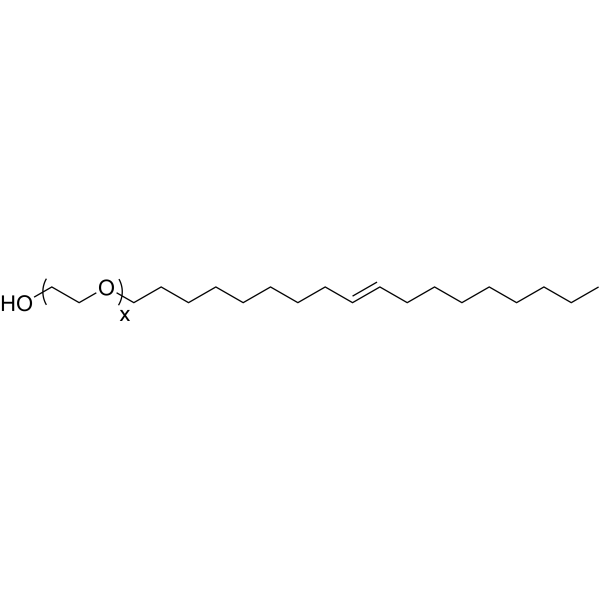
Cat. No.: HY-W250168
CAS No.: 9004-98-2
Synonyms: Polyethylene glycol oleyl ether, average Mn~709; Polyethylene glycol monooleyl ether, n~10
Polyoxyethylene(10) oleyl ether, also known as POE(10) monooleate, is a nonionic surfactant consisting of a polyethylene glycol chain with 10 ethylene oxide units and an oleic acid residue. It has excellent emulsifying, wetting and dispersing properties, making it suitable for a variety of applications including personal care products and pharmaceutical formulations. POE(10) monooleate is commonly used as a solubilizer to improve the solubility and bioavailability of poorly soluble drugs. Furthermore, it is biodegradable and has low toxicity, making it an environmentally friendly ingredient suitable for various industrial applications.
loading...
    loading...
Cat. No.: HY-Y0335R
CAS No.: 96-26-4
Synonyms: Dihydroxyacetone (Standard)
1,3-Dihydroxyacetone (Standard) is the analytical standard of 1,3-Dihydroxyacetone. This product is intended for research and analytical applications. 1,3-Dihydroxyacetone (DHA), the main active ingredient in sunless tanning skin-care preparations and an important precursor for the synthesis of various fine chemicals, is produced on an industrial scale by microbial fermentation of glycerol (HY-B1659) in Gluconobacter oxydans. 1,3-Dihydroxyacetone is also used for synthesis of new biodegradable polymers by combining with lactic acid (HY-B2227) .
loading...
    loading...
Cat. No.: HY-158222
Synonyms: AlgMA (MW 50000)
Alginate Methacryloyl (MW 50000) is a methacryloyl alginate with potential for use as a tissue engineering scaffold and 3D printing ink. Alginate Methacryloyl (MW 50000) is biocompatible, non-immunogenic, has low toxicity and is capable of physical cross-linking with divalent cations such as calcium . Alginate Methacryloyl (MW 50000) needs to self-assemble into fibrous hydrogel under the action of photoinitiator LAP (HY-44076), and target bioactive adhesion sites, play an inherent supporting role for tissue cells and biodegradable activity.
Application: cell culture, biological 3D printing, tissue engineering, etc.
loading...
    loading...
Cat. No.: HY-158222A
Synonyms: AlgMA (MW 300000)
Research Areas:  

Others

Alginate Methacryloyl (MW 300000) is a methacryloyl alginate with potential for use as a tissue engineering scaffold and 3D printing ink. Alginate Methacryloyl (MW 300000) is biocompatible, non-immunogenic, has low toxicity and is capable of physical cross-linking with divalent cations such as calcium . Alginate Methacryloyl (MW 300000) needs to self-assemble into fibrous hydrogel under the action of photoinitiator LAP (HY-44076), and target bioactive adhesion sites, play an inherent supporting role for tissue cells and biodegradable activity.
Application: cell culture, biological 3D printing, tissue engineering, etc.
loading...
    loading...
Cat. No.: HY-178400S
Ethyl heptanoate-d13 is the deuterium labeled Ethyl heptanoate (HY-W010177). Ethyl heptanoate, Ethyl heptanoate is commonly used as a fragrance ingredient in a variety of products, including food, beverages, and personal care products, it can also be used as a solvent, and a building block for the synthesis of various organic compounds, including pharmaceuticals and agrochemicals, in addition , due to its low toxicity and biodegradability, Ethyl heptanoate has been investigated for its potential use as a bio-based solvent, as well as for its potential antimicrobial properties against certain bacteria and fungi.
loading...
    loading...
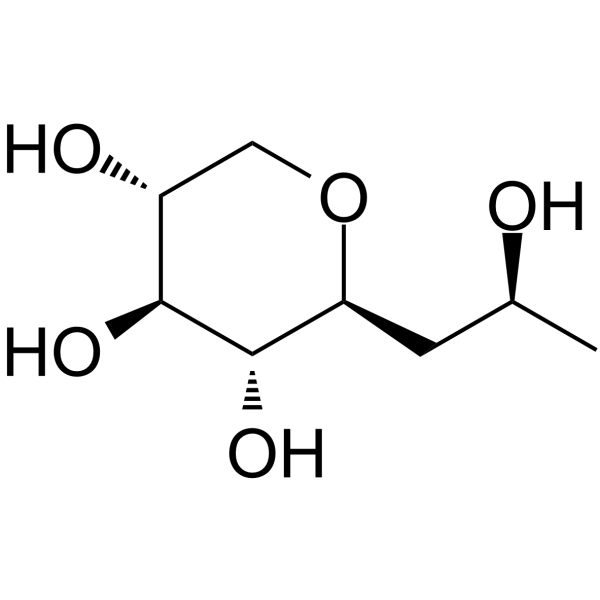
Cat. No.: HY-108036A
CAS No.: 868156-46-1
Purity:  ≥98.0%
Synonyms: (S)-Hydroxypropyl tetrahydropyrantriol
Research Areas:  

Metabolic Disease

(S)-Pro-xylane ((S)-Hydroxypropyl tetrahydropyrantriol) is a bioactive C-glycoside that targets the biosynthesis pathway of glycosaminoglycans/mucopolysaccharides (GAGs) in the skin matrix and can be absorbed transdermally. (S)-Pro-xylane stimulates the biosynthesis of GAGs in fibroblasts, enhances the structural stability of the skin extracellular matrix, improves skin elasticity and moisturizing ability, and delays wrinkle formation. (S)-Pro-xylane can effectively promote the synthesis of collagen fibers and hyaluronic acid in the dermis. (S)-Pro-xylane is used in the field of anti-aging cosmetics to improve skin hydration and elasticity. (S)-Pro-xylane is eco-friendly and biodegradable .
loading...
    loading...
Cat. No.: HY-158223
Synonyms: CMCSMA
Carboxymethyl chitosan Methacryloyl (CMCSMA) is methacrylated carboxymethyl chitosan with properties as a 3D printing ink. A composite hydrogel made of Carboxymethyl chitosan Methacryloyl can effectively accelerate bone healing in an infectious microenvironment after implantation in a rat model of Staphylococcus aureus-infected femoral defect . Carboxymethyl chitosan Methacryloyl needs to self-assemble into fibrous hydrogel under the action of photoinitiator LAP (HY-44076), and target bioactive adhesion sites, play an inherent supporting role for tissue cells and biodegradable activity.
Application: cell culture, biological 3D printing, tissue engineering, etc.
loading...
    loading...
Cat. No.: HY-B0633C
CAS No.: 9004-61-9
Hyaluronic acid (Mw: 1000-2000 Da) is a long-chain unbranched polysaccharide with a molecular weight of 1000-2000 Da. Hyaluronic acid (Mw: 2000 Da) inhibits IL-1β expression and increases LC3-II. Hyaluronic acid (Mw: 1000-2000Da) can regulate tissue homeostasis and stress resistance, promote angiogenesis and tissue remodeling. Hyaluronic acid (Mw: 1000-2000 Da) has good biocompatibility and biodegradability, and can be used in drug delivery systems and tissue engineering. Hyaluronic acid (Mw: 2000 Da) can reduce facial skin blemishes and sagging .
loading...
    loading...
Cat. No.: HY-P1032S
CAS No.: 2226467-14-5
Research Areas:  

Others

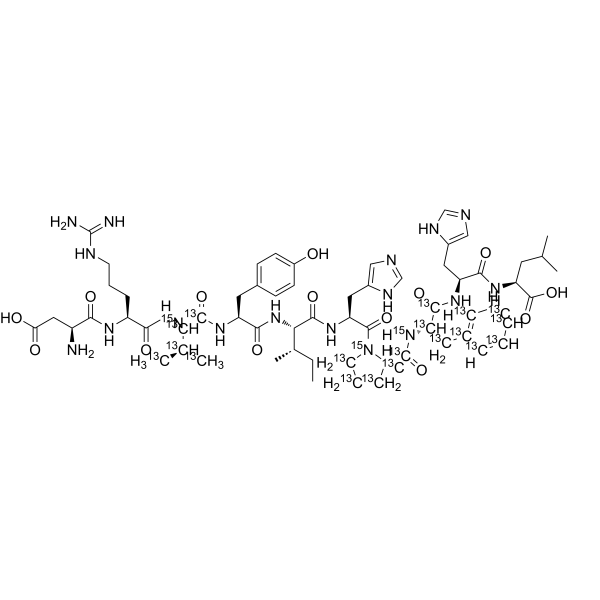
Angiotensin I- 13C19, 15N3 (human, mouse, rat) is the 13C and 15N labeled Angiotensin I (human, mouse, rat) (HY-P1032). Cellulose (Pectin glycosidase) is a natural high molecular weight polysaccharide found in many plants and organisms. It is widely used in manufacturing industries, such as in paper making, textiles, food and medicine, etc. As a renewable resource, Cellulose is biodegradable and sustainable, and can also be used to manufacture chemicals such as Cellulose Esters, Cellulose Acetate and Cellulose Nitrate. In addition, Cellulose is often used as a food additive to increase the stability and quality of food .
loading...
    loading...
Cat. No.: HY-W888515
Research Areas:  

Neurological Disease

mPEG-PCL is an amphiphilic biodegradable block copolymer composed of hydrophilic methoxy poly (ethylene glycol) (mPEG) and hydrophobic poly (ε-caprolactone) (PCL). mPEG-PCL possesses excellent biocompatibility and can form delivery carriers such as micelles and nanoparticles. Through its amphiphilic block structure, mPEG-PCL forms nanocarriers and encapsulates hydrophobic molecules, thereby enhancing the loading capacity of hydrophobic molecules, reducing burst release, and achieving sustained release. mPEG-PCL can be used in research on nanodelivery, tissue engineering, and ocular delivery systems related to age-related macular degeneration (AMD) .
loading...
    loading...
Cat. No.: HY-158217
Synonyms: Gelatin Methacryloyl, 30% methacrylation, Green Fluorescent
Green Fluorescent Gelatin Methacryloyl (Green Fluorescent GelMA) is methacryloyl gelatin (GelMA) with green fluorescence, which is obtained by "grafting" fluorescent molecules on GelMA. Green Fluorescent Gelatin Methacryloyl acts as a scaffold and can be used to engineer tissue analogs from the vasculature to cartilage and bone, allowing cells to proliferate and spread . GelMA, 30% methacrylation, Green Fluorescent needs to self-assemble into fibrous hydrogel under the action of photoinitiator LAP (HY-44076), and target bioactive adhesion sites, play an inherent supporting role for tissue cells and biodegradable activity.
Application: cell culture, biological 3D printing, tissue engineering, etc.
loading...
    loading...
Cat. No.: HY-158217A
Synonyms: Gelatin Methacryloyl, 60% methacrylation, Green Fluorescent
Green Fluorescent Gelatin Methacryloyl (Green Fluorescent GelMA) is methacryloyl gelatin (GelMA) with green fluorescence, which is obtained by "grafting" fluorescent molecules on GelMA. Green Fluorescent Gelatin Methacryloyl acts as a scaffold and can be used to engineer tissue analogs from the vasculature to cartilage and bone, allowing cells to proliferate and spread . GelMA, 60% methacrylation, Green Fluorescent needs to self-assemble into fibrous hydrogel under the action of photoinitiator LAP (HY-44076), and target bioactive adhesion sites, play an inherent supporting role for tissue cells and biodegradable activity.
Application: cell culture, biological 3D printing, tissue engineering, etc.
loading...
    loading...
Cat. No.: HY-158217B
Synonyms: Gelatin Methacryloyl, 90% methacrylation, Green Fluorescent
Green Fluorescent Gelatin Methacryloyl (Green Fluorescent GelMA) is methacryloyl gelatin (GelMA) with green fluorescence, which is obtained by "grafting" fluorescent molecules on GelMA. Green Fluorescent Gelatin Methacryloyl acts as a scaffold and can be used to engineer tissue analogs from the vasculature to cartilage and bone, allowing cells to proliferate and spread . GelMA, 90% methacrylation, Green Fluorescent needs to self-assemble into fibrous hydrogel under the action of photoinitiator LAP (HY-44076), and target bioactive adhesion sites, play an inherent supporting role for tissue cells and biodegradable activity.
Application: cell culture, biological 3D printing, tissue engineering, etc.
loading...
    loading...
Cat. No.: HY-158218
Synonyms: Gelatin Methacryloyl, 30% methacrylation, Red Fluorescent
Red Fluorescent Gelatin Methacryloyl (Red Fluorescent GelMA) is methacryloyl gelatin (GelMA) with red fluorescence, which is obtained by "grafting" fluorescent molecules on GelMA. Red Fluorescent Gelatin Methacryloyl acts as a scaffold and can be used to engineer tissue analogs from the vasculature to cartilage and bone, allowing cells to proliferate and spread . GelMA, 30% methacrylation, Red Fluorescent needs to self-assemble into fibrous hydrogel under the action of photoinitiator LAP (HY-44076), and target bioactive adhesion sites, play an inherent supporting role for tissue cells and biodegradable activity.
Application: cell culture, biological 3D printing, tissue engineering, etc.
loading...
    loading...

