1885 Results for "

Reactive

" in MedChemExpress (MCE) Product Catalog:
Products (1885)

1885 Results for "Reactive" in MCE Product Catalog:

Cat. No.: HY-105904
CAS No.: 54824-20-3
Research Areas:  

Cancer

Pinafide is an orally active anticancer agent. Pinafide binds to double-stranded DNA via intercalation, stabilizes the DNA-topoisomerase II complex, induces photo-induced DNA damage and ROS production, causes lysosomal and mitochondrial dysfunction, impairs DNA and RNA synthesis, and blocks cell growth. Pinafide binds to human serum albumin in vitro, undergoes biotransformation via reduction and acetylation in rats, and can cross the placental barrier of pregnant rats. Pinafide can be used in cancer-related research such as hepatocellular carcinoma .
loading...
    loading...
Cat. No.: HY-156065
CAS No.: 2700303-28-0
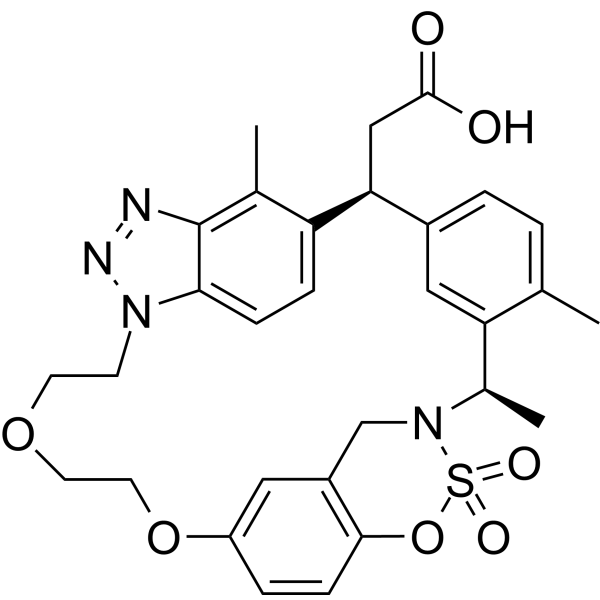
S217879 is an orally active and selective NRF2 activator. S217879 activates the NRF2 pathway by specifically disrupting the KEAP1 (Kd: 4.15 nM)-NRF2 interaction, and upregulates the antioxidant response. S217879 also ameliorates steatohepatitis and reduces the degree of liver fibrosis. S217879 can be used in the research of metabolic dysfunction-associated steatotic liver disease and nonalcoholic steatohepatitis .
loading...
    loading...
Cat. No.: HY-169072
CAS No.: 3103327-20-1
PROTAC MLKL Degrader-2 is an orally active and highly selective mixed lineage kinase domain-like pseudokinase (MLKL) PROTAC degrader with a DC50 of 0.012 μM. PROTAC MLKL Degrader-2 recruits the CRBN E3 ubiquitin ligase to form a ternary complex, leading to ubiquitination of MLKL and its degradation via a proteasome-dependent pathway. PROTAC MLKL Degrader-2 inhibits necroptosis, reduces ROS production, restores mitochondrial function, and ameliorates lysosomal dysfunction induced by necroptotic stimuli. PROTAC MLKL Degrader-2 degrades MLKL in xenograft mouse models. PROTAC MLKL Degrader-2 can be used in cancer-related research .
loading...
    loading...
Cat. No.: HY-181598
CAS No.: 3057531-85-5
GPX4 degrader-1 (Compound RS-1) is a hydrophobic tagging (HyT)-mediated GPX4 degrader (DC50: 8.9 nM in HT1080 cells) GPX4 degrader-1 induces GPX4 degradation. GPX4 degrader-1 induces Ferroptosis. GPX4 degrader-1 increases lipid ROS. GPX4 degrader-1 demonstrates potent antitumor efficacy in a murine mammary carcinoma model .
loading...
    loading...
Cat. No.: HY-181656
GPX4 degrader-2 is a GPX4 molecular glue degrader and ferroptosis inducer. GPX4 degrader-2 suppresses GPX4 enzyme activity, promotes ubiquitination-dependent proteasomal degradation of GPX4 protein. GPX4 degrader-2 indues ferroptosis, increases lipid ROS and MDA levels, suppresses glutathione levels in cancer cells. GPX4 degrader-2 inhibits cancer cells proliferation and colony formation. GPX4 degrader-2 can be used for the research of colorectal cancer .
loading...
    loading...
Cat. No.: HY-184452
BNNC is a Photomolecular glue . BNNC selectively releases (R)-CR8 (HY-18340) (a Cyclin K molecular glue) and BSS-Et in hypoxic tumor microenvironments, thereby triggering Cyclin K degradation dependent on the ubiquitin-proteasome pathway. BNNC generates ROS and singlet oxygen in hypoxic tumor cells under light irradiation. BNNC enhances DNA damage and Apoptosis through the combined effects of Cyclin K degradation and phototherapy. BNNC enhances the tumor selectivity of molecular glue via specific activation in hypoxic tumor microenvironments. BNNC can be used in breast cancer-related research .
loading...
    loading...
Cat. No.: HY-N19463
CAS No.: 1065-08-3
Dicatenarin is a caspase‑3 activator with growth‑inhibitory activity against human cancer cells. Dicatenarin increases caspase‑3 activity, induces intracellular ROS generation, and activates the mitochondrial‑mediated apoptotic pathway. Dicatenarin exerts growth‑inhibitory effects against a panel of human cancer cell lines. Dicatenarin can be used in research on pancreatic cancer, lung cancer, colon cancer, breast cancer, prostate cancer, and ovarian cancer .
loading...
    loading...
Cat. No.: HY-N2180A
CAS No.: 25305-05-9
Synonyms: (±)-Eudesmine
(±)-Eudesmin ((±)-Eudesmine) is a natural compound found in Fragaria nubicola with in vitro anti-inflammatory activity. (±)-Eudesmin inhibits NO production in LPS-activated macrophages; suppresses myeloperoxidase-dependent ROS production in zymosan-activated phagocytes; and inhibits superoxide anion production in PMA-activated macrophages. (±)-Eudesmin can be used for the research of inflammation-related diseases .
loading...
    loading...
Cat. No.: HY-N3741
CAS No.: 18296-45-2
Synonyms: Didrovaltratum
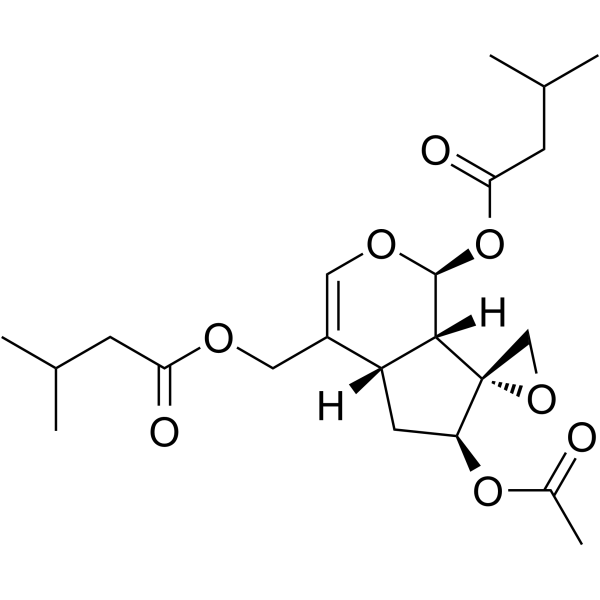
Didrovaltrate (Didrovaltratum) is an L-type calcium channel blocker, ROS scavenger, autophagy enhancer, and lipid accumulation inhibitor. Didrovaltrate blocks L-type calcium currents in a concentration-dependent manner, shifts the current-voltage curve upward, modulates steady-state inactivation kinetics, and inhibits the nuclear translocation of glucocorticoid receptors. Didrovaltrate reduces ROS levels, downregulates the expression of muscle atrophy-related genes, enhances autophagy via lipophagy, and decreases Oleic acid-induced lipid accumulation. Didrovaltrate exhibits cytotoxic activity against cancer cells. Didrovaltrate can be used in research related to skeletal muscle atrophy, non-alcoholic fatty liver disease, breast cancer, lung cancer, gastric cancer, and prostate cancer .
loading...
    loading...
Cat. No.: HY-N6821
CAS No.: 129499-78-1
Target:  

Drug Derivative

Research Areas:  

Inflammation/Immunology Cancer

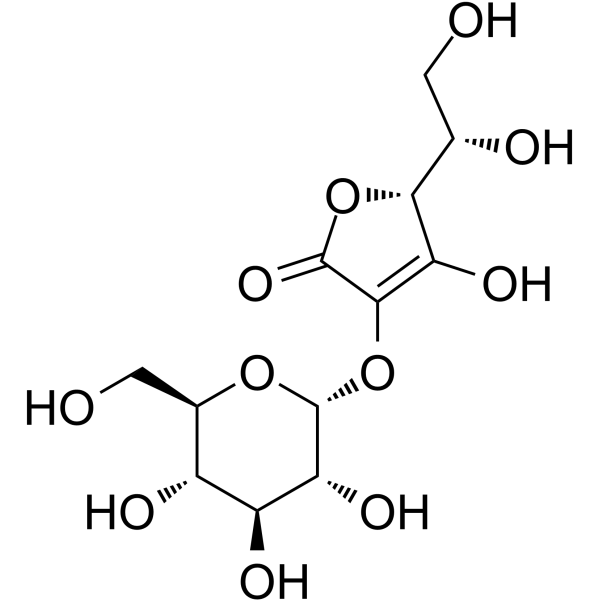
2-O-α-D-Glucopyranosyl-L-ascorbic Acid is an orally active glucoside derivative of ascorbic acid. 2-O-α-D-Glucopyranosyl-L-ascorbic Acid can be hydrolyzed by α-glucosidase to release ascorbic acid. 2-O-α-D-Glucopyranosyl-L-ascorbic Acid inhibits melanin synthesis, prevents UV-induced cell damage, and promotes collagen synthesis in skin fibroblasts. 2-O-α-D-Glucopyranosyl-L-ascorbic Acid also induces oxidative stress to inhibit tumor growth. 2-O-α-D-Glucopyranosyl-L-ascorbic Acid can be used in research related to tumors, inflammation, and other conditions .
loading...
    loading...
Cat. No.: HY-P11489
CAS No.: 252731-57-0
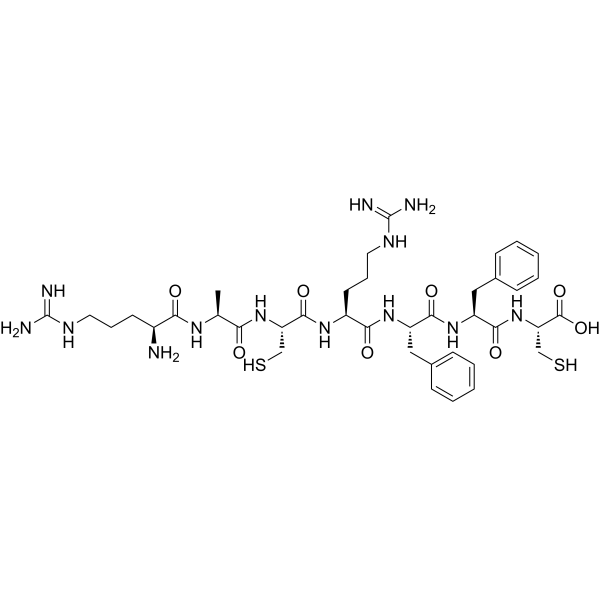
RN-0001 is a cyclophilin (Cyp) inhibitor with Ki values of 4.1 nM and 12.0 nM against CypA and CypD, respectively, and an EC50 of 916 nM for CypD. RN-0001 binds directly to CypD, inhibits the peptidyl-prolyl cis-trans isomerase activities of CypD and CypA, and prevents CypD-dependent mitochondrial permeability transition pore opening. RN-0001 improves mitochondrial function, reduces ROS production, inhibits the expression of lipogenic markers, blocks the nuclear translocation of NF-κB p65, and decreases the release of activated caspase-3 and cytochrome c. RN-0001 can be used in the research of alcohol-associated liver disease .
loading...
    loading...
Cat. No.: HY-P4111
CAS No.: 1318232-11-9
Target:  

CXCR

Research Areas:  

Inflammation/Immunology Cancer

Peptide R is a cyclic peptide and a specific CXCR4 antagonist. Peptide R exhibits excellent ability to effectively remodel tumor stroma. Peptide R has potential for use in tumor research .
loading...
    loading...
Cat. No.: HY-W115789
CAS No.: 1344-09-8
Sodium silicate is a water-soluble silicate. Sodium silicate is widely used as a binder, particularly in the production of detergents, soaps, and cleaners. Sodium silicate promotes the deposition of suberin polyphenols and lignin at wound sites of potato tubers, accelerates callus structure formation, enhances ROS production, and induces the synthesis of total phenols and flavonoids. Sodium silicate reduces the weight loss rate and disease index of wounded potato tubers during storage .
loading...
    loading...
Cat. No.: HY-W343900
CAS No.: 6912-67-0
Synonyms: DL-Hydroxyproline
Hydroxyproline (DL-Hydroxyproline) is a non-essential amino acid and one of the main components of collagenous tissues. Hydroxyproline acts as a substrate for mitochondrial hydroxyproline oxidase to generate ROS. Hydroxyproline promotes the synthesis of glutathione, DNA, heme and proteins via conversion to Glycine (HY-Y0966). Hydroxyproline promotes the activation of caspase-9 and apoptosis in cancer cells treated with Doxorubicin . Hydroxyproline serves as a biochemical marker. Hydroxyproline is used in research related to various diseases including colon cancer, diabetes and arthritis .
loading...
    loading...
Cat. No.: HY-181073
Apoptosis/necroptosis inducer 1 is an orally active and brain-penetrant apoptosis and necroptosis inducer. Apoptosis/necroptosis inducer 1 induces mitochondria-dependent (intrinsic pathway) apoptosis. Apoptosis/necroptosis inducer 1 induces necroptosis by activating the TNF-α/NF-κB/MAPK signaling pathway. Apoptosis/necroptosis inducer 1 exhibits antiproliferative activity in glioblastoma cell lines and multiple solid tumor types. Apoptosis/necroptosis inducer 1 inhibits growth of orthotopic glioblastoma in animal models and improves survival rate. Apoptosis/necroptosis inducer 1 can be used for the research of glioblastoma .
loading...
    loading...
Cat. No.: HY-182802
CAS No.: 3097756-33-4
Ferroptosis inducer-15 is a ferroptosis inducer. Ferroptosis inducer-15 downregulates GPX4 expression, triggers lipid peroxidation via ROS accumulation, and disrupts mitochondrial membrane potential to drive ferroptosis. Ferroptosis inducer-15 increases splenic CD4 + T cell proportion, promotes CD8 + cytotoxic T cell tumor infiltration, and activates antitumor immune responses. Ferroptosis inducer-15 exerts antiproliferative activity against colorectal cancer cells and inhibits tumor growth in xenograft mice models without significant body weight loss. Ferroptosis inducer-15 can be used for the research of cancer, such as colorectal cancer .
loading...
    loading...
Cat. No.: HY-183290
Research Areas:  

Infection

Antileishmanial agent-41 (Compound 20k) is a selective Antileishmanial agent with a IC50 of 1.51 μg/mL against Leishmania donovani. Antileishmanial agent-41 increases ROS levels. Antileishmanial agent-41 can be used for the research of leishmaniasis .
loading...
    loading...
Cat. No.: HY-183621
Research Areas:  

Infection

Antileishmanial agent-43 is a 3,4,5‑trisubstituted isoxazole with selective antileishmanial activity. Antileishmanial agent-43 shows IC50 values of 12.7 μM against Leishmania amazonensis promastigotes and 0.96 μM against intracellular amastigotes. Antileishmanial agent-43 induces ROS elevation, oxidative stress and mitochondrial dysfunction, resulting in lipid peroxidation, mitochondrial depolarization and ATP imbalance. Antileishmanial agent-43 causes cell shrinkage, phosphatidylserine externalization, plasma membrane permeabilization, and promotes autophagy. Antileishmanial agent-43 can be used for the research of leishmaniasis .
loading...
    loading...
Cat. No.: HY-183987
CAS No.: 859138-65-1
Research Areas:  

Cancer

ZINC000002107582 is a UVRAG binder. ZINC000002107582 induces Apoptosis, increases intracellular ROS levels, arrests the cell cycle at the S phase, and elevates the proportion of cells in the Sub G0 phase. ZINC000002107582 exhibits anticancer activity against breast cancer .
loading...
    loading...
Cat. No.: HY-184308
CAS No.: 3123321-73-0
Research Areas:  

Infection

Antifungal agent-165 is an antifungal agent with in vitro activity against Rhizoctonia solani. Antifungal agent-165 inhibits catalase (CAT) activity, drives intracellular ROS accumulation, and induces oxidative damage. Antifungal agent-165 disrupts fungal hyphal morphology, compromises cell membrane integrity, and triggers cellular content leakage in Rhizoctonia solani. Antifungal agent-165 can be used for the research of potato black scurf disease .
loading...
    loading...

