
205 Results for "

DNA binding activity

" in MedChemExpress (MCE) Product Catalog:
Products (205)

205 Results for "DNA binding activity" in MCE Product Catalog:

Cat. No.: HY-129056
CAS No.: 159776-70-2
Purity:  99.31%
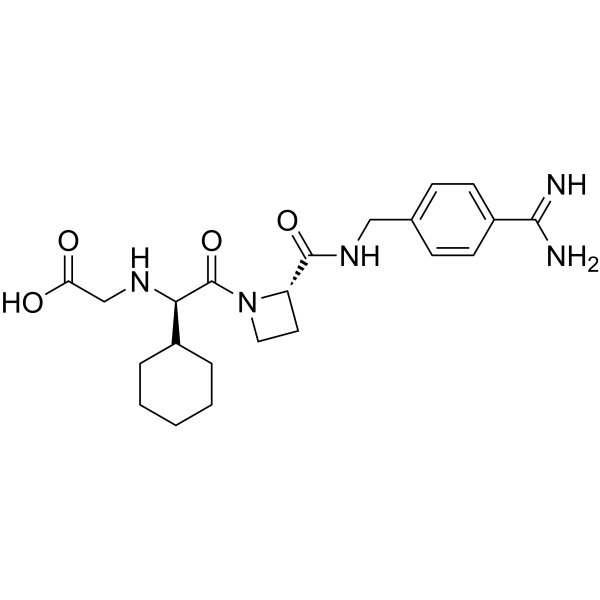
Melagatran is a reversible, selective, orally active direct inhibitor of thrombin with a Ki of 2 nM. Melagatran binds directly to the active site of thrombin, inhibiting thrombin-mediated conversion of fibrinogen to fibrin. Melagatran reduces the DNA binding activity of NF-κB and AP-1. Melagatran reduces fibrin deposition in organs, alleviates ischemic brain damage, and reduces the size of advanced atherosclerotic lesions. Melagatran can be used in the study of cardiovascular disease (coronary thrombosis, atherosclerosis) and ischemic brain damage .
loading...
    loading...
Cat. No.: HY-151153
Research Areas:  

Cancer

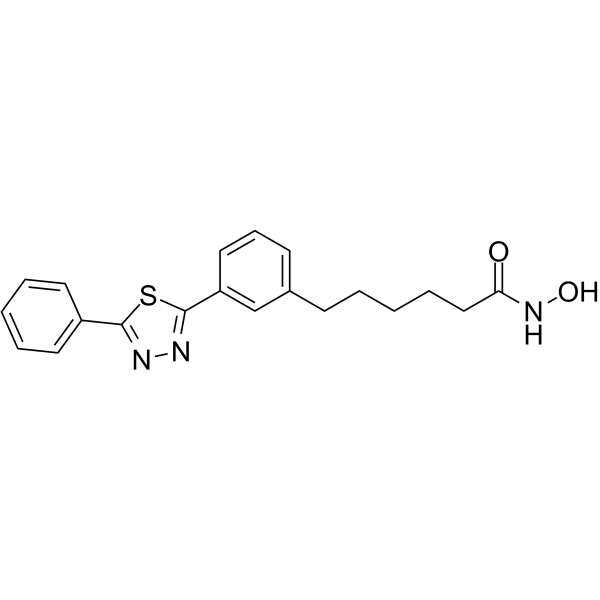
HDAC1-IN-5 is a potent HDAC1 inhibitor with IC50 values of 15 nM and 20 nM for HDAC1 and HDAC6, respectively. HDAC1-IN-5 can enhance the acetylation of histone H3 and α-tubulin, as well as promote the activation of caspase 3 in cancer cells, thereby inducing apoptosis. HDAC1-IN-5 induces chromatin damage by binding with DNA. HDAC1-IN-5 has strong inhibitory activity against tumor growth in xenograft mice .
loading...
    loading...
Cat. No.: HY-P99666

Target:  

IFNAR

Research Areas:  

Infection Cancer

Interferon alfa-2b is a type I interferon that activates novel genes and exerts potent antiviral and antiproliferative activity on target cells. Signaling by Interferon alfa-2b requires receptor-dependent activation of Stat1 and Stat2 to form a heterodimeric STAT that binds to the DNA-binding protein IRF-9 (p48) and forms ISGF-3 (IFN-stimulated gene factor 3). The driver genes are then further activated by ISGF-3 to achieve antiviral function .
loading...
    loading...
Cat. No.: HY-181966
Research Areas:  

Infection

Sideromycin 7 is an antibacterial agent. Sideromycin 7 forms a 7-Bi 3+ coordination complex with bismuth citrate, exerting a three-pronged antibacterial mode of action: direct DNA binding to induce damage and arrest replication, suppression of KdpC synthesis to block KdpFABC-mediated potas-sium transport, and inhibition of ATP production. Sideromycin 7 exhibits potent antibacterial activity against Ciprofloxacin (HY-B0356)-resistant Pseudomonas aeruginosa strains. Sideromycin 7 exerts antibiofilm activity against Pseudomonas aeruginosa. Sideromycin 7 can be used for the research of ciprofloxacin-resistant Pseudomonas aeruginosa infection .
loading...
    loading...
Cat. No.: HY-106055
CAS No.: 74817-61-1
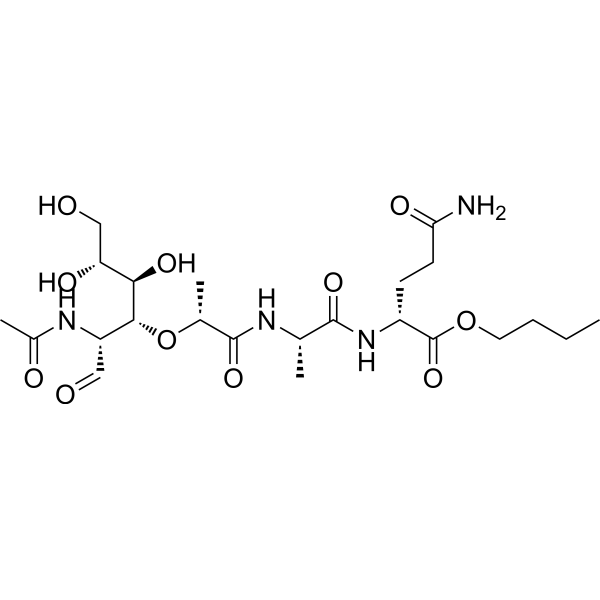
Murabutide is an immunomodulator and also a NOD2 receptor agonist . Murabutide enhances the signal transduction of ATR and NOD2, mediates the activation of the DDR pathway, and thereby repairs radiation-induced DNA double-strand breaks. Murabutide inhibits radiation-induced cell apoptosis and protects cells and mice from radiation-induced toxic damage. Murabutide induces the expression and DNA-binding activity of Oct-1 in macrophages, thereby inhibiting the transcription and replication of HIV-1. Murabutide reduces the expression levels of CD4 and CCR5 on the surface of macrophages, and induces the secretion of β-chemokines, TNF-α and IL-6. Murabutide enhances non-specific viral resistance and targets reticuloendothelial cells. Murabutide can be used in research related to radiation-induced damage and human immunodeficiency virus type 1 infection .
loading...
    loading...
Cat. No.: HY-113225
CAS No.: 86-01-1
Synonyms: GTP
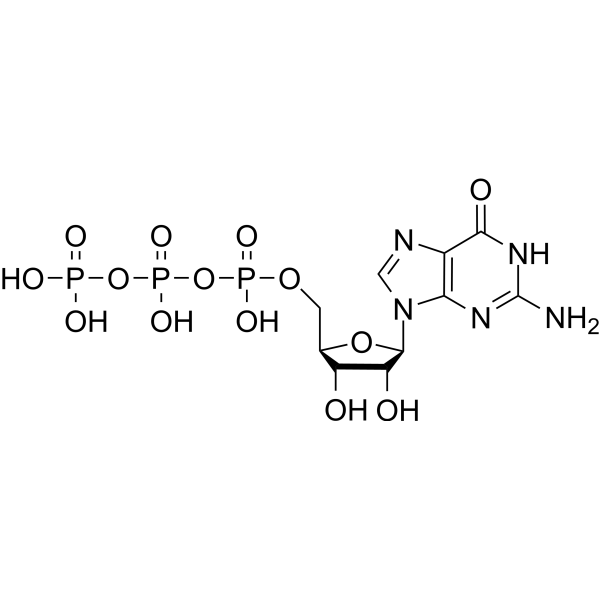
Guanosine triphosphate (GTP) is a critical nucleotide and regulator of cellular metabolism. Guanosine triphosphate promotes ribosomal DNA localization, pre-rRNA transcription and ribosome biogenesis by binding to RNA polymerase I and GPN proteins (GPN1/3). Guanosine triphosphate links MYC-dependent ribosome biogenesis to nucleotide sufficiency, acts as a metabolic gatekeeper supporting protein synthesis, DNA/RNA synthesis and cellular signal transduction, while also participating in the physiological activities of pancreatic β-cells and serving as an oxidative substrate for reactive oxygen species. In small cell lung cancer with high MYC expression, Guanosine triphosphate accumulates through the IMPDH-driven synthetic pathway, thereby affecting apoptosis and mitotic processes. Guanosine triphosphate is used in the research of small cell lung cancer, hepatoblastoma and cellular metabolism .
loading...
    loading...
Cat. No.: HY-100609R
CAS No.: 134865-74-0
4-P-PDOT (Standard) is the analytical standard of 4-P-PDOT. This product is intended for research and analytical applications. 4-P-PDOT is a potent, selective and affinity Melatonin receptor (MT2) antagonist. 4-P-PDOT is >300-fold more selective for MT2 than MT1. 4-P-PDOT significantly counteracts Melatonin-mediated antioxidant effects (GSH/GSSG ratio, phospho-ERK, Nrf2 nuclear translocation, Nrf2 DNA-binding activity) .
loading...
    loading...
Cat. No.: HY-12270R
CAS No.: 530141-72-1
Target:  

AP-1 MMP

Research Areas:  

Others

T-5224 (Standard) is the analytical standard of T-5224. This product is intended for research and analytical applications. T-5224 is a transcription factor c-Fos/activator protein (AP)-1 inhibitor with anti-inflammatory effects, which specifically inhibits the DNA binding activity of c-Fos/c-Jun without affecting other transcription factors. T-5224 inhibits the IL-1β-induced up-regulation of Mmp-3, Mmp-13 and Adamts-5 transcription .
loading...
    loading...
Cat. No.: HY-12270S
T-5224-d8 is the deuterium labeled T-5224 (HY-12270). T-5224 is a transcription factor c-Fos/activator protein (AP)-1 inhibitor with anti-inflammatory effects, which specifically inhibits the DNA binding activity of c-Fos/c-Jun without affecting other transcription factors. T-5224 inhibits the IL-1β-induced up-regulation of Mmp-3, Mmp-13 and Adamts-5 transcription .
loading...
    loading...
Cat. No.: HY-123876
CAS No.: 2171502-44-4
Research Areas:  

Inflammation/Immunology

AS2677131 is a potent and orally active PIKfyve inhibitor. AS2677131 inhibits f IL-12p40, IL-6 and IL-1β through a PIKfyve-c-Rel pathway. AS2677131 selectively inhibits DNA-binding activity of c-Rel to IL-12p40 and IL-1β promoter. AS2677131 inhibits MHC class II expression on B cells. AS2677131 can be used for the researches of inflammation and immunology, such as arthritis .
loading...
    loading...
Cat. No.: HY-162896
CAS No.: 3029132-46-2
Research Areas:  

Cancer

And1 degrader 1 is an acidic nucleoplasmic DNA-binding protein 1 (And1) molecular glue-like degrader. And1 degrader 1 binds to the WD40 domain of And1 in a 'V' conformation to induce And1 degradation via the ubiquitin-proteasome pathway. And1 degrader 1 exhibits antiproliferative activity via synthetic lethal interaction with a PARP1 inhibitor to inhibit proliferation of cancer cells. And1 degrader 1 can be used for the research of non-small cell lung cancer (NSCLC) .
loading...
    loading...
Cat. No.: HY-W244398
CAS No.: 13239-97-9
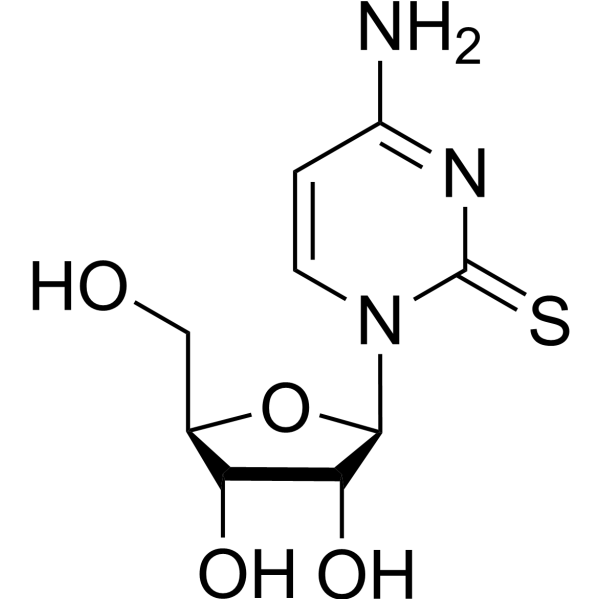
2-Thiocytidine is a natural thionucleoside in prokaryotic tRNA, which is biosynthesized under the catalysis of intracellular sulfur transferase systems and possesses multiple activities such as metal coordination and nucleic acid conformation regulation. 2-Thiocytidine forms stable Zn 2+ and Cd 2+ complexes via its (C2) S group, with partial involvement of N3; metal binding acidifies the deprotonation process of (C4) NH2. 2-Thiocytidine can be used in related research in various fields including nanotechnology and click chemistry for interstrand DNA crosslinking .
loading...
    loading...
Cat. No.: HY-168534
CAS No.: 2929223-35-6
Target:  

SF3B1 Apoptosis FOXA

Research Areas:  

Cancer

WX-02-23 is a small-molecule probe that stereoselectively and site-specifically binds to C258 of FOXA1 and C1111 of SF3B1. WX-02-23 remodels FOXA1's chromatin binding and pioneer activity in a DNA-dependent manner, disrupts spliceosome assembly, and enhances the thermal stability of SF3B1. WX-02-23 inhibits tumor cell proliferation and induces apoptosis. WX-02-23 can be used for research on cancers such as prostate cancer .
loading...
    loading...
Cat. No.: HY-153805
CAS No.: 1373391-77-5
Target:  

Molecular Glues

Research Areas:  

Others

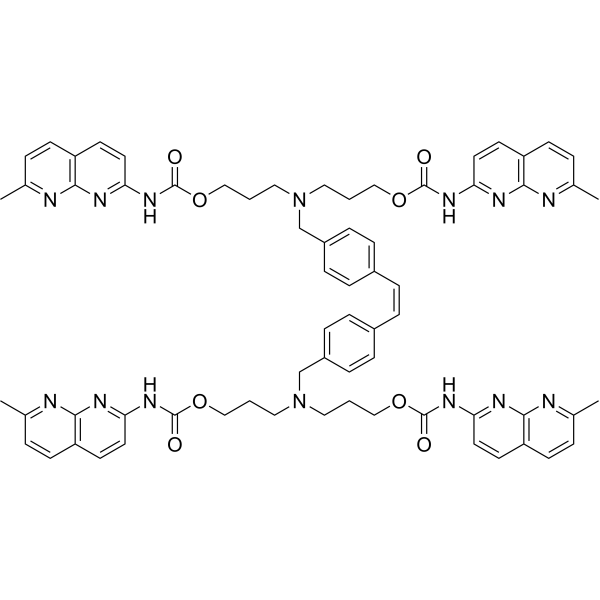
Z-NCTS is a small molecule that binds to mismatched RNA, recognizes the 5'-r (XGG)-3'/5'-r (XGG)-3' sequence, and acts as an RNA molecular glue. Z-NCTS induces the formation of tertiary structures in ribozymes and activates their RNA cleavage activity. As an RNA molecular glue, Z-NCTS enables small molecule-based strategies for regulating RNA structure and function. Z-NCTS binds to d (CGG)/d (CGG) double-stranded DNA, recognizes four guanine bases via hydrogen bonding, and stabilizes the double-stranded DNA. Z-NCTS binds to r (GGG)/r (GGG) double-stranded RNA and enhances the thermodynamic stability of the RNA duplex. Z-NCTS acts as a translation inhibitor by inducing the formation of stable hairpin structures in the 5'-UTR region of engineered mRNA, thereby blocking ribosomal access to the binding site .
loading...
    loading...
Cat. No.: HY-131319
CAS No.: 35225-13-9
Rifamycin AF-013 is a derivative of Rifamycin (HY-B1907). Rifamycin AF-013 inhibits DNA polymerase γ by competing with dTTP and template primers for binding. Rifamycin AF-013 exhibits inhibitory activity against Rifampicin (HY-B0272)-resistant RNA polymerase. Rifamycin AF-013 inhibits non-polymerase enzymes including glutamic-oxaloacetic transaminase (GOT), glutamic-pyruvic transaminase (GPT), and Alkaline phosphatase. Rifamycin AF-013 can be used in research related to Rifampicin-resistant bacterial infections and Ehrlich ascites tumors .
loading...
    loading...
Cat. No.: HY-132276
CAS No.: 1415684-80-8
Target:  

Phosphatase

Research Areas:  

Others

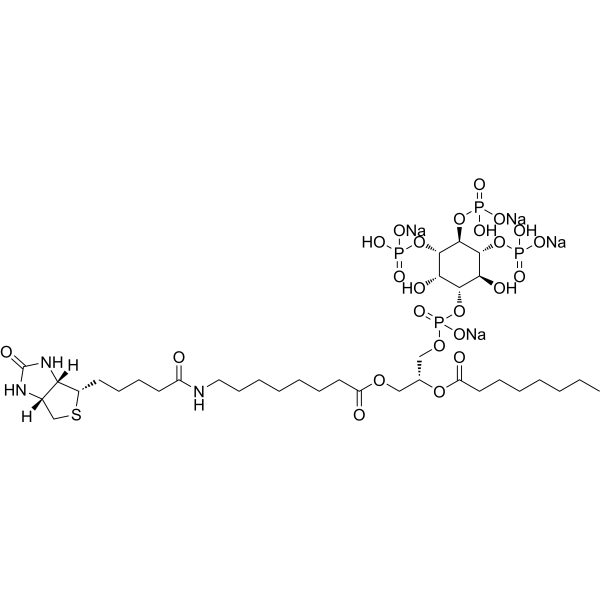
PtdIns-(3,4,5)-P3-biotin sodium is a Biotin-labeled PtdIns-(3,4,5)-P3 (PI(3,4,5)P3). PI(3,4,5)P3 is a substrate of nuclear phosphatidylinositol 5-phosphatase (PIP5Pase). PI(3,4,5)P3 binds to the N-terminus of RAP1 (repressor activator protein 1) and controls its DNA binding activity .
loading...
    loading...
Cat. No.: HY-D0932
CAS No.: 85-83-6
Synonyms: Solvent Red 24; C.I. 26105
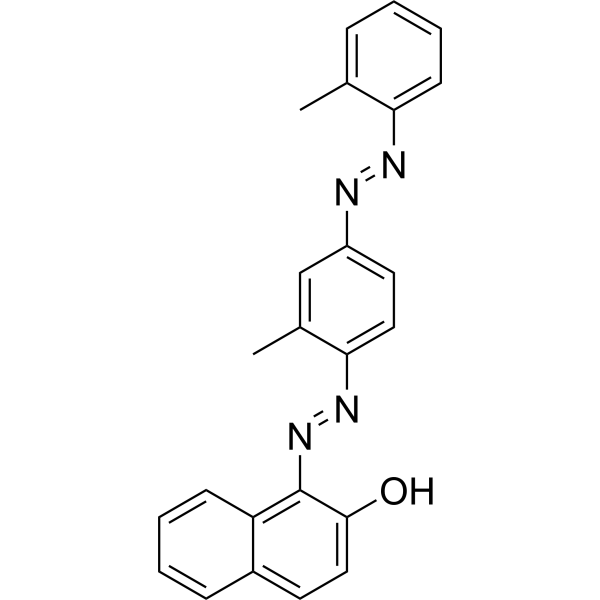
Sudan IV is an agonist of the aryl hydrocarbon receptor (AhR) that activates downstream signaling pathways and induces CYP1A1 expression. Sudan IV promotes CYP1A1 gene transcription by activating AhR-ARNT heterodimers and binding to exogenous response elements (XREs) on DNA, thereby enhancing drug metabolizing enzyme activity. Sudan IV can be used to study the toxicity mechanisms of industrial dyes and the effects of interactions with serum proteins (such as bovine serum albumin (BSA)) on their distribution in vivo. Sudan IV is a fat-soluble diazo dye that can be used to stain lipids, triglycerides, and lipoproteins on frozen sections .
loading...
    loading...
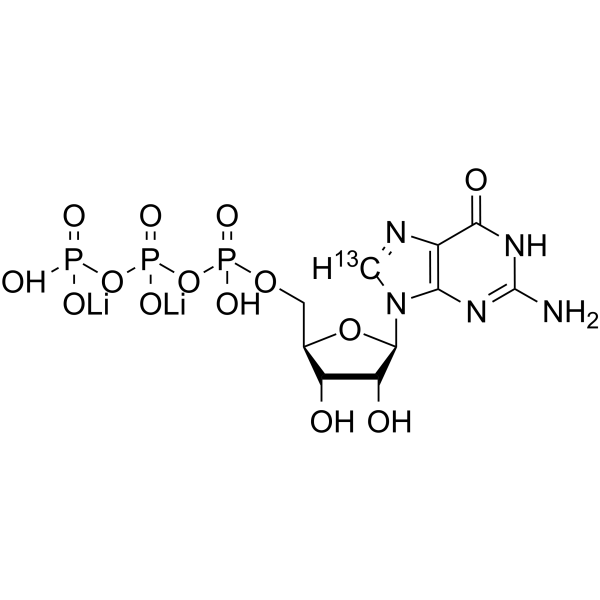
Cat. No.: HY-113225S2
Synonyms: GTP-13C dilithium
Guanosine triphosphate- 13C dilithium (GTP- 13C dilithium) is the 13C-labeled Guanosine triphosphate (HY-113225). Guanosine triphosphate (GTP) is a critical nucleotide and regulator of cellular metabolism. Guanosine triphosphate promotes ribosomal DNA localization, pre-rRNA transcription and ribosome biogenesis by binding to RNA polymerase I and GPN proteins (GPN1/3). Guanosine triphosphate links MYC-dependent ribosome biogenesis to nucleotide sufficiency, acts as a metabolic gatekeeper supporting protein synthesis, DNA/RNA synthesis and cellular signal transduction, while also participating in the physiological activities of pancreatic β-cells and serving as an oxidative substrate for reactive oxygen species. In small cell lung cancer with high MYC expression, Guanosine triphosphate accumulates through the IMPDH-driven synthetic pathway, thereby affecting apoptosis and mitotic processes. Guanosine triphosphate is used in the research of small cell lung cancer, hepatoblastoma and cellular metabolism .
loading...
    loading...
Cat. No.: HY-150773S1
Synonyms: GTP-d14 dilithium
Guanosine triphosphate-d14 dilithium (GTP-d14 dilithium) is the deuterated-labeled Guanosine triphosphate (HY-113225). Guanosine triphosphate (GTP) is a critical nucleotide and regulator of cellular metabolism. Guanosine triphosphate promotes ribosomal DNA localization, pre-rRNA transcription and ribosome biogenesis by binding to RNA polymerase I and GPN proteins (GPN1/3). Guanosine triphosphate links MYC-dependent ribosome biogenesis to nucleotide sufficiency, acts as a metabolic gatekeeper supporting protein synthesis, DNA/RNA synthesis and cellular signal transduction, while also participating in the physiological activities of pancreatic β-cells and serving as an oxidative substrate for reactive oxygen species. In small cell lung cancer with high MYC expression, Guanosine triphosphate accumulates through the IMPDH-driven synthetic pathway, thereby affecting apoptosis and mitotic processes. Guanosine triphosphate is used in the research of small cell lung cancer, hepatoblastoma and cellular metabolism .
loading...
    loading...
Cat. No.: HY-183622
CAS No.: 304896-41-1
Target:  

MDM-2/p53

Research Areas:  

Cancer

UCI-1014 is a mutant p53 (p53 R175H) corrector/reactivator. UCI-1014 restores the wild-type-like DNA-binding activity of p53 R175H, promotes the redistribution of the mutant protein to chromatin, and induces the expression of p53-dependent target genes. UCI-1014 inhibits the proliferation of p53 R175H-mutant cancer cells through an SLC7A11-independent mechanism. UCI-1014 can be used for research related to p53-mutant cancers .
loading...
    loading...

