
1865 Results for "

mouse models

" in MedChemExpress (MCE) Product Catalog:
Products (1865)

1865 Results for "mouse models" in MCE Product Catalog:

Cat. No.: HY-171705
CAS No.: 1478585-60-2
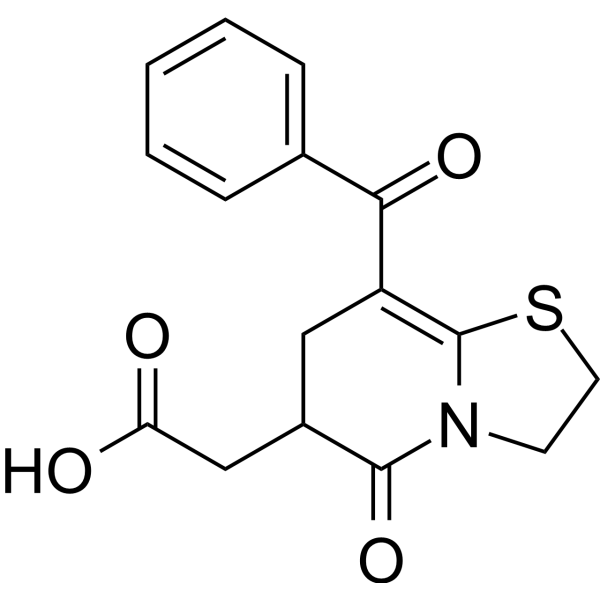
KMS99220 is an orally active, blood-brain barrier-permeable activator of the Nrf2 inhibitory protein Keap-1. KMS99220 enhances the activity of AMPK, activates the Nrf2 signaling pathway, and reduces the phosphorylation of IκB, nuclear translocation of NFκB, as well as the phosphorylation levels of JNK, IKK and p38 MAPK via HO-1. KMS99220 binds to Keap1 to trigger the nuclear translocation of Nrf2, induces the expression of HO-1, NQO1, GCLC, GCLM and proteasome subunits; enhances proteasomal enzymatic activity; inhibits iNOS expression, nitric oxide production and IL-1β generation; attenuates microglial activation; reduces α-synuclein aggregation; and prevents dopaminergic neuron degeneration and motor dysfunction. KMS99220 prevents the degeneration of dopaminergic neurons in the substantia nigra, induces the expression of Nrf2 downstream target genes, and effectively ameliorates associated motor dysfunction in a mouse model of Parkinson's disease. KMS99220 is applicable to research related to Parkinson's disease .
loading...
    loading...
Cat. No.: HY-173148
CAS No.: 2892688-18-3
Target:  

SARS-CoV

Research Areas:  

Infection

TKB272 is an orally active and selective antiviral agent targeting the main protease (Mpro) of SARS-CoV-2. It effectively blocks the infection and replication of various SARS-CoV-2 strains, including Omicron variants such as XBB.1.5 and EG.5.1. The enzymatic inhibitory activity of TKB272 shows an IC50 of 0.7 µM (against SARS-CoV-2WK-521 Mpro), and its antiviral activity at the cellular level reaches an EC50 as low as 2.6 nM (against BQ.1.1 strain in HeLahACE2-TMPRSS2 cells), with a cytotoxicity CC50 of 98 µM, indicating no apparent toxicity. In addition, TKB272 significantly suppresses the replication of SARS-CoV-2XBB.1.5 in B6.Cg-Tg(K18-hACE2)2-Prlmn/J transgenic mouse models. TKB272 holds promise for research in the field of SARS-CoV-2 infection .
loading...
    loading...
Cat. No.: HY-177300
CAS No.: 1402802-45-2
TLR7/8 agonist 13 is an orally active dual agonist of TLR7 (lowest effective concentrations (LEC) [hTLR7] = 1.6 μM) and TLR8 (LEC [hTLR8] = 1.6 μM). TLR7/8 agonist 13 exhibits agonistic activity against human peripheral blood mononuclear cells (hPBMCs) (LEC [hPBMC] = 0.5 μM). TLR7/8 agonist 13 induces endogenous IFNα, activating myeloid dendritic cells and monocytes toward a TH1 phenotype in mice and cynomolgus monkeys. TLR7/8 agonist 13 reduces viral load and HBV surface antigen expression in a mouse model of chronic AAV-HBV infection. TLR7/8 agonist 13 has the potential to indirectly induce IFNγ, which may promote HBV antigen-specific CD8 T cell-mediated responses. TLR7/8 agonist 13 can be used to study hepatitis B virus .
loading...
    loading...
Cat. No.: HY-179063
5-HT2A receptor agonist-13 (Compound 28c) is a partial agonist of the 5-HT2A receptor, with an EC50 value of 416.9 nM and a Ki value of 113.9 nM. 5-HT2A receptor agonist-13 exhibits very weak agonistic activity towards the 5-HT2B receptor (EC50 = 120.2 nM), D2 receptor (Ki = 1298 nM), and has no activity towards the 5-HT2C receptor. 5-HT2A receptor agonist-13 exhibits weak inhibitory activity on the serotonin transporter (SERT) (EC50 = 977.2 nM). 5-HT2A receptor agonist-13 has antidepressant activity in mouse models and does not induce hallucinogenic behavior. 5-HT2A receptor agonist-13 can be used for the study of major depressive disorder (MDD) and treatment-resistant depression (TRD) .
loading...
    loading...
Cat. No.: HY-B1580B
CAS No.: 4075-81-4
Synonyms: Bioban-C (Pharmaceutical primary standard, USP)
Calcium propionate, United States Pharmacopeia (USP) Reference Standard (Bioban-C (Pharmaceutical primary standard, USP)) is a calcium salt of Propionic acid with oral activity, which can be hydrolyzed into propionate and calcium ions. Calcium propionate, United States Pharmacopeia (USP) Reference Standard elevates intracellular ROS levels in tumor cells, depletes GSH, reduces mitochondrial membrane potential, and thereby induces tumor cell apoptosis. In mouse colitis models, Calcium propionate, United States Pharmacopeia (USP) Reference Standard modulates inflammatory factors such as IFN-γ, calprotectin, and Pglyrp3, ameliorating intestinal inflammation and metabolic disorders. In ruminants, Calcium propionate, United States Pharmacopeia (USP) Reference Standard serves as a gluconeogenic precursor, regulating rumen fermentation and microbial diversity; in high-fat diet rats, it alters gut microbiota composition and affects blood biochemical parameters. Calcium propionate, United States Pharmacopeia (USP) Reference Standard is commonly used as a food and feed additive, and is also used in research related to hypocalcemia, dyslipidemia, colitis, and lung cancer .
loading...
    loading...
Cat. No.: HY-112817A
Synonyms: 8-Oxo-Deoxyguanosine triphosphate trisodium
Target:  

Apoptosis

Research Areas:  

Others

8-Oxo-dGTP (8-Oxo-Deoxyguanosine triphosphate) trisodium solution (100mM) is an oxidized guanine nucleotide formed by ROS-mediated oxidative modification of dGTP, and it also serves as a key substrate for 8-oxo-dGTP pyrophosphohydrolases (such as hMTH1 and E. coli MutT). 8-Oxo-dGTP trisodium solution (100mM) acts as a DNA mutagen, inserts into nascent DNA and pairs with adenine and cytosine, inducing A:T to C:G transversion mutations. Furthermore, 8-Oxo-dGTP trisodium solution (100mM) causes oxidative DNA base modification, strand breakage and S-phase arrest, and ultimately triggers AIF-mediated apoptosis and promotes spontaneous carcinogenesis in mth1-deficient mice. Accumulation of 8-Oxo-dGTP trisodium solution (100mM) in cells induces genomic instability, but it exhibits a tumor-suppressive effect that reduces tumor incidence in mouse models instead. 8-Oxo-dGTP trisodium solution (100mM) is widely used in studies related to spontaneous carcinogenesis, Parkinson's disease, Alzheimer's disease, heart failure and tumor mechanisms .
loading...
    loading...
Cat. No.: HY-130133
CAS No.: 2378831-21-9
DHW-221 is a potent orally active dual PI3K/mTOR inhibitor, exhibiting low nanomolar potency against all four Class I PI3K isoforms and mTOR (PI3Kα, IC50 = 0.50 nM; PI3Kβ, IC50 = 1.9 nM; PI3Kγ, IC50 = 1.8 nM; PI3Kδ, IC50 = 0.74 nM; mTOR, IC50 = 3.9 nM). DHW-221 exerts antitumor effects by blocking the PI3K/Akt/mTOR pathway and inducing mitochondrial apoptosis and paraptosis (via Endoplasmic Reticulum (ER) stress and MAPK signaling) and arrests cell cycle, thereby inhibiting cell migration, invasion and angiogenesis. DHW-221 inhibits tumor growth in both the A549/Taxol (HY-B0015) and the HCC827 xenograft mouse models. DHW-221 can be used for non-small cell lung cancer (NSCLC), colon and breast cancer research .
loading...
    loading...
Cat. No.: HY-141439
CAS No.: 936475-62-6
TBE 31 is an orally active Keap1/Nrf2 pathway activator and NQO1 inducer with a Dm value of 1.1 nM for NQO1. TBE 31 binds to cysteine residues of Keap1, inhibits ubiquitination and degradation of Nrf2, thereby activating the expression of ARE-dependent genes. TBE 31 induces cytoprotective enzymes including NQO1 and GST isoforms, promotes Nrf2 accumulation, and upregulates Nrf2-regulated genes related to antioxidation and lipid metabolism. TBE 31 inhibits pro-inflammatory responses, formation of AFB1-DNA adducts, endoplasmic reticulum stress, cell apoptosis (apoptosis), hepatic fibrosis, oxidative stress, and the expression of ChREBP. TBE 31 reduces the number of tumors in a mouse model of ultraviolet-induced skin carcinogenesis. TBE 31 enhances nerve growth factor-induced neurite outgrowth. TBE 31 attenuates LPS-induced serum TNF-α levels and immobility time in mice. TBE 31 can be used in research related to liver cancer, skin cancer, inflammation-related depression, and non-alcoholic steatohepatitis .
loading...
    loading...
Cat. No.: HY-141878A
CAS No.: 2767983-77-5
Research Areas:  

Neurological Disease

di-Ellipticine-RIBOTAC TFA is a RNase recruiting chimera (RIBOTAC) degrader, capable of specifically binding and degrading expanded G4C2 RNA repeat (r(G4C2) exp). di-Ellipticine-RIBOTAC TFA selectively binds the three-dimensional (3D) structure formed by r(G4C2) exp and that recruits an endogenous ribonuclease (RNase) to cleave r(G4C2) exp. di-Ellipticine-RIBOTAC TFA selectively degrades the mutant chromosome 9 open reading frame 72 (C9orf72) allele and reduces quantities of toxic dipeptide repeat proteins (DPRs) translated from r(G4C2) exp. di-Ellipticine-RIBOTAC TFA significantly improves the pathological phenotype of amyotrophic lateral sclerosis/ frontotemporal dementia (c9ALS/FTD) in cells and mouse models. di-Ellipticine-RIBOTAC TFA can be used for the study of amyotrophic lateral sclerosis (ALS) and frontotemporal dementia (FTD) .
loading...
    loading...
Cat. No.: HY-162275
CAS No.: 861224-48-8
Research Areas:  

Cancer

JMJD1C-IN-1 is an orally active and selective inhibitor of JMJD1C (IC50 = 0.59 μM, Kd = 1.96 μM). JMJD1C-IN-1 inhibits the binding of JMJD1C to H3K9me2 peptide substrate in the HTRF assay (IC50 = 1.47 μM). JMJD1C-IN-1 disrupts intratumoral regulatory T (Treg) cell fitness by dual mechanisms: promoting H3K9me2 accumulation to downregulate PD1 expression and reducing STAT3 demethylation to enhance STAT3 activation. JMJD1C-IN-1 demonstrates dose-dependent antitumor efficacy in multiple mouse tumor models (MCA205 fibrosarcoma, B16-F10 melanoma, LLC lung cancer, Hepa1-6 hepatocellular carcinoma, CT26 colorectal cancer). JMJD1C-IN-1 can be used for the study of tumor immunotherapy by selectively targeting intratumoral Treg cells .
loading...
    loading...
Cat. No.: HY-181906
Research Areas:  

Cancer

ZnPc-PEG2-VH032 is a VHL-pathway-dependent photodegradation targeting chimera (PDTAC) and cytotoxic agent. ZnPc-PEG2-VH032 (HY-120217) binds to the VHL ligand domain, and then specifically degrades VHL under light irradiation, a process independent of non-specific ROS-mediated protein damage. ZnPc-PEG2-VH032 uses Zinc phthalocyanine (HY-19204) as a photosensitizer, and generates ROS via type I and type II photodynamic pathways under 680 nm LED irradiation. On one hand, it targets and degrades the bound VHL protein through ROS; on the other hand, it exerts direct photodynamic cytotoxicity. Meanwhile, the degradation of VHL downregulates the phosphorylation level of CDK2/4, induces cell cycle arrest in tumor cells, further enhances the sensitivity of tumor cells to oxidative damage caused by ROS, and achieves a synergistic anti-tumor effect. ZnPc-PEG2-VH032 exerts significant in vivo efficacy in an orthotopic mouse model of non-muscle invasive bladder cancer (NMIBC) .
loading...
    loading...
Cat. No.: HY-182759
MN33-47 is a multi-target anti-tumor compound with broad-spectrum anti-proliferative activity. MN33-47 relieves the inhibition of the mitochondrial apoptosis pathway by downregulating the anti-apoptotic protein Bcl-2, while activating caspase-3 and inhibiting Topoisomerase I activity, thereby promoting its degradation through the ubiquitin-proteasome and autophagy-lysosome pathways. MN33-47 can also induce DNA cross-linking and G2/M cell cycle arrest, inhibit cancer cell migration and activate the mitochondrial apoptosis pathway, thus exerting potent anti-tumor effects. MN33-47 can improve the water solubility of SN-38 (HY-13704), and exhibits dose-dependent tumor growth inhibition effects in CT26 tumor-bearing mouse models without obvious toxic and side effects. MN33-47 can be used in related studies on colorectal adenocarcinoma, cervical adenocarcinoma, hepatocellular carcinoma, alveolar basal epithelial adenocarcinoma, gastric cancer and colon cancer .
loading...
    loading...
Cat. No.: HY-19655S
Synonyms: ABT-773-d6; Abbott-195773-d6; A-195773-d6
Cethromycin-d6 (ABT-773-d6; Abbott-195773-d6; A-195773-d6) is the d6-labeled Cethromycin (HY-19655). Cethromycin (ABT-773; Abbott-195773) is an orally effective ketolide antibiotic with broad-spectrum antibacterial activity. Cethromycin binds to domains II/V of the 23S rRNA of the 50S subunit, inhibiting bacterial protein synthesis. Cethromycin can accumulate in lung tissue, alveolar macrophages, epithelial lining fluid, and human polymorphonuclear leukocytes. Cethromycin exhibits potent in vitro activity against a variety of respiratory pathogens, including Mycoplasma pneumoniae. Cethromycin exhibits significant intracellular and pulmonary enrichment and anti-inflammatory effects against mycoplasma pneumonia in mouse models, improving airway obstruction and airway hyperresponsiveness. Cethromycin disrupts the apicoplast and reduces liver-stage parasite burden during the liver stage of Plasmodium berghei. Cethromycin can be used in research related to pneumonia, Staphylococcus aureus infection, gonorrhea, and malaria .
loading...
    loading...
Cat. No.: HY-148775
Purity:  ≥95.0%
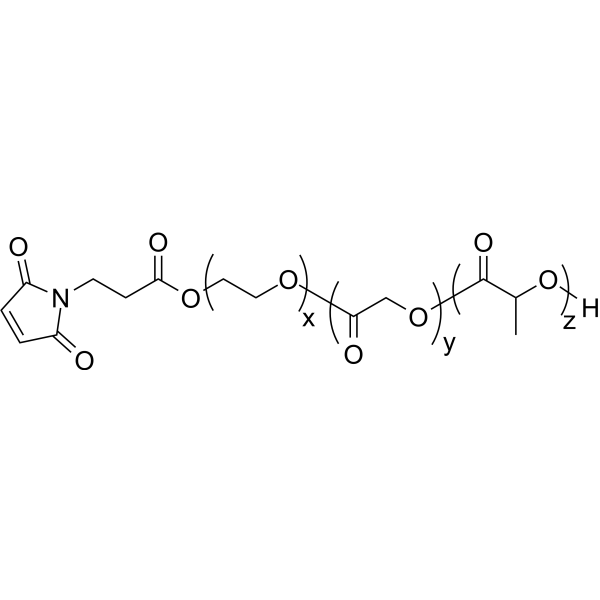
PLGA-PEG-MAL (60kDa-3.4kDa, LA:GA ratio 75:25) is a biodegradable amphipathic polymeric nanocarrier of poly (lactic-co-glycolic acid)-block-poly (ethylene glycol) (PLGA-PEG-Mal) that allows covalent modification of functional molecules. PLGA-PEG-MAL (60kDa-3.4kDa, LA:GA ratio 75:25) modified with Angiopep-2 can cross the blood-brain barrier and exhibits targeting selectivity for glioblastoma cells. PLGA-PEG-MAL (60kDa-3.4kDa, LA:GA ratio 75:25) can capture tumor-derived protein antigens, and exerts immunomodulatory effects when conjugated with anti-OX40 antibody; when used in combination with A2-CL/Dbait nanoparticles and radiotherapy, it prolongs survival time and reduces tumor volume in glioblastoma mouse models. PLGA-PEG-MAL (60kDa-3.4kDa, LA:GA ratio 75:25) can be used for studies related to bacterial wound infections and glioblastoma .
loading...
    loading...
Cat. No.: HY-12888
CAS No.: 907543-25-3
Target:  

Topoisomerase Bacterial

Research Areas:  

Infection

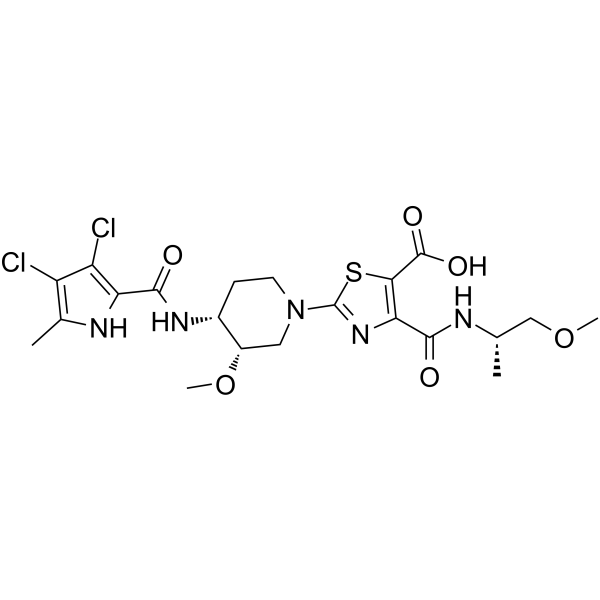
AZD5099 is an orally effective pyrrole amide inhibitor and antibacterial agent. AZD5099 shows over 10000-fold higher selectivity for bacterial type II topoisomerases than for human topoisomerase IIα, with a IC50 value of 0.032 μmol/L against Staphylococcus aureus GyrB, a IC50 of 0.760 μmol/L against Escherichia coli GyrB, a IC50 of 73 nM against Escherichia coli ParE, a Kd of 83.8 nmol/L for Staphylococcus aureus GyrB, and a IC50 of >50 μM against human topoisomerase IIα. AZD5099 inhibits rat Mrp2 ATPase activity, competitively binds to the ATP-binding site of bacterial type II topoisomerases, blocks enzyme activity, reduces bacterial DNA and RNA synthesis, disrupts DNA replication and transcription processes, and induces mitochondrial toxicity. AZD5099 exhibits activity against Gram-positive bacteria, fastidious Gram-negative bacteria and drug-resistant strains, reduces bacterial loads in mouse infection models, and has a low spontaneous resistance frequency. AZD5099 can be used in studies related to infections caused by Gram-positive bacteria and fastidious Gram-negative bacteria, methicillin-resistant Staphylococcus aureus infections, Streptococcus pneumoniae pulmonary infections, as well as Staphylococcus aureus and Escherichia coli infections .
loading...
    loading...
Cat. No.: HY-156466
CAS No.: 2848664-42-4
Purity:  99.95%
Research Areas:  

Inflammation/Immunology

QL-1200186 is a selective, orally active, allosteric inhibitor targeting the tyrosine kinase TYK2 pseudokinase domain JH2 (IC50=0.06 nM, TYK2 JH2), with 164-fold selectivity over TYK1 JH2 (IC50=9.85 nM,TYK1 JH2). QL-1200186 first stabilizes the TYK2 JH2 conformation, inhibits the activity of the JH1 catalytic domain, and blocks the IFNα, IL-12/IL-23-mediated JAK-STAT signaling pathway. QL-1200186 can inhibit the production of Th1/Th17 cell-related cytokines (such as IFNγ, IL-23), reduce immune cell activation, and has no significant effect on JAK1/2/3 kinase activity. QL-1200186 can significantly improve skin inflammation in the Imiquimod (HY-B0180)-induced psoriasis mouse model and reduce the Psoriasis Area and Severity Index (PASI) score. QL-1200186 can be used in the study of autoimmune diseases such as psoriasis and systemic lupus erythematosus (SLE) .
loading...
    loading...
Cat. No.: HY-162812
H3R antagonist 4 (compound 11L) was a dual inhibitor of cholinesterase and histamine receptor (H3R), with corresponding IC50 of 7.04 μM (eeAChE), 9.73 μM (hAChE)(reversible) and 1.09 nM (H3R) , respectively. H3R antagonist 4 inhibited the aggregation of Aβ1-42 induced by itself and Cu 2+ (95.48% and 88.63%) , and degraded the Aβ1-42 fibrils induced by itself and Cu 2+ (80.16% and 89.30%) . H3R antagonist 4 chelate biometals such as Cu 2+, Zn 2+, Al 3+, and Fe 2+. H3R antagonist 4 significantly reduced tau protein hyperphosphorylation induced by Aβ1-42 and inhibited RSL-3-induced apoptosis and ferroptosis in PC12 cells. H3R antagonist 4 had the best blood-brain barrier permeability and intestinal absorption in hCMEC/D3 and hPepT1-MDCK cells.H3R antagonist 4 ameliorates learning and memory impairment in a mouse model of Alzheimer's disease induced by scopolamine (HY-N0296) .
loading...
    loading...
Cat. No.: HY-168894
CT-1 is a secreted protein belonging to the IL-6 cytokine family. Overexpression of CT-1 enhances cell proliferation, migration and angiogenesis via the ADMA/DDAH pathway. CT-1 inhibits the growth of triple-negative breast cancer cells by simultaneously inducing Ferroptosis in N2-type tumor-associated neutrophils and cancer cells. CT-1 activates the Jak/STAT-3, p42/p44 MAPK and AMPK pathways, and inhibits GSK-3β activity through phosphorylation to induce cardiomyocyte hypertrophy. CT-1 enhances the viability of cardiomyocytes and neurons, reduces cell Apoptosis, induces the expression of heat shock proteins (HSP) and BNP, and inhibits TNF levels. CT-1 exerts anti-tumor activity in mouse models of triple-negative breast cancer. CT-1 improves cognitive impairment in mice. CT-1 is applicable to the research of ischemic heart disease, triple-negative breast cancer, myocardial hypertrophy, Parkinson's disease, hypertensive heart disease, myocardial infarction, acute Chagas cardiomyopathy, high-fat diet-induced cognitive impairment and diabetes-related cognitive impairment .
loading...
    loading...
Cat. No.: HY-181926
COX-2/HDAC6-IN-1 (Compound 11e) is a dual COX-2 and HDAC6 inhibitor, with an IC50 of 0.12 μM against HDAC6 and an IC50 of 0.66 μM against COX-2. COX-2/HDAC6-IN-1 enhances the acetylation level of α-tubulin, regulates epigenetic gene expression, and inhibits the expression of pro-inflammatory mediators (COX-2, IL-1β, IL-6 and TNF-α). COX-2/HDAC6-IN-1 promotes Amyloid-β clearance and reduces excessive phosphorylation of Tau protein. COX-2/HDAC6-IN-1 maintains neuronal morphology by stabilizing MAP2, protects synaptic integrity by regulating synapsin, and restores the expression of memory-related genes. COX-2/HDAC6-IN-1 possesses neuroprotective activity and improves learning and memory abilities in Scopolamine (HY-N0296)-induced Alzheimer's disease mouse models. COX-2/HDAC6-IN-1 is applicable to research related to Alzheimer's disease .
loading...
    loading...
Cat. No.: HY-182360
Cytisine-Platinum(IV) Prodrug-1 is a Pt(IV) prodrug incorporating the natural compound Cytisine (HY-N0175) with antiproliferative activity against tumor cells. Cytisine-Platinum(IV) Prodrug-1 promotes calcium transfer across the IP3R1-GRP75-VDAC1 axis to drive mitochondrial calcium overload. Cytisine-Platinum(IV) Prodrug-1 initiates unfolded protein response via PERK, eIF2α, ATF4, and CHOP to modulate Bcl-2 and Bax, triggering apoptosis. Cytisine-Platinum(IV) Prodrug-1 induces mitochondrial dysfunction, ROS production, reduced ATP synthesis, DNA damage, and S-phase cell cycle arrest. Cytisine-Platinum(IV) Prodrug-1 activates the cGAS-STING pathway, reduces PD-L1 expression, drives immunogenic cell death. Cytisine-Platinum(IV) Prodrug-1 exhibits high physiological stability, efficient cellular accumulation, and enhanced platinum-DNA binding, and inhibits tumor growth in mouse models with reduced systemic toxicity. Cytisine-Platinum(IV) Prodrug-1 can be used for the research of lung cancer .
loading...
    loading...

