
1. Search Result
Search Result
Results for "

β-amyloid peptides

" in MedChemExpress (MCE) Product Catalog:

76

Inhibitors & Agonists

2

Fluorescent Dyes

73

Peptides

1

Natural
Products

2

Isotope-Labeled Compounds

1

Click Chemistry

Targets Recommended:
Cat. No. Product Name Target Research Areas Chemical Structure
  • HY-P1363B

    Amyloid-β Neurological Disease
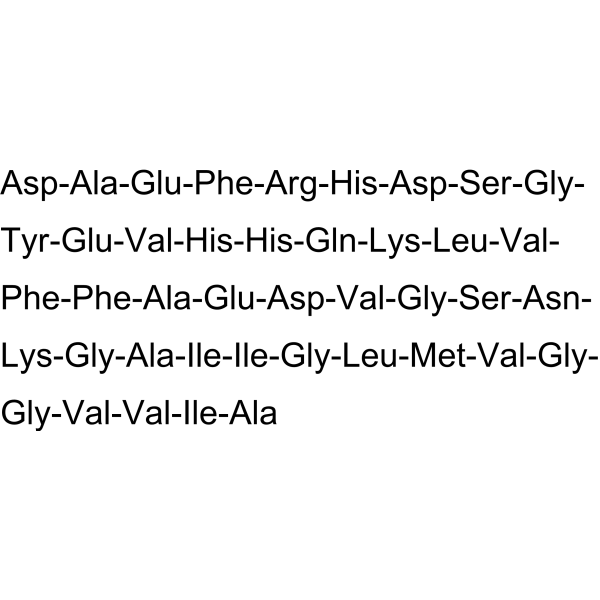
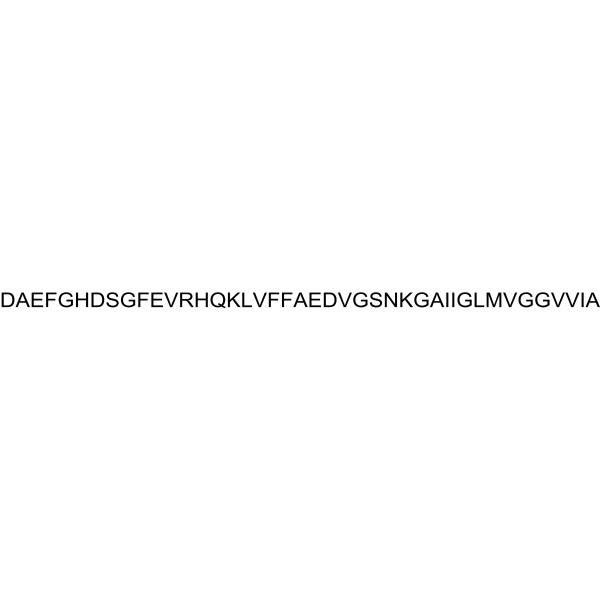
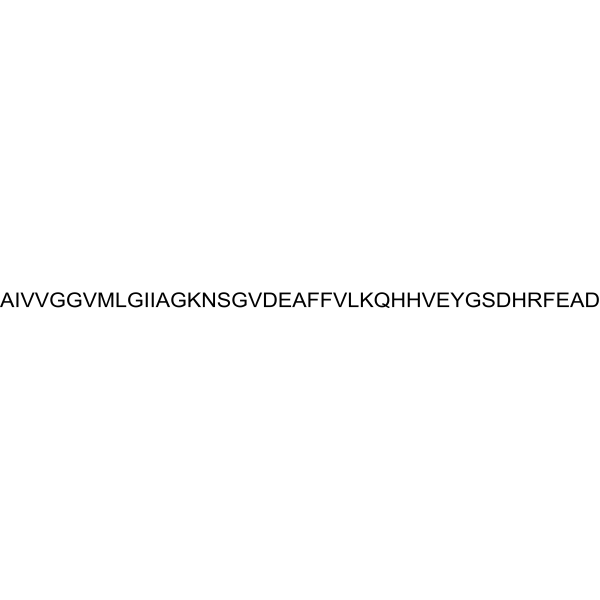
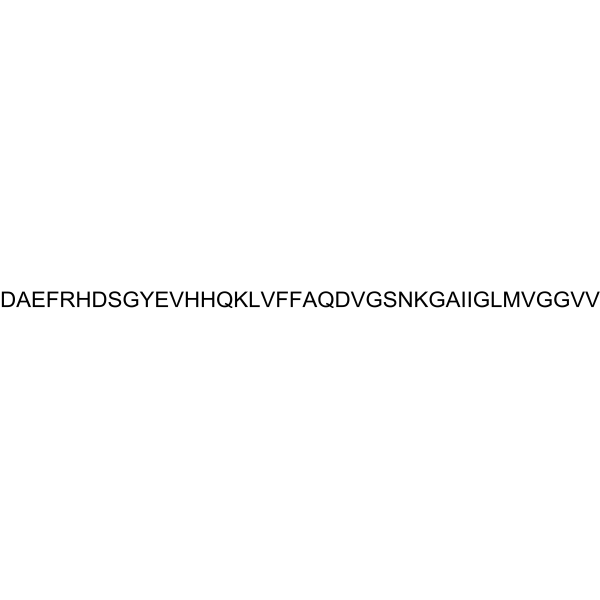
    β-Amyloid (1-42), human, HFIP-treated, a 42-amino acid peptide that has been treated with HFIP from β-Amyloid (1-42), human (HY-P1363A), is a brain-penetrant amyloid protein fragment, which can be used in research on Alzheimer's disease and Down’s syndrome. β-Amyloid (1-42), human, HFIP-treated remaining as a monomer exhibits antioxidant and neuroprotective effects. β-Amyloid (1-42), human, HFIP-treated, after being dissolved in DMSO to form the stock solution, on the one hand, can form soluble oligomers (AβOs) when incubated at 4°C, which have synaptic toxicity and neurotoxicity; on the other hand, it can be incubated at 37°C to form insoluble fibrils, with lower neurotoxicity, and participating in the oxidative damage process. Aβ42 oligomers bind to various neuronal surface receptors (such as PrPc, mGluR5, NMDA receptors, etc.), triggering oxidative stress, calcium homeostasis imbalance, and synaptic toxicity via activating downstream signaling pathways, leading to neuronal dysfunction and death .
    β-Amyloid (1-42), human, HFIP-treated
  • HY-P1363
    β-Amyloid (1-42), human TFA
    20+ Cited Publications

    amyloid β-peptide (1-42) (human) TFA

    Amyloid-β Neurological Disease
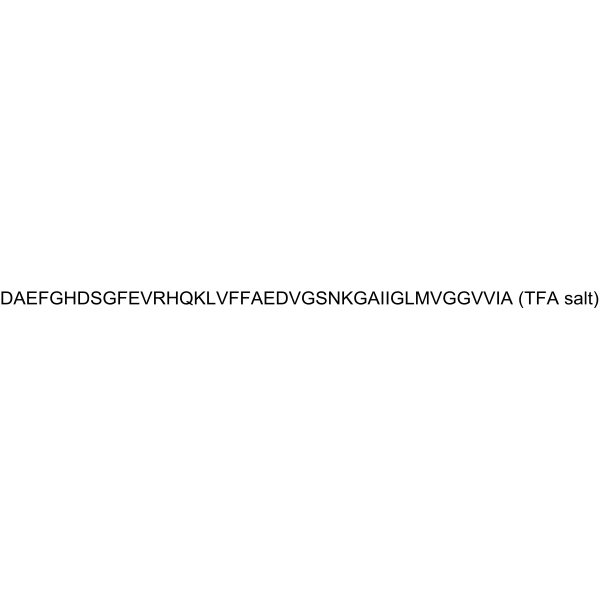
    β-Amyloid (1-42) (Amyloid β-peptide (1-42), human TFA, a 42-amino acid peptide that has not been treated with HFIP, is a brain-penetrant amyloid protein fragment, which can be used in research on Alzheimer's disease and Down’s syndrome. β-Amyloid (1-42), human TFA remaining as a monomer exhibits antioxidant and neuroprotective effects. β-Amyloid (1-42), human TFA, after being monomericized by HFIP and dissolved in DMSO to form the stock solution, on the one hand, can form soluble oligomers (AβOs) when incubated at 4 °C, which have synaptic toxicity and neurotoxicity; on the other hand, it can be incubated at 37 °C to form insoluble fibrils, with lower neurotoxicity, and participating in the oxidative damage process. Aβ42 oligomers bind to various neuronal surface receptors (such as PrPc, mGluR5, NMDA receptors, etc.), triggering oxidative stress, calcium homeostasis imbalance, and synaptic toxicity via activating downstream signaling pathways, leading to neuronal dysfunction and death .
    β-Amyloid (1-42), human TFA
  • HY-P1363A
    β-Amyloid (1-42), human
    20+ Cited Publications

    amyloid β-peptide (1-42) (human)

    Amyloid-β Neurological Disease
    β-Amyloid (1-42) (Amyloid β-peptide (1-42)), human, a 42-amino acid peptide that has not been treated with HFIP, is a brain-penetrant amyloid protein fragment, which can be used in research on Alzheimer's disease and Down’s syndrome. β-Amyloid (1-42), human remaining as a monomer exhibits antioxidant and neuroprotective effects. β-Amyloid (1-42), human, after being monomericized by HFIP and dissolved in DMSO to form the stock solution, on the one hand, can form soluble oligomers (AβOs) when incubated at 4 °C, which have synaptic toxicity and neurotoxicity; on the other hand, it can be incubated at 37 °C to form insoluble fibrils, with lower neurotoxicity, and participating in the oxidative damage process. Aβ42 oligomers bind to various neuronal surface receptors (such as PrPc, mGluR5, NMDA receptors, etc.), triggering oxidative stress, calcium homeostasis imbalance, and synaptic toxicity via activating downstream signaling pathways, leading to neuronal dysfunction and death .
    β-Amyloid (1-42), human
  • HY-P0128
    β-Amyloid (25-35)
    Maximum Cited Publications
    42 Publications Verification

    amyloid beta-peptide (25-35); Aβ25-35; β-amyloid peptide (25-35)

    Amyloid-β Neurological Disease
    β-Amyloid (25-35) (Amyloid beta-peptide (25-35)) is the fragment Aβ(25-35) of the Alzheimer's amyloid β-peptide, has shown neurotoxic activities in cultured cells .
    β-Amyloid (25-35)
  • HY-P1388
    β-Amyloid (1-42), (rat/mouse)
    5+ Cited Publications

    amyloid β-peptide (1-42) (rat/mouse)

    Amyloid-β Neurological Disease
    β-Amyloid (1-42), (rat/mouse) is a 42-aa peptide, shows cytotoxic effect on acute hippocampal slices, and used in the research of Alzheimer's disease.
    β-Amyloid (1-42), (rat/mouse)
  • HY-P1362
    β-Amyloid (42-1), human
    1 Publications Verification

    amyloid β Peptide (42-1)(human)

    Amyloid-β Neurological Disease
    β-Amyloid (42-1), human is the inactive form of Amyloid β Peptide (1-42). Its active form, β-Amyloid (1-42), may play a key role in the pathogenesis of Alzheimer's disease .
    β-Amyloid (42-1), human
  • HY-P0128A
    β-Amyloid (25-35), HFIP-treated
    Maximum Cited Publications
    42 Publications Verification

    amyloid beta-peptide (25-35), HFIP-treated; Aβ25-35, HFIP-treated; β-amyloid peptide (25-35), HFIP-treated

    Amyloid-β Neurological Disease
    β-Amyloid (25-35) (Amyloid beta-peptide (25-35)), HFIP-treated is a β-Amyloid (25-35) (HY-P0128) treated with HFIP. β-Amyloid (25-35) (Amyloid beta-peptide (25-35)) is the fragment Aβ(25-35) of the Alzheimer's amyloid β-peptide, has shown neurotoxic activities in cultured cells .
    β-Amyloid (25-35), HFIP-treated
  • HY-P1363F3

    5-FAM-amyloid β-peptide (1-42) (human) Tris

    Amyloid-β Neurological Disease
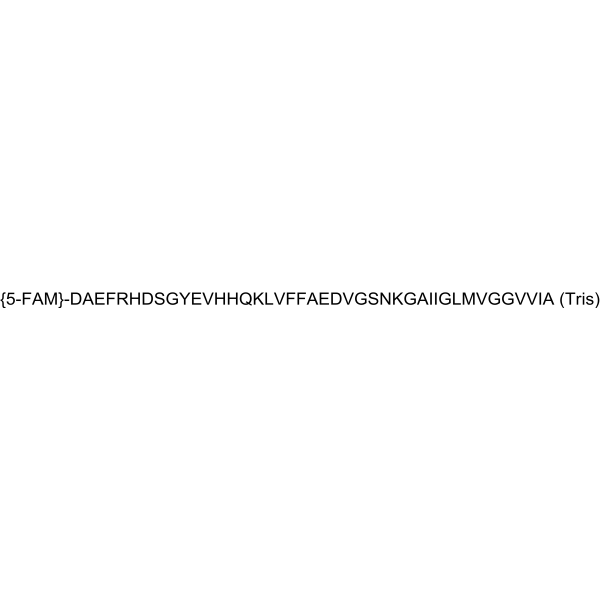
    5-FAM-β-Amyloid (1-42), human (5-FAM-Amyloid β-peptide (1-42) (human) TFA is a5-FAM labeled β-Amyloid (1-42), human TFA (HY-P1363).
    5-FAM-β-Amyloid (1-42), human Tris
  • HY-P1466

    amyloid β-Protein (1-16)

    Amyloid-β Neurological Disease
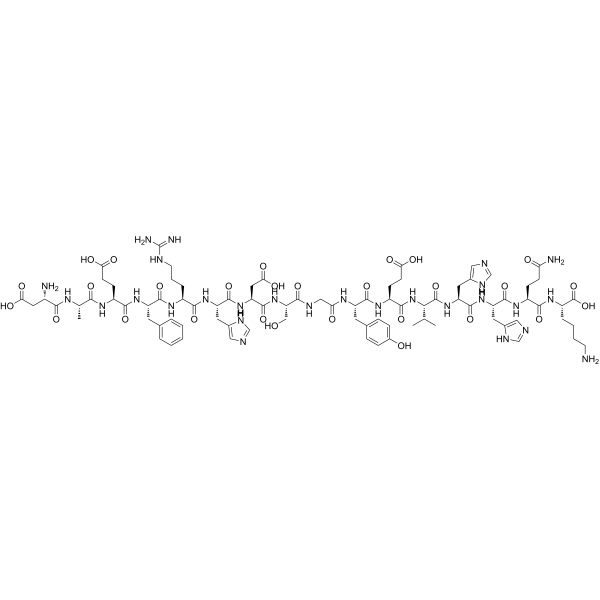
    β-Amyloid (1-16) is a β-Amyloid protein fragment involved in metal binding. Beta-amyloid is a peptide that forms amyloid plaques in the brains of Alzheimer's disease (AD) patients.
    β-Amyloid (1-16)
  • HY-P1903

    Amyloid-β Neurological Disease
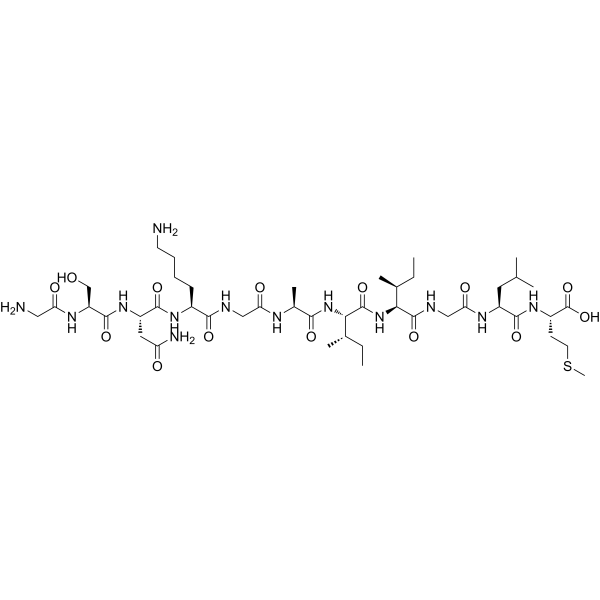
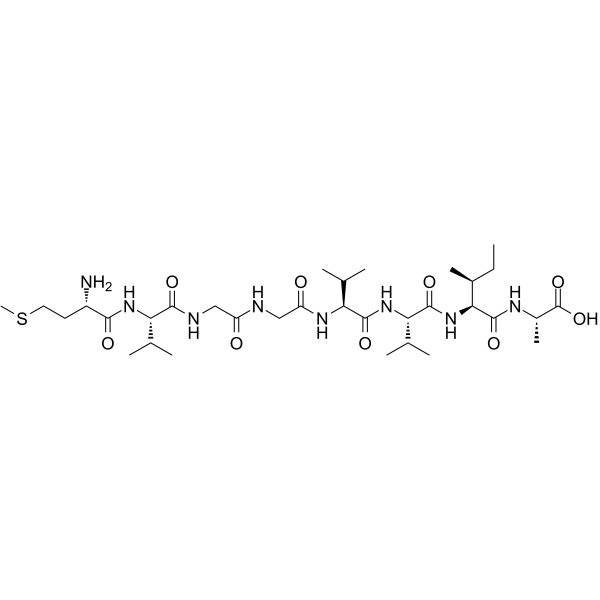
    β-Amyloid (35-42) is a peptide consisting of amino acid of 35 to 42 of beta amyloid protein.
    β-Amyloid (35-42)
  • HY-P5124

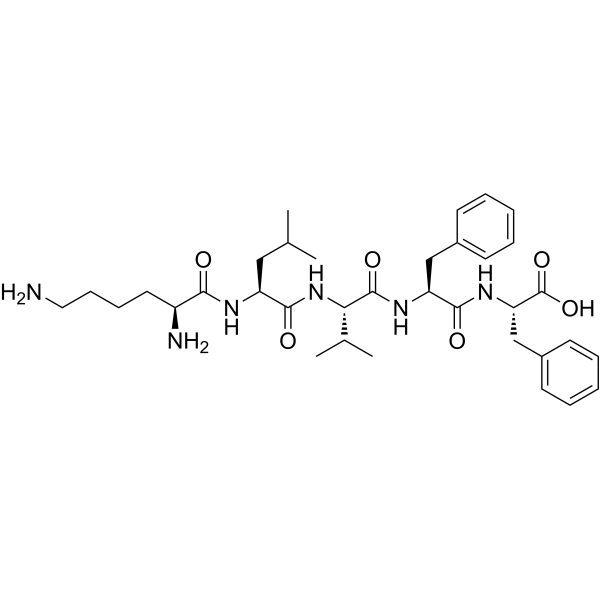
    KLVFF

    Amyloid-β Neurological Disease
    β-Amyloid peptide(16-20) is a amino acid sequences (KLVFF) of Amyloid-β (Abeta). β-Amyloid peptide(16-20) is an effective inhibitor of Abeta fibril formation, with RG-/-GR-NH2 residues added at N- and C-terminal ends to aid solubility) .
    β-Amyloid peptide(16-20)
  • HY-P1363F1

    Biotin-amyloid β-peptide (1-42) (human) TFA

    Amyloid-β Neurological Disease
    Biotin-β-Amyloid (1-42), human TFA (Biotin-Amyloid β-Peptide (1-42) (human) TFA) is the botin labeled β-Amyloid (1-42), human TFA (HY-P1363). β-Amyloid (1-42), human TFA is a 42-amino acid peptide which plays a key role in the pathogenesis of Alzheimer disease .
    Biotin-β-Amyloid (1-42), human TFA
  • HY-P3688A

    Aβ (1-38) TFA; Aβ38 TFA

    Amyloid-β Neurological Disease
    β-Amyloid (1-38) (Aβ (1-38)) TFA is a β-Amyloid (Aβ) peptide. β-Amyloid (1-38) TFA interferes with the conversion of Aβ(1-42) to a β-sheet-rich aggregate. β-Amyloid (1-38)TFA reverses the negative impact of Aβ(1-42) on long-term potentiation in acute hippocampal slices and on membrane conductance in primary neurons, and mitigates an Aβ(1-42) phenotype in Caenorhabditis elegans .
    β-Amyloid (1-38) TFA
  • HY-103374

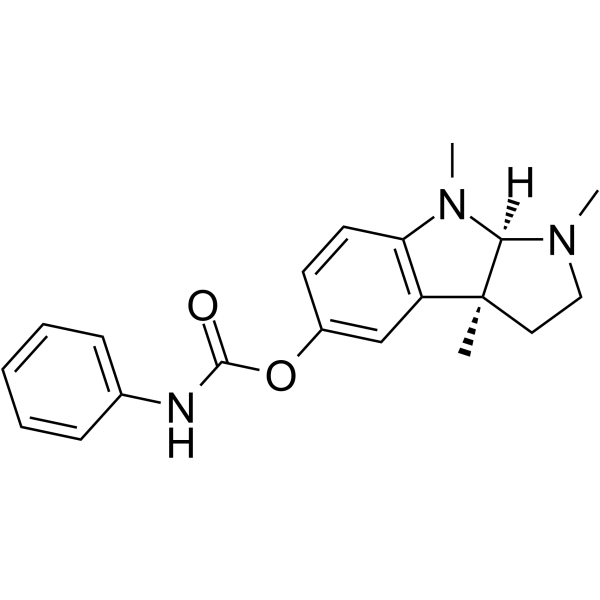
    (-)-Eseroline phenylcarbamate; (-)-Phenserine

    Cholinesterase (ChE) Amyloid-β Neurological Disease
    Phenserine ((-)-Eseroline phenylcarbamate) is a derivative of Physostigmine (HY-N6608) and is a potent, noncompetitive, long-acting and selective AChE inhibitor. Phenserine reduces β-amyloid precursor protein (APP) and β-amyloid peptide (Aβ) formation. Phenserine improves cognitive performance and attenuates the progression of Alzheimer's disease .
    Phenserine
  • HY-P1388A

    amyloid β-peptide (1-42) (rat/mouse) TFA

    Amyloid-β Neurological Disease
    β-Amyloid (1-42), (rat/mouse) TFA is a 42-aa peptide, shows cytotoxic effect on acute hippocampal slices, and used in the research of Alzheimer's disease.
    β-Amyloid (1-42), (rat/mouse) TFA
  • HY-P10040

    Amyloid-β Neurological Disease
    (Gln22)β-Amyloid (1-40) human is an amyloid beta protein (Aβ)-containing peptide used in Alzheimer's disease research .
    (Gln22)β-Amyloid (1-40) human
  • HY-P1046

    amyloid β-Protein (1-15)

    Amyloid-β Neurological Disease
    β-Amyloid (1-15) is a fragment of β-Amyloid peptide. Beta-amyloid is a peptide that forms amyloid plaques in the brains of Alzheimer's disease (AD) patients.
    β-Amyloid (1-15)
  • HY-P2550A

    Amyloid-β Neurological Disease
    β-Amyloid (1-40), FAM-labeled TFA is a FAM fluorescently-labelled β-Amyloid (1-40) peptide (λex= 492 nm and λem= 518 nm).
    β-Amyloid (1-40), FAM-labeled TFA
  • HY-P1387

    Amyloid-β Apoptosis Neurological Disease
    β-Amyloid (1-40) (rat) is a rat form of the amyloid β-peptide, which accumulates as an insoluble extracellular deposit around neurons, giving rise to the senile plaques associated with Alzheimer's disease (AD). β-Amyloid (1-40) (rat) increases 45Ca 2+ influx, induces neurodegeneration in the rat hippocampal neurons of the CA1 subfield. β-Amyloid (1-40) (rat) induces apoptosis. β-Amyloid (1-40) (rat) can be used for the research of Alzheimer's disease .
    β-Amyloid (1-40) (rat)
  • HY-P1362F

    Cy5-amyloid β Peptide (42-1)(human) Tris

    Amyloid-β Neurological Disease
    Cy5-β-Amyloid (42-1), human is a Cy5 fluorescently-labelled β-Amyloid (42-1, human) peptideex= 633 nm and λem= 670 nm) .
    Cy5-β-Amyloid (42-1), human Tris
  • HY-P5905

    Citrullinated Aβ (1-42); Citrullinated Aβ42

    Amyloid-β Neurological Disease
    Citrullinated amyloid-β (1-42) peptide (human) (Citrullinated Aβ (1-42)) is a modified form of β-Amyloid (1-42) (HY-P1363) with a citrullination at the Arg5 site. Compared to the unmodified β-Amyloid (1-42), its formation of soluble low-molecular-weight oligomers is enhanced, the rate of fibril formation is reduced, and like unmodified Aβ42, it forms protofibrils comprised of parallel β-sheets .
    Citrullinated amyloid-β (1-42) peptide (human)
  • HY-P2497
    Exendin (5-39)
    1 Publications Verification

    GCGR Neurological Disease
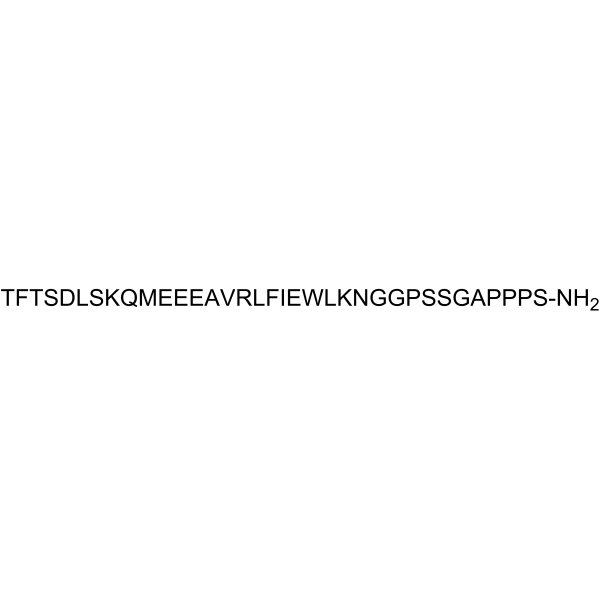
    Exendin (5-39) is a potent glucagon-like peptide 1 (GLP-1) receptor antagonist. Exendin (5-39) improves memory impairment in β-amyloid protein-treated rats .
    Exendin (5-39)
  • HY-B1588
    Carbenoxolone
    5+ Cited Publications

    Amyloid-β Gap Junction Protein Neurological Disease Metabolic Disease
    Carbenoxolone is a blood-brain barrier-permeable Pannexin1 inhibitor, gap junction (Gap junction) blocker, and β-amyloid 42 inhibitor. Carbenoxolone modulates voltage-gated currents of wild-type and mutant Panx1, and inhibits stimulus-activated Panx1 channel function. Carbenoxolone interacts with stable residues of β-amyloid 42 peptides, fibrils and oligomers, thereby inhibiting their aggregation. Carbenoxolone alleviates liver fibrosis. Carbenoxolone exerts neuroprotective and nootropic effects. Carbenoxolone can be used in studies related to Alzheimer's disease and liver fibrosis .
    Carbenoxolone
  • HY-P1468

    amyloid β-Protein (1-28)

    Amyloid-β Neurological Disease
    β-Amyloid (1-28) is a β-Amyloid protein fragment involved in metal binding. Beta-amyloid is a peptide that forms amyloid plaques in the brains of Alzheimer's disease (AD) patients.
    β-Amyloid (1-28)
  • HY-P2550

    Amyloid-β Neurological Disease
    β-Amyloid (1-40), FAM-labeled is a FAM fluorescently-labelled β-Amyloid (1-40) peptideex= 492 nm and λem= 518 nm) .
    β-Amyloid (1-40), FAM-labeled
  • HY-P1891

    Amyloid-β Neurological Disease
    β-Amyloid (22-40) is a peptide fragment of β-Amyloid.
    β-Amyloid (22-40)
  • HY-P1363S

    amyloid β-peptide-15N (1-42) (human) TFA

    Amyloid-β Neurological Disease
    β-Amyloid- 15N (1-42), human (TFA) is the 15N-labledβ-Amyloid (1-42) (TFA). β-Amyloid (1-42), human TFA (Amyloid β-Peptide (1-42) (human) TFA) is a 42-amino acid peptide which plays a key role in the pathogenesis of Alzheimer disease .
    β-Amyloid-15N (1-42), human TFA
  • HY-P3688

    Aβ (1-38); Aβ38

    Amyloid-β Neurological Disease
    β-Amyloid (1-38) (Aβ (1-38)) is a β-Amyloid (Aβ) peptide. β-Amyloid (1-38) interferes with the conversion of Aβ(1-42) to a β-sheet-rich aggregate. β-Amyloid (1-38) reverses the negative impact of Aβ(1-42) on long-term potentiation in acute hippocampal slices and on membrane conductance in primary neurons, and mitigates an Aβ(1-42) phenotype in Caenorhabditis elegans .
    β-Amyloid (1-38)
  • HY-P1517

    Amyloid-β Neurological Disease
    β-Amyloid (31-35) is the shortest sequence of native Amyloidpeptide that retains neurotoxic activity.
    β-Amyloid (31-35)
  • HY-P1894

    Amyloid-β Neurological Disease
    β-Amyloid Protein Precursor 770 (135-155) is a peptide of amyloid precursor protein isoform (APP 770). APP 770 produces Aβ40/42 .
    β-Amyloid Protein Precursor 770 (135-155)
  • HY-P2549

    Fluorescent Dye Neurological Disease
    Biotin-β-Amyloid (1-40) is a N-terminal-labelled biotinylated amyloid-β-(1-40) peptide.
    Biotin-β-Amyloid (1-40)
  • HY-P1879

    Amyloid-β Neurological Disease
    β-Amyloid (18-28) is a peptide fragment of β-Amyloid.
    β-Amyloid (18-28)
  • HY-P1051

    amyloid β-Protein (12-28)

    Amyloid-β Neurological Disease
    β-Amyloid (12-28) (Amyloid β-Protein (12-28)) is a peptide fragment of β-amyloid protein (β1-42). β1-42, a 42 amino acid protein , is the major component of senile plaque cores. β-Amyloid (12-28) shows aggregation properties. β-Amyloid (12-28) has the potential for Alzheimer’s disease research .
    β-Amyloid (12-28)
  • HY-P1522

    amyloid beta-protein(29-40)

    Amyloid-β Neurological Disease
    β-Amyloid (29-40) is a fragment of Amyloidpeptide.
    β-Amyloid (29-40)
  • HY-P1362A

    amyloid β Peptide (42-1)(human) TFA

    Amyloid-β Neurological Disease
    β-Amyloid (42-1), human TFA is the inactive form of Amyloid β Peptide (1-42). β-Amyloid (42-1), human TFA is a 42-amino acid peptide which plays a key role in the pathogenesis of Alzheimer disease .
    β-Amyloid (42-1), human TFA
  • HY-P1053

    Amyloid-β Neurological Disease
    β-Amyloid (10-20) is a fragment of Amyloidpeptide and maybe used in the research of neurological disease .
    β-Amyloid (10-20)
  • HY-P10040A

    Amyloid-β Neurological Disease
    (Gln22)β-Amyloid (1-40) (human) TFA is an amyloid beta protein (Aβ)-containing peptide used in Alzheimer's disease research .
    (Gln22)β-Amyloid (1-40) human TFA
  • HY-P2562

    Amyloid-β Neurological Disease
    β-Amyloid (1-38), mouse, rat is composed of 38 aa (1-38 residues of the Aβ peptide) and is the primary component of the amyloid plaques of Alzheimer’s disease .
    β-Amyloid (1-38), mouse, rat
  • HY-P1363S1

    Isotope-Labeled Compounds Amyloid-β Neurological Disease
    β-Amyloid (1-42), human, Ala( 13C3, 15N) TFA is the 13C and 15N-labeled β-Amyloid (1-42), human (HY-P1363A). β-Amyloid (1-42) (Amyloid β-peptide (1-42)), human, a 42-amino acid peptide that has not been treated with HFIP, is a brain-penetrant amyloid protein fragment, which can be used in research on Alzheimer's disease and Down’s syndrome. β-Amyloid (1-42), human remaining as a monomer exhibits antioxidant and neuroprotective effects. β-Amyloid (1-42), human, after being monomericized by HFIP and dissolved in DMSO to form the stock solution, on the one hand, can form soluble oligomers (AβOs) when incubated at 4 °C, which have synaptic toxicity and neurotoxicity; on the other hand, it can be incubated at 37 °C to form insoluble fibrils, with lower neurotoxicity, and participating in the oxidative damage process. Aβ42 oligomers bind to various neuronal surface receptors (such as PrPc, mGluR5, NMDA receptors, etc.), triggering oxidative stress, calcium homeostasis imbalance, and synaptic toxicity via activating downstream signaling pathways, leading to neuronal dysfunction and death .
    β-Amyloid (1-42), human, Ala(13C3,15N) TFA
  • HY-P1894A

    Amyloid-β Neurological Disease
    β-Amyloid Protein Precursor 770 (135-155) TFA is a peptide of amyloid precursor protein isoform (APP 770). APP 770 produces Aβ40/42 .
    β-Amyloid Protein Precursor 770 (135-155) TFA
  • HY-P11226

    Amyloid-β CaMK Apoptosis Neurological Disease
    TI-16 is a peptide that targets β-amyloid (Aβ) protein. TI-16 can cross the blood-brain barrier. TI-16 can increase the concentration of intracellular free CaM, thereby restoring calcium ion homeostasis and reducing Aβ toxicity. TI-16 can reduce the deposition of Aβ in the brain, improve neuronal pathology, inhibit cell apoptosis, and improve cognitive function in mice. TI-16 is commonly used in the study of Alzheimer's disease .
    TI-16
  • HY-P10628

    Amyloid-β Neurological Disease
    β Amyloid (1-14), human is a peptide fragment of β-amyloid protein (), which is obtained by hydrolysis of 1-40 peptide by catalytic antibody light chain #7TR. β Amyloid (1-14), human can be used for Alzheimer's disease research .
    β Amyloid (1-14), human
  • HY-P5968A

    β(25-35)KA TFA

    Amyloid-β Neurological Disease
    [Ala28]-β Amyloid(25-35) (β(25-35)KA) TFA is an electrically neutral mutant peptide of Aβ(25-35) that accelerates the aggregation of Firefly Luciferase .
    [Ala28]-β Amyloid(25-35) TFA
  • HY-P1880

    Amyloid-β Neurological Disease
    β-Amyloid (12-20) is a peptide fragment of β-Amyloid.
    β-Amyloid (12-20)
  • HY-P1893

    Amyloid-β Neurological Disease
    β-Amyloid (11-22) is a peptide fragment of β-Amyloid.
    β-Amyloid (11-22)
  • HY-P1867

    Amyloid-β Neurological Disease
    β-Amyloid (1-34) is a β-Amyloid peptide consists of 34 amino acid.
    β-Amyloid (1-34)
  • HY-P1772

    Amyloid-β Neurological Disease
    β-Amyloid (1-17) is a peptide of β-Amyloid, stabilizes the fibres and plays a role in Aβ fibre formation .
    β-Amyloid (1-17)
  • HY-P1895

    Amyloid-β Neurological Disease
    β-Amyloid (33-40) is a peptide consisting of amino acid of 33 to 40 of beta amyloid protein.
    β-Amyloid (33-40)
  • HY-P1898

    Amyloid-β Neurological Disease
    β-Amyloid (13-27) is a peptide consisting of amino acid of 13 to 27 of beta amyloid protein.
    β-Amyloid (13-27)
  • HY-P10039

    Amyloid-β Neurological Disease
    β-Amyloid (1-16) rat is a β-amyloid peptide (Abeta), a metal-binding domain fragment of amyloid. Three amino acid substitutions in β-Amyloid (1-16) rat that differ from humans render rats and mice less susceptible to AD-like neurodegeneration .
    β Amyloid (1-16) rat

Inquiry Online

Your information is safe with us. * Required Fields.

Salutation


Country or Region *

Applicant Name *


Organization Name *

Department *


Email Address *


Product Name *

Cat. No.


Requested quantity *

Phone Number *


Remarks

Inquiry Online

Inquiry Information

Product Name:
Cat. No.:
Quantity:
MCE Japan Authorized Agent:

