




Search Result
Results for "
Amylases
" in MedChemExpress (MCE) Product Catalog:
9
Biochemical Assay Reagents
| Cat. No. |
Product Name |
Target |
Research Areas |
Chemical Structure |
-
- HY-132179
-
-
-
- HY-N1425
-
|
|
Others
|
Metabolic Disease
|
|
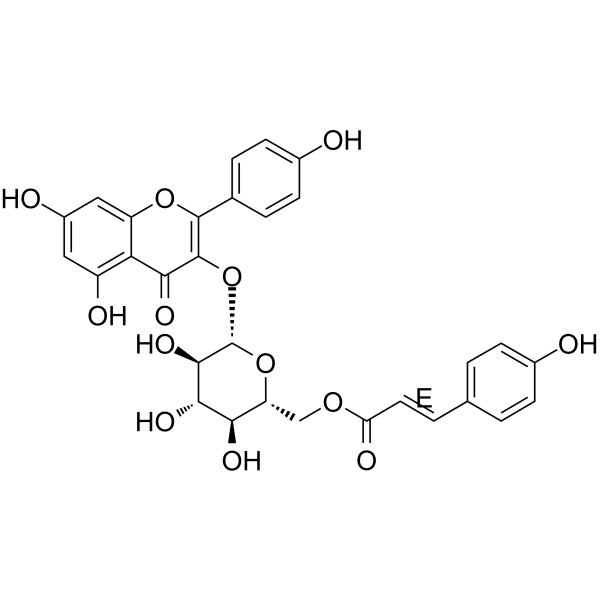
Tiliroside, a glycosidic flavonoid, possesses anti-diabetic activities. Tiliroside is a noncompetitive inhibitor of α-amylase with a Ki value of 84.2 μM. Tiliroside inhibits carbohydrate digestion and glucose absorption in the gastrointestinal tract .
|
-
-
- HY-P3462A
-
|
|
CGRP Receptor
|
Metabolic Disease
|
|
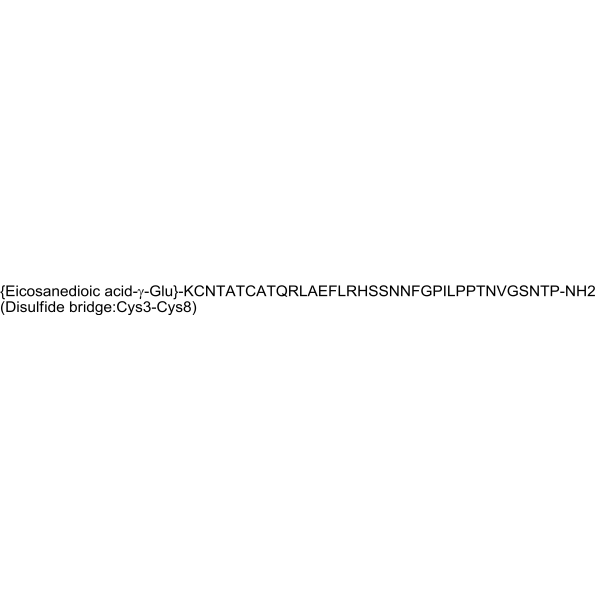
Cagrilintide acetate is a non-selective AMYR/CTR agonist and long-acting acylated amylase analogue. Cagrilintide acetate causes a reduction in food intake and significant weight loss in a dose-dependent manner. Cagrilintide acetate can be used in obesity studies .
|
-
-
- HY-W009694
-
|
|
Biochemical Assay Reagents
|
Others
|
|
3,5-Dinitrosalicylic acid the derivative of salicylic acid. 3,5-Dinitrosalicylic acid is used in the α-amylase assay, carbohydrase assay, and for the colorimetric determination of reducing substances .
|
-
-
- HY-B2193
-
|
|
Environmental Pollutants
Amylases
|
Others
|
|
α-Amylase is a hydrolase enzyme that catalyses the hydrolysis of internal α-1, 4-glycosidic linkages in starch to yield products like glucose and maltose.
|
-
-
- HY-N0668
-
|
|
GLUT
Amylases
NF-κB
|
Metabolic Disease
Inflammation/Immunology
Cancer
|
|
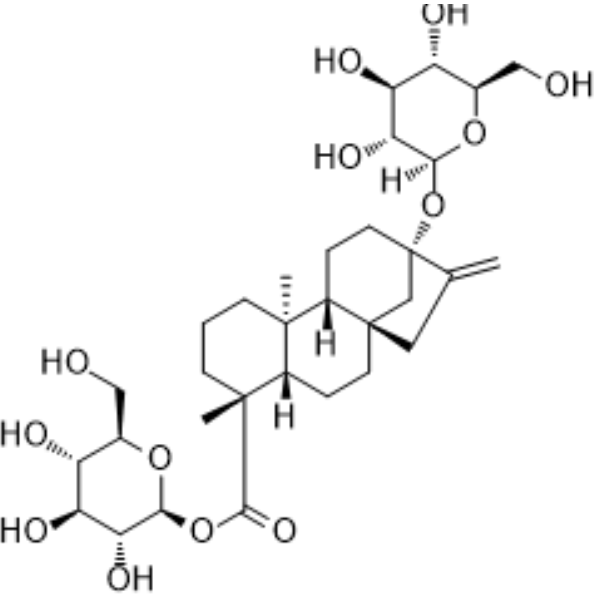
Rubusoside is a diterpene glycoside that is also a sweetener and solubilizer with anti-angiogenic, anti-cancer, anti-obesity, anti-allergic and anti-asthmatic effects. Rubusoside attenuates airway hyperresponsiveness and reduces inflammatory cells in bronchoalveolar lavage fluid (BALF), reducing OVA (HY-W250978)-induced airway inflammation. Rubusoside also prevents palmitic acid-induced lipotoxicity in pancreatic INS-1 cells, reduces the transport of human glucose transporters GLUT-1 and fructose GLUT-5, and inhibits NF-κB and α-amylase (α-amylase) .
|
-
-
- HY-N1495
-
|
Maltopentose
|
Amylases
|
Others
|
|
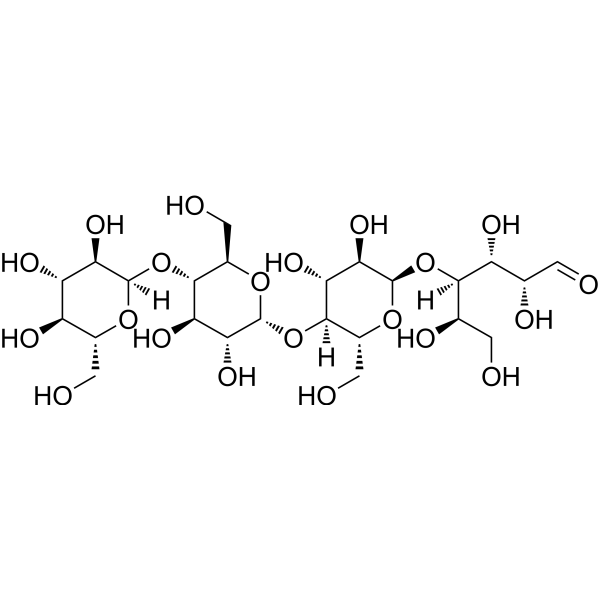
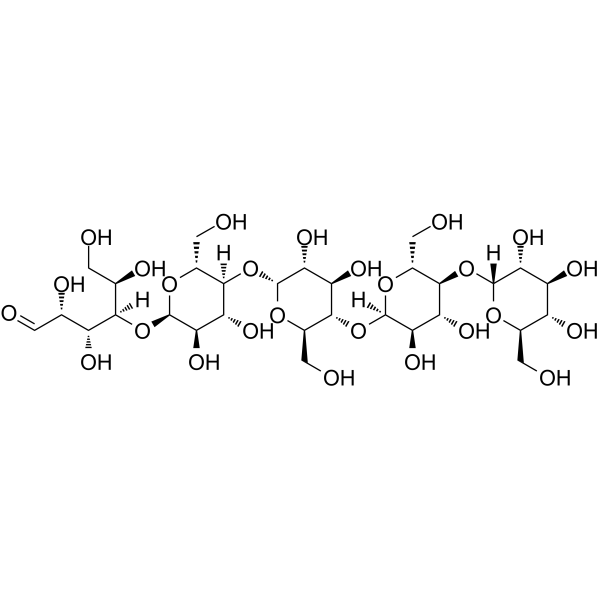
Maltopentaose is the shortest chain oligosaccharide. Maltopentaose is a substrate for α-amylases. Maltopentaose can be classified as maltodextrin and is also used in a study to investigate glycation and phosphorylation of α-lactalbumin. Maltopentaose is used to study the inhibition kinetics of human pancreatic α-amylase by dehydrodieugenol B .
|
-
-
- HY-153102
-
|
|
Biochemical Assay Reagents
|
Others
|
|
G3-CNP is an α-amylase substrate. The absorbance of G3-CNP cleavage product 2-chloro-4-nitrophenol is measured at 405 nm, which can be used to detect enzyme activity .
|
-
-
- HY-B2192
-
|
|
Amylases
|
Metabolic Disease
Cancer
|
|
Amylase is an enzyme produced by pancreas and salivary glands, catalyzing the hydrolysis of starch into sugars. Amylase are broadly classified into α, β, and γ subtypes .
|
-
-
- HY-112835
-
|
pNP-G7
|
Amylases
Glycosidase
|
Inflammation/Immunology
|
|
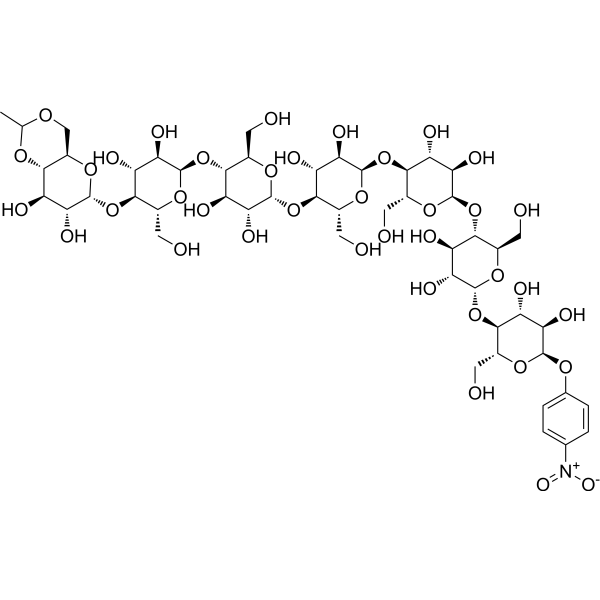
Ethylidene-4-nitrophenyl-α-D-Maltoheptaoside (EPS; pNP-G7) serves as a substrate for α-amylase. In the presence of an auxiliary enzyme such as α-glucosidase (α-glucosidase), Ethylidene-4-nitrophenyl-α-D-Maltoheptaoside is degraded by amylase (Amylase) to release a chromophore, enabling the measurement of amylase activity. Ethylidene-4-nitrophenyl-α-D-Maltoheptaoside is applicable for the diagnosis of pancreatitis [2].
|
-
-
- HY-P2968
-
|
|
Amylases
|
Others
|
|
Bacterial α-Amylase catalyses the hydrolysis of internal α-1,4-glycosidic linkages in starch in low molecular weight products, such glucose, maltose and maltotriose units. Bacterial α-Amylase is often used in biochemical studies .
|
-
-
- HY-P2762
-
|
|
Amylases
|
Others
|
|
α-Amylase from Aspergillus oryzae is an amylase. α-Amylase from Aspergillus oryzae can be used for various biochemical studies .
|
-
-
- HY-N6675
-
|
|
Amylases
Glycosidase
|
Inflammation/Immunology
|
|
Gardenia yellow is a competitive inhibitor of α-Amylase (HY-B2193) and α-glucosidase. Gardenia yellow can bind to the catalytic sites of α-Amylase and α-glucosidase, inhibit starch digestion, and significantly increase the contents of resistant starch and slowly digestible starch in starch-based systems. Gardenia yellow reduces the glycemic index and hydrolysis index. Gardenia yellow can be used in diabetes-related research .
|
-
-
- HY-P1096
-
|
|
Cholecystokinin Receptor
|
Metabolic Disease
|
|
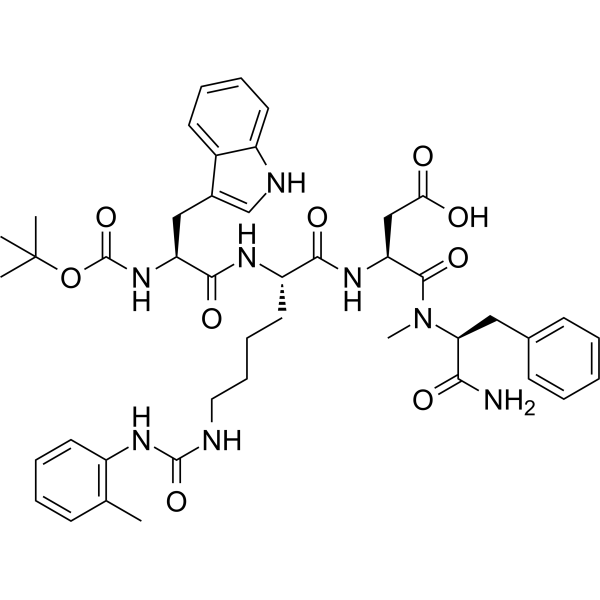
A71623, a CCK-4-based peptide, is a potent and highly selective CCK-A full agonist. The IC50s for A-71623 are 3.7 nM in guinea pig pancreas (CCK-A) and 4500 nM in cerebral cortex (CCK-B) in radioligand binding assays, respectively .
|
-
-
- HY-B2193A
-
|
1,4-alpha-D-Glucan-glucanohydrolase, ptyalin
|
Biochemical Assay Reagents
|
Metabolic Disease
Inflammation/Immunology
|
|
α-Amylase, Human Saliva (1,4-alpha-D-Glucan-glucanohydrolase) is a hydrolase enzyme that can be isolated from human saliva. α-Amylase, Human Saliva catalyses the hydrolysis of internal α-1, 4-glycosidic linkages in starch to yield products like glucose and maltose. α-Amylase, Human Saliva can be used in life science research .
|
-
-
- HY-B2193C
-
|
1,4-alpha-D-Glucan-glucanohydrolase, amy2, PPA, PA
|
Biochemical Assay Reagents
|
Others
|
|
α-Amylase, Porcine Pancreatic (1,4-alpha-D-Glucan-glucanohydrolase) is a hydrolase enzyme that can be isolated from porcine pancreatic. α-Amylase, Porcine Pancreatic catalyses the hydrolysis of internal α-1, 4-glycosidic linkages in starch to yield products like glucose and maltose. α-Amylase, Porcine Pancreatic can be used in life science research .
|
-
-
- HY-B2193B
-
|
Amylase, a-Amylase, 1,4-a-D-glucan glucanohydrolase, glycogenase
|
Biochemical Assay Reagents
|
Others
|
|
α-Amylase, Human Pancreas (Amylase) is a hydrolase enzyme that can be isolated from human pancreas. α-Amylase, Human Pancreas catalyses the hydrolysis of internal α-1, 4-glycosidic linkages in starch to yield products like glucose and maltose. α-Amylase, Human Pancreas can be used in life science research .
|
-
-
- HY-135530
-
|
|
Amylases
|
Metabolic Disease
|
|
Chinese gallotannin is a non-specific promiscuous α-amylase inhibitor with a Ki of 0.82 μg/mL for human salivary α-amylase. Chinese gallotannin can be used for the research of diabetes .
|
-
-
- HY-W005598
-
|
|
Glycosidase
Amylases
|
Metabolic Disease
|
|
2-Hydroxyquinoline is an inhibitor of α-glucosidase and α-amylase with IC50 values of 64.4 µg/mL and 130.5 µg/mL, respectively. 2-Hydroxyquinoline can be used in the study of diabetes .
|
-
-
- HY-153101
-
|
|
Biochemical Assay Reagents
|
Others
|
|
Gal-G2-CNP is a galactopyranosyl maltoside. Gal-G2-CNP is an amylase substrate specific to salivary amylase, which produces a yellow hydrolyzate upon decomposition. Gal-G2-CNP can serve as a matrix for the assays of novel amylases and pancreatic amylases .
|
-
-
- HY-P3112
-
|
|
Bombesin Receptor
|
Neurological Disease
|
|
ICI 216140 is a GRP/bombesin receptor 2 antagonist with the IC50 of 2 nM. ICI 216140 can reduce Bombesin (HY-P0195)-stimulated pancreatic amylase secretion and attenuates Bombesin (HY-P0195)-stimulated increases in blood pressure .
|
-
-
- HY-P2770
-
|
|
Endogenous Metabolite
|
Others
|
|
β-Amylase, Bacilus subtilis has abundant starch degrading activities. β-Amylase can be used for various biochemical studies .
|
-
-
- HY-E70183
-
|
EC:3.2.1.20; GAA
|
Biochemical Assay Reagents
|
Others
|
|
Lysosomal α-Glucosidase (EC:3.2.1.20) is a γ-amylase with specificity for glycogen and several natural and synthetic oligoglucosides .
|
-
-
- HY-200541
-
|
|
Others
|
Metabolic Disease
|
|
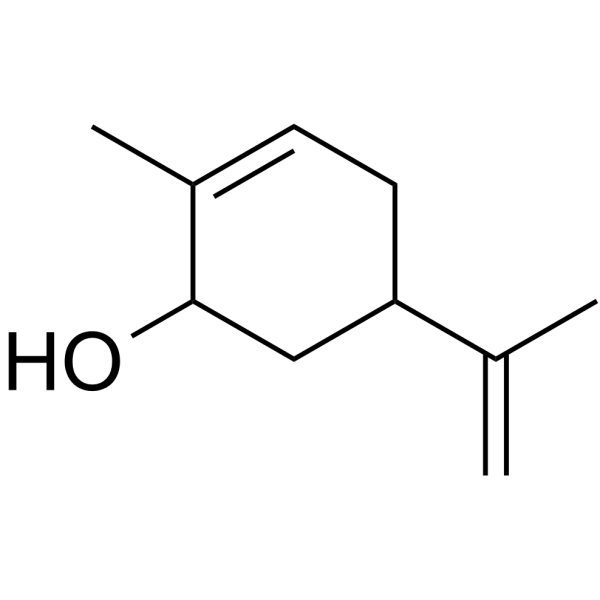
Dihydro-α-ionone is a volatile compound found in the essential oil of Persicaria hydropiper L. leaves. The essential oil can inhibit α-glucosidase and α-amylase activities .
|
-
-
- HY-N8326
-
|
|
Others
|
Others
|
|
Maltononaose is a linear oligosaccharide consisting of 9 glucose units linked by alpha-1, 4-glucoside bonds. Maltononaose is used as a substrate to study the subsites affinity of glucoamylase. Maltononaose can be used to determine the activity of amylase and to optimize the process of starch hydrolysis .
|
-
-
- HY-178363
-
|
|
Amylases
|
Metabolic Disease
Endocrinology
|
|
α-Amylase-IN-13 is an orally active, selective, brain-penetrant α-amylase inhibitor (IC50 = 0.71 μM). α-Amylase-IN-13 inhibits α-amylase through a mixed type of inhibition mechanism. α-Amylase-IN-13 leads to a significant reduction in blood glucose level in diabetic rats. α-Amylase-IN-13 causes significant histopathological improvements in the kidney, liver, and pancreas. α-Amylase-IN-13 can be used for the study of diabetic complications .
|
-
-
- HY-179141
-
|
|
Amylases
Glycosidase
|
Metabolic Disease
|
|
α-Amylase/α-Glucosidase-IN-23 (Compound 5e) is a α-Amylase/α-Glucosidase inhibitor with IC50 values of 73.68 nM for α-glucosidase and 146.18 nM for α-amylase. α-Amylase/α-Glucosidase-IN-23 can be used in the research of hypoglycemia .
|
-
-
- HY-146752
-
|
|
Amylases
|
Others
|
|
α-Amylase-IN-1 is a potent α-amylase inhibitor with an IC50 of 4.46 μM .
|
-
-
- HY-149008
-
|
|
Amylases
Cholinesterase (ChE)
|
Inflammation/Immunology
|
|
α-Amylase-IN-3 (Compound 4) is the inhibitor for α-Amylase, AChE and AChE with IC50s of 18.04 μM, 21.04 μM and 22.2 μM, respectively. α-Amylase-IN-3 exhibits antioxidant activity. α-Amylase-IN-3 can be used in research of diabetes and oxidative stress associated disease .
|
-
-
- HY-133718
-
|
(S)-Acarviosin
|
Amylases
|
Others
|
|
Acarviosin, a pseudodisaccharide moiety, is a part of the potent inhibitor of α-amylase .
|
-
-
- HY-N17254
-
-
-
- HY-118194
-
|
|
Cholecystokinin Receptor
|
Others
|
|
A-65186 is a CCK-A receptor antagonist with the activity of inhibiting CCK8-induced amylase secretion. A-65186 has high binding affinity for pancreatic CCK-A receptors, is more than 500 times more selective for CCK-A receptors than for CCK-B receptors, and can inhibit CCK8-induced amylase secretion.
|
-
-
- HY-N10413
-
|
|
Glycosidase
|
Metabolic Disease
|
|
Diphlorethohydroxycarmalol, a kind of phlorotannin, is an orally active α-glucosidase and α-amylase inhibitor with IC50s of 0.16 mM and 0.53 mM, respectively. Diphlorethohydroxycarmalol has anti-diabetic activities .
|
-
-
- HY-106525
-
|
|
Cholinesterase (ChE)
|
Inflammation/Immunology
|
|
Aclatonium napadisylate is a cholinergic agonist. Aclatonium napadisylate can increase amylase release and Ca 2+ efflux. Aclatonium napadisylate can stimulate pancreatic exocrine secretion and increase motility and peristalsis of the gastrointestinal tract. Aclatonium napadisylate can be used for the research of gastrointestinal disorders .
|
-
-
- HY-161944
-
|
|
Amylases
|
Metabolic Disease
|
|
α-Amylase-IN-8 (compound 44) is an α-amylase inhibitor (IC50=58.1 μM). α-Amylase-IN-8 can be used in the research of type 2 diabetes .
|
-
-
- HY-178935
-
|
|
Amylases
Reactive Oxygen Species (ROS)
|
Metabolic Disease
Inflammation/Immunology
|
|
α-Amylase-IN-14, a derivative of Nicotinic (HY-B0143), is an α-amylase inhibitor and has good interactions with α-amylase protein (-5.55 kcal/mol). α-Amylase-IN-14 is a dual anti-inflammatory and anti-hyperglycemic agent. α-Amylase-IN-14 exhibits good results against DPPH and ABTS radicals. α-Amylase-IN-14 can be used for the study of diabetes .
|
-
-
- HY-155241
-
|
|
Glycosidase
Amylases
|
Metabolic Disease
|
|
α-Amylase/α-Glucosidase-IN-4 (compound 5) is a dual inhibitor of α-glucosidase (Glucosidase) and α-amylase (Amylases) with IC50s of 0.15 μM and 1.10 μM, respectively. α-Amylase/α-Glucosidase-IN-4 has potential antidiabetic activity .
|
-
-
- HY-175605
-
|
|
Glycosidase
Amylases
|
Metabolic Disease
|
|
α-Amylase/α-Glucosidase-IN-21 (Compound 4) is a dual-functional inhibitor of α-Glucosidase and α-Amylase with IC50s of 0.27 and 0.19 µg/mL for α-Glucosidase and α-Amylase, respectively. α-Amylase/α-Glucosidase-IN-21 has an antidiabetic activity.α-Amylase/α-Glucosidase-IN-21 can be used for diabetes mellitus research .
|
-
-
- HY-149973
-
|
|
Amylases
|
Metabolic Disease
|
|
α-Amylase-IN-4 (Compd 10y) show maximum inhibition of amylase activity with IC50 value 17.83 ± 0.14 μg/mL .
|
-
-
- HY-149313
-
|
|
Amylases
|
Metabolic Disease
|
|
α Amylase-IN-1 (Compound 11) is an α-Amylase inhibitor with an IC50 value of 0.5509 μM. α Amylase-IN-1 has antioxidant activity with an IC50 value of 53.49 μM for scavenging DPPH free radicals. IC50 can be used in the study of diabetes and oxidative stress-related diseases.
|
-
-
- HY-W112651
-
|
|
Glycosidase
Amylases
|
Metabolic Disease
|
|
2,4,6-Triphenylaniline has anti-diabetic activity and can be encapsulated in nano-emulsions (NE) to enhance stability and permeability. The NE loaded with 2,4,6-Triphenylaniline inhibits α-glucosidase and α-amylase .
|
-
-
- HY-N0668R
-
|
|
GLUT
Amylases
NF-κB
Reference Standards
|
Metabolic Disease
Inflammation/Immunology
Cancer
|
|
Rubusoside (Standard) is the analytical standard of Rubusoside. This product is intended for research and analytical applications. Rubusoside is a diterpene glycoside that is also a sweetener and solubilizer with anti-angiogenic, anti-cancer, anti-obesity, anti-allergic and anti-asthmatic effects. Rubusoside attenuates airway hyperresponsiveness and reduces inflammatory cells in bronchoalveolar lavage fluid (BALF), reducing OVA (HY-W250978)-induced airway inflammation. Rubusoside also prevents palmitic acid-induced lipotoxicity in pancreatic INS-1 cells, reduces the transport of human glucose transporters GLUT-1 and fructose GLUT-5, and inhibits NF-κB and α-amylase (α-amylase) .
|
-
-
- HY-169737
-
|
|
Glycosidase
Amylases
|
Metabolic Disease
|
|
Inulobiose is a difructan disaccharide that can be isolated from Pistacia vera L.. Inulobiose inhibits α-glycosidase and α-amylase activities with IC50s of 1.87 and 40.72 mg/mL, respectively. Inulobiose can be used for the research of diabetes and glomerular filtration rate testing .
|
-
-
- HY-N0419R
-
|
Quercetin-7-O-β-D-glucopyranoside (Standard)
|
Reference Standards
Others
|
Metabolic Disease
|
|
Quercimeritrin (Standard) is the analytical standard of Quercimeritrin. This product is intended for research and analytical applications. Quercimeritrin, isolated from the leaves of Ixeridium dentatum, exhibits significant amylase activity .
|
-
-
- HY-P1133
-
|
Rat galanin(2-29)
|
Neuropeptide Y Receptor
|
Others
|
|
Galanin (2-29) (rat) inhibits rat pancreatic protein and CCK-8-stimulated amylase secretion. Galanin (2-29) (rat) is an GAL2R agonist (Ki: 3.5 nM) .
|
-
-
- HY-159491
-
|
|
Dipeptidyl Peptidase
Glycosidase
Amylases
|
Metabolic Disease
|
|
DPP-4-IN-11 (compound 10) is an orally active DPP-4 inhibitor (IC50=2.75 μM) with anti-type 2 diabetes activity. DPP-4-IN-11 exerts its glucose-lowering effect by inhibiting the activities of α-glucosidase (IC50=3.02 μM) and α-amylase (IC50=3.3 μM) .
|
-
-
- HY-161782
-
|
|
Amylases
|
Metabolic Disease
|
|
α-Amylase-IN-7 (Compound 6e) is an inhibitor for α-Amylase with an IC50 of 40 μM. α-Amylase-IN-7 exhibits potential as an antidiabetic agent .
|
-
-
- HY-149557
-
|
|
Glycosidase
Amylases
|
Metabolic Disease
|
|
α-Amylase/α-Glucosidase-IN-5 (compound 4l) is a dual inhibitor of α-glucosidase (Glucosidase) and α-amylase (Amylases) with IC50s of 5.96 μM and 1.62 μM, respectively. α-Amylase/α-Glucosidase-IN-4 has potential antidiabetic activity .
|
-
-
- HY-168495
-
|
|
Amylases
Glycosidase
|
Metabolic Disease
|
|
α-Amylase-IN-12 (Compound 5e) is an α-amylase inhibitor (IC50: 0.15 mM) with a mixed inhibition. α-Amylase-IN-12 has an IC50 of 9.40 mM against α-glucosidase. α-Amylase-IN-12 promotes glucose uptake in yeast cells and exhibits significant antiglycation activity at high concentrations. α-Amylase-IN-12 can be used for the research of diabetes .
|
-
-
- HY-170548
-
|
|
Amylases
|
Metabolic Disease
|
|
α-Amylase-IN-10 (Compound 15n) is an inhibitor for α-Amylase with an IC50 of 5.00 µM. α-Amylase-IN-10 can be used for research of type 2 diabetes mellitus .
|
-
- HY-146225
-
|
|
Glycosidase
|
Metabolic Disease
|
|
α-Amylase/α-Glucosidase-IN-2 (compound 5) is a potent α-amylase and α-glucosidase dual inhibitor with IC50 values of 13.02, 13.09 µM for α-amylase and α-glucosidase, respectively. α-Amylase/α-Glucosidase-IN-2 has the potential for the research of diabetic complications .
|
-
- HY-157537
-
-
- HY-147711
-
|
|
Glycosidase
|
Metabolic Disease
|
|
α-Amylase/α-Glucosidase-IN-1 (compound 33) is a potent α-amylase/α-glucosidase inhibitor with IC50s of 2.01, 2.09 µM for α-amylase and α-glucosidase, respectively. Kinetic studies predict that α-Amylase/α-Glucosidase-IN-1 has the potential of anti hyperglycemia .
|
-
- HY-174319
-
|
|
Amylases
Glycosidase
|
Metabolic Disease
|
|
α-Amylase/α-Glucosidase-IN-20 (Compound 6b) is a dual inhibitor of α-Amylase and α-Glucosidase with IC50s of 414.57 and 924.15 μM for α-Amylase and α-Glucosidase, respectively. α-Amylase/α-Glucosidase-IN-20 shows a potent anti-diabetic activity, promising for diabetes research .
|
-
- HY-172211
-
|
|
Amylases
Glycosidase
|
Metabolic Disease
Cancer
|
|
α-Amylase/α-Glucosidase-IN-17 (Compound 3) is an inhibitor of α-amylase and α-glucosidase, with IC50 values of 14.61 μM and 25.38 μM, respectively. α-Amylase/α-Glucosidase-IN-17 has certain inhibitory activity against A549 cancer cells. α-Amylase/α-Glucosidase-IN-17 has anti-tumor and anti-diabetic effects .
|
-
- HY-168961
-
|
|
Amylases
Glycosidase
|
Metabolic Disease
|
|
α-Amylase/α-Glucosidase-IN-18 (Compound 9g) is the inhibitor for α-Amylase and α-Glucosidase with IC50 of 49.17 nM and 10.71 nM. α-Amylase/α-Glucosidase-IN-18 can be used in research of type 2 diabetes mellitus .
|
-
- HY-162390
-
|
|
Amylases
Glycosidase
|
Endocrinology
|
|
α-Amylase/α-Glucosidase-IN-11 (Compound 5d) is a isoxazolidine-isatin hybrid with significant antidiabetic activity. α-Amylase/α-Glucosidase-IN-11 competitively inhibits α-amylase (IC50 = 30.39 μM) and α-glucosidase (IC50 = 65.1 μM), two key digestive enzymes. α-Amylase/α-Glucosidase-IN-11 does not cross the blood-brain barrier .
|
-
- HY-162169
-
|
|
Amylases
Glycosidase
|
Metabolic Disease
|
|
α-Amylase/α-Glucosidase-IN-8 (Compound 7p) is a potent dual inhibitor of α-amylase and α-glucosidase, with IC50s of 10.19 and 10.33 μM, respectively. α-Amylase/α-Glucosidase-IN-8 has good anti-oxidant activity(IC50 = 14.93 μM). α-Amylase/α-Glucosidase-IN-8 can be used for the research of diabetes .
|
-
- HY-162673
-
|
|
Amylases
Glycosidase
|
Metabolic Disease
|
|
α-Amylase/α-Glucosidase-IN-16 (compound 15) is a potent dual inhibitor of α-amylase and α-Glucosidase with IC50 values of 0.8 and 1.2 μM, respectively. α-Amylase/α-Glucosidase-IN-16 can be used in the study of diabetes mellitus (DM) .
|
-
- HY-156380
-
|
|
Amylases
Glycosidase
|
Metabolic Disease
|
|
α-Amylase/α-Glucosidase-IN-6 (compound 5j) is a potent dual inhibitor of α-amylase and α-glucosidase, with IC50s of 17.0 and 40.1 µM, respectively. α-Amylase/α-Glucosidase-IN-6 exhibits anti-hyperglycemic activities .
|
-
- HY-154972
-
|
|
Glycosidase
Amylases
|
Metabolic Disease
|
|
α-Amylase/α-Glucosidase-IN-3 (Compound 17) is an α-Amylase/α-Glucosidase dual inhibitor, with IC50s of 0.70 μM and 1.10 μM. α-Amylase/α-Glucosidase-IN-3 can be used for research of type-II diabetes mellitus .
|
-
- HY-161469
-
-
- HY-170796
-
|
|
Amylases
|
Metabolic Disease
|
|
α-Amylase-IN-11 (compound C5f) is an α-Amylase inhibitor (IC50=0.56 μM) that can reduce the sugar level in vivo. α-Amylase-IN-11 has a moderate inhibitory effect on α-glucosidase (α-glucosidase), with IC50=11.03 μM. α-Amylase-IN-11 can significantly reduce the glucose concentration in a mouse model and has the potential for use in diabetes research .
|
-
- HY-162036
-
|
|
Glycosidase
Amylases
Cholinesterase (ChE)
|
Neurological Disease
Metabolic Disease
|
|
α-Amylase/α-Glucosidase-IN-7 (Compound 3f) is a competitive α-glucosidase and α-amylase enzyme inhibitor with IC50 values of 18.52 and 20.25 µM, respectively. α-Amylase/α-Glucosidase-IN-7 can also effectively inhibit AChE and BChE, with IC50 values of 9.25 and 10.06 µM respectively. α-Amylase/α-Glucosidase-IN-7 can be used in diabetes and Alzheimer’s research .
|
-
- HY-168598
-
|
|
Amylases
|
Metabolic Disease
|
|
α-Amylase-IN-9 (Compound 1i) is an inhibitor of α-Amylase with an IC50 value of 14.64 μM, which can be used in diabetes research .
|
-
- HY-116576
-
-
- HY-172622
-
-
- HY-162634
-
|
|
Amylases
Glycosidase
|
Metabolic Disease
|
|
α-Amylase/α-Glucosidase-IN-15 (compound 6C) is an oral bioactive inhibitor of α-Glucosidase and α-amylase, with the IC50s of 21 μM and 61 μM, respectively .
|
-
- HY-162373
-
|
|
Amylases
Glycosidase
P-glycoprotein
|
Metabolic Disease
|
|
α-Amylase/α-Glucosidase-IN-10 (compound 5d) is an α-amylase and α-glucosidase inhibitor (IC50: 30.39 μM and 65.1 μM) with potential diabetes inhibitory effects. α-Amylase/α-Glucosidase-IN-10 exhibits high gastrointestinal (GI) absorption in ADMET (Absorption, Distribution, Metabolism, Excretion and Toxicity) prediction. While α-Amylase/α-Glucosidase-IN-10 acts as a substrate for P-gp and does not cross the blood-brain barrier (BBB), there may be a risk of central nervous system side effects .
|
-
- HY-161355
-
|
|
Amylases
Glycosidase
|
Metabolic Disease
|
|
α-Amylase/α-Glucosidase-IN-9 (compound 5h) is a dual inhibitor for both α-amylase (IC50 = 16.4 μM) and α-glucosidase (IC50 = 31.6 μM) enzymes .
|
-
- HY-N7729
-
|
|
Amylases
Glycosidase
|
Metabolic Disease
|
|
Sekikaic acid is an α-glucosidase (Glucosidase) and α-amylase (Amylases) inhibitor with hypolipidemic, antioxidant and antidiabetic activities. Sekikaic acid significantly reduces LDL, total cholesterol, and total glyceride levels and causes pancreatic beta cell regeneration .
|
-
- HY-163439
-
|
|
Amylases
Glycosidase
|
Metabolic Disease
|
|
α-Amylase/α-Glucosidase-IN-12 (compound 10k) is a dual inhibitor targeting α-glucosidase and α-amylase with IC50 of 34.52 nM and 24.62 nM, respectively. α-Amylase/α-Glucosidase-IN-12 is an inhibitor designed based on triazolo[4,3-b][1,2,4]triazine and has the potential to be used in diabetes research .
|
-
- HY-162635
-
|
|
Amylases
Glycosidase
|
Metabolic Disease
|
|
α-Amylase/α-Glucosidase-IN-14 (compound 6E) is an oral bioactive inhibitor of α-amylase and α-glucosidase, with the IC50s of 45.53 μM and 27.73 μM, respectively .
|
-
- HY-137228
-
-
- HY-N11844
-
|
|
Amylases
|
Metabolic Disease
|
|
Quercetin 3-(6″-caffeoylsophoroside) is an orally active α-amylase inhibitor, with an IC50 of 73.66 μg/mL. Quercetin 3-(6″-caffeoylsophoroside) presents in thehydro-methanolic extract of Cardamine hirsuta Linn. Quercetin 3-(6″-caffeoylsophoroside) shows the antidiabetic activities by oxidative stress reduction and α-amylase inhibition. Quercetin 3-(6″-caffeoylsophoroside) can be used for diabetes mellitus research .
|
-
- HY-N12263
-
|
|
Amylases
|
Metabolic Disease
|
|
3,5,6,7,8,4'-Hexamethoxyflavone is a inhibitor of α-Amylase with the inhibitory activity of 28.3% at 500 μM .
|
-
- HY-146981
-
-
- HY-137785
-
|
|
Biochemical Assay Reagents
|
Others
|
|
2-Chloro-4-nitrophenyl-β-D-maltotrioside is a chromogenic substrate used in bioluminescent and fluorescent assays to detect α-amylase.
|
-
- HY-N2464R
-
|
Amylotetraose (Standard); Fujioligo 450 (Standard); α-1,4-Tetraglucose (Standard)
|
TNF Receptor
Reference Standards
Endogenous Metabolite
Bacterial
|
Metabolic Disease
|
|
Maltotetraose (Standard) is the analytical standard of Maltotetraose. This product is intended for research and analytical applications. Maltotetraose can be used as a substrate for the enzyme-coupled determination of amylase activity in biological fluids.
|
-
- HY-W727627
-
|
|
Amylases
|
Metabolic Disease
|
|
5-O-Coumaroylquinic acid is a potent, reversible, non-competitive α-amylase inhibitor with an IC50 value of 69.39 μM. 5-O-Coumaroylquinic acid can be used in diabetes research .
|
-
- HY-146984
-
|
|
Glycosidase
|
Inflammation/Immunology
|
|
α-Glucosidase-IN-3 is an oleanolic acid (OA) oxime ester derivative against α-glucosidase (IC50=1.28 µM) and α-amylase (IC50=3.8 µM) .
|
-
- HY-N14506
-
|
|
Amylases
|
Others
|
|
Gibbestatin B inhibits the expression of α-amylase induced by gibberellin in De-embryoned rice and barley (IC50 is 25-50 ppm), and has no anti-bacterial, anti-yeast and anti-fungal effects at 100 ppm .
|
-
- HY-N10064
-
|
|
Others
|
Metabolic Disease
|
|
Ficusonolide has significant antidiabetic activity with a possible mechanism of interaction with dipeptidyl peptidase-IV (DPP-IV), protein tyrosine phosphatase 1B (PTP-1B), α-glucosidase, and α-amylase.
|
-
- HY-143268
-
|
|
Amylases
Glycosidase
|
Metabolic Disease
|
|
HPA-IN-1 (Compound 1) is a potent and selective human pancreatic α-amylase (HPA) inhibitor with IC50 values of 12.0 μM and 410.4 μM against HPA and α-glucosidase, respectively .
|
-
- HY-143269
-
|
|
Amylases
Glycosidase
|
Metabolic Disease
|
|
HPA-IN-2 (Compound 2a-1) is a potent and selective human pancreatic α-amylase (HPA) inhibitor with IC50 values of 8.2 μM and 450.7 μM against HPA and α-glucosidase, respectively .
|
-
- HY-P3899
-
|
|
Somatostatin Receptor
|
Metabolic Disease
|
|
[Nle8] Somatostatin (1-28) is a derivative of somatosttin (1-28) with norleucine replacing methionine in position 8. [Nle8] Somatostatin (1-28) increases the amylase release.[Nle8] Somatostatin (1-28) increases the cyclic AMP in pancreatic acini .
|
-
- HY-E70325
-
|
|
Endogenous Metabolite
|
Others
|
|
Maltogenic amylase is a biocatalyst and a key enzyme in new biocatalyst technology. Enzyme engineering focuses on enhancing enzyme reaction kinetics, substrate selectivity, and activity under harsh conditions such as low or high pH. By introducing stimulus responsiveness to these enzyme modifications, dynamic control of activity is also possible .
|
-
- HY-N1425R
-
|
|
Reference Standards
Others
|
Metabolic Disease
|
|
Tiliroside (Standard) is the analytical standard of Tiliroside. This product is intended for research and analytical applications. Tiliroside, a glycosidic flavonoid, possesses anti-diabetic activities. Tiliroside is a noncompetitive inhibitor of α-amylase with a Ki value of 84.2 μM. Tiliroside inhibits carbohydrate digestion and glucose absorption in the gastrointestinal tract .
|
-
- HY-B2193F
-
|
|
Amylases
|
Metabolic Disease
|
|
Amylase, Human (HEK293) is an enzyme, catalyzing the hydrolysis of starch into sugars. Amylase are broadly classified into α, β, and γ subtypes .
|
-
- HY-178170
-
|
|
Amylases
Glycosidase
|
Metabolic Disease
|
|
α-Amylase/α-Glucosidase-IN-22 is an inhibitor of α-Amylase and α-Glucosidase with IC50 values of 1.71 and 10.36 nM (5 and 23.8 folds more potent than Acarbose (HY-B0089)). α-Amylase/α-Glucosidase-IN-22 can be used for the researches of metabolic disease, such as diabetes .
|
-
- HY-P2770B
-
|
|
Biochemical Assay Reagents
|
Metabolic Disease
|
|
β-Amylase, Barley (EC 3.2.1.2) hydrolyzes the α-(1,4) glucan bonds in polysaccharides composed of three or more α-(1,4)-linked D-glucan units. In the absence of a reducing agent, β-Amylase, Barley (EC 3.2.1.2) rapidly polymerizes via thiol groups.
|
-
- HY-N18049
-
|
|
Amylases
|
Metabolic Disease
|
|
Decussatin is an α-Amylases inhibitor isolated from the Tibetan medicinal plant Swertia mussotii. By inhibiting the catalytic activity of α-Amylases, Decussatin reduces the hydrolysis of complex carbohydrates such as starch and the intestinal absorption of glucose, thereby lowering blood glucose levels in the body. Decussatin shows no significant in vitro antibacterial or antifungal activity. Decussatin can be used for the research of type 2 diabetes .
|
-
- HY-B2193H
-
|
|
Endogenous Metabolite
|
Metabolic Disease
|
|
α-Amylase, Porcine (EC 3.2.1.1) is a protein enzyme that hydrolyses alpha bonds of large, alpha-linked polysaccharides, such as starch and glycogen, yielding glucose and maltose.
|
-
- HY-N17989
-
|
|
Amylases
|
Inflammation/Immunology
|
|
Acetylregaloside C is a natural compound that can be extracted from Madonna Lily (Lilium candidum L.). Acetylregaloside C exhibits antioxidant properties and has the effect of promoting the production of α-amylase .
|
-
- HY-B2193E
-
|
|
Endogenous Metabolite
|
Metabolic Disease
|
|
α-Amylase, Bacteroides fragilis (EC 3.2.1.1) is a protein enzyme that hydrolyses alpha bonds of large, alpha-linked polysaccharides, such as starch and glycogen, yielding glucose and maltose.
|
-
- HY-B2193D
-
|
|
Endogenous Metabolite
|
Metabolic Disease
|
|
α-Amylase, Escherichia coli (EC 3.2.1.1) is a protein enzyme that hydrolyses alpha bonds of large, alpha-linked polysaccharides, such as starch and glycogen, yielding glucose and maltose.
|
-
- HY-N17294
-
|
|
Amylases
|
Cancer
|
|
Dendromoniliside D is a sesquiterpene glycoside. Dendromoniliside D can be isolated from D. nobile. Dendromoniliside D inhibits α-amylase. Dendromoniliside D can be used in the research of liver cancer, lung cancer, and breast cancer .
|
-
- HY-N17215
-
|
3,4,6-Trigalloylglucose
|
Amylases
Glycosidase
|
Metabolic Disease
Inflammation/Immunology
|
|
3,4,6-Tri-O-galloyl-D-glucose (3,4,6-Trigalloylglucose) is an α-amylase (porcine α-amylase IC50 = 334.6 μM; Ki = 307.5 μM) and α-glucosidase (yeast α-glucosidase IC50 = 46.5 μM; Ki = 39.9 μM) mixed type inhibitor. 3,4,6-Tri-O-galloyl-D-glucose exhibits free radical scavenging ability, ferric-reducing power, and antioxidant activity. 3,4,6-Tri-O-galloyl-D-glucose can be used for the research of diabetes .
|
-
- HY-P2770A
-
-
- HY-105528
-
|
|
Glycosidase
|
Metabolic Disease
|
|
MDL-25637 is an α-glucosidase inhibitor. MDL-25637 can inhibit the activity of sucrose enzyme, maltase, isomaltase, glucose amylase, and trehalose in the intestinal tract of rats. MDL-25637 can be used in the research of diabetes .
|
-
- HY-111918
-
|
|
Cholecystokinin Receptor
|
Metabolic Disease
|
|
A71378 is a selectivity CCK-A receptor agonist the IC50 values of 0.4 nM, 300 nM, and 1,200 nM for the pancreatic CCK-A, cortical CCK-B, and gastrin receptor, respectively. A71378 elicits pancreatic amylase secretion (EC50 = 0.16 nM) and ileal muscle contraction (EC50 = 3.7 nM) .
|
-
- HY-P3899A
-
|
|
Somatostatin Receptor
|
Metabolic Disease
|
|
[Nle8] Somatostatin (1-28) TFA is a derivative of somatosttin (1-28) with norleucine replacing methionine in position 8. [Nle8] Somatostatin (1-28) TFA increases the amylase release.[Nle8] Somatostatin (1-28) TFA increases the cyclic AMP in pancreatic acini .
|
-
- HY-168944
-
|
|
Amylases
Glycosidase
|
Metabolic Disease
|
|
ABCB1-IN-4 (Compound C6z) is an orally active and potent dual α-amylase and α-glucosidase inhibitor with IC50 values of 1.63 μM and 0.14 μM, respectively. ABCB1-IN-4 is promising for research of diabetes .
|
-
- HY-103282
-
|
|
Bombesin Receptor
|
Others
|
|
[D-Phe12]-Bombesin is a derivative of Bombesin (HY-P0195) and an antagonist for bombesin receptor with Ki of 4.7 μM. [D-Phe12]-Bombesin inhibits the Bombesin (HY-P0195)-induced amylase release, with IC50 of 4 μM .
|
-
- HY-161764
-
|
|
Amylases
Glycosidase
|
Metabolic Disease
|
|
α-Glucosidase-IN-67 (compound 5k) is a potent α-Glucosidase inhibitor with IC50 values of 0.31, 4.51 µM for alpha-glucosidase and alpha-amylase, respectively. α-Glucosidase-IN-67 has the potential for the research of type-2 diabetes .
|
-
- HY-B0998
-
|
Dehydrocholate sodium
|
Amylases
Lipase
Autophagy
|
Metabolic Disease
|
|
Dehydrocholic acid (Dehydrocholate) sodium is an orally active hydrocholeretic agent. Dehydrocholic acid sodium modulates Autophagy, reduces serum amylase and lipase levels. Dehydrocholic acid sodium has the effects of promoting choleretic function, protecting the liver, reducing pancreatic damage, and regulating cholesterol metabolism. Dehydrocholic acid sodium can be used in the study of acute biliary pancreatitis and obstructive jaundice .
|
-
- HY-N16656
-
|
|
Amylases
Glycosidase
|
Metabolic Disease
Inflammation/Immunology
|
|
Ladyginoside A is a triterpenoid saponin found in the leaves of Polyscias fruticosa (L.) Harms. Ladyginoside A has inhibitory activities against α-amylase and α-glucosidase, and can regulate carbohydrate metabolism. Ladyginoside A also exhibits potential anti-inflammatory and mast cell stabilizing effects. Ladyginoside A can be used for the researches of inflammation and metabolic disease, such as diabetes .
|
-
- HY-B1393
-
|
Dehydrocholate
|
Autophagy
Amylases
Lipase
|
Metabolic Disease
|
|
Dehydrocholic acid (Dehydrocholate) is an orally active hydrocholeretic agent. Dehydrocholic acid modulates Autophagy, reduces serum amylase and lipase levels. Dehydrocholic acid has the effects of promoting choleretic function, protecting the liver, reducing pancreatic damage, and regulating cholesterol metabolism. Dehydrocholic acid can be used in the study of acute biliary pancreatitis and obstructive jaundice .
|
-
- HY-161429
-
|
|
Amylases
Glycosidase
|
Metabolic Disease
|
|
Antidiabetic agent 5 (compound S1) is a antidiabetic agent. Antidiabetic agent 5 inhibits the activity of α-glucosidase and α-amylase with IC50 values of 3.91,8.89 μM,respectively. Antidiabetic agent 5 decreases sugar levels. Antidiabetic agent 5 has the potential for the research of type-II diabetes .
|
-
- HY-N12650
-
|
|
Endogenous Metabolite
|
Metabolic Disease
|
|
Kaempferol 3-O-alpha-L-(2, 3-di-Z-p-coumaroyl) rhamnoside (compound 42) is a flavonol that can be isolated from Platanus Occidentalis. Kaempferol 3-O-alpha-L-(2, 3-di-Z-p-coumaroyl) rhamnoside is an inhibitor of alpha-amylase and DPP IV .
|
-
- HY-101764
-
|
SR 27897
|
Cholecystokinin Receptor
|
Metabolic Disease
|
|
Lintitript (SR 27897) is a highly potent, selective, orally active, competitive and non-peptide cholecystokinin (CCK1) receptor antagonist with an EC50 of 6 nM and a Ki of 0.2 nM. Lintitript displays > 33-fold selectivity more selective for CCK1 than CCK2 receptors (EC50 value of 200 nM). Lintitript increases plasma concentration of leptin and food intake as well as plasma concentration of insulin .
|
-
- HY-101764R
-
|
SR 27897 (Standard)
|
Reference Standards
Cholecystokinin Receptor
|
Metabolic Disease
|
|
Lintitript (Standard) (SR 27897 (Standard)) is the analytical standard of Lintitript (HY-101764). This product is intended for research and analytical applications. Lintitript (SR 27897) is a highly potent, selective, orally active, competitive and non-peptide cholecystokinin (CCK1) receptor antagonist with an EC50 of 6 nM and a Ki of 0.2 nM. Lintitript displays > 33-fold selectivity more selective for CCK1 than CCK2 receptors (EC50 value of 200 nM). Lintitript increases plasma concentration of leptin and food intake as well as plasma concentration of insulin .
|
-
- HY-N10360
-
|
|
Dipeptidyl Peptidase
|
Metabolic Disease
|
|
Ellipyrone A, a γ-pyrone enclosed macrocyclic poyketide, shows inhibition potential against dipeptidyl peptidase-4 (IC50=0.35 mM). Ellipyrone A also has anti-carbolytic property against α-glucosidase (IC50=0.74 mM) and α-amylase (IC50=0.59 mM) .
|
-
- HY-179511
-
|
|
Glycosidase
|
Metabolic Disease
|
|
α-Glucosidase-IN-104 (Compound 9s) is an efficient inhibitor of α-glucosidase with an IC50 of 24.32 μM. α-Glucosidase-IN-104 has a weak inhibitory effect on α-amylase and avoids gastrointestinal side effects. α-Glucosidase-IN-104 can be used for research on type 2 diabetes .
|
-
- HY-Y0598
-
|
Benzylideneacetophenone
|
Fatty Acid Synthase (FASN)
Apoptosis
Fungal
|
Inflammation/Immunology
Cancer
|
|
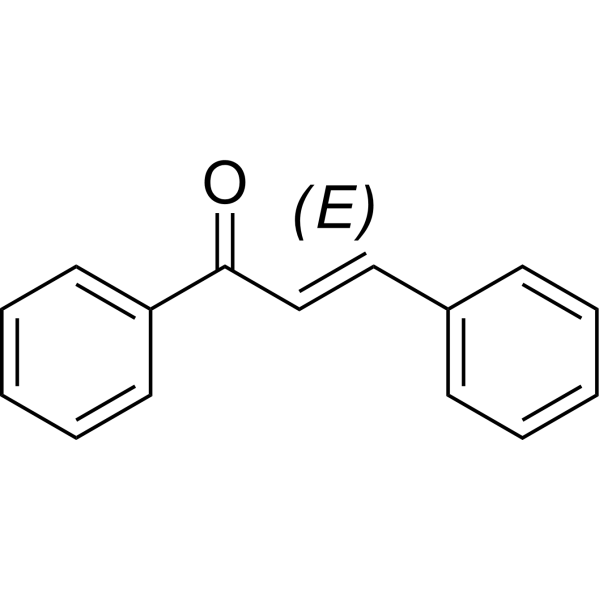
trans-Chalcone, isolated from Aronia melanocarpa skin, is a biphenolic core structure of flavonoids precursor. trans-Chalcone is a potent fatty acid synthase (FAS) and α-amylase inhibitor. trans-Chalcone causes cellcycle arrest and induces apoptosis in the breastcancer cell line MCF-7. trans-Chalcone has antifungal and anticancer activity .
|
-
- HY-N9916
-
|
|
Amylases
|
Metabolic Disease
|
|
8,3′,4′-Trihydroxyflavone-7-O-β-D-glucopyranoside (Compound 3) is natural product that can be isolated from Bidens bipinnata. 8,3′,4′-Trihydroxyflavone-7-O-β-D-glucopyranoside shows 22% inhibition against α-amylase at 0.556 mg/mL .
|
-
- HY-N12688
-
|
|
Glycosidase
Amylases
|
Metabolic Disease
|
|
2,3-Dihydrocalodenin B (Compound 6) is a compound that can be isolated from Knema globularia. 2,3-Dihydrocalodenin B is a potent and non-competitive inhibitor against α-glucosidase and α-amylase, with IC50 values of 1.1 and 2.6 μM, respectively. 2,3-Dihydrocalodenin B can be used for the research of diabetes .
|
-
- HY-181683
-
|
|
|
Metabolic Disease
|
|
Antidiabetic agent 8 is an orally active multi-target inhibitor, with IC50 values of 9.79, 6.36 and 19.08 μM against α-glucosidase, α-amylase and PTP1B, respectively. Antidiabetic agent 8 reduces postprandial blood glucose elevation. Antidiabetic agent 8 can be used in the research of type 2 diabetes .
|
-
- HY-155961
-
-
- HY-126052
-
|
|
COX
Tyrosinase
HDAC
|
Metabolic Disease
Cancer
|
|
Gnetol is a phenolic compound isolated from the root of Gnetum montanum . Gnetol potently inhibits COX-1 (IC50 of 0.78 μM) and HDAC. Gnetol is a potent tyrosinase inhibitor with an IC50 of 4.5 μM for murine tyrosinase and suppresses melanin biosynthesis. Gnetol has antioxidant, antiproliferative, anticancer and hepatoprotective activity. Gnetol also possesses concentration-dependent α-Amylase, α-glucosidase, and adipogenesis activities .
|
-
- HY-W068682
-
|
Hemipyocyanine; 1-Phenazinol; Hemi-pyocyanin
|
Amylases
Bacterial
|
Infection
Neurological Disease
Metabolic Disease
Inflammation/Immunology
Cancer
|
|
1-Hydroxyphenazine (Hemipyocyanine; 1-Phenazinol; Hemi-pyocyanin) is an inhibitor for α-Amylase with an IC50 of 3.1 μg/mL . 1-Hydroxyphenazine exhibits anticancer and anti-inflammatory activity against cells A549, 1321N1 and RAW264.7, antifungal and antibacterial activity against strains Candida albicans, Aspergillus fumigatus, Escherichia coli and Xanthomonas campestris .
|
-
- HY-N11728
-
|
|
Amylases
Glycosidase
|
Metabolic Disease
|
|
2,7"-Phloroglucinol-6,6'-bieckol is an orally active dual α-amylase/α-glucosidase inhibitor with IC50 values of 6.94 μM and 23.35 μM respectively. 2,7"-Phloroglucinol-6, 6'-bieckol alleviates postprandial hyperglycemia in diabetic mice. 2,7"-Phloroglucinol-6,6'-bieckol can be used in diabetes research .
|
-
- HY-B1393R
-
|
Dehydrocholate (Standard)
|
Reference Standards
Autophagy
Amylases
Lipase
|
Metabolic Disease
|
|
Dehydrocholic acid (Dehydrocholate) (Standard) is the analytical standard of Dehydrocholic acid (HY-B1393). This product is intended for research and analytical applications. Dehydrocholic acid (Dehydrocholate) is an orally active hydrocholeretic agent. Dehydrocholic acid modulates Autophagy, reduces serum amylase and lipase levels. Dehydrocholic acid has the effects of promoting choleretic function, protecting the liver, reducing pancreatic damage, and regulating cholesterol metabolism. Dehydrocholic acid can be used in the study of acute biliary pancreatitis and obstructive jaundice .
|
-
- HY-N17674
-
|
|
Amylases
|
Metabolic Disease
|
|
Luteolin 4'-O-β-D-glucuronopyranoside is a flavonoid glycoside. Luteolin 4'-O-β-D-glucuronopyranoside can be isolated from the aerial parts of C. rotundus L.. Luteolin 4'-O-β-D-glucuronopyranoside inhibits α-amylase. Luteolin 4'-O-β-D-glucuronopyranoside shows antioxidant activity. Luteolin 4'-O-β-D-glucuronopyranoside can be used in research on diabetes .
|
-
- HY-179698
-
|
|
Glycosidase
Amylases
|
Metabolic Disease
|
|
α-Glucosidase-IN-105 is a selective and potent α-Glucosidase inhibitor with an IC50 of 31.36 μM. α-Glucosidase-IN-105 also inhibits α-Amylase (IC50 = 104.2 μM). α-Glucosidase-IN-105 exhibits inhibitory effects comparable to the standard drug \rAcarbose (HY-B0089). α-Glucosidase-IN-105 can be used for the research of type 2 diabetes .
|
-
- HY-113159A
-
|
Clupanodonic acid sodium
|
Amylases
Glycosidase
|
Metabolic Disease
Inflammation/Immunology
|
|
Docosapentaenoic acid (22n-3) sodium is a component of phospholipids. Docosapentaenoic acid 22n-3 sodium has inhibitory activity against α-amylase and α-glucosidase, with IC50s value of 17 μg/mL and 22 μg/mL, respectively. Docosapentaenoic acid 22n-3 sodium increases cell vitality. Docosapentaenoic acid 22n-3 sodium has a weak anti-inflammatory effect .
|
-
- HY-113159
-
|
Clupanodonic acid
|
Amylases
Glycosidase
|
Metabolic Disease
Inflammation/Immunology
|
|
Docosapentaenoic acid (22n-3) is a component of phospholipids. Docosapentaenoic acid 22n-3 has inhibitory activity against α-amylase and α-glucosidase, with IC50s value of 17 μg/mL and 22 μg/mL, respectively. Docosapentaenoic acid 22n-3 increases cell vitality. Docosapentaenoic acid 22n-3 has a weak anti-inflammatory effect .
|
-
- HY-169404
-
|
|
PPAR
|
Metabolic Disease
|
|
PPARγ agonist 15 (Compound 7c) is an agonist for PPARγ. PPARγ agonist 15 inhibits the expression of alpha-amylase (HPA) and alpha-glucosidase (HLAG) with IC50 of 28.35 µM and 26.21 µM. PPARγ agonist 15 enhances glucose uptake in the L6 myotube cell. PPARγ agonist 15 improves glucose homeostasis, insulin sensitivity, and lipid metabolism in rat Streptozotocin (HY-13753)-induced diabetes model .
|
-
- HY-N2278
-
|
Leachianone E
|
Tyrosinase
Glycosidase
|
Cancer
|
|
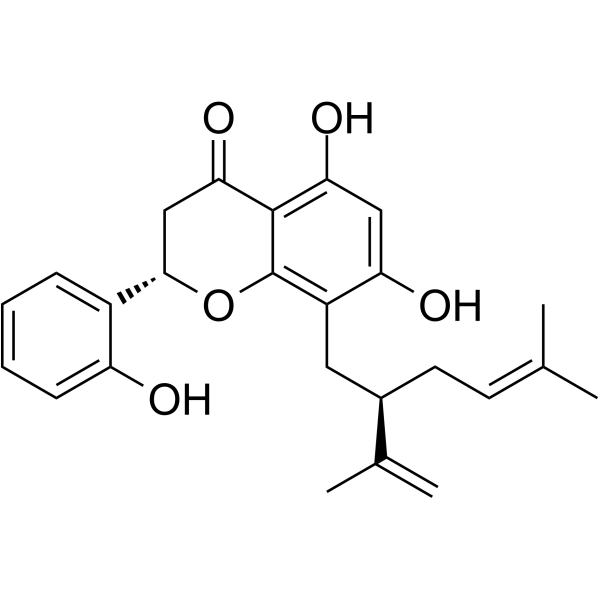
Kushenol A (Leachianone E) is isolated from the root of Sophora flavescent. Kushenol A is a non-competitive tyrosinase inhibitor to block the conversion of L-tyrosine to L-DOPA, shows IC50 and Kivalues of 1.1 μM and 0.4 μM, respectively . Kushenol A is a flavonoid antioxidant, has inhibitory effects on alpha-glucosidase (IC50: 45 μM; Ki: 6.8 μM) and β-amylase . Kushenol A is confirmed as potential inhibitors of enzymes targeted by cosmetics for skin whitening and aging .
|
-
- HY-129516
-
|
|
Cholecystokinin Receptor
|
Metabolic Disease
|
|
A-70874 is a tyrosine-free tetrapeptide analog of cholecystokinin (30-33) (CCK-4). A-70874 is an agonist that stimulates pancreatic amylase release and a partial agonist that stimulates pancreatic phosphoinositide decomposition. A-70874 has an IC50 of 4.9 nM for the guinea pig pancreatic CCK receptor. Cholecystokinin (CCK) receptors are divided into CCK-A (digestive tract) and CCK-B (brain). A-70874 has an affinity of 1.6 μM for the CCK-B/gastrin receptor .
|
-
- HY-P0039
-
|
|
Bombesin Receptor
|
Cancer
|
|
BIM-26226 is a selective gastrin-releasing peptide receptor (GRPR) (IC50 = 6 nM) and bombesin receptor (BN receptor) antagonist. BIM-26226 antagonizes BN- or GRP-stimulated amylase release with IC50 values of 0.3 nM and 0.2 nM, respectively. BIM-26226 is specific for the GRP-preferring BN receptor subtype with no interference with GRP receptor system. BIM-26226 can induce the synthesis of somatostatin receptor but has no significant effect on tumor growth .
|
-
- HY-Y0598R
-
|
|
Fatty Acid Synthase (FASN)
Reference Standards
Apoptosis
Fungal
|
Inflammation/Immunology
Cancer
|
|
trans-Chalcone (Standard) is the analytical standard of trans-Chalcone (HY-Y0598). This product is intended for research and analytical applications. trans-Chalcone, isolated from Aronia melanocarpa skin, is a biphenolic core structure of flavonoids precursor. trans-Chalcone is a potent fatty acid synthase (FAS) and α-amylase inhibitor. trans-Chalcone causes cellcycle arrest and induces apoptosis in the breastcancer cell line MCF-7. trans-Chalcone has antifungal and anticancer activity .
|
-
- HY-N8161
-
|
Kaempferol 3,7-diglucoside
|
Glycosidase
Cholinesterase (ChE)
|
Neurological Disease
|
|
Kaempferol-3,7-di-O-β-glucoside (Kaempferol 3,7-diglucoside), a flavonol, possesses enzyme inhibition property towards α-amylase, α-glucosidase and Acetylcholinesterase. Kaempferol-3,7-di-O-β-glucoside protects differentiating neuronal cells, SH-SY5Y from Amyloid β peptide-induced injury. Kaempferol-3,7-di-O-β-glucoside has the potential for Alzheimer's research .
|
-
- HY-160113
-
|
|
Biochemical Assay Reagents
|
Others
|
|
Sodium phosphate buffer 0.02 M, pH 6.9 is a commonly used aqueous biological buffer that maintains a stable pH value. Sodium phosphate buffer 0.02 M, pH 6.9 is often used in enzyme activity assays, such as α-amylase assays. Sodium phosphate buffer 0.02 M, pH 6.9 is prepared by mixing disodium hydrogen phosphate (Na2HPO4) (HY-B2243) and sodium dihydrogen phosphate (NaH2PO4) (HY-Y0308) to a total concentration of 0.02 M .
|
-
- HY-172832
-
|
|
Drug Metabolite
Amylases
Glycosidase
|
Metabolic Disease
Inflammation/Immunology
|
|
(±)7(8)-DiHDTE is a metabolite of Docosapentaenoic acid (22n-3) (HY-113159). Docosapentaenoic acid (22n-3) is a component of phospholipids. Docosapentaenoic acid 22n-3 has inhibitory activity against α-amylase and α-glucosidase with IC50s of 17 and 22 μg/mL, respectively. Docosapentaenoic acid 22n-3 increases cell vitality. Docosapentaenoic acid 22n-3 has a weak anti-inflammatory effect .
|
-
- HY-N2464
-
|
Amylotetraose; Fujioligo 450; α-1,4-Tetraglucose
|
TNF Receptor
Endogenous Metabolite
Bacterial
Integrin
NF-κB
|
Cardiovascular Disease
Inflammation/Immunology
|
|
Maltotetraose can serve as a substrate for enzyme-linked assays to measure amylase activity in biological fluids. Maltotetraose has oral active, and reduces TNF-α-induced inflammatory responses by inhibiting NF-κB activity and decreasing ICAM-1 expression. Maltotetraose also inhibits PDGF-induced vascular smooth muscle cell migration and neovascularization. Additionally, Maltotetraose derivatives can function as probes for detecting bacterial infections by targeting the maltodextrin transporter. With good long-term safety, Maltotetraose holds promise for research in atherosclerosis-related diseases .
|
-
- HY-N12999
-
|
|
Apoptosis
Bcl-2 Family
Caspase
MDM-2/p53
PARP
Amylases
|
Metabolic Disease
Endocrinology
Cancer
|
|
Stigmast-5-en-3-ol induces cancer cell apoptosis and inhibits proliferation by increasing the production of Bax, Caspase-9, p53, and PARP cleavage and reducing Bcl-xl expression. Stigmast-5-en-3-ol exhibits potent inhibitory activity against glucoamylase and α-amylase and possesses high antioxidant activity. Stigmast-5-en-3-ol can be used in the research of diseases such as leukemia, breast cancer, type 2 diabetes, and obesity .
|
-
- HY-168074
-
|
|
Amylases
Glycosidase
|
Metabolic Disease
Inflammation/Immunology
|
|
4″-C18 EGCG is a potent inhibitor of α-amylase and α-glucosidase with IC50 values of 3.74 and 0.81 μM, respectively. 4″-C18 EGCG inhibits carbohydrate hydrolases, reduces oxidative stress and inflammation, and exhibits antidiabetic activity. 4″-C18 EGCG also downregulates proinflammatory cytokines and is cytotoxic to primary human peripheral blood mononuclear cells (PBMCs), non-cancer cell lines 3T3-L1, and HEK 293 at 50 μM .
|
-
- HY-N1731
-
|
|
NF-κB
COX
TNF Receptor
NO Synthase
Reactive Oxygen Species (ROS)
Parasite
|
Infection
Metabolic Disease
Inflammation/Immunology
Cancer
|
|
2'-Hydroxy-5'-methoxyacetophenone is an acetophenone derivative with acaricidal activities. 2'-Hydroxy-5'-methoxyacetophenone attenuates the inflammatory response via NF-κB signaling pathway. 2'-Hydroxy-5'-methoxyacetophenone exhibits significant inhibitory activity against α-amylase, collagenase and aldose reductase (AR) with IC50s of 0.928, 3.264 and 20.046 μM, highlighting its potential in combating diabetes. 2'-Hydroxy-5'-methoxyacetophenone exhibits anti-ovarian cancer activity .
|
-
- HY-N8134
-
|
|
Dipeptidyl Peptidase
|
Metabolic Disease
|
|
2-Methoxy-5-acetoxy-fruranogermacr-1(10)-en-6-one is a natural product found in the leaves and stem bark of M. glabra. 2-Methoxy-5-acetoxy-fruranogermacr-1(10)-en-6-one displays binding affinities with dipeptidyl peptidase-4 (DPP-4) and α-Amylase. 2-Methoxy-5-acetoxy-fruranogermacr-1(10)-en-6-one has potential antidiabetic activities .
|
-
- HY-P2055
-
|
|
Endogenous Metabolite
|
Endocrinology
|
|
A-57696 is a cholecystokinin antagonist with selective activity at cortical CCK-B receptors (IC50 = 25 nM). A-57696 behaves as a competitive antagonist in reversing CCK8-stimulated pancreatic alpha-amylase secretion and phosphatidylinositol degradation. A-57696 fails to induce gallbladder contraction and inhibits CCK8-induced contraction. A-57696 behaves as a partial agonist at CCK-B/gastrin receptors on NCI-H345 cells, achieving 80% of the maximal CCK8 response. A-57696 and CCK8 inhibit each other in a calcium mobilization assay .
|
-
- HY-E70118
-
|
|
Glycosidase
|
Others
|
|
oligo-α-1,6-Glucosidase, Bacillus cereus ATCC7064 is a hydrolase that mainly hydrolyzes oligosaccharides with α-1,6-glycosidic bonds. oligo-α-1,6-Glucosidase, Bacillus cereus ATCC7064 can catalyzes the exo hydrolysis of α-1,6-glucoside bonds from the nonreducing ends of panose, palatinose, α-limit dextrins, and isomaltooligosaccharides. oligo-α-1,6-Glucosidase, Bacillus cereus ATCC7064 participates in the degradation pathway of starch and glycogen, assisting enzymes such as α-amylase to completely hydrolyzes amylopectin .
|
-
- HY-N4309
-
|
|
Amylases
Glycosidase
|
Neurological Disease
Metabolic Disease
Cancer
|
|
Lotusine is an orally active signaling pathway modulator and enzyme inhibitor, with an IC50 of 30.60 μg/mL against α-amylase and an IC50 of 36.15 μg/mL against α-glucosidase. Lotusine inhibits the EGFR-Akt-ERK signaling pathway by reducing the levels of phosphorylated EGFR, Akt and ERK. Lotusine induces apoptosis, triggers G0/G1 cell cycle arrest and inhibits cancer cell proliferation. Lotusine reduces lipid peroxidation and increases the activities of SOD, CAT and GPx. Lotusine is applicable to researches related to non-small cell lung cancer, type 2 diabetes and autism spectrum disorder .
|
-
- HY-N2376
-
|
|
Glycosidase
Amylases
NF-κB
|
Metabolic Disease
Inflammation/Immunology
|
|
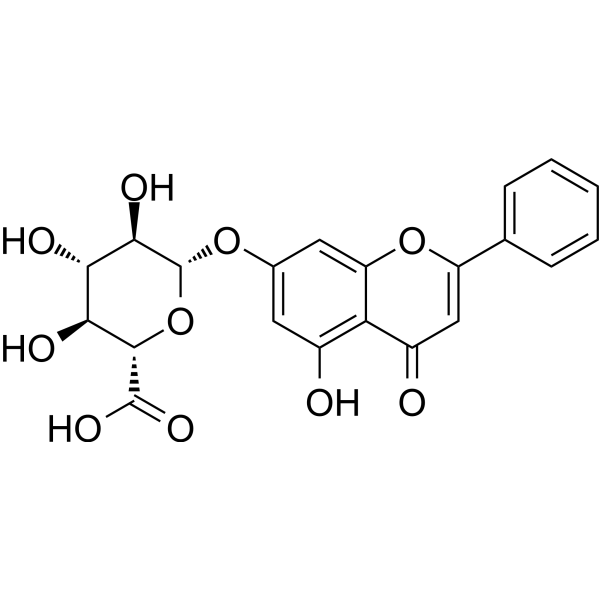
Chrysin-7-O-glucuronide is a flavonoid found in Scutellaria baicalensis. Chrysin-7-O-glucuronide inhibits α-glucosidase and α-amylase with IC50 values of 612.13 and 980.73 μg/mL. Chrysin-7-O-glucuronide suppresses NF-κB signaling activity. Chrysin-7-O-glucuronide scavenges free radicals, acts as a tight junction protector, and mitigates intestinal mucosal barrier injury. Chrysin-7-O-glucuronide can be used for the research of type 2 diabetes and severe acute pancreatitis-induced intestinal mucosal barrier injury .
|
-
- HY-N4309A
-
|
|
Amylases
Glycosidase
|
Cardiovascular Disease
|
|
Lotusine hydroxide is an orally active signaling pathway modulator and enzyme inhibitor, with an IC50 of 30.60 μg/mL against α-amylase and an IC50 of 36.15 μg/mL against α-glucosidase. Lotusine hydroxide inhibits the EGFR-Akt-ERK signaling pathway by reducing the levels of phosphorylated EGFR, Akt and ERK. Lotusine hydroxide induces apoptosis, triggers G0/G1 cell cycle arrest and inhibits cancer cell proliferation. Lotusine hydroxide reduces lipid peroxidation and increases the activities of SOD, CAT and GPx. Lotusine hydroxide is applicable to researches related to non-small cell lung cancer, type 2 diabetes and autism spectrum disorder .
|
-
- HY-168185
-
|
|
Glycosidase
Phosphatase
Amylases
|
Metabolic Disease
|
|
α-glucosidase/PTP1B-IN-1 (compound 8a) is a potent α-glucosidase and PTP1B inhibitor with an IC50 value of 66.3 μM and 47.0 μM, respectively. α-glucosidase/PTP1B-IN-1 exhibits excellent activities against α-amylase with an IC50 of 30.62 μM. α-glucosidase/PTP1B-IN-1 can dock into the active pockets of α-glucosidase and PTP1B. α-glucosidase/PTP1B-IN-1 has potential to reduce the postprandial blood glucose and is used for Type 2 diabetes mellitus .
|
-
- HY-N8599
-
-
- HY-W207699
-
|
|
Monoamine Oxidase
Amylases
|
Neurological Disease
Metabolic Disease
Inflammation/Immunology
|
|
MAO-B-IN-46 (Compound 16) is a selective hMAO-B inhibitor (IC50: 26.8 nM), with weak activity against hMAO-A (IC50: 7.2054 μM). MAO-B-IN-46 (Compound 8) also acts as an α-amylase inhibitor (IC50: 19.46 μM). MAO-B-IN-46 exhibits certain neuroprotective effects and shows no significant toxicity to human gingival fibroblasts and SH-SY5Y cells. Additionally, MAO-B-IN-46 can scavenge DPPH and ABTS free radicals, with IC50 values of 17.86 μM and 17.71 μM, respectively. MAO-B-IN-46 can be used in the research of neurodegenerative diseases such as Parkinson's disease, diabetes, and diseases related to oxidative stress resistance .
|
-
- HY-N2376R
-
|
|
Reference Standards
Glycosidase
Amylases
NF-κB
|
Metabolic Disease
Inflammation/Immunology
|
|
Chrysin-7-O-glucuronide (Standard) is the analytical standard of Chrysin-7-O-glucuronide (Hy-N2376). This product is intended for research and analytical applications. Chrysin-7-O-glucuronide is a flavonoid found in Scutellaria baicalensis. Chrysin-7-O-glucuronide inhibits α-glucosidase and α-amylase with IC50 values of 612.13 and 980.73 μg/mL. Chrysin-7-O-glucuronide suppresses NF-κB signaling activity. Chrysin-7-O-glucuronide scavenges free radicals, acts as a tight junction protector, and mitigates intestinal mucosal barrier injury. Chrysin-7-O-glucuronide can be used for the research of type 2 diabetes and severe acute pancreatitis-induced intestinal mucosal barrier injury .
|
-
- HY-W009417
-
|
|
Environmental Pollutants
Glycosidase
|
Metabolic Disease
|
|
Cedryl acetate is an orally active α-glucosidase inhibitor with an IC50 of 94 μM against yeast α-glucosidase. Cedryl acetate reduces high-fat diet-induced body weight gain, visceral fat pad weight, adipocyte hypertrophy, hepatic lipid accumulation, glucose intolerance, insulin resistance and gluconeogenesis. Cedryl acetate can be used in the research of obesity and obesity-related metabolic syndrome .
|
-
- HY-N9454
-
|
|
Pregnane X Receptor (PXR)
COX
NF-κB
Amylases
β-glucuronidase
DNA/RNA Synthesis
Amyloid-β
NOD-like Receptor (NLR)
Pyroptosis
|
Cancer
|
|
Garcinoic acid is an orally active anti-inflammatory agent that crosses the blood-brain barrier. Garcinoic acid also enhances efferocytosis and enzyme/receptor regulation, and selectively inhibits human COX-2, porcine α-amylase, Saccharomyces cerevisiae α-glucosidase and human DNA polymerase β (IC50=11 μM), as well as activates human PXR. Garcinoic acid enhances macrophage efferocytosis via receptors such as MerTK and LRP-1, and promotes the production of pro-resolving lipid mediators. Garcinoic acid inhibits NF-κB activation and pro-inflammatory cytokine secretion, interferes with Aβ aggregation, downregulates NLRP3 inflammasome activity, and binds to targets including CD44 and EGFR to inhibit leukemia cell proliferation. The pharmacological activities of Garcinoic acid, such as antioxidant, anti-inflammatory and lipid metabolism-regulating effects, are widely used in studies related to various diseases including atherosclerosis, Alzheimer's disease, type 2 diabetes, inflammatory bowel disease and viral pneumonia .
|
-
| Cat. No. |
Product Name |
Type |
-
- HY-W009694
-
|
|
Biochemical Assay Reagents
|
|
3,5-Dinitrosalicylic acid the derivative of salicylic acid. 3,5-Dinitrosalicylic acid is used in the α-amylase assay, carbohydrase assay, and for the colorimetric determination of reducing substances .
|
-
- HY-153102
-
|
|
Biochemical Assay Reagents
|
|
G3-CNP is an α-amylase substrate. The absorbance of G3-CNP cleavage product 2-chloro-4-nitrophenol is measured at 405 nm, which can be used to detect enzyme activity .
|
-
- HY-160113
-
|
|
Biochemical Assay Reagents
|
|
Sodium phosphate buffer 0.02 M, pH 6.9 is a commonly used aqueous biological buffer that maintains a stable pH value. Sodium phosphate buffer 0.02 M, pH 6.9 is often used in enzyme activity assays, such as α-amylase assays. Sodium phosphate buffer 0.02 M, pH 6.9 is prepared by mixing disodium hydrogen phosphate (Na2HPO4) (HY-B2243) and sodium dihydrogen phosphate (NaH2PO4) (HY-Y0308) to a total concentration of 0.02 M .
|
-
- HY-W005598
-
|
|
Biochemical Assay Reagents
|
|
2-Hydroxyquinoline is an inhibitor of α-glucosidase and α-amylase with IC50 values of 64.4 µg/mL and 130.5 µg/mL, respectively. 2-Hydroxyquinoline can be used in the study of diabetes .
|
-
- HY-153101
-
|
|
Biochemical Assay Reagents
|
|
Gal-G2-CNP is a galactopyranosyl maltoside. Gal-G2-CNP is an amylase substrate specific to salivary amylase, which produces a yellow hydrolyzate upon decomposition. Gal-G2-CNP can serve as a matrix for the assays of novel amylases and pancreatic amylases .
|
-
- HY-E70183
-
|
EC:3.2.1.20; GAA
|
Biochemical Assay Reagents
|
|
Lysosomal α-Glucosidase (EC:3.2.1.20) is a γ-amylase with specificity for glycogen and several natural and synthetic oligoglucosides .
|
-
- HY-N1731
-
|
|
Biochemical Assay Reagents
|
|
2'-Hydroxy-5'-methoxyacetophenone is an acetophenone derivative with acaricidal activities. 2'-Hydroxy-5'-methoxyacetophenone attenuates the inflammatory response via NF-κB signaling pathway. 2'-Hydroxy-5'-methoxyacetophenone exhibits significant inhibitory activity against α-amylase, collagenase and aldose reductase (AR) with IC50s of 0.928, 3.264 and 20.046 μM, highlighting its potential in combating diabetes. 2'-Hydroxy-5'-methoxyacetophenone exhibits anti-ovarian cancer activity .
|
-
- HY-137228
-
-
- HY-137785
-
|
|
Biochemical Assay Reagents
|
|
2-Chloro-4-nitrophenyl-β-D-maltotrioside is a chromogenic substrate used in bioluminescent and fluorescent assays to detect α-amylase.
|
| Cat. No. |
Product Name |
Target |
Research Area |
-
- HY-P3462A
-
|
|
CGRP Receptor
|
Metabolic Disease
|
|
Cagrilintide acetate is a non-selective AMYR/CTR agonist and long-acting acylated amylase analogue. Cagrilintide acetate causes a reduction in food intake and significant weight loss in a dose-dependent manner. Cagrilintide acetate can be used in obesity studies .
|
-
- HY-P1096
-
|
|
Cholecystokinin Receptor
|
Metabolic Disease
|
|
A71623, a CCK-4-based peptide, is a potent and highly selective CCK-A full agonist. The IC50s for A-71623 are 3.7 nM in guinea pig pancreas (CCK-A) and 4500 nM in cerebral cortex (CCK-B) in radioligand binding assays, respectively .
|
-
- HY-P0039
-
|
|
Bombesin Receptor
|
Cancer
|
|
BIM-26226 is a selective gastrin-releasing peptide receptor (GRPR) (IC50 = 6 nM) and bombesin receptor (BN receptor) antagonist. BIM-26226 antagonizes BN- or GRP-stimulated amylase release with IC50 values of 0.3 nM and 0.2 nM, respectively. BIM-26226 is specific for the GRP-preferring BN receptor subtype with no interference with GRP receptor system. BIM-26226 can induce the synthesis of somatostatin receptor but has no significant effect on tumor growth .
|
-
- HY-P3377
-
|
|
Peptides
|
Inflammation/Immunology
|
|
Rimtoregtide is a polypeptide compound which significantly reduces the increase in the levels of amylase and lipase in the blood caused by acute pancreatitis. Rimtoregtide has the potential for the research of pancreatitis and acute pancreatitis (extracted from patent WO2018205233A1).
|
-
- HY-P3112
-
|
|
Bombesin Receptor
|
Neurological Disease
|
|
ICI 216140 is a GRP/bombesin receptor 2 antagonist with the IC50 of 2 nM. ICI 216140 can reduce Bombesin (HY-P0195)-stimulated pancreatic amylase secretion and attenuates Bombesin (HY-P0195)-stimulated increases in blood pressure .
|
-
- HY-P3899A
-
|
|
Somatostatin Receptor
|
Metabolic Disease
|
|
[Nle8] Somatostatin (1-28) TFA is a derivative of somatosttin (1-28) with norleucine replacing methionine in position 8. [Nle8] Somatostatin (1-28) TFA increases the amylase release.[Nle8] Somatostatin (1-28) TFA increases the cyclic AMP in pancreatic acini .
|
-
- HY-P1133
-
|
Rat galanin(2-29)
|
Neuropeptide Y Receptor
|
Others
|
|
Galanin (2-29) (rat) inhibits rat pancreatic protein and CCK-8-stimulated amylase secretion. Galanin (2-29) (rat) is an GAL2R agonist (Ki: 3.5 nM) .
|
-
- HY-P3899
-
|
|
Somatostatin Receptor
|
Metabolic Disease
|
|
[Nle8] Somatostatin (1-28) is a derivative of somatosttin (1-28) with norleucine replacing methionine in position 8. [Nle8] Somatostatin (1-28) increases the amylase release.[Nle8] Somatostatin (1-28) increases the cyclic AMP in pancreatic acini .
|
-
- HY-103282
-
|
|
Bombesin Receptor
|
Others
|
|
[D-Phe12]-Bombesin is a derivative of Bombesin (HY-P0195) and an antagonist for bombesin receptor with Ki of 4.7 μM. [D-Phe12]-Bombesin inhibits the Bombesin (HY-P0195)-induced amylase release, with IC50 of 4 μM .
|
-
- HY-P2055
-
|
|
Endogenous Metabolite
|
Endocrinology
|
|
A-57696 is a cholecystokinin antagonist with selective activity at cortical CCK-B receptors (IC50 = 25 nM). A-57696 behaves as a competitive antagonist in reversing CCK8-stimulated pancreatic alpha-amylase secretion and phosphatidylinositol degradation. A-57696 fails to induce gallbladder contraction and inhibits CCK8-induced contraction. A-57696 behaves as a partial agonist at CCK-B/gastrin receptors on NCI-H345 cells, achieving 80% of the maximal CCK8 response. A-57696 and CCK8 inhibit each other in a calcium mobilization assay .
|
| Cat. No. |
Product Name |
Category |
Target |
Chemical Structure |
-
- HY-132179
-
-
-
- HY-113159
-
-
-
- HY-N1425
-
-
-
- HY-B2193
-
-
-
- HY-N0668
-
-
-
- HY-N2464
-
-
-
- HY-B0998
-
-
-
- HY-N1495
-
-
-
- HY-126052
-
-
-
- HY-B2192
-
-
-
- HY-N2278
-
-
-
- HY-N2376
-
-
-
- HY-N6675
-
-
-
- HY-Y0598
-
-
-
- HY-N8599
-
-
-
- HY-W009417
-
-
-
- HY-N8161
-
-
-
- HY-135530
-
-
-
- HY-N4309
-
-
-
- HY-200541
-
-
-
- HY-N12999
-
-
-
- HY-N9454
-
|
|
Structural Classification
Monophenols
other families
Classification of Application Fields
Ketones, Aldehydes, Acids
Phenols
Plants
Disease Research Fields
Source Classification
Cancer
|
Pregnane X Receptor (PXR)
COX
NF-κB
Amylases
β-glucuronidase
DNA/RNA Synthesis
Amyloid-β
NOD-like Receptor (NLR)
Pyroptosis
|
|
Garcinoic acid is an orally active anti-inflammatory agent that crosses the blood-brain barrier. Garcinoic acid also enhances efferocytosis and enzyme/receptor regulation, and selectively inhibits human COX-2, porcine α-amylase, Saccharomyces cerevisiae α-glucosidase and human DNA polymerase β (IC50=11 μM), as well as activates human PXR. Garcinoic acid enhances macrophage efferocytosis via receptors such as MerTK and LRP-1, and promotes the production of pro-resolving lipid mediators. Garcinoic acid inhibits NF-κB activation and pro-inflammatory cytokine secretion, interferes with Aβ aggregation, downregulates NLRP3 inflammasome activity, and binds to targets including CD44 and EGFR to inhibit leukemia cell proliferation. The pharmacological activities of Garcinoic acid, such as antioxidant, anti-inflammatory and lipid metabolism-regulating effects, are widely used in studies related to various diseases including atherosclerosis, Alzheimer's disease, type 2 diabetes, inflammatory bowel disease and viral pneumonia .
|
-
-
- HY-N8326
-
-
-
- HY-N17254
-
-
-
- HY-N10413
-
-
-
- HY-N0668R
-
|
|
Structural Classification
other families
Terpenoids
Diterpenoids
Plants
Source Classification
|
GLUT
Amylases
NF-κB
Reference Standards
|
|
Rubusoside (Standard) is the analytical standard of Rubusoside. This product is intended for research and analytical applications. Rubusoside is a diterpene glycoside that is also a sweetener and solubilizer with anti-angiogenic, anti-cancer, anti-obesity, anti-allergic and anti-asthmatic effects. Rubusoside attenuates airway hyperresponsiveness and reduces inflammatory cells in bronchoalveolar lavage fluid (BALF), reducing OVA (HY-W250978)-induced airway inflammation. Rubusoside also prevents palmitic acid-induced lipotoxicity in pancreatic INS-1 cells, reduces the transport of human glucose transporters GLUT-1 and fructose GLUT-5, and inhibits NF-κB and α-amylase (α-amylase) .
|
-
-
- HY-N11728
-
|
|
Microorganisms
Phenols
Polyphenols
Source Classification
|
Amylases
Glycosidase
|
|
2,7"-Phloroglucinol-6,6'-bieckol is an orally active dual α-amylase/α-glucosidase inhibitor with IC50 values of 6.94 μM and 23.35 μM respectively. 2,7"-Phloroglucinol-6, 6'-bieckol alleviates postprandial hyperglycemia in diabetic mice. 2,7"-Phloroglucinol-6,6'-bieckol can be used in diabetes research .
|
-
-
- HY-N8134
-
-
-
- HY-N0419R
-
-
-
- HY-N7729
-
-
-
- HY-N11844
-
|
|
Natural Products
Cardamine hirsuta L.
Plants
Brassicaceae
Source Classification
|
Amylases
|
|
Quercetin 3-(6″-caffeoylsophoroside) is an orally active α-amylase inhibitor, with an IC50 of 73.66 μg/mL. Quercetin 3-(6″-caffeoylsophoroside) presents in thehydro-methanolic extract of Cardamine hirsuta Linn. Quercetin 3-(6″-caffeoylsophoroside) shows the antidiabetic activities by oxidative stress reduction and α-amylase inhibition. Quercetin 3-(6″-caffeoylsophoroside) can be used for diabetes mellitus research .
|
-
-
- HY-N12263
-
-
-
- HY-N2464R
-
-
-
- HY-W727627
-
-
-
- HY-N14506
-
-
-
- HY-N10064
-
-
-
- HY-N1425R
-
-
-
- HY-N16656
-
-
-
- HY-N12650
-
-
-
- HY-N10360
-
-
-
- HY-N9916
-
-
-
- HY-N12688
-
|
|
Microorganisms
Phenols
Polyphenols
Source Classification
|
Glycosidase
Amylases
|
|
2,3-Dihydrocalodenin B (Compound 6) is a compound that can be isolated from Knema globularia. 2,3-Dihydrocalodenin B is a potent and non-competitive inhibitor against α-glucosidase and α-amylase, with IC50 values of 1.1 and 2.6 μM, respectively. 2,3-Dihydrocalodenin B can be used for the research of diabetes .
|
-
-
- HY-N4309A
-
-
-
- HY-N2376R
-
-
-
- HY-N18049
-
|
|
Structural Classification
Monophenols
Gentianaceae
Phenols
Swertia mussotii Franch.
Plants
Source Classification
|
Amylases
|
|
Decussatin is an α-Amylases inhibitor isolated from the Tibetan medicinal plant Swertia mussotii. By inhibiting the catalytic activity of α-Amylases, Decussatin reduces the hydrolysis of complex carbohydrates such as starch and the intestinal absorption of glucose, thereby lowering blood glucose levels in the body. Decussatin shows no significant in vitro antibacterial or antifungal activity. Decussatin can be used for the research of type 2 diabetes .
|
-
-
- HY-N17989
-
-
-
- HY-N17294
-
-
-
- HY-N17215
-
|
3,4,6-Trigalloylglucose
|
Structural Classification
Natural Products
Euphorbia fischeriana Steud.
Euphorbiaceae
Plants
Source Classification
|
Amylases
Glycosidase
|
|
3,4,6-Tri-O-galloyl-D-glucose (3,4,6-Trigalloylglucose) is an α-amylase (porcine α-amylase IC50 = 334.6 μM; Ki = 307.5 μM) and α-glucosidase (yeast α-glucosidase IC50 = 46.5 μM; Ki = 39.9 μM) mixed type inhibitor. 3,4,6-Tri-O-galloyl-D-glucose exhibits free radical scavenging ability, ferric-reducing power, and antioxidant activity. 3,4,6-Tri-O-galloyl-D-glucose can be used for the research of diabetes .
|
-
-
- HY-N17674
-
-
-
- HY-Y0598R
-
-
| Cat. No. |
Product Name |
|
Classification |
-
- HY-B1393
-
|
Dehydrocholate
|
|
Cholesterol
|
|
Dehydrocholic acid (Dehydrocholate) is an orally active hydrocholeretic agent. Dehydrocholic acid modulates Autophagy, reduces serum amylase and lipase levels. Dehydrocholic acid has the effects of promoting choleretic function, protecting the liver, reducing pancreatic damage, and regulating cholesterol metabolism. Dehydrocholic acid can be used in the study of acute biliary pancreatitis and obstructive jaundice .
|
Your information is safe with us. * Required Fields.
Inquiry Information
- Product Name:
- Cat. No.:
- Quantity:
- MCE Japan Authorized Agent:

