
Search Result
Results for "
Asthma and COPD
" in MedChemExpress (MCE) Product Catalog:
6
Isotope-Labeled Compounds
| Cat. No. |
Product Name |
Target |
Research Areas |
Chemical Structure |
-
- HY-B0809
-
-
-
- HY-P99673
-
|
REGN-3500; SAR-440340
|
Interleukin Related
NF-κB
|
Inflammation/Immunology
|
|
Itepekimab (REGN-3500) is an IgG4 monoclonal antibody against IL-33. Itepekimab reduced airway inflammation and related tissue damage in preliminary clinical studies. Itepekimab has potential effects in asthma, chronic obstructive pulmonary disease (COPD), and atopic dermatitis (AD) .
|
-
-
- HY-12463
-
|
|
Adrenergic Receptor
|
Inflammation/Immunology
|
|
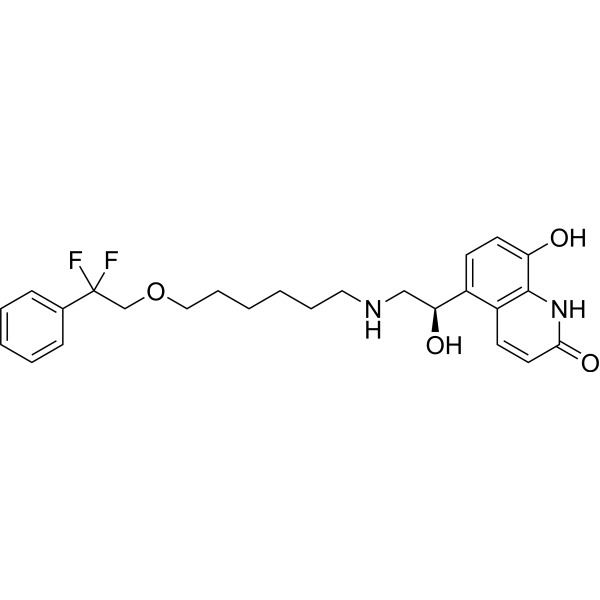
Carmoterol hydrochloride is a highly potent, selective and long-acting β2-adrenoceptor agonist with the pEC50 of 10.19. Carmoterol has 53 times higher affinity for the β2-adrenoceptors than for the β1-adrenoceptors. Carmoterol hydrochloride can be used for the research of asthma and chronic obstructive pulmonary disease (COPD) .
|
-
-
- HY-19519A
-
|
DF 2156A
|
CXCR
|
Infection
Inflammation/Immunology
Cancer
|
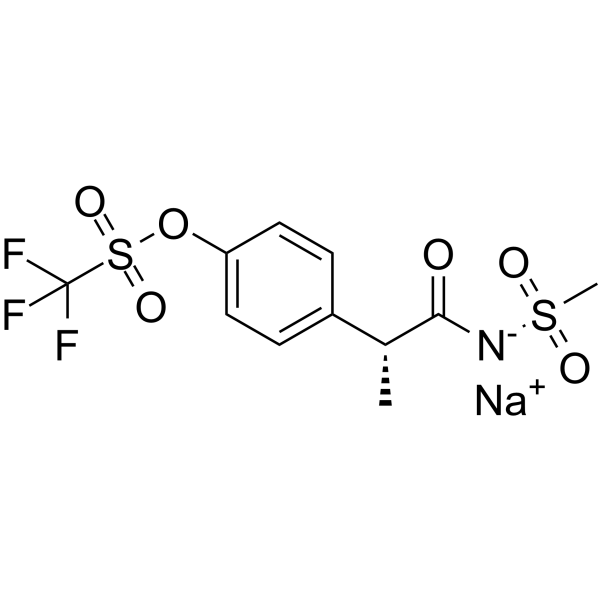
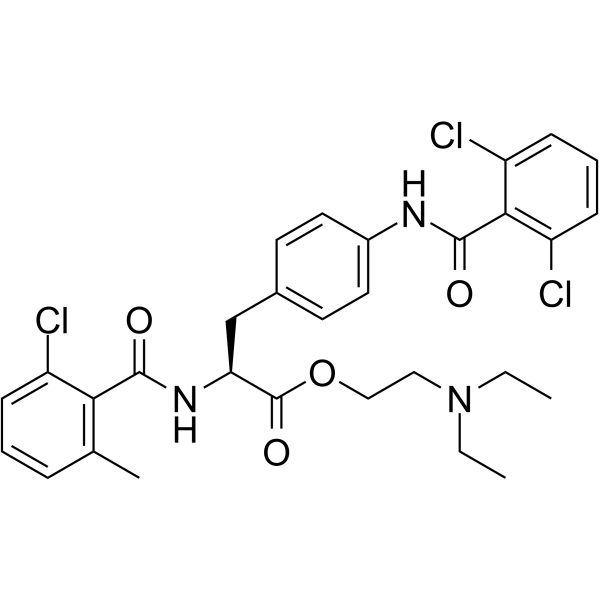
Ladarixin sodium (DF 2156A) is an orally active, allosteric non-competitive and dual CXCR1 and CXCR2 antagonist. Ladarixin sodium can be used for the research of COPD and asthma .
|
-
-
- HY-19519
-
|
DF 2156A free base
|
CXCR
|
Inflammation/Immunology
Cancer
|
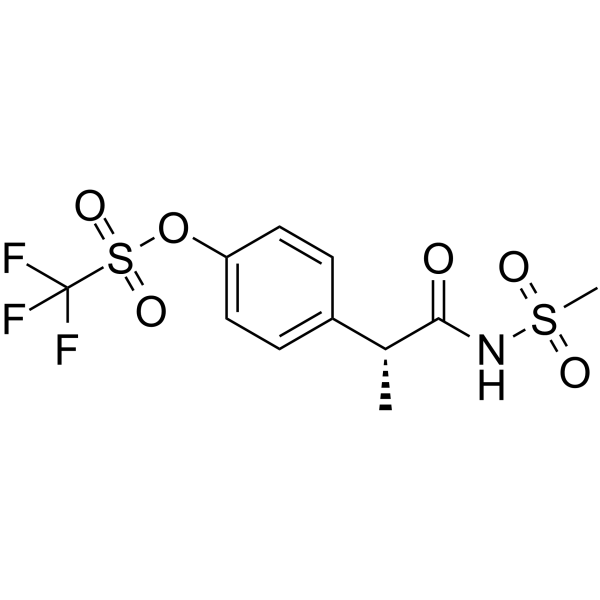
Ladarixin (DF 2156A free base) is an orally active, allosteric non-competitive and dual CXCR1 and CXCR2 antagonist. Ladarixin can be used for the research of COPD and asthma .
|
-
-
- HY-B0241
-
|
Sch 1000
|
mAChR
|
Neurological Disease
Inflammation/Immunology
|
|
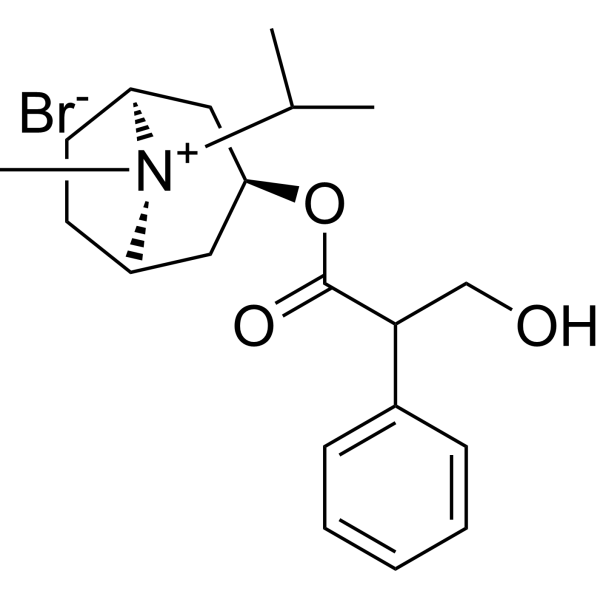
Ipratropium bromide (Sch 1000) is a muscarinic receptor antagonist, with IC50s of 2.9 nM, 2 nM, and 1.7 nM for M1, M2, and M3 receptors, respectively. Ipratropium bromide relaxes smooth muscle, can be used in the research for COPD (chronic obstructive pulmonary disease) and asthma .
|
-
-
- HY-10790
-
|
SB-207499
|
Phosphodiesterase (PDE)
|
Inflammation/Immunology
|
|
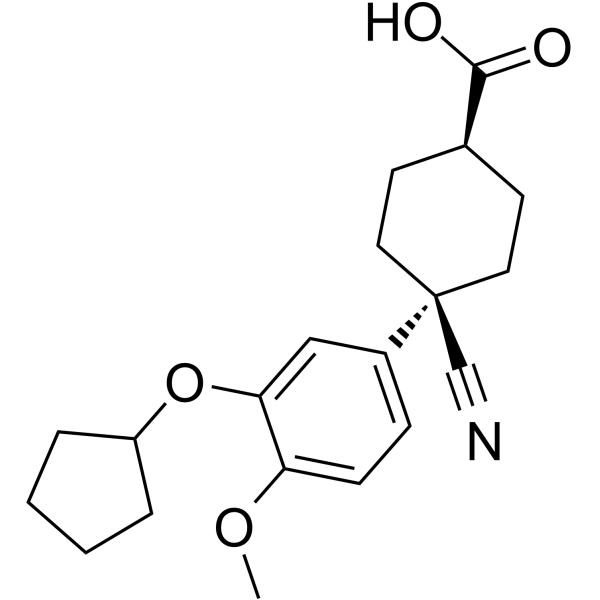
Cilomilast (SB-207499) is a potent, selective and orally active inhibitor of Phosphodiesterase 4 (PDE4), with IC50s of ~100 and 120 nM for LPDE4 and HPDE4, respectively. Cilomilast shows selectivity for PDE4 over PDE1, PDE2, PDE3 and PDE5 (IC50=74, 65, >100, and 83 μM, respectively). Cilomilast has anti-inflammatory and immunomodulatory effects and can be used for thr research of asthma and chronic obstructive pulmonary disease (COPD) .
|
-
-
- HY-B1332
-
|
Sch 1000 bromide hydrate
|
mAChR
|
Neurological Disease
Inflammation/Immunology
|
|
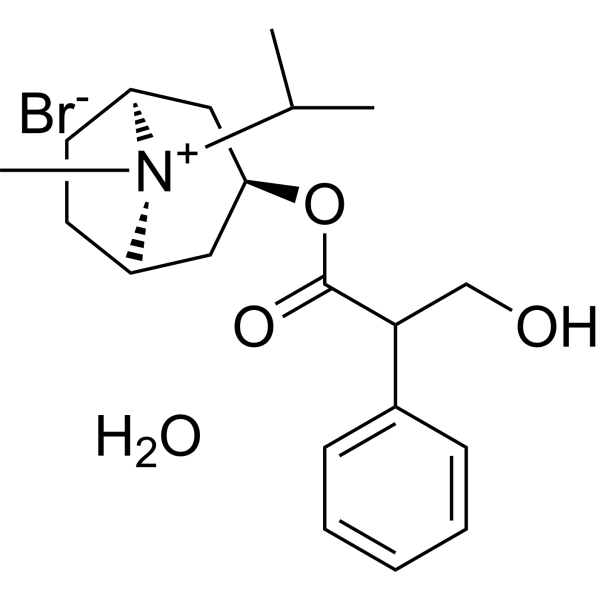
Ipratropium bromide (Sch 1000) hydrate is a muscarinic receptor antagonist, with IC50s of 2.9 nM, 2 nM, and 1.7 nM for M1, M2, and M3 receptors, respectively. Ipratropium bromide hydrate relaxes smooth muscle, can be used in the research for COPD (chronic obstructive pulmonary disease) and asthma .
|
-
-
- HY-111144
-
|
AZD0548; LAS100977
|
Adrenergic Receptor
|
Inflammation/Immunology
|
|
Abediterol (LAS100977) is an inhaled long-acting β2-adrenoceptor agonist (LABA) and can be used for the research of asthma and chronic obstructive pulmonary disease (COPD) .
|
-
-
- HY-108901
-
|
|
Adrenergic Receptor
|
Neurological Disease
Inflammation/Immunology
|
|
Formoterol hemifumarate hydrate is a selective, long-acting beta 2-adrenoceptor agonist. Formoterol is a bronchodilator used for the research of the asthma and chronic obstructive pulmonary disease (COPD). Formoterol hemifumarate hydrate induces mitochondrial biogenesis and promotes cognitive recovery after traumatic brain injury .
|
-
-
- HY-14190
-
|
R-411 free base
|
Integrin
|
Inflammation/Immunology
|
|
Valategrast (R-411 free base) is a potent and orally active integrin α4β1 (VLA-4) and α4β7 dual antagonist. Valategrast has the potential for Chronic obstructive pulmonary disease (COPD) and asthma treatment .
|
-
-
- HY-146346
-
|
|
PROTACs
HDAC
|
Inflammation/Immunology
|
|
HD-TAC7 is a potent PROTAC HDAC degrader with IC50 values of 3.6 μM, 4.2 μM and 1.1 μM for HDAC1, HDAC2 and HDAC3, respectively. HD-TAC7 can decreases NF-κB p65 in RAW 264.7 macrophages. HD-TAC7 can be used for the research of inflammatory diseases like asthma and chronic obstructive pulmonary disease (COPD) .
|
-
-
- HY-B0809A
-
|
1,3-Dimethylxanthine monohydrate; Theo-24 monohydrate
|
Phosphodiesterase (PDE)
Adenosine Receptor
HDAC
Apoptosis
Interleukin Related
TNF Receptor
|
Cancer
|
|
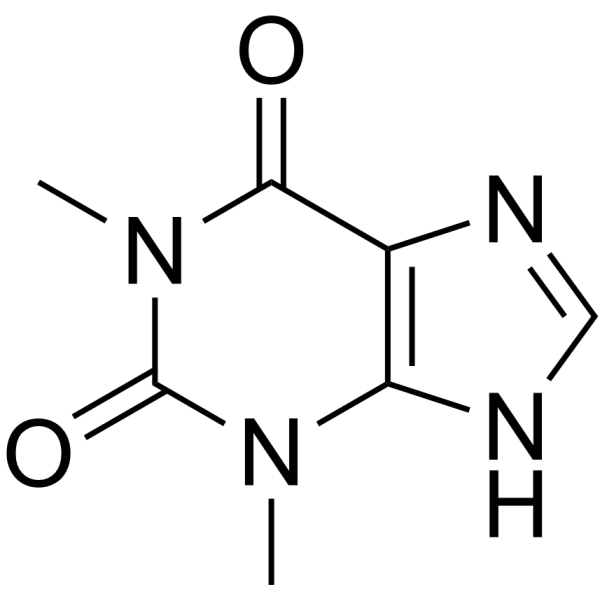
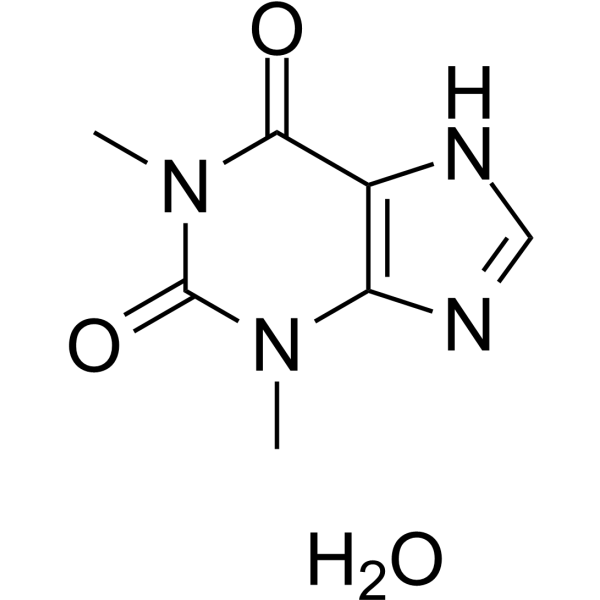
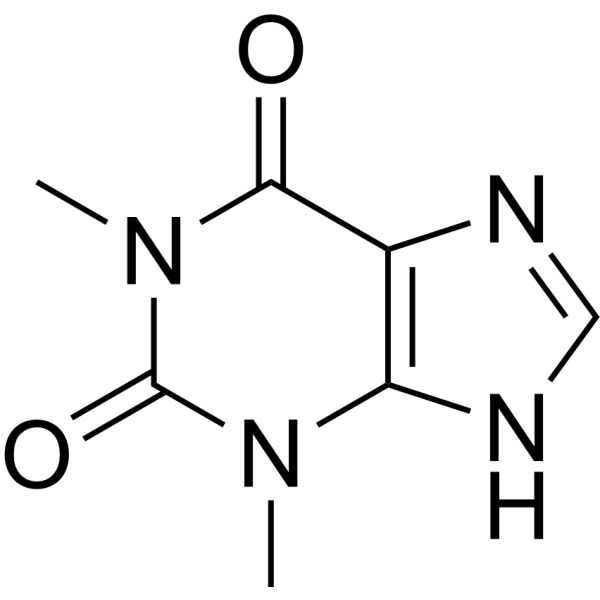
Theophylline (1,3-Dimethylxanthine) monohydrate is a potent phosphodiesterase (PDE) inhibitor, adenosine receptor antagonist, and histone deacetylase (HDAC) activator. Theophylline (1,3-Dimethylxanthine) monohydrate inhibits PDE3 activity to relax airway smooth muscle. Theophylline (1,3-Dimethylxanthine) monohydrate has anti-inflammatory activity by increase IL-10 and inhibit NF-κB into the nucleus. Theophylline (1,3-Dimethylxanthine) monohydrate induces apoptosis. Theophylline (1,3-Dimethylxanthine) monohydrate can be used for asthma and chronic obstructive pulmonary disease (COPD) research .
|
-
-
- HY-12093A
-
|
|
Drug Isomer
MMP
Cadherin
|
Inflammation/Immunology
|
|
(R)-MMP408 is an isomer of MMP408 (HY-12093). MMP408 is an orally active MMP-12 inhibitor (IC50=2.0 nM for hMMP-12) that effectively interferes with the epithelial-mesenchymal transition (EMT) process. MMP408 significantly upregulates the expression of E-cadherin in nasal epithelial cells, while inhibiting mesenchymal markers such as vimentin, α-smooth muscle actin and fibronectin, thereby reversing the EMT phenotype. MMP408 is used in studies of airway remodeling-related diseases, including chronic rhinosinusitis with nasal polyps, chronic obstructive pulmonary disease (COPD) and asthma .
|
-
-
- HY-120595
-
|
RV568
|
p38 MAPK
Src
|
Inflammation/Immunology
|
|
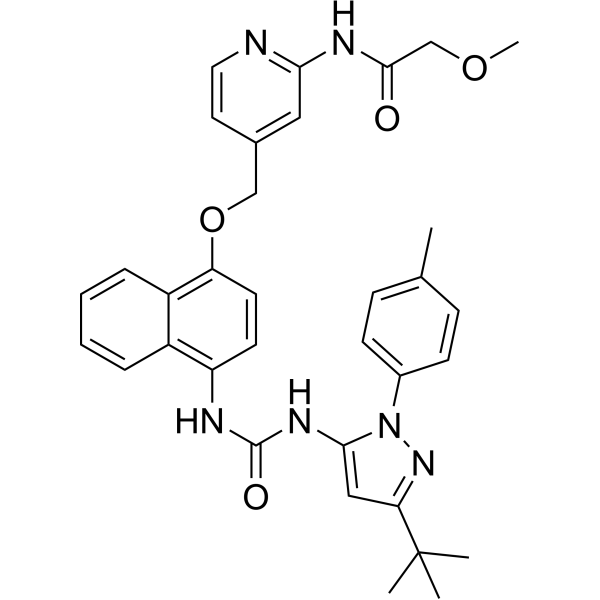
JNJ-49095397 (RV568) is an inhaled narrow-spectrum kinase inhibitor (NSKI) against both the α and γ isoforms of p38 MAPK. JNJ-49095397 also inhibits SRC kinase family, specifically haematopoietic kinase (HCK) JNJ-49095397 shows potent anti-inflammatory effects and can be used for the research of chronic obstructive pulmonary disease (COPD) and asthma .
|
-
-
- HY-B1037R
-
|
Albuterol (Standard); AH-3365 (Standard)
|
Reference Standards
Adrenergic Receptor
ERK
|
Inflammation/Immunology
Cancer
|
|
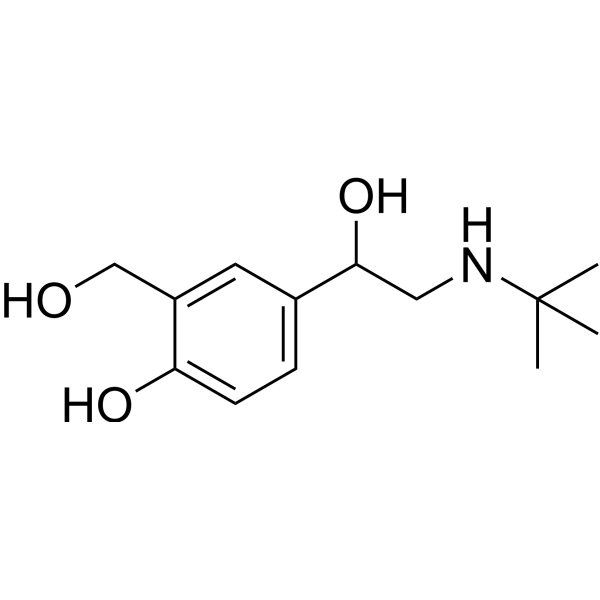
Salbutamol (Standard) is the analytical standard of Salbutamol. This product is intended for research and analytical applications. Salbutamol (Albuterol) is a short-acting beta-2 adrenergic receptor agonist with oral activity. Salbutamol promotes tumorigenesis of gastric cancer cells through the β2-AR/ERK/EMT pathway. Salbutamol is used to study bronchospasms caused by asthma and chronic obstructive pulmonary disease (COPD) .
|
-
-
- HY-12463A
-
|
|
Adrenergic Receptor
|
Inflammation/Immunology
|
|
Carmoterol is a highly potent and selective long-acting β2-adrenergic receptor agonist with a pEC50 of 10.19. Carmoterol shows 53-fold higher affinity for β2-adrenergic receptors than for β1-adrenergic receptors. Carmoterol stimulates cyclic adenosine monophosphate accumulation, induces airway smooth muscle relaxation, inhibits bronchoconstriction, reduces thromboxane B2 release, and prolongs survival time. Carmoterol can be used in research related to asthma and chronic obstructive pulmonary disease (COPD) .
|
-
-
- HY-B0809R
-
|
1,3-Dimethylxanthine(Standard); Theo-24 (Standard)
|
Reference Standards
Phosphodiesterase (PDE)
Adenosine Receptor
HDAC
Apoptosis
Interleukin Related
TNF Receptor
Endogenous Metabolite
|
Cancer
|
|
Theophylline (Standard) is the analytical standard of Theophylline. This product is intended for research and analytical applications. Theophylline (1,3-Dimethylxanthine) is a potent phosphodiesterase (PDE) inhibitor, adenosine receptor antagonist, and histone deacetylase (HDAC) activator. Theophylline (1,3-Dimethylxanthine) inhibits PDE3 activity to relax airway smooth muscle. Theophylline (1,3-Dimethylxanthine) has anti-inflammatory activity by increase IL-10 and inhibit NF-κB into the nucleus. Theophylline (1,3-Dimethylxanthine) induces apoptosis. Theophylline (1,3-Dimethylxanthine) can be used for asthma and chronic obstructive pulmonary disease (COPD) research .
|
-
-
- HY-19830
-
|
|
Phosphodiesterase (PDE)
|
Inflammation/Immunology
|
|
AN3199 is a PDE4 inhibitor with an IC50 of 94.5 nM. AN3199 can be used for the research of inflammation-associated diseases such as asthma and chronic obstructive pulmonary disease (COPD) .
|
-
-
- HY-159536
-
|
KN-002; VR-588
|
JAK
|
Inflammation/Immunology
|
|
Frevecitinib (KN-002) is a potent pan-JAK inhibitor (i.e. JAK1, JAK2, JAK3, TYK2). Frevecitinib can be used for the study of asthma and other respiratory conditions such as chronic obstructive pulmonary disease (COPD).
|
-
-
- HY-136409R
-
|
C10-HSL (Standard)
|
Reference Standards
Bacterial
Reactive Oxygen Species (ROS)
|
Infection
|
|
Formoterol (hemifumarate hydrate) (Standard) is the analytical standard of Formoterol (hemifumarate hydrate). This product is intended for research and analytical applications. Formoterol hemifumarate hydrate is a selective, long-acting beta 2-adrenoceptor agonist. Formoterol is a bronchodilator used for the research of the asthma and chronic obstructive pulmonary disease (COPD). Formoterol hemifumarate hydrate induces mitochondrial biogenesis and promotes cognitive recovery after traumatic brain injury .
|
-
-
- HY-178231
-
|
|
TGF-β Receptor
|
Inflammation/Immunology
Cancer
|
|
ALK5-IN-85 (Compound 19) is a TGFβRI (ALK5) inhibitor with an IC50 < 100 ?nM. ALK5-IN-85 can be used for respiratory diseases including idiopathic pulmonary fibrosis, asthma, COPD and lumg cancer, and dermal and ocular fibrotic conditions research .
|
-
-
- HY-125251
-
-
-
- HY-14298
-
|
GSK-159797C
|
Adrenergic Receptor
|
Endocrinology
|
|
Milveterol hydrochloride is a long-acting β2-adrenergic receptor agonist. Milveterol hydrochloride can be used in study asthma and chronic obstructive pulmonary disease (COPD) .
|
-
-
- HY-145390A
-
|
|
Keap1-Nrf2
|
Inflammation/Immunology
|
|
(R,R)-Nrf2 activator-1 is the enantiomer of Nrf2 activator-1. Nrf2 activator-1 is a potent activator of NF-E2 related factor 2 (Nrf2). Nrf2 activator-1 has the potential for the research of COPD and other respiratory diseases, including asthma, Acute Lung Injury (ALI), Acute Respiratory Distress Syndrome (ARDS) and pulmonary fibrosis .
|
-
-
- HY-107909
-
|
1,3-Dimethylxanthine sodium glycinate; Theo-24 sodium glycinate
|
Adenosine Receptor
HDAC
Apoptosis
Interleukin Related
TNF Receptor
|
Cancer
|
|
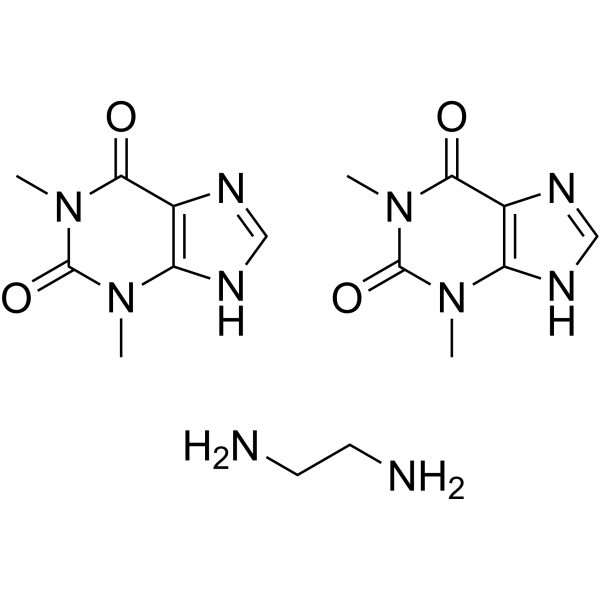
Theophylline (1,3-Dimethylxanthine) sodium glycinate is a potent phosphodiesterase (PDE) inhibitor, adenosine receptor antagonist, and histone deacetylase (HDAC) activator. Theophylline sodium glycinate inhibits PDE3 activity to relax airway smooth muscle. Theophylline sodium glycinate has anti-inflammatory activity by increase IL-10 and inhibit NF-κB into the nucleus. Theophylline sodium glycinate induces apoptosis. Theophylline sodium glycinate can be used for asthma and chronic obstructive pulmonary disease (COPD) research .
|
-
-
- HY-19672
-
|
BAY 19-8004
|
Phosphodiesterase (PDE)
|
Inflammation/Immunology
|
|
Lirimilast (BAY 19-8004) is a potent, selective and orally active phosphodiesterase-4 (PDE4) inhibitor with an IC50 value of 49 nM. Lirimilast can be used for the treatment of asthma or chronic obstructive pulmonary disease (COPD). Lirimilast has potently anti-inflammatory properties .
|
-
-
- HY-130786
-
|
BRL 30892
|
Phosphodiesterase (PDE)
|
Others
Inflammation/Immunology
|
|
Denbufylline (BRL 30892) is an inhibitor of phosphodiesterase-4 (PDE4). Denbufylline is able to block the degradation of intracellular cAMP (cyclic adenosine phosphate) thereby increasing the level of intracellular cAMP, which helps regulate a variety of cellular functions. Denbufylline can be used in the study of chronic obstructive pulmonary disease (COPD), asthma and other inflammatory diseases .
|
-
-
- HY-B0241S
-
|
Sch 1000-d3
|
mAChR
|
Neurological Disease
Inflammation/Immunology
|
|
Ipratropium-d3 (bromide) is the deuterium labeled Ipratropium bromide. Ipratropium bromide (Sch 1000) is a muscarinic receptor antagonist, with binding IC50 values of 2.9 nM, 2 nM, and 1.7 nM for M1, M2, and M3 receptors, respectively. Ipratropium bromide can be used in the research for COPD (chronic obstructive pulmonary disease) and asthma .
|
-
-
- HY-145390
-
|
|
Keap1-Nrf2
|
Inflammation/Immunology
|
|
Nrf2 activator-1 is a potent activator of NF-E2 related factor 2 (Nrf2). Nrf2 activator-1 has the potential for the research of COPD and other respiratory diseases, including asthma, Acute Lung Injury (ALI), Acute Respiratory Distress Syndrome (ARDS) and pulmonary fibrosis (extracted from patent WO2018109647A1) .
|
-
-
- HY-103167
-
|
|
Adenosine Receptor
p38 MAPK
Phosphodiesterase (PDE)
|
Inflammation/Immunology
|
|
CGH 2466 dihydrochloride is an orally active adenosine A1, A2B and A3 receptor antagonist with the IC50 values of 19 nM, 21 nM, and 80 nM respectively. CGH 2466 dihydrochloride inhibits p38 MAPK (IC50 = 187~ 400 nM) and phosphodiesterase type 4D (IC50 = 22 nM). CGH 2466 dihydrochloride displays potent anti-inflammatory effects both in vitro and in vivo, and can be used for research on asthma and chronic obstructive pulmonary disease (COPD) .
|
-
-
- HY-176524S
-
|
|
Phosphodiesterase (PDE)
|
Inflammation/Immunology
|
|
PDE3/4-IN-3 (Compound 7) is an orally active dual PDE3/4 inhibitor with IC50 s of 0.17 and ≤50 nM for PDE3A and PDE4B2, respectively. PDE3/4-IN-3 significantly inhibits methacholine-induced bronchoconstriction in guinea pigs. PDE3/4-IN-3 can be used for chronic obstructive pulmonary disease (COPD) and asthma research .
|
-
-
- HY-147518
-
|
|
p38 MAPK
|
Inflammation/Immunology
|
|
p38-α MAPK-IN-5 (compound 4e) is a potent p38α inhibitor with IC50s of 0.1 nM, 0.2 nM, 944 nM, 4100 nM for p38α, p38 β, p38γ, p38δ, respectively. p38-α MAPK-IN-5 has anti-inflammatory effect. p38-α MAPK-IN-5 has the potential for asthma and chronic obstructive pulmonary disease (COPD) research .
|
-
-
- HY-U00352
-
-
-
- HY-108193
-
-
-
- HY-11072
-
-
-
- HY-117024
-
|
AZD0548 napadisylate; LAS100977 napadisylate
|
Adrenergic Receptor
|
Inflammation/Immunology
|
|
Abediterol napadisylate is an inhaled long-acting β2-adrenoceptor agonist (LABA) and can be used for the research of asthma and chronic obstructive pulmonary disease (COPD) .
|
-
-
- HY-113692
-
|
|
mAChR
|
Others
|
|
AZD-9164 (bromide) is a long-acting muscarinic M3 antagonist. AZD-9164 (bromide) is promising for research of airways diseases, such as chronic obstructive pulmonary disease (COPD) or asthma .
|
-
-
- HY-14296
-
-
-
- HY-106996
-
|
GW 842470
|
Phosphodiesterase (PDE)
|
Inflammation/Immunology
|
|
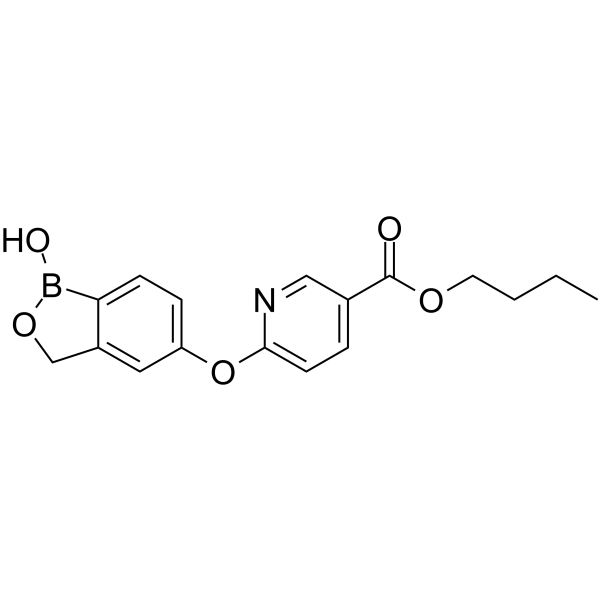
AWD 12-281 is an orally active and highly selective phosphodiesterase 4 (PDE4) inhibitor (IC50 = 9.7 nM). AWD 12-281 is used in the study of allergic dermatitis, asthma, chronic obstructive pulmonary disease (COPD), and allergic rhinitis .
|
-
-
- HY-14189
-
|
R-411
|
Integrin
|
Inflammation/Immunology
|
|
Valategrast hydrochloride (R-411) is a potent integrin α4β1 (VLA-4) and α4β7 dual antagonist. Valategrast hydrochloride has the potential for Chronic obstructive pulmonary disease (COPD) and asthma treatment .
|
-
-
- HY-14915
-
|
|
Adrenergic Receptor
|
Endocrinology
|
|
Bedoradrine is a highly selective β2-adrenergic agonist with activity in suppressing asthma and chronic obstructive pulmonary disease (COPD). Bedoradrine is administered by intravenous infusion and is specifically indicated for the suppression of acute asthma attacks. Bedoradrine has shown good safety and preliminary efficacy in clinical trials, especially in patients with stable moderate to severe asthma. The results of Bedoradrine studies have shown that it can provide clinical benefits without increasing clinical risks, especially for patients who are unable to use inhalation or nebulization suppression .
|
-
-
- HY-113749
-
|
|
Adrenergic Receptor
|
Inflammation/Immunology
|
|
L-Mabuterol hydrochloride is a selective β2-adrenergic receptor agonist with bronchodilator activity. L-Mabuterol hydrochloride can improve respiratory function and relieve asthma symptoms. L-Mabuterol hydrochloride also shows potential efficacy in the management of chronic obstructive pulmonary disease (COPD) .
|
-
-
- HY-142936
-
|
|
ROR
|
Neurological Disease
Inflammation/Immunology
Cancer
|
|
RORγt modulator 3 (Compound 23) is a modulator of retinoid-related orphan receptor γt (RORγt). RORγt modulator 3 can be used for the research of RORyt mediated diseases such as, e.g., pain, inflammation, COPD, asthma, rheumatoid arthritis, colitis, multiple sclerosis, psoriasis, neurodegenerative diseases and cancer .
|
-
-
- HY-142935
-
|
|
ROR
|
Neurological Disease
Inflammation/Immunology
Cancer
|
|
RORγt modulator 2 (Compound 21) is a modulator of retinoid-related orphan receptor γt (RORγt) with the IC50 of <50 nM. RORγt modulator 2 can be used for the research of RORyt mediated diseases such as, e.g., pain, inflammation, COPD, asthma, rheumatoid arthritis, colitis, multiple sclerosis, psoriasis, neurodegenerative diseases and cancer .
|
-
-
- HY-167891
-
|
|
Phosphodiesterase (PDE)
Apoptosis
|
Inflammation/Immunology
|
|
GPD-1116 is an orally active Phosphodiesterase (PDE) 4 and PDE1 inhibitor. GPD-1116 can reduce smoke-induced apoptosis of lung cells. GPD-1116 is effective in several disease models in animals, including emphysema, acute lung injury, chronic obstructive pulmonary disease (COPD), asthma and pulmonary hypertension .
|
-
-
- HY-B0241S1
-
|
Sch 1000-d7 bromide
|
Isotope-Labeled Compounds
mAChR
|
Neurological Disease
Inflammation/Immunology
|
|
Ipratropium-d7 (bromide)eis the deuterium labeled Ipratropium bromide. Ipratropium bromide (Sch 1000) is a muscarinic receptor antagonist, with binding IC50 values of 2.9 nM, 2 nM, and 1.7 nM for M1, M2, and M3 receptors, respectively. Ipratropium bromide can be used in the research for COPD (chronic obstructive pulmonary disease) and asthma .
|
-
-
- HY-108901R
-
|
|
Reference Standards
Adrenergic Receptor
|
Neurological Disease
Inflammation/Immunology
|
|
Formoterol (hemifumarate hydrate) (Standard) is the analytical standard of Formoterol (hemifumarate hydrate). This product is intended for research and analytical applications. Formoterol hemifumarate hydrate is a selective, long-acting beta 2-adrenoceptor agonist. Formoterol is a bronchodilator used for the research of the asthma and chronic obstructive pulmonary disease (COPD). Formoterol hemifumarate hydrate induces mitochondrial biogenesis and promotes cognitive recovery after traumatic brain injury .
|
-
-
- HY-123862
-
|
|
PI3K
Lipase
G Protein-coupled Receptor Kinase (GRK)
|
Inflammation/Immunology
|
|
LAS195319 is an orally active and potent inhibitor against PI3Kδ with an IC50 value of 0.5 nM. LAS195319 is also a highly selective inhibitor against an extensive panel of proteins, lipid kinases and GPCRs. LAS195319 causes an inhibition of neutrophil and eosinophil infiltration. LAS195319 is promising for research of respiratory diseases such as asthma and chronic obstructive pulmonary disease (COPD) .
|
-
-
- HY-125050
-
|
|
Phosphodiesterase (PDE)
|
Inflammation/Immunology
|
|
KCA-1490 is a dual PDE3/4 inhibitor with IC50 values of 369 nM and 42 nM, respectively. KCA-1490 exhibits potent bronchodilatory and anti-inflammatory activity. KCA-1490 suppresses Histamine (HY-B1204)-induced bronchoconstriction in vivo, which is promising for research of asthma and chronic obstructive pulmonary disease (COPD) .
|
-
- HY-14299C
-
|
|
Adrenergic Receptor
|
Inflammation/Immunology
|
|
Indacaterol xinafoate is an orally active long-acting β2-adrenergic agonist (LABA) with bronchodilatory effect. Indacaterol inhibits NF-κB activity in a β-arrestin2-dependent manner, preventing further lung damage and improving lung function in COPD (chronic obstructive pulmonary disorder). Indacaterol xinafoate can be utilized in asthma research .
|
-
- HY-174257
-
|
|
NF-κB
Oxidative Phosphorylation
|
Inflammation/Immunology
|
|
RCD405 is a bronchodilator. RCD405 exerts relaxant effects by acting directly on human airway smooth muscle (hASM) with an EC50 value of 12 μM for histamine-induced contractions and 45.71 μM for carbachol-induced contractions. RCD405 inhibits cholinergic and histaminergic tone and reduces electrically stimulated (EFS)-induced contractions. RCD405 is promising for research of asthma and chronic obstructive pulmonary disease (COPD) .
|
-
- HY-123008
-
|
|
Adrenergic Receptor
Phosphodiesterase (PDE)
|
Others
|
|
Reproterol hydrochloride is a dual-acting beta2-adrenoceptor agonist and phosphodiesterase inhibitor. Reproterol hydrochloride is more potent than albuterol and feterol in stimulating cAMP production in human monocytes, demonstrating its potential in enhancing airway function. Furthermore, Reproterol significantly inhibited the production of LTB4, indicating its anti-inflammatory properties. Reproterol hydrochloride may have inhibitory effects in respiratory diseases such as asthma and COPD .
|
-
- HY-B1332R
-
|
Sch 1000 bromide hydrate (Standard)
|
Reference Standards
mAChR
|
Neurological Disease
Inflammation/Immunology
|
|
Ipratropium (bromide hydrate) (Standard) is the analytical standard of Ipratropium (bromide hydrate). This product is intended for research and analytical applications. Ipratropium bromide (Sch 1000) hydrate is a muscarinic receptor antagonist, with IC50s of 2.9 nM, 2 nM, and 1.7 nM for M1, M2, and M3 receptors, respectively. Ipratropium bromide hydrate relaxes smooth muscle, can be used in the research for COPD (chronic obstructive pulmonary disease) and asthma .
|
-
- HY-146974
-
|
|
Phosphodiesterase (PDE)
|
Inflammation/Immunology
|
|
PDE4-IN-9 (Compound 5j) is a potent inhibitor of PDE4. PDE4-IN-9 exhibits lower IC50 value (1.4 μM) against PDE4 than parent rolipram (2.0 μM) in in vitro enzyme assay. PDE4-IN-9 also displays good in vivo activity in animal models of asthma/COPD and sepsis induced by LPS .
|
-
- HY-N8268R
-
|
3α,12α-Dihydroxynorcholanic acid (Standard)
|
Drug Metabolite
Reference Standards
|
Metabolic Disease
|
|
Reproterol (hydrochloride) (Standard) is the analytical standard of Reproterol (hydrochloride). This product is intended for research and analytical applications. Reproterol hydrochloride is a dual-acting beta2-adrenoceptor agonist and phosphodiesterase inhibitor. Reproterol hydrochloride is more potent than albuterol and feterol in stimulating cAMP production in human monocytes, demonstrating its potential in enhancing airway function. Furthermore, Reproterol significantly inhibited the production of LTB4, indicating its anti-inflammatory properties. Reproterol hydrochloride may have inhibitory effects in respiratory diseases such as asthma and COPD .
|
-
- HY-149235
-
|
|
PI3K
|
Inflammation/Immunology
|
|
PI3Kδ-IN-12 (compound 13) is a PI3Kδ inhibitor (pIC50 = 5.8), with pKi values of 8.0/6.5/6.4/6.7 for PI3Kδ/γ/β/α, respectively. PI3Kδ-IN-12 can be used in the study of chronic respiratory diseases such as asthma and chronic obstructive pulmonary disease (COPD) .
|
-
- HY-123008R
-
|
|
Phosphodiesterase (PDE)
Adrenergic Receptor
Reference Standards
|
Others
|
|
Reproterol (hydrochloride) (Standard) is the analytical standard of Reproterol (hydrochloride). This product is intended for research and analytical applications. Reproterol hydrochloride is a dual-acting beta2-adrenoceptor agonist and phosphodiesterase inhibitor. Reproterol hydrochloride is more potent than albuterol and feterol in stimulating cAMP production in human monocytes, demonstrating its potential in enhancing airway function. Furthermore, Reproterol significantly inhibited the production of LTB4, indicating its anti-inflammatory properties. Reproterol hydrochloride may have inhibitory effects in respiratory diseases such as asthma and COPD .
|
-
- HY-W707640
-
|
Albuterol-d4; AH-3365-d4
|
Isotope-Labeled Compounds
ERK
Adrenergic Receptor
|
Cancer
|
|
Salbutamol-d4 (Albuterol-d4; AH-3365-d4) is the deuterium labeled Salbutamol (HY-B1037). Salbutamol (Albuterol) is a short-acting beta-2 adrenergic receptor agonist with oral activity. Salbutamol promotes tumorigenesis of gastric cancer cells through the β2-AR/ERK/EMT pathway. Salbutamol is used to study bronchospasms caused by asthma and chronic obstructive pulmonary disease (COPD) .
|
-
- HY-119799
-
|
|
Phosphodiesterase (PDE)
|
Inflammation/Immunology
|
|
UK-500001 is an orally active inhibitor for phosphodiesterase 4 (PDE4), which inhibits PDE4D3 (IC50 is 0.28 nM), PDE4B2 (IC50 is 22.8 nM), PDE4A4 (IC50 is 26.1 nM) and PDE4C2 (IC50 is 271 nM). UK-500001 exhibits anti-inflammatory efficacy and inhibits TNF-α and IFN-γ release in human and rodent macrophagic cell lines in nanomolar levels. UK-500001 ameliorates chronic obstructive pulmonary disease (COPD) and asthma .
|
-
- HY-130054
-
|
Lysine theophyllinate
|
Phosphodiesterase (PDE)
Adenosine Receptor
HDAC
Apoptosis
Interleukin Related
TNF Receptor
|
Inflammation/Immunology
|
|
Theophylline L-lysine (Lysine theophyllinate) is a soluble derivative of Theophylline (HY-B0809). Theophylline L-lysine is a potent phosphodiesterase (PDE) inhibitor, adenosine receptor antagonist, and histone deacetylase (HDAC) activator. Theophylline L-lysine inhibits PDE3 activity to relax airway smooth muscle. Theophylline L-lysine has anti-inflammatory activity by increasing IL-10 and inhibiting NF-κB into the nucleus. Theophylline L-lysine induces apoptosis. Theophylline L-lysine can be used for asthma and chronic obstructive pulmonary disease (COPD) research .
|
-
- HY-B0809B
-
|
1,3-Dimethylxanthine sodium acetate; Theo-24 sodium acetate
|
Endogenous Metabolite
Phosphodiesterase (PDE)
Adenosine Receptor
HDAC
Apoptosis
Interleukin Related
TNF Receptor
|
Cancer
|
|
Theophylline (1,3-Dimethylxanthine) sodium acetate is a potent phosphodiesterase (PDE) inhibitor, adenosine receptor antagonist, and histone deacetylase (HDAC) activator. Theophylline (1,3-Dimethylxanthine) sodium acetate inhibits PDE3 activity to relax airway smooth muscle. Theophylline (1,3-Dimethylxanthine) sodium acetate has anti-inflammatory activity by increase IL-10 and inhibit NF-κB into the nucleus. Theophylline (1,3-Dimethylxanthine) sodium acetate induces apoptosis. Theophylline (1,3-Dimethylxanthine) sodium acetate can be used for asthma and chronic obstructive pulmonary disease (COPD) research .
|
-
- HY-10790R
-
|
SB-207499 (Standard)
|
Phosphodiesterase (PDE)
Reference Standards
|
Inflammation/Immunology
|
|
Cilomilast (Standard) is the analytical standard of Cilomilast. This product is intended for research and analytical applications. Cilomilast (SB-207499) is a potent, selective and orally active inhibitor of Phosphodiesterase 4 (PDE4), with IC50s of ~100 and 120 nM for LPDE4 and HPDE4, respectively. Cilomilast shows selectivity for PDE4 over PDE1, PDE2, PDE3 and PDE5 (IC50=74, 65, >100, and 83 μM, respectively). Cilomilast has anti-inflammatory and immunomodulatory effects and can be used for thr research of asthma and chronic obstructive pulmonary disease (COPD) .
|
-
- HY-B0809S1
-
|
1,3-Dimethylxanthine-d3; Theo-24-d3
|
Endogenous Metabolite
Adenosine Receptor
HDAC
TNF Receptor
Interleukin Related
Phosphodiesterase (PDE)
Apoptosis
Isotope-Labeled Compounds
|
Cancer
|
|
Theophylline-d3 is deuterated labeled Theophylline (HY-B0809). Theophylline (1,3-Dimethylxanthine) is a potent phosphodiesterase (PDE) inhibitor, adenosine receptor antagonist, and histone deacetylase (HDAC) activator. Theophylline (1,3-Dimethylxanthine) inhibits PDE3 activity to relax airway smooth muscle. Theophylline (1,3-Dimethylxanthine) has anti-inflammatory activity by increase IL-10 and inhibit NF-κB into the nucleus. Theophylline (1,3-Dimethylxanthine) induces apoptosis. Theophylline (1,3-Dimethylxanthine) can be used for asthma and chronic obstructive pulmonary disease (COPD) research .
|
-
- HY-106006
-
|
|
PI3K
|
Others
Inflammation/Immunology
|
|
RV-1729 is an inhibitor of the phosphatidylinositol 3-kinase-δ (PI3Kδ). RV-1729 identifies inhibition of the PI3K isotype by quantifying the release of phosphatidylinositol 3,4, 5-triphosphate (PIP3) (IC50=12 nM), showing twice the selectivity for PI3Kδ relative to PI3Kγ. RV-1729 is also 16 times more selective to PI3Kα. RV-1729 regulates immune and inflammatory responses by inhibiting PI3Kδ. RV-1729 can be used in studies of asthma and chronic obstructive pulmonary disease (COPD) .
|
-
- HY-143683S
-
|
1,3-Dimethylxanthine-13C2,d6; Theo-24-13C2,d6
|
Isotope-Labeled Compounds
Phosphodiesterase (PDE)
Interleukin Related
Adenosine Receptor
Apoptosis
HDAC
TNF Receptor
Endogenous Metabolite
|
Cancer
|
|
Theophylline- 13C2,d6 (1,3-Dimethylxanthine- 13C2,d6) is the deuterium labeled and 13C-labeled Theophylline (HY-B0809). Theophylline (1,3-Dimethylxanthine) is a potent phosphodiesterase (PDE) inhibitor, adenosine receptor antagonist, and histone deacetylase (HDAC) activator. Theophylline (1,3-Dimethylxanthine) inhibits PDE3 activity to relax airway smooth muscle. Theophylline (1,3-Dimethylxanthine) has anti-inflammatory activity by increase IL-10 and inhibit NF-κB into the nucleus. Theophylline (1,3-Dimethylxanthine) induces apoptosis. Theophylline (1,3-Dimethylxanthine) can be used for asthma and chronic obstructive pulmonary disease (COPD) research .
|
-
- HY-180792
-
|
|
Myosin
|
Inflammation/Immunology
|
|
CK-571 is a potent and selective inhibitor of smooth muscle myosin-2 (SMM), with an IC50 value of 86 nM. CK-571 exhibits IC50 values for cardiac muscle myosin (CMM), skeletal muscle myosin (SKM), and non-muscle myosin-2A (NMM-2A) of 2.3, 42, and 0.58 μM, respectively. CK-571 can be used for research on asthma, chronic obstructive pulmonary disease, and other smooth muscle-related diseases .
|
-
- HY-185463
-
|
|
Ser/Thr Protease
|
Inflammation/Immunology
|
|
β-Tryptase-IN-1 is a selective β-tryptase inhibitor with a Ki of 10 nM. β-Tryptase-IN-1 binds to the inducible S4 + pocket unique to β-tryptase. β-Tryptase-IN-1 can be used for the researches of asthma and chronic obstructive pulmonary disease (COPD) .
|
-
- HY-14190A
-
|
(rac)-R-411 free base
|
Drug Isomer
|
Others
|
|
(rac)-Valategrast ((rac)-R-411 free base) is a racemic compound of Valategrast (HY-14190). Valategrast is a potent, orally active dual antagonist of integrin α4β1 (VLA-4) and α4β7. Valategrast may be used in research on chronic obstructive pulmonary disease (COPD) and asthma.
|
-
- HY-185463A
-
|
|
Ser/Thr Protease
|
Inflammation/Immunology
|
|
β-Tryptase-IN-1 free base is a selective β-tryptase inhibitor with a Ki of 10 nM. β-Tryptase-IN-1 free base binds to the inducible S4 + pocket unique to β-tryptase. β-Tryptase-IN-1 free base can be used for the researches of asthma and chronic obstructive pulmonary disease (COPD) .
|
-
| Cat. No. |
Product Name |
Target |
Research Area |
Image |
-
- HY-P99673
-
|
REGN-3500; SAR-440340
|
Interleukin Related
NF-κB
|
Inflammation/Immunology
|
|
Itepekimab (REGN-3500) is an IgG4 monoclonal antibody against IL-33. Itepekimab reduced airway inflammation and related tissue damage in preliminary clinical studies. Itepekimab has potential effects in asthma, chronic obstructive pulmonary disease (COPD), and atopic dermatitis (AD) .
|
-
(5)
| Cat. No. |
Product Name |
Category |
Target |
Chemical Structure |
-
- HY-B0809
-
-
-
- HY-B0809A
-
-
-
- HY-B0809R
-
-
-
- HY-136409R
-
|
C10-HSL (Standard)
|
Microorganisms
Source Classification
|
Reference Standards
Bacterial
Reactive Oxygen Species (ROS)
|
|
Formoterol (hemifumarate hydrate) (Standard) is the analytical standard of Formoterol (hemifumarate hydrate). This product is intended for research and analytical applications. Formoterol hemifumarate hydrate is a selective, long-acting beta 2-adrenoceptor agonist. Formoterol is a bronchodilator used for the research of the asthma and chronic obstructive pulmonary disease (COPD). Formoterol hemifumarate hydrate induces mitochondrial biogenesis and promotes cognitive recovery after traumatic brain injury .
|
-
-
- HY-N8268R
-
|
3α,12α-Dihydroxynorcholanic acid (Standard)
|
Animals
Source Classification
|
Drug Metabolite
Reference Standards
|
|
Reproterol (hydrochloride) (Standard) is the analytical standard of Reproterol (hydrochloride). This product is intended for research and analytical applications. Reproterol hydrochloride is a dual-acting beta2-adrenoceptor agonist and phosphodiesterase inhibitor. Reproterol hydrochloride is more potent than albuterol and feterol in stimulating cAMP production in human monocytes, demonstrating its potential in enhancing airway function. Furthermore, Reproterol significantly inhibited the production of LTB4, indicating its anti-inflammatory properties. Reproterol hydrochloride may have inhibitory effects in respiratory diseases such as asthma and COPD .
|
-
-
- HY-B0809B
-
-
| Cat. No. |
Product Name |
Chemical Structure |
-
- HY-B0241S
-
|
|
|
Ipratropium-d3 (bromide) is the deuterium labeled Ipratropium bromide. Ipratropium bromide (Sch 1000) is a muscarinic receptor antagonist, with binding IC50 values of 2.9 nM, 2 nM, and 1.7 nM for M1, M2, and M3 receptors, respectively. Ipratropium bromide can be used in the research for COPD (chronic obstructive pulmonary disease) and asthma .
|
-
-
- HY-176524S
-
|
|
|
PDE3/4-IN-3 (Compound 7) is an orally active dual PDE3/4 inhibitor with IC50 s of 0.17 and ≤50 nM for PDE3A and PDE4B2, respectively. PDE3/4-IN-3 significantly inhibits methacholine-induced bronchoconstriction in guinea pigs. PDE3/4-IN-3 can be used for chronic obstructive pulmonary disease (COPD) and asthma research .
|
-
-
- HY-B0241S1
-
|
|
|
Ipratropium-d7 (bromide)eis the deuterium labeled Ipratropium bromide. Ipratropium bromide (Sch 1000) is a muscarinic receptor antagonist, with binding IC50 values of 2.9 nM, 2 nM, and 1.7 nM for M1, M2, and M3 receptors, respectively. Ipratropium bromide can be used in the research for COPD (chronic obstructive pulmonary disease) and asthma .
|
-
-
- HY-W707640
-
|
|
|
Salbutamol-d4 (Albuterol-d4; AH-3365-d4) is the deuterium labeled Salbutamol (HY-B1037). Salbutamol (Albuterol) is a short-acting beta-2 adrenergic receptor agonist with oral activity. Salbutamol promotes tumorigenesis of gastric cancer cells through the β2-AR/ERK/EMT pathway. Salbutamol is used to study bronchospasms caused by asthma and chronic obstructive pulmonary disease (COPD) .
|
-
-
- HY-B0809S1
-
|
|
|
Theophylline-d3 is deuterated labeled Theophylline (HY-B0809). Theophylline (1,3-Dimethylxanthine) is a potent phosphodiesterase (PDE) inhibitor, adenosine receptor antagonist, and histone deacetylase (HDAC) activator. Theophylline (1,3-Dimethylxanthine) inhibits PDE3 activity to relax airway smooth muscle. Theophylline (1,3-Dimethylxanthine) has anti-inflammatory activity by increase IL-10 and inhibit NF-κB into the nucleus. Theophylline (1,3-Dimethylxanthine) induces apoptosis. Theophylline (1,3-Dimethylxanthine) can be used for asthma and chronic obstructive pulmonary disease (COPD) research .
|
-
-
- HY-143683S
-
|
|
|
Theophylline- 13C2,d6 (1,3-Dimethylxanthine- 13C2,d6) is the deuterium labeled and 13C-labeled Theophylline (HY-B0809). Theophylline (1,3-Dimethylxanthine) is a potent phosphodiesterase (PDE) inhibitor, adenosine receptor antagonist, and histone deacetylase (HDAC) activator. Theophylline (1,3-Dimethylxanthine) inhibits PDE3 activity to relax airway smooth muscle. Theophylline (1,3-Dimethylxanthine) has anti-inflammatory activity by increase IL-10 and inhibit NF-κB into the nucleus. Theophylline (1,3-Dimethylxanthine) induces apoptosis. Theophylline (1,3-Dimethylxanthine) can be used for asthma and chronic obstructive pulmonary disease (COPD) research .
|
-
Your information is safe with us. * Required Fields.
Inquiry Information
- Product Name:
- Cat. No.:
- Quantity:
- MCE Japan Authorized Agent:

