



1. Search Result
Search Result
Pathways Recommended: Stem Cell/Wnt Cell Cycle/DNA Damage
Results for "

B cell acute lymphoblastic leukemia

" in MedChemExpress (MCE) Product Catalog:

21

Inhibitors & Agonists

5

Inhibitory Antibodies

1

Oligonucleotides

Cat. No. Product Name Target Research Areas Chemical Structure
  • HY-15676
    Idasanutlin
    Maximum Cited Publications
    51 Publications Verification

    RG7388

    MDM-2/p53 E1/E2/E3 Enzyme Apoptosis Pyroptosis Reactive Oxygen Species (ROS) Caspase Neurological Disease Cancer
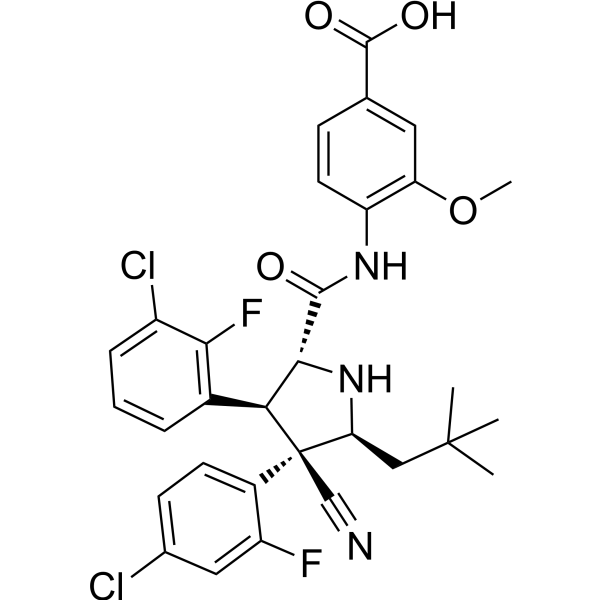
    Idasanutlin (RG7388) is an orally bioavailable MDM2 inhibitor with an IC50 of 6 nM. Idasanutlin disrupts MDM2-p53 binding, stabilizes and activates p53, triggering cell cycle arrest, apoptosis, and reduced cancer cell viability. Idasanutlin reduces EGFR protein expression and phosphorylation, suppresses downstream SHP2, MEK1/2, ERK1/2, AKT, mTOR, p70(S6K1), and S6 signaling. Idasanutlin induces mitochondrial ROS production, drives p38 MAPK phosphorylation, upregulates NOXA, and mediates caspase-3-dependent apoptosis and gasdermin E-mediated pyroptosis. Idasanutlin can be used for the research of TP53-mutant non-small cell lung cancer, T-cell acute lymphoblastic leukemia, colorectal carcinoma, melanoma, diffuse large B-cell lymphoma, mantle cell lymphoma, non-Hodgkin lymphoma, severe fever with thrombocytopenia syndrome, neuroblastoma, acute lymphoblastic leukemia, relapsed or refractory acute myeloid leukemia, osteosarcoma, solid tumors, and hematological tumors .
    Idasanutlin
  • HY-P9963
    Blinatumomab
    2 Publications Verification

    bscCD19xCD3; AMG-103; MEDI-538; MT-103; BLINCYTO

    CD19 Cancer
    Blinatumomab (Anatumomab) is a bispecific monoclonal antibody with two binding sites, one for CD3E on T cells and one for CD19 on B cells. Blinatumomab can be used in research for acute lymphoblastic leukemia .
    Blinatumomab
  • HY-P99412
    Lusvertikimab
    1 Publications Verification

    OSE-127

    Interleukin Related Cancer
    Lusvertikimab (OSE-127) is a humanized IL7R monoclonal antibody. Lusvertikimab is not internalized by target cells and prevents IL7R heterodimerization and subsequent downstream signaling. Lusvertikimab has anti-leukemic efficacy and has the potential for B cell precursor acute lymphoblastic leukemia (BCP-ALL) research .
    Lusvertikimab
  • HY-174228

    Insulin Receptor Apoptosis Cancer
    I3IN-002 is a small-molecule RNA-binding protein IGF2BP3 inhibitor with an IC50 value of approximately 2 μM in SEM cells. I3IN-002 interferes with interaction with m6 A-modified mRNAs, disrupting the stabilization of target genes (such as CDK6, MYC, and BCL2) to inhibit leukemic cell growth, induce cell cycle arrest, and promote apoptosis. I3IN-002 is promising for research of B-cell acute lymphoblastic leukemia .
    I3IN-002
  • HY-P9959

    CMC-544; PF-5208773; WAY-207294

    Antibody-Drug Conjugates (ADCs) CD22 Cancer
    Inotuzumab ozogamicin (CMC-544) is an antibody-targeted chemotherapy agent composed of a humanized anti-CD22 antibody conjugated to Calicheamicin (HY-19609). Inotuzumab ozogamicin and G544 bind human CD22 with similar affinities (Kd ≈ 150 pM). Inotuzumab ozogamicin has demonstrated efficacy against CD22 + B-cell non-Hodgkin’s lymphoma. Inotuzumab ozogamicin can be used in the research of acute lymphoblastic leukemia .
    Inotuzumab ozogamicin
  • HY-P99285
    Denintuzumab
    1 Publications Verification

    hBU 12

    ADC Antibody CD19 Cancer
    Denintuzumab (hBU 12) is a recombinant humanized anti-CD19 monoclonal antibody. Denintuzumab binds to CD19 on the surface of B cells. Denintuzumab can be used as the antibody moiety (ADC antibody) of antibody-drug conjugates to synthesize ADC, Denintuzumab Mafodotin (SGN-CD19A). Denintuzumab Mafodotin can be used in the research of acute lymphoblastic leukemia .
    Denintuzumab
  • HY-168654

    Wee1 Cancer
    WEE1 degrader 1 (Compound 10) is a CRBN-dependent molecular glue degrader of WEE1 and casein kinase 1α (CK1α) with sub-2 nM DC50 values for both targets. WEE1 degrader 1 can be used for the research of acute lymphoblastic leukemia, acute monocytic leukemia, acute promyelocytic leukemia, colorectal adenocarcinoma, diffuse large b cell lymphoma .
    WEE1 degrader 1
  • HY-161828

    PROTACs CDK Cancer
    JWZ-5-13 is a CDK7 PROTAC degrader. JWZ-5-13 inhibits the proliferation of cancer cells. JWZ-5-13 is applicable to the research of ovarian cancer, diffuse large B-cell lymphoma, acute T-lymphoblastic leukemia and non-small cell lung cancer .
    JWZ-5-13
  • HY-103275

    NSC 680410

    Bcr-Abl Apoptosis Cancer
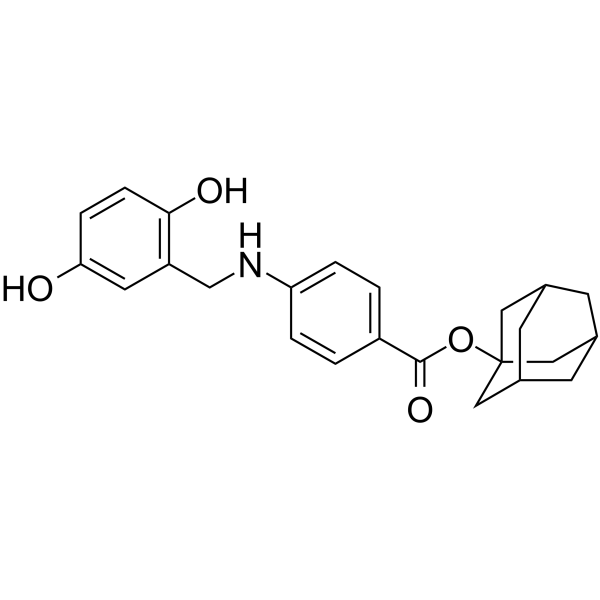
    Adaphostin (NSC 680410), the adamantyl ester of AG957, is a potent p210 bcr/abl inhibitor (IC50=14 μM). Adaphostin induces apoptosis in T-lymphoblastic human leukemia cell lines (IC50 ranging from 17 to 216 nM). Adaphostin has significant and selective activity against chronic and acute myeloid leukemia cells. Adaphostin increased the level of reactive oxygen species (ROS) within CLL B cells .
    Adaphostin
  • HY-112440

    Methuosis inducer 1

    Microtubule/Tubulin NF-κB MDM-2/p53 PI3K Akt c-Myc mTOR Autophagy Cancer
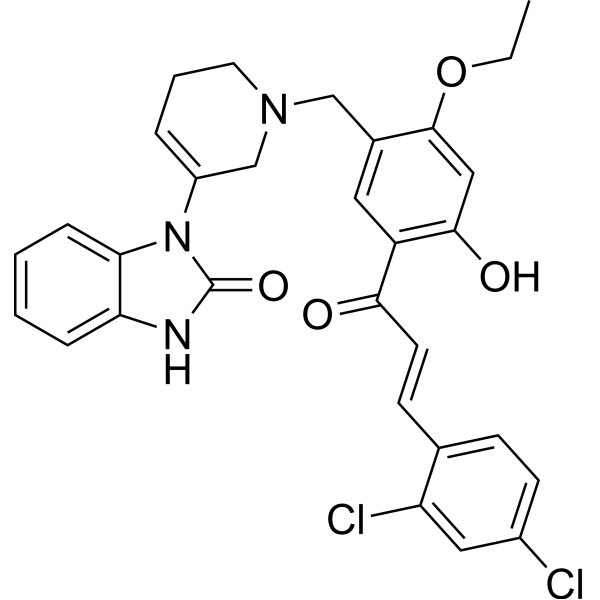
    HZX-02-059 is an allosteric inhibitor of PIKFYVE, and a methuosis inducer. HZX-02-059 disrupts the PIKfyve/TFEB axis, suppresses tubulin polymerization, reduces phosphorylated mTOR levels, downregulates p53, PI3K/AKT, c-Myc, and NF-κB pathways. HZX-02-059 induces G2/M cell cycle arrest, apoptosis, and inhibits cancer cell proliferation. HZX-02-059 can be used for the research of lymphoma, double-hit lymphoma, and B-cell acute lymphoblastic leukemia .
    HZX-02-059
  • HY-E70016

    TdT

    DNA/RNA Synthesis Others Cancer
    Terminal deoxyribonucleotidyltransferase (TdT) catalyses the condensation of deoxyribonucleotide triphosphates onto the 3' hydroxyl ends of DNA strands and adds N-regions to gene segment junctions during V(D)J recombination. Terminal deoxyribonucleotidyltransferase is expressed in immature, pre-B, pre-T lymphoid cells, and acute lymphoblastic leukemia/lymphoma cells .
    Terminal deoxyribonucleotidyltransferase
  • HY-116170

    Aldose Reductase Cancer
    SN34037 is a specific inhibitor of Aldo-keto reductase 1C3 (AKR1C3, EC 1.1.1.188) with the ability to inhibit the cytotoxic activity of PR-104A. SN34037-sensitive coumberone reduction provides a rapid and specific assay for AKR1C3 activity. SN34037 inhibits the aerobic cytotoxicity of PR-104A in TF1 erythroleukemia cells with high AKR1C3 expression, but not in Nalm6 pre-B acute lymphoblastic leukemia cells with low AKR1C3 expression .
    SN34037
  • HY-125257

    LY6

    Phosphatase SHP2 ERK Akt STAT JAK Apoptosis Cancer
    SHP2 inhibitor LY6 (LY6) is a selective SHP2 inhibitor with an IC50 of 9.8 μM, showing 7-fold selectivity over SHP1. SHP2 inhibitor LY6 inhibits SHP2-mediated cell signaling pathways and suppresses cell proliferation. SHP2 inhibitor LY6 elicits induces apoptosis and G2/M cell cycle arrest in lung cancer cells. SHP2 inhibitor LY6 can be used for the research of B cell acute lymphoblastic leukemia, acute myeloid leukemia, and lung cancer .
    SHP2 inhibitor LY6
  • HY-12482

    PI3K Apoptosis PDK-1 MEK Akt ERK Cancer
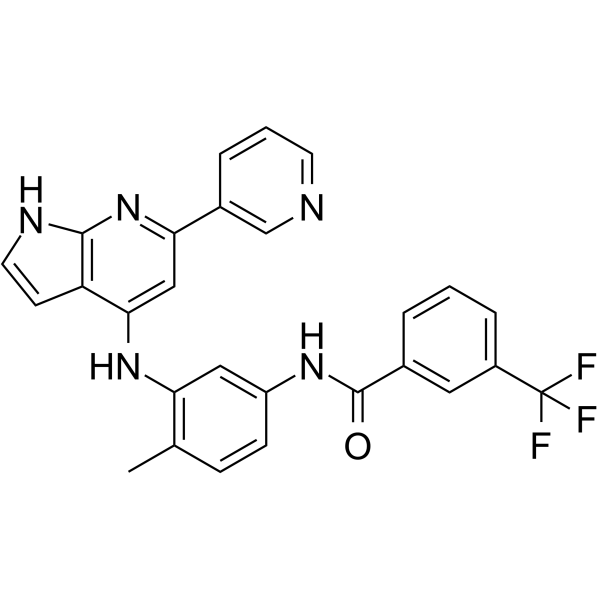
    X-370 is a PI3Kδ inhibitor (IC50 = 7 nM). X-370 inhibits the survival of leukemia cells, inducing G1 arrest and apoptosis. X-370 blocks PDK1 binding and phosphorylation of MEK1/2, eliminating Akt and Erk1/2 signaling. X-370 can be used in research on B-cell acute lymphoblastic leukemia (B-ALL) .
    X-370
  • HY-P990905

    SAR-443579

    Interleukin Related Cancer
    Bexatamig (SAR-443579) is a trifunctional natural killer cell engager targeting IL-3R α/CD123, NKp46/NCR1/CD335 and Fc gamma RIIIA/CD16a. Bexatamig forms a cytolytic synapse between natural killer cells and CD123-positive tumor cells. By activating natural killer cells to induce tumor cell death, Bexatamig effectively reduces the burden of CD123-positive acute myeloid leukemia (AML) blasts. Bexatamig has been granted FDA Fast Track designation, and is primarily investigated for relapsed or refractory acute myeloid leukemia, B-cell acute lymphoblastic leukemia, and high-risk myelodysplastic syndromes .
    Bexatamig
  • HY-146809

    Galectin Cancer
    Galectin-3 is a β Galactoside specific carbohydrate recognition protein (lectin) has the ability to promote the migration of B cell precursor acute lymphoblastic leukemia (BCP-ALL) cells and withstand drug research.
    Galectin-3 antagonist 2
  • HY-161080

    Nucleoside Antimetabolite/Analog Cancer
    4'-Ethynyl-2'-deoxycytidine is an anticancer nucleoside. 4'-Ethynyl-2'-deoxycytidine can used in study acute lymphoblastic leukemia and diffuse large B-cell lymphoma .
    4'-Ethynyl-2'-deoxycytidine
  • HY-103275R

    NSC 680410 (Standard)

    Reference Standards Bcr-Abl Apoptosis Cancer
    Adaphostin (Standard) is the analytical standard of Adaphostin. This product is intended for research and analytical applications. Adaphostin (NSC 680410), the adamantyl ester of AG957, is a potent p210bcr/abl inhibitor (IC50=14 μM). Adaphostin induces apoptosis in T-lymphoblastic human leukemia cell lines (IC50 ranging from 17 to 216 nM). Adaphostin has significant and selective activity against chronic and acute myeloid leukemia cells. Adaphostin increased the level of reactive oxygen species (ROS) within CLL B cells .
    Adaphostin (Standard)
  • HY-122023

    Integrin Inflammation/Immunology Cancer
    TBC3486 is a highly selective integrin α4β1 inhibitor. TBC3486 acts as a chemosensitizer to enhance the sensitivity of leukemia cells to chemotherapy. TBC3486 exhibits efficacy in preclinical models of integrin α4-dependent inflammatory and autoimmune diseases, including a mouse model of autoimmune encephalomyelitis. TBC3486 can be used for the research of precursor B-cell acute lymphoblastic leukemia .
    TBC3486
  • HY-179372

    Microtubule/Tubulin Apoptosis Cancer
    Tubulin polymerization-IN-84 inhibits tubulin polymerization by targeting the colchicine-binding pocket, with anIC50 = 10.9 μM. Tubulin polymerization-IN-84 shows antiproliferative activity against Jurkat, B16-F10, HCT116, and MDA-MB-231 cells (IC50 = 60 nM, 380 nM, 138 nM, and 1.054 μM). Tubulin polymerization-IN-84 induces G2/M-phase arrest and apoptosis in B16-F10 cells. Tubulin polymerization-IN-84 suppresses tumor growth in a B16-F10 melanoma model and potentiates anti-tumor immunity in combination with a PD-L1 mAb for the research of T-cell acute lymphoblastic leukemia, melanoma, colon cancer, and breast cancer.
    Tubulin polymerization-IN-84
  • HY-P991924

    CD47 Cancer
    CO-1 is an IgG4 anti-CD47 antibody. CO-1 not only enhances themacrophage phagocytosis activity but also induces a unique and fast form of programmed celldeath (PCD) in cancer cells directly through ligation of CD47. CO-1 has anticancer activity against hematologic malignancies such as acute lymphoblastic leukemia .
    CO-1

Inquiry Online

Your information is safe with us. * Required Fields.

Salutation


Country or Region *

Applicant Name *


Organization Name *

Department *


Email Address *


Product Name *

Cat. No.


Requested quantity *

Phone Number *


Remarks

Inquiry Online

Inquiry Information

Product Name:
Cat. No.:
Quantity:
MCE Japan Authorized Agent:

