33 Results for "

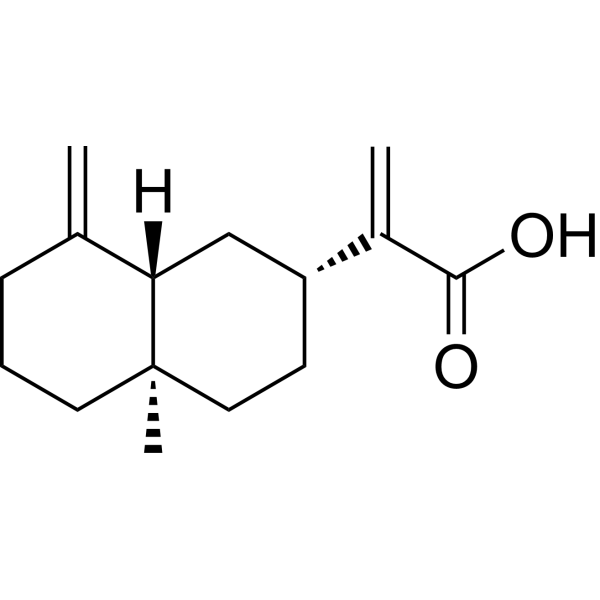
Costic acid

" in MedChemExpress (MCE) Product Catalog:
Products (33)

33 Results for "Costic acid" in MCE Product Catalog:

Cat. No.: HY-N2927
CAS No.: 3650-43-9
Synonyms: β-Costic acid
Costic acid (β-Costic acid) is a natural product, that can be isolated from Dittrichia viscosa. Costic acid exhibits potent in vivo acaricidal activity against the parasite. Costic acid is not toxic for human umbilical vein endothelial cells (HUVEC) at concentrations of up to 230 μM. Costic acid can be used for the research of varroosis in honey bee colonies .
loading...
    loading...
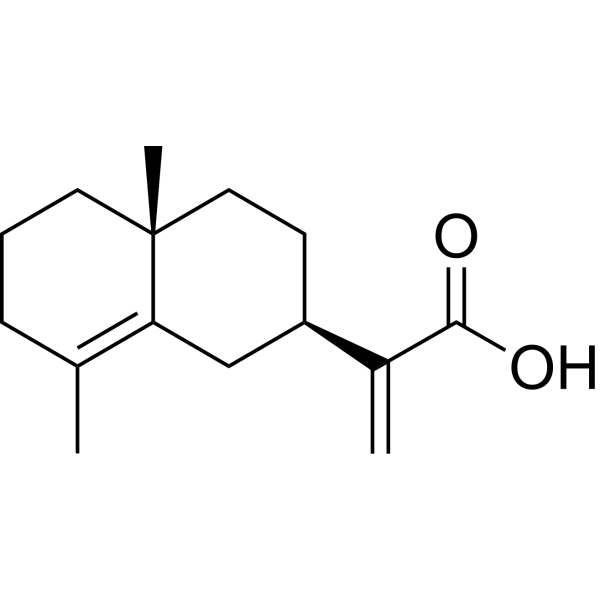
Cat. No.: HY-N16388
CAS No.: 28399-17-9
α-Costic acid is a plant sesquiterpene that can induce oxidative stress and autophagy in tomatoes. α-Costic acid has acaricidal activity .
loading...
    loading...
Cat. No.: HY-N3494
CAS No.: 69978-82-1
Synonyms: IsoCostic acid
γ-Costic acid (compound 13)is a kind of terpenoid. γ-Costic acid can be obtained by chemical transformation. γ-Costic acid has effective antifeedant and cytotoxic doses with EC50 0.5 μg/ml against L. decemlineata .
loading...
    loading...
45
45 Publications Verification
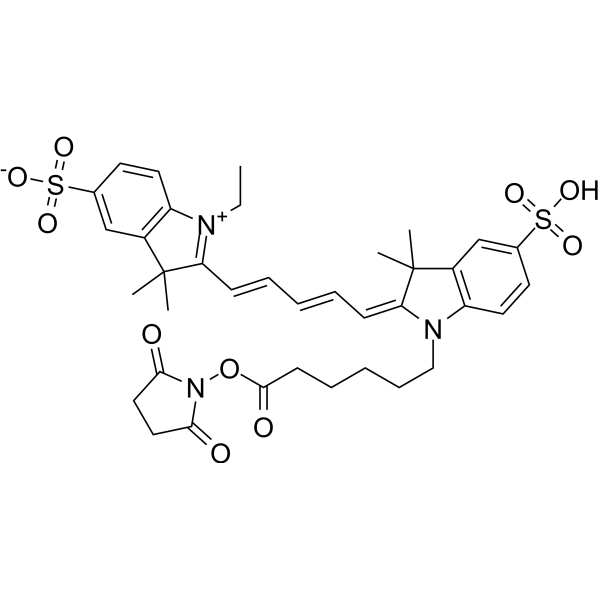
Cat. No.: HY-D0819
CAS No.: 146368-14-1
Synonyms: Cy5 NHS Ester; Sulfo-Cyanine5 Succinimidyl Ester
Cy5-SE (Cy5 NHS Ester) is a reactive dye for the labeling of amino-groups in peptides, proteins, and oligonucleotides. This dye requires small amount of organic co-solvent (such as DMF or DMSO) to be used in labeling reaction. This reagent is ideal for very cost-efficient labeling of soluble proteins, as well as all kinds of peptides and oligonucleotides. This reagent also works well in organic solvents for small molecule labeling. Excitation (nm):649, Emission (nm): 670.
loading...
    loading...
45
45 Publications Verification
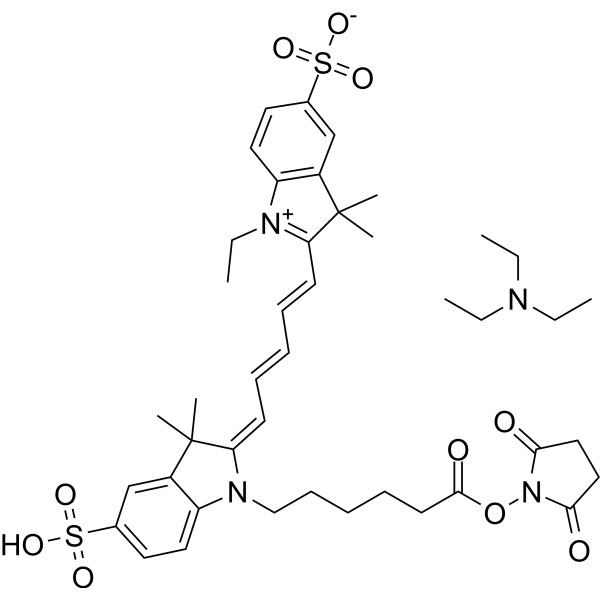
Cat. No.: HY-D0819A
CAS No.: 1497420-70-8
Synonyms: Cy5 NHS Ester triethylamine salt; Sulfo-Cyanine5 Succinimidyl Ester triethylamine salt
Cy5-SE (Cy5 NHS Ester) triethylamine salt is a reactive dye for the labeling of amino-groups in peptides, proteins, and oligonucleotides. Cy5-SE triethylamine salt is ideal for very cost-efficient labeling of soluble proteins, as well as all kinds of peptides and oligonucleotides Ex=649 nm; Em=670 nm) .
loading...
    loading...
1
1 Cited Publications
Cat. No.: HY-B2228
CAS No.: 9001-92-7
Proteinase, Aspergillus oryzae is a serine protease that hydrolyzes peptide bonds in protein substrates, preferring alkaline conditions (optimal pH 10.5). It efficiently degrades casein, poly-L-glutamic acid, and poly-L-lysine, with activity irreversibly inhibited by diisopropylfluorophosphate (DFP) and potato inhibitor. This enzyme catalyzes proteolysis via serine residues in its active site, finding applications in food processing (e.g., soy sauce fermentation), detergents, and leather industries due to its high yield in solid-state fermentation and cost-effective production.
loading...
    loading...
1
1 Cited Publications
Cat. No.: HY-120084
CAS No.: 2052301-24-1
Purity:  99.20%
Research Areas:  

Cancer

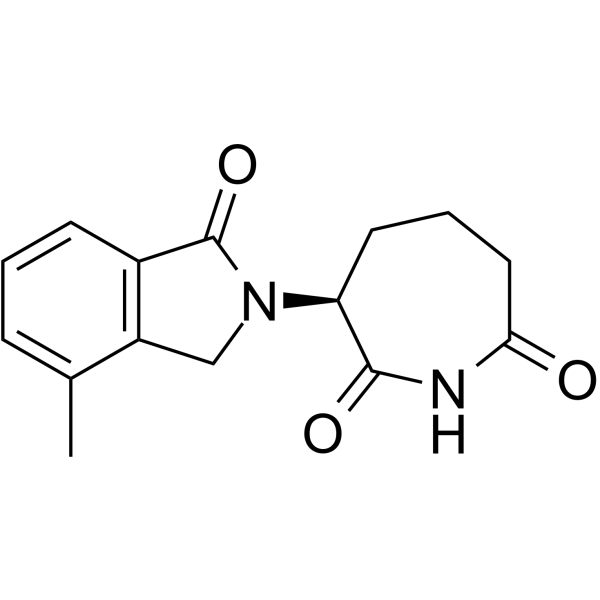
BTX161, a Thalidomide (HY-14658) analog, is a molecular glue degrader targeting CK1α. BTX161 recruits CK1α and the CK1α-FAM83 complex to the Cul4ACRBN E3 ligase complex, thereby driving ubiquitination and proteasomal degradation. BTX161 reduces FAM83G abundance through CK1α-FAM83G co-stability, slightly decreases FAM83H levels, but has no effect on the expression of FAM83B. BTX161 activates DNA damage response (DDR) and upregulates Wnt target genes including MYC. BTX161 can be used in research related to colorectal cancer, type b myelomonocytic leukemia and acute myeloid leukemia .
loading...
    loading...
Cat. No.: HY-W127329
CAS No.: 106-14-9
Research Areas:  

Others

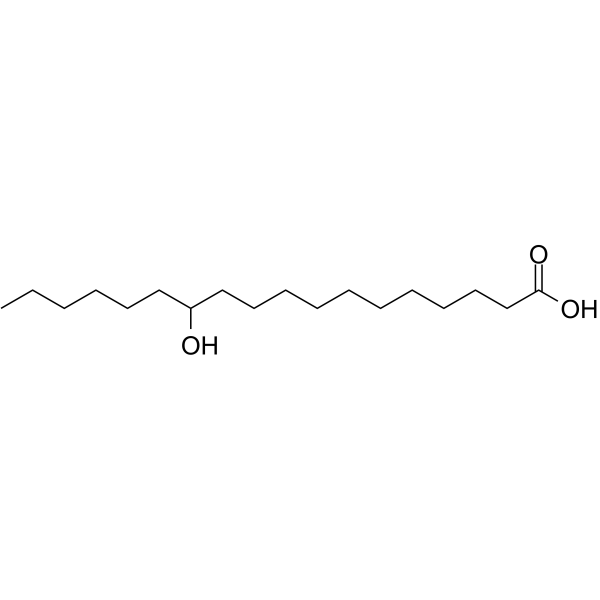
12-Hydroxystearic acid is a structurally simple and cost-effective low molecular weight organogelator, and its metal salts and derivatives find roles in many important applications .
loading...
    loading...
Cat. No.: HY-116954
CAS No.: 21087-64-9
Target:  

DNA/RNA Synthesis

Research Areas:  

Others

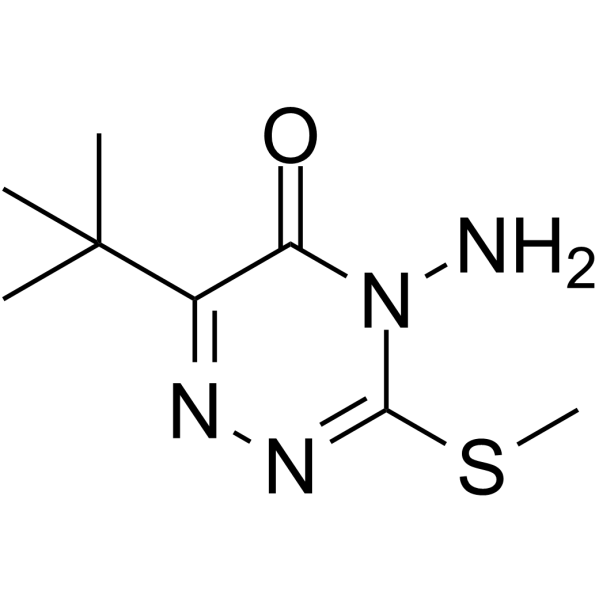
Metribuzin is a low-cost non-selective herbicide belonging to the chemical class of triazinones. Metribuzin inhibits plant DNA synthesis and acts on photosystem II, ultimately suppressing photosynthesis. Metribuzin provides excellent control of important annual grass and broadleaf weeds .
loading...
    loading...
Cat. No.: HY-W392173
CAS No.: 110615-47-9
Lauryl glucoside (50% in water) is a non-ionic surfactant with high cleansing ability, high foaming ability and low cost .
loading...
    loading...
Cat. No.: HY-DY1063
CAS No.: 146368-14-1
Cy5-SE (Cy5 NHS Ester) (solution) is a reactive dye for the labeling of amino-groups in peptides, proteins, and oligonucleotides. This dye requires small amount of organic co-solvent (such as DMF or DMSO) to be used in labeling reaction. This reagent is ideal for very cost-efficient labeling of soluble proteins, as well as all kinds of peptides and oligonucleotides. This reagent also works well in organic solvents for small molecule labeling. Excitation (nm) :649, Emission (nm) : 670.
Solvent and concentration: DMSO: 10 mM
loading...
    loading...
Cat. No.: HY-116954R
CAS No.: 21087-64-9
Research Areas:  

Others

Metribuzin (Standard) is the analytical standard of Metribuzin. This product is intended for research and analytical applications. Metribuzin is a low-cost non-selective herbicide that belongs to the chemical class of triazinones. Metribuzin hinders DNA synthesis in treated plants and acts on photosystem II, ultimately inhibiting photosynthesis. Metribuzin provides good control of important annual grass and broad-leaf weeds .
loading...
    loading...
Cat. No.: HY-W592622
CAS No.: 25014-41-9
Research Areas:  

Others

Polyacrylonitrile (MW 250000) is a semicrystalline organic polymer resin, which exhibits high tensile strength, thermal stability, as well as resistance to chemical corrosion and sunlight . Polyacrylonitrile serves as a low-cost carrier material with stable chemical and mechanical properties for immobilizing laccase, and it can also be used to prepare nanofibers, membrane air filters, carbon fibers and water filters .
loading...
    loading...
Cat. No.: HY-N10519
CAS No.: 120434-20-0
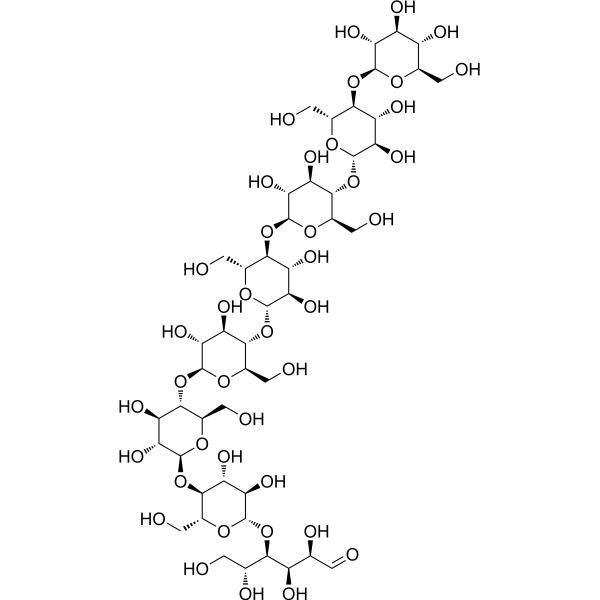
Cellooctaose is an oligosaccharide, consisting of eight glucose residues. Cellooctaose is a low-cost polysaccharides in fermentation to hold on Lactococcus lactis recombinant strain growth. Cellooctaose is the substrate of beta-glucosidase (E.C. 3.2.1.21) .
loading...
    loading...
Cat. No.: HY-W127329R
CAS No.: 106-14-9
Category:  

Microorganisms

12-Hydroxystearic acid (Standard) is the analytical standard of 12-Hydroxystearic acid. This product is intended for research and analytical applications. 12-Hydroxystearic acid is a structurally simple and cost-effective low molecular weight organogelator, and its metal salts and derivatives find roles in many important applications .
loading...
    loading...
Cat. No.: HY-L099
2,294 compounds

MCE Targeted Diversity Library contains 2,294 compounds, covering more than 1000 targets and isoforms, such as GPCRs, Ion channel, variety of kinases, etc. 1-3 compounds with high potency and selectivity were carefully selected for each target and isoform. The bioactivity information of each compound has been clearly reported in the literatures. This library is a concise collection of small molecule compounds with comprehensive target coverage, which can be used for phenotypic screening at low cost.

Cat. No.: HY-L026
2,564 compounds

New drug development is a time-consuming and high-cost process. Drug repurposing (also called drug repositioning, reprofiling or re‑tasking) offers various advantages over developing an entirely new drug for a given indication, such as lower risk and less investment. Clinical drugs have confirmed bioactivities, clear mechanisms and high safety that are suitable for drug repurposing.

MCE owns a unique collection of 2,564 clinical compounds that refer to various research areas including anti-cancer, anti-infection, anti-inflammation, nervous disease. Those compounds are of detailed information on clinical development status, research area, targets, etc.

Cat. No.: HY-L035
5,147 compounds

New drug development is a time-consuming and high-cost process. Drug repurposing (also called drug repositioning, reprofiling or re‑tasking) offers various advantages over developing an entirely new drug for a given indication. First, the risk of failure is lower. Second, the time frame for drug development can be reduced. Third, less investment is needed. Approved and clinical drugs, especially after phase I drugs, have identified bioactivities, good pharmacokinetic characteristics and safety which are suitable for drug repurposing.

MCE Drug Repurposing Compound Library contains 5,147 approved drugs and passed phase Ⅰclinical drugs, which have been completed extensive preclinical and clinical studies and have well-characterized bioactivities, safety and bioavailability properties.

Cat. No.: HY-L022M
3,237 compounds

New drug development is a time-consuming and high-cost process. Drug repurposing (also called drug repositioning, reprofiling or re‑tasking) offers various advantages over developing an entirely new drug for a given indication. First, the risk of failure is lower. Second, the time frame for drug development can be reduced. Third, less investment is needed. Approved drugs have identified bioactivities, good pharmacokinetic characteristics and safety which are suitable for drug repurposing.

MCE owns a unique collection of 3,237 approved compounds which have been completed extensive preclinical and clinical studies and have well-characterized bioactivities, safety and bioavailability properties. The package of this library is 96-well microplate with peelable foil seal, which makes the screening process easier and faster.

Cat. No.: HY-L022
3,237 compounds

New drug development is a time-consuming and high-cost process. Drug repurposing (also called drug repositioning, reprofiling or re‑tasking) offers various advantages over developing an entirely new drug for a given indication. First, the risk of failure is lower. Second, the time frame for drug development can be reduced. Third, less investment is needed. Approved drugs have identified bioactivities, good pharmacokinetic characteristics and safety which are suitable for drug repurposing.

MCE owns a unique collection of 3,237 approved compounds which have been completed extensive preclinical and clinical studies and have well-characterized bioactivities, safety and bioavailability properties. MCE FDA-Approved Drug Library is a good tool for drug repurposing which could dramatically accelerate drug development.

