1. Search Result
Search Result
Results for "

DDB1

" in MedChemExpress (MCE) Product Catalog:

32

Inhibitors & Agonists

1

Fluorescent Dye

2

Peptides

21

Recombinant Proteins

1

Isotope-Labeled Compounds

5

Antibodies

1

Click Chemistry

3

Oligonucleotides

Cat. No. Product Name Target Research Areas Chemical Structure
  • HY-14658
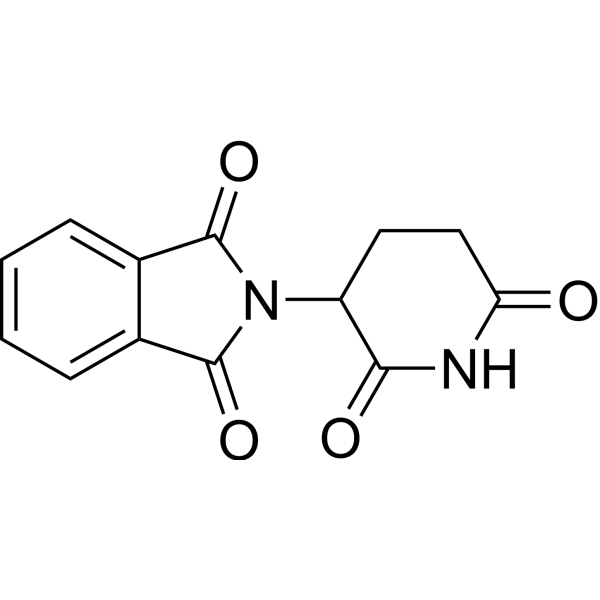
    Thalidomide
    Maximum Cited Publications
    25 Publications Verification

    Ligands for E3 Ligase Autophagy Apoptosis Molecular Glues Inflammation/Immunology Cancer
    Thalidomide inhibits cereblon (CRBN), a part of the cullin-4 E3 ubiquitin ligase complex CUL4-RBX1-DDB1, with a Kd of ∼250 nM, and has immunomodulatory, anti-inflammatory and anti-angiogenic cancer properties. Thalidomide can work as molecular glue to potentiate substrate.
    Thalidomide
  • HY-14571
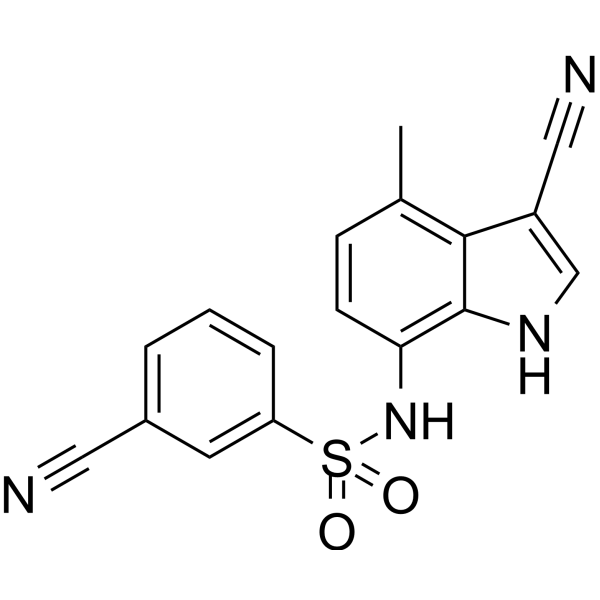
    E7820
    5 Publications Verification

    ER68203-00

    Molecular Glues Integrin Infection Metabolic Disease Cancer
    E7820 (ER68203-00), an orally active aromatic sulfonamide derivative, is a molecular glue that induces the targeted degradation of splicing factor RBM39 by recruiting the E3 ubiquitin ligase CUL4-RBX1-DDB1-DCAF15 (CRL4 DCAF15). E7820 is an angiogenesis inhibitor suppressing an expression of integrin alpha2 subunit on endothelium. E7820 inhibits rat aorta angiogenesis with an IC50 of 0.11 μg/ml. E7820 modulates α-1, α-2, α-3, and α-5 integrin mRNA expression. E7820 can be used for the study of acute myeloid leukemia (AML) [1] .
    E7820
  • HY-133870
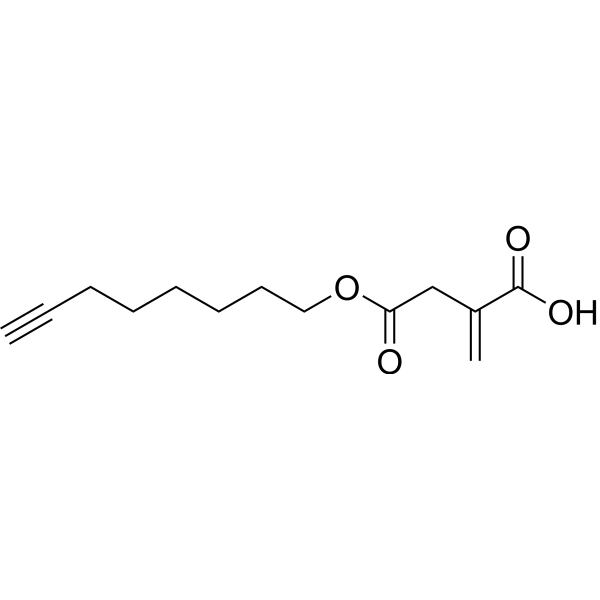
    Itaconate-alkyne
    3 Publications Verification

    ITalk

    Fluorescent Dye Inflammation/Immunology
    Itaconate-alkyne (ITalk) is a specific bioorthogonal probe for quantitative and site-specific chemoproteomic profiling of Itaconation in living cells. Itaconate-alkyne, a functional analogue of Itaconate, exhibits comparable antiinflammatory effect with Itaconate and enables the labeling of bona fide targets of Itaconate [1]. Itaconate-alkyne is a click chemistry reagent, it contains an Alkyne group and can undergo copper-catalyzed azide-alkyne cycloaddition (CuAAc) with molecules containing Azide groups.
    Itaconate-alkyne
  • HY-172113

    PROTACs YAP c-Myc Apoptosis Cancer
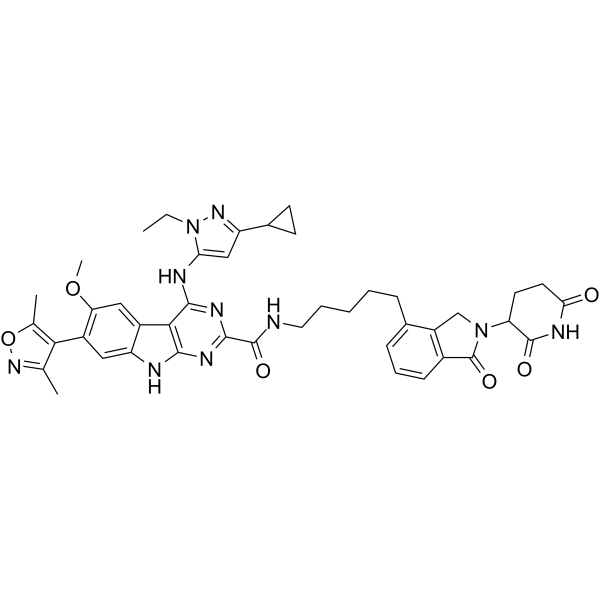
    H122 is a PROTAC degrader for TEAD that degrades TEAD1 with a DC50 of 3 nM. H122 exhibits good affinity to TEAD2, TEAD3, and TEAD4 with Ki values of 2.0, 3.6 and 1.6 nM, respectively. H122 relies on binding to TEAD1 and CRBN, functional E3 ligase activity, and a functional proteasome for degradation.H122 induces degradation of TEAD3 and forms a ternary complex with TEAD4 and CRBN/DDB1 to mediate degradation.H122 downregulates expression of Myc target genes. H122 exhibits antitumor efficacy in MSTO-211H mouse xenograft models.H122 can be used for the research of malignant mesothelioma [1].
    H122
  • HY-144981
    HQ461
    1 Publications Verification

    CDK Molecular Glues Cancer
    HQ461 is a molecular glue that promotes CDK12-DDB1 interaction to trigger cyclin K degradation. HQ461-mediated degradation of cyclin K impairs CDK12 function, resulting in decreased CDK12 substrate phosphorylation, downregulation of DNA damage response genes, and cell death [1].
    HQ461
  • HY-163944

    DNA/RNA Synthesis Molecular Glues CDK Apoptosis RAD51 ATM/ATR PARP Cancer
    LL-K12-18 is a CDK12 kinase inhibitor and a dual-site molecular glue. LL-K12-18 inhibits human CDK12 with an IC50 value of 283.9 nM, and selectively degrades cyclin K via the ubiquitin-proteasome system by stabilizing the CDK12-DDB1 complex. LL-K12-18 downregulates DNA damage response genes, reduces the phosphorylation level of CTD Ser2 in RNA polymerase II, and modulates biomarkers such as ATM, RAD51, γ-H2AX and cleaved PARP, thereby effectively inducing apoptosis and inhibiting proliferation of breast cancer cells. LL-K12-18 exhibits high target selectivity and serves as a research tool for studies on triple-negative breast cancer [1] .
    LL-K12-18
  • HY-159098

    Molecular Glues PROTACs Histone Acetyltransferase Cardiovascular Disease
    dWIZ-1 is an orally active molecular glue and chemical probe targeting the WIZ transcription factor, which based on an IMiD backbone, binding to human WIZ with an affinity of 3.5 μM. dWIZ-1 recruits WIZ to the cereblon-DDB1 complex via its ZF7 domain, thereby triggering proteasome-dependent degradation of WIZ. dWIZ-1 significantly induces fetal hemoglobin expression in erythroblasts while reducing the level of inhibitory H3K9 dimethylation at WIZ binding sites such as the β-globin locus. Meanwhile, dWIZ-1 does not affect the proliferation and differentiation of erythroblasts, and no cytotoxicity is observed in in vitro cells or cynomolgus monkey models. dWIZ-1 serves as a critical tool molecule for investigating the mechanism and underlying pathways of sickle cell disease [1] .
    dWIZ-1
  • HY-W181530

    Molecular Glues CDK Apoptosis Ligands for E3 Ligase Cancer
    NCT02 is a molecular glue degrader based on the E3 ubiquitin ligase DDB1 that targets CDK12 and its binding partner CCNK. NCT02 triggers the ubiquitination and proteasomal degradation of CCNK, thereby downregulating CDK12 protein levels and inhibiting its downstream signaling pathways. NCT02 can induce tumor cell apoptosis, arrest the cell cycle, and selectively inhibit the proliferation of colorectal cancer cells carrying TP53 defects or belonging to the consensus molecular subtype CMS4. NCT02 has the potential to inhibit tumor growth in in vitro and in vivo models [1] .
    NCT02
  • HY-161166

    Others Others
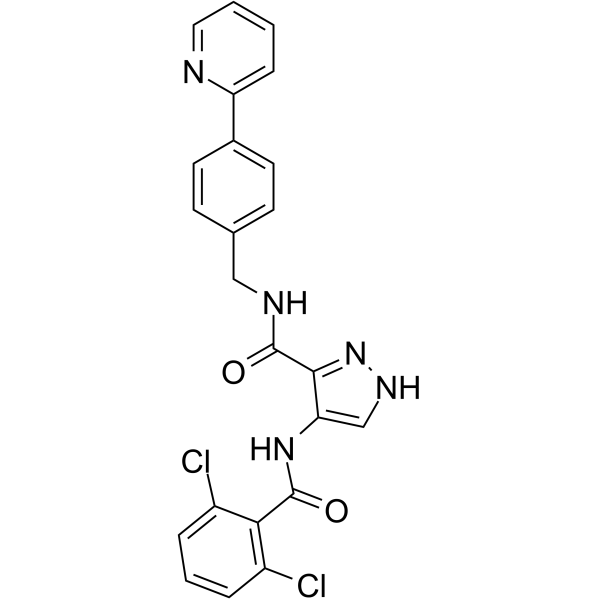
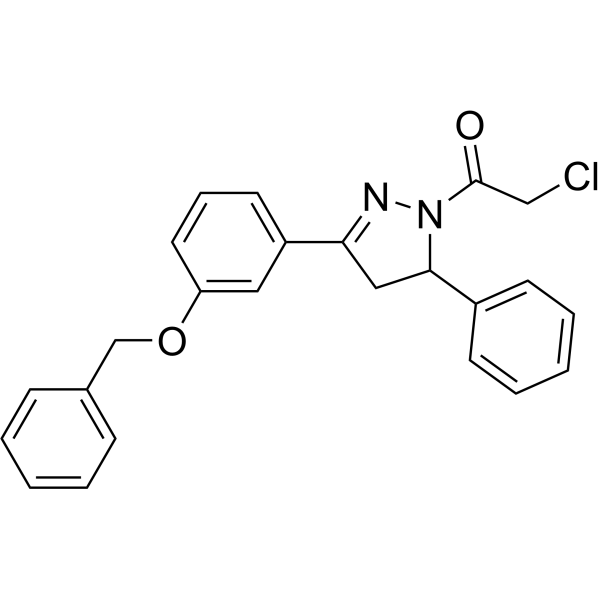
    MM-02-57 is a covalent DDB1 CUL4A adaptor protein recruiter [1].
    MM-02-57
  • HY-172615

    Molecular Glues Epigenetic Reader Domain Cancer
    AMPTX-1 is a selective, orally active, covalent reversible BRD9 molecular glue degrader with a DC50 of 0.05 nM. AMPTX-1 selectively recruits BRD9 to the E3 ligase DCAF16. AMPTX-1 forms a ternary complex with BRD9 and a reversible covalent adduct with Cys58 on the surface of DCAF16. AMPTX-1 mediates BRD9 degradation via the proteasome and Cullin RING E3 ligase pathways. AMPTX-1 can be used in the research of solid tumors and hematological malignancies [1].
    AMPTX-1
  • HY-14658R

    Ligands for E3 Ligase Autophagy Apoptosis Reference Standards Inflammation/Immunology Cancer
    Thalidomide (Standard) is the analytical standard of Thalidomide. This product is intended for research and analytical applications. Thalidomide inhibits cereblon (CRBN), a part of the cullin-4 E3 ubiquitin ligase complex CUL4-RBX1-DDB1, with a Kd of ∼250 nM, and has immunomodulatory, anti-inflammatory and anti-angiogenic cancer properties. Thalidomide can work as molecular glue to potentiate substrate.
    Thalidomide (Standard)
  • HY-161633

    PROTACs EGFR FAK Cancer
    PROTAC EGFR degrader 11 (Compound B71) is a PROTAC degrader for epidermal growth factor receptor (EGFR), with DC50 <100 nM. PROTAC EGFR degrader 11 binds CRBN-DDB1 with a Ki of 36 nM. PROTAC EGFR degrader 11 degrades EGFR, focal adhesion kinase (FAK), and RSK1, inhibits the proliferation of BaF3 wild type and EGFR mutants, with IC50 <100 nM.
    PROTAC EGFR degrader 11
  • HY-122653A

    PROTACs Cancer
    CCT367766 formic is a potent and the third generation heterobifunctional and Cereblon-based pirin targeting protein degradation probe (PDP, or PROTAC), depletes pirin protein expression at low concentration. CCT367766 formic exhibits a moderate affinity for the CRBN-DDB1 complex with an IC50 value of 490 nM. CCT367766 formic reveals a good affinity for the recombinant pirin and CRBN with Kd values of 55 nM and 120 nM, respectively. CCT367766 formic provides a potential chemical tool to study a largely unexplored protein [1].
    CCT367766 formic
  • HY-177742

    Molecular Glues Phosphoglycerate Dehydrogenase (PHGDH) Cancer
    LXH-3-71 is a PHGDH degrader. LXH-3-71 acts as a molecular glue to enhance the interaction of the PHGDH-DDB1-CRL E3 ligase complex, triggering ubiquitination and proteasomal degradation of PHGDH. LXH-3-71 regulates the stemness of colorectal cancer cells and inhibits tumor proliferation and colony formation. LXH-3-71 can be used in the research of colorectal cancer [1].
    LXH-3-71
  • HY-RS03606

    Small Interfering RNA (siRNA) Others

    DDB1 Human Pre-designed siRNA Set A contains three designed siRNAs for DDB1 gene (Human), as well as a negative control, a positive control, and a FAM-labeled negative control.

    DDB1 Human Pre-designed siRNA Set A
    DDB1 Human Pre-designed siRNA Set A
  • HY-RS24422

    Small Interfering RNA (siRNA) Others

    Ddb1 Rat Pre-designed siRNA Set A contains three designed siRNAs for Ddb1 gene (Rat), as well as a negative control, a positive control, and a FAM-labeled negative control.

    Ddb1 Rat Pre-designed siRNA Set A
    Ddb1 Rat Pre-designed siRNA Set A
  • HY-150641

    CDK Apoptosis DNA/RNA Synthesis Molecular Glues Cancer
    CDK-IN-9 (compound 24) is a potent CDK inhibitor, also as a molecular glue inducing an interaction between CDK12 and DDB1, with an IC50 values of 4 nM for CDK2/E. CDK-IN-9 leads to polyubiquitination of cyclin K and its subsequent degradation. CDK-IN-9 induce apoptosis through dephosphorylation of retinoblastoma protein and RNA polymerase II [1].
    CDK-IN-9
  • HY-182983

    Ligands for E3 Ligase Others
    DDB1 ligand-1 is a DNA damage-binding protein 1 (DDB1) ligand. DDB1 ligand-1 binds to a unique pocket on the β propeller C (BPC) domain of DDB1, induces conformational changes, and blocks the canonical DCAF/HBx peptide binding site of DDB1. DDB1 ligand-1 engages full-length DDB1 in cellular settings and supports PROTAC development research [1].
    DDB1 ligand-1
  • HY-14658S

    Molecular Glues Ligands for E3 Ligase Autophagy Apoptosis Inflammation/Immunology Cancer
    Thalidomide-d4 is a deuterium labeled Thalidomide. Thalidomide inhibits cereblon (CRBN), a part of the cullin-4 E3 ubiquitin ligase complex CUL4-RBX1-DDB1, with a Kd of ~250 nM, and has immunomodulatory, anti-inflammatory and anti-angiogenic cancer properties [1] .
    Thalidomide-d4
  • HY-RS17951

    Small Interfering RNA (siRNA) Others

    Ddb1 Mouse Pre-designed siRNA Set A contains three designed siRNAs for Ddb1 gene (Mouse), as well as a negative control, a positive control, and a FAM-labeled negative control.

    Ddb1 Mouse Pre-designed siRNA Set A
    Ddb1 Mouse Pre-designed siRNA Set A
  • HY-149441

    Molecular Glues Cancer
    Indisulam analog-1 (Compound 4) is an analog of Indisulam (HY-13650). Indisulam analog-1 recruits DCAF15-DDB1-DDA1-RBM39 with an EC50 of 1.21 µM. Indisulam analog-1 can be used in the research of colon cancer [1].
    Indisulam analog-1
  • HY-161167

    PROTACs Cancer
    MM-02-08 is the potent BRD4 degrader and binds to DDB1 [1].
    MM-02-08
  • HY-161632

    PROTACs EGFR FAK Cancer
    PROTAC EGFR degrader 10 (Compound B56) is a PROTAC degrader for epidermal growth factor receptor (EGFR), with DC50 <100 nM. PROTAC EGFR degrader 10 binds CRBN-DDB1 with a Ki of 37 nM. PROTAC EGFR degrader 10 degrades EGFR, focal adhesion kinase (FAK), and RSK1, inhibits the proliferation of BaF3 wild type and EGFR mutants, with IC50 <150 nM [1].
    PROTAC EGFR degrader 10
  • HY-P11028

    CDK Cancer
    M1-20 is a CDK1 inhibitor. M1-20 promotes CDK1 ubiquitination by CUL4-DDB1-DCAF1 complexes and degradation through the proteasome pathway. M1-20 abolishes the formation of CDK1/CCNB1 complexes. M1-20 has significant anticancer activity of spontaneous breast cancer in FVB/N MMTV-PyVT mice model [1].
    M1-20
  • HY-122653

    PROTACs Cancer
    CCT367766 is a potent and the third generation heterobifunctional and Cereblon-based pirin targeting protein degradation probe (PDP, or PROTAC), depletes pirin protein expression at low concentration. CCT367766 exhibits a moderate affinity for the CRBN-DDB1 complex with an IC50 value of 490 nM. CCT367766 reveals a good affinity for the recombinant pirin and CRBN with Kd values of 55 nM and 120 nM, respectively. CCT367766 provides a potential chemical tool to study a largely unexplored protein [1].
    CCT367766
  • HY-185230

    PROTACs YAP Cancer
    HC278 is a selective TEAD1/TEAD3 PROTAC degrader. HC278 induces proteasome-dependent degradation by forming a stable ternary complex with CRBN/DDB1. HC278 is applicable to the research of mesothelioma [1].
    HC278
  • HY-183755

    Molecular Glues Cancer
    YSA64 is an orally active RBM39-targeting molecular glue. YSA64 promotes degradation via formation of a DCAF15/DDB1 ternary complex, dependent on Cullin-RING E3 ligase and proteasome activity. YSA64 can be used for the research of acute myeloid leukemia and Ewing sarcoma [1].
    YSA64
  • HY-181164

    PROTACs Epigenetic Reader Domain HIV Infection
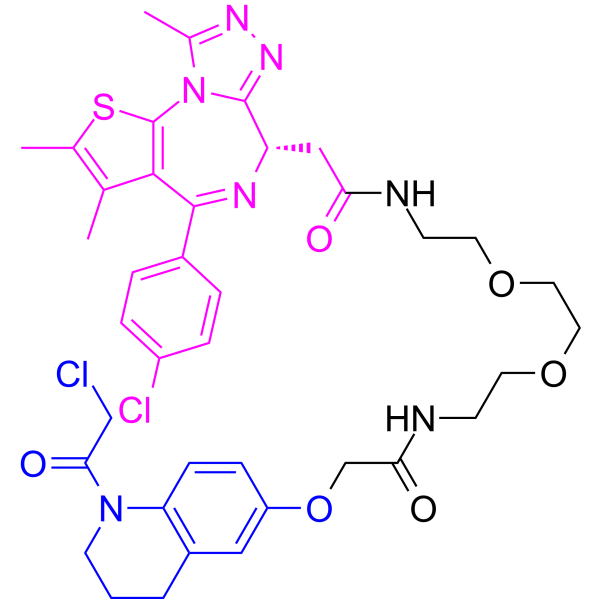
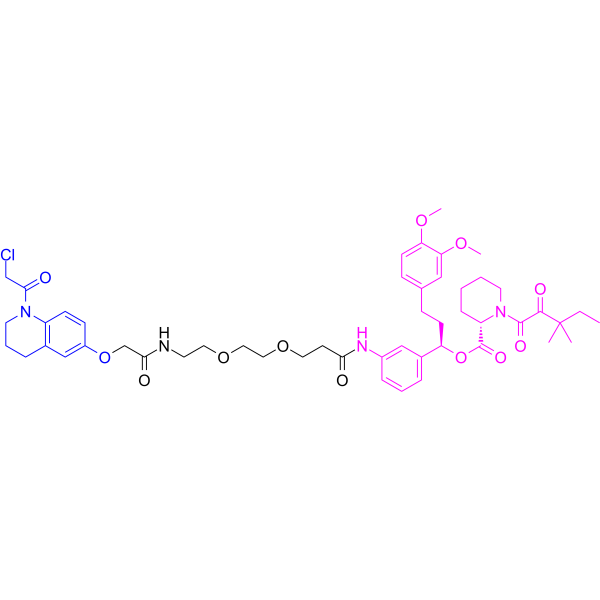
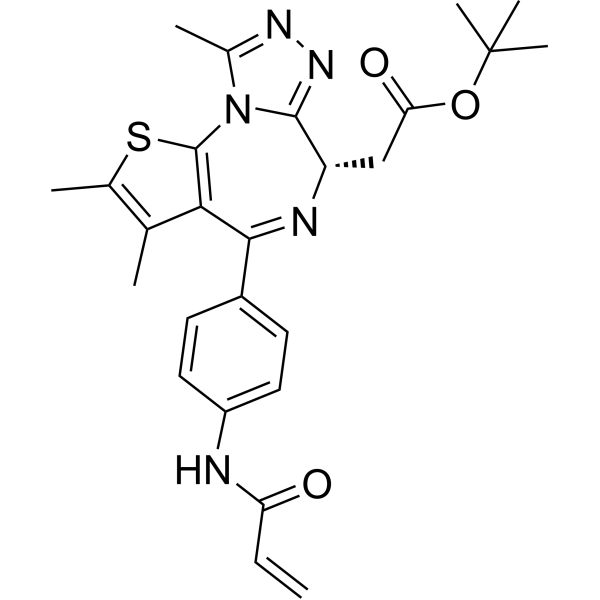
    PROTAC BRD4 Degrader-43 is a BRD4 PROTAC degrader. PROTAC BRD4 Degrader-43 recruits the DCAF1-DDB1-Cul4A E3 ligase complex via a Vpr-derived peptide moiety to induce BRD4 ubiquitination and degradation through the ubiquitin-proteasome system. PROTAC BRD4 Degrader-43 exhibits potent HIV latency-reversing activity. PROTAC BRD4 Degrader-43 can be used for the research of HIV-1 latent infection [1]. (Pink: BRD4 ligand (HY-13030); Blue: Cul4A-DDB1-DCAF1 ligand (HY-P11640); Black: conjugate of PEG linker + cell-penetrating peptide (HY-P2483))
    PROTAC BRD4 Degrader-43
  • HY-D3392

    Fluorescent Dye Ligands for E3 Ligase Others
    Thalidomide-cyanine 5 is a fluorescent probe prepared by conjugating the CRBN binder Thalidomide (HY-14658) with the near-infrared fluorescent dye Cy5. Thalidomide-cyanine 5 binds to DDB1-CRBN protein complex with a Kd of 121.6 nM. Thalidomide-cyanine 5 binds to CRBN to form a binary complex, and is mainly used for the visual tracking research of degradants such as PROTAC (Ex/Em = 650/665 nm) [1] .
    Thalidomide-cyanine 5
  • HY-P11640

    Ligands for E3 Ligase HIV Infection
    Vpr (1-14) is a viral protein R and acts as an accessory protein of HIV-1. Vpr (1-14) can binds to Cul4A-DDB1-DCAF1 E3 ligase complex and can be used as an E3 ligase-binding component in PROTACs. Vpr (1-14) can be used to synthesize PROTAC BRD4 Degrader-43 (HY-181164) [1].
    Vpr (1-14)
  • HY-181405

    Molecular Glues CDK Cancer
    SR-5037 is an orally active CDK12 (IC50 = 31 nM)/CDK13 inhibitor and CycK (DC50 = 30 nM;
    Dmax > 98%) molecular glue degrader. SR-5037 inhibits the enzymatic activity of CDK12/CycK and CDK13/CycK complexes. SR-5037 promotes the recruitment of DDB1 to the CDK12/CycK complex, thereby triggering proteasome-mediated CycK degradation. SR-5037 degrades active CycK in mouse models of triple-negative breast cancer. SR-5037 can be used in the research of cancers such as triple-negative breast cancer [1].
    SR-5037
  • HY-186126

    CDK Cancer
    CDK2 modulator 1 is a CDK2 modulator with an EC50 < 100 nM and an Emax > 100% of positive control in a TR-FRET proximity assay. CDK2 modulator 1 induces ternary complex formation with CDK2/CCNE1 and CRBN. CDK2 modulator 1 can be used for the research of cancer [1].
    CDK2 modulator 1

Inquiry Online

Your information is safe with us. * Required Fields.

Salutation


Country or Region *

Applicant Name *


Organization Name *

Department *


Email Address *


Product Name *

Cat. No.


Requested quantity *

Phone Number *


Remarks

Inquiry Online

Inquiry Information

Product Name:
Cat. No.:
Quantity:
MCE Japan Authorized Agent:

