67 Results for "

E3 ubiquitin ligase pathway

" in MedChemExpress (MCE) Product Catalog:
Products (67)

67 Results for "E3 ubiquitin ligase pathway" in MCE Product Catalog:

7
7 Publications Verification
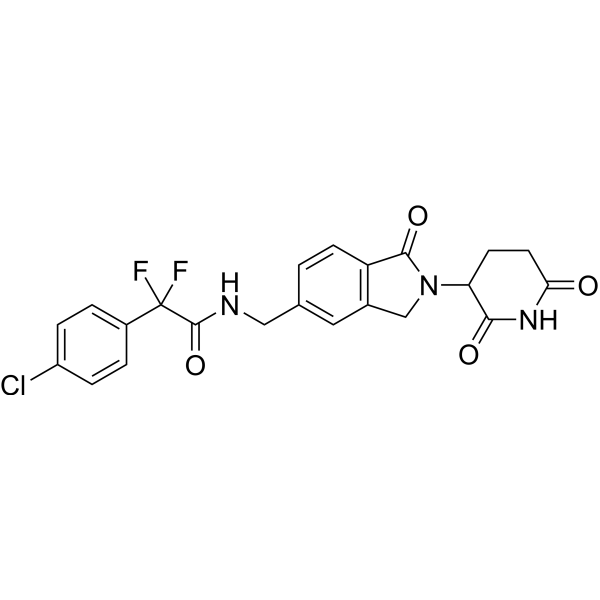
Cat. No.: HY-130800
CAS No.: 1860875-51-9
Purity:  99.76%
Synonyms: CC-90009
Eragidomide (CC-90009) is a GSPT1 Molecular Glue degrader. Eragidomide exhibits antiproliferative and pro-apoptotic (apoptosis) activities against acute myeloid leukemia cells. Eragidomide recruits the CRL4CRBN E3 ubiquitin ligase complex to selectively target GSPT1 for ubiquitination and proteasomal degradation. Eragidomide reduces leukemia cell engraftment and eliminates leukemia stem cells. Eragidomide promotes the activation of the GCN1/GCN2/ATF4 pathway and the integrated stress response pathway, inhibits global protein translation, promotes preferential translation of ATF4, and induces the accumulation of ATF4, CHOP and ATF3. The response to Eragidomide is regulated by the ILF2/ILF3 heterodimer complex, the mTOR signaling pathway and the integrated stress response. Eragidomide can be used in research related to acute myeloid leukemia and relapsed/refractory acute myeloid leukemia .
loading...
    loading...
4
4 Cited Publications
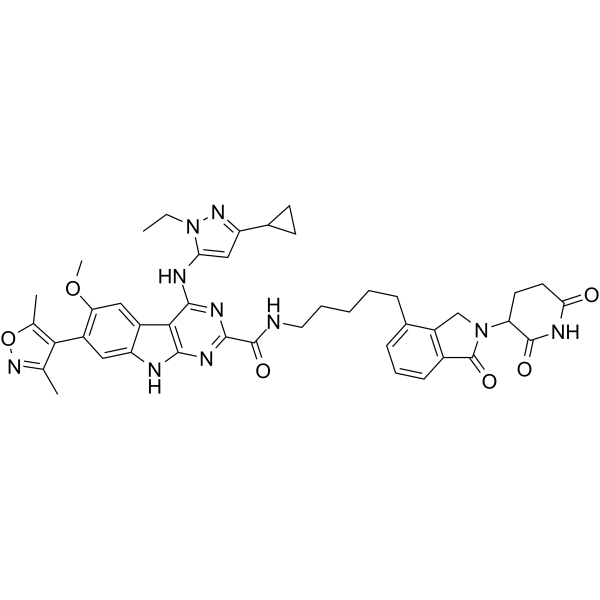
Cat. No.: HY-101519
CAS No.: 2093388-62-4
Purity:  99.59%
Synonyms: ZBC 260
BETd-260 (ZBC 260) is a BET PROTAC degrader. BETd-260 recruits BRD2, BRD3, and BRD4 to the CUL4-RBX1-DDB1-CRBN E3 ubiquitin ligase complex, driving cereblon-, proteasome-, and NEDD8-activating enzyme-dependent ubiquitination and degradation, with a DC50 of approximately 30-100 pM in RS4;11 cells. BETd-260 induces cancer cell apoptosis via endogenous signaling pathways, regulates the expression of the Bcl-2 family, inhibits the oncogene c-Myc, and reduces cell viability. BETd-260 suppresses tumor growth in mouse xenograft models with good biosafety. BETd-260 can be used in research related to acute leukemia, hepatocellular carcinoma, osteosarcoma, and triple-negative breast cancer .
loading...
    loading...
4
4 Cited Publications
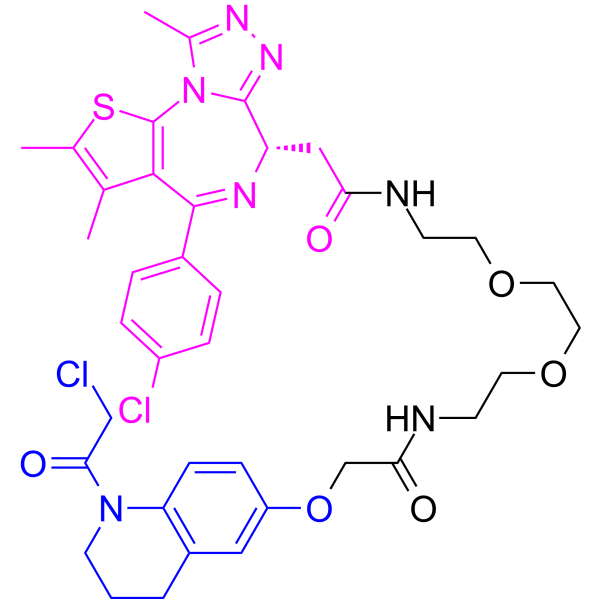
Cat. No.: HY-129917
CAS No.: 2384184-44-3
Purity:  99.17%
Research Areas:  

Cancer

KB02-JQ1 is a potent and selective BRD4 PROTAC degrader. KB02-JQ1 degrades BRD4 via the ubiquitin-proteasome pathway by bridging DCAF16 E3 ubiquitin ligase and BRD4. KB02-JQ1 can be used for cancer research .
loading...
    loading...
1
1 Cited Publications
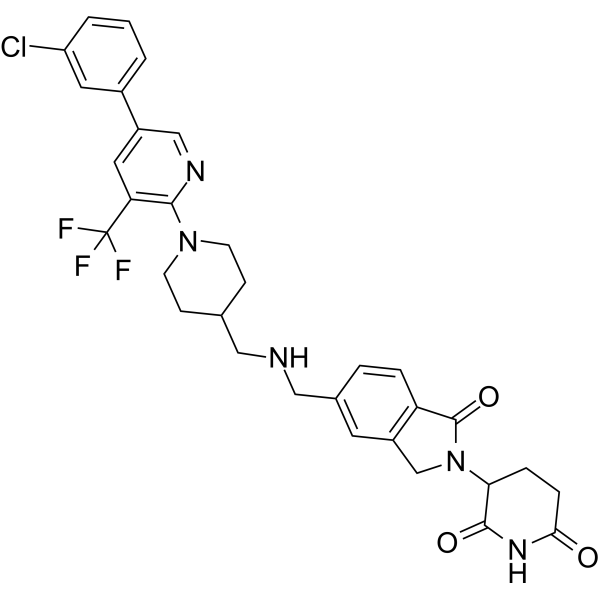
Cat. No.: HY-162318
CAS No.: 2946670-96-6
Research Areas:  

Cancer

MYC degrader 1 is a MYC degrader that recruits Cereblon (CRBN), with a Kd value of 145 nM and oral activity. MYC degrader 1 specifically binds MYC and GSPT1, recruits the CRBN E3 ubiquitin ligase complex, and induces MYC degradation via the ubiquitin-proteasome pathway. MYC degrader 1 downregulates KLHL42 expression, restores pRB1 protein levels, and re-establishes the sensitivity of MYC-overexpressing cancer cells to CDK4/6 inhibitors. MYC degrader 1 combined with Palbociclib (HY-50767) shows significant inhibition of tumor growth. MYC degrader 1 can be used in studies related to bladder cancer, prostate cancer, and breast cancer .
loading...
    loading...
1
1 Cited Publications
Cat. No.: HY-111866
CAS No.: 1801547-16-9
Purity:  99.89%
Research Areas:  

Metabolic Disease Cancer

PROTAC RIPK degrader-2 is a non-peptidic PROTAC degrader targeting RIPK2, with a DC50 of 1.5 nM. PROTAC RIPK degrader-2 recruits VHL or cereblon E3 ubiquitin ligases, induces ubiquitination and proteasomal degradation of RIPK2, acts via substoichiometric catalysis, and inhibits downstream pro-inflammatory signaling pathways. PROTAC RIPK degrader-2 inhibits the NOD2/RIPK2 pathway and suppresses MDP (HY-127090)-stimulated TNFα release in human whole blood. PROTAC RIPK degrader-2 can be used in studies related to acute monocytic leukemia and glucose metabolism .
loading...
    loading...
1
1 Cited Publications
Cat. No.: HY-134823
CAS No.: 2136246-72-3
Purity:  99.81%
Target:  

PROTACs MDM-2/p53

Research Areas:  

Cancer

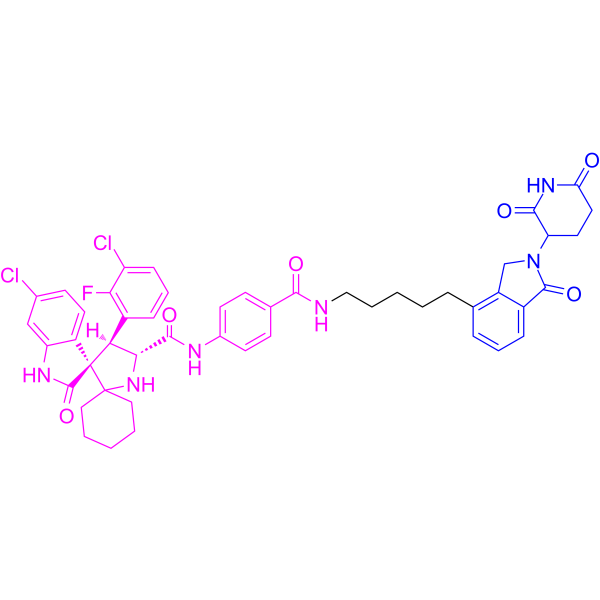
MD-222 is a potent MDM2 PROTAC degrader. MD-222 recruits the CRBN E3 ubiquitin ligase to target and degrade MDM2, and activates the wild-type p53 pathway in cells. MD-222 is used in relevant research on leukemia and breast cancer .
loading...
    loading...
1
1 Cited Publications
Cat. No.: HY-W181530
CAS No.: 790245-61-3
Research Areas:  

Cancer

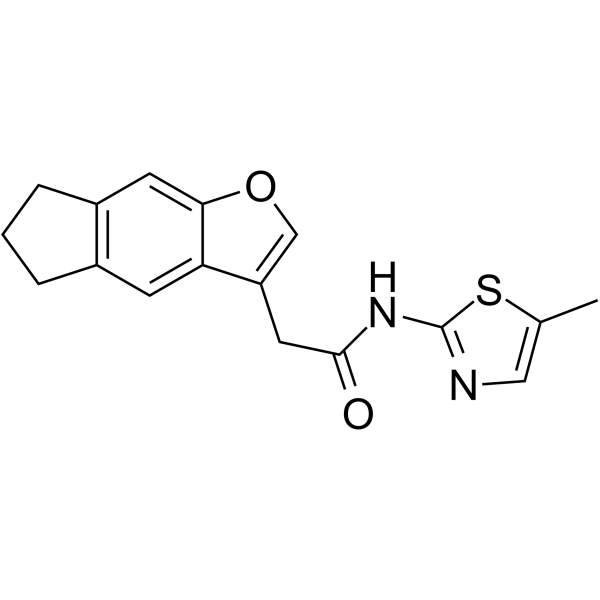
NCT02 is a molecular glue degrader based on the E3 ubiquitin ligase DDB1 that targets CDK12 and its binding partner CCNK. NCT02 triggers the ubiquitination and proteasomal degradation of CCNK, thereby downregulating CDK12 protein levels and inhibiting its downstream signaling pathways. NCT02 can induce tumor cell apoptosis, arrest the cell cycle, and selectively inhibit the proliferation of colorectal cancer cells carrying TP53 defects or belonging to the consensus molecular subtype CMS4. NCT02 has the potential to inhibit tumor growth in in vitro and in vivo models .
loading...
    loading...
1
1 Cited Publications
Cat. No.: HY-162318A
Target:  

c-Myc

Research Areas:  

Cancer

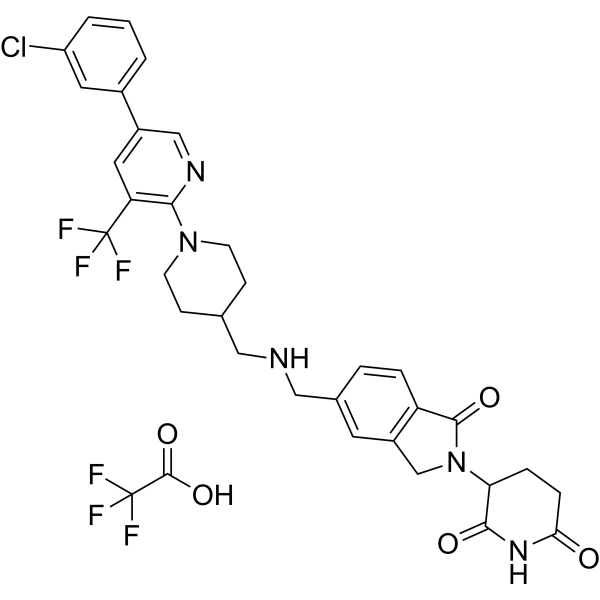
MYC degrader 1 TFA is a MYC degrader that recruits Cereblon (CRBN), with a Kd value of 145 nM and oral activity. MYC degrader 1 TFA specifically binds MYC and GSPT1, recruits the CRBN E3 ubiquitin ligase complex, and induces MYC degradation via the ubiquitin-proteasome pathway. MYC degrader 1 TFA downregulates KLHL42 expression, restores pRB1 protein levels, and re-establishes the sensitivity of MYC-overexpressing cancer cells to CDK4/6 inhibitors. MYC degrader 1 TFA combined with Palbociclib (HY-50767) shows significant inhibition of tumor growth. MYC degrader 1 TFA can be used in studies related to bladder cancer, prostate cancer, and breast cancer .
loading...
    loading...
Cat. No.: HY-145449
CAS No.: 2722698-03-3
Purity:  99.22%
Research Areas:  

Cancer

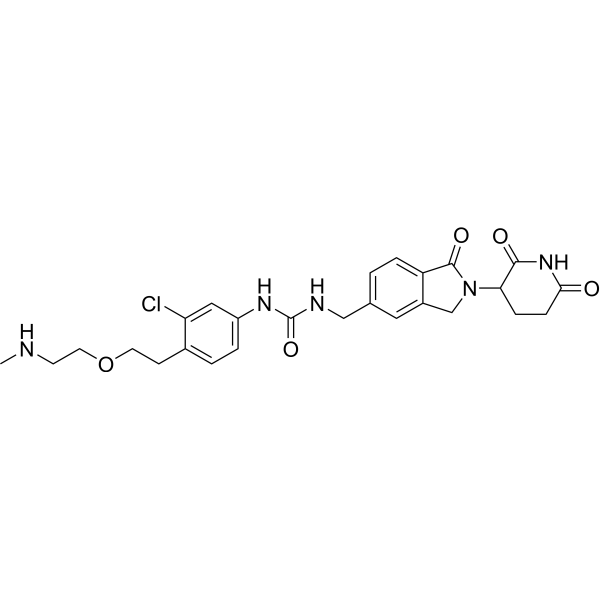
CC-885-CH2-PEG1-NH-CH3 is a neoDegrader that can be used in the synthesis of Antibody neoDegrader Conjugate (AnDC). CC-885-CH2-PEG1-NH-CH3 is the toxic molecule of ADC, which can specifically degrade the target protein in cancer cells through the E3 ubiquitin ligase pathway .
loading...
    loading...
Cat. No.: HY-145898
CAS No.: 2095780-08-6
Purity:  ≥95.0%
Synonyms: 14-D-Valine-TPL
Target:  

c-Myc Molecular Glues

Research Areas:  

Cancer

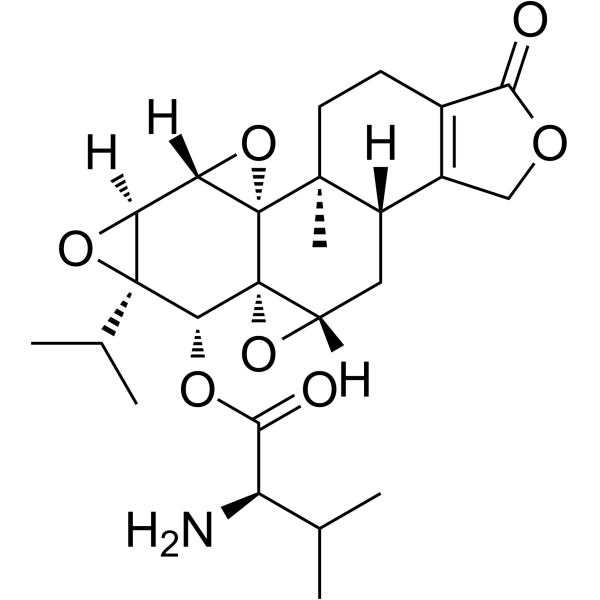
WBC100 (14-D-Valine-TPL) is a potent, selective, and orally active c-Myc molecule glue degrader. WBC100 is a c-Myc degrader and targets ubiquitin E3 ligase CHIP mediated 26S proteasome pathway. WBC100 is used for c-Myc overexpressing tumors research .
loading...
    loading...
Cat. No.: HY-153357
CAS No.: 2416130-57-7
Purity:  98.16%
Target:  

PROTACs Btk c-Myc NF-κB

Research Areas:  

Inflammation/Immunology Cancer

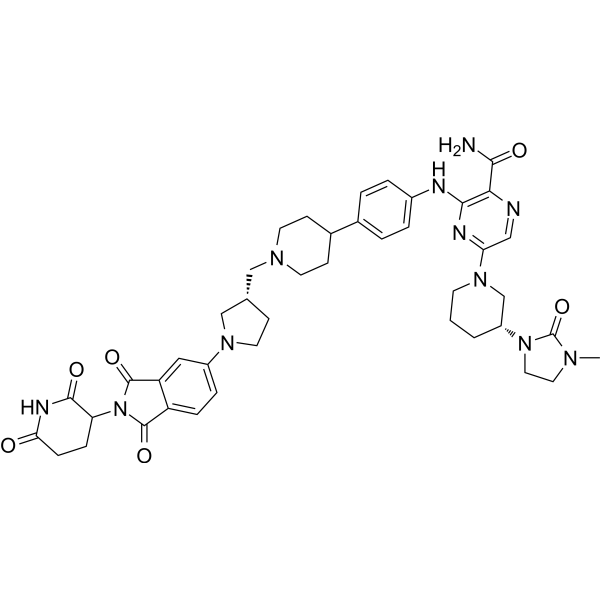
NRX-0492 is an orally active BTK PROTAC degrader, with a binding IC50 of 1.2 nM for both wild-type BTK and BTK T474I, and 2.7 nM for BTK C481S, and exhibits cellular DC50 values of 0.1 nM and 0.2 nM against wild-type BTK and BTK C481S, respectively. NRX-0492 catalyzes the ubiquitination and proteasomal degradation of wild-type and drug-resistant mutant BTK by recruiting the CRBN E3 ubiquitin ligase complex. NRX-0492 inhibits the BCR signaling pathway and its downstream NF-κB/MYC transcriptional program, achieves rapid and sustained degradation in primary CLL cells, and exhibits extremely low cytotoxicity. NRX-0492 degrades BTK, inhibits tumor cell proliferation and activation, and significantly suppresses tumor growth in xenograft models. NRX-0492 can be used in research related to chronic lymphocytic leukemia and diffuse large B-cell lymphoma .
loading...
    loading...
Cat. No.: HY-145319
CAS No.: 2367619-87-0
Purity:  99.75%
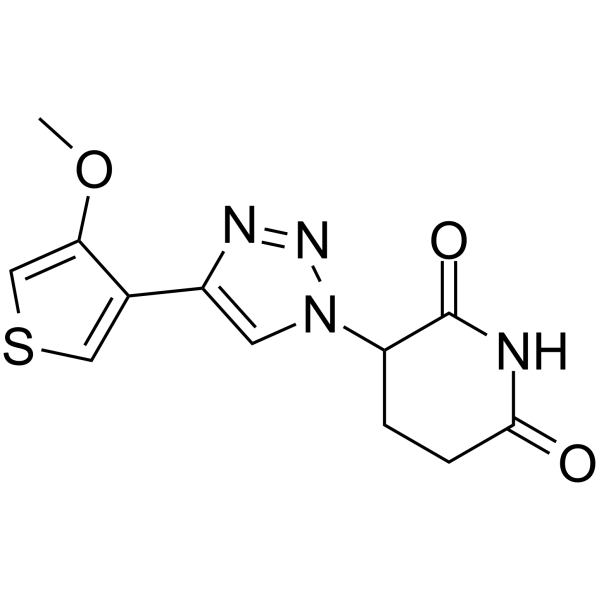
FPFT-2216 is an orally active Molecular glue degrader targeting IKZF1, IKZF3, CK-1α, and PDE6D, with a DC50 of 8 nM against PDE6D. FPFT-2216 mediates ubiquitin-proteasome degradation via the CRL4 CRBN E3 ubiquitin ligase complex and interacts with the non-isoprenoid-binding region of PDE6D. FPFT-2216 activates the p53 signaling pathway, inhibits the CBM complex/NF-κB pathway, upregulates IL-2, suppresses IL-1β and IL-6, and induces tumor cell Apoptosis. FPFT-2216 exhibits anticancer activity against multiple myeloma and lymphoma. FPFT-2216 can be used in research related to multiple myeloma, lymphoma, acute lymphoblastic leukemia, acute myeloid leukemia, pancreatic ductal adenocarcinoma, non-small cell lung cancer, and gastric adenocarcinoma .
loading...
    loading...
Cat. No.: HY-114402
CAS No.: 2316837-10-0
Purity:  99.61%
Research Areas:  

Cancer

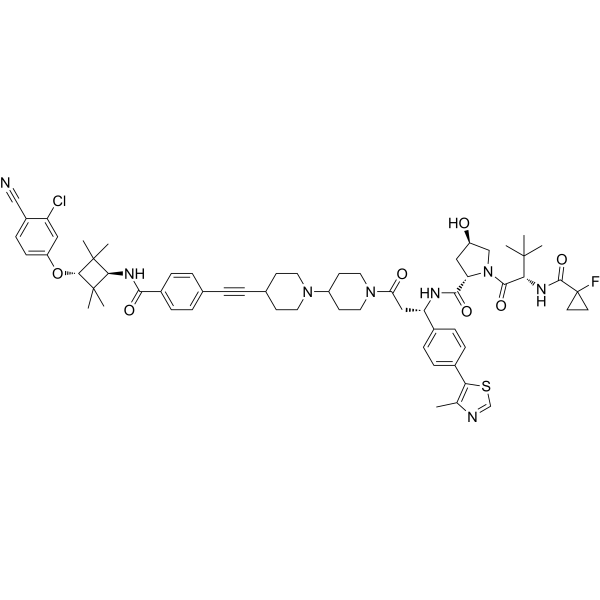
ARD-69 is a PROTAC degrader based on the E3 ubiquitin ligase VHL and targeting the androgen receptor, which can induce androgen receptor (AR) protein degradation in AR-positive prostate cancer cells. ARD-69 inhibits AR-regulated gene expression, binds to the AR ligand binding domain at one end and binds to VHL at the other end, prompting AR to be recruited to the E3 ubiquitin ligase complex, triggering proteasome degradation, thereby inhibiting AR signaling pathways and downstream gene expression (such as PSA, TMPRSS2). ARD-69 can be used to study of castration-resistant prostate cancer (mCRPC) .
loading...
    loading...
Cat. No.: HY-129610
CAS No.: 2384184-40-9
Purity:  99.25%
Target:  

PROTACs FKBP

Research Areas:  

Cancer

KB02-SLF is a nuclear FKBP12 covalent PROTAC degrader. KB02-SLF covalently modifies cysteine residues in DCAF16, forms a ternary complex with nuclear FKBP12, and mediates degradation via the CUL4-DDB1 E3 ubiquitin ligase pathway. KB02-SLF promotes polyubiquitination and proteasomal degradation of nucleus-localized FKBP12. KB02-SLF can be used in breast cancer research .
loading...
    loading...
Cat. No.: HY-148117
CAS No.: 2758431-97-7
Purity:  99.96%
MD13 is a MIF PROTAC degrader with a DC50 of approximately 100 nM. MD13 induces ubiquitination and degradation of MIF by recruiting the Cereblon Cullin RING E3 ubiquitin ligase complex. MD13 inactivates the MAPK pathway and induces G2/M phase cell cycle arrest. MD13 exhibits antiproliferative effects in 3D tumor spheroid models. MD13 can be used in lung cancer-related research .
loading...
    loading...
Cat. No.: HY-156106
CAS No.: 3033117-53-9
Purity:  99.78%
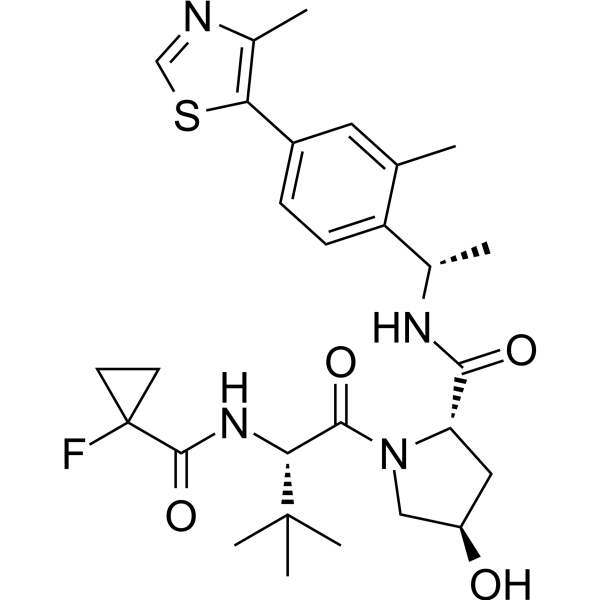
VHL-IN-1 (Compound 30) is an E3 ligase VHL inhibitor with a Kd value of 37 nM. VHL-IN-1 blocks VHL-mediated ubiquitination and degradation of HIF-1α. VHL-IN-1 stabilizes the protein levels of HIF-1α and hydroxylated HIF-1α, and induces the transcriptional activity of HIF-1α. VHL-IN-1 can be used for PROTAC development. VHL-IN-1 is applicable for cancer research .
loading...
    loading...
Cat. No.: HY-162943
Research Areas:  

Cancer

P60-L3-VHL is a PROTAC degrader targeting Foxp3. P60-L3-VHL triggers the ubiquitination modification of Foxp3 by conjugating the Foxp3-targeting peptide P60 with the VHL E3 ubiquitin ligase ligand via a long linker, and mediates protein degradation through the proteasome pathway. P60-L3-VHL blocks the nuclear translocation of Foxp3, relieves the transcriptional inhibition of IL2 and IFN-γ, and inhibits the differentiation of iTreg cells. P60-L3-VHL is applicable to cancer-related research .
loading...
    loading...
Cat. No.: HY-155021
CAS No.: 2781922-42-5
Purity:  99.95%
PROTAC α-synuclein degrader 5 is a selective PROTAC degrader targeting α‑synuclein aggregates, with a DC50 of 7.51 μM. PROTAC α-synuclein degrader 5 binds to αSyn aggregates, recruits the CRBN E3 ubiquitin ligase, and mediates the ubiquitination and subsequent degradation of α‑synuclein aggregates. PROTAC α-synuclein degrader 5 activates the autophagy-lysosome pathway. PROTAC α-synuclein degrader 5 reduces ROS levels in neuroblastoma cells, restores mitochondrial membrane potential, rescues cell viability, and decreases LDH release. PROTAC α-synuclein degrader 5 degrades αSyn aggregates in Caenorhabditis elegans and ameliorates oxidative stress. PROTAC α-synuclein degrader 5 is used for the research of synucleinopathies, such as Parkinson's disease .
loading...
    loading...
Cat. No.: HY-143346
CAS No.: 2361138-33-0
Purity:  98.73%
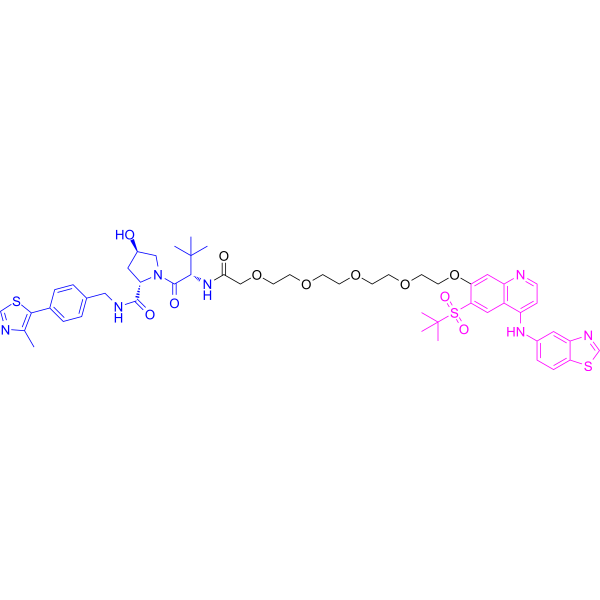
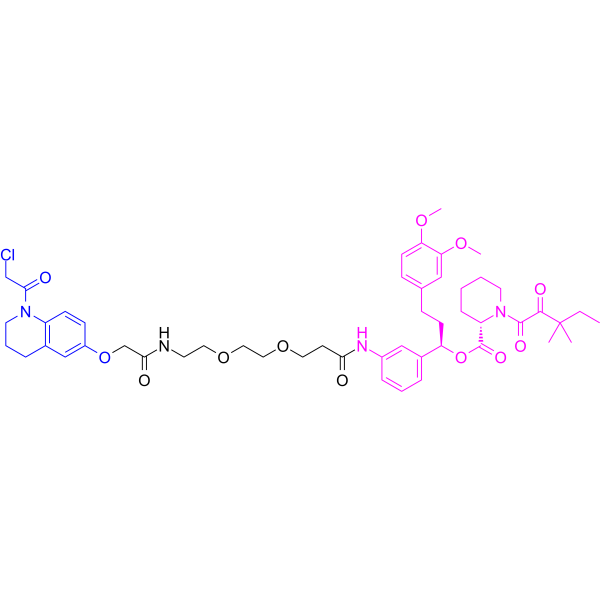
CCW16 is a non-selective cysteine-reactive covalent ligand and an RNF4 E3 ubiquitin ligase recruiter with an IC50 of 1.8 μM against human RNF4[. CCW16 covalently modifies accessible cysteine residues on RNF4, PRDX1, PRDX2, and PRDX6, attenuating the peroxide-scavenging activity of peroxiredoxins. CCW16 induces oxidative stress through upregulation of HMOX1 and NRF2, and triggers ferroptosis via lipid peroxidation and ROS signaling pathways in an RNF4-independent manner. CCW16 serves as an RNF4-recruiting moiety; it does not induce RNF4 degradation when used alone and can be used to synthesize protein degraders, such as the PROTAC compound CCW 28-3 (HY-156774). CCW16 can be used for research on acute myeloid leukemia and hepatocellular carcinoma .
loading...
    loading...
Cat. No.: HY-111870
CAS No.: 2089205-64-9
Purity:  99.97%
Target:  

PROTACs RIP kinase

Research Areas:  

Inflammation/Immunology Cancer

PROTAC RIPK degrader-6 (Example 1) is a RIPK2 PROTAC degrader that recruits cereblon. PROTAC RIPK degrader-6 recruits the CRBN E3 ubiquitin ligase complex and induces the degradation of RIPK2 kinase via the ubiquitin-proteasome pathway, thereby blocking NOD1/NOD2-mediated pro-inflammatory signaling pathways of NF-κB and MAPK. PROTAC RIPK degrader-6 can be used in research related to RIPK2-mediated autoinflammatory diseases and cancer .
loading...
    loading...

