1. Search Result
Search Result
Results for "

ERK signaling

" in MedChemExpress (MCE) Product Catalog:

441

Inhibitors & Agonists

4

Screening Libraries

7

Fluorescent Dyes

8

Biochemical Assay Reagents

32

Peptides

7

Inhibitory Antibodies

114

Natural
Products

27

Isotope-Labeled Compounds

1

Click Chemistry

1

Oligonucleotides

6

GMP Molecules

Targets Recommended:
Cat. No. Product Name Target Research Areas Chemical Structure
  • HY-14187
    Amiodarone
    10+ Cited Publications

    Potassium Channel Autophagy Cardiovascular Disease Infection Neurological Disease Cancer
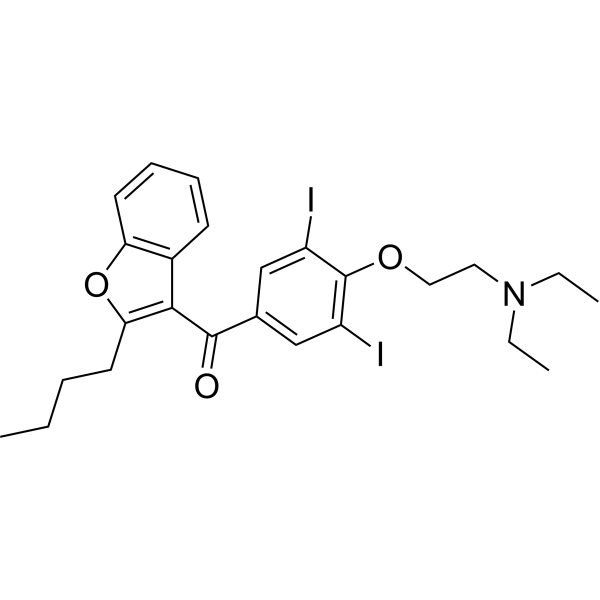
    Amiodarone, a benzofuran-based Class III antiarrhythmic agent, inhibits WT outward ionic current (IhERG) tails with an IC50 of ∼45 nM . Amiodarone induces cell proliferation and myofibroblast differentiation via ERK1/2 and p38 MAPK signaling in fibroblasts . Amiodarone can be used in the research of both supraventricular and ventricular arrhythmias .
    Amiodarone
  • HY-N2329
    Piperlongumine
    Maximum Cited Publications
    14 Publications Verification

    Piplartine

    ERK Reactive Oxygen Species (ROS) Autophagy Apoptosis Bacterial Ferroptosis Infection Cardiovascular Disease Cancer
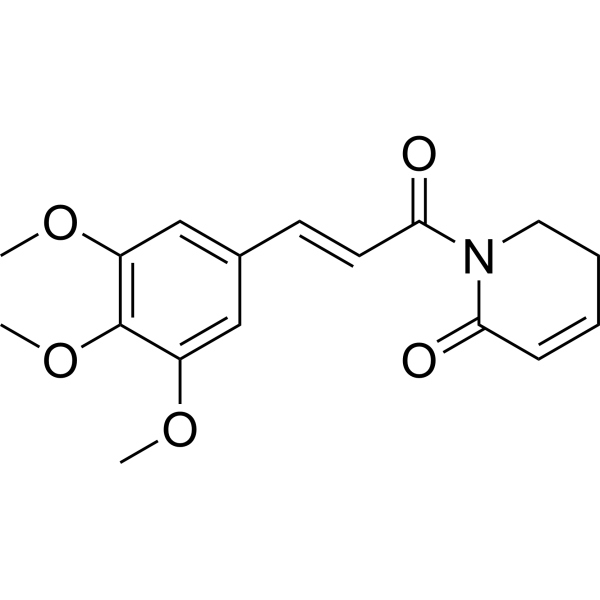
    Piperlongumine is a alkaloid , possesses ant-inflammatory, antibacterial, antiangiogenic, antioxidant, antitumor, and antidiabetic activities . Piperlongumine induces ROS, and induces apoptosis in cancer cell lines . Piperlongumine shows anti-cardiac fibrosis activity, suppresses myofibroblast transformation via suppression of the ERK1/2 signaling pathway. Piperlongumin could be used in the study of migrasome .
    Piperlongumine
  • HY-14188
    Amiodarone hydrochloride
    10+ Cited Publications

    Potassium Channel Autophagy Cardiovascular Disease Infection Neurological Disease Cancer
    Amiodarone hydrochloride, a benzofuran-based Class III antiarrhythmic agent, inhibits WT outward ionic current (IhERG) tails with an IC50 of ∼45 nM . Amiodarone hydrochloride induces cell proliferation and myofibroblast differentiation via ERK1/2 and p38 MAPK signaling in fibroblasts . Amiodarone hydrochloride can be used in the research of both supraventricular and ventricular arrhythmias .
    Amiodarone hydrochloride
  • HY-N0265
    Asperosaponin VI
    3 Publications Verification

    Akebia saponin D

    Caspase Apoptosis PERK p38 MAPK Akt HIF/HIF Prolyl-Hydroxylase PPAR Cardiovascular Disease Neurological Disease
    Asperosaponin VI is a saponin component from Dipsacus asper. Asperosaponin VI induces osteoblast differentiation through the BMP-2/p38 and ERK1/2 signaling pathways. Asperosaponin VI protects against hypoxia-induced cardiomyocyte apoptosis by activating the PI3K/Akt and CREB pathways. Additionally, Asperosaponin VI also has antidepressant and wound-healing-promoting activities .
    Asperosaponin VI
  • HY-N0371
    Pachymic acid
    5 Publications Verification

    3-O-Acetyltumulosic acid

    Akt ERK Cancer
    Pachymic acid is a lanostrane-type triterpenoid from P. cocos. Pachymic acid inhibits Akt and ERK signaling pathways.
    Pachymic acid
  • HY-135985
    DCLK1-IN-1
    4 Publications Verification

    Fluorescent Dye Cancer
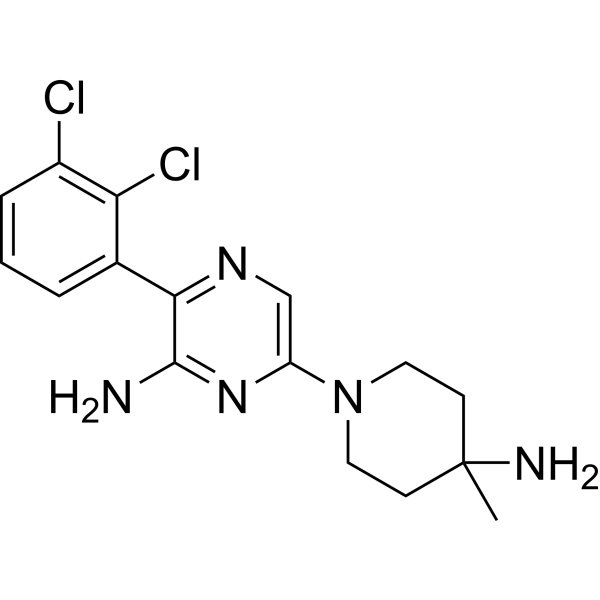
    DCLK1-IN-1 is a selective, oral bioavailability in vivo-compatible chemical probe of the doublecortin like kinase 1 (DCLK1 kinase) domain. DCLK1-IN-1 inhibits DCLK1 and DCLK2 kinases (IC50: DCLK1=9.5/57.2 nM and DCLK2=31/103 nM in binding and kinase assay, respectively). DCLK1-IN-1 shows low toxicity, and can investigate DCLK1 biology and establish its role in cancer, like DCLK1 + pancreatic ductal adenocarcinoma (PDAC) .
    DCLK1-IN-1
  • HY-B0444
    Maprotiline hydrochloride
    4 Publications Verification

    Autophagy Apoptosis ERK Neurological Disease Cancer
    Maprotiline hydrochloride is a highly selective noradrenergic reuptake inhibitor that has strong antidepressant, antitumor and neuropathic pain-relieving effects with oral activity. Maprotiline hydrochloride induces cancer cell apoptosis by targeting the ERK signaling pathway and CRABP1 .
    Maprotiline hydrochloride
  • HY-N7128
    Flavanone
    1 Publications Verification

    Cytochrome P450 ERK p38 MAPK NF-κB MMP PAI-1 Cancer
    Flavanone is a naturally occurring flavone. Flavanone has inhibitory activity for human estrogen synthetase (aromatase). Flavanone is the inhibitor for ERK/p38/NF-κB signaling pathway. Flavanone exhibits oral activity and antitumor efficacy .
    Flavanone
  • HY-N6670

    Antibiotic Raf ERK Ras MEK Bacterial Infection
    Cefotetan is a binding agent that targets human Raf1 kinase inhibitor protein (hRKIP). Cefotetan binds to hRKIP, reduces the binding space between hRKIP and Raf1 kinase, relieves hRKIP's inhibition of the Ras/Raf1/MEK/ERK signaling pathway, and enhances ERK phosphorylation. Cefotetan can be used to study diseases associated with dysregulated Ras/Raf1/MEK/ERK signaling pathways. Cefotetan is also a broad-spectrum antibacterial agent that disrupts cell wall synthesis by binding to bacterial penicillin-binding proteins (PBPs). It is used to study bacterial infections such as bone, skin, urinary tract, and lower respiratory tract .
    Cefotetan
  • HY-16697
    CID 16020046
    2 Publications Verification

    GPR55 Cancer
    CID 16020046 is a potent and selective GPR55 antagonist and inhibits GPR55 constitutive activity with an IC50 of 0.15 μM. CID 16020046 inhibits GPR55-mediated Ca 2+ signaling and GPR55-mediated ERK1/2 phosphorylation. CID 16020046 reduces wound healing in endothelial cells and is involved in the regulation of platelet function .
    CID 16020046
  • HY-109556

    Akt ERK Metabolic Disease
    Insulin Detemir is an artificial insulin, shows effect on controlling blood sugar levels. Insulin Detemir stimulates GLP-1 secretion as a consequence of enhanced Gcg expression by a mechanism involving activation of Akt- and/or extracellular signal-regulated kinase (ERK)-dependent-cat and CREB signaling pathways. Insulin Detemir can be used for type 2 diabetes research .
    Insulin Detemir
  • HY-144903

    GDC-1971

    SHP2 Phosphatase p38 MAPK ERK Cancer
    Migoprotafib (GDC-1971) (compound 199) is a SHP2 inhibitor. Migoprotafib inhibits the MAPK/ERK signaling pathway, and exhibits antitumor activity .
    Migoprotafib
  • HY-129566

    ERK Wnt β-catenin RUNX Neurological Disease Metabolic Disease Inflammation/Immunology Cancer
    Withanolide B is an active component of W. somnifera Dunal. Withanolide B promotes osteogenic differentiation of hBMSCs via ERK1/2 and Wnt/β-catenin signaling pathways. Withanolide B exhibits neuroprotective, anti-arthritic, anti-aging and anti-cancer effects .
    Withanolide B
  • HY-143212

    1-Stearoyl-2-docosahexaenoyl-sn-glycerol

    Ras p38 MAPK ERK PKC Metabolic Disease Inflammation/Immunology Cancer
    18:0-22:6 DG (1-Stearoyl-2-docosahexaenoyl-sn-glycerol) is a diacylglycerol (DG) that can interact with RasGRP (Ras guanine nucleotide-releasing protein) (Ki = 8.37 μM) and modulate the activation of MAP kinases (such as ERK1/ERK2), which play a crucial role in cellular signaling processes. 18:0-22:6 DG can also activate protein kinase C (PKC) isozyme. 18:0-22:6 DG can be used for research of cancer, immunology and metabolic disease .
    18:0-22:6 DG
  • HY-P10728

    RXFP Receptor ERK Cardiovascular Disease Inflammation/Immunology
    B7-33 is a single-chain relaxin mimetic and a selective relaxin receptor 1 (RXFP1) agonist. B7-33 phosphorylates ERK1/2 without inducing activation of the cAMP signaling pathway. B7-33 exhibits anti-fibrotic and cardioprotective activities. B7-33 can be used in the research of vascular diseases such as cardiomyopathy, myocardial infarction and fibrosis .
    B7-33
  • HY-18285

    Wnt Casein Kinase ERK CDK Cancer
    Longdaysin is a inhibitor of the Wnt/β-catenin signaling pathway, which exerts antitumor effect through blocking CK1δ/ε-dependent Wnt signaling. Longdaysin inhibits CK1α, CK1δ, CDK7, and ERK2 with IC50s of  5.6 µM, 8.8 µM, 29 µM, and 52 µM, respectively .
    Longdaysin
  • HY-16728
    Rapastinel
    1 Publications Verification

    GLYX-13

    iGluR ERK mTOR Neurological Disease Cancer
    Rapastinel (GLYX-13) is a potent NMDAR modulator capable of crossing the blood-brain barrier, and it exhibits extremely high affinity for human NMDAR (EC50=0.0017-9.9 nM). Rapastinel enhances ERK signaling and activates the mTOR pathway, thereby upregulating the expression of BDNF and VGF, and inducing significant neuroplastic changes such as enhanced LTP and increased mature dendritic spine density in the hippocampus. Rapastinel moderately elevates the efflux of dopamine, norepinephrine and 5-HT in the prefrontal cortex, and uniquely avoids side effects of traditional antidepressants such as dissociation, addiction or sedation. Rapastinel is applicable to the research of major depressive disorder and hepatocellular carcinoma .
    Rapastinel
  • HY-N2312
    Mogrol
    2 Publications Verification

    ERK STAT Cancer
    Mogrol is a biometabolite of mogrosides, and acts via inhibition of the ERK1/2 and STAT3 pathways, or reducing CREB activation and activating AMPK signaling.
    Mogrol
  • HY-N1374
    Magnolin
    2 Publications Verification

    ERK Inflammation/Immunology
    Magnolin, a major component of Magnolia liliiflora, inhibits the Ras/ERKs/RSK2 signaling axis by targeting the active pocket of ERK1 and ERK2 with IC50s of 87 nM and 16.5 nM, respectively.
    Magnolin
  • HY-16642A
    LY2828360
    1 Publications Verification

    Cannabinoid Receptor Neurological Disease
    LY2828360 is a slowly acting but efficacious G protein-biased cannabinoid (CB2) agonist, inhibiting cAMP accumulation and activating ERK1/2 signaling.
    LY2828360
  • HY-14340
    WAY-181187
    2 Publications Verification

    SAX-187

    5-HT Receptor Neurological Disease
    WAY-181187 (SAX-187) is a potent and selective full 5-HT6 receptor agonist with a Ki of 2.2 nM and an EC50 of 6.6 nM . WAY181187 mediates 5-HT6 receptor-dependent signal pathways, such as cAMP, Fyn and ERK1/2 kinase, as specific agonist .
    WAY-181187
  • HY-B1014

    VD/VDR p38 MAPK JNK ERK NF-κB Akt GSK-3 PKA Apoptosis Cardiovascular Disease Inflammation/Immunology Cancer
    Acenocoumarol is an anticoagulant that functions as a Vitamin K antagonist. Acenocoumarol inhibits MAPK/ERK/JNK signaling pathway, reduces the nuclear translocation of NF-κB p65, activates Akt/GSK3β signaling pathway. Acenocoumarol induces apoptosis in cell A549, arrests cell cycle at S phase .
    Acenocoumarol
  • HY-N0363
    (+)-Columbianetin
    2 Publications Verification

    (S)-Columbianetin

    ERK JNK Collagen TGF-beta/Smad p38 MAPK Reactive Oxygen Species (ROS) Others
    (+)-Columbianetin ((S)-Columbianetin) acts as an inhibitor of JNK/ERK. (+)-Columbianetin inhibits UVA-induced phosphorylation of JNK and ERK, reduces the production of MMP-1, reverses UVA-induced Collagen (HY-NP003) degradation, and alleviates UVA-mediated inhibition of Smad2/3 phosphorylation and translocation. (+)-Columbianetin regulates the AP-1 and ASK1-MAPK signaling pathways, inhibits the production of ROS and blocks sub-G1 cell cycle arrest. (+)-Columbianetin is applicable to research related to skin aging .
    (+)-Columbianetin
  • HY-120548

    TGF-β Receptor Integrin Raf RIP kinase ERK Cancer
    KBU2046 is an orally active transforming growth factor-β (TGF-β1) inhibitor. KBU2046 reduces integrin family protein expression, decreases Raf, RIPK1 and ERK phosphorylation to deactivate the ERK signaling pathway, and down-regulates genes linked to TGF-β1 maturation. KBU2046 suppresses tumor cell motility, impedes cancer invasion and metastasis, and inhibits human ESCC growth and metastasis in a murine model. KBU2046 can be used for the researches of triple-negative breast cancer and esophageal squamous cell carcinoma .
    KBU2046
  • HY-155978A
    RDN2150 TFA
    1 Publications Verification

    Tyrosinase ERK Interleukin Related IFNAR Inflammation/Immunology
    RDN2150 TFA is a ZAP-70 inhibitor with an IC50 of 14.6 nM, and it exhibits selectivity for Syk over other kinases. RDN2150 TFA inhibits signal transduction and activation of T cells/CAR-T cells, reduces the phosphorylation level of Erk1/2, suppresses the induction of CD69 and IL-2, and downregulates phosphotyrosine signaling pathways including hnRNP sites in T cells. RDN2150 TFA can be used for psoriasis-related research .
    RDN2150 TFA
  • HY-111083

    CID23612552

    GPR55 Others
    ML-191 is an antagonist of GPR55. It inhibits GPR55 signaling induced by lysophosphatidylinositol (EC50=1.076 µM in U2OS cells overexpressing GPR55). ML-191 inhibits LPI-induced phosphorylation of ERK1/2 (IC50=328 nM) and receptor-dependent translocation of PKCβII when used at a concentration of 30 µM .
    ML191
  • HY-N6076

    ERK Neurological Disease
    Tenuifoliside A is isolated from Polygala tenuifolia, has anti-apoptotic and antidepressant-like effects. Tenuifoliside A exhibits its neneurotrophic effects and promotes cell proliferation through the ERK/CREB/BDNF signal pathway in C6 cells .
    Tenuifoliside A
  • HY-147855
    ACA-28
    1 Publications Verification

    ERK Apoptosis Reactive Oxygen Species (ROS) Keap1-Nrf2 Cancer
    ACA-28 is a potent ERK MAPK signaling modulator. ACA-28 selectively inhibits cancer cell growth and induces apoptosis. ACA-28 can activate nuclear factor erythroid 2-related factor 2 (Nrf2) signaling via inducing ROS production. ACA-28 can be used for the research of cancer, such as melanoma .
    ACA-28
  • HY-148117

    PROTACs Macrophage migration inhibitory factor (MIF) Cancer
    MD13 is a macrophage migration inhibitory factor (MIF)-directed PROTAC with a Ki of 71 nM. MD13 can be used for cancer research .
    MD13
  • HY-B1853

    Environmental Pollutants Apoptosis ERK Herbicide MEK Cardiovascular Disease
    Simetryn is a triazine herbicide that exerts teratogenicity. Simetryn inhibits photosynthesis by blocking electron transfer in the chloroplast photosystem II and activates the MEK/Erk signaling pathway. Simetryn triggers vascular and developmental abnormalities in zebrafish and tadpoles, suppresses proliferation, enhances apoptosis, and induces malformations. Simetryn serves as a tool to establish a zebrafish model for studying arteriovenous malformations and related pathogenesis. Simetryn controls paddy weeds and can be used for research on developmental and vascular disorders .
    Simetryn
  • HY-W001174

    ERK NF-κB Inflammation/Immunology
    2,5-Dihydroxyacetophenone, isolated from Rehmannia glutinosa, inhibits the production of inflammatory mediators in activated macrophages by blocking the ERK1/2 and NF-κB signaling pathways .
    2,5-Dihydroxyacetophenone
  • HY-N8303

    ERK PAK Neurological Disease Inflammation/Immunology
    Gardenin A is an orally active and synthetic PMF analogue with the neurotrophic effect for neurite outgrowth and neuronal differentiation. Gardenin A promotes neuritogenesis via activating MAPK/ERK, PKC, and PKA, but not TrkA, CREB signaling pathways. Gardenin A also has sedative, anxiolytic, antidepressant, and anticonvulsant effects .
    Gardenin A
  • HY-B1272A

    Adrenergic Receptor ERK JNK p38 MAPK NF-κB AP-1 Apoptosis Reactive Oxygen Species (ROS) Mitochondrial Metabolism TNF Receptor Neurological Disease Inflammation/Immunology Cancer
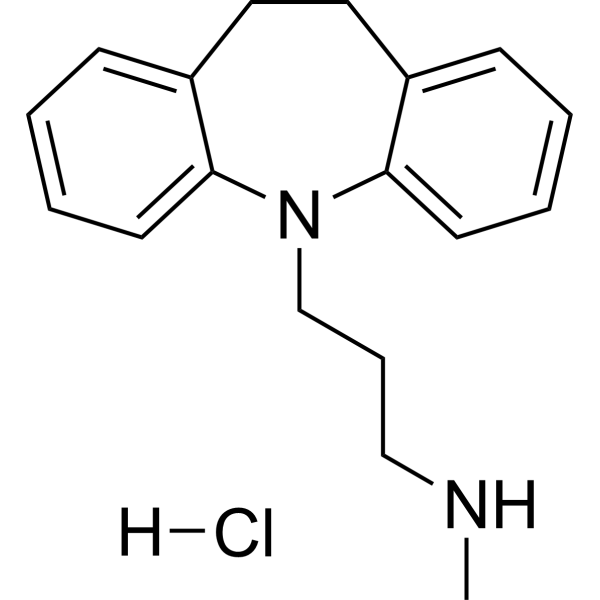
    Desipramine is a first-generation tricyclic antidepressant. Desipramine selectively binds to norepinephrine transporter and blocks neuronal norepinephrine reuptake. Desipramine activates MAPK signaling via ERK1/2, JNK, and p38, represses NF-κB and AP-1 activity, and induces apoptosis via ROS elevation, mitochondrial membrane potential reduction, and intracellular calcium increase. Desipramine also shows anyi-inflammatory activity, inhibiting TNF-α production. Desipramine can be used for the research of hepatocellular cancer, inflammation, and neurological diseases .
    Desipramine
  • HY-121280

    ERK Cancer
    ERK2-IN-4 (Compound 6o) is an effective and selective ERK2 inhibitor with a Ki of 0.006 μM. ERK2-IN-4 inhibits the ERK signaling pathway and can be used in cancer research .
    ERK2-IN-4
  • HY-142066

    PKA ERK iGluR Neurological Disease
    4′-Demethylnobiletin is a bioactive metabolite that activates the PKA/ERK/CREB signaling pathway, enhances CRE-mediated transcription in hippocampal neurons, and reverses memory impairment associated with NMDA receptor antagonism by stimulating ERK signaling .
    4′-Demethylnobiletin
  • HY-113599

    EGFR ERK Akt Others
    Isoprocurcumenol is a guaiane type sesquiterpene, that can be isolated from Curcuma comosa. Isoprocurcumenol can activate EGFR signaling. Isoprocurcumenol increases the phosphorylation of ERK and AKT. Isoprocurcumenol promotes the proliferation of keratinocytes .
    Isoprocurcumenol
  • HY-164853

    Pyroptosis NOD-like Receptor (NLR) ERK FGFR AMPK Cardiovascular Disease Neurological Disease Inflammation/Immunology
    Kanglexin is an orally active and novel anthraquinone compound. Kanglexin inhibits NLRP3 inflammatory body activation and cell pyroptosis, and has a cardioprotective effect. Kanglexin promotes angiogenesis through FGFR1/ERK signaling pathway and accelerates diabetic wound healing. In addition, Kanglexin has the effect of lipid-lowering and inhibiting the dedifferentiation of vascular smooth muscle cells, and can be used in the study of hyperlipidemia, fatty liver and atherosclerosis .
    Kanglexin
  • HY-116586

    Sigma Receptor mAChR ERK Amyloid-β Tau Protein Neurological Disease
    AF710B is an orally effective allosteric agonist for the M1 muscarinic receptor and σ1 receptor. AF710B activates the downstream phosphorylated ERK1/2 and phosphorylated CREB signaling pathways. AF710B simultaneously improves cognitive function and alleviates the core pathological features of Alzheimer's disease, including deposition, excessive Tau phosphorylation and neuroinflammation. AF710B is applicable to the research of Alzheimer's disease .
    AF710B
  • HY-N4309

    Amylases Glycosidase Neurological Disease Metabolic Disease Cancer
    Lotusine is an orally active signaling pathway modulator and enzyme inhibitor, with an IC50 of 30.60 μg/mL against α-amylase and an IC50 of 36.15 μg/mL against α-glucosidase. Lotusine inhibits the EGFR-Akt-ERK signaling pathway by reducing the levels of phosphorylated EGFR, Akt and ERK. Lotusine induces apoptosis, triggers G0/G1 cell cycle arrest and inhibits cancer cell proliferation. Lotusine reduces lipid peroxidation and increases the activities of SOD, CAT and GPx. Lotusine is applicable to researches related to non-small cell lung cancer, type 2 diabetes and autism spectrum disorder .
    Lotusine
  • HY-B0444R
    Maprotiline hydrochloride (Standard)
    4 Publications Verification

    Reference Standards Autophagy Apoptosis ERK Neurological Disease Cancer
    Maprotiline (hydrochloride) (Standard) is the analytical standard of Maprotiline (hydrochloride). Maprotiline (hydrochloride) (Standard) is a highly selective noradrenergic reuptake inhibitor that has strong antidepressant, antitumor and neuropathic pain-relieving effects. Maprotiline (hydrochloride) (Standard) induces cancer cell apoptosis by targeting the ERK signaling pathway and CRABP1 .
    Maprotiline hydrochloride (Standard)
  • HY-N6577

    EGFR Neurological Disease Inflammation/Immunology
    Astragaloside VI could activate EGFR/ERK signalling pathway to improve wound healing.
    Astragaloside VI
  • HY-B0444A

    Autophagy Apoptosis ERK Neurological Disease Cancer
    Maprotiline is a highly selective noradrenergic reuptake inhibitor that has strong antidepressant, antitumor and neuropathic pain-relieving effects. Maprotiline induces cancer cell apoptosis by targeting the ERK signaling pathway and CRABP1 .
    Maprotiline
  • HY-14188R

    Reference Standards Potassium Channel Autophagy Cardiovascular Disease Cancer
    Amiodarone (hydrochloride) (Standard) is the analytical standard of Amiodarone (hydrochloride). This product is intended for research and analytical applications. Amiodarone hydrochloride, a benzofuran-based Class III antiarrhythmic agent, inhibits WT outwardIhERG tails with an IC50 of ∼45 nM . Amiodarone hydrochloride induces cell proliferation and myofibroblast differentiation via ERK1/2 and p38 MAPK signaling in fibroblasts . Amiodarone hydrochloride can be used in the research of both supraventricular and ventricular arrhythmias .
    Amiodarone hydrochloride (Standard)
  • HY-145025

    ERK Inflammation/Immunology Cancer
    ERK1/2 inhibitor 3 is a potent inhibitor of ERK1/2. Mitogen-activated protein kinase (MAPK) plays an extremely important role in the signal transduction pathway, and extracellular signal regulated kinase (ERK) is a member of the MAPK family. ERK1/2 inhibitor 3 has the potential for the research or prevention of cancer, inflammation or other proliferative diseases (extracted from patent WO2021218912A1, compound 1) .
    ERK1/2 inhibitor 3
  • HY-177132

    WX001

    ERK Cancer
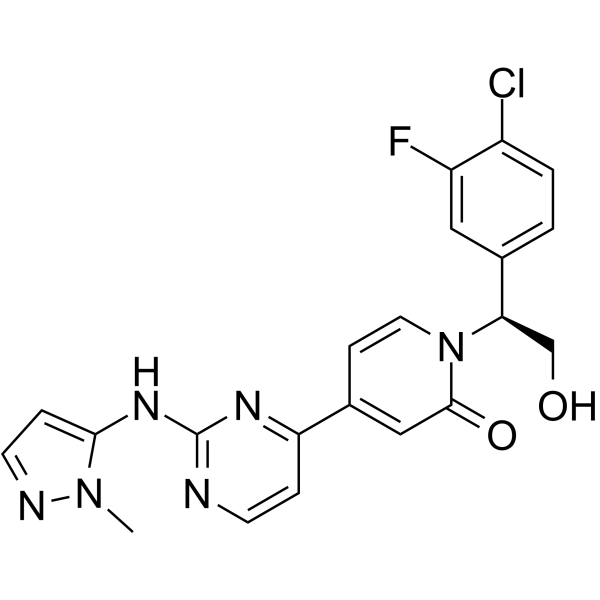
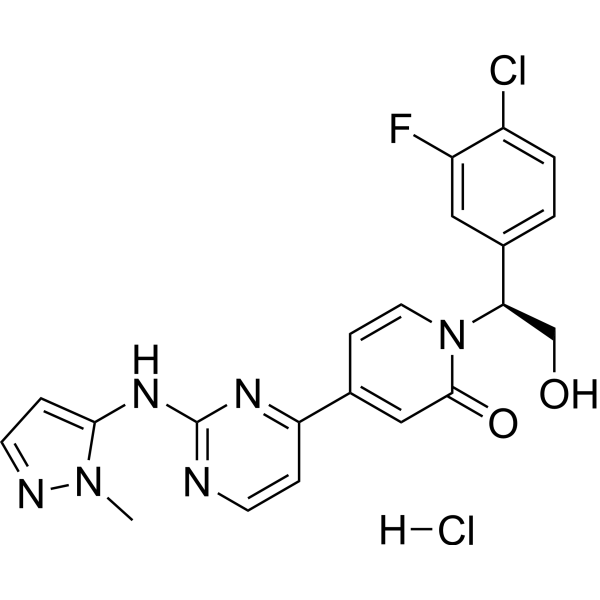
    Sonvuterkib (WX001) is a potent and orally active extracellular signal-regulated kinases (ERK) inhibitor with IC50 values of 1.4, 0.54 nM for ERK1, ERK2, respectively. Sonvuterkib inhibits cell proliferation. Sonvuterkib shows anticancer activity .
    Sonvuterkib
  • HY-155978

    Tyrosinase IFNAR ERK Interleukin Related Inflammation/Immunology
    RDN2150 is a ZAP-70 inhibitor with an IC50 of 14.6 nM, and it exhibits selectivity for Syk over other kinases. RDN2150 inhibits signal transduction and activation of T cells/CAR-T cells, reduces the phosphorylation level of Erk1/2, suppresses the induction of CD69 and IL-2, and downregulates phosphotyrosine signaling pathways including hnRNP sites in T cells. RDN2150 can be used for psoriasis-related research .
    RDN2150
  • HY-136778

    PARP Reactive Oxygen Species (ROS) Bcl-2 Family Caspase ERK p38 MAPK Cardiovascular Disease
    INH2BP is a poly(ADP-ribose) polymerase (PARP) inhibitor with antioxidant and anti-apoptotic activities. INH2BP reduces the production of intracellular reactive oxygen species (ROS), modulates the expression of apoptosis-related proteins such as Bax, Bcl-2 and cleaved caspase-3 and enhances cell survival through the activation of the ERK1/2 and p38 MAPK signaling pathways. INH2BP is promising for research of cardiovascular diseases .
    INH2BP
  • HY-173571

    SHP2 Apoptosis Cancer
    TK-685 is an orally active, selective, and allosteric SHP2 inhibitor with an IC50 of 2.1 nM. TK-685 inhibits esophageal cancer cell proliferation and induced apoptosis by targeting SHP2-mediated AKT and ERK signaling pathways .
    TK-685
  • HY-119420

    Antibiotic Apoptosis Caspase JNK p38 MAPK TNF Receptor ERK NF-κB Mitochondrial Metabolism Inflammation/Immunology Cancer
    Acetoxycycloheximide is an antibiotic with antitumor activity. Acetoxycycloheximide a protein synthesis inhibitor. Acetoxycycloheximide significantly induces activation of procaspase-3 and subsequent apoptosis mediated by the Cytochrome c from mitochondria via activation of JNK pathway. Acetoxycycloheximide triggers the downregulation of cell surface TNF-R1 via the activation of ERK and p38 MAPK, thereby preventing activation of the NF-κB signaling pathway by TNF-α. Acetoxycycloheximide is much more toxic to female rats than to males. Acetoxycycloheximide can be used for inflammatory and immune diseases and cancers research .
    Acetoxycycloheximide
  • HY-145026

    ERK Inflammation/Immunology Cancer
    ERK1/2 inhibitor 5 is a potent inhibitor of ERK1/2. Mitogen-activated protein kinase (MAPK) plays an extremely important role in the signal transduction pathway, and extracellular signal regulated kinase (ERK) is a member of the MAPK family. ERK1/2 inhibitor 5 has the potential for the research or prevention of cancer, inflammation or other proliferative diseases (extracted from patent WO2020238776A1) .
    ERK1/2 inhibitor 4

Inquiry Online

Your information is safe with us. * Required Fields.

Salutation


Country or Region *

Applicant Name *


Organization Name *

Department *


Email Address *


Product Name *

Cat. No.


Requested quantity *

Phone Number *


Remarks

Inquiry Online

Inquiry Information

Product Name:
Cat. No.:
Quantity:
MCE Japan Authorized Agent:

