14 Results for "

FtsZ polymerization

" in MedChemExpress (MCE) Product Catalog:
Products (14)

14 Results for "FtsZ polymerization" in MCE Product Catalog:

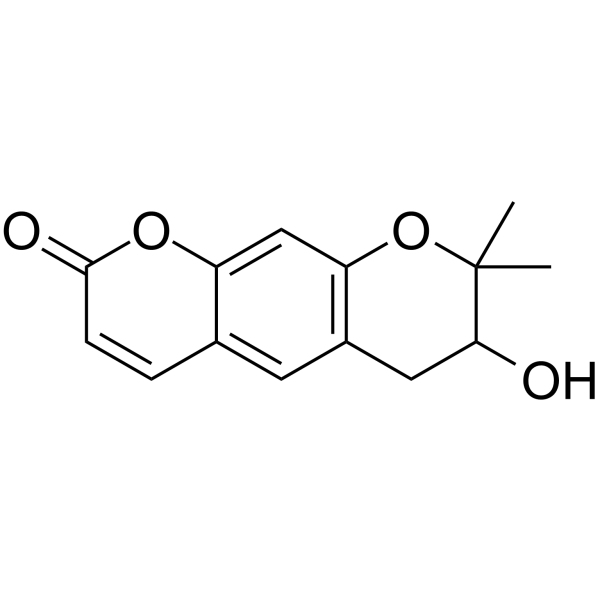
Cat. No.: HY-N2567
CAS No.: 5993-18-0
Synonyms: (±)-Aegelinol; (±)-Smyrinol
(±)-Decursinol is a potent FtsZ inhibitor. (±)-Decursinol inhibits B. anthracis FtsZ polymerization with an IC50 of 102 μM .
loading...
    loading...
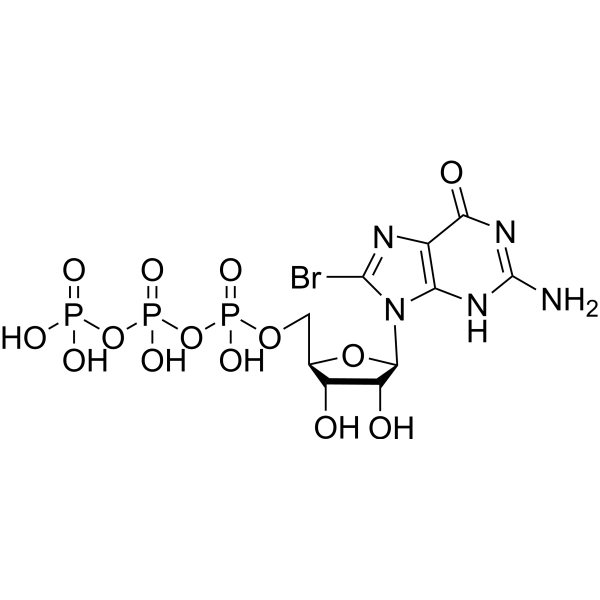
Cat. No.: HY-134274
CAS No.: 23197-98-0
Synonyms: 8-Bromoguanosine-5'-triphosphate
Target:  

Bacterial

Research Areas:  

Infection

8-Br-GTP, a GTP analog, is a competitive FtsZ polymerization and GTPase activity (Ki of 31.8 μM) inhibitor. 8-Br-GTP can be used for nucleic acid modification .
loading...
    loading...
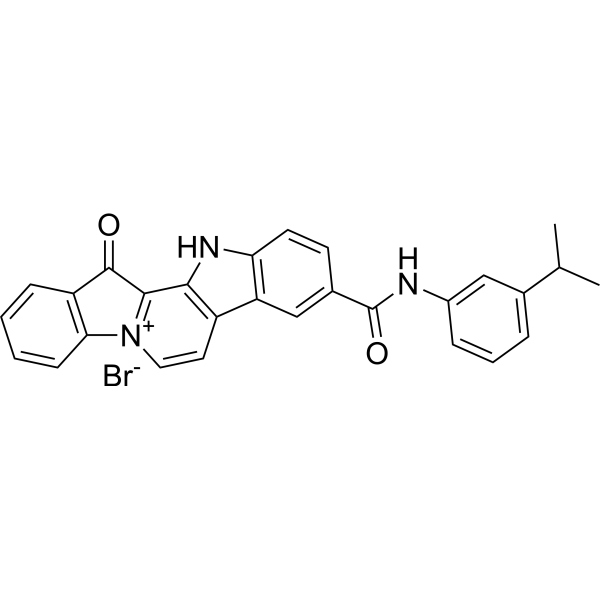
Cat. No.: HY-173054
CAS No.: 3099249-36-9
Target:  

Bacterial

Research Areas:  

Infection

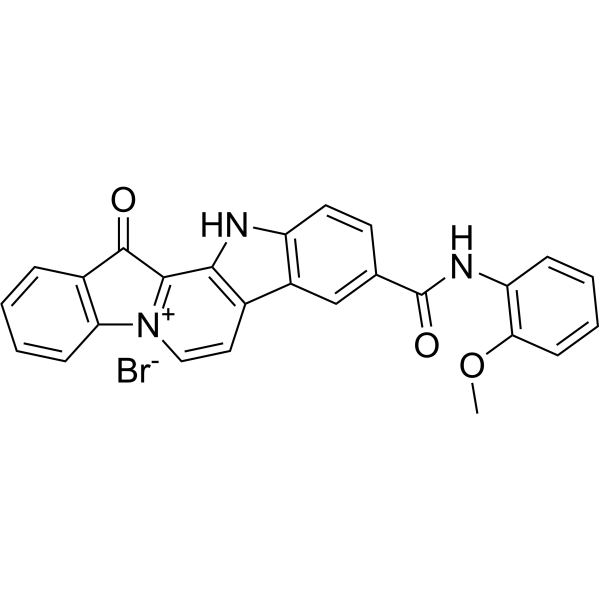
FtsZ-IN-12 (Compound 16e) is the inhibitor for filamentous temperature-sensitive mutant Z (FtsZ) that promotes the polymerization of FtsZ protein, inhibits its GTPase activity, thereby interfering with bacterial cell division process. FtsZ-IN-12 exhibits boardspectrum antibacterial activity that inhibits B. subtilis ATCC9372, B. pumilus CMCC63202, S. aureus ATCC25923, E. coli BW25113 and A. baumannii ATCC19606 with MIC of 0.062-1 μg/mL. FtsZ-IN-12 inhibits the formation of bacterial biofilms and exhibits a clearing effect on mature biofilms. FtsZ-IN-12 exhibits bactericidal activity without hemolytic toxicity to mammalian red blood cells (15 mg/kg) .
loading...
    loading...
Cat. No.: HY-149223
Target:  

Bacterial

Research Areas:  

Infection

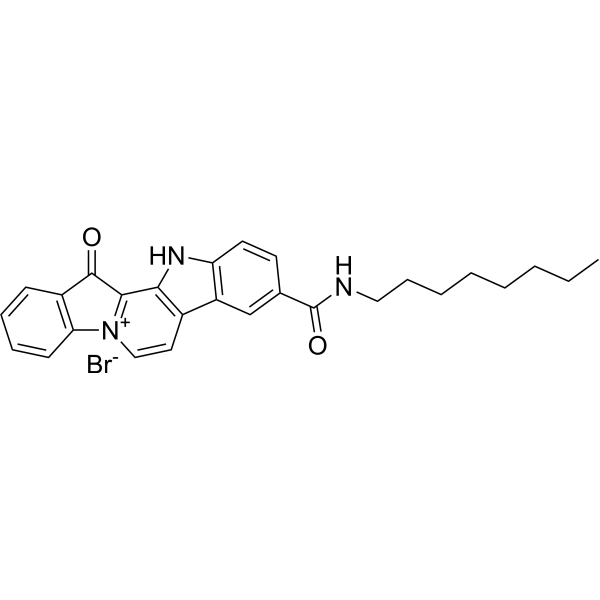
FtsZ-IN-5 is a potent FtsZ inhibitor, to promote FtsZ polymerization and inhibit GTPase activity of FtsZ. Thus, FtsZ-IN-5 inhibits bacterial division to lead to death of bacterial cells. FtsZ-IN-5 shows bactericidal activity with no significant tendency to trigger bacterial resistance as well as rapid bactericidal properties. And FtsZ-IN-5 shows low hemolytic activity and cytotoxicity to mammalian cells .
loading...
    loading...
Cat. No.: HY-149224
Target:  

Bacterial

Research Areas:  

Infection

FtsZ-IN-6 is a potent FtsZ inhibitor, to promote FtsZ polymerization and inhibit GTPase activity of FtsZ. Thus, FtsZ-IN-6 inhibits bacterial division to lead to death of bacterial cells. FtsZ-IN-6 shows bactericidal activity with no significant tendency to trigger bacterial resistance as well as rapid bactericidal properties. And FtsZ-IN-6 shows low hemolytic activity and cytotoxicity to mammalian cells .
loading...
    loading...
Cat. No.: HY-149225
Target:  

Bacterial

Research Areas:  

Infection

FtsZ-IN-7 is a potent FtsZ inhibitor, to promote FtsZ polymerization and inhibit GTPase activity of FtsZ. Thus, FtsZ-IN-7 inhibits bacterial division to lead to death of bacterial cells. FtsZ-IN-7 shows bactericidal activity with no significant tendency to trigger bacterial resistance as well as rapid bactericidal properties. And FtsZ-IN-7 shows low hemolytic activity and cytotoxicity to mammalian cells .
loading...
    loading...
Cat. No.: HY-149226
Target:  

Bacterial

Research Areas:  

Infection

FtsZ-IN-8 is a potent FtsZ inhibitor, to promote FtsZ polymerization and inhibit GTPase activity of FtsZ. Thus, FtsZ-IN-8 inhibits bacterial division to lead to death of bacterial cells. FtsZ-IN-8 shows bactericidal activity with no significant tendency to trigger bacterial resistance as well as rapid bactericidal properties. And FtsZ-IN-8 shows low hemolytic activity and cytotoxicity to mammalian cells .
loading...
    loading...
Cat. No.: HY-W773487
CAS No.: 676995-91-8
Target:  

Bacterial

Research Areas:  

Infection

FtsZ-IN-10 is a bacterial division inhibitor that interferes with the normal assembly of FtsZ. FtsZ-IN-10 specifically binds to Bacillus subtilis FtsZ monomers, thereby affecting their polymerization behavior. FtsZ-IN-10 may also activate nucleotide-free archaeal FtsZ to form ordered polymers. FtsZ-IN-10 can hinder the localization of FtsZ in the Z ring and inhibit bacterial cell division. Chlorinated analogs of FtsZ-IN-10 show the ability to inhibit the growth of antibiotic-resistant clinical isolates such as Staphylococcus aureus and Enterococci .
loading...
    loading...
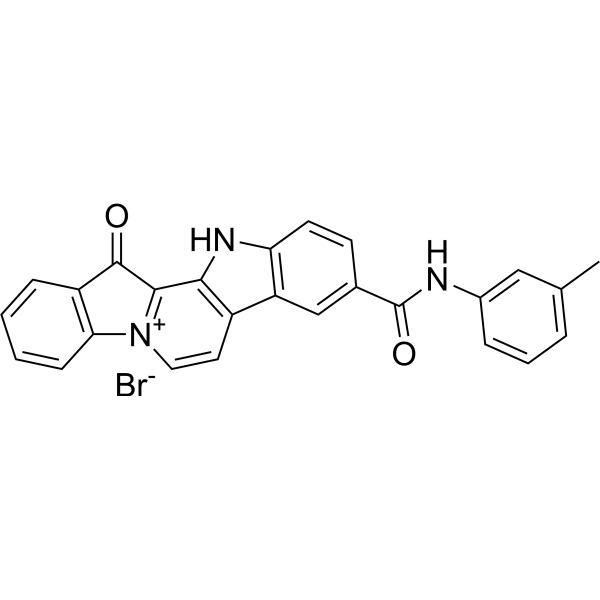
Cat. No.: HY-146595
CAS No.: 2516246-24-3
Target:  

Bacterial

Research Areas:  

Infection

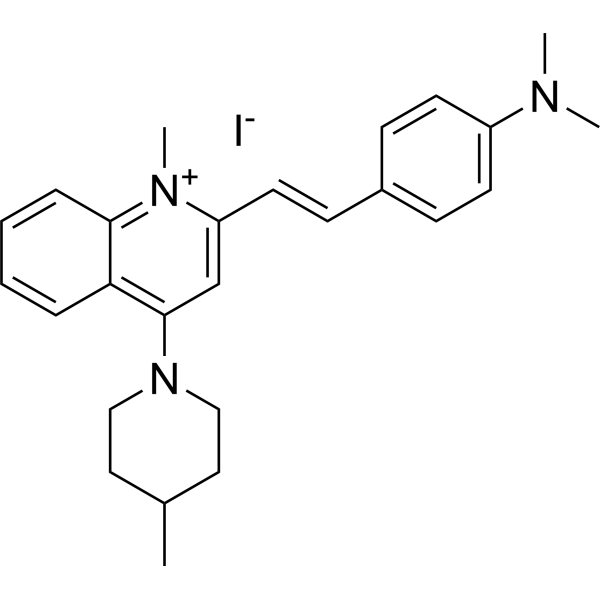
FtsZ-IN-1 is a potent FtsZ inhibitor with quinolinium ring. FtsZ-IN-1 has stronger antibacterial activity against Gram-positive bacteria with MICs of 0.5-8 μg/mL. FtsZ-IN-1 significantly causes cell elongation of B. subtilis by enhancing FtsZ polymerization. FtsZ-IN-1 exhibits low hemolytic toxicity and low tendency to induce agent resistance. FtsZ-IN-1 has against drug-resistant bacteria activity .
loading...
    loading...
Cat. No.: HY-157808
Target:  

Bacterial

Research Areas:  

Infection

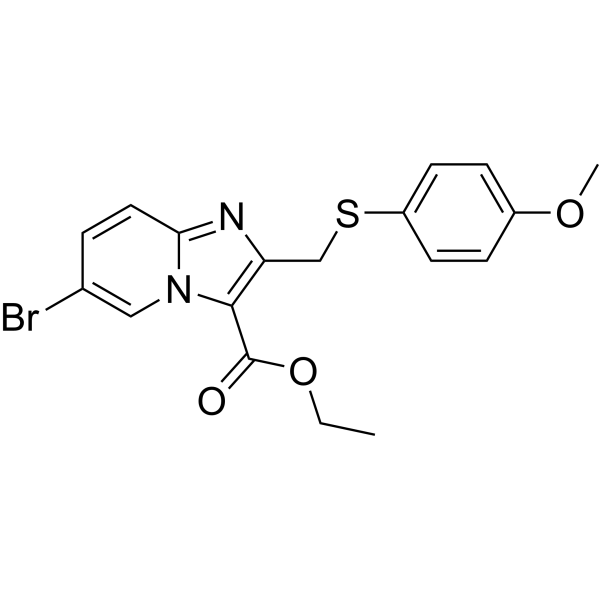
Antibacterial agent 185 (compound IP-01) is a potent antibacterial agent. Antibacterial agent 185 inhibits filamentous temperature-sensitive mutant Z (FtsZ) polymerization and bundling by increasing GTP hydrolysis. Antibacterial agent 185 inhibits Streptococcus pneumoniae and shows narrow-spectrum activity .
loading...
    loading...
Cat. No.: HY-125533
CAS No.: 1404289-52-6
Target:  

Bacterial

Research Areas:  

Infection

TXA497 is a potent local topical bactericide. TXA497 exerts its bactericidal effect by interfering with the polymerization kinetics of the bacterial cell division protein FtsZ, rather than inhibiting it. TXA497 shows strong activity against various Staphylococcus aureus strains, including MRSA and MSSA, with an MIC value ranging from 1.0 to 2.0 μg/mL. TXA497 skin deposition is concentration-dependent in its formulation, consistent with Fick's first law. TXA497 has limited systemic permeability through the lipid pathway of the stratum corneum and is easily absorbed through this route. TXA497 can be used for research on topical bactericidal agents .
loading...
    loading...
Cat. No.: HY-184334
Target:  

Bacterial

Research Areas:  

Infection

FtsZ-IN-15 is an inhibitor targeting the FtsZ protein of Xanthomonas oryzae pv. oryzae (Xoo) and a cell division inhibitor. FtsZ-IN-15 specifically binds to key residues of XooFtsZ, inhibits its GTPase activity and disrupts its polymerization. FtsZ-IN-15 induces cell elongation of Xanthomonas oryzae pv. oryzae and exhibits significant antibacterial activity against this strain. FtsZ-IN-15 shows good control efficacy against rice bacterial blight and can be used in relevant research on rice bacterial blight .
loading...
    loading...
Cat. No.: HY-126051
CAS No.: 1381782-08-6
Synonyms: (-)-Viriditoxin
Viriditoxin ((-)-Viriditoxin) is a mycotoxin . Viriditoxin promotes tubulin polymerization, and inhibits FtsZ polymerization and GTPase activity. Viriditoxin exhibits cytotoxicity against cancer cells, induces apoptosis, inhibits cell migration and colony formation, induces G2/M phase arrest, and triggers autophagic cell death. Viriditoxin activates caspase-3, cleaves PARP, promotes cytochrome c release, and induces ROS production. Viriditoxin possesses broad-spectrum antibacterial activity against Gram-positive pathogenic bacteria, fish pathogenic bacteria, and permeabilized Gram-negative bacteria. Viriditoxin can be used in research related to ovarian cancer, lung cancer, nasopharyngeal carcinoma, colon cancer, neuroblastoma, prostate cancer, leukemia, lymphoma, bacterial infections, and streptococcosis .
loading...
    loading...
Cat. No.: HY-180273
Target:  

Bacterial

Research Areas:  

Infection

Antibacterial agent 309 (Compound C9) is an antibacterial agent, substrate of AcrB efflux pump. Antibacterial agent 309 promotes FtsZ polymerization. Antibacterial agent 309 demonstrates antibacterial activity against Erythromycin (HY-B0220)-resistant S. pyogenes 2 (MIC = 0.25 μg/mL), Penicillin-resistant S. aureus CI (MIC = 0.125 μg/mL), Penicillin-resistant S. epidermidis (MIC = 2 μg/mL). Antibacterial agent 309 exhibits weak antibacterial activity against the wild-type E. coli BW25113 MIC = 256 μg/mL) .
loading...
    loading...
  • 1

