8 Results for "

Fungal defense

" in MedChemExpress (MCE) Product Catalog:
Products (8)

8 Results for "Fungal defense" in MCE Product Catalog:

  • Categories Recommended:
    More
Cat. No.: HY-Y1058
CAS No.: 495-18-1
Synonyms: BHA
Target:  

Fungal

Research Areas:  

Infection

Benzohydroxamic acid (BHA) is a chitin deacetylase (CDA) inhibitor with significant antifungal activity. The Ki values of BHA against the CDAs of Verticillium dahliae and Puccinia striiformis f. sp. tritici are 8.31 μM and 9.83 μM, respectively. Benzohydroxamic acid can restore the defense responses of infected host plants, upregulate the expression of defense-related genes, and reduce the growth and reproduction of fungi in plants. Benzohydroxamic acid can be used in the research of the field of controlling agricultural fungal diseases, such as various plant fungal diseases caused by Verticillium dahliae, Puccinia striiformis and other fungi, like cotton wilt and wheat stripe rust .
loading...
    loading...
Cat. No.: HY-N3463
CAS No.: 5835-26-7
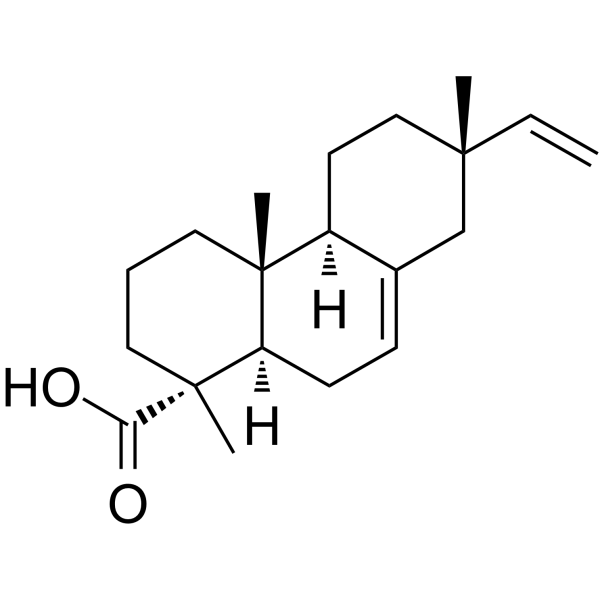
Isopimaric acid is a coniferous tree defense compound. Isopimaric acid binds to AKT and inhibits mTOR phosphorylation, thereby regulating the AKT/mTOR pathway. Isopimaric acid inhibits oxidative stress, inflammation, microglial migration, apoptosis, autophagic flux, ornithine decarboxylase activity, breast cancer proliferation and metastasis, and fungal spore germination. Isopimaric acid also induces M2 microglial polarization, mitochondrial damage, ROS accumulation, starvation-induced colon cancer cell apoptosis, and breast cancer cell cycle arrest. Isopimaric acid activates potassium channels, regulates sodium channels and calcium channels, reduces myocardial excitability, and improves arrhythmia. Isopimaric acid acts as an oxidative substrate for CYP6BW1/3, down-regulates PINK1/Parkin, and regulates calcium homeostasis, oxidative phosphorylation, EMT, and the Wnt pathway. Isopimaric acid exhibits activity against drug-resistant Staphylococcus aureus, repels feeding, and promotes the growth of rice seedlings. Isopimaric acid is suitable for research related to epilepsy, tumors, drug-resistant bacterial infections, atrial fibrillation, hypertension, hyperlipidemia, pulmonary tuberculosis, etc .
loading...
    loading...
Cat. No.: HY-116541
CAS No.: 135158-54-2
Purity:  99.77%
Synonyms: ASM
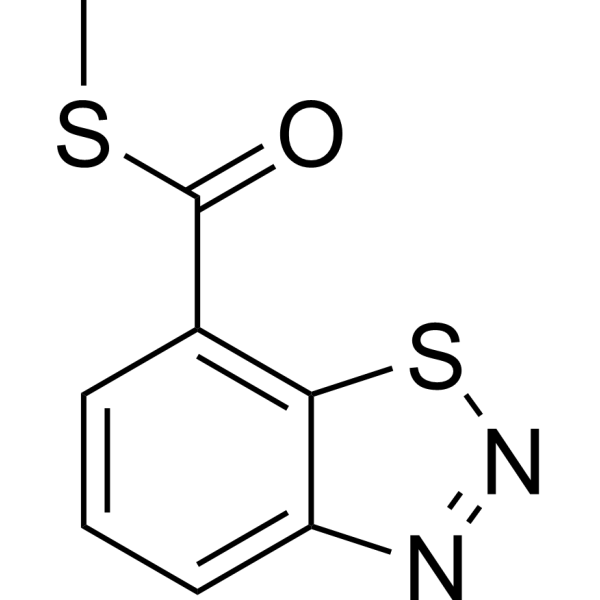
Acibenzolar-S-methyl (ASM) is a synthetic analog of Salicylic acid (HY-B0167) and a plant activator. Acibenzolar‑S‑methyl induces increased activities of defense-related enzymes such as peroxidase and chitinase, activates stomatal defense responses and PR defense gene expression, induces the production of ROS, triggers local and systemic acquired resistance, and inhibits the proliferation of bacterial and fungal pathogens in plants. Acibenzolar‑S‑methyl can be used in studies related to plant infection .
loading...
    loading...
Cat. No.: HY-W010076
CAS No.: 2150-47-2
Target:  

Fungal

Research Areas:  

Infection

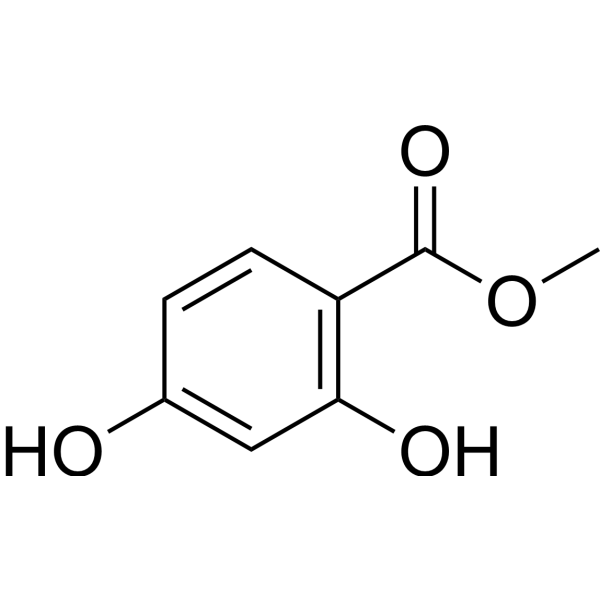
Methyl 2,4-dihydroxybenzoate is an antifungal agent and plant defense activator. Methyl 2,4-dihydroxybenzoate disrupts the fungal antioxidant system, induces oxidative stress, interferes with N-glycosylation and protein synthesis, inhibits energy metabolism, and impairs transport function. Methyl 2,4-dihydroxybenzoate exhibits potent antifungal activity against the causal agent of banana Panama disease (Fusarium oxysporum f. sp. cubense) . Methyl 2,4-dihydroxybenzoate can also serve as a cosmetic raw material and is used in the synthesis of fine chemical raw materials. Methyl 2,4-dihydroxybenzoate is applicable to research related to Panama disease (Fusarium wilt) .
loading...
    loading...
Cat. No.: HY-116541R
CAS No.: 135158-54-2
Synonyms: ASM (Standard)
Acibenzolar-S-methyl (Standard) (ASM (Standard)) is the analytical standard of Acibenzolar-S-methyl (HY-116541). This product is intended for research and analytical applications. Acibenzolar-S-methyl (ASM) is a synthetic analog of Salicylic acid (HY-B0167) and a plant activator. Acibenzolar‑S‑methyl induces increased activities of defense-related enzymes such as peroxidase and chitinase, activates stomatal defense responses and PR defense gene expression, induces the production of ROS, triggers local and systemic acquired resistance, and inhibits the proliferation of bacterial and fungal pathogens in plants. Acibenzolar‑S‑methyl can be used in studies related to plant infection .
loading...
    loading...
Cat. No.: HY-P11093
Papiliocin is a potent peptide antibiotic with both anti-inflammatory and antibacterial activities. Papiliocin is primarily active against Gram-negative bacteria. Papiliocin exhibits strong anti-inflammatory activity against cell, exerting its anti-inflammatory activity by inhibiting the production of NO and the secretion of TNF-α and MIP-2. Papiliocin participates in the innate defense response mechanism by inhibiting the Toll-like receptor pathway and NF-κB. Papiliocin induces apoptosis in fungal cells and increases the total level of intracellular ROS. Papiliocin acts as an effective antiseptic peptide in sepsis models. Papiliocin is useful in anti-inflammatory and antibacterial research .
loading...
    loading...
Cat. No.: HY-N12106
CAS No.: 1421941-29-8
Synonyms: Fumicycline
Neosartoricin (Fumicycline) (Compound 3), a prenylated anthracenone, is a microbial secondary metabolite. Neosartoricin can be isolated from Aspergillus fumigatus and Neosartorya fischeri. Neosartoricin has immunosuppressive activity, and significantly inhibits T-cell proliferative activity with an IC50 of 3 μM. Neosartoricin may be beneficial to fungal defense, facilitating infection through suppressing the host adaptive immunity without involvement of primary virulence .
loading...
    loading...
Cat. No.: HY-183541
CAS No.: 56857-64-8
Target:  

Bacterial

Research Areas:  

Infection

Phytuberol is an antibacterial agent and unsaturated sesquiterpene alcohol. As a phytoalexin, phytuberol participates in plant defense responses by inhibiting the growth of pathogenic fungi (e.g., Phytophthora infestans, Helminthosporium spp.). Its accumulation increases significantly in potato tuber slices treated with Ethephon (HY-W131845) and fungal elicitors, and correlates with tissue browning and disease resistance responses. Hytuberol can be used in studies related to bacterial wilt, tobacco wildfire disease, potato late blight, and potato-fungus interactions .
loading...
    loading...

