
15 Results for "

Graves

" in MedChemExpress (MCE) Product Catalog:
Products (15)

15 Results for "Graves" in MCE Product Catalog:

3
3 Cited Publications
Cat. No.: HY-B0346
CAS No.: 51-52-5
Synonyms: 6-n-Propylthiouracil; 6-Propyl-2-thiouracil; PTU
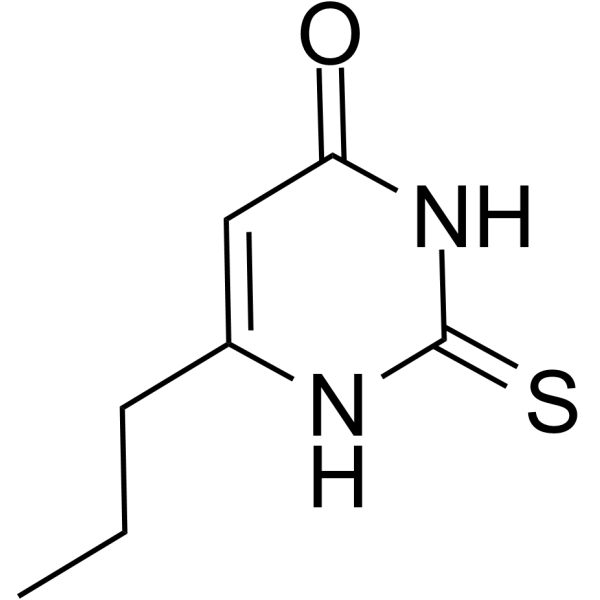
Propylthiouracil (6-n-Propylthiouracil), a thioamide antithyroid agent, is an orally active thyroperoxidase and type-1 deiodinase (DIO1) inhibitor. Propylthiouracil can be used for the Graves disease and hyperthyroidism research .
loading...
    loading...
1
1 Cited Publications
Cat. No.: HY-12381
CAS No.: 1338824-21-7
Purity:  99.18%
Synonyms: NCGC00242364; ANTAG3
Target:  

TSH Receptor

Research Areas:  

Endocrinology

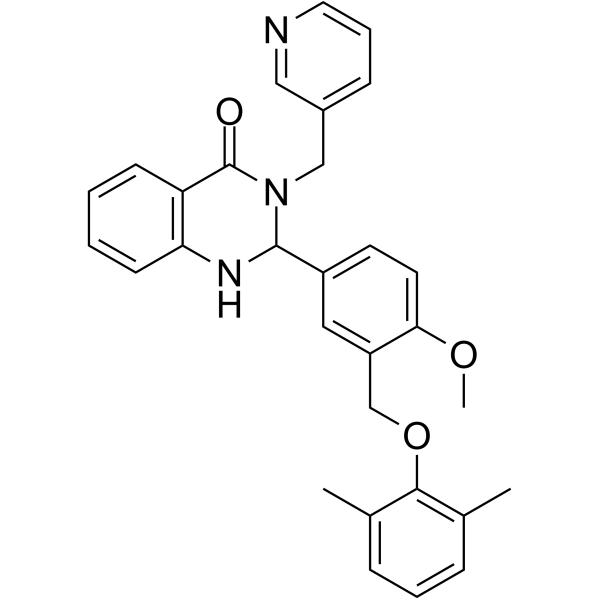
ML224 (NCGC00242364) is a selective TSHR antagonist with an IC50 value of 2.1 µM. ML224 can be used in the study of Graves' disease and other thyroid disorders.
loading...
    loading...
Cat. No.: HY-P991202
Anti-TSHR Antibody (M22) is a selective agonist targeting TSHR (thyroid-stimulating hormone receptor), acting through competitive binding to the extracellular domain of TSHR. Anti-TSHR Antibody (M22) can mimic the biological effects of thyroid-stimulating hormone (TSH), activating downstream cAMP-PKA and other signaling pathways. Anti-TSHR Antibody (M22) can stimulate the proliferation of thyroid follicular epithelial cells and human umbilical vein endothelial cells (HUVECs), promote angiogenesis and tube formation, cell migration, and also upregulate the expression of angiogenesis-related proteins such as PROX1. Anti-TSHR Antibody (M22) can be used in research areas such as the mechanisms of goiter formation in Graves' disease (GD), angiogenesis regulation, and TSHR antagonist screening .
loading...
    loading...
Cat. No.: HY-P99670
CAS No.: 2031153-61-2
Synonyms: CFZ-533; OM11-62MF

Target:  

TNF Receptor

Iscalimab (CFZ-533) is a non-depleting IGg1 monoclonal antibody targeting CD40 (KD: 0.3 nM). Iscalimab can be used for research of Graves' hyperthyroidism and autoimmune diseases .
loading...
    loading...
Cat. No.: HY-114610
CAS No.: 17735-98-7
Purity:  99.00%
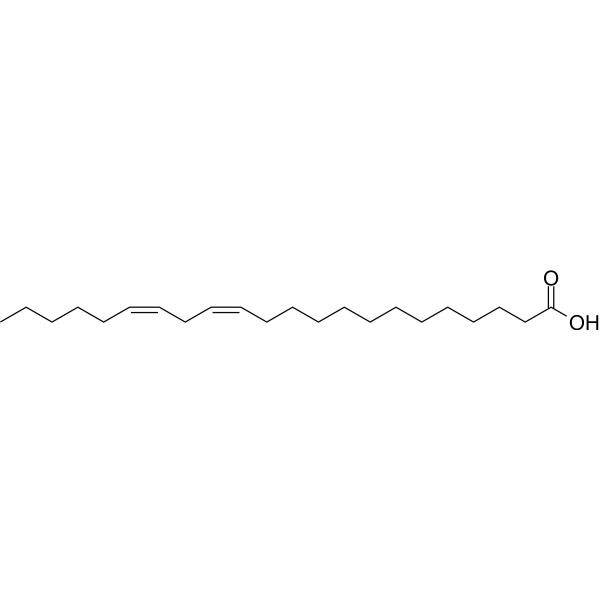
13Z,16Z-Docosadienoic acid is a GPR120 agonist with bactericidal activity. 13Z,16Z-Docosadienoic acid serves as a potential biomarker for canine mammary tumors. 13Z,16Z-Docosadienoic acid is used in the research of bacterial infections, Lyme disease, Graves' disease and mammary tumors .
loading...
    loading...
Cat. No.: HY-129995A
CAS No.: 2143452-20-2
Purity:  98.00%
Target:  

TSH Receptor

Research Areas:  

Endocrinology

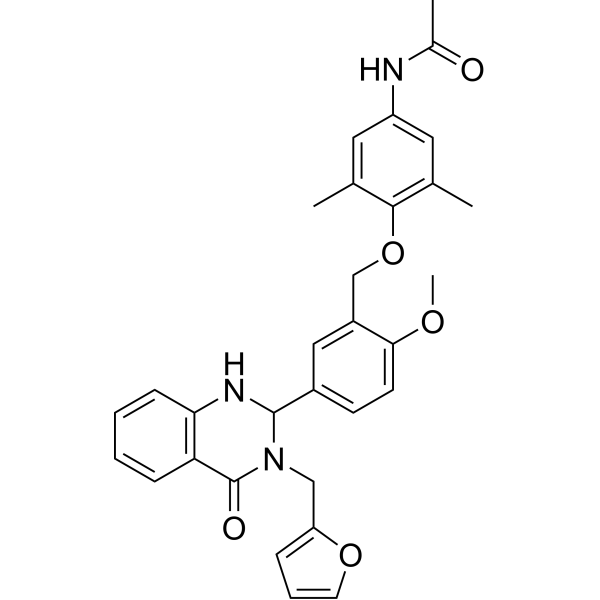
TSHR antagonist S37a is a highly selective thyrotropin receptor (TSHR) antagonist, with potential for the treatment of Graves' orbitopathy .
loading...
    loading...
Cat. No.: HY-153213
CAS No.: 1421683-12-6
Target:  

TSH Receptor

Research Areas:  

Metabolic Disease

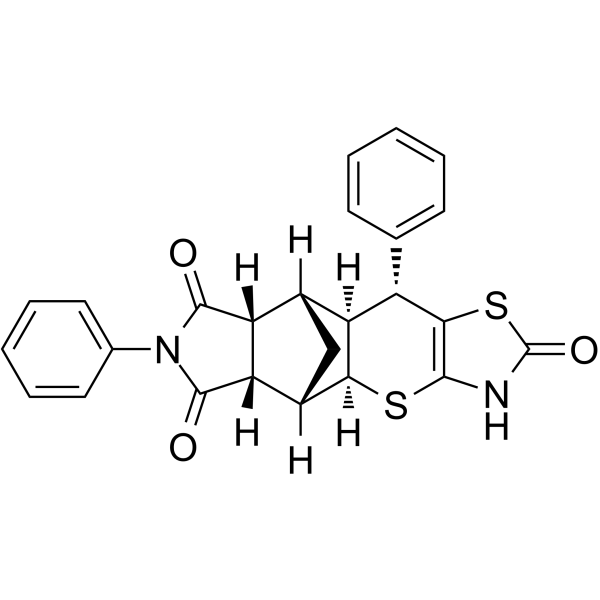
Org 274179-0 is a potent and allosteric antagonist of thyroid-stimulating hormone (TSH) receptor, with an IC50 of nanomolar concentration. Org 274179-0 completely inhibits TSH (and TSI)-mediated TSH receptor activation with little effect on the potency of TSH. Org 274179-0 can be used for the research of Graves' disease (GD) .
loading...
    loading...
Cat. No.: HY-18286
CAS No.: 1338824-20-6
Target:  

TSH Receptor

Research Areas:  

Endocrinology

NCGC00229600 is an allosteric inverse agonist of thyrotropin receptor (TSHR). NCGC00229600 inhibits both TSH and stimulating antibody activation of TSHRs endogenously expressed in Graves' disease .
loading...
    loading...
Cat. No.: HY-N10348
CAS No.: 585-95-5
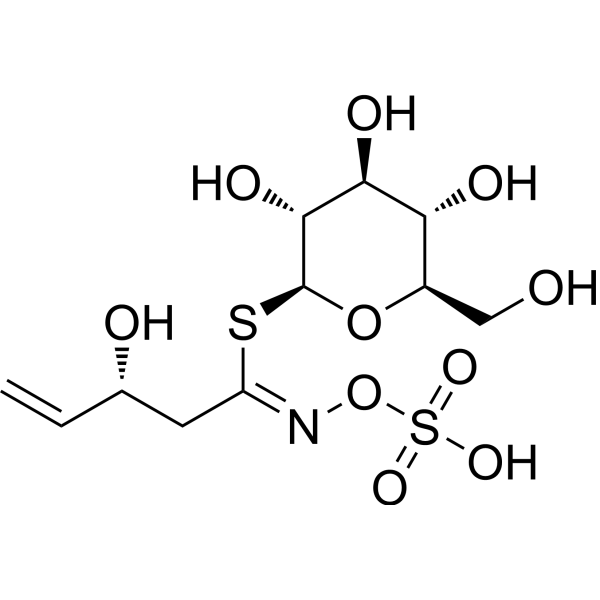
Progoitrin is a sulfur-containing glucosinolate, as well as a naturally occurring orally active thioglycoside. Progoitrin acts as a hepatotoxin and antithyroid agent. Progoitrin is quantitatively converted to goitrin in vivo, including via a gastrointestinal hydrolysis pathway that does not require exogenous myrosinase, thereby blocking the organification of iodine in the thyroid gland and inhibiting the uptake and accumulation of radioactive iodine. Progoitrin can be used in studies related to Graves' disease .
loading...
    loading...
Cat. No.: HY-153213A
Target:  

TSH Receptor

Research Areas:  

Endocrinology

Org 274178-0 is a selective thyroid-stimulating hormone receptor (TSHR) antagonist with a pIC50 value for TSHR is 5.03. Org 274178-0 inhibits the activation of cAMP signaling pathway and phospholipase C (PLC) signaling pathway mediated by thyroid-stimulating hormone (TSH) and TSH receptor-stimulating immunoglobulins (TSIs). Org 274178-0 is promising for research of Graves’ disease and Graves’ ophthalmopathy .
loading...
    loading...
Cat. No.: HY-127024A
CAS No.: 1073179-55-1
Research Areas:  

Metabolic Disease

TR antagonist 2 (Compound 10a) is a competitive thyroid hormone receptors (TRα/β) antagonist (IC50=47 nM). TR antagonist 2 competes with triiodothyronine (T3) for binding to the ligand-binding domain of TR to block receptor-coactivator complex formation and inhibit target gene transcription, reducing thyroid hormone-mediated hypermetabolic effects. TR antagonist 2 is promising for research of hyperthyroidism (e.g., Graves' disease) and thyrotoxicosis .
loading...
    loading...
Cat. No.: HY-P991255

Target:  

IGF-1R

Research Areas:  

Inflammation/Immunology

VRDN-002 is a human monoclonal antibody (mAb) targeting IGF1R/CD221. VRDN-002 reduces inflammation and proptosis in thyroid eye disease (TED). VPI-2690B can be used in Graves ophthalmopathy research .
loading...
    loading...
Cat. No.: HY-B0346R
CAS No.: 51-52-5
Synonyms: 6-n-Propylthiouracil (Standard); 6-Propyl-2-thiouracil (Standard); PTU (Standard)
Propylthiouracil (Standard) is the analytical standard of Propylthiouracil. This product is intended for research and analytical applications. Propylthiouracil (6-n-Propylthiouracil), a thioamide antithyroid agent, is an orally active thyroperoxidase and type-1 deiodinase (DIO1) inhibitor. Propylthiouracil can be used for the Graves disease and hyperthyroidism research .
loading...
    loading...
Cat. No.: HY-L131
950 compounds

Ossification is a tightly regulated process, performed by specialized cells called osteoblasts. Dysregulation of this process may cause inadequate or excessive mineralization of bones or ectopic calcification, all of which have grave consequences for human health.

Osteoblasts play important roles in the process of osteogenesis and prevention of osteonecrosis. Osteoblast formation and bone formation are regulated by hormones, growth factors, cytokines, etc.

MCE offers a unique collection of 950 bone formation compounds with identified and potential inducing osteogenesis activity. MCE bone formation compound library is a useful tool for the study of bone disease drugs and pharmacology.

Cat. No.: HY-L003
3,560 compounds

Apoptosis is an ordered and orchestrated cellular process that occurs in physiological and pathological conditions, which is also called programmed cell death (PCD). Apoptosis plays a crucial role in developing and maintaining the health of the body by eliminating old cells, unhealthy cells and unnecessary cells. Too little or too much apoptosis contribute to many diseases. When apoptosis does not work correctly, cells that should be eliminated may persist and become immortal, for example, in cancer and leukemia. When apoptosis works overly well, it kills too many cells and inflicts grave tissue damage. This is the case in strokes and neurodegenerative disorders such as Alzheimer's, Huntington's, and Parkinson's disease.

MCE designs a unique collection of 3,560 apoptosis-related compounds mainly focusing on the key targets in the apoptosis signaling pathway and can be used in the research of apoptosis signal pathway and related diseases.

  • 1

