
4 Results for "

Kupffer

" in MedChemExpress (MCE) Product Catalog:
Products (4)

4 Results for "Kupffer" in MCE Product Catalog:

Cat. No.: HY-N1482
CAS No.: 112-39-0
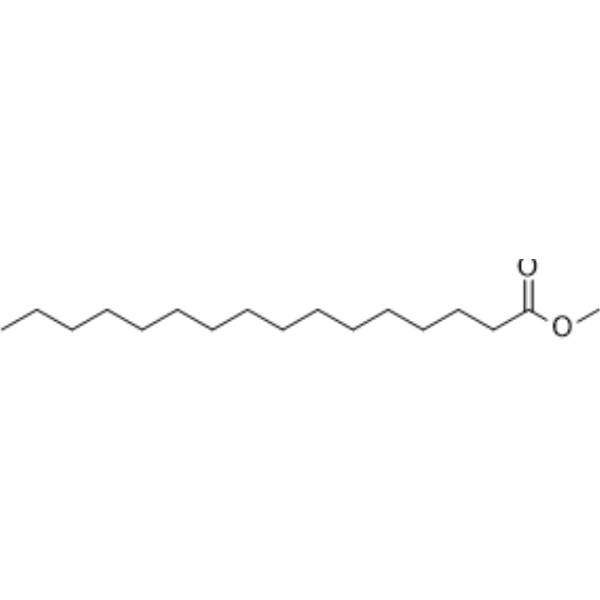
Methyl palmitate is a naturally occurring fatty acid ester. Methyl palmitate is a potent inhibitor of ΙκB phosphorylation. Methyl palmitate modulates macrophage activity and down-regulates pro-inflammatory mediators such as TNF-α and nitric oxide (NO). Methyl palmitate possesses anti-inflammatory and antifibrotic effects. Methyl palmitate can inhibit LPS (HY-D1056)-induced Kupffer cells and rat peritoneal macrophages. Methyl palmitate is able to inhibit the phagocytic function of RAW cells. Methyl palmitate is antagonistic to muscarinic receptors. Methyl palmitate exerts cardioprotective effects against ischemia/reperfusion injury in vivo. Methyl palmitate is highly toxic against adult T. cinnabarinus .
loading...
    loading...
Cat. No.: HY-P3023
CAS No.: 55466-22-3
Mutanolysin is a bacteriolytic agent. Mutanolysin is a muralytic enzyme that can prevent hepatic injury. Mutanolysin can digest the cell wall of S. mutans BHT and shows antibacterial activity. Mutanolysin reduces TNF-α production in isolated Kupffer cells stimulated with peptidoglycan-polysaccharide (PG-APS). Mutanolysin can be used for the researches of infection, inflammation and hepatic injury .
loading...
    loading...
Cat. No.: HY-176224
Target:  

Bacterial

Research Areas:  

Infection Inflammation/Immunology

Anti-virulence factor-IN-2 (compound C7) is an inhibitor targeting the virulence factor KpsM in Escherichia coli. kpsM mediates the translocation of capsular polysaccharides to the cell surface, allowing kpsM-positive E. coli to escape the phagocytosis of the scavenger receptor Marco on liver Kupffer cells, leading to bacterial dissemination. kpsM-positive E. coli exacerbates ethanol-induced liver disease. Anti-virulence factor-IN-2 can inhibit the ethanol-induced liver disease model caused by kpsM-dependent capsid in mice and has anti-infective activity. Anti-virulence factor-IN-2 can be used for the study of alcoholic hepatitis .
loading...
    loading...
Cat. No.: HY-N21832
CAS No.: 6790-64-3
Aplysinol is an orally effective TLR4 signaling pathway inhibitor. Aplysinol reduces the expression of CD14, MyD88, and NF-κB p65, and downregulates the expression and secretion of TNF-α protein as well as the secretion of IL-1β. Aplysinol restores the phagocytic activity of Kupffer cells and reduces plasma endotoxin levels. Aplysinol alleviates alcohol-induced liver histopathological changes and inhibits the elevation of liver injury biomarkers, and can be used for research related to alcoholic liver disease .
loading...
    loading...

