1. Search Result
Search Result
Pathways Recommended: Stem Cell/Wnt Cell Cycle/DNA Damage
Results for "

NCI-H226 cells

" in MedChemExpress (MCE) Product Catalog:

20

Inhibitors & Agonists

1

Inhibitory Antibodies

3

Natural
Products

1

Click Chemistry

Cat. No. Product Name Target Research Areas Chemical Structure
  • HY-175357

    YAP Cancer
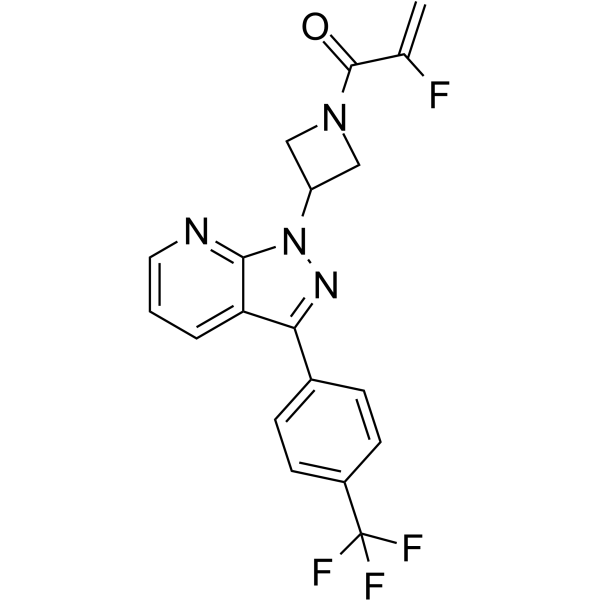
    YAP/TEAD-IN-2 (Compound T-1) is a YAP/TEAD inhibitor. YAP/TEAD-IN-2 inhibits the luciferase activity driven by YAP/TEAD in 293T cells. YAP/TEAD-IN-2 exhibits strong anti-proliferative activity against human pleural mesothelioma NCI-H226 cells. YAP/TEAD-IN-2 can be used for the study of diseases associated with Hippo pathway dysregulation, particularly cancers .
    YAP/TEAD-IN-2
  • HY-147322
    YAP/TAZ inhibitor-2
    1 Publications Verification

    YAP Cancer
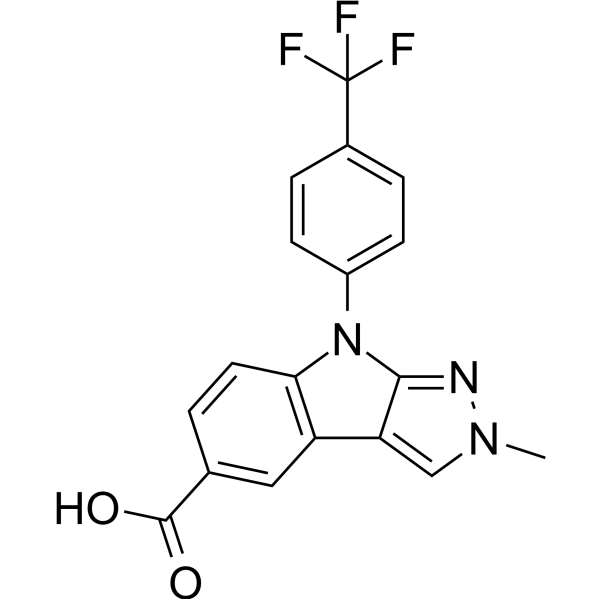
    YAP/TAZ inhibitor-2 is a potent and orally active TEAD-YAP/TAZ inhibitor with an EC50 value of 3 nM. YAP/TAZ inhibitor-2 shows anti-proliferative activity. YAP/TAZ inhibitor-2 shows antitumor activity .
    YAP/TAZ inhibitor-2
  • HY-174275

    YAP Inflammation/Immunology Cancer
    TEAD1/3/4-IN-1 is an orally active inhibitor of TEAD1/3/4. TEAD1/3/4-IN-1 inhibits the YAP/TAZ-TEAD interaction, with its EC50 being 2 nM. TEAD1/3/4-IN-1 has anti-proliferative activity against NCI-H226 cells. TEAD1/3/4-IN-1 can be used in the research of lung squamous cell carcinoma .
    TEAD1/3/4-IN-1
  • HY-168016

    PROTACs YAP Cancer
    PROTAC YAP degrader-1 is a VHL-recruiting PROTAC degrader (DC50=8.2 μM) and antiproliferative agent that targets YAP. PROTAC YAP degrader-1 recruits the E3 ligase VHL and binds to VHL to form a ternary complex containing YAP. PROTAC YAP degrader-1 inhibits the nuclear localization of YAP in cancer cells, reduces YAP/TEAD-mediated transcription, and induces TAZ protein degradation. PROTAC YAP degrader-1 reduces the oncogenic activity of YAP and exerts antiproliferative effects in the Huh7 xenograft mouse model. PROTAC YAP degrader-1 can be used for the research of hepatocellular carcinoma and mesothelioma .
    PROTAC YAP degrader-1
  • HY-N3239

    Tyrosinase NADPH Oxidase HBV SARS-CoV Reactive Oxygen Species (ROS) JAK STAT Apoptosis Caspase PARP Infection Neurological Disease Inflammation/Immunology Cancer
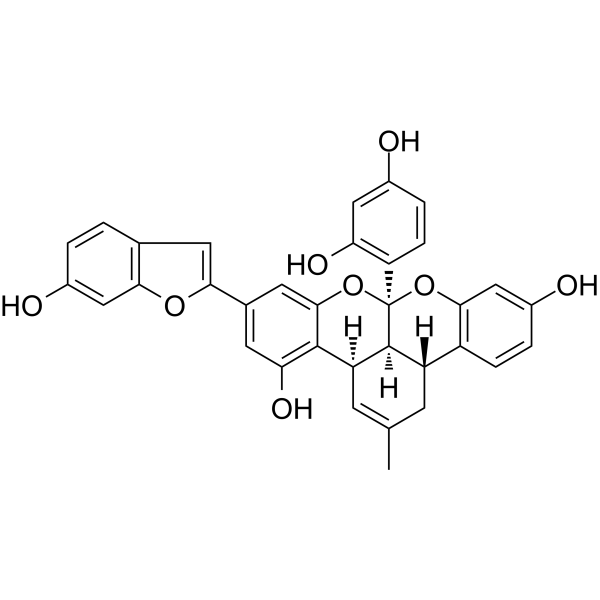
    Mulberrofuran G is a NOX inhibitor (IC50: 6.9 μM) and tyrosinase inhibitor. Mulberrofuran G exhibits anti-inflammatory, antioxidant, antiviral, antitumor, and neuroprotective effects. Mulberrofuran G can be used in the research of tumors, nervous system diseases, and other conditions .
    Mulberrofuran G
  • HY-158342

    PROTACs YAP Cancer
    PROTAC TEAD degrader-1 is a TEAD2 degrader and antiproliferative agent with selective activity toward TEAD2 relative to other TEAD family members. PROTAC TEAD degrader-1 relies on CRBN and the proteasome system for TEAD2 degradation; disruption of CRBN binding attenuates this activity. PROTAC TEAD degrader-1 decreases expression of YAP target genes CYR61 and CTGF. PROTAC TEAD degrader-1 can be used for the research of NF2-deficient cancer .
    PROTAC TEAD degrader-1
  • HY-147208

    YAP Cancer
    MSC-4106 is an orally active and potent inhibitor of YAP/TAZ-TEAD. MSC-4106 inhibits TEAD1 or TEAD3 auto-palmitoylation and shows inhibitory effect on NCI-H226 tumor xenograft model .
    MSC-4106
  • HY-170764

    YAP Cancer
    M3686 (Compound 29) is a potent, selective TEAD1 inhibitor with an IC50 value of 51 nM. M3686 also shows weaker binding activity on TEAD3. M3686 potently inhibits cell viability against YAP-dependent NCI-H226 cell line with an IC50 value of 0.06 uM. M3686 shows strong anti-tumor effects in the NCI-H226 xenograft model .
    M3686
  • HY-169021

    JNK Cancer
    JNK-1-IN-3 (Compound 9e) is an inhibitor of JNK1 that downregulates JNK1 gene expression and inhibits the protein levels of its phosphorylated form, concurrently reducing the expression of its downstream targets, c-Jun and c-Fos, in tumors while restoring p53 activity. JNK-1-IN-3 exhibits broad-spectrum antiproliferative activity, particularly with high inhibitory activity against renal and breast cancer cell lines, demonstrating both in vivo and in vitro anticancer activity .
    JNK-1-IN-3
  • HY-N12004

    Others Cancer
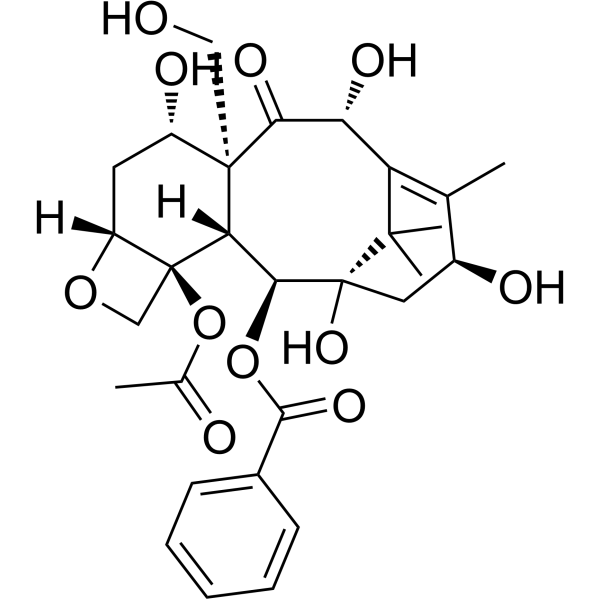
    19-Hydroxy-10-deacetylbaccatin III (compound 13) is a taxane with potential antitumor activity. 19-Hydroxy-10-deacetylbaccatin III has weak cytotoxicity against A498 and NCI-H226 cell lines. The study found that the inhibition rates of 30 μg/mL 19-Hydroxy-10-deacetylbaccatin III on A498, NCI-H226 and PC-3 were 16.6% and 32% respectively .
    19-Hydroxy-10-deacetylbaccatin III
  • HY-W778562

    Others Cancer
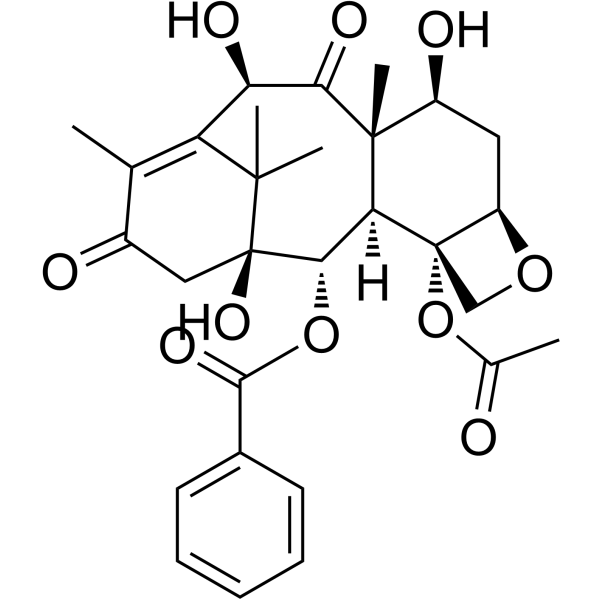
    10-Deacetyl-13-oxobaccatin III is an taxane that can be isolated from Taxus sumatrana. 10-Deacetyl-13-oxobaccatin III (30 μg/mL) shows cytotoxicity against A498, NCI-H226, A549, PC-3 cells, with inhibition a rate of 29.7%, 49.2%, 43.9%, 65.3% .
    10-Deacetyl-13-oxobaccatin III
  • HY-159119

    Dihydroorotate Dehydrogenase Ferroptosis Cancer
    hDHODH-IN-15 (Compound H19) is an inhibitor for human dihydroguanylate dehydrogenase (hDHODH) with an IC50 of 0.21 µM. hDHODH-IN-15 exhibits cytotoxicity in cancer cells NCI-H226, HCT-116, and MDA-MB-231, with IC50 of 0.95-2.81 µM. hDHODH-IN-15 induces ferroptosis in HCT-116, and exhibits antitumor efficacy .
    hDHODH-IN-15
  • HY-181590

    PROTACs SNIPERs YAP IAP Cancer
    PROTAC TEAD1/IAP degrader-3 is a TEAD1/IAP PROTAC degrader. PROTAC TEAD1/IAP degrader-3 recruits the cIAP1 and XIAP E3 ligases to form a ternary complex, drives proteasomal degradation of TEAD1, and triggers autoubiquitination and proteasomal degradation of cIAP1. PROTAC TEAD1/IAP degrader-3 inhibits cell proliferation. PROTAC TEAD1/IAP degrader-3 regulates Hippo pathway activity by downregulating CTGF gene expression in a TEAD-dependent manner. PROTAC TEAD1/IAP degrader-3 is applicable to the research of mesothelioma .
    PROTAC TEAD1/IAP degrader-3
  • HY-181594

    PROTACs SNIPERs YAP Cancer
    PROTAC TEAD/IAP degrader-1 is a TEAD/IAP PROTAC degrader. PROTAC TEAD/IAP degrader-1 is also a specific and Nongenetic inhibitor of apoptosis protein (IAP)-dependent protein eraser (SNIPERs). PROTAC TEAD/IAP degrader-1 recruits cIAP1 to form ternary complexes, induces ubiquitination, proteasomal TEAD1, TEAD4 degradation. PROTAC TEAD/IAP degrader-1 inhibits TEAD transcriptional activity, reduces CTGF expression, and reduces cell proliferation. PROTAC TEAD/IAP degrader-1 can be used for the research of mesothelioma .
    PROTAC TEAD/IAP degrader-1
  • HY-185230

    PROTACs YAP Cancer
    HC278 is a selective TEAD1/TEAD3 PROTAC degrader. HC278 induces proteasome-dependent degradation by forming a stable ternary complex with CRBN/DDB1. HC278 is applicable to the research of mesothelioma .
    HC278
  • HY-181537

    PROTACs SNIPERs YAP IAP Cancer
    PROTAC TEAD1/IAP degrader-2 is an IAP-harnessing TEAD1 PROTAC degrader, with a DC50 of 170 nM against TEAD1 in NCI-H2052 cells. PROTAC TEAD1/IAP degrader-2 exhibits moderate antiproliferative activity in Hippo pathway-dependent mesothelioma cells. PROTAC TEAD1/IAP degrader-2 inhibits the expression of CTGF, but with a weaker effect than the TEAD inhibitor VT-107 (HY-134957). PROTAC TEAD1/IAP degrader-2 can be used in mesothelioma-related research .
    PROTAC TEAD1/IAP degrader-2
  • HY-186118

    Ligands for Target Protein for PROTAC YAP Neurological Disease Cancer
    TEAD ligand 6 is a TEAD ligand. TEAD ligand 6 serves as a ligand for target protein for PROTAC (Ligands for Target Protein for PROTAC) and is used to develop and design PROTAC-based TEAD degraders, such as KG-FP-003 (HY-186117). TEAD ligand 6 applies to glioblastoma research .
    TEAD ligand 6
  • HY-183728

    YAP Cancer
    LC-TEAD01 is a potent covalent transcription enhancer-associated domain (TEAD) inhibitor with an IC50 of 116 nM and a Ki of 0.132 μM. LC-TEAD01 disrupts the TEAD-YAP interaction and inhibits TEAD-dependent transcriptional activity. LC-TEAD01 suppresses the proliferation of NF2-deficient cancer cells. LC-TEAD01 inhibits tumor growth in NF2-deficient xenograft models. LC-TEAD01 can be used in studies related to NF2-deficient malignant pleural mesothelioma .
    LC-TEAD01
  • HY-P992430

    Transmembrane Glycoprotein Radionuclide-Drug Conjugates (RDCs) Inflammation/Immunology Cancer
    OI-3 is a monoclonal antibody targeting CD146 (MCAM). OI-3 specifically binds to CD146 on the surface of human mesothelioma cells and undergoes endocytosis; both chimeric (chOI-3) and murine (mOI-3) variants possess this activity. When conjugated with 212Pb to form 212Pb-TCMC-OI-3, OI-3 acts as a cytotoxic agent that delivers α-emitting radionuclides to induce targeted cytotoxicity. OI-3 can be used in research related to malignant peritoneal mesothelioma .
    OI-3
  • HY-182672

    YAP Cancer
    VT101 is a TEAD inhibitor with an IC50 of 454 nM. VT101 is applicable for cancer research .
    VT101

Inquiry Online

Your information is safe with us. * Required Fields.

Salutation


Country or Region *

Applicant Name *


Organization Name *

Department *


Email Address *


Product Name *

Cat. No.


Requested quantity *

Phone Number *


Remarks

Inquiry Online

Inquiry Information

Product Name:
Cat. No.:
Quantity:
MCE Japan Authorized Agent:

