28 Results for "

PC-3 prostate tumor

" in MedChemExpress (MCE) Product Catalog:
Products (28)

28 Results for "PC-3 prostate tumor" in MCE Product Catalog:

1
1 Cited Publications
Cat. No.: HY-16160
CAS No.: 851636-83-4
Target:  

Autophagy ICMT

Research Areas:  

Neurological Disease Cancer

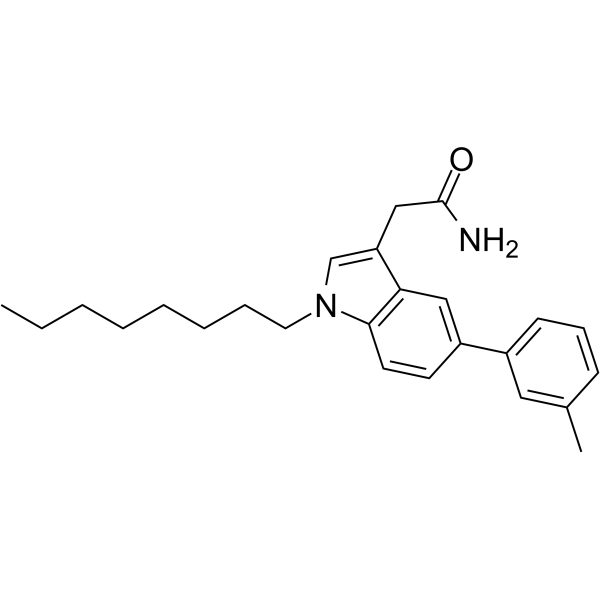
Cysmethynil is an Icmt inhibitor(IC50 = 2.4 μM). Cysmethynil inhibites RAS membrane binding and EGF signal transduction. Cysmethynil prevents the cells in the G1 phase and induces autophagy. Cysmethynil inhibits PC3 cells proliferation, has synergistic effect with Paclitaxel (HY-B0015) and Doxorubicin (HY-15142A). Cysmethynil has anti-tumor effects and can be used for solid tumor (such as prostate cancer et al.) research .
loading...
    loading...
Cat. No.: HY-130709
CAS No.: 2408641-24-5
Purity:  99.85%
Target:  

PROTACs CDK

Research Areas:  

Cancer

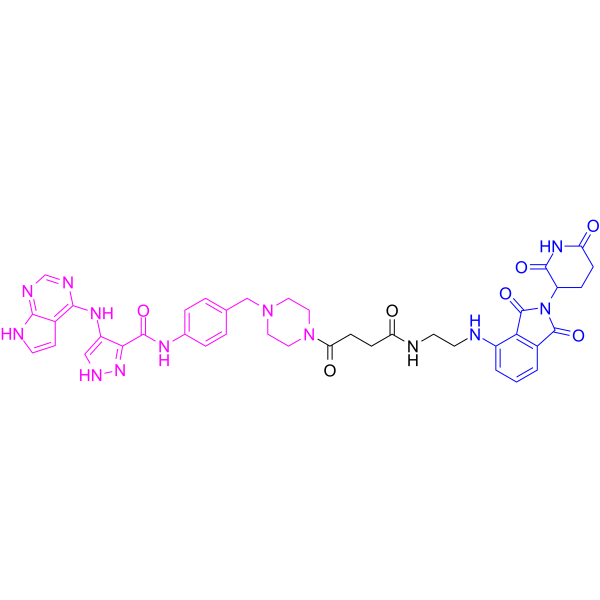
PROTAC CDK2/9 Degrader-1 (Compound F3) is a potent dual degrader for CDK2 (DC50=62 nM) and CDK9 (DC50=33 nM). PROTAC CDK2/9 Degrader-1 suppresses prostate cancer PC-3 cell proliferation (IC50=0.12 µM) by effectively blocking the cell cycle in S and G2/M phases. PROTAC CDK2/9 Degrader-1 is a PROTAC by tethering CDK inhibitor with Cereblon ligand .
loading...
    loading...
Cat. No.: HY-143883
CAS No.: 2376137-41-4
Target:  

PROTACs Akt

Research Areas:  

Cancer

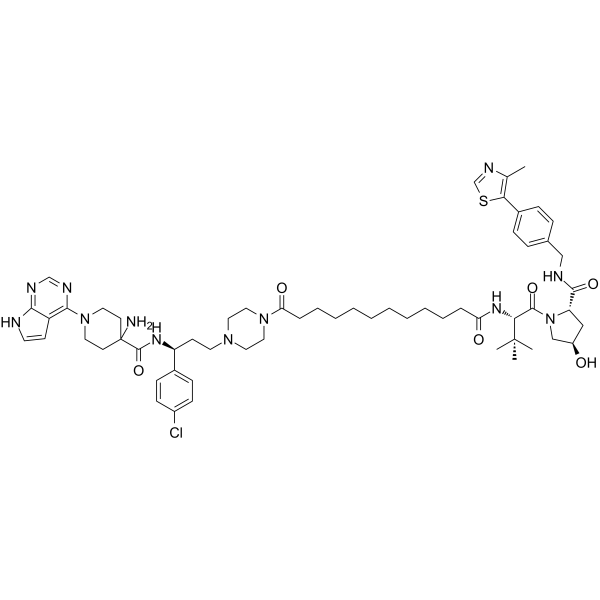
MS143 is a VHL-recruiting AKT protein PROTAC degrader with a DC50 of 46 nM in PC3 prostate cancer cells. MS143 preferentially binds to AKT1 and AKT3, with weaker binding activity towards AKT2. MS143 degrades AKT and blocks the phosphorylation of downstream signaling molecules in the PI3K/AKT/mTOR pathway. MS143 inhibits cancer cell growth and xenograft tumor growth. MS143 can be used for research on prostate cancer, triple-negative breast cancer, and breast cancer .
loading...
    loading...
Cat. No.: HY-P1793
CAS No.: 83471-50-5
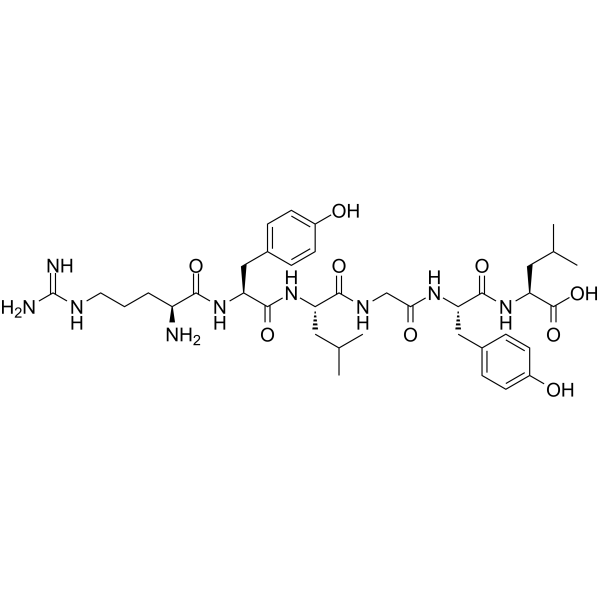
α-Casein (90-95) is a partial agonist of opioid receptors and a copper ion ligand, with opioid activity. α-Casein (90-95) inhibits the secretion of β-hexosaminidase by rat peritoneal mast cells (PMC) with IC50= 0.1 μM. α-Casein (90-95) inhibits the proliferation of prostate cancer cells LNCaP, DU145, and PC3 with IC50 of 0.94 nM, 137 nM, and 6.92 nM, respectively. α-Casein (90-95) activates Gi-like proteins through a membrane-assisted, receptor-independent pathway, or reversibly binds to opioid receptors, inducing intracellular calcium release and conformational changes, and exerts the activity of promoting mast cell secretion and inhibiting tumor cell proliferation. α-Casein (90-95) can be used in the study of the mechanisms of allergic diseases and prostate cancer .
loading...
    loading...
Cat. No.: HY-N15686
CAS No.: 547-23-9
Synonyms: Torulin
Torulene (Torulin) is an orally active carotenoid with anti-cancer activity. Torulene inhibits proliferation and induces apoptosis of tumor cells via a mitochondrial signal pathway and the down-regulation of androgen receptor (AR) expression. Torulene can be used for the study of prostate cancer .
loading...
    loading...
Cat. No.: HY-147696
CAS No.: 2851532-40-4
Purity:  99.58%
Research Areas:  

Cancer

SMTIN-T140 (compound 6a) is a potent TRAP1 (tumor-necrosis-factor-receptor associated protein 1) inhibitor, with an IC50 of 1.646 μM. SMTIN-T140 shows anticancer activity. SMTIN-T140 leads to mitochondrial dysfunction, increases mitochondrial ROS production and activates AMPK. SMTIN-T140 potently suppressed tumor growth without any noticeable in vivo toxicity in a mouse model xenografted with PC3 prostate cancer cells .
loading...
    loading...
Cat. No.: HY-P5292A
CAS No.: 2375849-11-7
Research Areas:  

Cancer

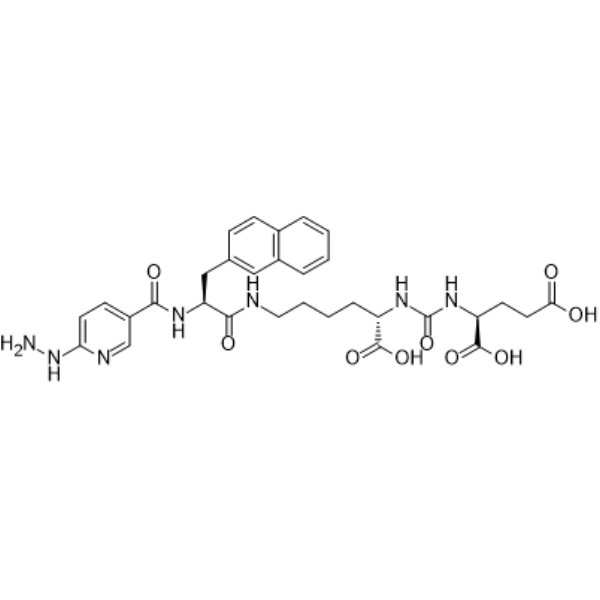
HYNIC-iPSMA TFA is a PSMA-targeted ligand for tumor molecular imaging, with a Ki value of 3.11 nM. HYNIC-iPSMA TFA consists of two components: HYNIC (6-hydrazinonicotinamide) and iPSMA (Inhibitor of Prostate-Specific Membrane Antigen). HYNIC serves as a chelating moiety to link radionuclides to the targeting molecule; iPSMA is a specific inhibitor that targets Prostate-Specific Membrane Antigen (PSMA). 68Ga-labeled iPSMA is used for prostate cancer detection via PET imaging, while the further developed 99mTc-EDDA/HYNIC-iPSMA TFA exhibits excellent specificity and sensitivity. HYNIC-iPSMA TFA can be used for the synthesis and research of radionuclide-conjugated drugs (RDC) .
loading...
    loading...
Cat. No.: HY-178489
Target:  

Nectin-4

Research Areas:  

Cancer

BGC1614 is a Nectin-4-targeting bicyclic toxin conjugate (BTC) belonging to the category of peptide-drug conjugates (PDCs). BGC1614 exhibits strong targeted binding ability to Nectin-4, with an KD of 3.859 × 10 -7 M. BGC1614 exhibits superior antitumor efficacy in nude mice bearing PC-3 and N87 tumor xenografts. BGC1614 can be used for research related to Nectin-4-overexpressing tumors (such as prostate cancer, gastric cancer) .
loading...
    loading...
Cat. No.: HY-P5292
CAS No.: 2192215-74-8
Research Areas:  

Cancer

HYNIC-iPSMA is a PSMA-targeted ligand for tumor molecular imaging, with a Ki value of 3.11 nM. HYNIC-iPSMA consists of two components: HYNIC (6-hydrazinonicotinamide) and iPSMA (Inhibitor of Prostate-Specific Membrane Antigen). HYNIC acts as a chelating moiety to link radionuclides to the targeting molecule; iPSMA is a specific inhibitor that targets Prostate-Specific Membrane Antigen (PSMA). 68Ga-labeled iPSMA is used for prostate cancer detection via PET imaging, while the further developed 99mTc-EDDA/HYNIC-iPSMA TFA exhibits excellent specificity and sensitivity. HYNIC-iPSMA can be used for the synthesis and research of radionuclide-conjugated drugs (RDC) .
loading...
    loading...
Cat. No.: HY-178045
CAS No.: 3109265-41-7
Target:  

c-Myc

Research Areas:  

Cancer

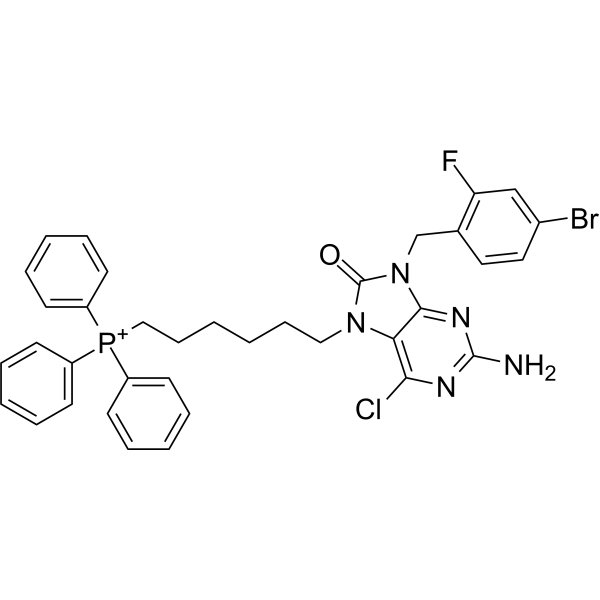
MYC-IN-4 is a MYC inhibitor. MYC-IN-4 impairs MYC/MAX protein-protein interaction (IC50 = 3.06 μM). MYC-IN-4 inhibits MYC-aberrant PC-3 prostate cancer cells with an IC50 of 0.440 μM. MYC-IN-4 demonstrates potent antitumor efficacy in FVB mice bearing Myc-CaP prostate tumor allografts. MYC-IN-4 can be used for the study of prostate cancer .
loading...
    loading...
Cat. No.: HY-175017
Target:  

Survivin

Research Areas:  

Cancer

Survivin-IN-2 is a survivin inhibitor. Survivin-IN-2 shows cytotoxicity in cells with IC50s of 0.53 μM (C4-2 cells) and 1.06 μM (PC-3 cells). Survivin-IN-2 effectively suppresses xenograft tumor growth without apparent toxicity and eliminates survivin in the tumors. Survivin-IN-2 can be used for the study of prostate cancer .
loading...
    loading...
Cat. No.: HY-163683
CAS No.: 2375590-67-1
Research Areas:  

Cancer

EB-PSMA-617 is a modified form of PSMA-617 that has enhanced pharmacokinetic properties by conjugating it to Evans Blue (EB) to extend its circulation half-life to improve prostate tumor uptake and radiotherapy efficacy. In preclinical studies using PC3-PIP-loaded mice, EB-PSMA-617 demonstrated prolonged blood half-life, increased accumulation in PSMA-positive tumors, and successful tumor elimination with lower radioactivity .
loading...
    loading...
Cat. No.: HY-131438
CAS No.: 149809-18-7
Target:  

Topoisomerase

Research Areas:  

Cancer

GI-149893 is a selective topoisomerase I (TopoI) inhibitor. GI-149893 prevents DNA religation and induces irreversible DNA damage in tumor cells. GI-149893 is promising for research of cancers (e.g., colon carcinoma HT-29/SW-48, breast MX-1, prostate PC-3 xenografts) .
loading...
    loading...
Cat. No.: HY-175826
USP30-IN-20 is an orally active USP30 inhibitor (Kd = 1.61 μM, IC50 = 12.8 μM). USP30-IN-20 induces ferroptosis by promoting ubiquitination-mediated degradation of GPX4. USP30-IN-20 inhibits the proliferation, migration, invasion, and stemness of prostate cancer cells. USP30-IN-20 induces G0/G1 cell cycle arrest and ROS levels in prostate cancer cells. USP30-IN-20 exhibits significant anti-tumor efficacy in PC3 cell subcutaneous xenografts in mice. USP30-IN-20 can be used for the study of advanced prostate cancer .
loading...
    loading...
Cat. No.: HY-P1793A
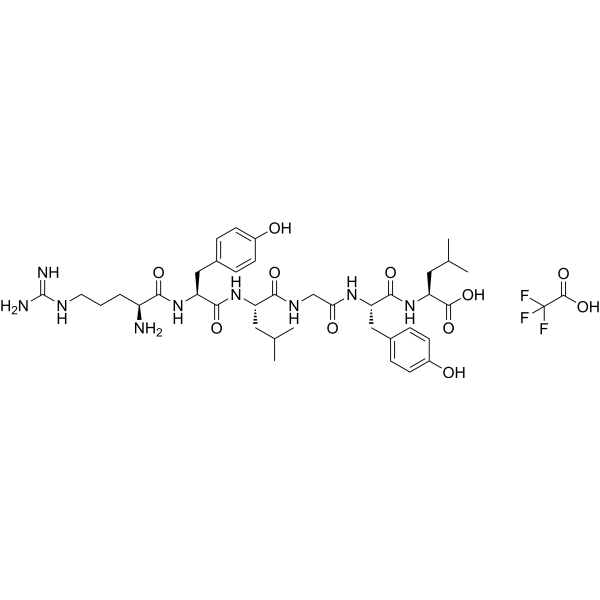
α-Casein (90-95) TFA is a partial agonist of opioid receptors and a copper ion ligand, with opioid activity. α-Casein (90-95) TFA inhibits the secretion of β-hexosaminidase by rat peritoneal mast cells (PMC) with IC50= 0.1 μM. α-Casein (90-95) TFA inhibits the proliferation of prostate cancer cells LNCaP, DU145, and PC3 with IC50 of 0.94 nM, 137 nM, and 6.92 nM, respectively. α-Casein (90-95) TFA activates Gi-like proteins through a membrane-assisted, receptor-independent pathway, or reversibly binds to opioid receptors, inducing intracellular calcium release and conformational changes, and exerts the activity of promoting mast cell secretion and inhibiting tumor cell proliferation. α-Casein (90-95) TFA can be used in the study of the mechanisms of allergic diseases and prostate cancer .
loading...
    loading...
Cat. No.: HY-175555
Research Areas:  

Cancer

Tubulin-IN-54 is a tubulin inhibitor. Tubulin-IN-54 exhibits anti-proliferative activity against various cancer cells. Tubulin-IN-54 inhibits tubulin polymerization, disrupts microtubule networks, induces G2/M cell cycle arrest, and promotes cancer cell apoptosis. Tubulin-IN-54 demonstrates significant anti-tumor efficacy in mice bearing PC-3/TxR xenografts. Tubulin-IN-54 can be used for the study of taxane-resistant cancers (prostate cancer, melanoma) .
loading...
    loading...
Cat. No.: HY-169414
Target:  

DNA/RNA Synthesis

Research Areas:  

Cancer

WRN inhibitor 15 (Compound 9) is a WRN inhibitor with anti-tumor activity that can be used in prostate cancer research, the IC50 values are 37.9, 40.2 and 46.6 μM in PC3, LNCaP, and HeLa .
loading...
    loading...
Cat. No.: HY-N16426
CAS No.: 1532554-02-1
Target:  

Parasite

Mycoleptone A is an azafluorenone compound. Mycoleptone A exhibits certain anti-leishmanial activity, with an LD50 of 28.5 μM against L. major. Mycoleptone A shows cytotoxicity against human prostate cancer cell line PC3, with an IC50 of 10.0 μM. Mycoleptone A can be used in research on anti-parasitic and anti-tumor aspects .
loading...
    loading...
Cat. No.: HY-168300
CAS No.: 2527888-07-7
Antiangiogenic agent 7 (Compound 1) can induce cell apoptosis, increase Reactive Oxygen Species, and inhibit the intracellular enzyme thioredoxin reductase. Antiangiogenic agent 7 has anti-cancer activity, with an IC50 of 0.08-3.5 μM against cervical cancer cells HeLa, prostate cancer cells PC-3, and non-small cell lung cancer A549. Antiangiogenic agent 7 inhibits tumor growth in mouse xenograft models .
loading...
    loading...
Cat. No.: HY-169078
CAS No.: 3068378-07-1
Research Areas:  

Cancer

ML234 is a dual inhibitor against EZH2/LSD1 with IC50 values of 0.09 and 0.12 μM, respectively. ML234 displays an excellent antiproliferative capacity against prostate cancer cell lines LNCAP, PC3 and 22RV1. ML234 suppresses the tumor growth in the 22RV1 xenograft mouse model. ML234 is promising for research of anticancer agents in prostate cancer .
loading...
    loading...

