14 Results for "

PQS

" in MedChemExpress (MCE) Product Catalog:
Products (14)

14 Results for "PQS" in MCE Product Catalog:

2
2 Cited Publications
Cat. No.: HY-128200
CAS No.: 108985-27-9
Purity:  99.84%
Synonyms: PQS
Target:  

Bacterial

Research Areas:  

Infection Inflammation/Immunology

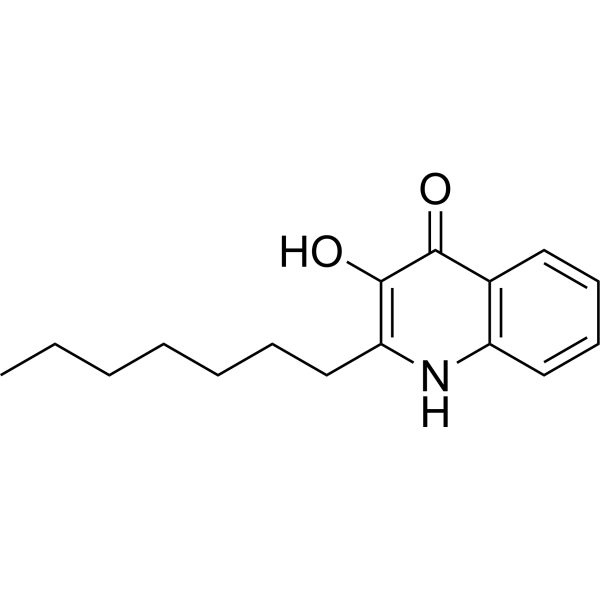
Pseudomonas quinolone signal (PQS) is a quorum-sensing signaling molecule produced by Pseudomonas aeruginosa. The synthesis of Pseudomonas quinolone signal relies on the las quorum-sensing system, and its biological activity is associated with the rhl system. Pseudomonas quinolone signal regulates the expression of the virulence gene lasB. Additionally, Pseudomonas quinolone signal plays roles in iron acquisition, cytotoxicity, outer-membrane vesicle biogenesis, and host immune modulation .
loading...
    loading...
1
1 Cited Publications
Cat. No.: HY-W007390
CAS No.: 52727-57-8
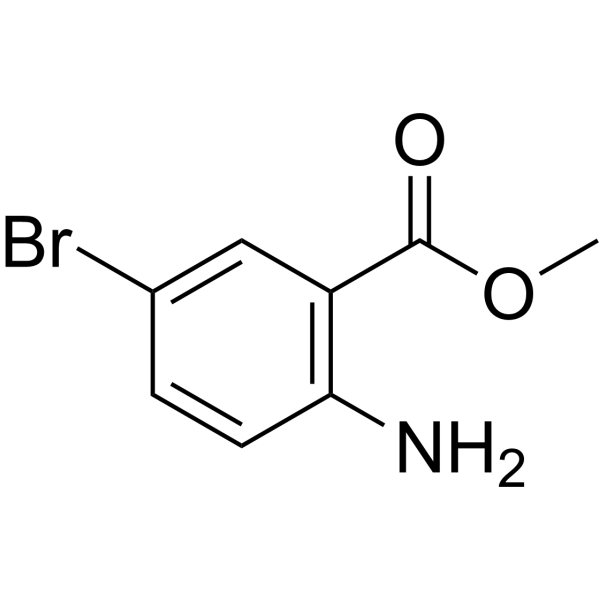
Methyl 2-amino-5-bromobenzoate (Compound 8/12) is a pharmaceutical intermediate. Methyl 2-amino-5-bromobenzoate can be used to synthesize 2-benzamidobenzoic acid, a known FabH inhibitor. Derivatives of methyl 2-amino-5-bromobenzoate also inhibit PqsD, the pqs quorum sensing (QS) system, of Pseudomonas aeruginosa .
loading...
    loading...
Cat. No.: HY-129503
CAS No.: 40522-46-1
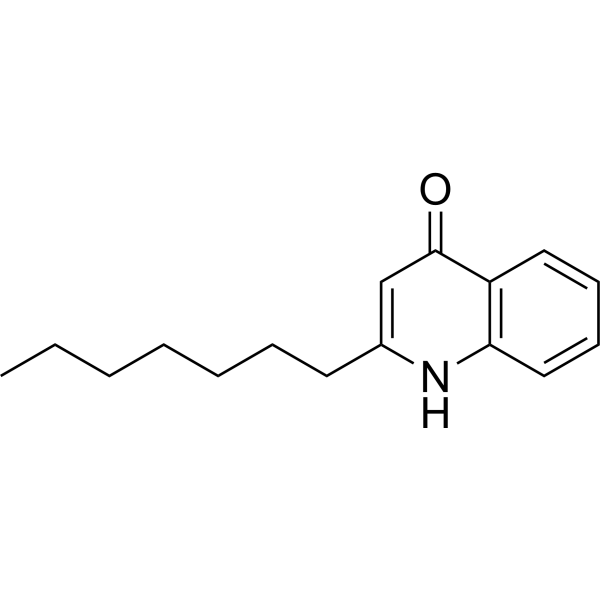
2-Heptyl-4-quinolone is an intermediate in the synthesis of the Pseudomonas quinolone signal (PQS) that controls swarming by positively regulating phenazine production. 2-Heptyl-4-quinolone induces the production of the phenazine-1-carboxylic acid (PCA) .
loading...
    loading...
Cat. No.: HY-177852
CAS No.: 873556-29-7
Target:  

Bacterial

Research Areas:  

Infection

Anthranilyl-AMSN is a potent PqsA inhibitor, with a Kiapp of 170 nM. Anthranilyl-AMSN decreases HHQ and PQS production. Anthranilyl-AMSN can be used in the research of Pseudomonas aeruginosa infections .
loading...
    loading...
Cat. No.: HY-179389
Research Areas:  

Infection

XDS-23 is a selective biofilm inhibitor with an IC50 of 1.26 µM against Pseudomonas aeruginosa. XDS-23 exerts a dual inhibitory effect on the LasI/LasR System (las) and Pseudomonas Quinolone Signal System (pqs). XDS-23 suppress the production of key virulence factors including elastase, pyocyanin, and extracellular polysaccharides. XDS-23 exhibits synergistic antibacterial activity and can enhance the efficacy of multiple antibiotics in both in vitro and in vivo models, while maintaining a favorable safety profile. XDS-23 can be employed for research in combating biofilm-mediated drug-resistant P. aeruginosa infections .
loading...
    loading...
Cat. No.: HY-124352S
Synonyms: C9-PQS-d4
2-Nonyl-3-hydroxy-4-quinolone-d4 (C9-PQS-d4) is deuterium labeled 2-Nonyl-3-hydroxy-4-quinolone. 2-nonyl-3-hydroxy-4-Quinolone (C9-PQS) is a quinolone compound produced by P. aeruginosa and other related bacterias. 2-nonyl-3-hydroxy-4-Quinolone is a quorum sensing (QS) signal molecule that controls the expression of many virulence genes as a function of cell population density .
loading...
    loading...
Cat. No.: HY-W717950
CAS No.: 602302-51-2
Synonyms: PQS-d4
Pseudomonas quinolone signal-d4 is a stable isotope internal standard .
loading...
    loading...
Cat. No.: HY-124352
CAS No.: 1259944-03-0
Purity:  ≥98.0%
Target:  

Bacterial

Research Areas:  

Others

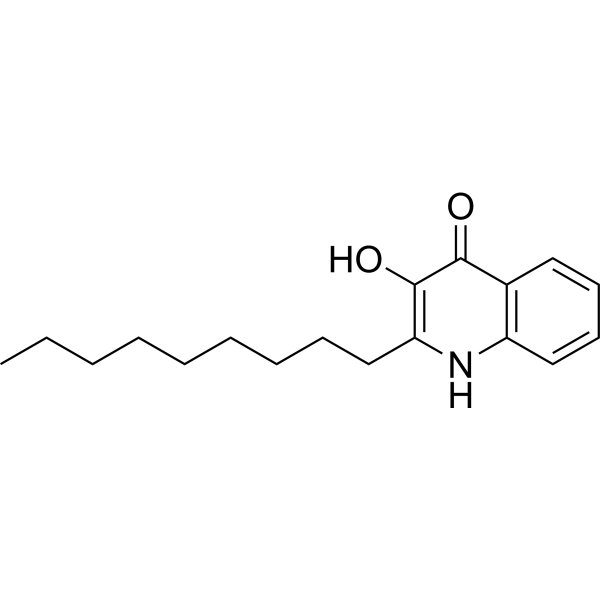
2-nonyl-3-hydroxy-4-Quinolone (C9-PQS) is a quinolone compound produced by P. aeruginosa and other related bacterias. 2-nonyl-3-hydroxy-4-Quinolone is a quorum sensing (QS) signal molecule that controls the expression of many virulence genes as a function of cell population density .
loading...
    loading...
Cat. No.: HY-155479
CAS No.: 3033007-79-0
Target:  

Bacterial

Research Areas:  

Infection

PqsR-IN-3 (compound 16e) is a selective inhibitor of the pqs system (IC50=3.7 μM) and its associated virulence factor pyocyanin (IC50=2.7 μM). PqsR-IN-3 inhibits bacterial biofilm synthesis and is significantly cytotoxic against Pseudomonas aeruginosa. PqsR-IN-3 has synergistic effects with several antibiotics, such as Ciprofloxacin (HY-B0356) and Tobramycin (HY-B0441) .
loading...
    loading...
Cat. No.: HY-129503S1
2-Heptyl-4-quinolone- 15N is the 15N-labeled 2-Heptyl-4-quinolone (HY-129503). 2-Heptyl-4-quinolone is an intermediate in the synthesis of the Pseudomonas quinolone signal (PQS) that controls swarming by positively regulating phenazine production. 2-Heptyl-4-quinolone induces the production of the phenazine-1-carboxylic acid (PCA) .
loading...
    loading...
Cat. No.: HY-183361
Target:  

Bacterial Elastase

Research Areas:  

Infection

Antibiofilm agent-22 is an FpvA receptor-targeting antibacterial agent. Antibiofilm agent-22 chelates iron, disrupts las, pqs, and rhl pathways, reduces elastase, pyocyanin, and rhamnolipid production, and induces bacterial iron starvation. Antibiofilm agent-22 can be used for the research of Pseudomonas aeruginosa infection .
loading...
    loading...
Cat. No.: HY-129503S
2-Heptyl-4-quinolone- 13C6 is the 13C-labeled 2-Heptyl-4-quinolone (HY-129503). 2-Heptyl-4-quinolone is an intermediate in the synthesis of the Pseudomonas quinolone signal (PQS) that controls swarming by positively regulating phenazine production. 2-Heptyl-4-quinolone induces the production of the phenazine-1-carboxylic acid (PCA) .
loading...
    loading...
Cat. No.: HY-187556
CAS No.: 2581199-68-8
Target:  

Bacterial

Research Areas:  

Infection

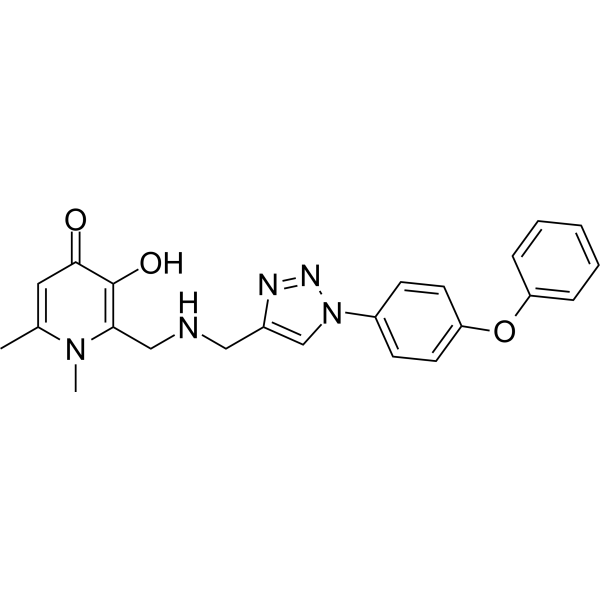
Antibiofilm agent-23 is a PqsR-targeting agent, iron chelator, biofilm inhibitor, biofilm dispersant, and anti-virulence agent. Antibiofilm agent-23 selectively binds to PqsR, disrupts the pqs quorum sensing pathway, restricts bacterial iron acquisition, induces intracellular iron deficiency, reduces pyocyanin, elastase, and rhamnolipid production, impairs biofilm formation, and disperses mature biofilms. Antibiofilm agent-23 exhibits low cytotoxicity and shows antibacterial synergy with Ciprofloxacin (HY-B0356) in Caenorhabditis elegans infection models. Antibiofilm agent-23 can be used for the research of biofilm-associated Pseudomonas aeruginosa infections .
loading...
    loading...
Cat. No.: HY-76705S
CAS No.: 2562378-12-3
Methyl N-methylanthranilate-d3 is the deuterated-labeled Methyl N-methylanthranilate (HY-76705). Methyl N-methylanthranilate is an N-alkylated anthranilate with a sweet citrus aroma, which is commonly used in perfume manufacturing. Methyl N-methylanthranilate is the dominant component in the defensive secretion of the millipede Typhloiulus orpheus. Methyl N-methylanthranilate exhibits quorum sensing inhibition and anti-biofilm activity against P. aeruginosa; it interferes with PQS synthesis via competitive inhibition of PqsA, but lacks bactericidal activity. Methyl N-methylanthranilate is sensitive to UVA/sunlight in human skin cells, and generates O2• - through type I photodynamic reactions, leading to lysosomal/mitochondrial damage, double-strand DNA breaks and apoptosis, with potential phototoxicity .
loading...
    loading...
  • 1

