10 Results for "

PRC1 complex

" in MedChemExpress (MCE) Product Catalog:
Products (10)

10 Results for "PRC1 complex" in MCE Product Catalog:

10
10 Publications Verification
Art. -Nr.: HY-19817
CAS. Nr.: 31083-55-3
Synonyms: NSC600157
Target:  

E1/E2/E3 Enzyme

Forschungsgebiete:  

Cancer

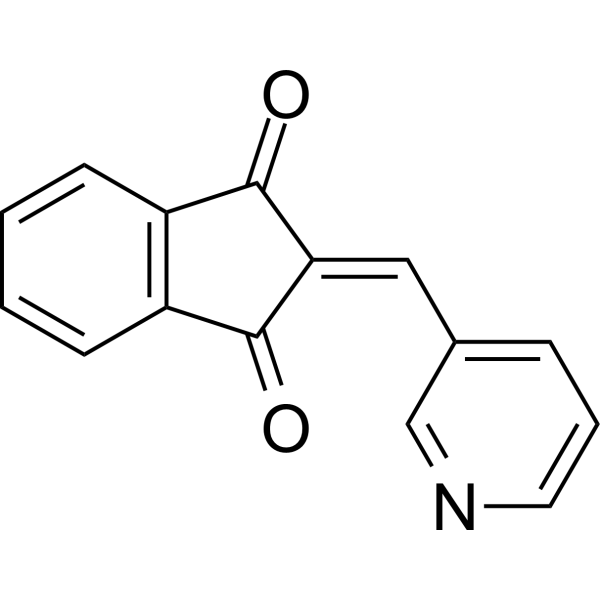
PRT4165 is a potent inhibitor of polycomb-repressive complex 1 (PRC1)-mediated H2A ubiquitylation.
loading...
    loading...
6
6 Cited Publications
Art. -Nr.: HY-138794
CAS. Nr.: 2417089-74-6
Reinheit:  99.60%
Forschungsgebiete:  

Cancer

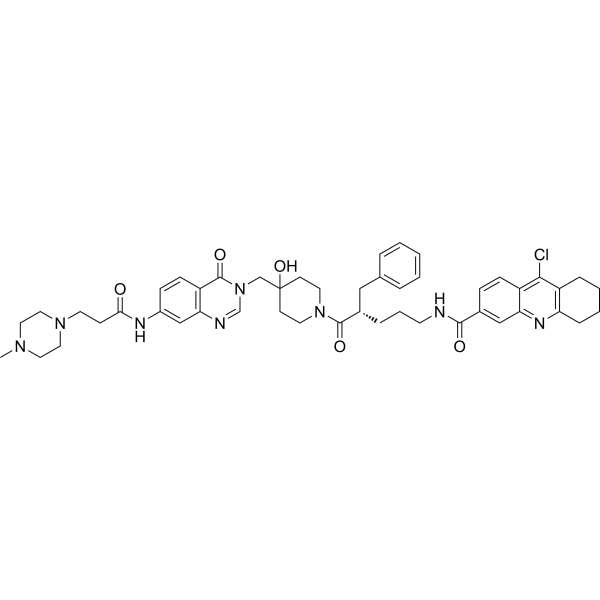
XL177A is a covalent USP7 inhibitor that blocks the deubiquitinase activity of USP7. XL177A destabilizes non-canonical PRC1 complexes or KDM6A and reduces chromatin deposition of H2AK119Ub, thereby relieving the repression of neuronal differentiation programs. Meanwhile, XL177A also regulates the ELOF1-UVSSA-USP7-nuclear β-catenin axis, decreasing the transcription levels of related proteins and the accumulation of nuclear β-catenin. XL177A exerts antiviral effects by reducing the expression levels of coronavirus receptors, and exhibits inhibitory activity against APC-mutated colorectal cancer cells, neuroblastoma, and coronaviruses including SARS-CoV-2 variants. XL177A is mainly used in studies related to colorectal cancer, neuroblastoma, and coronavirus infections .
loading...
    loading...
Art. -Nr.: HY-139514
CAS. Nr.: 2396639-11-3
Reinheit:  99.42%
Target:  

E1/E2/E3 Enzyme

Forschungsgebiete:  

Cancer

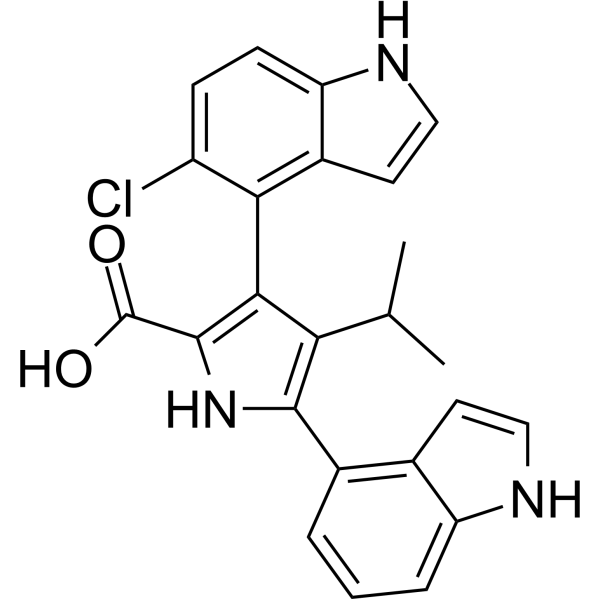
RB-3, a polycomb repressive complex 1 (PRC1) inhibitor, binds to RING1B-BMI1f, with a Kd of 2.8 μM .
loading...
    loading...
Art. -Nr.: HY-170823
CAS. Nr.: 2396639-29-3
Target:  

E1/E2/E3 Enzyme

Forschungsgebiete:  

Cancer

PRC1-IN-1 is a PRC1 complex inhibitor. PRC1-IN-1 binds to both RING1A and RING1B proteins, and inhibits the activities of RING1B-BMI1 and RING1B-PCGF1. PRC1-IN-1 effectively inhibits H2AK119 ubiquitination and induces cell differentiation in leukemia cells. PRC1-IN-1 can be used for the research of leukemia .
loading...
    loading...
Art. -Nr.: HY-159805
CAS. Nr.: 2813260-27-2
Target:  

CDK

Forschungsgebiete:  

Cancer

CDK2-IN-31 is a CCNE1:CDK2 complex inhibitor with an IC50 of 0.13 μM. CDK2-IN-31 binds to a cryptic allosteric pocket at the CCNE1:CDK2 interface, inducing structural rearrangements of the CDK2 A-loop that disrupt the kinase's active conformation and interfere with substrate binding. CDK2-IN-31 inhibits phosphorylation of retinoblastoma protein 1 (RB1) in CCNE1-dependent ovarian cancer cells. CDK2-IN-31 impairs coenrichment of protein PRC1 with CCNE1-N112C:CDK2 complexes. CDK2-IN-31 can be used for the research of ovarian cancer .
loading...
    loading...
Art. -Nr.: HY-148369
CAS. Nr.: 3094177-94-0
Reinheit:  99.68%
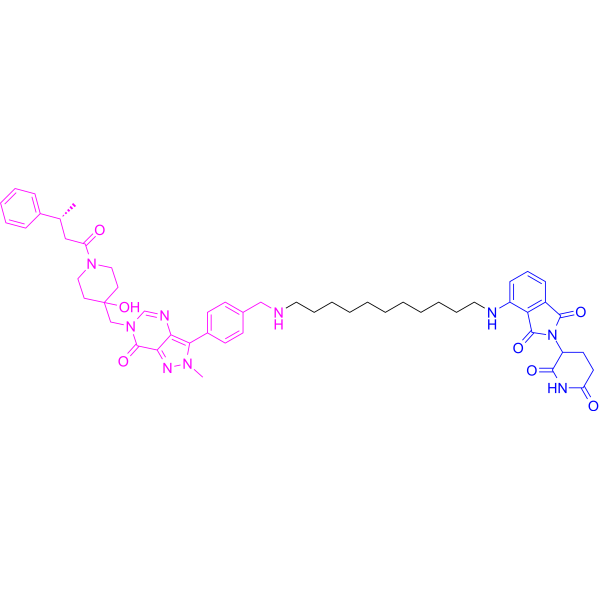
U7D-1 is a USP7 PROTAC degrader that induces selective proteasomal degradation of USP7. U7D-1 destabilizes and downregulates the expression of variant PRC1 complex subunits PCGF1, RING1A and PCGF6, and also slightly reduces the protein level of KDM2B. U7D-1 decreases cell viability, arrests neuroblastoma cells at the G0/G1 cell cycle phase, and downregulates the expression of target genes of PAX3::FOXO1 in FP-RMS cells. U7D-1 increases the level of cleaved PARP in FP-RMS cells, induces cell apoptosis, and upregulates the expression of muscle differentiation markers MYH1 and MYF5. U7D-1 inhibits the growth and proliferation of p53 wild-type and mutant cancer cells, and regulates the apoptosis pathway and E2F pathway. U7D-1 is applicable to studies on neuroblastoma, fusion-positive rhabdomyosarcoma, p53-mutant cancers and cancer-related research .
loading...
    loading...
Art. -Nr.: HY-138794A
CAS. Nr.: 2417089-73-5
Target:  

Deubiquitinase

Forschungsgebiete:  

Cancer

(Rac)-XL177A is the racemic isomer of XL177A (HY-138794). XL177A is a covalent USP7 inhibitor that blocks the deubiquitinase activity of USP7. XL177A destabilizes non-canonical PRC1 complexes or KDM6A and reduces chromatin deposition of H2AK119Ub, thereby relieving the repression of neuronal differentiation programs. Meanwhile, XL177A also regulates the ELOF1-UVSSA-USP7-nuclear β-catenin axis, decreasing the transcription levels of related proteins and the accumulation of nuclear β-catenin. XL177A exerts antiviral effects by reducing the expression levels of coronavirus receptors, and exhibits inhibitory activity against APC-mutated colorectal cancer cells, neuroblastoma, and coronaviruses including SARS-CoV-2 variants. XL177A is mainly used in studies related to colorectal cancer, neuroblastoma, and coronavirus infections .
loading...
    loading...
Art. -Nr.: HY-161521
CAS. Nr.: 2991469-21-5
Forschungsgebiete:  

Cancer

PLK1-IN-10 (Compound 4Bb) is an orally active PLK1 PBD (polo-box domain) inhibitor. PLK1-IN-10 blocks the interaction of PLK1 with the cell division regulator protein 1 (PRC1) and decreases the protein expression of the CDK1-Cyclin B1 complex. PLK1-IN-10 reacts with glutathione (GSH) to increase cellular oxidative stress, ultimately leading to cell death .
loading...
    loading...
Art. -Nr.: HY-172943
CAS. Nr.: 2991469-28-2
Forschungsgebiete:  

Cancer

PLK1/PRC1-IN-1 (compound B4) is a PLK1/PRC1 protein complex formation inhibitor. PLK1/PRC1-IN-1 can be used in the study of non-small cell lung cancer (NSCLC) .
loading...
    loading...
Art. -Nr.: HY-138794G
CAS. Nr.: 2417089-74-6
XL177A GMP is XL177A (HY-138794) produced by using GMP guidelines. GMP small molecules works appropriately as an auxiliary reagent for cell therapy manufacture. XL177A is a covalent USP7 inhibitor that blocks the deubiquitinase activity of USP7. XL177A destabilizes non-canonical PRC1 complexes or KDM6A and reduces chromatin deposition of H2AK119Ub, thereby relieving the repression of neuronal differentiation programs. Meanwhile, XL177A also regulates the ELOF1-UVSSA-USP7-nuclear β-catenin axis, decreasing the transcription levels of related proteins and the accumulation of nuclear β-catenin. XL177A exerts antiviral effects by reducing the expression levels of coronavirus receptors, and exhibits inhibitory activity against APC-mutated colorectal cancer cells, neuroblastoma, and coronaviruses including SARS-CoV-2 variants. XL177A is mainly used in studies related to colorectal cancer, neuroblastoma, and coronavirus infections .
loading...
    loading...

