
13 Results for "

Probiotic

" in MedChemExpress (MCE) Product Catalog:
Products (13)

13 Results for "Probiotic" in MCE Product Catalog:

4
4 Cited Publications
Cat. No.: HY-N7075
CAS No.: 9005-80-5
Inulin is an orally active prebiotic targeting the intestinal microbiota, selectively promoting the proliferation and activity of beneficial bacteria such as bifidobacteria and lactic acid bacteria, and playing a role in regulating the intestinal microecology. The functions of Inulin include: Fermentation by probiotics in the colon to produce short-chain fatty acids (such as butyrate and propionate), lowering the intestinal pH and inhibiting the overgrowth of harmful bacteria; Enhancing the intestinal barrier function and reducing endotoxin translocation; Directly scavenging free radicals (such as superoxide free radicals, hydroxyl free radicals) and activating antioxidant enzymes (SOD, CAT) to reduce oxidative stress. Inulin can also be used in the study of intestinal diseases (constipation, IBD), metabolic syndrome (diabetes, obesity) and liver damage by regulating glucose and lipid metabolism (such as reducing triglycerides, improving insulin sensitivity) and immune response (enhancing NK cell activity, inhibiting inflammatory factors)[1][2][3][4].
loading...
    loading...
1
1 Cited Publications
Cat. No.: HY-139413
CAS No.: 9041-22-9
Purity:  99.00%
β-D-glucan is a natural non-digestible polysaccharide and high biocompatibility that can be selectively recognized by recognition receptors such as Dectin-1 and Toll-like receptors as well as being easily internalized by murine or human macrophages, which is likely to attribute to a target delivery . β-d-glucan is an enteric delivery vehicle for probiotics .
loading...
    loading...
1
1 Cited Publications
Cat. No.: HY-113529
CAS No.: 10094-58-3
Purity:  ≥98.0%
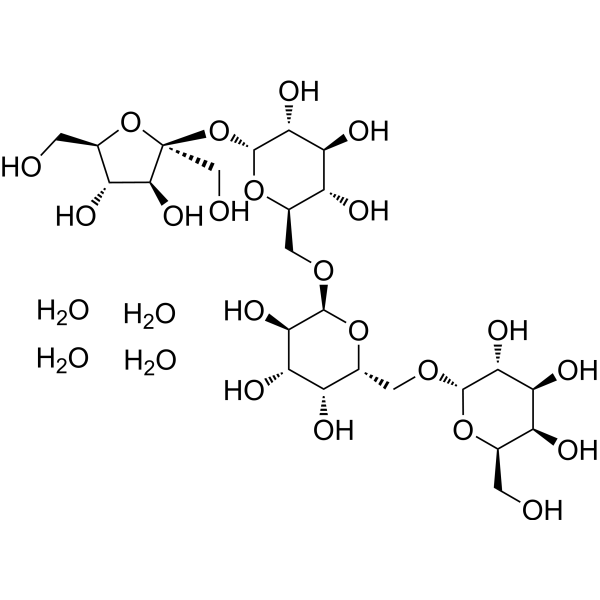
Stachyose tetrahydrate, a functional oligosaccharide, acts as a prebiotic. Stachyose tetrahydrate can prevent indirectly colon cancer cell growth by promoting the proliferation of probiotics or producing beneficial materials in the intestine .
loading...
    loading...
1
1 Cited Publications
Cat. No.: HY-P10208A
RKH acetate exerts protective effects against sepsis-induced death and organ damage. RKH acetate can directly bind to Toll-like receptor 4 (TLR4) and block TLR4 signal transduction in immune cells .
loading...
    loading...
Cat. No.: HY-Y0079
CAS No.: 673-06-3
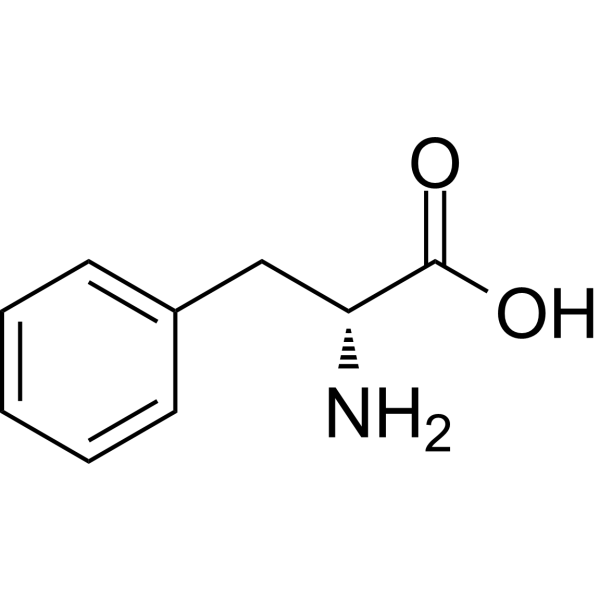
D-Phenylalanine is an atypical D-amino acid and an inhibitor of bacterial biofilm formation. D-Phenylalanine mainly replaces D-alanine (D-Ala) by incorporating into the fourth and fifth positions of bacterial peptidoglycan (PG), changing the cell wall structure, enhancing bacterial acid resistance and affecting biofilm formation. D-Phenylalanine may promote the secretion of peptide tyrosine tyrosine (PYY) in mammals by activating the intestinal GPR109B receptor. D-Phenylalanine can inhibit the maturation of microbial biofilms and promote the release of specific hormones. It can be used for antibacterial preservation, improving the yield of probiotics in the food industry, and studying appetite regulation and blood sugar control in metabolic diseases such as diabetes .
loading...
    loading...
Cat. No.: HY-30216
CAS No.: 20312-37-2
Synonyms: D-α-Hydroxyisocaproic acid
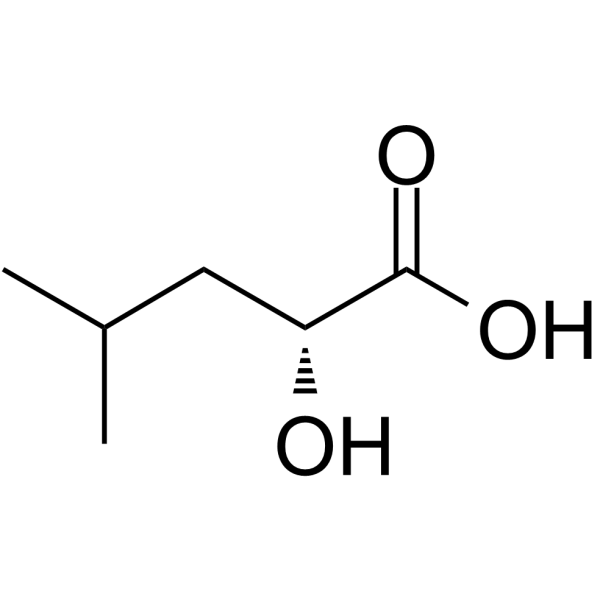
(R)-Leucic acid (D-α-Hydroxyisocaproic acid) is an orally active D-isomer of the α-hydroxy analogue of Leucine (HY-N0486). (R)-Leucic acid is a metabolite of Lactobacillus and can promote intestinal fatty acid absorption by upregulating CD36 expression. (R)-Leucic acid can be used to study microbe-host interactions and the regulation of lipid metabolism by probiotics .
loading...
    loading...
Cat. No.: HY-W750796
CAS No.: 286367-75-7
Synonyms: Butanoic acid-13C4 sodium
Butyric acid-13C4 sodium (Butanoic acid-13C4 sodium) is a stable isotope labeled compound with the activity of promoting cell proliferation and regulating gene expression. Butyric acid-13C4 sodium can be used in metabolic research and compound development to help scientists gain a deeper understanding of the role of short-chain fatty acids in organisms. Butyric acid-13C4 sodium also plays an important role in nutrition and intestinal health research, especially in the regulation of probiotic function and intestinal microbiota.
loading...
    loading...
Cat. No.: HY-139410
CAS No.: 9005-46-3
Sodium caseinates is a kind of sodium salts of major milk proteins, which act as protein-based biopolymers and innate immune system activators. Sodium caseinates induce granulopoiesis, activation and differentiation, promote the production of M-CSF, and increase serum levels of G-CSF and GM-CSF. Sodium caseinates inhibit the proliferation and reduce the viability of leukemia macrophage-like cells, thereby significantly improving the survival rate of mice inoculated with leukemia cells. Sodium caseinates can serve as carriers for probiotics in edible films and exhibit anti-Listeria activity. Sodium caseinates effectively protect vitamin A from degradation, enhance its stability, bioaccessibility and bioavailability, and regulate protein digestibility when complexed with vitamin A. Sodium caseinates can be applied to research related to acute monocytic leukemia and vitamin A deficiency .
loading...
    loading...
Cat. No.: HY-124003
CAS No.: 503-06-0
Phytomonic acid is a long-chain fatty acid containing a cyclopropane ring produced by Lactobacillus reuteri. Lactobacilli that normally produce Lactobacillic acid also have the ability to resist TNF-α .
loading...
    loading...
Cat. No.: HY-113529R
CAS No.: 10094-58-3
Stachyose (tetrahydrate) (Standard) is the analytical standard of Stachyose (tetrahydrate). This product is intended for research and analytical applications. Stachyose tetrahydrate, a functional oligosaccharide, acts as a prebiotic. Stachyose tetrahydrate can prevent indirectly colon cancer cell growth by promoting the proliferation of probiotics or producing beneficial materials in the intestine .
loading...
    loading...
Cat. No.: HY-30216R
CAS No.: 20312-37-2
Synonyms: D-α-Hydroxyisocaproic acid (Standard)
(R)-Leucic acid (Standard) is the analytical standard of (R)-Leucic acid (HY-30216). This product is intended for research and analytical applications. (R)-Leucic acid (D-α-Hydroxyisocaproic acid) is the D-isomer of the α-hydroxy analogue of Leucine (HY-N0486). (R)-Leucic acid is a metabolite of Lactobacillus and can promote intestinal fatty acid absorption by upregulating CD36 expression. (R)-Leucic acid can be used to study microbe-host interactions and the regulation of lipid metabolism by probiotics.
loading...
    loading...
Cat. No.: HY-N20592
Category:  

Extract

Target:  

Bacterial

Pu-erh tea extract is an extract of Pu-erh tea that can reduce intestinal lesions, promote the growth of probiotics, and inhibit pathogenic bacteria.
loading...
    loading...
Cat. No.: HY-W783478
CAS No.: 336784-82-8
Calebin A is a PI3K/Akt/mTOR, MAPK, and NF-κB inhibitor with oral effectiveness. Calebin A can block the autophagy-repressive, inhibiting apoptosis. Calebin A has anti-tumor activity by epigenetic regulation. Calebin A suppresses adipogenesis, modulates thermogenesis, and enriches gut probiotics. Calebin A can be used in research on osteoarthritis, Alzheimer's disease, type 2 diabetes, malignant peripheral nerve sheath tumors, and colorectal cancer .
loading...
    loading...
  • 1

