1. Search Result
Search Result
Results for "

Protein kinase

" in MedChemExpress (MCE) Product Catalog:

1431

Inhibitors & Agonists

23

Screening Libraries

5

Fluorescent Dyes

10

Biochemical Assay Reagents

152

Peptides

1

MCE Kits

5

Inhibitory Antibodies

134

Natural
Products

960

Recombinant Proteins

28

Isotope-Labeled Compounds

613

Antibodies

4

Click Chemistry

35

Oligonucleotides

3

GMP Molecules

Cat. No. Product Name Target Research Areas Chemical Structure
  • HY-100984
    HA-100
    1 Publications Verification

    PKA PKC Myosin ROCK Cancer
    HA-100 is a potent protein kinase inhibitor, with IC50s of 4 μM, 8 μM, 12 μM and 240 μM for cGMP-dependent protein kinase (PKG), cAMP-dependent protein kinase (PKA), protein kinase C (PKC) and MLC-kinase, respectively. HA-100 also used as a ROCK inhibitor .
    HA-100
  • HY-15847
    HS38
    3 Publications Verification

    DAPK Cardiovascular Disease
    HS38 is a potent, selective, and ATP-competitive inhibitor of death-associated protein kinase 1 (DAPK1) and zipper-interacting protein kinase (ZIPK, also called DAPK3), with Kds of 300 nM and 280 nM, respectively. HS38 is also a PIM3 inhibitor with an IC50 of 200 nM. HS38 can be used for the research of smooth muscle related disorders .
    HS38
  • HY-100983

    PKC Cancer
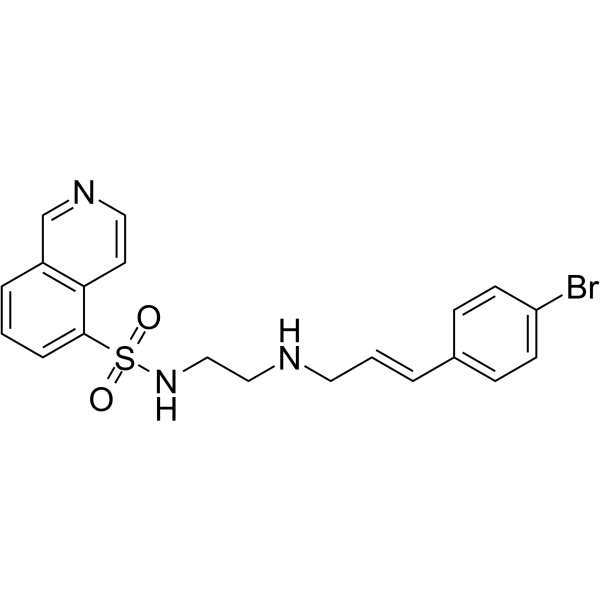
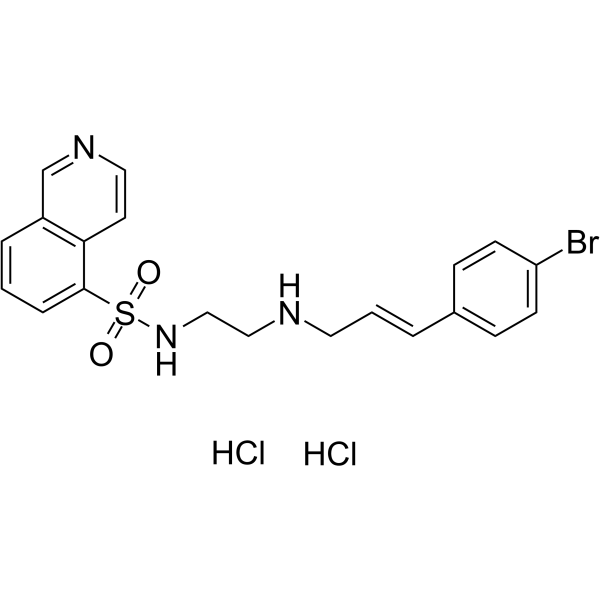
    Protein kinase inhibitor H-7 dihydrochloride is a potent PKC (protein kinase C) inhibitor. At 100 μM, Protein kinase inhibitor H-7 dihydrochloride completely inhibits both TPA (skin tumour promoter, 12-O-tetradecanoylphorbol-13-acetate) and phospholipase C-induced ODC (ornithine decarboxylase) .
    Protein kinase inhibitor H-7 dihydrochloride
  • HY-P2503

    EGFR Cancer
    EGFR Protein Tyrosine Kinase Substrate is a EGFR protein tyrosine kinase substrate.
    EGFR Protein Tyrosine Kinase Substrate
  • HY-147312

    Wee1 Cancer
    GSK-1520489A is a PKMYT1 (active protein kinase) inhibitor (IC50=115 nM, Ki=10.94 nM) .
    GSK-1520489A
  • HY-131900

    PKC Cancer
    Protein kinase inhibitor H-7 is a potent inhibitor of protein kinase C (PKC) and cyclic nucleotide dependent protein kinase, with a Ki of 6 μM for PKC .
    Protein kinase inhibitor H-7
  • HY-U00439A
    Protein kinase inhibitor 1 hydrochloride
    4 Publications Verification

    DYRK Cancer
    Protein kinase inhibitor 1 hydrochloride is a potent HIPK2 inhibitor, with IC50s of 136 and 74 nM for HIPK1 and HIPK2, and a Kd of 9.5 nM for HIPK2.
    Protein kinase inhibitor 1 hydrochloride
  • HY-P2948

    Ser/Thr Protein kinase

    Biochemical Assay Reagents Infection
    Protein serine/threonine kinase is a type of serine/threonine protein kinase. Protein serine/threonine kinases are pleiotropic signaling proteins that can phosphorylate various substrates, thereby initiating branched signaling pathways. Mycobacteria protein serine/threonine kinase plays a crucial role in signal transduction pathways, ultimately determining the growth and metabolic adaptability of mycobacteria .
    Protein serine/threonine kinase
  • HY-P5426

    Bcr-Abl Others
    Abl protein tyrosine kinase substrate is a biological active peptide. (Abltide is a peptide substrate for Abl Kinase (Abl protein tyrosine kinase), a partner in the gag-Abl fusion protein of the Abelson murine leukemia virus. Used in Western blot and kinase assay.)
    Abl protein tyrosine kinase substrate
  • HY-159846

    MEK Cancer
    Luvometinib is a mitogen-activated protein kinase (MEK) inhibitor with antitumor activity .
    Luvometinib
  • HY-P1746
    Protein Kinase C (19-31)
    1 Publications Verification

    PKC (19-31)

    PKC Inflammation/Immunology
    Protein Kinase C (19-31), a peptide inhibitor of protein kinase C (PKC), derived from the pseudo-substrate regulatory domain of PKCa (residues 19-31), is used as protein kinase C substrate peptide for testing the protein kinase C activity .
    Protein Kinase C (19-31)
  • HY-77048

    IRAK Inflammation/Immunology
    IRAK-4 protein kinase inhibitor 2 (compound 1) is a potent inhibitor of interleukin-1 (IL-1) receptor-associated kinase-4 (IRAK-4), with an IC50 of 4 μM. IRAK-4 protein kinase inhibitor 2 can be used for the research of inflammatory and immune-related conditions or disorders .
    IRAK-4 protein kinase inhibitor 2
  • HY-W844543

    Others Neurological Disease
    Protein Kinase Inhibitor 12 (compound 1-91) is a triazolopyridazine derivative and protein kinase inhibitor that can be utilized in research related to diseases associated with protein kinases .
    Protein kinase inhibitor 12
  • HY-P3935

    Ser/Thr Kinase Cancer
    Arg-Gly-Tyr-Ser-Leu-Gly is corresponding to the sequence of residues from 21 through 26 in lysozyme. Arg-Gly-Tyr-Ser-Leu-Gly can be used as a substrate for the protein kinase, and phosphorylated at serine residue by protein kinase .
    Arg-Gly-Tyr-Ser-Leu-Gly
  • HY-P3841

    PKC Others
    Protein Kinase C β Peptide is a peptide fragment of Protein Kinase Cβ. Protein Kinase Cβ is related with hyperglycemia decreases endothelium-derived nitric oxide. Inhibition of Protein kinase Cβ prevents the reduction in endothelium-dependent vasodilation induced by acute hyperglycemia .
    Protein Kinase C β Peptide
  • HY-P3838

    PKC Others
    Protein Kinase C γ Peptide is a peptide fragment of Protein Kinase Cγ. Protein Kinase Cγ is a protein causative for dominant ataxia, that can negatively regulate nuclear import of recessive-ataxia-related aprataxin .
    Protein Kinase C γ Peptide
  • HY-P1288

    PKC fragment (530-558)

    PKC Others
    Protein Kinase C (530-558), a peptide fragment of protein kinase C (PKC), is a potent PKC activator. Protein Kinase C (530-558) significantly inhibits osteoclastic bone resorption .
    Protein Kinase C (530-558)
  • HY-P3892

    PKC Inflammation/Immunology
    Protein Kinase C (19-35) Peptide is the PKC pseudosubstrate inhibitor/region. Protein Kinase C (19-35) Peptide possibly blocks the substrate-binding site in its kinase domain, makes the cytoplasmic form of PKC inactive .
    Protein Kinase C (19-35) Peptide
  • HY-E70805

    SRPK Cancer
    SRPK2 (serine-arginine protein kinase 2) is a protein kinase that is involved in cell cycle regulation and cell apoptosis. Biotin-SRPK2 Recombinant Human Active Protein Kinase is a recombinant SRPK2 protein that can be used to study SRPK2-related functions, and is biotinylated .
    Biotin-SRPK2 Recombinant Human Active Protein Kinase
  • HY-P1088

    PKC Others
    [Ser25] Protein Kinase C (19-31) is a substrate of protein kinase C (PKC) (Km: 0.3 μM). [Ser25] Protein Kinase C (19-31) is derived from the pseudo-substrate regulatory domain of PKCα (19-31) with a Serine at position 25 replacing the wild-type Alanine .
    [Ser25] Protein Kinase C (19-31)
  • HY-P2673

    KRTLRR

    EGFR Others
    Lys-Arg-Thr-Leu-Arg-Arg (KRTLRR) is a hexapeptide. Lys-Arg-Thr-Leu-Arg-Arg is a substrate of protein kinase C from EGF receptor. Lys-Arg-Thr-Leu-Arg-Arg can be used to determine the activity of protein kinase C .
    Lys-Arg-Thr-Leu-Arg-Arg
  • HY-P10316

    Calmodulin-Dependent Protein kinase I (299-320) Binding Domain

    CaMK Others
    CaMKI (299-320) refers to a peptide consisting of residues 299-320 of Calcium/calmodulin-dependent protein kinase I (CaMKI). CaMKI (299-320), as a protein kinase, has a high affinity interaction with Ca 2+-CAM (Kd≤1 nM≤1 nM), which can phosphorylate specific substrate proteins, thereby regulating their activity. CaMKI (299-320) contains the CAM-binding domain and the self-inhibition domain, and CaMKI (299-320) can be used to study cell physiological processes, including cell proliferation, differentiation, and apoptosis .
    CaMKI(299-320)
  • HY-P1401

    PKC Metabolic Disease
    Protein Kinase C (19-36) is a pseudosubstrate peptide inhibitor of protein kinase C (PKC), with an IC50 of 0.18 μM. Protein Kinase C (19-36) markedly attenuated vascular hyperproliferation and hypertrophy as well as glucose-induced suppression of natriuretic peptide receptor response .
    Protein Kinase C (19-36)
  • HY-E70863

    SRPK Cancer
    SRPK1 (serine-arginine protein kinase 1) is a protein kinase that specifically phosphorylates proteins containing serine-arginine-rich domains. SRPK1 Recombinant Human Active Protein Kinase is a recombinant SRPK1 protein that can be used to study SRPK1-related functions .
    SRPK1 Recombinant Human Active Protein Kinase
  • HY-P3930

    IP20-amide

    PKA Neurological Disease
    PKI (5-24),amide (IP20-amide) is a 20-residue peptide that corresponds to the active portion of the heat-stable inhibitor protein of cAMP-dependent protein kinase. PKI (5-24),amide is a potent cAMP-dependent protein kinase (PKA) (PKA) inhibitor with a Ki of 2.3 nM .
    PKI (5-24),amide
  • HY-P1479

    Autophagy CaMK Neurological Disease
    Calmodulin-Dependent Protein Kinase II (290-309) is a potent CaMK antagonist with an IC50 of 52 nM for inhibition of Ca2+/calmodulin-dependent protein kinase II .
    Calmodulin-Dependent Protein Kinase II (290-309)
  • HY-P1803

    PKCε; PRKCE ; Peptide Epsilon

    PKC Neurological Disease Inflammation/Immunology Endocrinology
    Protein Kinase C Peptide Substrate is targeted to a specific cellular compartment in a manner dependent on second messengers and on specific adapter proteins in response to extracellular signals that activate G-protein-coupled receptors, tyrosine kinase receptors, or tyrosine kinase-coupled receptors. Protein Kinase C Peptide Substrate then regulates various physiological functions including the activation of nervous, endocrine, exocrine, inflammatory, and immune systems .
    Protein Kinase C Peptide Substrate
  • HY-E70728

    Eukaryotic Initiation Factor (eIF) Inflammation/Immunology
    Heme-regulated inhibitory (HRI) is an eIF2α kinase, which induces a cytosolic unfolded protein response to prevent aggregation of innate immune signalosomes. HRI Recombinant Human Active Protein Kinase is a recombinant HRI protein that can be used to study HRI-related functions .
    HRI Recombinant Human Active Protein Kinase
  • HY-E70833

    Itk Cancer
    ITK is the Tec family tyrosine kinase that has been implicated in T cell receptor (TCR) signaling. ITK Recombinant Human Active Protein Kinase is a recombinant ITK protein that can be used to study ITK-related functions .
    ITK Recombinant Human Active Protein Kinase
  • HY-E70868

    TNK1 Cancer
    Thirty-eight-negative kinase-1 (TNK1) is a member of the ACK family of NRTKs, which includes only two human kinases, TNK1 and TNK2 (also called ACK1). TNK1 Recombinant Human Active Protein Kinase is a recombinant TNK1 protein that can be used to study TNK1-related functions .
    TNK1 Recombinant Human Active Protein Kinase
  • HY-E70830

    DYRK Cancer
    Homeodomain interacting protein kinase 2 (HIPK2) is an evolutionary conserved serine/threonine kinase that regulates gene expression by phosphorylation of transcription factors and accessory components of the transcription machinery. HIPK2 is activated in response to DNA-damaging agents or morphogenic signals. HIPK2 Recombinant Human Active Protein Kinase is a recombinant HIPK2 protein that can be used to study HIPK2-related functions .
    HIPK2 Recombinant Human Active Protein Kinase
  • HY-E70861

    Salt-inducible Kinase (SIK) Inflammation/Immunology
    SIK1 is a MAP4 kinase. The SIK1 MAP4K regulates cell proliferation and cell expansion. SIK1 phosphorylates BIK1 and stabilizes it in a kinase activity-dependent manner. SIK1 Recombinant Human Active Protein Kinase is a recombinant SIK1 protein that can be used to study SIK1-related functions .
    SIK1 Recombinant Human Active Protein Kinase
  • HY-E70649

    Raf Cancer
    BRAF is a member of the Raf kinase family of growth signal transduction protein kinases. BRAF has multiple mutants. BRAF V600E is commonly found in melanoma. BRAF V600E Recombinant Human Active Protein Kinase is a recombinant BRAF V600E protein that can be used to study BRAF V600E-related functions .
    BRAF V600E Recombinant Human Active Protein Kinase
  • HY-E70844

    MEK Cancer
    MAP2K2 (MEK2) is a dual specificity protein kinase that belongs to the MAP kinase kinase family. This kinase is known to play a critical role in mitogen growth factor signal transduction. MAP2K2 phosphorylates and thus activates MAPK1/ERK2 and MAPK3/ERK1. MAP2K2 Recombinant Human Active Protein Kinase is a recombinant MAP2K2 protein that can be used to study MAP2K2-related functions .
    MAP2K2 Recombinant Human Active Protein Kinase
  • HY-47026

    Checkpoint Kinase (Chk) CDK BMX Kinase Bcr-Abl Aurora Kinase Others
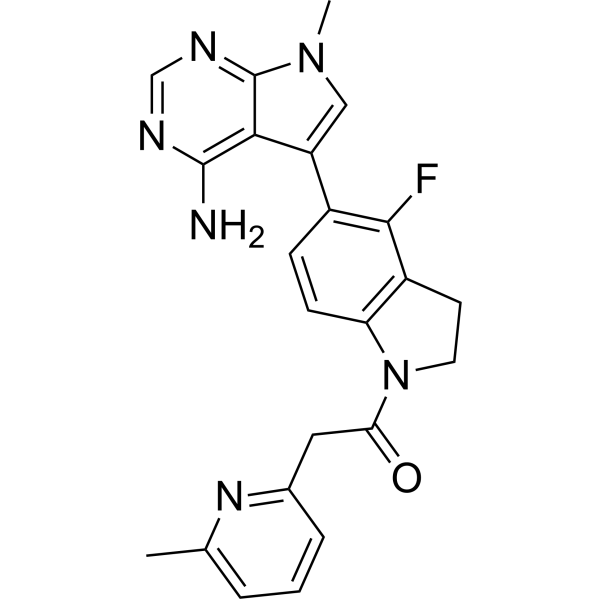
    Protein kinase inhibitor 6 is a protein kinase inhibitor.
    Protein kinase inhibitor 6
  • HY-P3944

    CaMK Neurological Disease
    Calmodulin Dependent Protein Kinase Substrate is a Ca 2+- and calmodulin (CaM)-dependent protein kinase (CaMK) substrate peptide. Calmodulin Dependent Protein Kinase Substrate is a synthetic peptide substrate for protein kinases .
    Calmodulin Dependent Protein Kinase Substrate
  • HY-P3943

    CaMK Neurological Disease
    Calmodulin Dependent Protein Kinase Substrate Analog is a Ca 2+- and calmodulin (CaM)-dependent protein kinase (CaMK) substrate peptide. Calmodulin Dependent Protein Kinase Substrate Analog is a synthetic peptide substrate for protein kinases .
    Calmodulin Dependent Protein Kinase Substrate Analog
  • HY-153743

    ROS Kinase Trk Receptor Cancer
    Protein kinase inhibitor 4 (Compound 3) is a protein kinase inhibitor that inhibits TRK-A and ROS1 (IC50=3.0 nM and 104 nM respectively) .
    Protein kinase inhibitor 4
  • HY-100983R

    Reference Standards PKC Cancer
    Protein kinase inhibitor H-7 (dihydrochloride) (Standard) is the analytical standard of Protein kinase inhibitor H-7 (dihydrochloride). This product is intended for research and analytical applications. Protein kinase inhibitor H-7 dihydrochloride is a potent PKC (protein kinase C) inhibitor. At 100 μM, Protein kinase inhibitor H-7 dihydrochloride completely inhibits both TPA (skin tumour promoter, 12-O-tetradecanoylphorbol-13-acetate) and phospholipase C-induced ODC (ornithine decarboxylase) .
    Protein kinase inhibitor H-7 dihydrochloride (Standard)
  • HY-100984A

    PKA PKC Myosin ROCK Cancer
    HA-100 hydrochloride is a potent protein kinase inhibitor, with IC50s of 4 μM, 8 μM, 12 μM and 240 μM for cGMP-dependent protein kinase (PKG), cAMP-dependent protein kinase (PKA), protein kinase C (PKC) and MLC-kinase, respectively. HA-100 hydrochloride also used as a ROCK inhibitor .
    HA-100 hydrochloride
  • HY-148066

    Biochemical Assay Reagents Others
    DB0662 is a compound for kinase-targeted protein degradation and can be used in studies of diseases mediated by abnormal kinase activity, as well as for the identification of degradable kinases and optimal kinases .
    DB0662
  • HY-P3764

    PKC Others
    Protein kinase C substrate is a substrate of Protein kinase C, can be used to detect protein. Protein kinase C is a key regulatory element in signal transduction and exerts its effects by catalysing specific substrate phosphorylation .
    Protein kinase C substrate
  • HY-155619

    PKC PKA Cancer
    Protein kinase inhibitor 7 is an inhibitor for protein kinase A and protein kinase C. Protein kinase inhibitor 7 affects autocrine motility factor (AMF) signaling pathway, without affecting the cell motility .
    Protein kinase inhibitor 7
  • HY-131900R

    PKC Cancer
    Protein kinase inhibitor H-7 (Standard) is the analytical standard of Protein kinase inhibitor H-7. This product is intended for research and analytical applications. Protein kinase inhibitor H-7 is a potent inhibitor of protein kinase C (PKC) and cyclic nucleotide dependent protein kinase, with a Ki of 6 μM for PKC .
    Protein kinase inhibitor H-7 (Standard)
  • HY-47597

    Bacterial Infection
    Protein kinase G inhibitor-2 (Compound 266) is a mycobacterial protein kinase G inhibitor, with an IC50 of 3 μM. Protein kinase G inhibitor-2 can be used for mycobacterial infection research .
    Protein kinase G inhibitor-2
  • HY-169587

    Ser/Thr Kinase Bacterial Infection
    Protein kinase G inhibitor-3 (Compound 177) is an inhibitor of mycobacterial serine/threonine protein kinases. Protein kinase G inhibitor-3 can be used in the research of diseases related to mycobacterial infections .
    Protein kinase G inhibitor-3
  • HY-48958

    Bacterial Infection
    Protein kinase G inhibitor-1 (Compound 270) is a mycobacterial protein kinase G inhibitor, with an IC50 of 0.9 μM. Protein kinase G inhibitor-1 can be used for mycobacterial infection research .
    Protein kinase G inhibitor-1
  • HY-136219

    Fluorescent Dye Others
    Protein kinase affinity probe 1 is a novel protein kinase affinity probe for the functional identification of protein kinases (PKs). Protein kinase affinity probe 1 is a modified Purvalanol B (HY-18299) probe with 50% beads loading (Compound S3) .
    Protein kinase affinity probe 1
  • HY-P1874

    Calmodulin Neurological Disease
    Calmodulin-Dependent Protein Kinase II (281-309) is a peptide of calcium/calmodulin-dependent protein kinase II (CaM-kinase II) .
    Calmodulin-Dependent Protein Kinase II (281-309)
  • HY-E70729

    Ser/Thr Kinase Metabolic Disease
    The intestinal cell kinase (ICK) protein belongs to the ros-cross hybridizing kinase (RCK) family. ICK is a ciliary protein, involved in ciliogenesis and regulation of intraflagellar transport (IFT). ICK Recombinant Human Active Protein Kinase is a recombinant ICK protein that can be used to study ICK-related functions .
    ICK Recombinant Human Active Protein Kinase

Inquiry Online

Your information is safe with us. * Required Fields.

Salutation


Country or Region *

Applicant Name *


Organization Name *

Department *


Email Address *


Product Name *

Cat. No.


Requested quantity *

Phone Number *


Remarks

Inquiry Online

Inquiry Information

Product Name:
Cat. No.:
Quantity:
MCE Japan Authorized Agent:

