1. Search Result
Search Result
Results for "

SF-268

" in MedChemExpress (MCE) Product Catalog:

15

Inhibitors & Agonists

10

Natural
Products

Targets Recommended:
Cat. No. Product Name Target Research Areas Chemical Structure
  • HY-N3000

    JNK IRE1 Akt mTOR YAP Reactive Oxygen Species (ROS) Autophagy Apoptosis Ferroptosis Fungal Infection Inflammation/Immunology Cancer
    6-Methoxydihydrosanguinarine is an alkaloid with activity across multiple cancer cell types. 6-Methoxydihydrosanguinarine activates IRE1/JNK signaling, blocks Akt/mTOR and PI3K/AKT/mTOR pathways, reduces expression of Cdc25C, CyclinB1, Cdc2, YAP/TAZ, Survivin, GPX4, and EGFR, upregulates IRE1 and DR5, and activates JNK and caspases. 6-Methoxydihydrosanguinarine induces apoptosis, G2/M phase arrest, DNA damage, ROS generation, lipid peroxidation, ferroptosis, autophagy, and suppresses cancer cell growth. 6-Methoxydihydrosanguinarine disruptes the biofilm formation of Candida albicans (C. albicans). 6-Methoxydihydrosanguinarine can be used for the research of non-small cell lung cancer, hepatocellular carcinoma, melanoma, colon carcinoma, ovarian cancer and breast cancer .
    6-Methoxydihydrosanguinarine
  • HY-169021

    JNK Cancer
    JNK-1-IN-3 (Compound 9e) is an inhibitor of JNK1 that downregulates JNK1 gene expression and inhibits the protein levels of its phosphorylated form, concurrently reducing the expression of its downstream targets, c-Jun and c-Fos, in tumors while restoring p53 activity. JNK-1-IN-3 exhibits broad-spectrum antiproliferative activity, particularly with high inhibitory activity against renal and breast cancer cell lines, demonstrating both in vivo and in vitro anticancer activity .
    JNK-1-IN-3
  • HY-13906

    (+)-Largazole

    HDAC Neurological Disease Cancer
    Largazole ((+)-Largazole) is a potent, selective, orally active and brain-penetrant class I HDAC inhibitor found in marine cyanobacteria. Largazole shows an IC50 of 0.07 nM for HDAC2. Largazole releases its active form Largazole thiol (HY-170890) after hydrolysis. Largazole has a strong inhibitory effect on SF-268, SF-295 and SH-SY5Y cells, with IC50 values of 62, 68 and 102 nM respectively Largazole can upregulate the tumor suppressor gene Pax6 to inhibit the proliferation, invasion and colony formation of glioblastoma cells. Largazole can significantly upregulated brain-derived neurotrophic factor BDNF, neuronal transcription factor Pax6, and μ-opioid receptor gene Oprm1. Largazole exerts antitumor and neuroprotective effects. Largazole can be used for researches of Glioblastoma and Alzheimer’s disease .
    Largazole
  • HY-W560574

    Xanthine Oxidase Cancer
    Xanthine oxidase-IN-14 (Compound 3f) is an inhibitor for xanthine oxidase, with IC50 >100 μM. Xanthine oxidase-IN-14 inhibits proliferations of cancer cells MCF-7, NCI-H460 and SF-268, with IC50 greater than 150 μM .
    Xanthine oxidase-IN-14
  • HY-126618

    Tyrosinase Cancer
    Aspochalasin I exhibits cytotoxicity against cancer cells NCIH460, MCF-7 and SF-268, with IC50s of 22.1, 33.4 and 19.9 μM. Aspochalasin I inhibits melanogenesis (IC50 of 22.4 μM) through inhibition of tyrosinase, and can thus be used as whitening agent .
    Aspochalasin I
  • HY-N14255

    Antibiotic Bacterial Infection Cancer
    Memnobotrin A is an antibiotic found in Memnoniella echinata (JS6308). Memnobotrin A has inhibitory effect on NCI-460, MCF7 and SF-268 cell lines .
    Memnobotrin A
  • HY-N14280

    Antibiotic Bacterial Infection Cancer
    Memnobotrin B is an antibiotic found in Memnoniella echinata (JS6308). Memnobotrin B has inhibitory effect on NCI-460, MCF7 and SF-268 cell lines .
    Memnobotrin B
  • HY-N3443

    Others Cancer
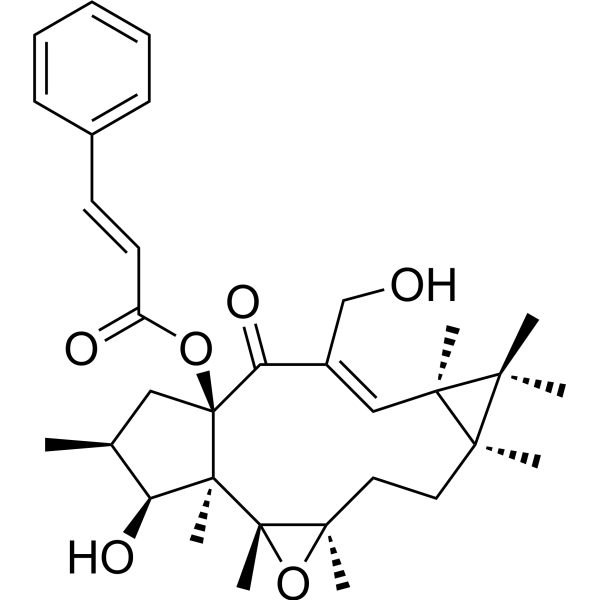
    Jolkinol A is a natural product that can be found in Euphorbia pubescens. Jolkinol A inhibits cell growth with GI50s of 95.3, 57.3, >100 µM for MCF-7, NCI-460, SF-268 cells, respectively .
    Jolkinol A
  • HY-124456

    Bacterial Infection
    Unguinol is a depsidone originally isolated from A. unguis. It is an inhibitor of pyruvate phosphate dikinase (PPDK; IC50=42.3 μM). It inhibits the growth of plants utilizing C4, but not C3, carbon fixation. Unguinol also inhibits the growth of the bacteria S. aureus and V. harveyi (GI50s=8.7 and 69.5 μM, respectively) and H460, MCF-7, and SF-268 cancer cells (GI50s=28.2, 50.8, and 44.3 μM, respectively).
    Unguinol
  • HY-139090

    28-O-Acetyl-3-Oxobetulin; 3-oxo-28-O-Acetylbetulin

    Bacterial HIV Drug Derivative Cancer
    3-Oxobetulin acetate (28-O-Acetyl-3-Oxobetulin; 3-oxo-28-O-Acetylbetulin) is a derivative of betulin (HY-N0083), a cholesterol biosynthesis inhibitor. 3-Oxobetulin acetate inhibits the growth of P388 murine lymphocytic leukemia cells (EC50=0.12 μg/mL) and human MCF-7 breast cancer, SF-268 CNS cancer, H460 lung cancer, and KM20L2 colon cancer cells (GI50s=8, 10.6, 5.2, and 12.7 μg/mL), but not BxPC-3 pancreatic cancer cells or DU145 prostate cancer cells (GI50s=>10 μg/mL for both). 3-Oxobetulin acetate inhibits the replication of X4-tropic recombinant HIV (NL4.3-Ren) in MT-2 lymphoblastoid cells (IC50=13.4 μM). 3-Oxobetulin acetate is also effective against Listeria donovani amastigotes.
    3-Oxobetulin acetate
  • HY-N10949

    Others Cancer
    Viscosalactone B is a withanolide found in Withania somnifera. Viscosalactone B shows potent inhibitory activities to NCI-H460, HCT-116, MCF-7 and SF-268 cancer cells with IC50 values of 0.32, 0.47, 0.4 and 0.45 μg/mL. Viscosalactone B can be used for the research of cancer .
    Viscosalactone B
  • HY-N3950

    Microtubule/Tubulin Cancer
    Glochidiol is an orally active tubulin polymerization inhibitor with an IC50 of 2.76 μM. Glochidiol shows anti-cancer activity .
    Glochidiol
  • HY-125727

    Fungal Infection Cancer
    Globosuxanthone A is a dihydroxanthenone with obvious antifungal activity towards Fusarium graminearum, Fusarium solani, and Botrytis cinerea with MIC values of 4, 8, and 16 μg/mL, respectively. Anticancer activity .
    Globosuxanthone A
  • HY-N17458

    Akt p38 MAPK Cancer
    N-Acetyldehydroanonaine is an alkaloid that acts as a ligand for AKT1 and MAPK1. N-Acetyldehydroanonaine can be isolated from plants of the Zanthoxylum genus. N-Acetyldehydroanonaine is applicable to the research of diseases such as gastric cancer .
    N-Acetyldehydroanonaine
  • HY-180416

    Antibiotic Cancer
    TMC-169 is a potent antibiotic of the Aspochalasin group that can be isolated from Aspergillus flavipes. TMC-169 exhibits anti-tumor activity against multiple cancer cells. TMC-169 can be used for the research of cancer, such as hematologic malignancies, non-small cell lung cancer, breast cancer, and glioma .
    TMC-169

Inquiry Online

Your information is safe with us. * Required Fields.

Salutation


Country or Region *

Applicant Name *


Organization Name *

Department *


Email Address *


Product Name *

Cat. No.


Requested quantity *

Phone Number *


Remarks

Inquiry Online

Inquiry Information

Product Name:
Cat. No.:
Quantity:
MCE Japan Authorized Agent:

