35 Results for "

Schiff base

" in MedChemExpress (MCE) Product Catalog:
Products (35)

35 Results for "Schiff base" in MCE Product Catalog:

2
2 Cited Publications
Cat. No.: HY-W013205
CAS No.: 645-15-8
Synonyms: BNPP
Research Areas:  

Others

Bis(4-nitrophenyl) phosphate (BNPP) is an esterase inhibitor, inhibits the activity of esterases such as carboxylesterase. Bis(4-nitrophenyl) phosphate inhibits the degradation of Abiraterone in fresh plasma. Bis(4-nitrophenyl) phosphate can be used as a substrate to determine the enzymatic activity of phosphodiesterase in the roots of wetland plants. Bis(4-nitrophenyl) phosphate also acts as a catalyst for metallomicelles and a catalyst that promotes ring-opening polymerization (ROP) .
loading...
    loading...
2
2 Cited Publications
Cat. No.: HY-W013205B
CAS No.: 4043-96-3
Synonyms: BNPP sodium
Bis(4-nitrophenyl) phosphate sodium (BNPP sodium) is an esterase inhibitor, inhibits the activity of esterases such as carboxylesterase. Bis(4-nitrophenyl) phosphate sodium inhibits the degradation of Abiraterone in fresh plasma. Bis(4-nitrophenyl) phosphate sodium can be used as a substrate to determine the enzymatic activity of phosphodiesterase in the roots of wetland plants. Bis(4-nitrophenyl) phosphate sodium also acts as a catalyst for metallomicelles and a catalyst that promotes ring-opening polymerization (ROP) .
loading...
    loading...
1
1 Cited Publications
Cat. No.: HY-W016729
CAS No.: 6203-18-5
4-(Dimethylamino) cinnamaldehyde is a staining agent that reacts with flavan-3-ols and Proanthocyanidins (HY-N0794) bearing meta-dihydroxyl or trihydroxyl phenol structures to form a green chromophore. In acidic media, 4-(Dimethylamino) cinnamaldehyde undergoes a condensation reaction with aromatic primary amines to produce colored and stable quinoid protonated Schiff base salts. 4-(Dimethylamino) cinnamaldehyde can be used to determine indole products of apotryptophanase and tryptophanase, as well as for the detection and analysis of Proanthocyanidins, with the absorbance detection wavelength of the calibration curve set at 640 nm .
loading...
    loading...
1
1 Cited Publications
Cat. No.: HY-K0604

MCE Periodic Acid-Schiff (PAS) Staining Kit is developed based on the classical Periodic Acid–Schiff (PAS) reaction principle and is suitable for the detection of glycogen and polysaccharide-containing substances in paraffin-embedded or frozen tissue sections.

loading...
    loading...
Cat. No.: HY-W008818
CAS No.: 99-92-3
Synonyms: p-Aminoacetophenone
4'-Aminoacetophenone (p-Aminoacetophenone) is an intermediate that can be used for the synthesis of other active compounds, such as antitumor agents .
loading...
    loading...
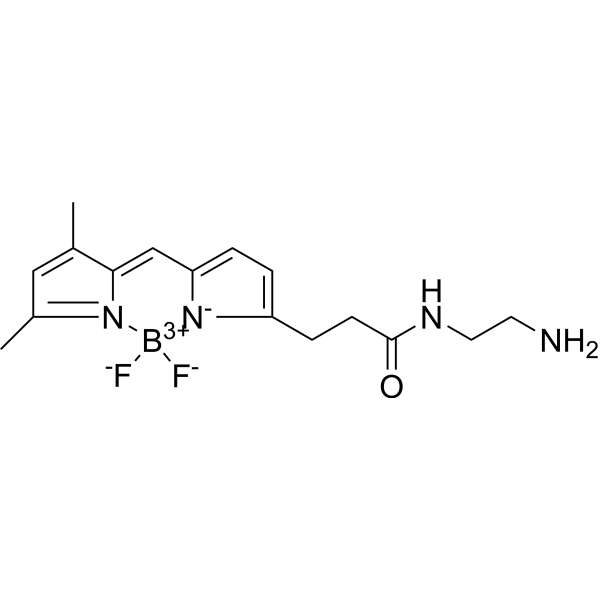
Cat. No.: HY-D1604
CAS No.: 1229571-00-9
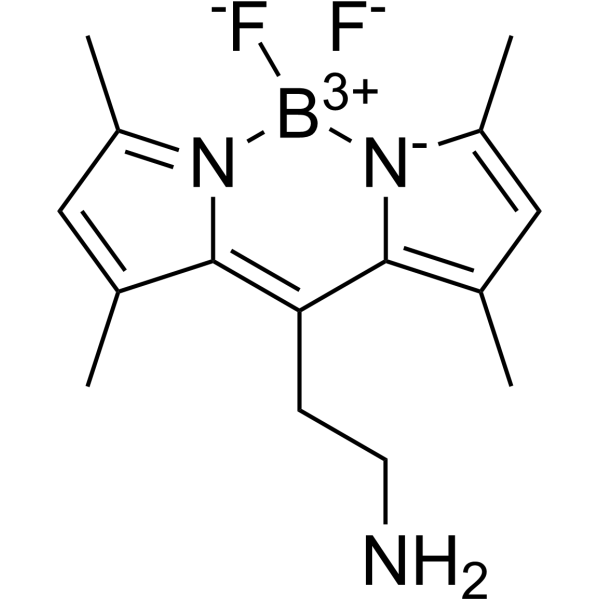
BODIPY FL Ethylamine is a fluorescent dye that reversibly reacts with aldehyde/ketone to yield a Schiff base. BODIPY FL Ethylamine can be reduced to form a stable amine derviative using sodium borohydride or sodium cyanoborohydride .
loading...
    loading...
Cat. No.: HY-114351
CAS No.: 178388-71-1
Purity:  97.40%
BODIPY FL Hydrazide is a green-fluorescent dye, BODIPY FL Hydrazide is reactive with aldehyde/ketone on polysaccharides and glycoproteins, yielding a reversible Schiff base product that can be transformed to a stable linkage using a reducing agent like sodium borohydride or sodium cyanoborohydride. (λex=495 nm, λem=516 nm) .
loading...
    loading...
Cat. No.: HY-W002040
CAS No.: 616-30-8
Synonyms: 1-Aminoglycerol, 97%
(±)-3-Amino-1,2-propanediol, 97% (1-Aminoglycerol, 97%) is a chiral raw material that can be used for the synthesis of chiral vanadium (V) Schiff base complexes .
loading...
    loading...
Cat. No.: HY-W007539
CAS No.: 95-01-2
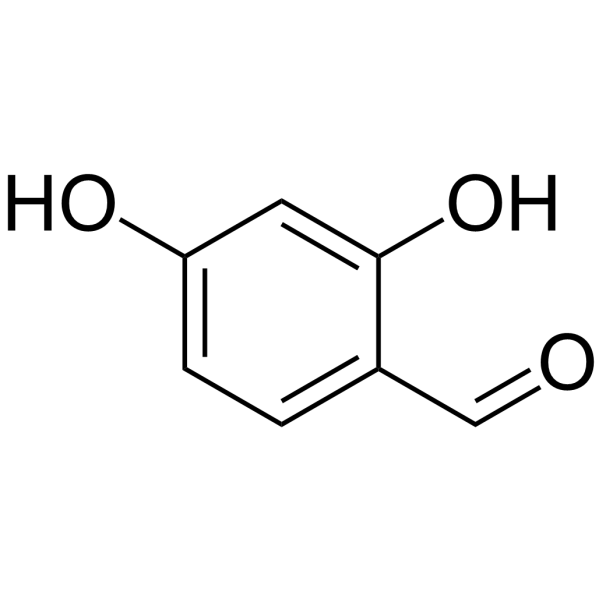
2,4-Dihydroxybenzaldehyde is an endogenous metabolite. 2,4-Dihydroxybenzaldehyde is a pharmaceutical intermediate that can be used to synthesize various Schiff base compounds. 2,4-Dihydroxybenzaldehyde exhibits significant anti angiogenic, anti-inflammatory, and analgesic activities. 2,4-Dihydroxybenzaldehyde reduces the production of NO and ROS by inhibiting the expression of iNOS and COX-2. 2,4-Dihydroxybenzaldehyde is commonly used in the study of inflammatory conditions .
loading...
    loading...
Cat. No.: HY-125372
CAS No.: 16348-49-5
Purity:  99.85%
Synonyms: ABAO
Research Areas:  

Others

2-Amino benzamidoxime (ABAO) acts as a bioconjugation reagent precursor and a fluorescent probe precursor. 2-Amino benzamidoxime contains an aniline group for imine activation of aldehydes, as well as a nucleophilic group (Nu:) located at the ortho position of the amine, which is responsible for intramolecular cyclization. 2-Amino benzamidoxime reacts with glyoxal at the N-terminus of phage-displayed peptide libraries. Derivatives of 2-Amino benzamidoxime can be used for protein bioconjugation. Derivatives of 2-Amino benzamidoxime serve as fluorescent probes .\n


loading...
    loading...
Cat. No.: HY-Y0075
CAS No.: 66-99-9
2-Naphthaldehyde belongs to naphthalene-based bis-aromatic aldehyde compounds. 2-Naphthaldehyde scavenges DPPH and ABTS + free radicals, and exerts reductive effects by donating hydrogen atoms to interrupt free radical chain reactions. 2-Naphthaldehyde inhibits the growth and proliferation of colon cancer cells. 2-Naphthaldehyde serves as a substrate for NAD +-dependent salicylaldehyde dehydrogenase from Pseudomonas strain C6 and is catalytically oxidized. 2-Naphthaldehyde acts as a precursor material for the chemical synthesis of antioxidant Schiff bases .
loading...
    loading...
Cat. No.: HY-W008168
CAS No.: 5470-96-2
Synonyms: 2-Quinolinecarboxaldehyde
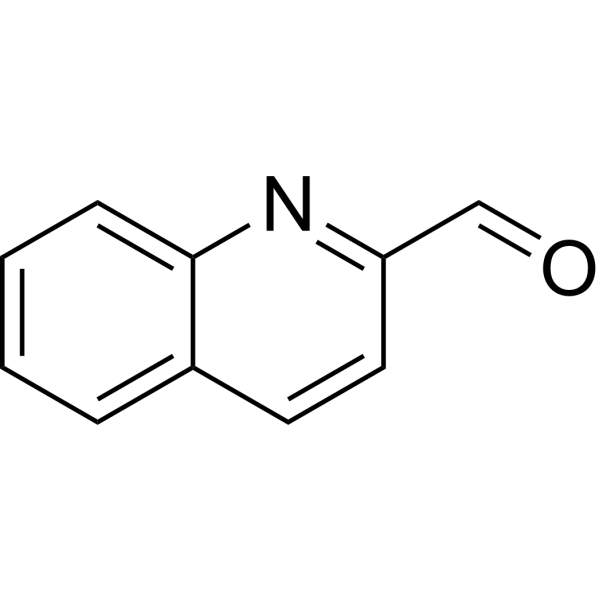
Quinoline-2-carboxaldehyde (2-Quinolinecarboxaldehyde) is a quinoline derivative that serves as a synthetic precursor for Schiff base copper complexes. Quinoline-2-carboxaldehyde is applicable to research related to the synthetic design of biomaterials or organic compounds, such as fluorescent sensors .
loading...
    loading...
Cat. No.: HY-Y0425
CAS No.: 623-27-8
Terephthalaldehyde is a crosslinking agent. Terephthalaldehyde forms a crosslinked structure inside the gelatin matrix by forming Schiff base imines with the amino groups of gelatin, thereby constructing a three-dimensional network. Terephthalaldehyde improves the hydrophobicity of the gelatin matrix, delays water vapor penetration and enhances the liquid water resistance of gelatin films. Terephthalaldehyde can be used as a crosslinking agent to prepare crosslinked chitosan hydrogel (CAAT) via ultrasound-induced synthesis. Terephthalaldehyde helps CAAT hydrogels selectively adsorb anionic dyes from aqueous media, including multi-component systems containing cationic dyes. Terephthalaldehyde serves as a starting material for the synthesis of bis-heterocyclic compounds (including bis-thiazole and bis-triazolopyrimidine compounds) .
loading...
    loading...
Cat. No.: HY-W067445
CAS No.: 122-85-0
Synonyms: 4-Acetamidobenzaldehyde
N-(4-Formylphenyl) acetamide (4-Acetamidobenzaldehyde) is an organic ligand bearing aldehyde and acetamide functional groups. N-(4-Formylphenyl) acetamide can be used to functionalize Fe3O4@SiO2 nanoparticles for selective fluorescence quenching detection of Hg 2+. N-(4-Formylphenyl) acetamide serves as a precursor for the synthesis of benzimidazole, benzothiazole and Schiff base derivatives, which exhibit antioxidant, AChE/BChE inhibitory and DNA-binding activities. N-(4-Formylphenyl) acetamide can be applied in studies related to Alzheimer's disease .
loading...
    loading...
Cat. No.: HY-W686763
CAS No.: 2161-87-7
Synonyms: 2,4,6-Triacetylphloroglucinol
Target:  

Drug Intermediate

Research Areas:  

Infection

Triacetylphloroglucinol (2,4,6-Triacetylphloroglucinol) is a C3-symmetric three-dimensional bridged ligand. It has been used in the synthesis of various compounds including trinuclear vanadium Schiff base complexes, copper complexes and anthelmintics.
loading...
    loading...
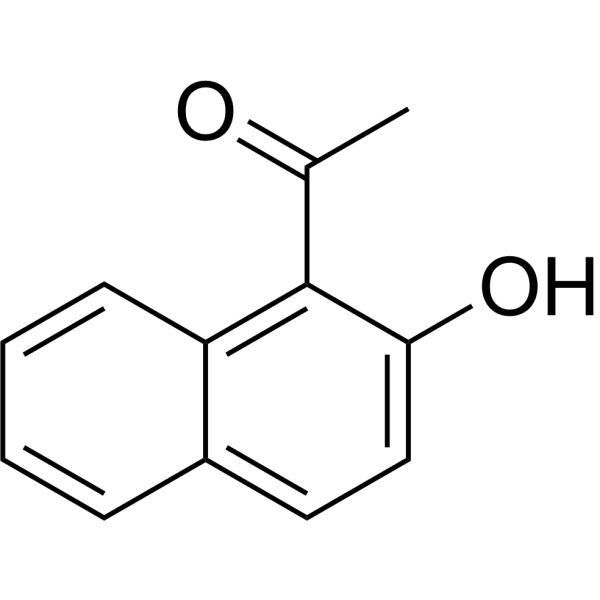
Cat. No.: HY-W048312
CAS No.: 574-19-6
Target:  

Drug Intermediate

Research Areas:  

Others

2'-Hydroxy-1'-acetonaphthone is a Schiff base used as pharmaceutical intermediates .
loading...
    loading...
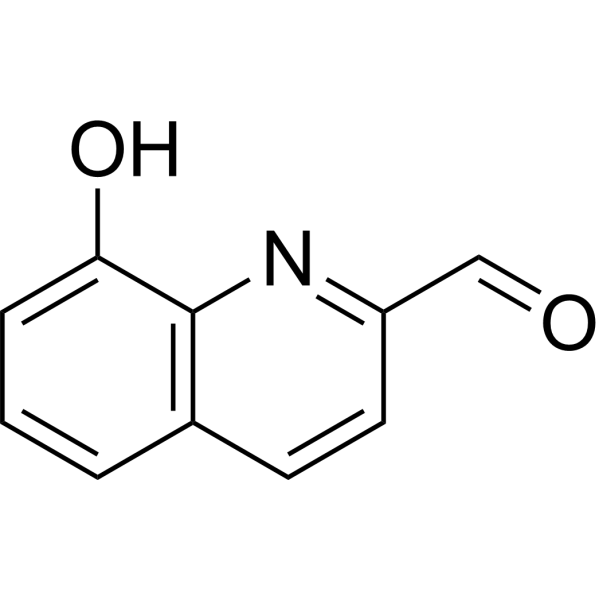
Cat. No.: HY-W016840
CAS No.: 14510-06-6
8-Hydroxyquinoline-2-carbaldehyde is a quinoline derivative with the functions of DNA intercalation, hydroxyl radical scavenging and superoxide radical scavenging. 8-Hydroxyquinoline-2-carbaldehyde serves as a precursor for synthesizing Schiff base ligands with DNA intercalation activity and antioxidant properties. 8-Hydroxyquinoline-2-carbaldehyde can be used in relevant research across multiple fields including materials science and biomedicine .
loading...
    loading...
Cat. No.: HY-D2772
CAS No.: 383912-87-6
5-TAMRA cadaverine can used to modify carboxylic acid group in the presence of activators (e.g. EDC, or DCC) or activated esters (e.g. NHS esters) through a stable amide bond. It also can be reversibly coupled to aldehydes and ketones to form a Schiff base – which can be reduced to a generate stable amine derivative by sodium borohydride (NaBH4) or sodium cyanoborohydride (NaCNH3). Although the mixed isomers of 5(6)-TAMRA cadaverine is a preferred, routinely used orange-fluorescent dye for staining proteins, it is rearly used for labeling peptides and nucleotides. Purification of 5(6)-TAMRA labeled peptide and nucleotides might be troublesome due to significant signal broadening in HPLC purification. Peptides and nucleotides labeled with a single isomer TAMRA usually give better resolution in HPLC purification that is often required in the conjugation processes.
loading...
    loading...
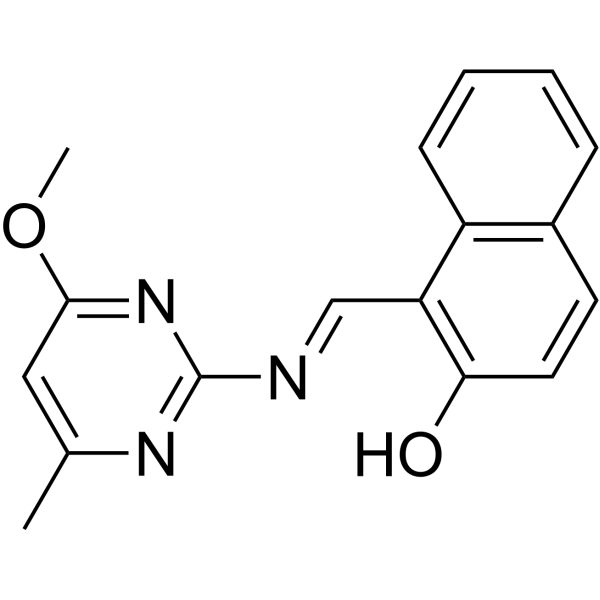
Cat. No.: HY-161071
CAS No.: 1449470-38-5
Target:  

Fungal

Research Areas:  

Infection Cancer

Antioxidant/anticancer agent 1 (compound 5) is a pyrimidine-derivatized Schiff base based on pyrimidine hydroxy-1-naphthaldehyde and has antibacterial, antioxidant, antifungal, and anticancer properties. Antioxidant/anticancer agent 1 .
loading...
    loading...
Cat. No.: HY-147957
Target:  

Bacterial

Research Areas:  

Infection

Antibacterial agent 112 (compound 2) is a potent antibacterial agent. Antibacterial agent 112 shows antibacterial activity against P.aeruginosa, S.mutans, B.subtilis, E.coli, E.faecalis, S.typhimuriumand, and S.aureus microorganisms, with MIC values of 625, 625, 1250, 1250, 1250, 1250 and 1250 μM, respectively .
loading...
    loading...

