
From 11:00 pm to 12:00 pm EST ( 8:00 pm to 9:00 pm PST ) on January 6th, the website will be under maintenance. We are sorry for the inconvenience. Please arrange your schedule properly.
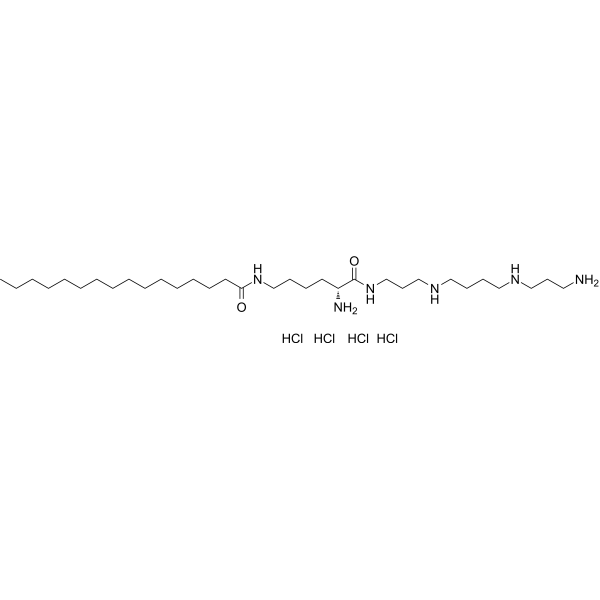
AMXT-1501 tetrahydrochloride is a Bacterial agent and polyamine transport system inhibitor. AMXT-1501 tetrahydrochloride targets membrane phospholipids and exhibits antibacterial activity against a variety of Gram-positive and Gram-negative multidrug-resistant bacteria . AMXT-1501 tetrahydrochloride inhibits capsular biosynthesis in Streptococcuspneumoniae. AMXT-1501 tetrahydrochloride targets ornithine decarboxylase and polyamines to inhibit the proliferation of neuroblastoma cells . AMXT-1501 tetrahydrochloride in combination with DFMO (HY-B0744) induces Apoptosis in neuroblastoma cells. AMXT-1501 tetrahydrochloride is applicable to research related to multidrug-resistant bacterial infections, pneumococcal infections, Streptococcuspneumoniae infections, and neuroblastoma .
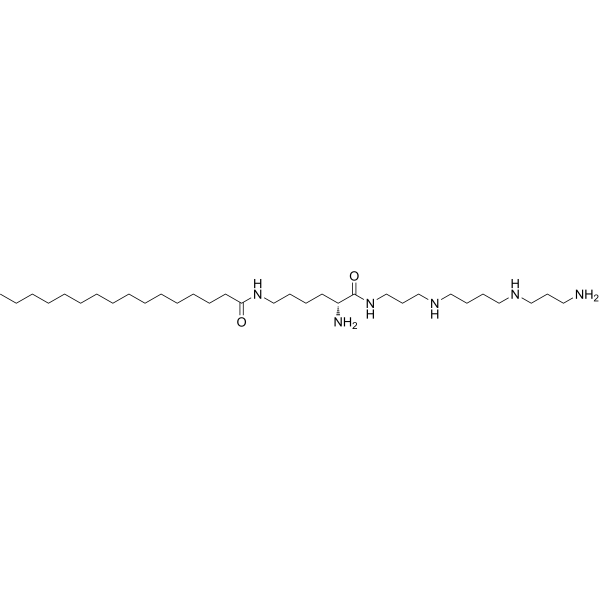
AMXT-1501 is a Bacterial agent and polyamine transport system inhibitor. AMXT-1501 targets membrane phospholipids and exhibits antibacterial activity against a variety of Gram-positive and Gram-negative multidrug-resistant bacteria . AMXT-1501 inhibits capsular biosynthesis in Streptococcuspneumoniae. AMXT-1501 targets ornithine decarboxylase and polyamines to inhibit the proliferation of neuroblastoma cells . AMXT-1501 in combination with DFMO (HY-B0744) induces Apoptosis in neuroblastoma cells. AMXT-1501 is applicable to research related to multidrug-resistant bacterial infections, pneumococcal infections, Streptococcuspneumoniae infections, and neuroblastoma .
Streptokinase, β-hemolytic streptococcus (Lancefield Group C) is a bacteria-derived protein and a plasminogen activator. Streptokinase is widely used for the research of the blood-clotting disorders. Streptokinase improves reperfusion blood flow after coronary artery occlusion .
Lipopolysaccharides, from Klebsiella pneumoniae (LPS, from bacterial (Klebsiella pneumoniae)) are lipopolysaccharide endotoxins and TLR4 activators derived from Klebsiella pneumoniae, and are classified as S-type LPS. Lipopolysaccharides, from Klebsiella pneumoniae exhibit a typical three-part structure: O-antigen, core oligosaccharide, and lipid A. Lipopolysaccharides, from Klebsiella pneumoniae may participate in bacterial immune evasion by inhibiting complement-mediated killing and suppressing the host's secretion of antimicrobial peptides, thereby allowing the bacteria to escape immune defenses. Lipopolysaccharides, from Klebsiella pneumoniae possess high viscosity and resistance to serum-mediated killing, which may lead to sepsis. Lipopolysaccharides, from Klebsiella pneumoniae can be used to construct Acute Lung Injury Model .
It is recommended to prepare a solution with concentration ≥2 mg/mL. Vortex thoroughly for more than 10 minutes. Due to the adsorption characteristics of LPS, silanized container or low adsorption centrifuge tubes should be used for aliquoting and storage, and mix thoroughly before use.
D-Cysteine, the D-isomer of cysteine, is an orally active antibacterial agent and a regulator of neural progenitor cell proliferation. D-Cysteine can inhibit Escherichia coli, Streptococcus mutans, and Streptococcus sanguinis. The no-observed-adverse-effect level of D-Cysteine in rats should be less than 500 mg/kg/day .
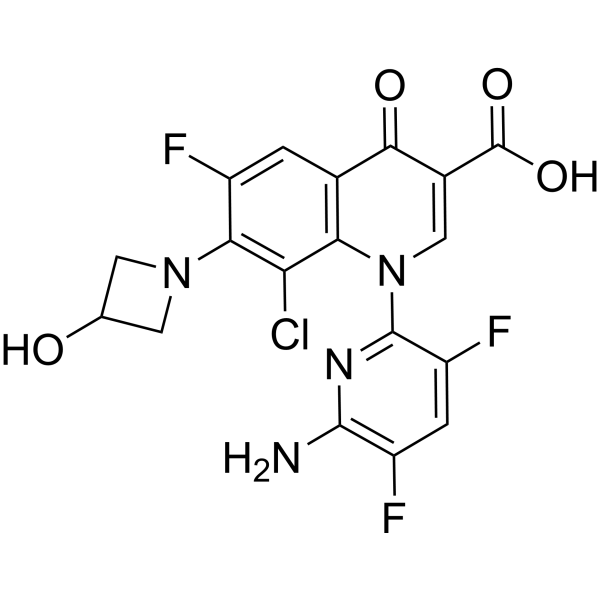
Delafloxacin (RX-3341; WQ-3034; ABT492) is a broad-spectrum fluoroquinolone antibiotic. Delafloxacin has a broad spectrum of activity that includes drug-resistant Staphylococcus aureus, Streptococcuspneumoniae, and Klebsiella pneumonia .
β-N-Acetylhexosaminidase, Streptococcuspneumoniae is a cell surface virulence factor of Streptococcuspneumoniae, which contains two synergistically acting GH20 domains (with higher activity in GH20-2). β-N-Acetylhexosaminidase, Streptococcuspneumoniae specifically recognizes and hydrolyzes substrates with β(1,2) glycosidic bonds via Trp-443 and Tyr-482 residues. β-N-Acetylhexosaminidase, Streptococcuspneumoniae catalyzes the hydrolysis of β(1,2)-linked N-acetylglucosamine groups and related disaccharides, and promotes persistent colonization of bacteria in the airway by modifying host defense molecules and releasing monosaccharides for bacterial growth. β-N-Acetylhexosaminidase, Streptococcuspneumoniae can be used in studies related to Streptococcuspneumoniae infection, acute pneumonia, otitis media and meningitis .
Endo-β-N-acetylglucosaminidase (Endo S) is a family 18 glycosyl hydrolase secreted by Streptococcus pyogenes. Endo-β-N-acetylglucosaminidase (Endo S) exclusively hydrolyzes the β-1,4-di-N-acetylchitobiose core of the asparagine-linked complex-type glycan on Asn-297 of the γ-chains of IgG antibody .
2-Amino-2-deoxyglucose hydrochloride (D-Glucosamine Hydrochloride) is a glucose analog that is specifically recognized and transported by the cell membrane GLUT1. 2-Amino-2-deoxyglucose hydrochloride acts as a tumor-targeting ligand and a guiding molecule for the synthesis of prodrug conjugates, thus delivering drugs precisely to tumor cells. 2-Amino-2-deoxyglucose hydrochloride is applicable to diagnostic imaging and therapeutic efficacy monitoring of solid tumors and various cancers (e.g., breast cancer, glioblastoma). 2-Amino-2-deoxyglucose hydrochloride also helps bacteria resist lysozyme digestion by integrating into the non-N-acetylated residues of Streptococcuspneumoniae peptidoglycan. 2-Amino-2-deoxyglucose hydrochloride is used in studies on tumor metabolism and the exploration of bacterial drug resistance mechanisms .
Avarofloxacin (JNJ-Q2) is a broad-spectrum fluoroquinolone antibacterial agent being developed for the treatment of acute bacterial skin and skin-structure infections and community-acquired pneumonia with oral activity. Avarofloxacin (JNJ-Q2) is an aminoethylidenylpiperidine fluoroquinolone that demonstrates antibacterial effect against numerous Gram-positive bacteria with a mean 0.12 mg/L MIC90 value. Avarofloxacin (JNJ-Q2) has potential for treatment of methicillin-resistant Staphylococcus aureus (MRSA) infections .
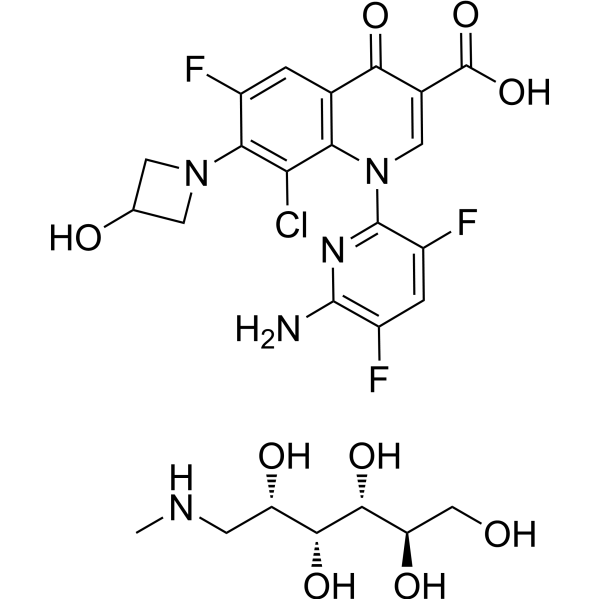
Delafloxacin meglumine (ABT492 meglumine; RX-3341 meglumine; WQ-3034 meglumine) is a broad-spectrum fluoroquinolone antibiotic. Delafloxacin has a broad spectrum of activity that includes drug-resistant Staphylococcus aureus, Streptococcuspneumoniae, and Klebsiella pneumonia .
Carumonam (AMA-1080; Ro 17-2301) is a sulfonated monocyclic β-Lactam Antibiotic, targeting to penicillin-binding protein (PBP). Carumonam exerts highly activity against Enterobacteriaceae, Pseudomonas aeruginosa, and Haemophilus influenzae, while it weakly and even inactively inhibits Streptococcuspneumoniae and Staphylococcus aureus. Carumonam is resistant to beta-lactamase-mediated hydrolysis .
Nemonoxacin (TG-873870) malate is a nonfluorinated quinolone antibiotic. Nemonoxacin malate has broad-spectrum activity against Gram-positive, Gram-negative and atypical pathogens. Nemonoxacin malate can inhibit drug-resistant Streptococcuspneumoniae and Methicillin-resistant Staphylococcus aureus. Nemonoxacin malate can be used for the research of community-acquired pneumonia .
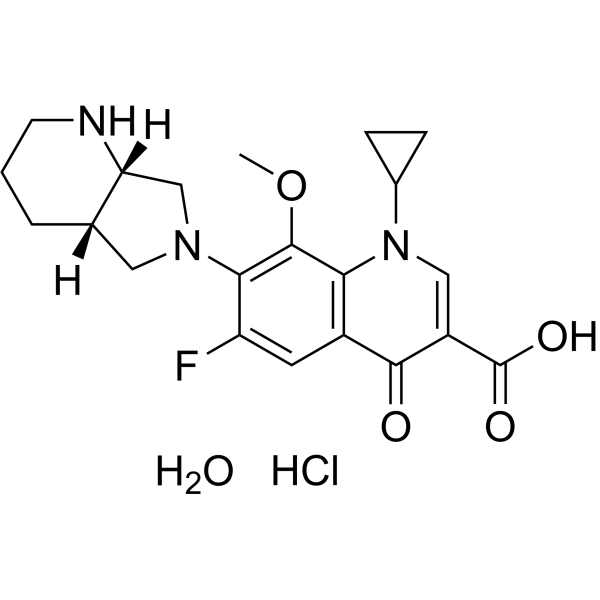
Moxifloxacin (BAY 12-8039) hydrochloride monohydrate is an orally active bacterial inhibitor that is effective against Streptococcuspneumoniae. Moxifloxacin hydrochloride monohydrate can be used in tuberculosis research .
Rhodomyrtone is an antibiotic that can be found in the leaves of Rhodomyrtus tomentosa. Rhodomyrtone kills Gram-positive bacterial cells without causing bacteriolysis. Rhodomyrtone exhibits activity against a variety of Gram-positive bacteria, including Bacillus cereus, Bacillus subtilis, Enterococcus faecalis, Staphylococcus epidermidis, Streptococcus gordonii, Streptococcuspneumoniae, Streptococcus pyogenes and Streptococcus salivarius. Rhodomyrtone is applicable to studies related to bacterial infections .
Competence-Stimulating Peptide-2 (CSP-2) is a 17-amino acid signal peptide produced by Streptococcuspneumoniae, with an EC50 of 50.7 nM for its compatible receptor ComD2. Competence-Stimulating Peptide-2 (CSP-2) can regulate bacterial phenotypes such as competence development, virulence, and biofilm formation through quorum sensing .
Faropenem daloxate (Faropenem medoxil) is an orally active beta-lactam antibiotic. Faropenem daloxate has excellent in vitro activity against Streptococcuspneumonia, Haemophilus influenza, and other key pathogens implicated in acute bacterial rhino sinusitis. Faropenem daloxate can be studied in research for respiratory pathogens and acute bacterial sinusitis .
Seconeolitsine, an antibiotic, and is an inhibitor of targeting topoisomerase I (TopA). Seconeolitsine also is a new antimicrobial agent that can inhibit S. pneumoniae growth. Seconeolitsine can inhibit TopA relaxation activity with an IC50 value of 17 μM. Seconeolitsine can be used for the research of S. pneumoniae infections resistant to other antibiotics .
TP0586532 is a non-hydroxamate LpxC inhibitor (IC50=0.101 μM). TP0586532 as a compound with a low cardiovascular risk that is effective against K. pneumoniae, including resistant strains . TP0586532 is a click chemistry reagent, it contains an Alkyne group and can undergo copper-catalyzed azide-alkyne cycloaddition (CuAAc) with molecules containing Azide groups.
Ceftaroline fosamil hydrate is a potent cephalosporin antibiotic. Ceftaroline fosamil hydrateshows broad-spectrum activity against Gram-positive pathogens, including methicillin-resistant Staphylococcus aureus (MRSA) and multidrug-resistant Streptococcuspneumoniae, and common Gram-negative organisms. Ceftaroline fosamil hydrate has anti-infective activity, and can be used for the research of complicated skin and skin structure infections (cSSSIs) and community-acquired bacterial pneumonia (CABP) .
Pneumolysin-IN-1 (compound PB-3) is a targeted small molecule inhibitor of Pneumolysin (PLY) (IC50=3.1 µM). Pneumolysin-IN-1 is a pore blocking agent and an anti-virulence factor. Pneumolysin-IN-1 can be used to study the infection caused by Streptococcuspneumoniae .
Diazaborine is an inhibitor for enoyl-acyl carrier protein (enoyl ACP) in an NAD+-dependent manner. Diazaborine exhibits antibacterial activity, MIC for E. coli and K. pneumoniae is 25 and 3.12 μg/mL .
Gancaonin G is a 6-prenylated isoflavanone that can be isolated from Glycyrrhiza uralensis. Gancaonin G has antibacterial activity against Streptococcus mutants and MRSA strains .
Endo-β-N-acetylglucosaminidase D (Endo D), isolated from Streptococcuspneumoniae. Endo-β-N-acetylglucosaminidase D hydrolyzes Fc N-glycan of intact IgG antibodies after sequential removal of the sialic acid, galactose, and internal GlcNAc residues in the N-glycan. Endo-β-N-acetylglucosaminidase D possesses transglycosylation activity with sugar oxazoline as the donor substrate .
Nafithromycin (WCK 4873) is an orally available antibiotic that inhibits community-acquired pneumonia caused by Streptococcuspneumoniae, Haemophilus influenzae, Moraxella catarrhalis, and Methicillin (HY-121544)-susceptible Staphylococcus aureus. The MIC90 of nafithromycin against macrolide-resistant and telithromycin (HY-A0062)-insensitive Streptococcuspneumoniae is 0.12 mg/liter .
AR-709 is a diaminopyrimidine antibiotic. AR-709 exhibits potent antibacterial activity against Streptococcuspneumoniae (MIC = 0.03 mg/L). AR-709 can be used for research on bacterial infections .
Endo S2, Streptococcus pyogenes (GMP Like) is Endo S2, Streptococcus pyogenes (HY-E70069) produced by using GMP like guidelines. Endo-β-N-acetylglucosaminidase (Endo S2) is a key enzyme involved in the processing of free oligosaccharides in the cytosol. Endo-β-N-acetylglucosaminidase catalyzes hydrolysis of N-linked oligosaccharides .
LpxC-IN-10 (Compound A) is a high selectivity inhibitor of LpxC. LpxC-IN-10 exhibits MIC values of 0.5 μg/mL against E. coli and K. pneumoniae. LpxC-IN-10 (Compound A) can be used for the research of bacterial infection . LpxC-IN-10 is a click chemistry reagent, it contains an Alkyne group and can undergo copper-catalyzed azide-alkyne cycloaddition (CuAAc) with molecules containing Azide groups.
Chlamydia pneumoniae-IN-1 (compound 55), a benzimidazole, shows high activity against the bacterium. Chlamydia pneumoniae-IN-1 has 99% inhibition of C. pneumoniae Growth at 10 μM, and has 95% inhibition effect on the viability of the host cells at 10 μM. Chlamydia pneumoniae-IN-1 inhibits the growth of the CV-6 strain with a MIC of 12.6 μM. Chlamydia pneumoniae-IN-1 has antichlamydial efficiency .
BC-7013 is a novel semi-synthetic pleuromutilin derivative. BC-7013 has excellent activity against Gram-positive pathogenic bacteria. BC-7013 exhibits potent antibacterial properties against both Staphylococcus, Streptococcus and penicillin-resistant Streptococcuspneumoniae. BC-7013 has activity against Gram-positive pathogenic bacteria, BC-7013 is useful in the research of acute bacterial skin and skin structure infection (ABSSSI) .
Ethylhydrocupreine (Optochin) is a quinine derivate with antimicrobial activity against S. pneumoniae. Ethylhydrocupreine also possesses antimalarial activity against Plasmodium falciparum, with an IC50 of 25.75 nM. Ethylhydrocupreine is a Gallus gallus taste 2 receptors (ggTas2r1, ggTas2r2 and ggTas2r7) agonist .
BB-83698 is a peptide deformylase (PDF) inhibitor. BB-83698 exhibits potent in vitro activity against Streptococcuspneumoniae, with a minimum inhibitory concentration (MIC) range of 0.06-0.25μg/mL. BB-83698 elevates the survival rate of mice regardless of whether the infecting strain carries resistance mechanisms. BB-83698 can be used for the study of diseases related to drug-resistant Streptococcuspneumoniae infections .
Xibornol (Bactacine) has strong antibacterial action against Streptococcuspneumoniae, Streptococcus pyogenes, and Staphyloccus aureus, as well as against Actinomyces israelii and Corynebacterium ulcerans. Xibornol has the potential for using for the antisepsis of the oral cavity and as adjuvant in pharyngeal infections caused by Gram-positive microorganisms .
(±)-ε-Viniferin is a racemate of ε-Viniferin (HY-N3841). (±)-ε-Viniferin exhibits P450 inhibitory antioxidants, as well as hepato-protective and antimicrobial activities. (±)-ε-Viniferin has antibacterial and antibiofilm activity against Gram-positive bacteria Streptococcuspneumoniae with a MIC of 20 μM .
Biclotymol is an antimicrobial agent against gram-positive cocci. Biclotymol inhibits Streptococcuspneumoniae and Haemophilus influenzae, with MIC of 150 and 150 μM. Biclotymol exhibits anti-inflammatory and analgesic activity and ameliorates the otolaryngology infection and throat sore .
FK-041 is an orally active cephalosporin antibiotic with high affinity for penicillin-binding proteins (PBPs). FK-041 exhibits broad-spectrum antibacterial activity, exerting potent antibacterial effects against Gram-positive bacteria, most Gram-negative bacteria, anaerobes, and so on. FK-041 also shows good efficacy against some drug-resistant strains such as penicillin-resistant Streptococcuspneumoniae. FK-041 is an antibacterial agent and can be used in the research of infectious diseases .
Farobin A is a natural compound with antibacterial, antioxidant and anti-inflammatory activities. Farobin A against Streptococcus mutans ATCC 25175 and Streptococcus sobrinusATCC 33478. Farobin A shows anti-inflammatory activity on cytokine IL-6 and TNF-α .
Cefpirome (HR 810) is a fourth generation cephalosporin. Cefpirome shows antibacterial activity. Cefpirome also has in vitro activity against Streptococcuspneumoniae .
Albomycin δ2 is a siderophore-antibiotic conjugate targeting bacterial ribosomes (MIC: 0.0625 μg/mL against S. pneumoniae, 0.125 μg/mL against MRSA). Albomycin δ2 is promising for research of Streptococcuspneumoniae and Staphylococcus aureus infections .
Albomycin ε is a siderophore-antibiotic conjugate targeting bacterial ribosomes (MIC values:>512 μg/mL). Albomycin ε is promising for research of Streptococcuspneumoniae and Staphylococcus aureus infections .
Delafloxacin-d5 is deuterium labeled Delafloxacin. Delafloxacin (RX-3341; WQ-3034; ABT492) is a broad-spectrum fluoroquinolone antibiotic. Delafloxacin has a broad spectrum of activity that includes drug-resistant Staphylococcus aureus, Streptococcuspneumoniae, and Klebsiella pneumonia .
Delafloxacin (Standard) is the analytical standard of Delafloxacin. This product is intended for research and analytical applications. Delafloxacin (RX-3341; WQ-3034; ABT492) is a broad-spectrum fluoroquinolone antibiotic. Delafloxacin has a broad spectrum of activity that includes drug-resistant Staphylococcus aureus, Streptococcuspneumoniae, and Klebsiella pneumonia .
Delafloxacin (meglumine) (Standard) is the analytical standard of Delafloxacin (meglumine). This product is intended for research and analytical applications. Delafloxacin meglumine (ABT492 meglumine; RX-3341 meglumine; WQ-3034 meglumine) is a broad-spectrum fluoroquinolone antibiotic. Delafloxacin has a broad spectrum of activity that includes drug-resistant Staphylococcus aureus, Streptococcuspneumoniae, and Klebsiella pneumonia[1].
PDF-IN-2 is a peptidyl deformylase (PDF) inhibitor. PDF-IN-2 has average IC50 values of 0.25, 0.50 and 0.34 nM, and average MIC values of 0.16, 0.33 and 0.25 μg/mL for StreptococcuspneumoniaePDF WT, G70V and G70D, respectively. PDF-IN-2 can be used in the research of infectious diseases .
Antibacterial agent 199 (Compound 2) is an activator for caseinolytic protease (ClpP) with a Kd of 0.7 μM. Antibacterial agent 199 exhibits antibacterial efficacy against Gram-positive strains Staphylococcus aureus, Streptococcuspneumoniae and Gram-negative strain Neisseria meningitidis, with MICs of 16, 0.5 and 0.5 μg/mL, respectively .
DNA Gyrase-IN-11 (Compound 23Be) is an inhibitor for protein synthesis (IC50 is 0.74 μM) and DNA replication. DNA Gyrase-IN-11 inhibits DNA gyrase, that inhibits E. coli DNA supercoiling with IC50 of 11.9 μM. DNA Gyrase-IN-11 exhibits antibacterial efficacy, that inhibits Streptococcuspneumoniae, Streptococcus pyogenes, Haemophilus influenzae and Staphylococcus aureus, with MICs of 0.008-0.25 μg/mL .
SCH 34343 is a penem antibiotic. SCH 34343 is highly active against Streptococcuspneumoniae (MIC50 ≤ 0.015 mg/L), viridans streptococci (MIC50 = 0.06 mg/L), streptococci of groups A (MIC50 = 0.03 mg/L), B (MIC50 = 0.06 mg/L), C and G (MIC50 = 0.03 mg/L), and Str. bovis. SCH 34343 can be used for antibacterial research .
Martinomycin is an antibiotic, which inhibits Staphylococcus spp., Streptococcus spp. and Enterococcus spp., with MICs ranging from 0.06 to 0.5 μg/mL .
LY 255262 is an antibacterial agent. LY 255262 exhibits potent inhibitory effects against a variety of Gram-positive and Gram-negative bacteria in vitro. LY 255262 has MIC values of 64, 0.25, 0.5, 0.25, 0.25, 1, and 1 μg/mL for Staphylococcus aureus, Streptococcuspneumoniae, Haemophilus influenza, Escherichia coli, Klebsiella, Enterobacter aerogenes, and Serratia, respectively. LY 255262 has a relatively weak inhibitory effect on Pseudomonas (MIC >128 μg/mL). LY 255262 can be used in antibacterial research .
Cetefloxacin (E 4868) is a board-spectrum antibacterial antibiotic, MIC of 0.007-8 µg/ml. Cetefloxacin exhibits good pharmacokinetic characters in mice. Cetefloxacin exhibits protective effects against Escherichia coli, Pseudomonas aeruginosa, Staphylococcus aureus, and Streptococcuspneumoniae in mice .
Paulomenol A has the effect of anti-Gram-positive bacteria including Staphylococcus aureus, Streptococcus pyogenes, Streptococcuspneumoniae and so on .
SCH 34343 sodium is a potent β-lactam Antibiotic with bactericidal activity against Streptococcuspneumoniae, viridans streptococci, streptococci of groups A, B, C and G, and Str. bovis .
Acetyl-Adhesin (1025-1044) amide is a 20-peptide fragment of Streptococcus pyogenes cell surface adhesin that acts as an antimicrobial peptide to specifically inhibit the binding of adhesin to salivary receptors and prevent recolonization of Streptococcus pyogenes .
Nocathiacin II (Nocathiacine II) is highly resistant to Gram-positive bacteria, including methicillin-resistant Staphylococcus aureus (MRSA), penicillin-resistant Streptococcuspneumoniae (PRSP) and multidrug resistant Enterococcus faecalis (MREF) .
ACT-387042 is a bacterial topoisomerase inhibitor with broad-spectrum activity against Gram-positive and Gram-negative bacteria, including methicillin-resistant Staphylococcus aureus and penicillin- and fluoroquinolone-resistant Streptococcuspneumoniae .
Nocathiacin III (Nocathiacine III) is highly resistant to Gram-positive bacteria, including methicillin-resistant Staphylococcus aureus (MRSA), penicillin-resistant Streptococcuspneumoniae (PRSP) and multidrug resistant Enterococcus faecalis (MREF) .
CAY10657 is an inhibitor for NF-κB pathway. CAY10657 downregulates expressions of proinflammatory cytokine (IL-6) and chemokine (MCP-1), and thus exhibits anti-inflammatory efficacy against meningitis induced by Streptococcus suis .
Cefmatilen (S-1090) is an orally-active cephalosporin antibiotic that shows high activity against a variety of Gram-positive and Gram-negative bacteria, including Streptococcus pyogenes and Neisseria gonorrhoeae .
Moxifloxacin (hydrochloride monohydrate) (Standard) is the analytical standard of Moxifloxacin (hydrochloride monohydrate). This product is intended for research and analytical applications. Moxifloxacin (BAY 12-8039) hydrochloride monohydrate is an orally active bacterial inhibitor that is effective against Streptococcuspneumoniae. Moxifloxacin hydrochloride monohydrate can be used in tuberculosis research .
Ethyl Violet Aziode Broth is a special medium for growth culture of streptococcus. The composition of 1 litre medium is 35.8 g Ethyl Violet Aziode Broth.
Hc-CATH (Sea snake cathelicidin) is an antibacterial peptide with broad-spectrum. Hc-CATH inhibits Shigella dysenteriae and Klebsiella pneumoniae with MIC of 0.16 mM-20.67 mM. Hc-CATH exhibits anti-inflammatory efficacy .
5-Hydroxysophoranone is a flavanone that can be isolated from the Erythrina subumbrans. 5-Hydroxysophoranone shows weak antibacterial activity against several strains of Streptococcus .
LB 10517 (sodium) is a type of cephalosporin. LB 10517 (sodium) has broad-spectrum antibacterial activity against both Gram-positive and Gram-negative bacteria, including Enterobacteriaceae, Pseudomonas aeruginosa, Staphylococcus, and Streptococcus .
Cefuzonam is an antibiotic, which exhibits antibacterial activity against gram positive bacteria, such as Staphylococcus, Streptococcus and Neisseria gonorrhoeae, with MIC ranginf from 0.63 to 2 μg/mL. Cefuzonam is an inhibitor for mild steel corrosion by increasing hydrophobicity of the metal surface to the acid solution .
β-Lactamase-IN-7 (compound 14) is a potent VIM-Type metallo-β-lactamase inhibitor, with Kis of 1.26 μM and 0.54 μM for VIM-1 and VIM-4, respectively. β-Lactamase-IN-7 can effectively inhibit Klebsiella pneumoniae .
Chalcomycin is a macrolide antibiotic, which exhibits antimicrobial activities against gram-positive Staphylococcus aureus and Streptococcus pyogenes. Chalcomycin protects mice from infection with a variety of staphylococci and streptococc, without significant toxicity (LD50 >2500 mg/kg) .
KPC-2-IN-2 (Compound 6c) is a potent Klebsiella pneumoniae carbapenemase (KPC-2) inhibitor (Ki=0.038 μM). KPC-2-IN-2 can enhance the activity of cefotaxime in KPC-2 expressing Escherichia coli .
DWC 751 is a cephalosporin antibiotic. DWC 751 exhibits activity against most Gram-positive bacteria, such as methicillin-sensitive Staphylococcus aureus and S. pneumoniae, as well as Gram-negative bacteria including E. coli and E. cloacae. DWC 751 can be used in the research of infectious diseases .
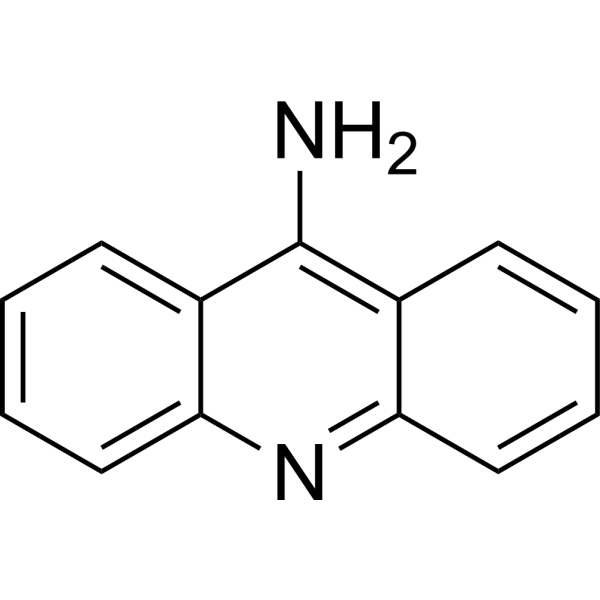
9-Aminoacridine-13C6 is the 13C-labeled 9-Aminoacridine(HY-B1422). 9-Aminoacridine, a fluorescent probe, acts as an indicator of pH for quantitative determination of transmembrane pH gradients (inside acidic). 9-Aminoacridine is an antimicrobial. 9-Aminoacridine exerts its antimicrobial activity by interacting with specific bacterial DNA and disrupting the proton motive force in K. pneumoniae. 9-Aminoacridine is a HIV-1 inhibitor and inhibits HIV LTR transcription highly dependent on the presence and location of the amino moiety. 9-Aminoacridine inhibits virus replication in HIV-1 infected cell lines. 9-Aminoacridine is used as a Rifampin (RIF; HY-B0272) adjuvant for the multidrug-resistant K. pneumoniae infections .
Antibacterial agent 19 (compound 8) is a potent antibacterial agent. Antibacterial agent 19 has antibacterial activity against K. pneumoniae, (M-R)S. aureus and (M-R,V-R)S. aureus with MIC values of 0.022, 0.022 and 0.045 mg/mL, respectively .
Selenosemicarbazide (Hydrazinecarboselenoamide) exhibits antimicrobial activity, that inhibits B. subtilis, S. aureus, Klebsiella pneumoniae, Sarcina lutea and Mycobacterium tuberculosis. Selenosemicarbazide forms complex with metal ions, and exhibits antitumor efficacy against cancer cells
Temporin-GHd exhibits antibacterial activity against Streptococcus mutans (MIC=13.1 μM; MBC=26 μM). Temporin-GHd increases the permeability of the bacterial cell membrane, causing membrane damage and leakage of cellular contents. Temporin-GHd disrupts preformed biofilms at high concentrations. Temporin-GHd can bind to bacterial DNA, inhibiting DNA migration .
Timcodar mesylate (VX-853-2) and its analog VX-710 are mammalian multidrug-resistant bacterial efflux pump inhibitors that directly inhibit ethidium bromide efflux in Staphylococcus aureus. Timcodar mesylate has the potential to enhance antibiotic activity by inhibiting bacterial efflux pumps, effectively reducing the minimum inhibitory concentration of some antibiotics against Gram-positive pathogens such as Staphylococcus aureus, Enterococcus and Streptococcuspneumoniae .
PD 131628 is an antimicrobial agent and active PD 131112 metabolite. PD 131628 is two- to four-fold more active than Ciprofloxacin (HY-B0356), inhibiting all strains of Staphylococcus aureus and Streptococcuspneumoniae. PD 131628 is very active against Neisseria spp., Haemophilus influenzae and Moraxella catarrhalis, with MIC90s ranging from 0.004 to 0.008 mg/L .
8-Deazafolic acid is an antimicrobial drug for the folate-dependent bacteria, Streptococcus faecium (ATCC 8043) and Lactobacillus casei (ATCC 74691). 8-Deazafolic acid has activity against lymphoid leukemia L1210 in mice .
(R)-DS86760016 is the R-enantiomer of DS86760016 (HY-124679). DS86760016 is a potent leucyl-tRNA synthetase (LeuRS) inhibitor with activity against multidrug-resistant (MDR) Gram-negative bacteria, such as Escherichia coli, Klebsiella pneumoniae, and Pseudomonas aeruginosa .
MsbA-IN-5 (compound 40) is a potent and highly selective MsbA inhibitor with an IC50 value of 2 nM. MsbA-IN-5 has inhibitory activity against Escherichia coli, Klebsiella pneumoniae, and Enterobacter cloacae with MICs of 12 μM, 12 μM and 25 μM, respectively. MsbA-IN-5 can be used for researching anti-Gram-negative bacteria .
RNAP-NusG-IN-1 is an RNAP-NusG inhibitor. RNAP-NusG-IN-1 has antibacterial activity against Gram-positive bacteria, with the strongest activity against Streptococcuspneumoniae, showing an MIC value of 1 μg/mL .
DK 507k is an orally active 8-methoxyquinolone Antibacterial agent. DK 507k targets DNA gyrase subunit A (GyrA) and modulates the function of GyrA. DK 507k inhibits the growth of various Gram-positive and Gram-negative bacteria, including Pseudomonas aeruginosa and Methicillin (HY-121544)-resistant Staphylococcus aureus. DK 507k eliminates Penicillin-tolerant Streptococcuspneumoniae from the lungs of mice. DK 507k can be used in research related to sepsis and *Streptococcuspneumoniae* pneumonia .
PBP1b-IN-1 is a penicillin-binding protein inhibitor, with an IC50 of 0.042 μM against PBP1b of Streptococcuspneumoniae and an IC50 of 7.6 μM against PBP3 of Escherichia coli. PBP1b-IN-1 exerts antibacterial activity by targeting penicillin-binding proteins to inhibit bacterial peptidoglycan cross-linking. PBP1b-IN-1 can be used in studies related to bacterial infections .
L-Phenylalanine decarboxylase, Streptococcus faecalis (EC 4.1.1.53) belongs to the lyase family and is capable of cleaving carbon-carbon bonds. L-Phenylalanine decarboxylase, Streptococcus faecalis is involved in the metabolism of phenylalanine. This enzyme has one substrate, L-phenylalanine, and two products: phenylethylamine and CO2.
Paulomenol B has the effect of anti-Gram-positive bacteria including Staphylococcus aureus, Streptococcus pyogenes, Streptococcuspneumoniae and so on .
Streptokinase, Streptococcus hemolyticus (EC 3.4.99.0) is an enzyme secreted by several species of streptococci that can bind and activate human plasminogen. Streptokinase belongs to a group of medications known as fibrinolytics, and complexes of streptokinase with human plasminogen can hydrolytically activate other unbound plasminogen by activating through bond cleavage to produce plasmin.
L-Tyrosine Decarboxylase, Streptococcus faecalis (EC 4.1.1.25), is a carboxyl lyase capable of cleaving carbon-carbon bonds. L-Tyrosine Decarboxylase Apoenzyme participates in tyrosine metabolism and alkaloid biosynthesis. L-Tyrosine Decarboxylase Apoenzyme uses a cofactor—pyridoxal phosphate. L-Tyrosine Decarboxylase Apoenzyme has one substrate, L-tyrosine, and two products: tyramine and carbon dioxide.
Glycerol 3-phosphate Oxidase, Streptococcus thermophilus (EC 1.1.3.21), is an oxidoreductase that acts on the CH-OH group in donor molecules and uses oxygen as an acceptor. Glycerol 3-phosphate Oxidase participates in glycerophospholipid metabolism and utilizes a cofactor, FAD. The two substrates of Glycerol 3-phosphate Oxidase are sn-glycerol-3-phosphate and O2, while its two products are glycerophosphate and H2O2.
L-Tyrosine Decarboxylase Apoenzyme, Streptococcus faecalis (EC 4.1.1.25), is a carboxyl lyase capable of cleaving carbon-carbon bonds. L-Tyrosine Decarboxylase Apoenzyme participates in tyrosine metabolism and alkaloid biosynthesis. L-Tyrosine Decarboxylase Apoenzyme uses a cofactor—pyridoxal phosphate. L-Tyrosine Decarboxylase Apoenzyme has one substrate, L-tyrosine, and two products: tyramine and carbon dioxide.
BC-1175 (CB-181963) is a novel cephalosporin and antibacterial agent. CB-181963 displays strong binding to altered PBP 2a. CB-181963 demonstrates marked efficacy against MRSA, Klebsiella pneumoniae, Streptococcuspneumoniae, and Escherichia coli .
Sanfetrinem cilexetil (GV 118819X), a prodrug of Sanfetrinem (HY-106922), is an orally active antibiotic. Sanfetrinem cilexetil shows potent efficacy against experimental murine septicemia caused by Staphylococcus aureus, Streptococcus pyogenes, and Escherichia coli and against murine respiratory infections caused by Streptococcuspneumoniae .
Nocathiacin I (Nocathiacine I) is highly resistant to Gram-positive bacteria, including methicillin-resistant Staphylococcus aureus (MRSA), penicillin-resistant Streptococcuspneumoniae (PRSP) and multidrug resistant Enterococcus faecalis (MREF) .
M104 peptide is an OXA-48 carbapenemase inhibitor and antibiotic potentiator. M104 peptide effectively blocks the binding and active site cavity of OXA-48 . M104 peptide restores Meropenem (HY-13678)’s antibacterial activity against OXA-48-producing Klebsiella pneumoniae. M104 peptide can be used for the research of Carbapenem-resistant Klebsiella pneumoniae infection .
JT71 is an inhibitor of the transcriptional activator MrkH of type III fimbriae in Klebsiella pneumoniae. JT71 reduces the activity of the mrkA promoter in Klebsiella pneumoniae, effectively inhibiting the formation of biofilms by Klebsiella pneumoniae, while not affecting the cell's viability. JT71 can be used for research on Klebsiella pneumoniae infections .
LpxH-IN-3 is a Klebsiella pneumoniaeLpxH inhibitor with an IC50 of 0.17 μM. LpxH-IN-3 binds to the L-shaped hydrophobic binding pocket of Klebsiella pneumoniae LpxH, forms hydrogen bonds and other interactions with key residues, disrupts lipid A biosynthesis, and induces bacterial death. LpxH-IN-3 exhibits moderate antibacterial activity against Klebsiella pneumoniaeand Escherichia coli. LpxH-IN-3 can be used for the research of klebsiella pneumoniae infection .
Chinenol A is an antibacterial agent that can be found in the aerial part of Helwingia chinensis. Chinenol A can be used for the research of bacterial infections (staphylococcus aureus infection, mycobacterium tuberculosis infection, streptococcuspneumonia infection) .
XMP-629 (XOMA-629), a cationic α-helical peptide, is a potent endotoxin inhibitor. XMP-629 exhibits broad-spectrum antimicrobial activity via an immunomodulatory mechanism. XOMA 629 has antimicrobial activity against Propionibacterium acnes, Staphylococcus aureus and Streptococcus pyogenesand .
Netilmicin (Sch 20569) is a broad-spectrum semisynthetic aminoglycoside antibiotic. Netilmicin exhibits antibacterial activity against aminoglycoside-susceptible gram-negative strains and aminoglycoside-resistant strain, such as Escherichia coli, Pseudomonas aeruginosa, Proteus, Staphylococcus aureus, Streptococcus, Serratia, and Enterobacter, with MIC of 0.125-8 μg/mL .
D(+)-Raffinose pentahydrate is an orally active inhibitor of LecA (Kd = 32 μM) and GtfC. D(+)-Raffinose pentahydrate reduces cyclic diguanylate (c-di-GMP) by increased activity of a c-di-GMP specific phosphodiesterase. D(+)-Raffinose pentahydrate interferes with GTF function. D(+)-Raffinose pentahydrate decreases IL-4 and IL-5 mRNA. D(+)-Raffinose pentahydrate exhibits biofilm-inhibitory activity against Pseudomonas aeruginosa and Streptococcus mutans and inhibits allergic airway eosinophilia .
Antifungal agent 143 is potent antifungal agent which also exihibits antibacterial activity. Antifungal agent 143 inhibits growth of Candida albicans and Aspergillus niger, Escherichia coli, Pseudomonas aeruginosa, Staphylococcus aureus, and Streptococcus pyogenes. Antifungal agent 143 can be used for antimicrobial research.
(7S,8S)-Dihydrodehydrodiconiferyl alcohol 9’-β-D-glucopyranoside is a Streptococcus mutansSortase A inhibitor with an IC50 of 37.3 μM. (7S,8S)-Dihydrodehydrodiconiferyl alcohol 9’-β-D-glucopyranoside inhibits transpeptidase activity linked to Gram-positive bacterial surface protein anchoring. (7S,8S)-Dihydrodehydrodiconiferyl alcohol 9’-β-D-glucopyranoside can be used for the research of dental caries .
Colistin is an orally active polypeptide antibiotic. Colistin has excellent activity against various Gram-negative rod-shaped bacteria, including multidrug-resistant Pseudomonas aeruginosa, Acinetobacter baumannii and Klebsiella pneumoniae. Colistin is associated with nephrotoxicity. Colistin can be used for the research of infections caused by Gram-negative bacilli .
Cefditoren is a broad-spectrum oral active cephalosporin that acts as a penicillin-binding protein (PBP) inhibitor. Cefditoren binds to specific PBPs in Gram-positive and Gram-negative bacteria, thereby inhibiting cell wall synthesis. Cefditoren also reduces serum levels of the inflammatory biomarkers IL-6 and KL-6. Cefditoren can be used in research related to acute exacerbation of chronic bronchitis, pharyngitis-tonsillitis, uncomplicated skin and skin structure infections, respiratory tract infections, acute pyelonephritis, and enterococcal endocarditis .
Endo-β-N-acetylglucosaminidase (Endo S2) is a key enzyme involved in the processing of free oligosaccharides in the cytosol. Endo-β-N-acetylglucosaminidase catalyzes hydrolysis of N-linked oligosaccharides .
Nacubactam (OP0595 free acid) is a potent non-β-lactam-β-lactamase inhibitor with activity against class A and C β-lactamases. Nacubactam acts as a penicillin binding protein (PBP) 2-active antibacterial, and gives β-lactamase-independent potentiation of β-lactams targeting other PBPs. Nacubactam potentiates the antimicrobial activities of Piperacillin (HY-B1923), Cefepime (HY-B0692), and Meropenem (HY-13678) against CTX-M-15-positive Escherichia coli and KPC-positive Klebsiella pneumoniae .
PF-04753299 is a potent and selective UDP-3-O-(R-3-hydroxymyristol)-N-acetylglucosamine deacetylase (LpxC) inhibitor. PF-04753299 is bactericidal for the gonococcal isolates. PF-04753299 inhibits E. coli, P. aeruginosa and K. pneumoniae strains with MIC90 values of 2 μg/ml, 4 μg/ml and 16 μg/ml, respectively. PF-04753299 is used for the study of gram-negative bacteria infection .
Cefcanel is an orally active cephalosporin and antibacterial agent. Cefcanel inhibits growth of methicillin-susceptible Staphylococcus aureus, methicillin-susceptible Staphylococcus epidermidis, Haemophilus influenzae, Moraxella catarrhalis. Cefcanel acts as a substrate hydrolyzed by TEM-1, TEM-3, and Moraxella Bro-1 beta-lactamases .
Chondrillasterol is a sterol that can be isolated from Vernonia adoensis. Chondrillasterol exhibits antibacterial activity. Chondrillasterol inhibits growth of Staphylococcus aureus, Klebsiella pneumoniae, and Pseudomonas aeruginosa. Chondrillasterol inhibits formation of bacterial biofilms. Chondrillasterol can be used for the research of bacterial infections .
(7S,8R)-Dihydrodehydrodiconiferyl alcohol-9-β-D-glucopyranoside (compound 1) is a lignan found in the dried roots of Pulsatilla koreana and Sortase A inhibitor with an IC50 of 67.7 μM against Streptococcus mutans OMZ65 Sortase A. (7S,8R)-Dihydrodehydrodiconiferyl alcohol-9-β-D-glucopyranoside can be used for the research of dental caries .
Neothramycin A is an antibiotic, which can be isolated from Streptomyces. Neothramycin A exhibits board spectrum antimicrobial activity, inhibits Staphylococcus aureus, Klebsiella pneumoniae, Escherichia coli W677, and Saccharomyces cerevisia with MIC of 25-50 μg/mL. Neothramycin A exhibits antitumor efficacy against leukemia in mouse models .
α-Amyrin is a pentacyclic triterpenoid compound with oral activity. α-Amyrin activates the ERK and GSK-3β signaling pathways. α-Amyrin can inhibit cancer cells proliferation and induce apoptosis. α-Amyrin shows anti-bacterial and anti-inflammation activity. α-Amyrin can reduce blood glucose level. α-Amyrin can be used for the researches of cancer, infection, inflammation, metabolic disease and neurological disease, such as breast cancer, Streptococcus oralis infection, skin inflammation and diabetes .
Nacubactam (Standard) is the analytical standard of Nacubactam (HY-109008). This product is intended for research and analytical applications. Nacubactam (OP0595 free acid) is a potent non-β-lactam-β-lactamase inhibitor with activity against class A and C β-lactamases. Nacubactam acts as a penicillin binding protein (PBP) 2-active antibacterial, and gives β-lactamase-independent potentiation of β-lactams targeting other PBPs. Nacubactam potentiates the antimicrobial activities of Piperacillin (HY-B1923), Cefepime (HY-B0692), and Meropenem (HY-13678) against CTX-M-15-positive Escherichia coli and KPC-positive Klebsiella pneumoniae .
Aquastatin C is a glycoaromatic derivative that can be found in Sporothrix sp. FN611. Aquastatin C is a substance that neither regulates bacterial enzymes nor inhibits bacterial growth .
Ranbezolid (RBx7644 free base) is an orally active, oxazolidinone antibiotic against Gram-positive and Gram-negative anaerobes including Staphylococcus aureus, Staphylococcus epidermidis and Bacteroides fragilis. Ranbezolid can inhibit the 50s ribosomal subunit with an IC50 of 17 μM for bacterial ribosomes. Ranbezolid interferes cell wall and lipid synthesis. Ranbezolid can rapidly kill bacteria, significantly reduce bacterial load, and has better cardiovascular safety. Ranbezolid can be used for the study of antibiotics for anaerobic bacteria .
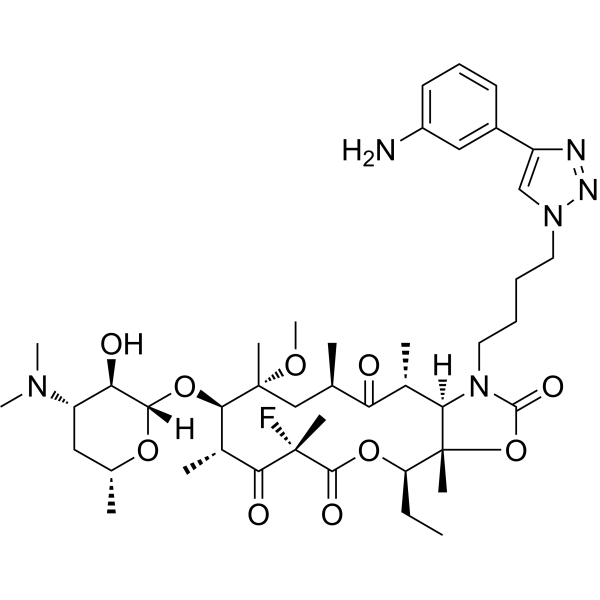
Azithromycin-amide-C3-amide-quinoxaline (Compound 5f) is an Azithromycin (HY-17506) derivative and antibacterial agent. Azithromycin-amide-C3-amide-quinoxaline inhibits topoisoisomerase I with an IC50 of 120.7 μM. Azithromycin-amide-C3-amide-quinoxaline interacts with 70S E. coli ribosome with a Kd of 0.8 nM. Azithromycin-amide-C3-amide-quinoxaline inhibits bacterial translation with an IC50 of 0.7 μM. Azithromycin-amide-C3-amide-quinoxaline shows antibacterial potency against S. pneumoniaATCC 49619, S. aureusATCC 29213, E. faecalisATCC 29212 with MICs of 0.06 μg/mL, 2 μg/mL, 0.5 μg/mL, respectively. Azithromycin-amide-C3-amide-quinoxaline exhibits anticancer activity against prostate cancer, colon cancer .
Bacterial Sortase Substrate III, Abz/DNP is a fluorescent peptide substrate. Bacterial Sortase Substrate III, Abz/DNP undergoes cleavage catalyzed by Staphylococcus aureus sortase A (SrtAΔN24) and Streptococcus pyogenes sortase A (SrtAΔN81), and catalyzes the formation of an amide bond between the carboxyl group of threonine and the amino group of the cell wall cross-bridge. Cleavage of this substrate can be detected at Ex/Em=320 nm/420 nm .
Bacterial Sortase Substrate III, Abz/DNP TFA is a fluorescent peptide substrate. Bacterial Sortase Substrate III, Abz/DNP TFA undergoes cleavage catalyzed by Staphylococcus aureus sortase A (SrtAΔN24) and Streptococcus pyogenes sortase A (SrtAΔN81), and catalyzes the formation of an amide bond between the carboxyl group of threonine and the amino group of the cell wall cross-bridge. Cleavage of this substrate can be detected at Ex/Em=320 nm/420 nm .
Gypsogenic acid is a triterpenoid acid that can be isolated from Miconia stenostachya and has antibacterial and trypanoidal activities. The MICs values of Gypsogenic acid for the oral bacterial pathogens Enterococcus faecalis, Streptococcus salivarius, Streptococcus haematococcus, Streptococcus mutans and sobrinus were 50-200 μg/mL. Gypsogenic acid can induce blood cortensite cleavage in isolated mice with IC50 56.6 μM .
Cadrofloxacin (Caderofloxacin; CS-940) hydrochloride is an orally active antibacterial agent with significant bactericidal activity against quinolone-resistant Staphylococcus aureus, Gram-positive bacteria, Gram-negative bacteria and anaerobic bacteria. Cadrofloxacin hydrochloride effectively improves systemic infection and experimental Klebsiella pneumoniaepneumonia in mice. Cadrofloxacin hydrochloride can be widely used in research related to systemic bacterial infections and bacterial pneumonia .
α-Amyrin (Standard) is a pentacyclic triterpenoid compound with oral activity. α-Amyrin (Standard) activates the ERK and GSK-3β signaling pathways. α-Amyrin (Standard) can inhibit cancer cells proliferation and induce apoptosis. α-Amyrin (Standard) shows anti-bacterial and anti-inflammation activity. α-Amyrin (Standard) can reduce blood glucose level. α-Amyrin (Standard) can be used for the researches of cancer, infection, inflammation, metabolic disease and neurological disease, such as breast cancer, Streptococcus oralis infection, skin inflammation and diabetes .
HA5 inhibits Streptococcus mutans biofilm with an IC50 value of 6.42 μM, without affecting its growth. HA5 also inhibits Streptococcus mutans glucan production and eDNA levels .
DNA gyrase B-IN-2 (Compound E) is a 2-aminobenzothiazole-based DNA gyrase B inhibitor with promising activity against ESKAPE bacterial pathogens. DNA gyrase B-IN-2 showed low nanomolar inhibition of DNA gyrase (IC50 < 10 nM) and broad-spectrum antibacterial activity against pathogens belonging to the ESKAPE group, with the minimum inhibitory concentration < 0.03 μg/mL for most Gram-positive strains and 4–16 μg/mL against Gram-negative E. coli, Acinetobacter baumannii, Pseudomonas aeruginosa, and Klebsiella pneumoniae.DNA gyrase B-IN-2 can be used for the research of infection .
Gly-Ala-Tyr (H-Gly-Ala-Tyr-OH) is a tripeptide substrate composed of L-glycine, alanine, and L-tyrosine joined in sequence by peptide linkages. Gly-Ala-Tyr can be hydrolyzed at both extracellular and intracellular levels by Streptococcus thermophilus, Lactobacillus delbrueckii ssp. bulgaricus, Lactobacillus acidophilus, and Bifidobacterium spp. Ala-Gly-Tyr is functionally related to L-alanine, glycine and L-tyrosine. .
Silver (I) sulfide is a biochemical reagent. Silver (I) sulfide nanoparticles exert Antibacterial effects against a variety of resistant bacteria, including Gram-positive and Gram-negative bacteria. Silver (I) sulfide can be used in the research of bacterial infections, such as infections caused by Staphylococcus aureus, Streptococcus agalactiae, Escherichia coli and Pseudomonas species .
Brain Derived Basic Fibroblast Growth Factor (1-24) (FGF basic 1-24) is a synthetic peptide, shows anti-bacterial and anti-HBV activities. Brain Derived Basic Fibroblast Growth Factor (1-24) can be used in infection disease and immune disease research .
LpxC-IN-17 (Compound a5) is a non-covalent LpxC inhibitor and Antibacterial agent. LpxC-IN-17 chelates catalytic zinc ions and forms extensive non-covalent interactions within the LpxC active site, thereby functionally inhibiting the enzyme. LpxC-IN-17 exhibits antibacterial activity against Gram-negative pathogens including Escherichia coli, Klebsiella pneumoniae and Pseudomonas aeruginosa. LpxC-IN-17 is applicable to research related to Gram-negative bacterial infections .
SMT-738 is a bacterial bactericide. SMT-738 targets the small molecules responsible for lipoprotein transport in Enterobacteriaceae, causing abnormal lipoprotein localization and bacterial cell death. SMT-738 inhibits the growth of E. coli and K. pneumoniae. SMT-738 reduces bacterial loads in mouse models of urinary tract infection, bloodstream infection, and pulmonary infection caused by Enterobacterales. SMT-738 can be used in the research of Enterobacteriaceae infections, urinary tract infections, bloodstream infections, and pneumonia .
DS21412020 is a fluoroquinolone antibacterial agent. DS21412020 inhibits bacterial DNA gyrase (GyrA) and topoisomerase IV, leading to DNA breaks. DS21412020 exhibits significant activity against Gram-positive bacteria such as Staphylococcus aureus (MIC = 0.006 μg/mL), Streptococcuspneumoniae (MIC = 0.05 μg/mL), and Methicillin (HY-121544)-resistant Staphylococcus aureus (MIC = 0.2 μg/mL), and Gram-negative bacteria such as Escherichia coli (MIC = 0.006 μg/mL) and Pseudomonas aeruginosa (MIC = 0.78 μg/mL). DS21412020 significantly reduces bacterial load in mouse pneumonia and MRSA infection models. DS21412020 can be used in the development of next-generation quinolone antibiotics .
Lincosamine is a lincosamide antibiotic with activity that inhibits bacterial growth. Lincosamine is primarily produced by Streptomyces lincolnensis. Lincosamine has shown efficacy in combating certain bacterial infections, especially against Klebsiella pneumoniae. Lincosamine ranked among 14 other antimicrobial compounds in its activity against Klebsiella pneumoniae in a test .
Cefamandole (Cephamandole) is a semi-synthetic second-generation cephalosporin antibiotic with broad-spectrum antimicrobial activity. Cefamandole is resistant to hydrolysis by β-lactamases produced by some Gram-negative bacteria. Cefamandole kills Gram-positive cocci and various Gram-negative bacilli mainly by inhibiting cell wall synthesis, but it is inactive against Pseudomonas, Proteus vulgaris and Providencia stuartii, and its efficacy is affected by inoculum size. The plasma elimination half-life of Cefamandole in rats is only 0.4 h, it is mainly excreted in urine in biologically active form, and it hardly penetrates the non-inflamed blood-brain barrier. Cefamandole is widely used in studies related to bacterial infections .
Cefamandole (Cephamandole) sodium is a semi-synthetic second-generation cephalosporin antibiotic with broad-spectrum antimicrobial activity. Cefamandole sodium is resistant to hydrolysis by β-lactamases produced by some Gram-negative bacteria. Cefamandole sodium kills Gram-positive cocci and various Gram-negative bacilli mainly by inhibiting cell wall synthesis, but it is inactive against Pseudomonas, Proteus vulgaris and Providencia stuartii, and its efficacy is affected by inoculum size. The plasma elimination half-life of Cefamandole sodium in rats is only 0.4 h, it is mainly excreted in urine in biologically active form, and it hardly penetrates the non-inflamed blood-brain barrier. Cefamandole sodium is widely used in studies related to bacterial infections .
Brilacidin (PMX 30063) is an anti-infective antimicrobial with MIC90s of 1 and 8 μg/mL for Gram-positive bacteria Streptococcuspneumonia and Streptococcus viridans, and MIC90 of 8 and 4 μg/mL for Gram-negative bacteria Haemophilus influenza and Pseudomonas aeruginosa. Brilacidin is a defensin mimetic antibiotic compound .
Brilacidin tetrahydrochloride (PMX 30063 tetrahydrochloride) is an anti-infective antimicrobial with MIC90s of 1 and 8 μg/mL for Gram-positive bacteria Streptococcuspneumonia and Streptococcus viridans, and MIC90 of 8 and 4 μg/mL for Gram-negative bacteria Haemophilus influenza and Pseudomonas aeruginosa. Brilacidin tetrahydrochloride is a defensin mimetic antibiotic compound .
Sapienic acid is a fatty acid commonly found on the skin and in mucosa. Sapienic acid has variable antimicrobial activities against Gram-positive and Gram-negative bacteria found on the skin and in the oral cavity. Sapienic acid is active against Streptococcus sanguinis, Streptococcus mitis and Fusobacterium nucleatum with MBC values of 31.3 μg/mL, 375.0 μg/mL and 93.8 μg/mL, respectively .
Sapienic acid sodium is a fatty acid commonly found on the skin and in mucosa. Sapienic acid sodium has variable antimicrobial activities against Gram-positive and Gram-negative bacteria found on the skin and in the oral cavity. Sapienic acid sodium is active against Streptococcus sanguinis, Streptococcus mitis and Fusobacterium nucleatum with MBC values of 31.3 μg/mL, 375.0 μg/mL and 93.8 μg/mL, respectively .
Ceanothic acid (Emmolic acid) is an orally active pentacyclic triterpenoid. Ceanothic acid inhibits the growth of various oral bacteria, including Streptococcus mutans, Actinomyces viscosus, Porphyromonas gingivalis, and Prevotella intermedia. Ceanothic acid scavenges DPPH and H2O2 free radicals. Ceanothic acid inhibits acetic acid (HY-Y0319)-induced writhing response, xylene-induced ear swelling, and carrageenan-induced paw swelling in mice. Ceanothic acid can be used in research related to oral bacterial infections, ovarian cancer, liver cancer, and liver injury .
Albomycin δ1 is a selective bacterial ribosome-targeted antibiotic (MIC: 0.0625 μg/mL against S. pneumoniae). Albomycin δ1 exerts bactericidal activity via covalent binding to 70S ribosomes and irreversible inhibition of peptidyl transferase. Albomycin δ1 is promising for research of S. pneumoniae and S. aureus infections .
DV-7751A is a new Fluoroquinolone and antibacterial agent. DV-7751A inhibits the supercoiling activity of DNA gyrases. DV-7751A exhibits antimicrobial activity against Streptococcus pneumonae, Streptococcus pyogenes, and Peptostreptococcus spp. DV-7751A has a rapid bactericidal effect against S. aureus, Escherichia coli, and P. aeruginosa .
Oseltamivir-fructosyl exhibits antiviral activity against influenza viruses and has inhibitory effects on various types of bacteria such as streptococcus and serratia marcescens.
FabI-IN-1 is a FabI (enoyl-acyl carrier protein reductase) inhibitor with a Ki of 0.32 μM against E. coli FabI. FabI-IN-1 inhibits exhibits activity against Gram-negative bacteria including Escherichia coli (MIC = 6.25 μM) and Klebsiella pneumoniae. FabI-IN-1 rescues Galleria mellonella larvae from lethal Escherichia coli infection. FabI-IN-1 exerts a synergistic effect with Colistin (HY-113678) against Escherichia coli. FabI-IN-1 can be used for the research of gram-negative bacterial infection .
Viscosin is a cyclic lipopeptide compound produced by the Pseudomonas genus. Viscosin exerts its antibacterial effect through two mechanisms: membrane permeabilization and interference with cell wall synthesis. Viscosin shows significant antibacterial activity against various Gram-positive bacteria, but has no inhibitory effect on fungi. Viscosin can be used for the study of bacterial infections .
Sapienic acid-d19 is a deuterated labeled Sapienic acid . Sapienic acid is a fatty acid commonly found on the skin and in mucosa. Sapienic acid has variable antimicrobial activities against Gram-positive and Gram-negative bacteria found on the skin and in the oral cavity. Sapienic acid is active against Streptococcus sanguinis, Streptococcus mitis and Fusobacterium nucleatum with MBC values of 31.3 μg/mL, 375.0 μg/mL and 93.8 μg/mL, respectively .
C16G2 is a specific targeted antimicrobial peptide (STAMP) that targets the cariogenic oral pathogen Streptococcus mutans. C16G2 specifically recognizes and disrupts the bacterial cell membrane, causing small molecule leakage and loss of membrane potential, leading to bacterial killing. C16G2 exhibits higher selectivity and efficacy against Streptococcus mutans, unlike broad-spectrum antimicrobial peptides .
Pyrronamycin A has antibacterial activity against Gram-positive and negative bacteria such as Staphylococcus aureus, enterococcus, Escherichia coli, Klebsiella pneumoniae, Proteus, Shigella and Salmonella .
γ-Chloronorvaline has the activity of resistance to Pseudomonas aeruginosa, Serrata, Klebsiella pneumoniae and Bacillus subtilis in the synthetic medium, but has no effect on Escherichia coli .
D-Cysteine (Standard) is the analytical standard of D-Cysteine. This product is intended for research and analytical applications. D-Cysteine, the D-isomer of cysteine, is an orally active antibacterial agent and a regulator of neural progenitor cell proliferation. D-Cysteine can inhibit Escherichia coli, Streptococcus mutans, and Streptococcus sanguinis. The no-observed-adverse-effect level of D-Cysteine in rats should be less than 500 mg/kg/day[1][2][3][4].
C16G2 TFA is a specific targeted antimicrobial peptide (STAMP) that targets the cariogenic oral pathogen Streptococcus mutans. C16G2 TFA specifically recognizes and disrupts the bacterial cell membrane, causing small molecule leakage and loss of membrane potential, leading to bacterial killing. C16G2 TFA exhibits higher selectivity and efficacy against Streptococcus mutans, unlike broad-spectrum antimicrobial peptides .
YM-17K (MC-352) is a macrolide antibiotic. YM-17K exhibits antimicrobial activity against Gram-positive bacteria, Gram-negative bacteria, and anaerobic bacteria. YM-17K exhibits stable activity in serum and is less affected by pH values .
Nisin is a bacteriocin produced by a group of Gram-positive bacteria that belongs to Lactococcus and Streptococcus species. Nisin has antibacterial and anti-inflammatory activity .
H-Val-Ala-pNA is a substrate for the dipeptide aminopeptidase (DPAPase) of Streptococcus bovis. H-Val-Ala-pNA can be used to measure the activity of the protease .
K11 is an antimicrobial peptide. K11 is active against MDR/XDR K. pneumoniae isolates (MIC: 8-512 μg/mL), and inhibits bacterial biofilm formation. K11 can act synergistically with antibiotics (Chloramphenicol (HY-B0239), Meropenem (HY-13678), Rifampicin (HY-B0272), etc.) against drug-resistant K. pneumoniae. K11 has high thermal and wide pH stability .
Bactenecin 5 is a bovine antibacterial peptide. Bactenecin 5 is active against Escherichia coli, Salmonella typhimurium, and Klebsiella pneumoniae. T, with MIC values of 12-25 μg/mL .
Antibacterial agent 234 (6p) is an antibacterial agent. Antibacterial agent 234 (6p) exhibits good activity against Klebsiella pneumoniae with a MIC value of 6.25 µg/mL .
Epiquinine is a stereoisomer of Quinine (HY-D0143).Epiquinine exhibits activity against chloroquine-sensitive and chloroquine-resistant Plasmodium falciparum parasites. Epiquinine can be used for the research of malaria .
Cas9 Nuclease is cloned from wild-type Streptococcus pyogenes. Cas9 Nuclease can be used in the area of molecular diagnosis to achieve highly sensitive and specific detection of pathogens [1] .
Antibacterial agent 135 (example 7) is a potent antibacterial agent. Antibacterial agent 135 can inhibit P. aeruginosa, A. baumannii, E. coli, and K. pneumoniae, with MIC>64 μg/mL .
DNA polymerase, NeoApollonia Thermophilus is a thermostable DNA polymerase from Streptococcus thermophilus that can be used in PCR reactions. DNA polymerase, NeoApollonia Thermophilus has 3’→5’ and 5’→3’ exonuclease activities.
P1 is a broad-spectrum antimicrobial peptide. P1 shows antibacterial activity against Gram-positive and Gram-negative bacteria,such as B. anthracis spores and Carbapenem-resistant A. baumannii and K. pneumoniae .
SrtA-IN-1 (Compound T10) is an inhibitor of Streptococcus pyogenes sortase A (SpSrtA), with an IC50 value of 0.7 μM. SrtA-IN-1 can be used in the research of the anti-infection field .
Guaijaverin (Standard) is the analytical standard of Guaijaverin. This product is intended for research and analytical applications. Guaijaverin is a urease inhibitor with an IC50 of 120 μM. Guaijaverin shows antioxidant and anti-Streptococcus mutans activities .
Desotamide is a cyclic hexapeptide antibiotic originally isolated from Streptomyces. It is active against S. aureus, S. pneumoniae, and methicillin-resistant S. epidermidis (MRSE; MICs=16, 12.5, and 32 μg/mL, respectively).
22-((4-Methoxyphenyl)urea-1-yl)-22-deoxypleuromutilin (compound 6n) is an antibacterial pleuromutilin derivative against Gram-positive pathogens (GPPs) and Mycoplasma pneumoniae .
Labiase, Streptomyces fulvissimus TU-6 is an enzyme preparation useful for the lysis of many Gram-positive bacteria such as Lactobacillus, Aerococcus and, Streptococcus. Labiase contains β-N-acetyl-D-glucosaminidase and lysozyme activity.
Tetrahydromethotrexate is a more potent folate antagonist than Methotrexate (HY-14519) in studies against certain bacteria (Streptococcus faecalis, Pediococcus erevisiae) and in animal models. Tetrahydromethotrexate is used in the research of cancer and autoimmune diseases .
DXPS-IN-2 (compound 19) is a 1-deoxy-d-xylose 5-phosphate synthase (DXPS) inhibitor. DXPS-IN-2 has antibacterial activity and is useful for studying infections caused by Klebsiella pneumoniae .
Pyrronamycin B has antibacterial activity against Gram-positive and negative bacteria such as Staphylococcus aureus, enterococcus, Escherichia coli, Klebsiella pneumoniae, Proteus, Shigella and Salmonella. Pyrronamycin B also has anti-tumor activity .
T145 is an oxazolidinone with antibacterial activity that inhibits growth of gram negatives (K. pneumoniae, A. baumannii, P. aeruginosa and E. cloacae), gram positives (E. faecalis and S. aureus) and acid fast pathogens (Mab, Mav and Mtb) .
10-Thiofolic acid is a potent antibacterial and antitumor agent. 10-Thiofolic acid inhibits the growth of Streptococcus faecium (ATCC 8043) and Lactobacillus casei (ATCC 7469). 10-Thiofolic acid has the potential for the research of leukemia .
LY 215891 (compound 6a) exhibits potent Gram-positive and Gram-negative antibacterial activity with MICs of 0.015 μg/mL and 0.06 μg/mL for Klebsiella pneumoniae X26 and Escherichia coli EC14, respectively .
BDM91288 is an orally active AcrB efflux pump inhibitor of pyridinium piperazine. BDM91288 can enhance the in vivo efficacy of levofloxacin (HY-B0330) in the treatment of Klebsiella pneumoniae pulmonary infection in mouse models .
Grepafloxacin (OPC-17116) is an oral actively fluoroquinolone antibiotic with potent activity against community-acquired respiratory pathogens including Streptococcuspneumonia. Grepafloxacin has high tissue penetration and a promising pharmacodynamic profile .
Lactitol (D-Lactitol) is a non-absorbable disaccharide and Bacterial regulator. Lactitol reduces the populations of Bacteroides, Clostridium, coliforms and Eubacterium, while increasing the populations of Lactobacillus and Streptococcus. Lactitol can be used in the research of portosystemic encephalopathy and chronic constipation .
Lactitol monohydrate (D-Lactitol monohydrate) is a non-absorbable disaccharide and Bacterial regulator. Lactitol monohydrate reduces the populations of Bacteroides, Clostridium, coliforms and Eubacterium, while increasing the populations of Lactobacillus and Streptococcus. Lactitol monohydrate can be used in the research of portosystemic encephalopathy and chronic constipation .
Cefdaloxime is an orally active cephalosporin and HR-916 ester metabolite. Cefdaloxime has a broad spectrum of activity against pathogens such as the majority of members of the family Enterobacteriaceae, staphylococci, Streptococcus spp., Neisseria gonorrhoeae, Moraxella catarrhalis, Haemophilus influenzae .
FuK is a WK2-analog antimicrobial peptide modified with fluorinated unnatural amino acids. FuK has an LD50 of 72.34 mg/kg in mice, shows no hemolytic activity, with high stability against trypsin, chymotrypsin, and saline environments. FuK exerts bactericidal effects by enhancing the permeability of bacterial outer membranes, inducing depolarization of cytoplasmic membranes, and disrupting membrane potential balance against bacterias such as Staphylococcus aureus, Escherichia coli, Klebsiella pneumoniae, and MRSA. FuK exhibits synergistic antimicrobial activity with polymyxin B (HY-149179), vancomycin (HY-B0671), and ciprofloxacin (HY-B0356), and also inhibits Ciprofloxacin-induced bacterial drug resistance. FuK has in vivo safety, effectively reduces bacterial load and inflammatory cell infiltration in a mouse MRSA model, and promotes collagen fiber formation in skin wounds .
Moxifloxacin hydrochloride (BAY 12-8039) monohydrate (Standard) is the analytical standard of Moxifloxacin hydrochloride monohydrate. This product is intended for research and analytical applications. Moxifloxacin hydrochloride monohydrate is a blood-brain barrier-permeable, orally active topoisomerase II/IV inhibitor and a fluoroquinolone antibiotic. Moxifloxacin hydrochloride monohydrate disrupts bacterial DNA replication, transcription, repair and chromosome segregation processes. Moxifloxacin hydrochloride monohydrate exhibits activity against Gram-positive bacteria, Gram-negative bacteria, anaerobes, atypical pathogens, drug-resistant respiratory pathogens, Mycobacterium tuberculosis, mycoplasmas and Ureaplasma urealyticum.
Competence-stimulating peptide is a competence-stimulating peptide. Competence-stimulating peptide activates the Com-dependent quorum sensing system of S. mutans. Competence-stimulating peptide restores bacteriocin production .
Grepafloxacin (OPC-17116) hydrochloride is an oral actively fluoroquinolone antibiotic with potent activity against community-acquired respiratory pathogens including Streptococcuspneumonia. Grepafloxacin hydrochloride has high tissue penetration and a promising pharmacodynamic profile .
Oleanolic aldehyde is an antimicrobial compound used to inhibit oral bacteria. Oleanolic aldehyde inhibits Streptococcus mutans and Porphyromonas gingivalis, which are associated with dental caries and periodontal disease, with minimum inhibitory concentrations (MICs) of 488 μg/mL and 250 μg/mL, respectively .
LpxH-IN-AZ1, a sulfonyl piperazine compound, is a potent UDP-2,3-diacylglucosamine pyrophosphate hydrolase LpxH inhibitor. LpxH-IN-AZ1 is a potent inhibitor of Klebsiella pneumoniae LpxH with IC50 of 0.36 μM .
FR295389 is a dihydroimidazopyrazolium cephalosporin with antibacterial activity. FR295389 shows activity against IMP-type metallo-β-lactamases (MBL)-producing Klebsiella pneumoniae, Acinetobacter baumanii and Pseudomonas putida with MIC values ranging from 4 to 32 mg/mL .
Desmycosin is a macrolide antibiotic. Desmycosin exhibits biological activity against H. influenzae, S.aureus, S. pneumoniae, and S. pyogenes with MIC values of 4, 1, <0.125, and <0.125 µg/ml, respectively. Desmycosin is an acidic degradation product of tylosin .
2-Hexylglutaconic acid is a 2-Pentenedioic acid (HY-W073501A) derivative found in the soil-derived fungus Gongronella butleri. 2-Pentenedioic acid is a chemical building block in synthesis, with research applications focusing on metabolic studies .
Antibacterial agent 204 (Compd P2-56-3) possesses potentiated Rifampin (RIF) activity against Acinetobacter baumannii and Klebsiella pneumoniae. Antibacterial agent 204 (Compd P2-56-3) disrupts the outer membrane of A. baumannii. T .
IMB-H4 is an antibacterial agent and BamA binder. IMB-H4 disrupts BamA-BamD interaction by binding to BamA. IMB-H4 shows growth inhibition to Escherichia coli, Klebsiella pneumoniae, Pseudomonas aeruginosa, and Acinetobacter baumannii .
TP0586352 is a LpxC inhibitor that is effective against carbapenem-resistant Klebsiella pneumoniae and does not pose a cardiovascular risk. TP0586352 is a click chemistry reagent, it contains an Alkyne group and can undergo copper-catalyzed azide-alkyne cycloaddition (CuAAc) with molecules containing Azide groups.
9-Aminoacridine, a fluorescent probe, acts as an indicator of pH for quantitative determination of transmembrane pH gradients (inside acidic). 9-Aminoacridine is an antimicrobial. 9-Aminoacridine exerts its antimicrobial activity by interacting with specific bacterial DNA and disrupting the proton motive force in K. pneumoniae. 9-Aminoacridine is a HIV-1 inhibitor and inhibits HIV LTR transcription highly dependent on the presence and location of the amino moiety. 9-Aminoacridine inhibits virus replication in HIV-1 infected cell lines. 9-Aminoacridine is used as a Rifampin (RIF; HY-B0272) adjuvant for the multidrug-resistant K. pneumoniae infections .
Glyceryl 1-monooctanoate is a glycerol monolaurate derivative. Glyceryl 1-monooctanoate is a broad-spectrum antimicrobial, suppresses the growth of pathogenic yeast (Candida albicans and Candida parapsilosis), as well as Gram-positive (Staphylococcus aureus) and Gram-negative (Escherichia coli, Klebsiella pneumoniae) bacteria .
Cefroxadine (CGP 9000) is an orally active cephalosporin antibiotic. Cefroxadine is more effective than cephalexin against Escherichia coli and Klebsiella pneumoniae with MIC values of 3.13 and 1.56 μg/mL respectively with a concentration of 10 6 μg/mL. Cefroxadine can be used for the research of infection .
Mn007 is a potent inhibitor of bovine pancreatic DNase I, with the IC50 of 45 μM, by forming molecular aggregation. Mn007 shows suppression of S. pyogenes growth in human whole blood .
KPC-IN-1 (compound 1e) is an inhibitor of Klebsiella pneumoniae carbapenemase KPC-2 (IC50=8.3 nM). KPC is a β-lactamase expressed in Gram-negative bacteria that hydrolyzes carbapenems. KPC causes significant bacterial resistance to carbapenem antibiotics .
TLN-58 is an antimicrobial peptide. TLN-58 has antibacterial activity against S. aureus, S. epidermidis, and group A Streptococcus. TLN-58 also induces inflammatory cytokine mRNAs upregulation in normal human keratinocytes and NCL-SG3 cells .
ME-1036 (CP-5609) is a carbapenem antibiotic. ME-1036 against resistant Gram-positive organisms, including Methicillin-resistant Staphylococcus aureus (MRSA), and vancomycin-resistant Enterococci (VRE), and ESBL-producing E. coli and K. pneumoniae but is not effective against P. aeruginosa .
Citreamicin alpha (LL-E 19085-alpha) is an antibiotic whose in vitro antimicrobial activity against 429 clinical isolates of Gram-positive cocci has been tested by the agar dilution method. These microorganisms included 313 strains of Staphylococci and 116 strains of Streptococci. The in vitro activity of Citreamicin alpha was compared with that of ampicillin, amoxicillin, ceftriaxone, erythromycin, and vancomycin. For Staphylococci, the MIC values of Citreamicin alpha ranged from 0.12-4.0 μg/ml, and for Streptococcus pyogenes of the genus Streptococcus, it was 0.03-0.12 μg/ml. However, enterococci were relatively resistant, requiring 2.0 μg/ml of the agent to inhibit 64% of the 62 tested strains. The in vitro activity of this antibiotic was much better than that of ampicillin, amoxicillin, ceftriaxone, and erythromycin, but comparable or slightly inferior to that of vancomycin.
16-Deethylindanomycin (A 83094A) is an antibiotic, which can be produced by Streptomyces setonii. 16-Deethylindanomycin exhibits antimicrobial activities against gram-positive bacteria Staphylococcus spp. and Streptococcus with MIC of 2-4 µg/mL. 16-Deethylindanomycin exhibits anticoccidial activity against Eimeria tenella .
Topoisomerase I/II inhibitor 6 (compound 3i) is a potent inhibitor of topoisomerase I and II with IC50s of 4.77 and 15 µM, respectively. Topoisomerase I/II inhibitor 6 shows antiproliferative activities against human melanoma LOX IMVI cancer cell line with IC50 values of 26.7 and 25.4 µM, respectively. Topoisomerase I/II inhibitor 6 provokes substantial levels of early, late apoptosis and increases the expression level of active caspase-3 .
PepW is a potent antimicrobial peptide targeting the capsule of multidrug-resistant Klebsiella pneumoniae (MIC=2-8 μM). PepW achieves bactericidal activity via capsule polysaccharide aggregation and structural disruption. PepW is promising for research of infectious diseases caused by Gram-negative bacteria (e.g., pneumonia, sepsis) .
Hyaluronate lyase can cleat hyaluronate (HA) and produce unsaturated disaccharides through a β-elimination reaction. The resulting disaccharides further trigger the downstream pathway and catalyze the next reaction. Hyaluronate lyase helps Streptococcus dysgalactiae subsp.equisimilis (SDSE) acquire nutrients from the host, causing bacterial pathogenicity .
Netilmicin (Sch 20569) sulfate is a broad-spectrum semisynthetic aminoglycoside antibiotic. Netilmicin sulfate exhibits antibacterial activity against aminoglycoside-susceptible gram-negative strains and aminoglycoside-resistant strain, such as Escherichia coli, Pseudomonas aeruginosa, Proteus, Staphylococcus aureus, Streptococcus, Serratia, and Enterobacter, with MIC of 0.125-8 μg/mL .
ADEP-14 (ADEP26) is a ClpP activator. ADEP-14 exhibits antibacterial activity against Gram-negative and Gram-positive bacteria. ADEP-14 can be used in studies related to bacterial infections .
sCy5DA is a is a fluorescent D-amino acid . sCy5DA incorporates into bacterial peptidoglycan layers and cross-links via transpeptidase action, replacing peptidoglycan stem peptide D-amino acids. sCy5DA labels live bacterial cell walls, nascent peptidoglycan biosynthesis sites, and diverse bacterial species including Gram-negative, Gram-positive, and mycobacteria (Ex/Em = 646/665 nm) .
Micronomicin sulfate (Gentamicin C2b sulfate) is an aminoglycoside antibiotic isolated from Micromonospora. Micronomicin sulfate is a broad-spectrum antibiotic close to the gentamicin-type antibiotics, exhibits a high activity against Pseudomonas, Proteus, Klebsiella pneumoniae, Serratia, etc (MIC=0.001-8.3 μg/ml) .
Tebipenem pivoxil (L084) is an orally active antibiotic against a variety of pathogenic bacteria. Tebipenem pivoxil binds penicillin-binding protein (PBP), thereby inhibiting cell wall synthesis .
Tebipenem pivoxil (Standard) is the analytical standard of Tebipenem pivoxil. This product is intended for research and analytical applications. Tebipenem pivoxil (L084) is an orally active antibiotic against a variety of pathogenic bacteria. Tebipenem pivoxil binds penicillin-binding protein (PBP), thereby inhibiting cell wall synthesis[1].
Tebipenem pivoxil (L084) hydrochloride is an orally active antibiotic against a variety of pathogenic bacteria. Tebipenem pivoxil hydrochloride binds penicillin-binding protein (PBP), thereby inhibiting cell wall synthesis .
BRD7586 is a potent and selective Streptococcus pyogenes Cas9 (SpCas9) inhibitor. BRD7586 specifically engages SpCas9 but not Cas12a in cells and enhances SpCas9 specificity at multiple loci. BRD7586 inhibits SpCas9 at multiple genomic loci irrespective of the mode of SpCas9 delivery .
9-Aminoacridine (Standard) is the analytical standard of 9-Aminoacridine. This product is intended for research and analytical applications. 9-Aminoacridine, a fluorescent probe, acts as an indicator of pH for quantitative determination of transmembrane pH gradients (inside acidic). 9-Aminoacridine is an antimicrobial. 9-Aminoacridine exerts its antimicrobial activity by interacting with specific bacterial DNA and disrupting the proton motive force in K. pneumoniae. 9-Aminoacridine is a HIV-1 inhibitor and inhibits HIV LTR transcription highly dependent on the presence and location of the amino moiety. 9-Aminoacridine inhibits virus replication in HIV-1 infected cell lines. 9-Aminoacridine is used as a Rifampin (RIF; HY-B0272) adjuvant for the multidrug-resistant K. pneumoniae infections .
Neospiramycin I is a macrolide antibiotic and a derivative of Spiramycin I (HY-N7141). Neospiramycin I is effective against the macrolide-sensitive KB210 strain of S. aureus, but ineffective against the macrolide-resistant KB224 strain, with minimum inhibitory concentrations (MIC) of 3.12 and greater than 100 µg/mL, respectively; it is also effective against B. cereus, B. subtilis, M. luteus, E. coli, and K. pneumoniae, with respective MIC values of 1.56, 3.12, 3.12, 0.2, 50, and 12.5 µg/mL. Neospiramycin I binds to the ribosomes of E. coli, with an inhibitory concentration 50 (IC50) of 1.2 µM. It protects mice from death in a type III S. pneumoniae infection model, with an effective dose 50 (ED50) of 399.8 mg/kg .
Moxifloxacin prodrug-1 TFA (Compound 1e) is a Moxifloxacin (HY-66011A) prodrug and antibacterial agent. Moxifloxacin prodrug-1 TFA exhibits comparable potent activity as Moxifloxacin against E. coli, S. aureus, K. pneumoniae, A. baumannii, and P. aeruginosa. Moxifloxacin prodrug-1 TFA inhibits Mtb .
Ethylhydrocupreine hydrochloride (Optochin hydrochloride) is a quinine derivate with antimicrobial activity against S. pneumoniae. Ethylhydrocupreine hydrochloride also possesses antimalarial activity against Plasmodium falciparum, with an IC50 of 25.75 nM. Ethylhydrocupreine hydrochloride is a Gallus gallus taste 2 receptors (ggTas2r1, ggTas2r2 and ggTas2r7) agonist .
Human CCL26 mRNA encodes the human C-C motif chemokine ligand 26 (CCL26) protein, a cytokine that displays chemotactic activity for normal peripheral blood eosinophils and basophils. CCL26 also has antimicrobial activity, displaying an antibacterial effect on S. pneumoniae, S. aureus, Non-typeable H. influenzae, and P. aeruginosa.
Lactitol (Standard) is the analytical standard of Lactitol (HY-N7104). This product is intended for research and analytical applications. Lactitol (D-Lactitol) is a non-absorbable disaccharide and Bacterial regulator. Lactitol reduces the populations of Bacteroides, Clostridium, coliforms and Eubacterium, while increasing the populations of Lactobacillus and Streptococcus. Lactitol can be used in the research of portosystemic encephalopathy and chronic constipation .
Lactitol (monohydrate) (Standard) is the analytical standard of Lactitol monohydrate (HY-B1389). This product is intended for research and analytical applications. Lactitol monohydrate (D-Lactitol monohydrate) is a non-absorbable disaccharide and Bacterial regulator. Lactitol monohydrate reduces the populations of Bacteroides, Clostridium, coliforms and Eubacterium, while increasing the populations of Lactobacillus and Streptococcus. Lactitol monohydrate can be used in the research of portosystemic encephalopathy and chronic constipation .
Altromycin F is an anthraquinone-derived antibiotic produced by the actinomycete AB 1246E-26 isolated from a South African bush soil. Altromycin F has antibacterial activity against Gram-positive bacteria, particularly Streptococcus and Staphylococcus, with a microbial inhibitory concentration (MIC) ranging from 0.2-3.12 μg/mL .
Epitheaflagallin 3-O-gallate is a minor polyphenol in black tea. Epitheaflagallin 3-O-gallate exhibits versatile physiological functions in vivo and in vitro, including antioxidative activity, pancreatic lipase inhibition, Streptococcus sorbinusglycosyltransferase inhibition, and an inhibiting effect on the activity of matrix metalloprotease-1 and -3 and their synthesis by human gingival fibroblasts .
Olamufloxacin (HSR-903) methanesulfonate is an orally active fluoroquinolone antibacterial agent. Olamufloxacin methanesulfonate inhibits DNA supercoiling activity. Olamufloxacin methanesulfonate exhibits activity against Gram-positive, Gram-negative, chlamydial, and quinolone-resistant bacterial strains. Olamufloxacin methanesulfonate can be used for the research of bacterial infections .
2-Amino-5-chlorobenzophenone (5-Chloro-2-aminobenzophenone) is a chemical intermediate. Derivatives of 2-Amino-5-chlorobenzophenone serve as skeletal muscle relaxants. 2-Amino-5-chlorobenzophenone acts as a starting material for the synthesis of anti-biofilm 2-amino-5-chlorobenzophenone Schiff bases. 2-Amino-5-chlorobenzophenone is applicable to research related to bacterial infections .\n
5-(Pyridin-4-yl)-1,3,4-oxadiazole-2-thiol (Compound 3n) is an antimicrobial and antioxidant agent, that inhibits Escherichia coli and Staphylococcus epidermidis, with MIC of 8 and 4 μg/mL. 5-(Pyridin-4-yl)-1,3,4-oxadiazole-2-thiol exhibits antioxidant activity with IC50 of 17.47 μM using DPPH free radical-scavenging method .
Olamufloxacin (HSR-903) is an orally active fluoroquinolone antibacterial agent. Olamufloxacin inhibits DNA supercoiling activity. Olamufloxacin exhibits activity against Gram-positive, Gram-negative, chlamydial, and quinolone-resistant bacterial strains. Olamufloxacin can be used for the research of bacterial infections .
DfrA1-IN-1 (Compound DC6) is an orally active DfrA1 inhibitor with strong binding ability to DfrA1. DfrA1-IN-1 can be used in research related to trimethoprim-resistant bacterial infections .
Calcium gluconate (Standard) is the analytical standard of Calcium gluconate. This product is intended for research and analytical applications. Calcium Gluconate Monohydrate is a biochemical reagent that can be used as a biological material or organic compound for life science related research.
Meropenem-vaborbactam (Carbavance) is a Carbapenem Antibiotic and Boronic acid-based beta-lactamase inhibitor, is a fixed-dose combination product with potent in vitro activity against Enterobacteriaceae that are Klebsiella pneumoniae carbapenemase producers. Meropenem-vaborbactam exhibits activity against Pseudomonas aeruginosa isolates , with an MIC50 of 0.5 μg/mL and an MIC90 of 8 μg/mL .
Pralurbactam (FL058) is a β-lactamase (Beta-lactamase) inhibitor. Pralurbactam enhances the antibacterial activity of Imipenem against Mycobacterium abscessus. Pralurbactam reduces the pulmonary bacterial load in neutropenic mice infected with Mycobacterium abscessus. Pralurbactam can be used in research related to infections caused by Mycobacterium abscessus complex, Escherichia coli, and Klebsiella pneumoniae .
Mupirocin is an antibiotic. Mupirocin inhibits bacterial isoleucyl-tRNA synthetase, blocking protein synthesis. Mupirocin has high activity against Gram-positive bacteria such as Staphylococcus and Streptococcus, as well as some Gram-negative bacteria (such as Haemophilus influenzae). Mupirocin can be used in the research of diseases such as skin infections (such as MRSA infections) and chronic sinusitis .
Solithromycin (CEM-101) is an orally bioavailable, effective antimicrobial agent, with IC50s for inhibition of cell viability, protein synthesis, and growth rate are 7.5 ng/mL, 40 ng/mL, and 125 ng/mL for Streptococcuspneumonia, Staphylococcus aureus, and Haemophilus influenzae, respectively. Solithromycin binds to the large 50S subunit of the ribosome and inhibits protein biosynthesis .
Zabofloxacin hydrochloride (DW-224a) is a potent and seletive inhibitor of the bacterial type II and IV topoisomerases. Zabofloxacin hydrochloride has excellent activity against gram-positive pathogens including Steptococcus aureus, Streptococcus pyogenes and S.pneumonia. Zabofloxacin hydrochloride is a novel fluoronaphthyridone quinolone that is considered as an alternative antibiotic for treatment of quinolone-susceptible (QSSP) and quinolone-resistant gonorrhea (QRSP) .
Endo SH is a fusion protein of Endo S (from Streptococcus pyogenes) and Endo H (from Streptomyces plicatus), expressed in Escherichia coli. Endo SH can cleave the chitobiose core structure of high mannose, complex and some hybrid oligosaccharides in N-glycoproteins, remove N-linked high mannose in glycoproteins, and can completely replace Endo S and Endo H.
DS86760016 is a potent leucyl-tRNA synthetase (LeuRS) inhibitor with activity against multidrug-resistant (MDR) Gram-negative bacteria, such as Escherichia coli, Klebsiella pneumoniae, and Pseudomonas aeruginosa. DS86760016 inhibits LeuRS enzymes from Escherichia coli, Pseudomonas aeruginosa, and Acinetobacter baumannii, with IC50s of 0.38, 0.62, and 0.16 μM, respectively .
Cadrofloxacin (Caderofloxacin; CS-940) is an orally active antibacterial agent with significant bactericidal activity against quinolone-resistant Staphylococcus aureus, Gram-positive bacteria, Gram-negative bacteria and anaerobic bacteria. Cadrofloxacin effectively improves systemic infection and experimental Klebsiella pneumoniaepneumonia in mice. Cadrofloxacin can be widely used in research related to systemic bacterial infections and bacterial pneumonia .
IgdE protease is a cysteine protease, which is initially isolated from Streptococcus agalactiae. IgdE protease digests monoclonal antibodies (mAbs) of the IgG1 type specifically at their upper hinge region, produces Fc/2, hinge peptide dimers, and Fab fragment. IgdE protease can be used in disulfide bonds and free thiol analysis, as it requires no reducing agents for cleavage .
Zabofloxacin (DW-224a Free base) is a potent and seletive inhibitor of the bacterial type II and IV topoisomerases. Zabofloxacin has excellent activity against gram-positive pathogens including Steptococcus aureus, Streptococcus pyogenes and S.pneumonia. Zabofloxacin is a novel fluoronaphthyridone quinolone that is considered as an alternative antibiotic for treatment of quinolone-susceptible (QSSP) and quinolone-resistant gonorrhea (QRSP) .
LpxC-IN-5 is a potent non-hydroxamate LpxC (UDP-3-O-acyl-N-acetylglucosamine deacetylase) inhibitor with an IC50 of 20 nM. LpxC-IN-5 shows antibacterial activity against E. coliATCC25922, P. aeruginosaATCC27853, K. pneumoniaeATCC13883 and P. aeruginosa 5567 with MIC of 16, 4, 64, and 4 μg/mL, respectively .
Human CCL24 mRNA encodes the human C-C motif chemokine ligand 24 (CCL24) protein, a cytokine that displays chemotactic activity on resting T lymphocytes, a minimal activity on neutrophils, and is negative on monocytes and activated T lymphocytes. CCL24 also has antimicrobial activity, displaying an antibacterial effect on S. pneumoniae, S. aureus, Non-typeable H. influenzae, and P. aeruginosa.
Cyclamidomycin (Desdanine) is an acrylamide antibiotic with antibacterial activity. Cyclamidomycin inhibits nucleoside diphosphate kinase and pyruvate kinase (in E. coli) and oxidative phosphorylation in rat liver mitochondria. Cyclamidomycin is active against S. aureus, M. flavus, S. lutea, B. subtilis, E. coli, S. flexneri, S. typhosa, P. vulgaris, and K. pneumoniae (MICs=3.12-25 mg/ml) .
Bovine tracheal antimicrobial peptide is a kind of comes from the tracheal mucosa of antimicrobial peptides. Bovine tracheal antimicrobial peptide has activity against E.coli D31, K.pneumoniae 13883, S.aureus 25923, P.aeruginosa 27853 and C.albicans 14053, MIC value 12-25, 12-25, 25-50, 25-50, 6-12 μg/ml, respectively .
MLEB-22043 is a synthetic siderophore-monobactam conjugate that is taken up into bacteria via its synthetic siderophore component by TonB-dependent transporters. Once inside the bacteria, it exerts antibacterial activity through its β-lactam component. MLEB-22043 is a broad-spectrum antibiotic with significant inhibitory activity against Klebsiella pneumoniae, Escherichia coli, Acinetobacter baumannii, and Pseudomonas aeruginosa .
Anti-Mouse IL-12 Antibody (R1-5D9) is a rat-derived IgG2a type antibody inhibitor, targeting to mouse IL-12. Anti-Mouse IL-12 Antibody (R1-5D9) can neutralize IL-12. Anti-Mouse IL-12 Antibody (R1-5D9) can be used for the researches of infection, inflammation and immunology, such as Leishmania infection and skin inflammation .
Tubercidin (7-Deazaadenosine) is an antibiotic obtained from Streptomyces tubercidicus. Tubercidin inhibits the growth of Streptococcus faecalis (8043) with an IC50 of 0.02 μM . Tubercidin inhibits polymerases by incorporating DNA or RNA, thereby inhibiting DNA replication, RNA and protein synthesis . Tubercidin is a weak inhibitor of adenosine phosphorylase, and interferes with the phosphorylation of adenosine and AMP . Tubercidin has antiviral activity .
Mupirocin lithium is an antibiotic. Mupirocin lithium inhibits bacterial isoleucyl-tRNA synthetase, blocking protein synthesis. Mupirocin lithium has high activity against Gram-positive bacteria such as Staphylococcus and Streptococcus, as well as some Gram-negative bacteria (such as Haemophilus influenzae). Mupirocin lithium can be used in the research of diseases such as skin infections (such as MRSA infections) and chronic sinusitis .
Topoisomerase inhibitor 6 (Compound REDX05931) is a dual irreversible inhibitor of DNA gyrase and topoisomerase IV (MIC=0.06 μg/mL against fluoroquinolone-resistant S. aureus). Topoisomerase inhibitor 6 blocks DNA strand break-reunion, inducing lethal DNA damage. Topoisomerase inhibitor 6 is promising for research of Gram-positive bacterial infections (e.g., S. aureus, S. pneumoniae) .
Metallo-β-lactamase-IN-9 (Compound 23) is a pan metallo-beta-lactamase (MBL) inhibitor with IC50s of 35, 269 and 369 nM against NDM-1, VIM-1 and IMP-1, respectively .
Cefozopran (SCE-2787) is a potent antibiotic with broad-spectrum antibacterial activity. Cefozopran binds PBPs, induces cell wall destruction, cell elongation, filamentation, irregular septa formation, and bactericidal, bacteriolytic activity. Cefozopran reduces bacterial counts and eradicates bacteria in mouse respiratory, urinary, and thigh muscle infections. Cefozopran can be used for the research of bacterial infections .
Cefozopran (SCE-2787) dihydrochloride is a potent antibiotic with broad-spectrum antibacterial activity. Cefozopran dihydrochloride binds PBPs, induces cell wall destruction, cell elongation, filamentation, irregular septa formation, and bactericidal, bacteriolytic activity. Cefozopran dihydrochloride reduces bacterial counts and eradicates bacteria in mouse respiratory, urinary, and thigh muscle infections. Cefozopran dihydrochloride can be used for the research of bacterial infections .
Cefozopran (SCE-2787) hydrochloride is a potent antibiotic with broad-spectrum antibacterial activity. Cefozopran hydrochloride binds PBPs, induces cell wall destruction, cell elongation, filamentation, irregular septa formation, and bactericidal, bacteriolytic activity. Cefozopran hydrochloride reduces bacterial counts and eradicates bacteria in mouse respiratory, urinary, and thigh muscle infections. Cefozopran hydrochloride can be used for the research of bacterial infections .
RWJ-49815 is a histidine kinase inhibitor. RWJ-49815 inhibits the autokinase activity of purified GST-Sln1 and the autophosphorylation of KinA in vitro. RWJ-49815 acts as a fungal growth inhibitor . RWJ-49815 serves as a bactericide against Gram-positive pathogenic bacteria. RWJ-49815 is applicable to research related to fungal infections and Gram-positive bacterial infections .
CB-182804, Polymyxin B (HY-149179) analogue, is a polypeptide antibiotic. CB-182804 has inhibitory activity against all Gram-negative pathogenic bacteria, including Escherichia coli, Klebsiella pneumoniae, Acinetobacter baumannii, and Pseudomonas aeruginosa with MIC50 values of 2 μg/mL. CB-182804 is mainly used for the research on refractory infections caused by multidrug-resistant (MDR) Gram-negative bacteria .
Glyceryl 1-monooctanoate-d15 is the deuterium labeled Glyceryl 1-monooctanoate (HY-W012444). Glyceryl 1-monooctanoate is a glycerol monolaurate derivative. Glyceryl 1-monooctanoate is a broad-spectrum antimicrobial, suppresses the growth of pathogenic yeast (Candida albicans and Candida parapsilosis), as well as Gram-positive (Staphylococcus aureus) and Gram-negative (Escherichia coli, Klebsiella pneumoniae) bacteria .
Glyceryl 1-monooctanoate-d5 is the deuterium labeled Glyceryl 1-monooctanoate (HY-W012444). Glyceryl 1-monooctanoate is a glycerol monolaurate derivative. Glyceryl 1-monooctanoate is a broad-spectrum antimicrobial, suppresses the growth of pathogenic yeast (Candida albicans and Candida parapsilosis), as well as Gram-positive (Staphylococcus aureus) and Gram-negative (Escherichia coli, Klebsiella pneumoniae) bacteria .
Ethylhydrocupreine (hydrochloride) (Standard) is the analytical standard of Ethylhydrocupreine (hydrochloride). This product is intended for research and analytical applications. Ethylhydrocupreine hydrochloride (Optochin hydrochloride) is a quinine derivate with antimicrobial activity against S. pneumoniae. Ethylhydrocupreine hydrochloride also possesses antimalarial activity against Plasmodium falciparum, with an IC50 of 25.75 nM. Ethylhydrocupreine hydrochloride is a Gallus gallus taste 2 receptors (ggTas2r1, ggTas2r2 and ggTas2r7) agonist .
PD-L1/LpxC-IN-1 (Conpound 12b) is the inhibitor for PD-L1 and LpxC with IC50 of 5.2 μM and 0.081 μM. PD-L1/LpxC-IN-1 inhibits the biosynthesis of bacterial lipopolysaccharide, causes the lysis and death of bacterial cells. PD-L1/LpxC-IN-1 inhibits Gram-negative bacteria, MIC for K. pneumoniaeATCC 13883, E. coliATCC 8739, S. typhimuriumATCC 14028 and P. aeruginosaATCC 9027 is 0.25-0.5 μg/mL. PD-L1/LpxC-IN-1 downregulates the expression of inflammatory factors IL-2 and IFN-γ, upregulates the expression of CD4+ and CD8+ cells, thereby activating the immune system and inhibiting excessive inflammatory responses. PD-L1/LpxC-IN-1 exhibits antibacterial activity in K. pneumoniaeATCC 13883 infected mouse models .
MBL-IN-3 (compound 72922413) is a New Delhi metallo-β-lactamase-1 (NDM-1) inhibitor(IC50=54±4 μM). MBL-IN-3 is identified and shown to lower minimum inhibitory concentrations (MICs) of Meropenem (HY-13678) for a panel of E. coli and K. pneumoniae clinical isolates expressing NDM-1. MBL-IN-3 can be used for antibiotic sensitizer research .
Cefadroxil is an orally active broad-spectrum cephalosporin antibiotic. Cefadroxil inhibits bacterial cell wall synthesis and enhances the expression of glutamate transporter-1. Cefadroxil is dependent on the intestinal peptide transporter PepT1 for small intestinal absorption. Cefadroxil has inhibitory and bactericidal activity against a variety of Gram-positive and Gram-negative bacteria and has analgesic effects on neuropathic pain .
Solithromycin (Standard) is the analytical standard of Solithromycin. This product is intended for research and analytical applications. Solithromycin (CEM-101) is an orally bioavailable, effective antimicrobial agent, with IC50s for inhibition of cell viability, protein synthesis, and growth rate are 7.5 ng/mL, 40 ng/mL, and 125 ng/mL for Streptococcuspneumonia, Staphylococcus aureus, and Haemophilus influenzae, respectively. Solithromycin binds to the large 50S subunit of the ribosome and inhibits protein biosynthesis .
Netilmicin sulfate (Standard) is the analytical standard of Netilmicin sulfate (HY-A0086). This product is intended for research and analytical applications. Netilmicin (Sch 20569) sulfate is a broad-spectrum semisynthetic aminoglycoside antibiotic. Netilmicin sulfate exhibits antibacterial activity against aminoglycoside-susceptible gram-negative strains and aminoglycoside-resistant strain, such as Escherichia coli, Pseudomonas aeruginosa, Proteus, Staphylococcus aureus, Streptococcus, Serratia, and Enterobacter, with MIC of 0.125-8 μg/mL .
GSK945237 is a potent and orally active bacterial type IIA topoisomerases inhibitor. GSK945237 shows broad-spectrum activity against Gram-positive and Gram-negative bacteria (IC50 of 0.034 μg/mL against H. influenzae DNA gyrase). GSK945237 demonstrates good in vivo efficacy in a rat respiratory tract infection model. GSK945237 can be used for anti-infection research .
Ribostamycin sulfate (Vistamycin sulfate) is a broad-spectrum aminoglycoside Antibiotic with bactericidal activity against Gram-positive cocci, Gram-negative cocci, bacilli, and drug-resistant strains. Ribostamycin sulfate also acts as an inhibitor of protein disulfide isomerase (PDI), with a binding constant KD of 319 μM for bovine PDI. Ribostamycin sulfate targets bacterial 16S ribosomal RNA and the 30S ribosomal subunit, causing translational misreading and thereby inhibiting bacterial protein synthesis. Ribostamycin sulfate disrupts the integrity of bacterial cell membranes, induces membrane pore formation, and leads to bacterial death. Ribostamycin sulfate can be used in studies related to bacterial infections .
5,6-O-Isopropylidene-L-ascorbic acid (L-Ascorbic acid 5,6-acetonide) is an organic compound and a derivative of L-ascorbic acid (vitamin C). 5,6-O-Isopropylidene-L-ascorbic acid inhibits biofilm formation by pathogenic bacteria. 5,6-O-Isopropylidene-L-ascorbic acid is applicable to studies related to bacterial infections .
Antibacterial agent 285 (Compound 3) is a cephalosporin antibiotic. Antibacterial agent 285 has significant antibacterial activity against gram-negative bacterium with MICs of 0.125-0.5, 0.125-0.5 and 0.125-2 μg/mL for carbapenem-resistant Acinetobacter baumannii (CRAB), Klebsiella pneumoniae (CRE) and Pseudomonas aeruginosa (CRPA), respectively. Antibacterial agent 285 can be used for bacterial infection research, such as complicated urinary tract infections (cUTI) and kidney infections .
L18-MDP is a derivative of muramyl dipeptide, an antibacterial agent. L18-MDP has antibacterial activity and has potential applications in bacterial and fungal infections .
Antibacterial agent 255 (compound (±)-1) is a potent antibacterial agent. Antibacterial agent 255 is a potent and selective 4-diphosphocytidyl-2-C-methyl-D-erythritol (IspE) inhibitor with IC50 values of 13.0, 8.0, 20 µM for EclspE, KplspE, AblspE, respectively .
Zabofloxacin hydrochloride (Standard) is the analytical standard of Zabofloxacin hydrochloride (HY-106410A). This product is intended for research and analytical applications. Zabofloxacin hydrochloride (DW-224a) is a potent and seletive inhibitor of the bacterial type II and IV topoisomerases. Zabofloxacin hydrochloride has excellent activity against gram-positive pathogens including Steptococcus aureus, Streptococcus pyogenes and S.pneumonia. Zabofloxacin hydrochloride is a novel fluoronaphthyridone quinolone that is considered as an alternative antibiotic for treatment of quinolone-susceptible (QSSP) and quinolone-resistant gonorrhea (QRSP) .
Corticostatin, human (Human Neutrophil Peptide-4) TFA is an antimicrobial peptide with demonstrated antiviral activity. Corticostatin, human TFA can kill Escherichia coli, Streptococcus faecalis, and Candida albicans. Corticostatin, human (HNP-4) TFA is more bactericidal against Gram-negative bacteria than any of HNP-1-3. Corticostatin, human TFA can be isolated from the azurophil granule fraction of discontinuous Percoll gradients .
Mupirocin (Standard) is the analytical standard of Mupirocin (HY-B0958). This product is intended for research and analytical applications. Mupirocin is an antibiotic. Mupirocin inhibits bacterial isoleucyl-tRNA synthetase, blocking protein synthesis. Mupirocin has high activity against Gram-positive bacteria such as Staphylococcus and Streptococcus, as well as some Gram-negative bacteria (such as Haemophilus influenzae). Mupirocin can be used in the research of diseases such as skin infections (such as MRSA infections) and chronic sinusitis .
Faropenem daloxate (Faropenem medoxil) (Standard) is the analytical standard of Faropenem daloxate (Faropenem medoxil). This product is intended for research and analytical applications. Faropenem daloxate is an orally active beta-lactam antibiotic. Faropenem daloxate has excellent in vitro activity against Streptococcuspneumonia, Haemophilus influenza, and other key pathogens implicated in acute bacterial rhino sinusitis. Faropenem daloxate can be studied in research for respiratory pathogens and acute bacterial sinusitis .
PD 0305970 is an orally active bacterialgyrase and topoisomerase inhibitor. PD 0305970 shows exceptional activity against gram-positive and fastidious organisms and more modest activity against gram-negative species. PD 0305970 shows low spontaneous resistance frequencies. PD 0305970 shows antibacterial efficacy in murine streptococcal sepsis and pneumococcal pneumonia models. PD 0305970 can be used for the research of bacterial infection .
DNA Gyrase-IN-15 (Compound 11) is an antimicrobial agent and inhibitor of DHPS and DNA gyrase, with IC50s of 1.73 and 0.07 µM, respectively. DNA Gyrase-IN-15 shows antimicrobial activity against Enterococcus faecalis (MIC of 15.62 µg/mL), Acinetobacter baumannii, Enterobacter species (MIC of 7.81 µg/mL), Pseudomonas aeruginosa, Klebsiella pneumoniae and Staphylococcus aureus. DNA Gyrase-IN-15 also shows antibiofilm activity against Enterococcus faecalis .
ME-1228 is an antibacterial agent and sulfur-containing analogue of OCP 9-176. ME 1228 is generally twofold more active than OCP 9-176 against Escherichia coli, Klebsiella pneumoniae, Klebsiella oxytoca, Providencia stuartii, Proteus vulgaris, and Serratia marcescens. ME-1228 has antibacterial activity against E. coli UB 1005, P. aeruginosa K779K, and P. aeruginosa E4, with MICs of 0.25, 0.25, and 1 μg/mL, respectively .
Lactonamycin had strong activity against Gram-positive bacteria including Staphylococcus, Streptococcus, Enterococcus, MRSA (MIC of 0.39-0.78 μg/mL) and VRE (MIC of 0.39-0.78 μg/mL). Lactonamycin also has inhibitory effect on L-1210, P388, S180, FS-3, Ehrlich, B16-BL5 and other tumor cell lines (IC50s of 0.06-3.3 μg/mL) .
Tubercidin (Standard) is the analytical standard of Tubercidin. This product is intended for research and analytical applications. Tubercidin (7-Deazaadenosine) is an antibiotic obtained from Streptomyces tubercidicus. Tubercidin inhibits the growth of Streptococcus faecalis (8043) with an IC50 of 0.02 μM[1]. Tubercidin inhibits polymerases by incorporating DNA or RNA, thereby inhibiting DNA replication, RNA and protein synthesis[2]. Tubercidin is a weak inhibitor of adenosine phosphorylase, and interferes with the phosphorylation of adenosine and AMP[1]. Tubercidin has antiviral activity[2].
Avrainvillamide ((+)-Avrainvillamide) is a naturally occurring alkaloid with antiproliferative effects, binds to the nuclear chaperone nucleophosmin, a proposed oncogenic protein that is overexpressed in many different human tumors. Avrainvillamide affects cell biology both by directly binding NPM1 and Crm1 as well as by inhibiting the association of these proteins with certain native cellular partners. Avrainvillamide, an antibiotic, inhibits growth of multi-agent resistant Staphylococcus aureus, Streptococcus pyogenes, and Enterococcus faecalis, with MICs of 12.5, 12.5 and 25 μg/ml, respectively .
Lolamicin is an orally effective inhibitor that specifically targets the Gram-negative bacteria lipoprotein transport system LolCDE complex. It selectively inhibits the transmembrane transport of outer membrane lipoproteins by competitively binding to lipoprotein binding sites. Lolamicin destroys the integrity of the bacterial outer membrane, leading to cell death, and has both bactericidal and antibacterial activity. It has significant effects on multidrug-resistant Enterobacteriaceae pathogens (such as Escherichia coli and Klebsiella pneumoniae). Lolamicin can be used to inhibit the study of acute pneumonia, sepsis and other infections caused by Gram-negative bacteria .
Mupirocin (lithium) (Standard) is the analytical standard of Mupirocin lithium (HY-W108875). This product is intended for research and analytical applications. Mupirocin lithium is an antibiotic. Mupirocin lithium inhibits bacterial isoleucyl-tRNA synthetase, blocking protein synthesis. Mupirocin lithium has high activity against Gram-positive bacteria such as Staphylococcus and Streptococcus, as well as some Gram-negative bacteria (such as Haemophilus influenzae). Mupirocin lithium can be used in the research of diseases such as skin infections (such as MRSA infections) and chronic sinusitis .
α-Amyrin acetate is a pentacyclic triterpenoid compound with oral activity. α-Amyrin acetate can inhibit cancer cells proliferation and induce apoptosis. α-Amyrin acetate can reduce blood glucose level. α-Amyrin acetate can be used for the researches of cancer and metabolic disease, such as breast cancer and diabetes .
ZLWH-67 is a β-Carboline derivative and Antibacterial agent. ZLWH-67 inhibits DNA synthesis, suppresses biofilm formation, and increases reactive oxygen species (ROS) levels. ZLWH-67 exhibits potent in vitro antibacterial activity against MRSA (MIC = 0.5-4 μg/mL), S. epidermidis (MIC = 4 μg/mL), E. faecalis (MIC = 4-8 μg/mL), and S. pneumoniae (MIC = 16 μg/mL). ZLWH-67 displays anti-MRSA effects in murine skin and pneumonia infection models .
RNAP-σ interaction-IN-4 (Compound 3a) is an inhibitor of the RNA polymerase-sigma factor interaction (RNAP-σ) with MIC values against S. pneumoniae and S. aureus of 1 μg/mL and 2 μg/mL, respectively. RNAP-σ interaction-IN-4 exhibits strong bactericidal properties by interfering with the interaction of β′CH−σ and disrupting the transcription of bacteria. RNAP-IN-2 shows significant efficacy in sepsis models. RNAP-σ interaction-IN-4 can be used to study Gram-positive bacterial infections caused by multi-drug resistant strains .
Deoxyenterocin is a bacterial metabolite originally isolated from Streptomyces that has diverse biological activities, including antibiotic, antiviral, and antioxidant properties. It inhibits the growth of S. lutea, S. aureus, K. pneumoniae, and V. percolans in vitro when used at a concentration of 500 μg/mL. Deoxyenterocin (50 μg/mL) inhibits the cytopathic effect of influenza A H1N1 virus by 60.6% in vitro. It also prevents hydrogen peroxide-induced decreases in glutathione (GSH) levels and in the mitochondrial membrane potential in mouse primary cortical neuronal cultures when used at a concentration of 1 μM.
(–)-Mycousnine is a microbial metabolite and derivative of Usnic Acid (HY-N0656) originally isolated from M. nawae that has antibacterial and antifungal activities. It is active against the Gram-positive bacteria B. subtilis, K. rhizophila, and S. aureus (MICs=4, 8, and 4 g/ml, respectively) but not the Gram-negative bacteria E. coli, S. typhimurium, and K. pneumoniae (MICs=>128 g/ml for all).2 (–)-Mycousnine is also active against the fungi T. mentagrophytes, T. rubrum, and C. albicans (MICs=25, 25, and 100 μg/mL, respectively).
ABT-255 hydrochloride is an orally active anti-bacterial agent. ABT-255 hydrochloride exhibits potent in vitro potency (MIC = 0.016-0.031 μg/mL) against drug-susceptible and Rifampin (HY-B0272)- or Ethambutol (HY-B0535)-resistant Mycobacterium tuberculosis. ABT-255 hydrochloride shows efficacy against S. aureus, S. pneumoniae and E. coli and reduces viable counts of drug-resistant Mycobacterium tuberculosis in CF-1 mice. ABT-255 hydrochloride can be used for the study of pulmonary tuberculosis .
CAP 3 is a cholic acid-peptide conjugate (CAP) antimicrobial agent. CAP 3 effectively inhibits Gram-negative bacteria, with MIC99 (minimum inhibitory concentration for 99% bacterial killing) values of 8 μM, 16 μM, and 16 μM against E. coli, Klebsiella pneumoniae and Acinetobacter baumannii, respectively. CAP 3 exerts its antibacterial effects by disrupting the structural integrity of the bacterial lipopolysaccharide (LPS) outer membrane. CAP 3 rapidly kills bacteria, inhibits biofilm formation, and effectively combats drug-resistant strains and persistent bacterial infections .
CGP 31523A is a broad-spectrum aminothiazole cephalosporin. CGP 31523A exhibits potent inhibitory effects on Enterobacteriaceae, Neisseria, Haemophilus influenzae, and Streptococcus (except Enterococcus faecalis), among others. CGP 31523A can be hydrolyzed by the common Escherichia coli type Ic β-lactamase, but is stable against the Ia type enzyme. CGP 31523A is neither an effective β-lactamase inhibitor nor does it induce the production of β-lactamase. CGP 31523A can be used for studying infections caused by Gram-negative bacteria (including drug-resistant strains) .
KKL-40 is a small molecule inhibitor that targets the trans-transcription process and is effective against methicillin-sensitive and -resistant Staphylococcus aureus (S. aureus) as well as other Gram-positive pathogens including vancomycin-resistant Enterococcus faecium, Bacillus subtilis, and Streptococcus pyogenes. KKL-40 synergizes with the human antimicrobial peptide LL-37 to inhibit S. aureus, but does not synergize with other antibiotics such as daptomycin, kanamycin, or erythromycin. Trans-transcription is an extreme form of recoding, and KKL-40 inhibits trans-transcription but is nontoxic to HeLa cells .
Ro 09-1428 is a broad-spectrum parenteral cephalosporin. Ro 09-1428 has potent antibacterial activities against Pseudomonas aeruginosa and Acinetobacter caloaceticus, with MIC90s of 0.39 and 6.25 μg/mL, respectively, better than Ceftazidime (HY-B0593). Additionally, Ro 09-1428 shows high activity against Escherichia coli, Kkbsielia pneumoniae, Proteus mirabilis, P. aeruginosa, staphylococci, and more. Ro 09-1428 preferentially attacks PBP 3 for target in E. coli and P. aeruginosa, which is promising for research of septicemias and serious P. aeruginosa infections .
Cefuroxime is an orally active second-generation cephalosporin antibiotic with increased stability to β-lactamase. Cefuroxime has a broad spectrum activity against Gram-positive and Gram-negative bacteria .
Cefuroxime (Standard) is the analytical standard of Cefuroxime. This product is intended for research and analytical applications. Cefuroxime is an orally active second-generation cephalosporin antibiotic with increased stability to β-lactamase. Cefuroxime has a broad spectrum activity against Gram-positive and Gram-negative bacteria .
Cefuroxime (sodium) (Standard) is the analytical standard of Cefuroxime (sodium). This product is intended for research and analytical applications. Cefuroxime sodium is an orally active second-generation cephalosporin antibiotic with increased stability to β-lactamase. Cefuroxime sodium has a broad spectrum activity against Gram-positive and Gram-negative bacteria .
Cefuroxime sodium is an orally active second-generation cephalosporin antibiotic with increased stability to β-lactamase. Cefuroxime sodium has a broad spectrum activity against Gram-positive and Gram-negative bacteria .
Cefetamet (Ro 15-8074) sodium is a cephalosporin antibiotic and the active metabolite of Cefetamet pivoxil (HY-B1894A). Cefetamet sodium binds to bacterial penicillin-binding protein (PBP) (IC50 for PBP3 in Escherichia coli W3110 is 2.5 μg/mL). Cefetamet sodium has significant activity against Gram-negative bacteria such as Enterobacteriaceae, Neisseria species, and Haemophilus influenzae, as well as Gram-positive bacteria such as Streptococcus. Cefetamet sodium kills and lyses Treponema pallidum. Cefetamet sodium can be used in the research of respiratory tract, urinary tract, ear, nose and throat infections, and syphilis .
Cefetamet (Ro 15-8074) hydrochloride is a cephalosporin antibiotic and the active metabolite of Cefetamet pivoxil (HY-B1894A). Cefetamet hydrochloride binds to bacterial penicillin-binding protein (PBP) (IC50 for PBP3 in Escherichia coli W3110 is 2.5 μg/mL). Cefetamet hydrochloride has significant activity against Gram-negative bacteria such as Enterobacteriaceae, Neisseria species, and Haemophilus influenzae, as well as Gram-positive bacteria such as Streptococcus. Cefetamet hydrochloride kills and lyses Treponema pallidum. Cefetamet hydrochloride can be used in the research of respiratory tract, urinary tract, ear, nose and throat infections, and syphilis .
LY164846 is an orally active cephalosporin. LY164846 is highly sensitive to Haemophilus influenzae (including Ampicillin (HY-B0522)-resistant strains) and Moraxella catarrhalis (with MIC90 ≤ 4 μg/mL). LY164846 is generally sensitive to Methicillin (HY-121544)-resistant Staphylococcus aureus and Streptococcus (except Enterococcus) (with MIC90: 0.25 - 8 μg/mL), and moderately sensitive to anaerobic bacteria. LY164846 has MBC/MIC ratio to Haemophilus influenzae of ≤ 2, showing bactericidal activity. LY164846 can be used for research on respiratory and skin infections .
Cefetamet (Ro 15-8074) is a cephalosporin antibiotic and the active metabolite of Cefetamet pivoxil (HY-B1894A). Cefetamet binds to bacterial penicillin-binding protein (PBP) (IC50 for PBP3 in Escherichia coli W3110 is 2.5 μg/mL). Cefetamet has significant activity against Gram-negative bacteria such as Enterobacteriaceae, Neisseria species, and Haemophilus influenzae, as well as Gram-positive bacteria such as Streptococcus. Cefetamet kills and lyses Treponema pallidum. Cefetamet can be used in the research of respiratory tract, urinary tract, ear, nose and throat infections, and syphilis .
BMAP-18 is a biological active peptide. (BMAP-18 is a truncated form of the antimicrobial peptide BMAP-27. Bovine myeloid antimicrobial peptide-27 (BMAP-27) belongs to the Cathelicidin family of peptides which displays rapid bactericidal activity against Staphylococcus aureus, Streptococcus uberis, and Escherichia coli. BMAP-27 is cytotoxic to human erythrocytes and neutrophils, although at higher than microbicidal concentrations. BMAP-18 displays much higher cell selectivity as compared to parental BMAP-27 because of its decreased hemolytic activity and retained antimicrobial activity.)
Piperacillin sodium is a semisynthetic broad-spectrum β-lactam antibiotic which exhibits potent bactericidal activity against Gram-negative bacteria as well as select Gram-positive strains through penicillin-binding proteins. Piperacillin is most commonly used in combination with the β-lactamase inhibitor Tazobactam .
Piperacillin (sodium) (Standard) is the analytical standard of Piperacillin (sodium). This product is intended for research and analytical applications. Piperacillin sodium is a semisynthetic broad-spectrum β-lactam antibiotic which exhibits potent bactericidal activity against Gram-negative bacteria as well as select Gram-positive strains through penicillin-binding proteins. Piperacillin is most commonly used in combination with the β-lactamase inhibitor Tazobactam .
Cefetamet pivoxyl (Ro 15-8075 free base) is an orally active cephalosporin Antibiotic and a prodrug of Cefetamet (HY-A0111). After ingestion, Cefetamet pivoxyl is hydrolyzed by gastrointestinal esterases to form Cefetamet. Cefetamet pivoxyl is primarily active against aerobic Gram-negative bacteria (such as Enterobacteriaceae, *Neisseria*, *Haemophilus*) and some Gram-positive bacteria (such as non-enterococcal streptococci). Cefetamet pivoxyl exhibits potent in vivo antibacterial activity against strains of Gram-positive bacteria (S. pyogenes) and Gram-negative bacteria (E. coli, K. pneumoniae, S. marcescens, P. vulgaris, P. mirabilis, H. influenzae) .
Rifalazil (KRM-1648; ABI-1648), a rifamycin derivative, inhibits the bacterial DNA-dependent RNA polymerase and kills bacterial cells by blocking off the β-subunit in RNA polymerase . Rifalazil (KRM-1648; ABI-1648) is an antibiotic, exhibits high potency against mycobacteria, gram-positive bacteria, Helicobacter pylori, C. pneumoniae and C. trachomatis with MIC values from 0.00025 to 0.0025 μg/ml . Rifalazil (KRM-1648; ABI-1648) has the potential for the treatment of Chlamydia infection, Clostridium difficile associated diarrhea (CDAD), and tuberculosis (TB) .
ABT-255 free base is an orally active anti-bacterial agent. ABT-255 free base exhibits potent in vitro potency (MIC = 0.016-0.031 μg/mL) against drug-susceptible and Rifampin (HY-B0272)- or Ethambutol (HY-B0535)-resistant Mycobacterium tuberculosis. ABT-255 free base shows efficacy against S. aureus, S. pneumoniae and E. coli and reduces viable counts of drug-resistant Mycobacterium tuberculosis in CF-1 mice. ABT-255 free base can be used for the study of pulmonary tuberculosis .
Pyruvate Oxidase, Microorganisms (PoxB) is a peripheral membrane enzyme, isolated from microorganisms. Pyruvate oxidase catalyzes the oxidative decarboxylation of pyruvate to acetyl phosphate, carbon dioxide and water. Pyruvate oxidase is an important enzyme in bacterial metabolism and is often used in biochemical research .
o-Cymen-5-ol is a broad-spectrum antimicrobial agent with direct antimicrobial activity. o-Cymen-5-ol showed effective minimum inhibitory concentrations (MICs) against a variety of bacteria and fungi, such as Streptococcus mutans and Candida albicans. The combination of o-Cymen-5-ol and zinc showed synergistic effects, enhancing the inhibitory effect against oral pathogens. o-Cymen-5-ol was able to inhibit the glycolysis process and co-enhanced this effect with zinc. o-Cymen-5-ol showed a stronger antibacterial effect in toothpaste than placebo .
WLBU2 is a engineered cationic antimicrobial peptide (eCAP) that overcomes the environmental sensitivity of natural antimicrobial peptides (AMPs). WLBU2 exhibits rapid bactericidal effect, with the MIC values of ≤ 10 μM against both Gram-negative and Gram-positive bacteria including MRSA, vancomycin-resistant enterococci, K. pneumoniae, E.aerogenes, E. cloacae, Escherichia coli, et, al. WLBU2 prevents P. aeruginosa biofilm growth and retains its activity in an environment rich in mucus, low pH and high salt concentrations without negative effects on human airway epithelial cells. WLBU2 can be used for the studies of cystic fibrosis (CF) and Pseudomonas aeruginosa infections .
WLBU2 acetate is a engineered cationic antimicrobial peptide (eCAP) that overcomes the environmental sensitivity of natural antimicrobial peptides (AMPs). WLBU2 acetate exhibits rapid bactericidal effect, with the MIC values of ≤ 10 μM against both Gram-negative and Gram-positive bacteria including MRSA, vancomycin-resistant enterococci, K. pneumoniae, E.aerogenes, E. cloacae, Escherichia coli, et, al. WLBU2 acetate prevents P. aeruginosa biofilm growth and retains its activity in an environment rich in mucus, low pH and high salt concentrations without negative effects on human airway epithelial cells. WLBU2 acetate can be used for the studies of cystic fibrosis (CF) and Pseudomonas aeruginosa infections .
Protegrin-1 is an orally active antibacterial peptide. Protegrin-1 activates ERK, COX2, NFκB, inhibits Apoptosis, and NO production. Protegrin-1 has antibacterial activity against S. aureus, E. faecium, E. coli, P. aeruginosa and K. Pneumoniae, with MBC values between 10 and 20 µM. Protegrin-1 has antiviral activity against dengue NS2B-NS3. Protegrin-1 has anti-inflammatory activity. Protegrin-1 is used in the study of inflammatory diseases and infections .
Curcumene (α-Curcumene) is a monocyclic sesquiterpene found in the essential oil of rhizomes of Curcuma aromatica Salisb. Curcumene has antifungal and antibacterial activities. Curcumene can be used for the research of infection .
Antibacterial agent 202 (compound 45c) is a low cytotoxicity bacterial inhibitor with good activity against Gram-negative bacteria, including Escherichia coli, Klebsiella pneumonia, especially Pseudomonas aeruginosa, (MIC (minimum inhibitory concentration)=7.8-31.25 μM). Antibacterial agent 202 can exert antibacterial activity by destroying the integrity of cell membranes and can be used in the research of bacterial infections .
Rosellichalasin is an antibacterial agent isolated from the endophytic fungus Aspergillus flavipes Y-62. Rosellichalasin exhibits antibacterial activity .
OES2-0017 shows potent synergy with polyamines and growth-inhibitory effects at the low micromolar range. OES2-0017 inhibits spermine/spermidine acetyltransferase (SpeG) (IC50: 34.82 μM ) and other polyamine detoxification enzymes in low concentrations, perturbed the bacterial membrane in higher concentrations .
WK2 is an antibacterial agent. WK2 reduces serum TNF-α production induced by Bacterial infection. WK2 reduces wound size and promotes tissue repair in a skin wound infection model. WK2 exerts anti-inflammatory effects in a pneumonia model. WK2 can be used for research on infectious diseases such as pneumonia caused by bacterial infection .
Piperacillin hydrate is a semisynthetic broad-spectrum β-lactam antibiotic which exhibits potent bactericidal activity against Gram-negative bacteria as well as select Gram-positive strains through penicillin-binding proteins. Piperacillin hydrate is most commonly used in combination with the β-lactamase inhibitor Tazobactam (HY-B1418) .
Antibacterial agent 329 (Compound 9c) is an antibacterial agent. Antibacterial agent 329 inhibits the activity of MraY. Antibacterial agent 329 exhibits antibacterial activity against Escherichia coli K12 and Bacillus subtilis W23 with a MIC of 16 μg/mL, but shows no activity against Pseudomonas fluorescens Pf-5. Antibacterial agent 329 exerts antibacterial activity against Acinetobacter baumannii 19606, Staphylococcus aureus MRSA USA300 JE2, Enterobacter cloacae 19434, Klebsiella pneumoniae 700603 and Enterococcus faecium 19434, with MIC values of 8, 8, 16-32, 16-32 and 16 μg/mL, respectively, while it shows no activity against Pseudomonas aeruginosa NCTC 13437 .
Cefetamet (Standard) is the analytical standard of Cefetamet (HY-A0111). This product is intended for research and analytical applications. Cefetamet (Ro 15-8074) is a cephalosporin antibiotic and the active metabolite of Cefetamet pivoxil (HY-B1894A). Cefetamet binds to bacterial penicillin-binding protein (PBP) (IC50 for PBP3 in Escherichia coli W3110 is 2.5 μg/mL). Cefetamet has significant activity against Gram-negative bacteria such as Enterobacteriaceae, Neisseria species, and Haemophilus influenzae, as well as Gram-positive bacteria such as Streptococcus. Cefetamet kills and lyses Treponema pallidum. Cefetamet can be used in the research of respiratory tract, urinary tract, ear, nose and throat infections, and syphilis .
Pefloxacin (Pefloxacinium) mesylate is a broad spectrum antibiotic. Pefloxacin blocks DNA replication by inhibiting DNA gyrase. Pefloxacin mesylate inhibits DNA relaxation catalyzed by topoisomerase I with an IC50 of 45 μg/mL. Pefloxacin mesylate exhibits antibacterial activity against Escherichia coli, Pseudomonas aeruginosa, and Bacteroides fragilis with MIC90s of 0.12, 4, and 16 mg/L, respectively. Pefloxacin mesylate has anti-Plasmodium yoelii infection activity. Pefloxacin mesylate increase UVA-induced edema and immunesuppression. Pefloxacin mesylate can be used for infection studies .
Pefloxacin (Pefloxacinium) mesylate dihydrate is a broad spectrum antibiotic. Pefloxacin mesylate dihydrate blocks DNA replication by inhibiting DNA gyrase. Pefloxacin mesylate dihydrate inhibits DNA relaxation catalyzed by topoisomerase I with an IC50 of 45 μg/mL. Pefloxacin mesylate dihydrate exhibits antibacterial activity against Escherichia coli, Pseudomonas aeruginosa, and Bacteroides fragilis with MIC90s of 0.12, 4, and 16 mg/L, respectively. Pefloxacin mesylate dihydrate has anti-Plasmodium yoelii infection activity. Pefloxacin mesylate dihydrate increase UVA-induced edema and immunesuppression. Pefloxacin mesylate dihydrate can be used for infection studies .
Antibacterial agent 319 is an antibacterial and antitumor agent. Antibacterial agent 319 exhibits activity against E. coli and S. aureus. Antibacterial agent 319 also inhibits the growth of melanoma cells. Antibacterial agent 319 can be used in research on tumor bacterial infections such as melanoma .
Pefloxacin (Pefloxacinium) is a broad spectrum antibiotic. Pefloxacin blocks DNA replication by inhibiting DNA gyrase. Pefloxacin inhibits DNA relaxation catalyzed by topoisomerase I with an IC50 of 45 μg/mL. Pefloxacin exhibits antibacterial activity against Escherichia coli, Pseudomonas aeruginosa, and Bacteroides fragilis with MIC90s of 0.12, 4, and 16 mg/L, respectively. Pefloxacin has anti-Plasmodium yoelii infection activity. Pefloxacin increase UVA-induced edema and immunesuppression. Pefloxacin can be used for infection studies .
BWC0977 is an antibacterial agent that inhibits bacterial DNA replication via inhibition of DNA gyrase and topoisomerase IV. BWC0977 exhibits a minimum inhibitory concentration (MIC90) of 0.03-2 µg/mL against MDR (Multi-Drug Resistant) Gram-negative bacteria .
Rifalazil (Standard) is the analytical standard of Rifalazil. This product is intended for research and analytical applications. Rifalazil (KRM-1648; ABI-1648), a rifamycin derivative, inhibits the bacterial DNA-dependent RNA polymerase and kills bacterial cells by blocking off the β-subunit in RNA polymerase[1]. Rifalazil (KRM-1648; ABI-1648) is an antibiotic, exhibits high potency against mycobacteria, gram-positive bacteria, Helicobacter pylori, C. pneumoniae and C. trachomatis with MIC values from 0.00025 to 0.0025 μg/ml[3]. Rifalazil (KRM-1648; ABI-1648) has the potential for the treatment of Chlamydia infection, Clostridium difficile associated diarrhea (CDAD), and tuberculosis (TB)[2].
VEGFR-2/DHFR-IN-1 (compound 8b) is an inhibitor of VEGFR-2 and DHFR with IC50s of 0.384 and 7.881 μM, respectively. VEGFR-2/DHFR-IN-1 shows good antibacterial activities against Escherichia coli, Streptococcus faecalis, Salmonella enterica, MSSA and MRSA with MIC values of 16, 16, 16, 8, and 16 μg/mL, respectively. VEGFR-2/DHFR-IN-1 exhibits good cytotoxic activities against C26, HepG2, and MCF7 cancer cell lines with IC50 values of 2.97-7.12 μM. VEGFR-2/DHFR-IN-1 can be used for the research of cancer .
A40926 is a glycopeptide antibiotic that targets the bacterial cell wall peptidoglycan precursor D-alanyl-D-alanine (D-Ala-D-Ala). A40926 irreversibly inhibits cell wall synthesis by competitively binding to this target, and has high bactericidal activity against Gram-positive bacteria (such as Staphylococcus, Streptococcus) and Neisseria gonorrhoeae, with MIC=0.06-2 μg/mL, and is also effective against penicillin-resistant strains. A40926 blocks peptidoglycan cross-linking, destroys cell wall integrity, and causes bacterial lysis and death. A40926 has a fat-soluble fatty acid structure, which can increase serum concentrations and prolong the duration of action (e.g., the terminal half-life in rats is 61.22 h) .
Cefetamet-d3 (Ro 15-8074-d3; Deacetoxycefotaxime-d3) is the deuterium labeled Cefetamet (HY-A0111). Cefetamet (Ro 15-8074) is a cephalosporin antibiotic and the active metabolite of Cefetamet pivoxil (HY-B1894A). Cefetamet binds to bacterial penicillin-binding protein (PBP) (IC50 for PBP3 in Escherichia coli W3110 is 2.5 μg/mL). Cefetamet has significant activity against Gram-negative bacteria such as Enterobacteriaceae, Neisseria species, and Haemophilus influenzae, as well as Gram-positive bacteria such as Streptococcus. Cefetamet kills and lyses Treponema pallidum. Cefetamet can be used in the research of respiratory tract, urinary tract, ear, nose and throat infections, and syphilis .
Cas9 Nickase D10A mRNA expresses a version of the Streptococcus pyogenes SF370 Cas9 protein (CRISPR Associated Protein 9) that contains a D10A amino acid substitution. This mRNA also contains a C-terminal nuclear localization signal followed by a HA tag.Cas9 functions as part of the CRISPR (clustered regularly interspaced short palindromic repeats) genome editing system. In the CRISPR system, an RNA guide sequence targets the site of interest and the Cas9 protein is employed to perform the DNA cleavage. While wild-type Cas9 creates a double-stranded break at the target site, Cas9 nickase creates a single-stranded break. This favors homology-directed repair and decreases the occurrence of non-homologous end joining.
Kuwanon G is a flavonoid compound and an antagonist of the bombesin receptor. Kuwanon G has multiple activities such as bactericidal, anti-tumor, anti-inflammatory, antioxidant, anti-atherosclerotic, and neuroprotective effects. Kuwanon G exhibits strong antibacterial activity against oral pathogens, especially cariogenic bacteria and periodontal pathogens. Kuwanon G can induce apoptosis and inhibit proliferation, migration, and invasion of tumor cells. Kuwanon G can be used in the research of diseases such as gastric cancer and atherosclerosis .
Reltecimod (AB-103) is a T-cell-specific surface glycoprotein CD28 (TP44) antagonist. Reltecimod has beneficial effects against different bacterial infections, their exotoxins and endotoxins, and ionizing radiation. Reltecimod modulates the inflammatory response by targeting and attenuating the critical CD28/B7-2 co-stimulatory pathway, without inhibiting it. Reltecimod can be used to research necrotizing soft-tissue infections (NSTIs) .
Reltecimod (AB-103) TFA is a T-cell-specific surface glycoprotein CD28 (TP44) antagonist. Reltecimod TFA has beneficial effects against different bacterial infections, their exotoxins and endotoxins, and ionizing radiation. Reltecimod TFA modulates the inflammatory response by targeting and attenuating the critical CD28/B7-2 co-stimulatory pathway, without inhibiting it. Reltecimod TFA can be used to research necrotizing soft-tissue infections (NSTIs) .
β,β-Dimethylacrylalkannin (Arnebin 1) is an orally active FGFR1 inhibitor (IC50=2.5 μM) and the main active component of Lithospermum erythrorhizon. β,β-Dimethylacrylalkannin blocks downstream signaling by binding to the ATP pocket of FGFR1, and regulates the CDK1/Cdc25C pathway and ROS-JNK axis, thereby inducing G2/M phase arrest, necrosis and apoptosis in cancer cells, and inhibiting tumor proliferation. β,β-Dimethylacrylalkannin also acts as a colistin adjuvant to disrupt the cell membrane of Gram-negative bacteria. β,β-Dimethylacrylalkannin exhibits significant tumor-inhibitory effects with no obvious toxicity in PDX models, but chronic exposure to high doses may alter the relative lung/liver weights of rats, while acute exposure to high doses causes responses such as reduced motor activity. β,β-Dimethylacrylalkannin finds wide application in studies related to hepatocellular carcinoma, colorectal cancer, colistin-resistant bacterial infections, hepatitis and psoriasis .
Piperacillin is a semisynthetic broad-spectrum β-lactam antibiotic which exhibits potent bactericidal activity against Gram-negative bacteria as well as select Gram-positive strains through penicillin-binding proteins. Piperacillin is most commonly used in combination with the β-lactamase inhibitor Tazobactam .
Piperacillin (Standard) is the analytical standard of Piperacillin. This product is intended for research and analytical applications. Piperacillin is a semisynthetic broad-spectrum β-lactam antibiotic which exhibits potent bactericidal activity against Gram-negative bacteria as well as select Gram-positive strains through penicillin-binding proteins. Piperacillin is most commonly used in combination with the β-lactamase inhibitor Tazobactam .
Poly (I:C):Kanamycin (1:1) sodium is an isometric complex of Poly (I:C) (HY-135748) and Kanamycin (HY-16566). Poly(I:C) sodium, a synthetic analog of double-stranded RNA, is a TLR3 and retinoic acid-inducible gene I receptor (RIG-I and b>MDA5) agonist. Poly(I:C) sodium can be used as a vaccine adjuvant to enhance innate and adaptive immune responses and induce apoptosis in cancer cells . Kanamycin is an orally active antibacterial agent (Gram-negative/positive bacteria) that inhibits translocation and causes miscoding by binding to the 70S ribosomal subunit. Kanamycin shows good inhibitory activity against Mycobacterium tuberculosis (susceptible and drug-resistant) and Klebsiella pneumoniae, and can be used in the research of tuberculosis and pneumonia .
PYO12 is a 3-phenyl-4-phenoxypyrazole type antibacterial compound. PYO12 exhibits selective activity against Gram-positive bacteria with MIC for S. aureus, B. subtilis, S. pneumoniae, and MRSA of 1, 1, 1, and 4 μg/mL respectively. PYO12 has no activity against Gram-negative bacteria. PYO12 can significantly increase bacterial membrane permeability and significantly upregulate cell wall stress-related genes, possibly by binding to the C55-PP part of lipid II. PYO12 shows a concentration-dependent bactericidal effect, has low toxicity to mammalian cells, and does not cause hemolysis. PYO12 can be used to develop new antibiotics targeting bacterial cell wall synthesis .
Anti-infective agent 12 (Compound A09) is a competitive inhibitor of type I signal peptidease (SPase I), with an IC50 of 4.475 μM and a Kd of 16.3 μM. Anti-infective agent 12 has the ability to disrupt bacterial membranes and remove biofilms. Anti-infective agent 12 exhibits potent bactericidal activity against Gram-positive bacteria, with MIC values of 4, 4, 8, and 8 μg/mL for Staphylococcus aureus, Enterococcus faecalis, Enterococcus faecium, and Streptococcus suis, respectively. Anti-infective agent 12 remains effective against multi-drug resistant strains, but has weaker activity against Gram-negative bacteria (such as Escherichia coli and Salmonella), with MIC values > 64 μg/mL. Anti-infective agent 12 has low hemolytic activity and shows significant efficacy in mouse skin infection models .
Pullulanase (R-enzyme) is a key starch debranching enzyme that specifically hydrolyzes α-1,6-glycosidic linkages in polysaccharides such as amylopectin and pullulan, facilitating the efficient degradation of starch into fermentable sugars .
Bacampicillin hydrochloride is an orally active semi-synthetic aminopenicillin derivative, prodrug and bactericide that is readily inactivated by β-lactamases. Bacampicillin hydrochloride is hydrolyzed by carboxylester hydrolases and non-specific esterases in the gastrointestinal wall and plasma to form Ampicillin (HY-B0522), and produces higher levels of Ampicillin in rodents in vivo. Bacampicillin hydrochloride exhibits bactericidal activity against Gram-positive and Gram-negative bacteria. Bacampicillin hydrochloride can be used in studies related to bacterial infections .
α-Pyridone (2-Pyridone) is an antibacterial agent that plays an important role in the field of biochemical research. α-Pyridone can serve as a scaffold compound to synthesize a variety of active compounds .
YU253434 is a PBP3 inhibitor with an IC50 of 2.5 μM against Pseudomonas aeruginosa PBP3. YU253434 contains a siderophore domain that facilitates its uptake into the periplasmic space of Gram-negative bacilli. YU253434 exhibits antibacterial activity against multidrug-resistant Gram-negative bacilli. YU253434 can be used in studies of multidrug-resistant Gram-negative bacterial infections .
7-keto-Deoxycholic acid is a metabolite of bile acids in Clostridium absonum. 7-keto-Deoxycholic acid is also converted from Lactobacillus and Bifidobacterium with specific condition .
7-keto-Deoxycholic acid (Standard) is the analytical standard of 7-keto-Deoxycholic acid. This product is intended for research and analytical applications. 7-keto-Deoxycholic acid is a metabolite of bile acids in Clostridium absonum. 7-keto-Deoxycholic acid is also converted from Lactobacillus and Bifidobacterium with specific condition[1][2].
Geranyl isobutyrate is a synthetic α,β‑unsaturated branched‑chain aliphatic ester and a geraniol derivative. Geranyl isobutyrate acts as a food and feed flavouring agent and a biologically active antimicrobial compound. Geranyl isobutyrate shows antimicrobial activity against Gram‑positive and most Gram‑negative bacteria .
Rebaudioside A is an orally effective steviol glycoside with high sweetness. Rebaudioside A acts as an inhibitor of α-glucosidase with an IC50 value of 35.01 μg/mL. Rebaudioside A increases the ATP/ADP ratio in β cells in a glucose-dependent manner, thereby inhibiting KATP channels, leading to membrane depolarization, calcium influx, and ultimately stimulating insulin secretion. Rebaudioside A activates the SREBP signaling pathway by inhibiting HMGCR, the rate-limiting enzyme in cholesterol synthesis, resulting in increased expression of LDLR on the cell surface, thus promoting the uptake of LDL-C in the blood. Rebaudioside A can be used for studies on blood glucose and lipid regulation as well as anti-obesity .
Cm-CATH2 is an antimicrobial peptide discovered from Chelonia mydas. Cm-CATH2 has a potent, broad-spectrum and rapid bactericidal ability by rapidly destroying the integrity of bacterial cell membranes. It shows strong activity against Gram-positive bacteria (such as VREF, Staphylococcus aureus), Gram-negative bacteria (such as Escherichia coli, Klebsiella pneumoniae), and fungi (such as Candida albicans) with MICs ranges from 1.17 to 18.75 μg/mL. Cm-CATH2 is also effective against various aquatic pathogenic bacteria. Cm-CATH2 not only inhibits biofilm formation but can also remove the formed biofilms. Cm-CATH2 has immunomodulatory functions and chemotactic effects on immune cells, and can inhibit the production of pro-inflammatory cytokines by macrophages stimulated by LPS (HY-D1056). Cm-CATH2 prevents the activation of NF-κB by inhibiting the degradation of IκBα, and also inhibits the phosphorylation of MAPK signaling pathways (p38, JNK, ERK). Cm-CATH2 demonstrates strong anti-infective ability in mouse peritonitis models and pneumonia models .
Kanamycins sulfate is a blood-brain barrier-permeable JNK1 and Bcl-2 modulator as well as an antibiotic, with broad-spectrum antibacterial, and biofilm-inhibiting activities, and it induces autophagy. Kanamycins sulfate promotes Bcl-2 phosphorylation to upregulate autophagy levels, triggering changes such as mitochondrial swelling and endoplasmic reticulum expansion. Consequently, it causes reversible neuronal damage in the dorsal cochlear nucleus without inducing significant neuronal apoptosis. In the presence of exogenous alanine or glucose, Kanamycins sulfate effectively kills drug-resistant bacteria, restores drug sensitivity of multidrug-resistant bacteria, and alleviates urinary tract and kidney infections in mice. Kanamycins sulfate can be applied to scientific research related to Mycobacterium tuberculosis, salmonellosis, brucellosis, shigellosis, urinary tract infections, and reversible neurotoxicity .
Sulfamerazine (RP2632) sodium is a brain-penetrant and orally active sulfonamide antibiotic and α-synuclein inhibitor with human α-synuclein KD of 352 μM. Sulfamerazine sodium inhibits the synthesis of dihydrofolate by bacteria, thereby inhibiting bacterial growth. Sulfamerazine sodium inhibits α-synuclein fibrillation, reduces α-synuclein aggregation-associated toxicity and α-synuclein aggregate accumulation. Sulfamerazine sodium can be used for the research of Parkinson’s disease and bacterial infection .
Roseoside is an inhibitor of DNA gyrase and HAV 3C protease, and also inhibits HCV NS5A/B replicase in human systems with an IC50 of 20 μM. Roseoside binds to the active site of enzymes and stabilizes the interaction by forming hydrogen bonds with key amino acid residues. Roseoside inhibits the growth of Gram-positive bacteria, Gram-negative bacteria, and Candida albicans, and interferes with HCV RNA replicationin vitro by inhibiting HCV NS5A/B replicase (IC50=20 μM). Roseoside shows no cytotoxicity and serves as a research tool for studies related to bacterial infections, candidiasis, HAV and HCV .
Antifungal agent 153, a derivative of Blasticidin S (HY-103401A), is an antibacterial agent. Antifungal agent 153 retains the antibacterial activity of Blasticidin S, exhibits potent inhibitory effects against multidrug-resistant Gram-positive bacteria, and significantly reduces mammalian cytotoxicity. Antifungal agent 153 can be used in studies related to bacterial infections .
B26 peptoid is a ptoid antibiotic. B26 peptoid exhibits excellent broad-spectrum activity and high selectivity toward a panel of Gram-positive and Gram-negative bacterial strains. B26 peptoid disrupts bacterial membranes and has bactericidal activity. B26 peptoid shows low propensity for bacterial drug resistance. B26 peptoid can be used for the research of bacterial infection .
Antibacterial agent 340 is a DNA gyrase inhibitor. Antibacterial agent 340 exhibits broad-spectrum bactericidal activity against Gram-positive and Gram-negative bacteria. Antibacterial agent 340 disrupts bacterial cell membrane integrity, induces reactive oxygen species (ROS) accumulation, and inhibits and eradicates bacterial biofilms. Antibacterial agent 340 can be used for the research of bacterial infections .
Rhein 8-O-β-D-Glucopyranoside is an orally active glycoside found in Rhubarb. Rhein 8-O-β-D-Glucopyranoside attenuates high glucose-induced apoptosis, recovers altered lincRNA ANRIL and let-7a expression, reverses high glucose-altered Bcl-2 and cleaved caspase-3 protein expression, and inhibits TGF-β1/Smad signaling. Rhein 8-O-β-D-Glucopyranoside accelerates Sennoside A (HY-N0365) metabolism, stimulates sennoside A purgative activity. Rhein 8-O-β-D-Glucopyranoside inhibits bacterial biofilm formation, suppresses its virulence gene expression, and exerts antibacterial activity. Rhein 8-O-β-D-Glucopyranoside can be used for the research of diabetic nephropathy, constipation, and infection .
Sulfamerazine (RP2632) is a brain-penetrant and orally active sulfonamide antibiotic and α-synuclein inhibitor with human α-synuclein KD of 352 μM. Sulfamerazine inhibits the synthesis of dihydrofolate by bacteria, thereby inhibiting bacterial growth. Sulfamerazine inhibits α-synuclein fibrillation, reduces α-synuclein aggregation-associated toxicity and α-synuclein aggregate accumulation. Sulfamerazine can be used for the research of Parkinson’s disease and bacterial infection .
CDy11 is a fluorescent probe and amyloid-binding dye (λex=590 nm; λem=612 nm), with a Ka of 29 μM for Pseudomonas aeruginosaFap. CDy11 specifically recognizes amyloid fibrils in bacterial biofilms and exhibits significantly enhanced fluorescence upon binding to the target. CDy11 shows no staining effect on amyloid-deficient mutant strains, planktonic cells or protein monomers. CDy11 supports in vivo imaging of Pseudomonas aeruginosa biofilms in mouse implant and corneal infection models. CDy11 is widely used in studies of Staphylococcus aureus biofilm infections, dental caries, and Pseudomonas aeruginosa-associated implant and corneal infections .
Ubiquicidin (29-41) (UBI (29-41)) is an Antimicrobial peptide and infection-localizing agent. Ubiquicidin (29-41) acts as an infection-specific imaging agent and infection-targeting agent. Ubiquicidin (29-41) serves as an antibiotic efficacy monitoring agent, and its aggregation level in infections induced by Staphylococcus aureus is higher than that in infections induced by Escherichia coli .
Tigemonam is an orally active monobactam antibiotic with a Ki of 0.86 μM against Enterobacter cloacae P99 β-lactamase and 50.8 μM against Escherichia coli TEM-1 β-lactamase. Tigemonam binds to penicillin-binding proteins 1a, 3, and 4, inhibits bacterial cell wall synthesis, and exhibits bactericidal activity against aerobic gram-negative bacteria including Enterobacteriaceae, Haemophilus influenzae, and Neisseria gonorrhoeae. Tigemonam resists hydrolysis by multiple β-lactamase enzymes, reduces bacterial load in systemic, pyelonephritic, lung, and thigh muscle infections in rodents, and shows minimal difference between minimum inhibitory and bactericidal concentrations. Tigemonam can be used for the research of gram-negative bacterial infections, acute pyelonephritis, lung infection, and thigh muscle infection .
TP-S1-68 (Compound 10) is a TIE-2 inhibitor with an IC50 of 3.65 μM. TP-S1-68 exhibits antibacterial activity against a variety of fungal and bacteria. TP-S1-68 serves as a starting compound for the further development of TIE-2 inhibitors. TP-S1-68 can be used in research related to solid tumors, bacterial infections and fungal infections .
Topoisomerase IV-IN-3 is a Staphylococcus aureusTopoisomerase IV inhibitor, DNA gyrase inhibitor and antibacterial agent. Topoisomerase IV-IN-3 has IC50 values of 1.32 μM and 0.48 μM against topoisomerase IV, and 0.88 μM and 0.54 μM against DNA gyrase. Topoisomerase IV-IN-3 inhibits decatenation, ATPase, and supercoiling activities of its target enzymes. Topoisomerase IV-IN-3 exerts antibacterial activity against Gram-positive and Gram-negative bacterial strains. Topoisomerase IV-IN-3 exhibits low cytotoxicity toward human fibroblast cells. Topoisomerase IV-IN-3 can be used for the research of bacterial infections .
Zinc oxide, 99.99% metals basis is a versatile wide-bandgap semiconductor with superior comprehensive properties. Zinc oxide, 99.99% metals basis serves as raw material for Schottky diodes, functional nanostructures, sensors, energy harvesters and photocatalysts for hydrogen production. Zinc oxide, 99.99% metals basis acts as a non-toxic antibacterial agent and selective cytotoxin against multiple bacteria, fungi and spores. Zinc oxide, 99.99% metals basis induces cancer cell death. Zinc oxide, 99.99% metals basis is applicable to drug delivery, biosensing, bioimaging and researches on cancer, microbial infections and skin diseases .
α-Androstenol (5α-Androst-16-en-3α-ol) is a steroid pheromone that has been found in boar testes and male axillary sweat. α-Androstenol is also a positive allosteric modulator of GABAA receptors, which enhances GABA-activated currents in primary mouse cerebellar granule cells (EC50 of 0.4 μM). α-Androstenol produces anxiolytic-like, antidepressant-like, and anticonvulsant effects in mice.α-Androstenol can be used for the research of seizures .
Cefpirome (HR-810) sulfate is a cephalosporin antibiotic that can cross cell membranes and the blood-brain barrier. Cefpirome sulfate binds to penicillin-binding proteins with high affinity, thereby inhibiting bacterial cell wall synthesis. Cefpirome sulfate exhibits bactericidal and growth-inhibitory activities against Gram-negative bacteria, Gram-positive bacteria, and susceptible anaerobic bacteria (including some β-lactamase-producing strains) .
Nifurpipone is an orally active broad-spectrum antimicrobial agent. Nifurpipone acts against Gram-positive and Gram-negative bacteria, and reduces bacterial loads in systemic, intramuscular and urinary tract infections in mouse models. Nifurpipone can be used in studies related to bacterial infections .
Etimicin is a fourth-generation semisynthetic aminoglycoside antibiotic. Etimicin exhibits broad spectrum of activity against gram-positive, gram-negative, and aminoglycoside-resistant bacterial strains, with lower ototoxicity and nephrotoxicity. Etimicin exerts rapid, concentration-dependent bactericidal activity against bacteria. Etimicin can be used for the research of bacterial infections .
Pithecolobine is a saponin-like alkaloid found in the bark, seeds, and leaves of Samanea saman. Pithecolobine can inhibit the growth of Gram-positive bacteria, Gram-negative bacteria, and pathogenic yeasts. Pithecolobine scavenges DPPH radicals. Pithecolobine can be used for the research of infections caused by pathogenic bacteria and yeasts .
N2W2 is a tryptophan- and lysine-rich β-hairpin antimicrobial peptide. N2W2 exhibits potent antimicrobial activity but also high toxicity. N2W2 is highly susceptible to trypsin or chymotrypsin. N2W2 can be used for the research of bacterial infection .
(-)-Codonopsine is an alkaloid with antibacterial activity. (-)-Codonopsine can be used in research related to Staphylococcus aureus and Escherichia coli infections .
2-(p-Tolyl) propanoic acid (2-(4-methylphenyl) propionic acid) acts as an Antimicrobial agent intermediate. 2-(p-Tolyl) propanoic acid inhibits COX-1 and COX-2 enzymes, with IC50 values of 38.23 μM and 64.30 μM, respectively. 2-(p-Tolyl) propanoic acid is applicable to research on E. coli, Enterococcus faecalis, Listeria monocytogenes, and Staphylococcus aureus .
6-O-β-D-Galactopyranosyl-D-galactose, a disaccharide, is a part of the polysaccharide main chain with β-(1→6)-glycoside bonds with a side chain bonded to the main one by the β-(1→3) bond. 6-O-β-D-Galactopyranosyl-D-galactose can be isolated from enzyme-hydrolyzed peach gum .
Strictinin is an orally active phenolic compound. Strictinin reduces xanthine oxidase activity, uric acid production, and the activation of ERK1/2, JNK, NF-κB, and NLRP3 inflammasome components in hepatocytes treated with Xanthine (HY-W017389). Strictinin decreases elevated serum uric acid levels and enhanced xanthine oxidase activity in mice treated with potassium oxonate. Strictinin acts as a ROR1 inhibitor and exhibits anticancer activity against highly aggressive non-androgen-dependent prostate cancer. Strictinin induces cancer cell apoptosis (apoptosis), arrests cell cycle, and inhibits cancer cell migration, invasion, and epithelial-mesenchymal transition. Strictinin modulates gut microbiota, inhibits bacterial growth and biofilm formation, accelerates small intestinal transit, and blocks viral entry and replication. Strictinin can be used in research related to hyperuricemia, androgen receptor-negative non-androgen-dependent prostate cancer, triple-negative breast cancer, bacterial infections, constipation, coronavirus infections, dental caries, and infections caused by influenza A, influenza B, and human parainfluenza virus type 1 .
Cyclopent-4-ene-1,3-dione is a potent antifungal inhibitor of chitin synthesis. Cyclopent-4-ene-1,3-dione is potently antifungal against human pathogenic Candida species (IC50 = 1-2 μM). Cyclopent-4-ene-1,3-dione is detected in feijoa cultivars with high antifungal bioactivity. Cyclopent-4-ene-1,3-dione can be used for the research of fungal infections .
9-Aminoacridine, a fluorescent probe, acts as an indicator of pH for quantitative determination of transmembrane pH gradients (inside acidic). 9-Aminoacridine is an antimicrobial. 9-Aminoacridine exerts its antimicrobial activity by interacting with specific bacterial DNA and disrupting the proton motive force in K. pneumoniae. 9-Aminoacridine is a HIV-1 inhibitor and inhibits HIV LTR transcription highly dependent on the presence and location of the amino moiety. 9-Aminoacridine inhibits virus replication in HIV-1 infected cell lines. 9-Aminoacridine is used as a Rifampin (RIF; HY-B0272) adjuvant for the multidrug-resistant K. pneumoniae infections .
Endo S2, Streptococcus pyogenes (GMP Like) is Endo S2, Streptococcus pyogenes (HY-E70069) produced by using GMP like guidelines. Endo-β-N-acetylglucosaminidase (Endo S2) is a key enzyme involved in the processing of free oligosaccharides in the cytosol. Endo-β-N-acetylglucosaminidase catalyzes hydrolysis of N-linked oligosaccharides .
9-Aminoacridine (Standard) is the analytical standard of 9-Aminoacridine. This product is intended for research and analytical applications. 9-Aminoacridine, a fluorescent probe, acts as an indicator of pH for quantitative determination of transmembrane pH gradients (inside acidic). 9-Aminoacridine is an antimicrobial. 9-Aminoacridine exerts its antimicrobial activity by interacting with specific bacterial DNA and disrupting the proton motive force in K. pneumoniae. 9-Aminoacridine is a HIV-1 inhibitor and inhibits HIV LTR transcription highly dependent on the presence and location of the amino moiety. 9-Aminoacridine inhibits virus replication in HIV-1 infected cell lines. 9-Aminoacridine is used as a Rifampin (RIF; HY-B0272) adjuvant for the multidrug-resistant K. pneumoniae infections .
sCy5DA is a is a fluorescent D-amino acid . sCy5DA incorporates into bacterial peptidoglycan layers and cross-links via transpeptidase action, replacing peptidoglycan stem peptide D-amino acids. sCy5DA labels live bacterial cell walls, nascent peptidoglycan biosynthesis sites, and diverse bacterial species including Gram-negative, Gram-positive, and mycobacteria (Ex/Em = 646/665 nm) .
CDy11 is a fluorescent probe and amyloid-binding dye (λex=590 nm; λem=612 nm), with a Ka of 29 μM for Pseudomonas aeruginosaFap. CDy11 specifically recognizes amyloid fibrils in bacterial biofilms and exhibits significantly enhanced fluorescence upon binding to the target. CDy11 shows no staining effect on amyloid-deficient mutant strains, planktonic cells or protein monomers. CDy11 supports in vivo imaging of Pseudomonas aeruginosa biofilms in mouse implant and corneal infection models. CDy11 is widely used in studies of Staphylococcus aureus biofilm infections, dental caries, and Pseudomonas aeruginosa-associated implant and corneal infections .
Lipopolysaccharides, from Klebsiella pneumoniae (LPS, from bacterial (Klebsiella pneumoniae)) are lipopolysaccharide endotoxins and TLR4 activators derived from Klebsiella pneumoniae, and are classified as S-type LPS. Lipopolysaccharides, from Klebsiella pneumoniae exhibit a typical three-part structure: O-antigen, core oligosaccharide, and lipid A. Lipopolysaccharides, from Klebsiella pneumoniae may participate in bacterial immune evasion by inhibiting complement-mediated killing and suppressing the host's secretion of antimicrobial peptides, thereby allowing the bacteria to escape immune defenses. Lipopolysaccharides, from Klebsiella pneumoniae possess high viscosity and resistance to serum-mediated killing, which may lead to sepsis. Lipopolysaccharides, from Klebsiella pneumoniae can be used to construct Acute Lung Injury Model .
It is recommended to prepare a solution with concentration ≥2 mg/mL. Vortex thoroughly for more than 10 minutes. Due to the adsorption characteristics of LPS, silanized container or low adsorption centrifuge tubes should be used for aliquoting and storage, and mix thoroughly before use.
Moxifloxacin (BAY 12-8039) hydrochloride monohydrate is an orally active bacterial inhibitor that is effective against Streptococcuspneumoniae. Moxifloxacin hydrochloride monohydrate can be used in tuberculosis research .
5,6-O-Isopropylidene-L-ascorbic acid (L-Ascorbic acid 5,6-acetonide) is an organic compound and a derivative of L-ascorbic acid (vitamin C). 5,6-O-Isopropylidene-L-ascorbic acid inhibits biofilm formation by pathogenic bacteria. 5,6-O-Isopropylidene-L-ascorbic acid is applicable to studies related to bacterial infections .
2-Amino-5-chlorobenzophenone (5-Chloro-2-aminobenzophenone) is a chemical intermediate. Derivatives of 2-Amino-5-chlorobenzophenone serve as skeletal muscle relaxants. 2-Amino-5-chlorobenzophenone acts as a starting material for the synthesis of anti-biofilm 2-amino-5-chlorobenzophenone Schiff bases. 2-Amino-5-chlorobenzophenone is applicable to research related to bacterial infections .\n
Endo S2, Streptococcus pyogenes (GMP Like) is Endo S2, Streptococcus pyogenes (HY-E70069) produced by using GMP like guidelines. Endo-β-N-acetylglucosaminidase (Endo S2) is a key enzyme involved in the processing of free oligosaccharides in the cytosol. Endo-β-N-acetylglucosaminidase catalyzes hydrolysis of N-linked oligosaccharides .
Zinc oxide, 99.99% metals basis is a versatile wide-bandgap semiconductor with superior comprehensive properties. Zinc oxide, 99.99% metals basis serves as raw material for Schottky diodes, functional nanostructures, sensors, energy harvesters and photocatalysts for hydrogen production. Zinc oxide, 99.99% metals basis acts as a non-toxic antibacterial agent and selective cytotoxin against multiple bacteria, fungi and spores. Zinc oxide, 99.99% metals basis induces cancer cell death. Zinc oxide, 99.99% metals basis is applicable to drug delivery, biosensing, bioimaging and researches on cancer, microbial infections and skin diseases .
Ethyl Violet Aziode Broth is a special medium for growth culture of streptococcus. The composition of 1 litre medium is 35.8 g Ethyl Violet Aziode Broth.
Moxifloxacin hydrochloride (BAY 12-8039) monohydrate (Standard) is the analytical standard of Moxifloxacin hydrochloride monohydrate. This product is intended for research and analytical applications. Moxifloxacin hydrochloride monohydrate is a blood-brain barrier-permeable, orally active topoisomerase II/IV inhibitor and a fluoroquinolone antibiotic. Moxifloxacin hydrochloride monohydrate disrupts bacterial DNA replication, transcription, repair and chromosome segregation processes. Moxifloxacin hydrochloride monohydrate exhibits activity against Gram-positive bacteria, Gram-negative bacteria, anaerobes, atypical pathogens, drug-resistant respiratory pathogens, Mycobacterium tuberculosis, mycoplasmas and Ureaplasma urealyticum.
Nisin is a bacteriocin produced by a group of Gram-positive bacteria that belongs to Lactococcus and Streptococcus species. Nisin has antibacterial and anti-inflammatory activity .
L18-MDP is a derivative of muramyl dipeptide, an antibacterial agent. L18-MDP has antibacterial activity and has potential applications in bacterial and fungal infections .
Protegrin-1 is an orally active antibacterial peptide. Protegrin-1 activates ERK, COX2, NFκB, inhibits Apoptosis, and NO production. Protegrin-1 has antibacterial activity against S. aureus, E. faecium, E. coli, P. aeruginosa and K. Pneumoniae, with MBC values between 10 and 20 µM. Protegrin-1 has antiviral activity against dengue NS2B-NS3. Protegrin-1 has anti-inflammatory activity. Protegrin-1 is used in the study of inflammatory diseases and infections .
Reltecimod (AB-103) is a T-cell-specific surface glycoprotein CD28 (TP44) antagonist. Reltecimod has beneficial effects against different bacterial infections, their exotoxins and endotoxins, and ionizing radiation. Reltecimod modulates the inflammatory response by targeting and attenuating the critical CD28/B7-2 co-stimulatory pathway, without inhibiting it. Reltecimod can be used to research necrotizing soft-tissue infections (NSTIs) .
Bacterial Sortase Substrate III, Abz/DNP TFA is a fluorescent peptide substrate. Bacterial Sortase Substrate III, Abz/DNP TFA undergoes cleavage catalyzed by Staphylococcus aureus sortase A (SrtAΔN24) and Streptococcus pyogenes sortase A (SrtAΔN81), and catalyzes the formation of an amide bond between the carboxyl group of threonine and the amino group of the cell wall cross-bridge. Cleavage of this substrate can be detected at Ex/Em=320 nm/420 nm .
Gly-Ala-Tyr (H-Gly-Ala-Tyr-OH) is a tripeptide substrate composed of L-glycine, alanine, and L-tyrosine joined in sequence by peptide linkages. Gly-Ala-Tyr can be hydrolyzed at both extracellular and intracellular levels by Streptococcus thermophilus, Lactobacillus delbrueckii ssp. bulgaricus, Lactobacillus acidophilus, and Bifidobacterium spp. Ala-Gly-Tyr is functionally related to L-alanine, glycine and L-tyrosine. .
Competence-Stimulating Peptide-2 (CSP-2) is a 17-amino acid signal peptide produced by Streptococcuspneumoniae, with an EC50 of 50.7 nM for its compatible receptor ComD2. Competence-Stimulating Peptide-2 (CSP-2) can regulate bacterial phenotypes such as competence development, virulence, and biofilm formation through quorum sensing .
Brain Derived Basic Fibroblast Growth Factor (1-24) (FGF basic 1-24) is a synthetic peptide, shows anti-bacterial and anti-HBV activities. Brain Derived Basic Fibroblast Growth Factor (1-24) can be used in infection disease and immune disease research .
Competence-stimulating peptide is a competence-stimulating peptide. Competence-stimulating peptide activates the Com-dependent quorum sensing system of S. mutans. Competence-stimulating peptide restores bacteriocin production .
WLBU2 is a engineered cationic antimicrobial peptide (eCAP) that overcomes the environmental sensitivity of natural antimicrobial peptides (AMPs). WLBU2 exhibits rapid bactericidal effect, with the MIC values of ≤ 10 μM against both Gram-negative and Gram-positive bacteria including MRSA, vancomycin-resistant enterococci, K. pneumoniae, E.aerogenes, E. cloacae, Escherichia coli, et, al. WLBU2 prevents P. aeruginosa biofilm growth and retains its activity in an environment rich in mucus, low pH and high salt concentrations without negative effects on human airway epithelial cells. WLBU2 can be used for the studies of cystic fibrosis (CF) and Pseudomonas aeruginosa infections .
C16G2 is a specific targeted antimicrobial peptide (STAMP) that targets the cariogenic oral pathogen Streptococcus mutans. C16G2 specifically recognizes and disrupts the bacterial cell membrane, causing small molecule leakage and loss of membrane potential, leading to bacterial killing. C16G2 exhibits higher selectivity and efficacy against Streptococcus mutans, unlike broad-spectrum antimicrobial peptides .
Ubiquicidin (29-41) (UBI (29-41)) is an Antimicrobial peptide and infection-localizing agent. Ubiquicidin (29-41) acts as an infection-specific imaging agent and infection-targeting agent. Ubiquicidin (29-41) serves as an antibiotic efficacy monitoring agent, and its aggregation level in infections induced by Staphylococcus aureus is higher than that in infections induced by Escherichia coli .
Bacterial Sortase Substrate III, Abz/DNP is a fluorescent peptide substrate. Bacterial Sortase Substrate III, Abz/DNP undergoes cleavage catalyzed by Staphylococcus aureus sortase A (SrtAΔN24) and Streptococcus pyogenes sortase A (SrtAΔN81), and catalyzes the formation of an amide bond between the carboxyl group of threonine and the amino group of the cell wall cross-bridge. Cleavage of this substrate can be detected at Ex/Em=320 nm/420 nm .
H-Val-Ala-pNA is a substrate for the dipeptide aminopeptidase (DPAPase) of Streptococcus bovis. H-Val-Ala-pNA can be used to measure the activity of the protease .
XMP-629 (XOMA-629), a cationic α-helical peptide, is a potent endotoxin inhibitor. XMP-629 exhibits broad-spectrum antimicrobial activity via an immunomodulatory mechanism. XOMA 629 has antimicrobial activity against Propionibacterium acnes, Staphylococcus aureus and Streptococcus pyogenesand .
C16G2 TFA is a specific targeted antimicrobial peptide (STAMP) that targets the cariogenic oral pathogen Streptococcus mutans. C16G2 TFA specifically recognizes and disrupts the bacterial cell membrane, causing small molecule leakage and loss of membrane potential, leading to bacterial killing. C16G2 TFA exhibits higher selectivity and efficacy against Streptococcus mutans, unlike broad-spectrum antimicrobial peptides .
K11 is an antimicrobial peptide. K11 is active against MDR/XDR K. pneumoniae isolates (MIC: 8-512 μg/mL), and inhibits bacterial biofilm formation. K11 can act synergistically with antibiotics (Chloramphenicol (HY-B0239), Meropenem (HY-13678), Rifampicin (HY-B0272), etc.) against drug-resistant K. pneumoniae. K11 has high thermal and wide pH stability .
PepW is a potent antimicrobial peptide targeting the capsule of multidrug-resistant Klebsiella pneumoniae (MIC=2-8 μM). PepW achieves bactericidal activity via capsule polysaccharide aggregation and structural disruption. PepW is promising for research of infectious diseases caused by Gram-negative bacteria (e.g., pneumonia, sepsis) .
Corticostatin, human (Human Neutrophil Peptide-4) TFA is an antimicrobial peptide with demonstrated antiviral activity. Corticostatin, human TFA can kill Escherichia coli, Streptococcus faecalis, and Candida albicans. Corticostatin, human (HNP-4) TFA is more bactericidal against Gram-negative bacteria than any of HNP-1-3. Corticostatin, human TFA can be isolated from the azurophil granule fraction of discontinuous Percoll gradients .
BMAP-18 is a biological active peptide. (BMAP-18 is a truncated form of the antimicrobial peptide BMAP-27. Bovine myeloid antimicrobial peptide-27 (BMAP-27) belongs to the Cathelicidin family of peptides which displays rapid bactericidal activity against Staphylococcus aureus, Streptococcus uberis, and Escherichia coli. BMAP-27 is cytotoxic to human erythrocytes and neutrophils, although at higher than microbicidal concentrations. BMAP-18 displays much higher cell selectivity as compared to parental BMAP-27 because of its decreased hemolytic activity and retained antimicrobial activity.)
Acetyl-Adhesin (1025-1044) amide is a 20-peptide fragment of Streptococcus pyogenes cell surface adhesin that acts as an antimicrobial peptide to specifically inhibit the binding of adhesin to salivary receptors and prevent recolonization of Streptococcus pyogenes .
Hc-CATH (Sea snake cathelicidin) is an antibacterial peptide with broad-spectrum. Hc-CATH inhibits Shigella dysenteriae and Klebsiella pneumoniae with MIC of 0.16 mM-20.67 mM. Hc-CATH exhibits anti-inflammatory efficacy .
Temporin-GHd exhibits antibacterial activity against Streptococcus mutans (MIC=13.1 μM; MBC=26 μM). Temporin-GHd increases the permeability of the bacterial cell membrane, causing membrane damage and leakage of cellular contents. Temporin-GHd disrupts preformed biofilms at high concentrations. Temporin-GHd can bind to bacterial DNA, inhibiting DNA migration .
Bactenecin 5 is a bovine antibacterial peptide. Bactenecin 5 is active against Escherichia coli, Salmonella typhimurium, and Klebsiella pneumoniae. T, with MIC values of 12-25 μg/mL .
P1 is a broad-spectrum antimicrobial peptide. P1 shows antibacterial activity against Gram-positive and Gram-negative bacteria,such as B. anthracis spores and Carbapenem-resistant A. baumannii and K. pneumoniae .
Desotamide is a cyclic hexapeptide antibiotic originally isolated from Streptomyces. It is active against S. aureus, S. pneumoniae, and methicillin-resistant S. epidermidis (MRSE; MICs=16, 12.5, and 32 μg/mL, respectively).
TLN-58 is an antimicrobial peptide. TLN-58 has antibacterial activity against S. aureus, S. epidermidis, and group A Streptococcus. TLN-58 also induces inflammatory cytokine mRNAs upregulation in normal human keratinocytes and NCL-SG3 cells .
Bovine tracheal antimicrobial peptide is a kind of comes from the tracheal mucosa of antimicrobial peptides. Bovine tracheal antimicrobial peptide has activity against E.coli D31, K.pneumoniae 13883, S.aureus 25923, P.aeruginosa 27853 and C.albicans 14053, MIC value 12-25, 12-25, 25-50, 25-50, 6-12 μg/ml, respectively .
Reltecimod (AB-103) TFA is a T-cell-specific surface glycoprotein CD28 (TP44) antagonist. Reltecimod TFA has beneficial effects against different bacterial infections, their exotoxins and endotoxins, and ionizing radiation. Reltecimod TFA modulates the inflammatory response by targeting and attenuating the critical CD28/B7-2 co-stimulatory pathway, without inhibiting it. Reltecimod TFA can be used to research necrotizing soft-tissue infections (NSTIs) .
Cm-CATH2 is an antimicrobial peptide discovered from Chelonia mydas. Cm-CATH2 has a potent, broad-spectrum and rapid bactericidal ability by rapidly destroying the integrity of bacterial cell membranes. It shows strong activity against Gram-positive bacteria (such as VREF, Staphylococcus aureus), Gram-negative bacteria (such as Escherichia coli, Klebsiella pneumoniae), and fungi (such as Candida albicans) with MICs ranges from 1.17 to 18.75 μg/mL. Cm-CATH2 is also effective against various aquatic pathogenic bacteria. Cm-CATH2 not only inhibits biofilm formation but can also remove the formed biofilms. Cm-CATH2 has immunomodulatory functions and chemotactic effects on immune cells, and can inhibit the production of pro-inflammatory cytokines by macrophages stimulated by LPS (HY-D1056). Cm-CATH2 prevents the activation of NF-κB by inhibiting the degradation of IκBα, and also inhibits the phosphorylation of MAPK signaling pathways (p38, JNK, ERK). Cm-CATH2 demonstrates strong anti-infective ability in mouse peritonitis models and pneumonia models .
M104 peptide is an OXA-48 carbapenemase inhibitor and antibiotic potentiator. M104 peptide effectively blocks the binding and active site cavity of OXA-48 . M104 peptide restores Meropenem (HY-13678)’s antibacterial activity against OXA-48-producing Klebsiella pneumoniae. M104 peptide can be used for the research of Carbapenem-resistant Klebsiella pneumoniae infection .
FuK is a WK2-analog antimicrobial peptide modified with fluorinated unnatural amino acids. FuK has an LD50 of 72.34 mg/kg in mice, shows no hemolytic activity, with high stability against trypsin, chymotrypsin, and saline environments. FuK exerts bactericidal effects by enhancing the permeability of bacterial outer membranes, inducing depolarization of cytoplasmic membranes, and disrupting membrane potential balance against bacterias such as Staphylococcus aureus, Escherichia coli, Klebsiella pneumoniae, and MRSA. FuK exhibits synergistic antimicrobial activity with polymyxin B (HY-149179), vancomycin (HY-B0671), and ciprofloxacin (HY-B0356), and also inhibits Ciprofloxacin-induced bacterial drug resistance. FuK has in vivo safety, effectively reduces bacterial load and inflammatory cell infiltration in a mouse MRSA model, and promotes collagen fiber formation in skin wounds .
WLBU2 acetate is a engineered cationic antimicrobial peptide (eCAP) that overcomes the environmental sensitivity of natural antimicrobial peptides (AMPs). WLBU2 acetate exhibits rapid bactericidal effect, with the MIC values of ≤ 10 μM against both Gram-negative and Gram-positive bacteria including MRSA, vancomycin-resistant enterococci, K. pneumoniae, E.aerogenes, E. cloacae, Escherichia coli, et, al. WLBU2 acetate prevents P. aeruginosa biofilm growth and retains its activity in an environment rich in mucus, low pH and high salt concentrations without negative effects on human airway epithelial cells. WLBU2 acetate can be used for the studies of cystic fibrosis (CF) and Pseudomonas aeruginosa infections .
WK2 is an antibacterial agent. WK2 reduces serum TNF-α production induced by Bacterial infection. WK2 reduces wound size and promotes tissue repair in a skin wound infection model. WK2 exerts anti-inflammatory effects in a pneumonia model. WK2 can be used for research on infectious diseases such as pneumonia caused by bacterial infection .
B26 peptoid is a ptoid antibiotic. B26 peptoid exhibits excellent broad-spectrum activity and high selectivity toward a panel of Gram-positive and Gram-negative bacterial strains. B26 peptoid disrupts bacterial membranes and has bactericidal activity. B26 peptoid shows low propensity for bacterial drug resistance. B26 peptoid can be used for the research of bacterial infection .
N2W2 is a tryptophan- and lysine-rich β-hairpin antimicrobial peptide. N2W2 exhibits potent antimicrobial activity but also high toxicity. N2W2 is highly susceptible to trypsin or chymotrypsin. N2W2 can be used for the research of bacterial infection .
Anti-Mouse IL-12 Antibody (R1-5D9) is a rat-derived IgG2a type antibody inhibitor, targeting to mouse IL-12. Anti-Mouse IL-12 Antibody (R1-5D9) can neutralize IL-12. Anti-Mouse IL-12 Antibody (R1-5D9) can be used for the researches of infection, inflammation and immunology, such as Leishmania infection and skin inflammation .
7-keto-Deoxycholic acid is a metabolite of bile acids in Clostridium absonum. 7-keto-Deoxycholic acid is also converted from Lactobacillus and Bifidobacterium with specific condition .
α-Amyrin is a pentacyclic triterpenoid compound with oral activity. α-Amyrin activates the ERK and GSK-3β signaling pathways. α-Amyrin can inhibit cancer cells proliferation and induce apoptosis. α-Amyrin shows anti-bacterial and anti-inflammation activity. α-Amyrin can reduce blood glucose level. α-Amyrin can be used for the researches of cancer, infection, inflammation, metabolic disease and neurological disease, such as breast cancer, Streptococcus oralis infection, skin inflammation and diabetes .
Mupirocin is an antibiotic. Mupirocin inhibits bacterial isoleucyl-tRNA synthetase, blocking protein synthesis. Mupirocin has high activity against Gram-positive bacteria such as Staphylococcus and Streptococcus, as well as some Gram-negative bacteria (such as Haemophilus influenzae). Mupirocin can be used in the research of diseases such as skin infections (such as MRSA infections) and chronic sinusitis .
Colistin is an orally active polypeptide antibiotic. Colistin has excellent activity against various Gram-negative rod-shaped bacteria, including multidrug-resistant Pseudomonas aeruginosa, Acinetobacter baumannii and Klebsiella pneumoniae. Colistin is associated with nephrotoxicity. Colistin can be used for the research of infections caused by Gram-negative bacilli .
D(+)-Raffinose pentahydrate is an orally active inhibitor of LecA (Kd = 32 μM) and GtfC. D(+)-Raffinose pentahydrate reduces cyclic diguanylate (c-di-GMP) by increased activity of a c-di-GMP specific phosphodiesterase. D(+)-Raffinose pentahydrate interferes with GTF function. D(+)-Raffinose pentahydrate decreases IL-4 and IL-5 mRNA. D(+)-Raffinose pentahydrate exhibits biofilm-inhibitory activity against Pseudomonas aeruginosa and Streptococcus mutans and inhibits allergic airway eosinophilia .
Tubercidin (7-Deazaadenosine) is an antibiotic obtained from Streptomyces tubercidicus. Tubercidin inhibits the growth of Streptococcus faecalis (8043) with an IC50 of 0.02 μM . Tubercidin inhibits polymerases by incorporating DNA or RNA, thereby inhibiting DNA replication, RNA and protein synthesis . Tubercidin is a weak inhibitor of adenosine phosphorylase, and interferes with the phosphorylation of adenosine and AMP . Tubercidin has antiviral activity .
Ribostamycin sulfate (Vistamycin sulfate) is a broad-spectrum aminoglycoside Antibiotic with bactericidal activity against Gram-positive cocci, Gram-negative cocci, bacilli, and drug-resistant strains. Ribostamycin sulfate also acts as an inhibitor of protein disulfide isomerase (PDI), with a binding constant KD of 319 μM for bovine PDI. Ribostamycin sulfate targets bacterial 16S ribosomal RNA and the 30S ribosomal subunit, causing translational misreading and thereby inhibiting bacterial protein synthesis. Ribostamycin sulfate disrupts the integrity of bacterial cell membranes, induces membrane pore formation, and leads to bacterial death. Ribostamycin sulfate can be used in studies related to bacterial infections .
Pefloxacin (Pefloxacinium) is a broad spectrum antibiotic. Pefloxacin blocks DNA replication by inhibiting DNA gyrase. Pefloxacin inhibits DNA relaxation catalyzed by topoisomerase I with an IC50 of 45 μg/mL. Pefloxacin exhibits antibacterial activity against Escherichia coli, Pseudomonas aeruginosa, and Bacteroides fragilis with MIC90s of 0.12, 4, and 16 mg/L, respectively. Pefloxacin has anti-Plasmodium yoelii infection activity. Pefloxacin increase UVA-induced edema and immunesuppression. Pefloxacin can be used for infection studies .
Rebaudioside A is an orally effective steviol glycoside with high sweetness. Rebaudioside A acts as an inhibitor of α-glucosidase with an IC50 value of 35.01 μg/mL. Rebaudioside A increases the ATP/ADP ratio in β cells in a glucose-dependent manner, thereby inhibiting KATP channels, leading to membrane depolarization, calcium influx, and ultimately stimulating insulin secretion. Rebaudioside A activates the SREBP signaling pathway by inhibiting HMGCR, the rate-limiting enzyme in cholesterol synthesis, resulting in increased expression of LDLR on the cell surface, thus promoting the uptake of LDL-C in the blood. Rebaudioside A can be used for studies on blood glucose and lipid regulation as well as anti-obesity .
D-Cysteine, the D-isomer of cysteine, is an orally active antibacterial agent and a regulator of neural progenitor cell proliferation. D-Cysteine can inhibit Escherichia coli, Streptococcus mutans, and Streptococcus sanguinis. The no-observed-adverse-effect level of D-Cysteine in rats should be less than 500 mg/kg/day .
2-Amino-2-deoxyglucose hydrochloride (D-Glucosamine Hydrochloride) is a glucose analog that is specifically recognized and transported by the cell membrane GLUT1. 2-Amino-2-deoxyglucose hydrochloride acts as a tumor-targeting ligand and a guiding molecule for the synthesis of prodrug conjugates, thus delivering drugs precisely to tumor cells. 2-Amino-2-deoxyglucose hydrochloride is applicable to diagnostic imaging and therapeutic efficacy monitoring of solid tumors and various cancers (e.g., breast cancer, glioblastoma). 2-Amino-2-deoxyglucose hydrochloride also helps bacteria resist lysozyme digestion by integrating into the non-N-acetylated residues of Streptococcuspneumoniae peptidoglycan. 2-Amino-2-deoxyglucose hydrochloride is used in studies on tumor metabolism and the exploration of bacterial drug resistance mechanisms .
Avrainvillamide ((+)-Avrainvillamide) is a naturally occurring alkaloid with antiproliferative effects, binds to the nuclear chaperone nucleophosmin, a proposed oncogenic protein that is overexpressed in many different human tumors. Avrainvillamide affects cell biology both by directly binding NPM1 and Crm1 as well as by inhibiting the association of these proteins with certain native cellular partners. Avrainvillamide, an antibiotic, inhibits growth of multi-agent resistant Staphylococcus aureus, Streptococcus pyogenes, and Enterococcus faecalis, with MICs of 12.5, 12.5 and 25 μg/ml, respectively .
Curcumene (α-Curcumene) is a monocyclic sesquiterpene found in the essential oil of rhizomes of Curcuma aromatica Salisb. Curcumene has antifungal and antibacterial activities. Curcumene can be used for the research of infection .
Ceanothic acid (Emmolic acid) is an orally active pentacyclic triterpenoid. Ceanothic acid inhibits the growth of various oral bacteria, including Streptococcus mutans, Actinomyces viscosus, Porphyromonas gingivalis, and Prevotella intermedia. Ceanothic acid scavenges DPPH and H2O2 free radicals. Ceanothic acid inhibits acetic acid (HY-Y0319)-induced writhing response, xylene-induced ear swelling, and carrageenan-induced paw swelling in mice. Ceanothic acid can be used in research related to oral bacterial infections, ovarian cancer, liver cancer, and liver injury .
Micronomicin sulfate (Gentamicin C2b sulfate) is an aminoglycoside antibiotic isolated from Micromonospora. Micronomicin sulfate is a broad-spectrum antibiotic close to the gentamicin-type antibiotics, exhibits a high activity against Pseudomonas, Proteus, Klebsiella pneumoniae, Serratia, etc (MIC=0.001-8.3 μg/ml) .
α-Amyrin acetate is a pentacyclic triterpenoid compound with oral activity. α-Amyrin acetate can inhibit cancer cells proliferation and induce apoptosis. α-Amyrin acetate can reduce blood glucose level. α-Amyrin acetate can be used for the researches of cancer and metabolic disease, such as breast cancer and diabetes .
Kuwanon G is a flavonoid compound and an antagonist of the bombesin receptor. Kuwanon G has multiple activities such as bactericidal, anti-tumor, anti-inflammatory, antioxidant, anti-atherosclerotic, and neuroprotective effects. Kuwanon G exhibits strong antibacterial activity against oral pathogens, especially cariogenic bacteria and periodontal pathogens. Kuwanon G can induce apoptosis and inhibit proliferation, migration, and invasion of tumor cells. Kuwanon G can be used in the research of diseases such as gastric cancer and atherosclerosis .
β,β-Dimethylacrylalkannin (Arnebin 1) is an orally active FGFR1 inhibitor (IC50=2.5 μM) and the main active component of Lithospermum erythrorhizon. β,β-Dimethylacrylalkannin blocks downstream signaling by binding to the ATP pocket of FGFR1, and regulates the CDK1/Cdc25C pathway and ROS-JNK axis, thereby inducing G2/M phase arrest, necrosis and apoptosis in cancer cells, and inhibiting tumor proliferation. β,β-Dimethylacrylalkannin also acts as a colistin adjuvant to disrupt the cell membrane of Gram-negative bacteria. β,β-Dimethylacrylalkannin exhibits significant tumor-inhibitory effects with no obvious toxicity in PDX models, but chronic exposure to high doses may alter the relative lung/liver weights of rats, while acute exposure to high doses causes responses such as reduced motor activity. β,β-Dimethylacrylalkannin finds wide application in studies related to hepatocellular carcinoma, colorectal cancer, colistin-resistant bacterial infections, hepatitis and psoriasis .
α-Pyridone (2-Pyridone) is an antibacterial agent that plays an important role in the field of biochemical research. α-Pyridone can serve as a scaffold compound to synthesize a variety of active compounds .
Rhein 8-O-β-D-Glucopyranoside is an orally active glycoside found in Rhubarb. Rhein 8-O-β-D-Glucopyranoside attenuates high glucose-induced apoptosis, recovers altered lincRNA ANRIL and let-7a expression, reverses high glucose-altered Bcl-2 and cleaved caspase-3 protein expression, and inhibits TGF-β1/Smad signaling. Rhein 8-O-β-D-Glucopyranoside accelerates Sennoside A (HY-N0365) metabolism, stimulates sennoside A purgative activity. Rhein 8-O-β-D-Glucopyranoside inhibits bacterial biofilm formation, suppresses its virulence gene expression, and exerts antibacterial activity. Rhein 8-O-β-D-Glucopyranoside can be used for the research of diabetic nephropathy, constipation, and infection .
Rhodomyrtone is an antibiotic that can be found in the leaves of Rhodomyrtus tomentosa. Rhodomyrtone kills Gram-positive bacterial cells without causing bacteriolysis. Rhodomyrtone exhibits activity against a variety of Gram-positive bacteria, including Bacillus cereus, Bacillus subtilis, Enterococcus faecalis, Staphylococcus epidermidis, Streptococcus gordonii, Streptococcuspneumoniae, Streptococcus pyogenes and Streptococcus salivarius. Rhodomyrtone is applicable to studies related to bacterial infections .
Seconeolitsine, an antibiotic, and is an inhibitor of targeting topoisomerase I (TopA). Seconeolitsine also is a new antimicrobial agent that can inhibit S. pneumoniae growth. Seconeolitsine can inhibit TopA relaxation activity with an IC50 value of 17 μM. Seconeolitsine can be used for the research of S. pneumoniae infections resistant to other antibiotics .
Gancaonin G is a 6-prenylated isoflavanone that can be isolated from Glycyrrhiza uralensis. Gancaonin G has antibacterial activity against Streptococcus mutants and MRSA strains .
6-O-β-D-Galactopyranosyl-D-galactose, a disaccharide, is a part of the polysaccharide main chain with β-(1→6)-glycoside bonds with a side chain bonded to the main one by the β-(1→3) bond. 6-O-β-D-Galactopyranosyl-D-galactose can be isolated from enzyme-hydrolyzed peach gum .
Strictinin is an orally active phenolic compound. Strictinin reduces xanthine oxidase activity, uric acid production, and the activation of ERK1/2, JNK, NF-κB, and NLRP3 inflammasome components in hepatocytes treated with Xanthine (HY-W017389). Strictinin decreases elevated serum uric acid levels and enhanced xanthine oxidase activity in mice treated with potassium oxonate. Strictinin acts as a ROR1 inhibitor and exhibits anticancer activity against highly aggressive non-androgen-dependent prostate cancer. Strictinin induces cancer cell apoptosis (apoptosis), arrests cell cycle, and inhibits cancer cell migration, invasion, and epithelial-mesenchymal transition. Strictinin modulates gut microbiota, inhibits bacterial growth and biofilm formation, accelerates small intestinal transit, and blocks viral entry and replication. Strictinin can be used in research related to hyperuricemia, androgen receptor-negative non-androgen-dependent prostate cancer, triple-negative breast cancer, bacterial infections, constipation, coronavirus infections, dental caries, and infections caused by influenza A, influenza B, and human parainfluenza virus type 1 .
(-)-Codonopsine is an alkaloid with antibacterial activity. (-)-Codonopsine can be used in research related to Staphylococcus aureus and Escherichia coli infections .
Epitheaflagallin 3-O-gallate is a minor polyphenol in black tea. Epitheaflagallin 3-O-gallate exhibits versatile physiological functions in vivo and in vitro, including antioxidative activity, pancreatic lipase inhibition, Streptococcus sorbinusglycosyltransferase inhibition, and an inhibiting effect on the activity of matrix metalloprotease-1 and -3 and their synthesis by human gingival fibroblasts .
Calcium gluconate (Standard) is the analytical standard of Calcium gluconate. This product is intended for research and analytical applications. Calcium Gluconate Monohydrate is a biochemical reagent that can be used as a biological material or organic compound for life science related research.
(±)-ε-Viniferin is a racemate of ε-Viniferin (HY-N3841). (±)-ε-Viniferin exhibits P450 inhibitory antioxidants, as well as hepato-protective and antimicrobial activities. (±)-ε-Viniferin has antibacterial and antibiofilm activity against Gram-positive bacteria Streptococcuspneumoniae with a MIC of 20 μM .
7-keto-Deoxycholic acid (Standard) is the analytical standard of 7-keto-Deoxycholic acid. This product is intended for research and analytical applications. 7-keto-Deoxycholic acid is a metabolite of bile acids in Clostridium absonum. 7-keto-Deoxycholic acid is also converted from Lactobacillus and Bifidobacterium with specific condition[1][2].
Farobin A is a natural compound with antibacterial, antioxidant and anti-inflammatory activities. Farobin A against Streptococcus mutans ATCC 25175 and Streptococcus sobrinusATCC 33478. Farobin A shows anti-inflammatory activity on cytokine IL-6 and TNF-α .
Albomycin δ2 is a siderophore-antibiotic conjugate targeting bacterial ribosomes (MIC: 0.0625 μg/mL against S. pneumoniae, 0.125 μg/mL against MRSA). Albomycin δ2 is promising for research of Streptococcuspneumoniae and Staphylococcus aureus infections .
Albomycin ε is a siderophore-antibiotic conjugate targeting bacterial ribosomes (MIC values:>512 μg/mL). Albomycin ε is promising for research of Streptococcuspneumoniae and Staphylococcus aureus infections .
Neothramycin A is an antibiotic, which can be isolated from Streptomyces. Neothramycin A exhibits board spectrum antimicrobial activity, inhibits Staphylococcus aureus, Klebsiella pneumoniae, Escherichia coli W677, and Saccharomyces cerevisia with MIC of 25-50 μg/mL. Neothramycin A exhibits antitumor efficacy against leukemia in mouse models .
α-Amyrin (Standard) is a pentacyclic triterpenoid compound with oral activity. α-Amyrin (Standard) activates the ERK and GSK-3β signaling pathways. α-Amyrin (Standard) can inhibit cancer cells proliferation and induce apoptosis. α-Amyrin (Standard) shows anti-bacterial and anti-inflammation activity. α-Amyrin (Standard) can reduce blood glucose level. α-Amyrin (Standard) can be used for the researches of cancer, infection, inflammation, metabolic disease and neurological disease, such as breast cancer, Streptococcus oralis infection, skin inflammation and diabetes .
Albomycin δ1 is a selective bacterial ribosome-targeted antibiotic (MIC: 0.0625 μg/mL against S. pneumoniae). Albomycin δ1 exerts bactericidal activity via covalent binding to 70S ribosomes and irreversible inhibition of peptidyl transferase. Albomycin δ1 is promising for research of S. pneumoniae and S. aureus infections .
Guaijaverin (Standard) is the analytical standard of Guaijaverin. This product is intended for research and analytical applications. Guaijaverin is a urease inhibitor with an IC50 of 120 μM. Guaijaverin shows antioxidant and anti-Streptococcus mutans activities .
Oleanolic aldehyde is an antimicrobial compound used to inhibit oral bacteria. Oleanolic aldehyde inhibits Streptococcus mutans and Porphyromonas gingivalis, which are associated with dental caries and periodontal disease, with minimum inhibitory concentrations (MICs) of 488 μg/mL and 250 μg/mL, respectively .
Citreamicin alpha (LL-E 19085-alpha) is an antibiotic whose in vitro antimicrobial activity against 429 clinical isolates of Gram-positive cocci has been tested by the agar dilution method. These microorganisms included 313 strains of Staphylococci and 116 strains of Streptococci. The in vitro activity of Citreamicin alpha was compared with that of ampicillin, amoxicillin, ceftriaxone, erythromycin, and vancomycin. For Staphylococci, the MIC values of Citreamicin alpha ranged from 0.12-4.0 μg/ml, and for Streptococcus pyogenes of the genus Streptococcus, it was 0.03-0.12 μg/ml. However, enterococci were relatively resistant, requiring 2.0 μg/ml of the agent to inhibit 64% of the 62 tested strains. The in vitro activity of this antibiotic was much better than that of ampicillin, amoxicillin, ceftriaxone, and erythromycin, but comparable or slightly inferior to that of vancomycin.
Antibacterial agent 199 (Compound 2) is an activator for caseinolytic protease (ClpP) with a Kd of 0.7 μM. Antibacterial agent 199 exhibits antibacterial efficacy against Gram-positive strains Staphylococcus aureus, Streptococcuspneumoniae and Gram-negative strain Neisseria meningitidis, with MICs of 16, 0.5 and 0.5 μg/mL, respectively .
Martinomycin is an antibiotic, which inhibits Staphylococcus spp., Streptococcus spp. and Enterococcus spp., with MICs ranging from 0.06 to 0.5 μg/mL .
Paulomenol A has the effect of anti-Gram-positive bacteria including Staphylococcus aureus, Streptococcus pyogenes, Streptococcuspneumoniae and so on .
Nocathiacin II (Nocathiacine II) is highly resistant to Gram-positive bacteria, including methicillin-resistant Staphylococcus aureus (MRSA), penicillin-resistant Streptococcuspneumoniae (PRSP) and multidrug resistant Enterococcus faecalis (MREF) .
Nocathiacin III (Nocathiacine III) is highly resistant to Gram-positive bacteria, including methicillin-resistant Staphylococcus aureus (MRSA), penicillin-resistant Streptococcuspneumoniae (PRSP) and multidrug resistant Enterococcus faecalis (MREF) .
5-Hydroxysophoranone is a flavanone that can be isolated from the Erythrina subumbrans. 5-Hydroxysophoranone shows weak antibacterial activity against several strains of Streptococcus .
Chalcomycin is a macrolide antibiotic, which exhibits antimicrobial activities against gram-positive Staphylococcus aureus and Streptococcus pyogenes. Chalcomycin protects mice from infection with a variety of staphylococci and streptococc, without significant toxicity (LD50 >2500 mg/kg) .
Pyrronamycin A has antibacterial activity against Gram-positive and negative bacteria such as Staphylococcus aureus, enterococcus, Escherichia coli, Klebsiella pneumoniae, Proteus, Shigella and Salmonella .
D-Cysteine (Standard) is the analytical standard of D-Cysteine. This product is intended for research and analytical applications. D-Cysteine, the D-isomer of cysteine, is an orally active antibacterial agent and a regulator of neural progenitor cell proliferation. D-Cysteine can inhibit Escherichia coli, Streptococcus mutans, and Streptococcus sanguinis. The no-observed-adverse-effect level of D-Cysteine in rats should be less than 500 mg/kg/day[1][2][3][4].
Pyrronamycin B has antibacterial activity against Gram-positive and negative bacteria such as Staphylococcus aureus, enterococcus, Escherichia coli, Klebsiella pneumoniae, Proteus, Shigella and Salmonella. Pyrronamycin B also has anti-tumor activity .
16-Deethylindanomycin (A 83094A) is an antibiotic, which can be produced by Streptomyces setonii. 16-Deethylindanomycin exhibits antimicrobial activities against gram-positive bacteria Staphylococcus spp. and Streptococcus with MIC of 2-4 µg/mL. 16-Deethylindanomycin exhibits anticoccidial activity against Eimeria tenella .
Altromycin F is an anthraquinone-derived antibiotic produced by the actinomycete AB 1246E-26 isolated from a South African bush soil. Altromycin F has antibacterial activity against Gram-positive bacteria, particularly Streptococcus and Staphylococcus, with a microbial inhibitory concentration (MIC) ranging from 0.2-3.12 μg/mL .
Cyclamidomycin (Desdanine) is an acrylamide antibiotic with antibacterial activity. Cyclamidomycin inhibits nucleoside diphosphate kinase and pyruvate kinase (in E. coli) and oxidative phosphorylation in rat liver mitochondria. Cyclamidomycin is active against S. aureus, M. flavus, S. lutea, B. subtilis, E. coli, S. flexneri, S. typhosa, P. vulgaris, and K. pneumoniae (MICs=3.12-25 mg/ml) .
Mupirocin (Standard) is the analytical standard of Mupirocin (HY-B0958). This product is intended for research and analytical applications. Mupirocin is an antibiotic. Mupirocin inhibits bacterial isoleucyl-tRNA synthetase, blocking protein synthesis. Mupirocin has high activity against Gram-positive bacteria such as Staphylococcus and Streptococcus, as well as some Gram-negative bacteria (such as Haemophilus influenzae). Mupirocin can be used in the research of diseases such as skin infections (such as MRSA infections) and chronic sinusitis .
Lactonamycin had strong activity against Gram-positive bacteria including Staphylococcus, Streptococcus, Enterococcus, MRSA (MIC of 0.39-0.78 μg/mL) and VRE (MIC of 0.39-0.78 μg/mL). Lactonamycin also has inhibitory effect on L-1210, P388, S180, FS-3, Ehrlich, B16-BL5 and other tumor cell lines (IC50s of 0.06-3.3 μg/mL) .
Tubercidin (Standard) is the analytical standard of Tubercidin. This product is intended for research and analytical applications. Tubercidin (7-Deazaadenosine) is an antibiotic obtained from Streptomyces tubercidicus. Tubercidin inhibits the growth of Streptococcus faecalis (8043) with an IC50 of 0.02 μM[1]. Tubercidin inhibits polymerases by incorporating DNA or RNA, thereby inhibiting DNA replication, RNA and protein synthesis[2]. Tubercidin is a weak inhibitor of adenosine phosphorylase, and interferes with the phosphorylation of adenosine and AMP[1]. Tubercidin has antiviral activity[2].
Paulomenol B has the effect of anti-Gram-positive bacteria including Staphylococcus aureus, Streptococcus pyogenes, Streptococcuspneumoniae and so on .
Nocathiacin I (Nocathiacine I) is highly resistant to Gram-positive bacteria, including methicillin-resistant Staphylococcus aureus (MRSA), penicillin-resistant Streptococcuspneumoniae (PRSP) and multidrug resistant Enterococcus faecalis (MREF) .
Chinenol A is an antibacterial agent that can be found in the aerial part of Helwingia chinensis. Chinenol A can be used for the research of bacterial infections (staphylococcus aureus infection, mycobacterium tuberculosis infection, streptococcuspneumonia infection) .
(7S,8S)-Dihydrodehydrodiconiferyl alcohol 9’-β-D-glucopyranoside is a Streptococcus mutansSortase A inhibitor with an IC50 of 37.3 μM. (7S,8S)-Dihydrodehydrodiconiferyl alcohol 9’-β-D-glucopyranoside inhibits transpeptidase activity linked to Gram-positive bacterial surface protein anchoring. (7S,8S)-Dihydrodehydrodiconiferyl alcohol 9’-β-D-glucopyranoside can be used for the research of dental caries .
Chondrillasterol is a sterol that can be isolated from Vernonia adoensis. Chondrillasterol exhibits antibacterial activity. Chondrillasterol inhibits growth of Staphylococcus aureus, Klebsiella pneumoniae, and Pseudomonas aeruginosa. Chondrillasterol inhibits formation of bacterial biofilms. Chondrillasterol can be used for the research of bacterial infections .
(7S,8R)-Dihydrodehydrodiconiferyl alcohol-9-β-D-glucopyranoside (compound 1) is a lignan found in the dried roots of Pulsatilla koreana and Sortase A inhibitor with an IC50 of 67.7 μM against Streptococcus mutans OMZ65 Sortase A. (7S,8R)-Dihydrodehydrodiconiferyl alcohol-9-β-D-glucopyranoside can be used for the research of dental caries .
Aquastatin C is a glycoaromatic derivative that can be found in Sporothrix sp. FN611. Aquastatin C is a substance that neither regulates bacterial enzymes nor inhibits bacterial growth .
Viscosin is a cyclic lipopeptide compound produced by the Pseudomonas genus. Viscosin exerts its antibacterial effect through two mechanisms: membrane permeabilization and interference with cell wall synthesis. Viscosin shows significant antibacterial activity against various Gram-positive bacteria, but has no inhibitory effect on fungi. Viscosin can be used for the study of bacterial infections .
γ-Chloronorvaline has the activity of resistance to Pseudomonas aeruginosa, Serrata, Klebsiella pneumoniae and Bacillus subtilis in the synthetic medium, but has no effect on Escherichia coli .
Epiquinine is a stereoisomer of Quinine (HY-D0143).Epiquinine exhibits activity against chloroquine-sensitive and chloroquine-resistant Plasmodium falciparum parasites. Epiquinine can be used for the research of malaria .
2-Hexylglutaconic acid is a 2-Pentenedioic acid (HY-W073501A) derivative found in the soil-derived fungus Gongronella butleri. 2-Pentenedioic acid is a chemical building block in synthesis, with research applications focusing on metabolic studies .
Rosellichalasin is an antibacterial agent isolated from the endophytic fungus Aspergillus flavipes Y-62. Rosellichalasin exhibits antibacterial activity .
Geranyl isobutyrate is a synthetic α,β‑unsaturated branched‑chain aliphatic ester and a geraniol derivative. Geranyl isobutyrate acts as a food and feed flavouring agent and a biologically active antimicrobial compound. Geranyl isobutyrate shows antimicrobial activity against Gram‑positive and most Gram‑negative bacteria .
Pithecolobine is a saponin-like alkaloid found in the bark, seeds, and leaves of Samanea saman. Pithecolobine can inhibit the growth of Gram-positive bacteria, Gram-negative bacteria, and pathogenic yeasts. Pithecolobine scavenges DPPH radicals. Pithecolobine can be used for the research of infections caused by pathogenic bacteria and yeasts .
Cyclopent-4-ene-1,3-dione is a potent antifungal inhibitor of chitin synthesis. Cyclopent-4-ene-1,3-dione is potently antifungal against human pathogenic Candida species (IC50 = 1-2 μM). Cyclopent-4-ene-1,3-dione is detected in feijoa cultivars with high antifungal bioactivity. Cyclopent-4-ene-1,3-dione can be used for the research of fungal infections .
The PLY protein, a cholesterol-dependent toxin, induces cytolysis by forming pores in host membranes with a significant conformational change and oligomeric pore complex formation. Cholesterol is crucial for binding, insertion, and pore formation. PLY Protein, Streptococcus pneumoniae serotype 4 is the recombinant others-derived PLY protein, expressed by E. coli, with tag free.
The PLY protein, a cholesterol-dependent toxin, induces cytolysis by forming pores in host membranes with a significant conformational change and oligomeric pore complex formation. Cholesterol is crucial for binding, insertion, and pore formation. PLY Protein, Streptococcus pneumoniae serotype 4 (N-His) is the recombinant PLY protein, expressed by E. coli , with N-His labeled tag.
The PLY protein, a cholesterol-dependent toxin, induces cytolysis by forming pores in host membranes with a significant conformational change and oligomeric pore complex formation. Cholesterol is crucial for binding, insertion, and pore formation. PLY Protein, Streptococcus pneumoniae serotype 4 (sf9, His-Myc) is the recombinant PLY protein, expressed by sf9 insect cells , with N-10*His, C-Myc labeled tag.
IdeS Protein is a highly specific IgG endopeptidase evolved from Streptococcus pyogenes, which can degrade IgG and participate in the immune response. IdeS Protein inhibits the function of certain neutrophil effectors, namely the production of reactive oxygen species (ROS), independently of IgG endopeptidase activity. ideS Protein, Streptococcus pyogenes is the recombinant ideS, expressed by E. coli, with tag-free.
Streptokinase G protein, devoid of protease activity, complexes with plasminogen, inducing its activation. Serving as a potential virulence factor, Streptokinase G is implicated in hindering robust fibrin barriers at infection sites, potentially augmenting microbial pathogenicity. Its activation of plasminogen highlights its role in manipulating the host's fibrinolytic system—a strategy employed to evade defenses and enhance infection. Streptokinase G Protein, Streptococcus sp. (His) is the recombinant Streptokinase G protein, expressed by E. coli , with N-6*His labeled tag.
IdeS Protein is a highly specific IgG endopeptidase evolved from Streptococcus pyogenes, which can degrade IgG and participate in the immune response. IdeS Protein inhibits the function of certain neutrophil effectors, namely the production of reactive oxygen species (ROS), independently of IgG endopeptidase activity. IdeS Protein, Streptococcus pyogenes (His) is the recombinant IdeS protein, expressed by E. coli , with N-10*His labeled tag.
IdeS Protein is a highly specific IgG endopeptidase evolved from Streptococcus pyogenes, which can degrade IgG and participate in the immune response.IdeS Protein inhibits the function of certain neutrophil effectors, namely the production of reactive oxygen species (ROS), independently of IgG endopeptidase activity. IdeS Protein, Streptococcus pyogenes (His, solution) is the recombinant IdeS protein, expressed by E.coli , with N-10*His labeled tag.
Outer membrane protein C (OmpC) acts as a pore-forming protein that facilitates the passive diffusion of small molecules across the bacterial outer membrane. Notably, in Klebsiella pneumoniae, OmpC has been shown to bind the C1Q component and activate the classical pathway of the complement system. Outer membrane porin C/OmpC Protein, Klebsiella pneumoniae (His, Myc) is the recombinant Outer membrane protein C/OmpC protein, expressed by E. coli , with N-10*His, C-Myc labeled tag.
APT, also known as adenine phosphoribosyltransferase, plays a crucial role in the rescue reaction that forms AMP (adenosine monophosphate). This salvage pathway provides a more energy-efficient route for AMP synthesis than de novo synthesis. APT Protein, Streptococcus pyogenes serotype M1 (sf9, His-Myc) is the recombinant APT protein, expressed by sf9 insect cells , with N-10*His, C-Myc labeled tag.
The Kanamycin kinase type II/NEO protein imparts resistance to aminoglycoside antibiotics, including kanamycin, neomycin, paromomycin, ribostamycin, butirosin, and gentamicin B. It counteracts their inhibitory effects, showcasing the protein's versatility in mitigating the impact of various antibiotics and enabling the organism to thrive in their presence. Kanamycin kinase type II/NEO protein, Klebsiella pneumoniae is the recombinant Kanamycin kinase type II/NEO protein, expressed by E. coli , with tag free.
ACPS, an essential enzyme in cellular processes, transfers the 4'-phosphopantetheine moiety from coenzyme A to a serine residue of acyl-carrier-protein. ACPS Protein, Streptococcus pyogenes serotype M28 (His) is the recombinant ACPS protein, expressed by E. coli , with N-6*His labeled tag.
ACPS Protein, Streptococcus pyogenes serotype M28 (sf9, His-Myc), a 4-phosphopantetheinyl transferase, activates two distinct acyl carrier proteins (ACPs) that are present in fatty acid synthase (FAS) systems FAS-I and FAS-II, the ACP-I domain and the mycobacterial ACP-II protein (ACPM), respectively.
Delafloxacin-d5 is deuterium labeled Delafloxacin. Delafloxacin (RX-3341; WQ-3034; ABT492) is a broad-spectrum fluoroquinolone antibiotic. Delafloxacin has a broad spectrum of activity that includes drug-resistant Staphylococcus aureus, Streptococcuspneumoniae, and Klebsiella pneumonia .
Cefetamet-d3 (Ro 15-8074-d3; Deacetoxycefotaxime-d3) is the deuterium labeled Cefetamet (HY-A0111). Cefetamet (Ro 15-8074) is a cephalosporin antibiotic and the active metabolite of Cefetamet pivoxil (HY-B1894A). Cefetamet binds to bacterial penicillin-binding protein (PBP) (IC50 for PBP3 in Escherichia coli W3110 is 2.5 μg/mL). Cefetamet has significant activity against Gram-negative bacteria such as Enterobacteriaceae, Neisseria species, and Haemophilus influenzae, as well as Gram-positive bacteria such as Streptococcus. Cefetamet kills and lyses Treponema pallidum. Cefetamet can be used in the research of respiratory tract, urinary tract, ear, nose and throat infections, and syphilis .
9-Aminoacridine-13C6 is the 13C-labeled 9-Aminoacridine(HY-B1422). 9-Aminoacridine, a fluorescent probe, acts as an indicator of pH for quantitative determination of transmembrane pH gradients (inside acidic). 9-Aminoacridine is an antimicrobial. 9-Aminoacridine exerts its antimicrobial activity by interacting with specific bacterial DNA and disrupting the proton motive force in K. pneumoniae. 9-Aminoacridine is a HIV-1 inhibitor and inhibits HIV LTR transcription highly dependent on the presence and location of the amino moiety. 9-Aminoacridine inhibits virus replication in HIV-1 infected cell lines. 9-Aminoacridine is used as a Rifampin (RIF; HY-B0272) adjuvant for the multidrug-resistant K. pneumoniae infections .
Sapienic acid-d19 is a deuterated labeled Sapienic acid . Sapienic acid is a fatty acid commonly found on the skin and in mucosa. Sapienic acid has variable antimicrobial activities against Gram-positive and Gram-negative bacteria found on the skin and in the oral cavity. Sapienic acid is active against Streptococcus sanguinis, Streptococcus mitis and Fusobacterium nucleatum with MBC values of 31.3 μg/mL, 375.0 μg/mL and 93.8 μg/mL, respectively .
Glyceryl 1-monooctanoate-d15 is the deuterium labeled Glyceryl 1-monooctanoate (HY-W012444). Glyceryl 1-monooctanoate is a glycerol monolaurate derivative. Glyceryl 1-monooctanoate is a broad-spectrum antimicrobial, suppresses the growth of pathogenic yeast (Candida albicans and Candida parapsilosis), as well as Gram-positive (Staphylococcus aureus) and Gram-negative (Escherichia coli, Klebsiella pneumoniae) bacteria .
Glyceryl 1-monooctanoate-d5 is the deuterium labeled Glyceryl 1-monooctanoate (HY-W012444). Glyceryl 1-monooctanoate is a glycerol monolaurate derivative. Glyceryl 1-monooctanoate is a broad-spectrum antimicrobial, suppresses the growth of pathogenic yeast (Candida albicans and Candida parapsilosis), as well as Gram-positive (Staphylococcus aureus) and Gram-negative (Escherichia coli, Klebsiella pneumoniae) bacteria .
Cas9 Nickase D10A mRNA expresses a version of the Streptococcus pyogenes SF370 Cas9 protein (CRISPR Associated Protein 9) that contains a D10A amino acid substitution. This mRNA also contains a C-terminal nuclear localization signal followed by a HA tag.Cas9 functions as part of the CRISPR (clustered regularly interspaced short palindromic repeats) genome editing system. In the CRISPR system, an RNA guide sequence targets the site of interest and the Cas9 protein is employed to perform the DNA cleavage. While wild-type Cas9 creates a double-stranded break at the target site, Cas9 nickase creates a single-stranded break. This favors homology-directed repair and decreases the occurrence of non-homologous end joining.
Human CCL26 mRNA encodes the human C-C motif chemokine ligand 26 (CCL26) protein, a cytokine that displays chemotactic activity for normal peripheral blood eosinophils and basophils. CCL26 also has antimicrobial activity, displaying an antibacterial effect on S. pneumoniae, S. aureus, Non-typeable H. influenzae, and P. aeruginosa.
Human CCL24 mRNA encodes the human C-C motif chemokine ligand 24 (CCL24) protein, a cytokine that displays chemotactic activity on resting T lymphocytes, a minimal activity on neutrophils, and is negative on monocytes and activated T lymphocytes. CCL24 also has antimicrobial activity, displaying an antibacterial effect on S. pneumoniae, S. aureus, Non-typeable H. influenzae, and P. aeruginosa.
Endo S2, Streptococcus pyogenes (GMP Like) is Endo S2, Streptococcus pyogenes (HY-E70069) produced by using GMP like guidelines. Endo-β-N-acetylglucosaminidase (Endo S2) is a key enzyme involved in the processing of free oligosaccharides in the cytosol. Endo-β-N-acetylglucosaminidase catalyzes hydrolysis of N-linked oligosaccharides .
Inquiry Online
Your information is safe with us. * Required Fields.
Western blot analysis of extracts from THP-1(lane 2(20μg), Jurkat (lane 3(20μg) and NIH3T3(lane 4(20μg) using FOXO1A (HY-P80132) Rabbit mAb. Proteins were transferred
to a PVDF membrane and blocked with 5% non-fat milk in TBST for 2 hour at room temperature. The primary antibody (1/1000) and Loading control antibody (Beta Actin, HY-P80438, 1/10000) was
used in 5% non-fat milk in TBST at 4°C overnight. Goat Anti-Mouse/Rabbit IgG-HRP Secondary Antibody (1/10000) was used for 1 hour at room temperature.
Western blot analysis of extracts from THP-1(lane 2(20μg), Jurkat (lane 3(20μg) and NIH3T3(lane 4(20μg) using FOXO1A (HY-P80132) Rabbit mAb. Proteins were transferred
to a PVDF membrane and blocked with 5% non-fat milk in TBST for 2 hour at room temperature. The primary antibody (1/1000) and Loading control antibody (Beta Actin, HY-P80438, 1/10000) was
used in 5% non-fat milk in TBST at 4°C overnight. Goat Anti-Mouse/Rabbit IgG-HRP Secondary Antibody (1/10000) was used for 1 hour at room temperature.
Western blot analysis of extracts from THP-1(lane 2(20μg), Jurkat (lane 3(20μg) and NIH3T3(lane 4(20μg) using FOXO1A (HY-P80132) Rabbit mAb. Proteins were transferred
to a PVDF membrane and blocked with 5% non-fat milk in TBST for 2 hour at room temperature. The primary antibody (1/1000) and Loading control antibody (Beta Actin, HY-P80438, 1/10000) was
used in 5% non-fat milk in TBST at 4°C overnight. Goat Anti-Mouse/Rabbit IgG-HRP Secondary Antibody (1/10000) was used for 1 hour at room temperature.
Western blot analysis of extracts from THP-1(lane 2(20μg), Jurkat (lane 3(20μg) and NIH3T3(lane 4(20μg) using FOXO1A (HY-P80132) Rabbit mAb. Proteins were transferred
to a PVDF membrane and blocked with 5% non-fat milk in TBST for 2 hour at room temperature. The primary antibody (1/1000) and Loading control antibody (Beta Actin, HY-P80438, 1/10000) was
MedchemExpress Validation 03
Western blot analysis of extracts from THP-1(lane 2(20μg), Jurkat (lane 3(20μg) and NIH3T3(lane 4(20μg) using FOXO1A (HY-P80132) Rabbit mAb. Proteins were transferred
MedchemExpress Validation 04
Western blot analysis of extracts from THP-1(lane 2(20μg), Jurkat (lane 3(20μg) and NIH3T3(lane 4(20μg) using FOXO1A (HY-P80132) Rabbit mAb. Proteins were transferred
to a PVDF membrane and blocked with 5% non-fat milk in TBST for 2 hour at room temperature. The primary antibody (1/1000) and Loading control antibody (Beta Actin, HY-P80438, 1/10000) was
used in 5% non-fat milk in TBST at 4°C overnight. Goat Anti-Mouse/Rabbit IgG-HRP Secondary Antibody (1/10000) was used for 1 hour at room temperature.
MedchemExpress Validation
Western blot analysis of extracts from THP-1(lane 2(20μg), Jurkat (lane 3(20μg) and NIH3T3(lane 4(20μg) using FOXO1A (HY-P80132) Rabbit mAb. Proteins were transferred
to a PVDF membrane and blocked with 5% non-fat milk in TBST for 2 hour at room temperature. The primary antibody (1/1000) and Loading control antibody (Beta Actin, HY-P80438, 1/10000) was
used in 5% non-fat milk in TBST at 4°C overnight. Goat Anti-Mouse/Rabbit IgG-HRP Secondary Antibody (1/10000) was used for 1 hour at room temperature.
Western blot analysis of extracts from THP-1(lane 2(20μg), Jurkat (lane 3(20μg) and NIH3T3(lane 4(20μg) using FOXO1A (HY-P80132) Rabbit mAb. Proteins were transferred
to a PVDF membrane and blocked with 5% non-fat milk in TBST for 2 hour at room temperature. The primary antibody (1/1000) and Loading control antibody (Beta Actin, HY-P80438, 1/10000) was
used in 5% non-fat milk in TBST at 4°C overnight. Goat Anti-Mouse/Rabbit IgG-HRP Secondary Antibody (1/10000) was used for 1 hour at room temperature.
MedchemExpress Validation
Western blot analysis of extracts from THP-1(lane 2(20μg), Jurkat (lane 3(20μg) and NIH3T3(lane 4(20μg) using FOXO1A (HY-P80132) Rabbit mAb. Proteins were transferred
to a PVDF membrane and blocked with 5% non-fat milk in TBST for 2 hour at room temperature. The primary antibody (1/1000) and Loading control antibody (Beta Actin, HY-P80438, 1/10000) was
used in 5% non-fat milk in TBST at 4°C overnight. Goat Anti-Mouse/Rabbit IgG-HRP Secondary Antibody (1/10000) was used for 1 hour at room temperature.
MedchemExpress Validation
Western blot analysis of extracts from THP-1(lane 2(20μg), Jurkat (lane 3(20μg) and NIH3T3(lane 4(20μg) using FOXO1A (HY-P80132) Rabbit mAb. Proteins were transferred
to a PVDF membrane and blocked with 5% non-fat milk in TBST for 2 hour at room temperature. The primary antibody (1/1000) and Loading control antibody (Beta Actin, HY-P80438, 1/10000) was
used in 5% non-fat milk in TBST at 4°C overnight. Goat Anti-Mouse/Rabbit IgG-HRP Secondary Antibody (1/10000) was used for 1 hour at room temperature.
MedchemExpress Validation
Western blot analysis of extracts from THP-1(lane 2(20μg), Jurkat (lane 3(20μg) and NIH3T3(lane 4(20μg) using FOXO1A (HY-P80132) Rabbit mAb. Proteins were transferred
to a PVDF membrane and blocked with 5% non-fat milk in TBST for 2 hour at room temperature. The primary antibody (1/1000) and Loading control antibody (Beta Actin, HY-P80438, 1/10000) was
used in 5% non-fat milk in TBST at 4°C overnight. Goat Anti-Mouse/Rabbit IgG-HRP Secondary Antibody (1/10000) was used for 1 hour at room temperature.
MedchemExpress Validation
Western blot analysis of extracts from THP-1(lane 2(20μg), Jurkat (lane 3(20μg) and NIH3T3(lane 4(20μg) using FOXO1A (HY-P80132) Rabbit mAb. Proteins were transferred
to a PVDF membrane and blocked with 5% non-fat milk in TBST for 2 hour at room temperature. The primary antibody (1/1000) and Loading control antibody (Beta Actin, HY-P80438, 1/10000) was
used in 5% non-fat milk in TBST at 4°C overnight. Goat Anti-Mouse/Rabbit IgG-HRP Secondary Antibody (1/10000) was used for 1 hour at room temperature.
MedchemExpress Validation
Western blot analysis of extracts from THP-1(lane 2(20μg), Jurkat (lane 3(20μg) and NIH3T3(lane 4(20μg) using FOXO1A (HY-P80132) Rabbit mAb. Proteins were transferred
to a PVDF membrane and blocked with 5% non-fat milk in TBST for 2 hour at room temperature. The primary antibody (1/1000) and Loading control antibody (Beta Actin, HY-P80438, 1/10000) was
used in 5% non-fat milk in TBST at 4°C overnight. Goat Anti-Mouse/Rabbit IgG-HRP Secondary Antibody (1/10000) was used for 1 hour at room temperature.
MedchemExpress Validation
Western blot analysis of extracts from THP-1(lane 2(20μg), Jurkat (lane 3(20μg) and NIH3T3(lane 4(20μg) using FOXO1A (HY-P80132) Rabbit mAb. Proteins were transferred
to a PVDF membrane and blocked with 5% non-fat milk in TBST for 2 hour at room temperature. The primary antibody (1/1000) and Loading control antibody (Beta Actin, HY-P80438, 1/10000) was
used in 5% non-fat milk in TBST at 4°C overnight. Goat Anti-Mouse/Rabbit IgG-HRP Secondary Antibody (1/10000) was used for 1 hour at room temperature.
MedChemExpress values your privacy and your trust is important to us. We use cookies to enhance your website experience. Some cookies are necessary to run the website.
Privacy and Cookie Policy

