Search Result
Results for "
Trichoderma
" in MedChemExpress (MCE) Product Catalog:
2
Biochemical Assay Reagents
| Cat. No. |
Product Name |
Target |
Research Areas |
Chemical Structure |
-
- HY-B2220A
-
|
|
Endogenous Metabolite
|
Others
|
|
Cellulase R-10 from Trichoderma Vride is an enzyme mixture that includes cellulase, hemicellulase, pectinase and protease, etc. Cellulase R-10 from Trichoderma Vride can act on the 1,4-β-D-glucosidic bonds in cellulose, catalyzing the hydrolysis of cellulose molecules and generating cellulose oligosaccharides, cellulose di-saccharides and glucose. Cellulase R-10 from Trichoderma Vride can be used in combination with lyase R-10 to break down the cell walls of plants, preparing protoplasts. Cellulase R-10 from Trichoderma Vride is widely applied in plant cell hybridization research .
|
-
-
- HY-137824
-
|
4-Methylumbelliferyl-β-D-xyloside
|
Biochemical Assay Reagents
|
Others
|
|
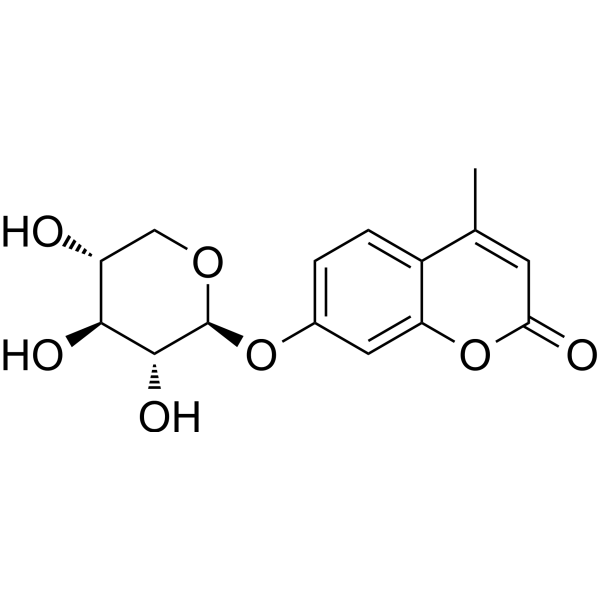
4-Methylumbelliferyl-β-D-xylopyranoside (4-Methylumbelliferyl-β-D-xyloside) is an enzymatically hydrolyzable β-D-xylopyranoside substrate. The enzymatic hydrolysis of 4-Methylumbelliferyl-β-D-xylopyranoside is mediated by the stereochemistry-retaining β-D-xylosidase GSXynB2 via a two-step catalytic process (xylosylation followed by dexylosidation). 4-Methylumbelliferyl-β-D-xylopyranoside serves as a substrate for the β-xylosidase of Trichoderma reesei QM 9414, and its enzymatic hydrolysis process is limited by the dexylosidation step.
|
-
-
- HY-W040240
-
|
|
Endogenous Metabolite
|
Infection
|
|
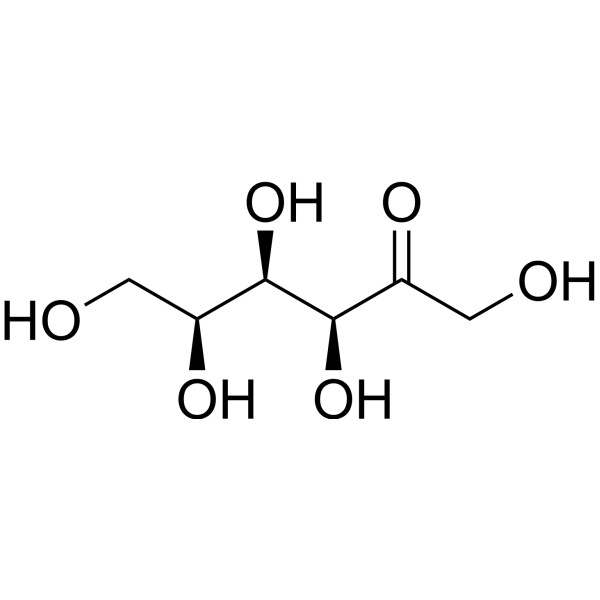
L-(-)-Sorbose (L-Sorbose) is a monosaccharide that induces the production of cellulase. L-(-)-Sorbose regulates the coordinated transcription of 6 cellulase genes (including egl3) in Trichoderma reesei strains. L-(-)-Sorbose is currently the only monosaccharide reported to exhibit cellulase-inducing activity .
|
-
-
- HY-P2840
-
|
|
Endogenous Metabolite
|
Metabolic Disease
|
|
Dextranase, Trichoderma reesei, glucan hydrolase, is often used in biochemical research. Dextranase can catalyze the hydrolysis of α-(1,6)-glucosidic bonds in dextran, and has a wide range of applications, such as food processing, sugar modification, agent preparation, and medicine for enhancing the activity of endocarditis antibiotics wait .
|
-
-
- HY-119445A
-
|
2-O-beta-D-Glucopyranosyl-D-glucopyranose monohydrate
|
Biochemical Assay Reagents
|
Infection
Others
Cancer
|
|
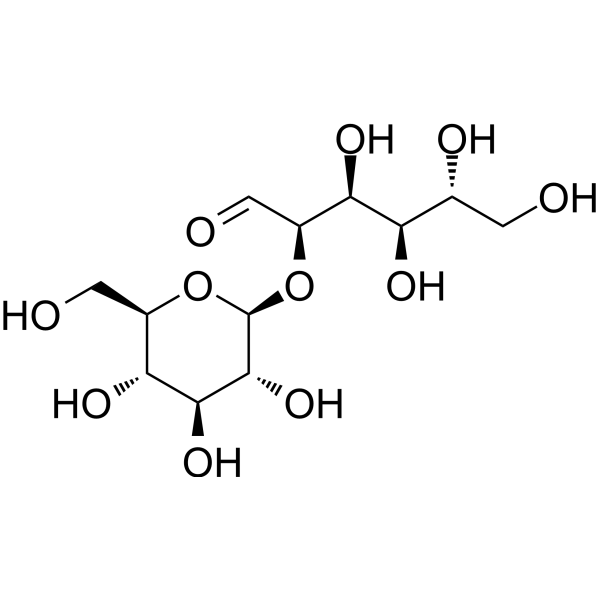
Sophorose (2-O-beta-D-Glucopyranosyl-D-glucopyranose) monohydrate is the disaccharide component of microbial glycolipids, which are often used as biosurfactants due to their hydrophobicity. Sophorolipids also exhibit antibacterial, antifungal, spermicidal, virucidal, and anticancer activities. In studies of Trichoderma reesei fermentation, sophorose monohydrate has been identified as a potent inducer of cellulase gene expression .
|
-
-
- HY-P2816
-
|
|
Biochemical Assay Reagents
|
Others
|
|
Xylanase is an enzyme targeting 1,4-β-D-xylan that randomly cleaves the β-1,4 backbone of xylan, a complex polysaccharide in plant cell walls. Xylanase finds applications in the food, feed and industrial sectors, including pulp and paper processing, baking, animal feed improvement, and biotransformation of waste .
|
-
-
- HY-135849C
-
-
-
- HY-N10418
-
|
|
Fungal
|
Infection
|
|
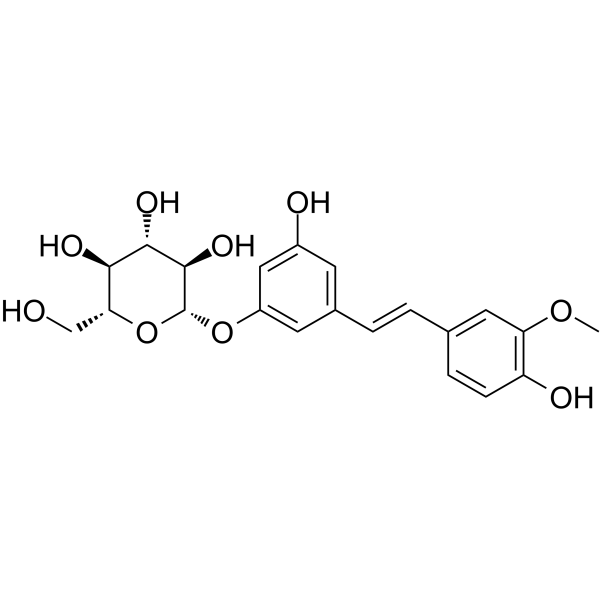
Isorhapontin is an antifungal agent. Isorhapontin inhibits the hydrolytic activity of Trichoderma cellobiohydrolase I (CBH I) with a Ki of 57.2 μM. Isorhapontin also inhibits the activity of Trichoderma endoglucanase I .
|
-
-
- HY-119445
-
|
2-O-beta-D-Glucopyranosyl-D-glucopyranose
|
Biochemical Assay Reagents
|
Others
|
|
Sophorose is a disaccharide component of microbial glycolipids produced by yeast called sophorolipids. Due to their hydrophobic nature, sophorolipids are commonly used as biosurfactants. Sophorolipids also exhibit antibacterial, antifungal, spermicidal, virucidal, and anticancer activities. Sophorose has been identified as a potent inducer of cellulase gene expression in Trichoderma reesei fermentation studies.
|
-
-
- HY-N10751
-
|
|
Bacterial
|
Infection
|
|
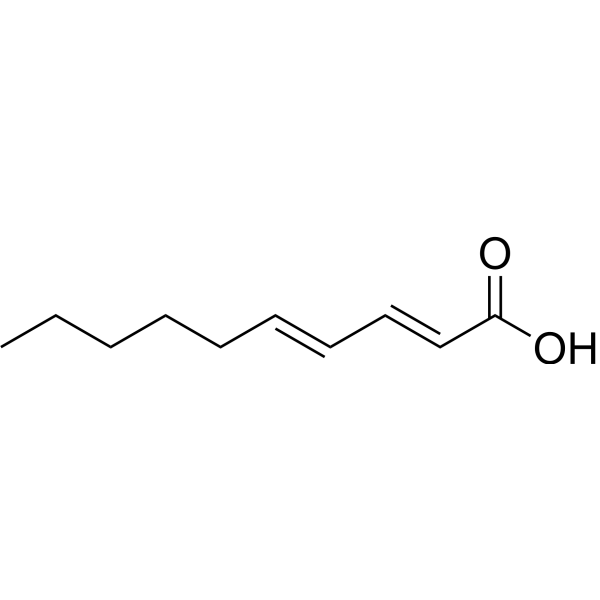
(2E,4E)-Decadienoic acid is an anti-oomycete aliphatic compound that can be found in Coculture of Bacillus subtilis and Trichoderma asperellum .
|
-
-
- HY-120183
-
|
|
Fungal
|
Infection
|
|
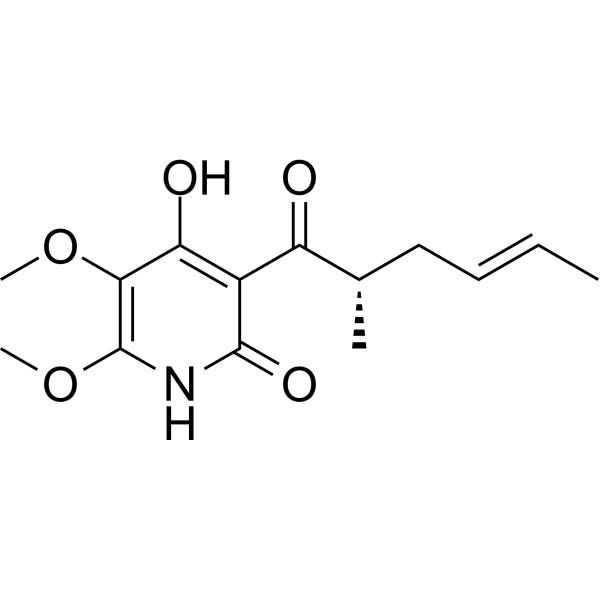
Harzianopyridone is a compound that can be isolated from Trichoderma harzianum. Harzianopyridone is a succinate dehydrogenase (SDH) inhibitor with an IC50 of 80 nM. Harzianopyridone has antifungal, antibacterial, and herbicidal activities .
|
-
-
- HY-E70107
-
|
Cbh1
|
Others
|
Others
|
|
Cellobiohydrolase I, Trichoderma longibrachiatum (Cbh1) belongs to glycoside hydrolase family 7 (GH7) that catalyzes the processive hydrolysis of cellulose into cellobiose .
|
-
-
- HY-N15512
-
|
|
NO Synthase
|
Inflammation/Immunology
|
|
Harzianol L is found in Trichoderma sp. SCSIOW21. Harzianol L can inhibit the production of NO and exhibit anti-inflammatory activity .
|
-
-
- HY-N15511
-
|
|
NO Synthase
|
Inflammation/Immunology
|
|
Harzianol A is found in Trichoderma sp. SCSIOW21. Harzianol A can inhibit the production of NO and exhibit anti-inflammatory activity .
|
-
-
- HY-N15513
-
|
|
NO Synthase
|
Inflammation/Immunology
|
|
Harzianol M is found in Trichoderma sp. SCSIOW21. Harzianol M can inhibit the production of NO and exhibit anti-inflammatory activity .
|
-
-
- HY-129515
-
|
|
Fungal
|
Others
|
|
Trichodecenin II is a fungal metabolite that can be found in conidia of the fungus, Trichoderma viride .
|
-
-
- HY-108280
-
|
VUFB 12018; Repanidal
|
Fungal
|
Infection
Inflammation/Immunology
|
|
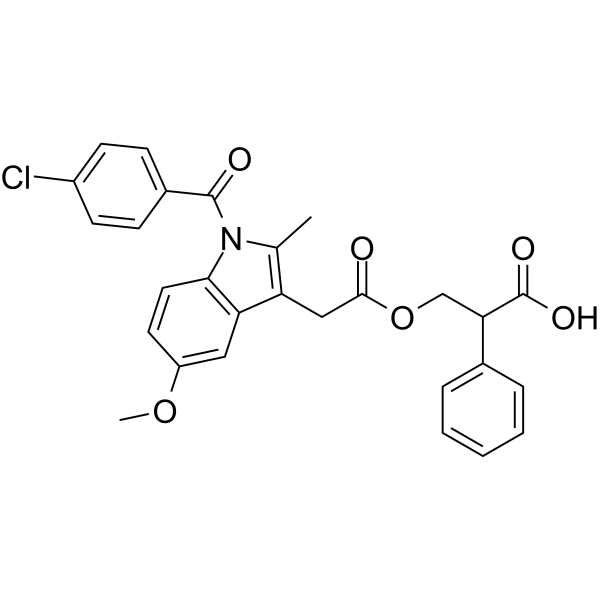
Tropesin (VUFB 12018; Repanidal) is a nonsteroid antiinflammatory agent (NSAIA) that inhibits the growth of Trichoderma viride .
|
-
-
- HY-N15514
-
|
|
Others
|
Others
|
|
Harzianol N is a harziane-type diterpene derivative isolated from the deep-sea sediment-derived fungus Trichoderma sp. SCSIOW21 .
|
-
-
- HY-N15507
-
|
|
NO Synthase
|
Inflammation/Immunology
|
|
Harzianoside A is a diterpene aminoglycoside compound discovered from Trichoderma sp. SCSIOW21. Harzianoside A has the activity of inhibiting the production of NO and can be used in the research of the anti-inflammatory field .
|
-
-
- HY-P2098
-
|
|
Antibiotic
Bacterial
Fungal
|
Infection
|
|
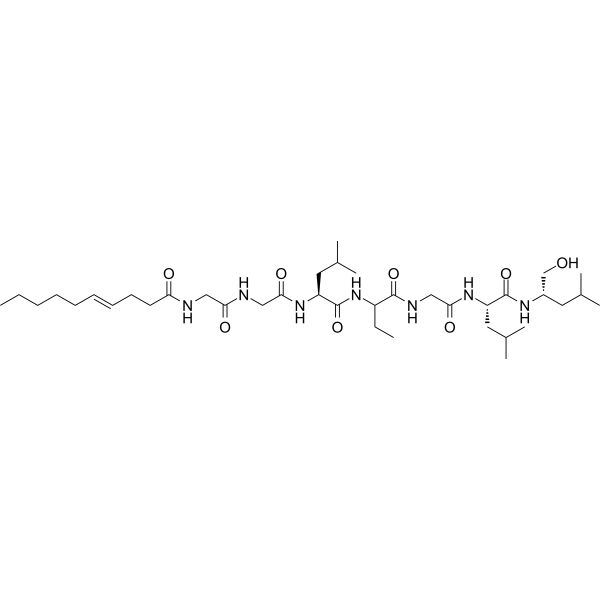
Alamethicin F 50 is an antibiotic. Alamethicin F 50 is composed of membrane-active peptide, containing 75% Alamethicin F 50/5 and 10% Alamethicin F 50/7. Alamethicin F 50 is exhibits antifungal and antibacterial activity by disrupting the integrity of microbial cell membranes, resulting in leakage of cell contents and death of the microorganisms. Alamethicin F 50 is able to reduce the surface tension of water, which can be used as a surfactant or detergent .
|
-
-
- HY-N14366
-
|
|
HIV
Endogenous Metabolite
|
Infection
|
|
Fleephilone is a fungal metabolite that can be isolated from Trichoderma harzianum. Fleephilone is a HIV REV/RRE binding inhibitor. Fleephilone inhibits the binding of REV-protein to RRE RNA with an IC50 of 7.6 μM .
|
-
-
- HY-N15509
-
|
|
NO Synthase
|
Inflammation/Immunology
|
|
Harzianol K is a novel harziane - type diterpene derivative discovered from the deep - sea sediment fungus Trichoderma sp. SCSIOW21. It has an inhibitory effect on NO production and can be used in the research of the anti - inflammatory field .
|
-
-
- HY-N15503
-
|
|
NO Synthase
|
Inflammation/Immunology
|
|
Cycloneroside B is a novel sesquiterpene aminoglycoside compound that can be isolated from Trichoderma sp. SCSIOW21. Cycloneroside B has the activity of inhibiting the production of NO, and its IC50 value for inhibiting the production of NO is 50.7 µM. Cycloneroside B can be used in the research of the anti-inflammatory field .
|
-
-
- HY-N15502
-
|
|
NO Synthase
|
Inflammation/Immunology
|
|
Cycloneroside A is a sesquiterpene aminoglycoside compound discovered from Trichoderma sp. SCSIOW21. Cycloneroside A has the activity of inhibiting the production of NO. In the experiment with macrophage RAW 264.7 cells, its IC50 value for inhibiting the production of NO is approximately 100 µM. Cycloneroside A can be used in the research of the anti-inflammatory field .
|
-
-
- HY-N15505
-
|
|
NO Synthase
|
Inflammation/Immunology
|
|
Cycloneroside D is a novel sesquiterpene aminoglycoside compound discovered from the deep - sea - sediment fungus Trichoderma sp. SCSIOW21. Cycloneroside D has the activity of inhibiting the production of NO. In the experiment with macrophage RAW 264.7 cells, its IC50 value for inhibiting the production of NO is 42.0 μM. Cycloneroside D can be used in the research of the anti - inflammatory field .
|
-
-
- HY-N15510
-
|
|
NO Synthase
|
Inflammation/Immunology
|
|
Harzianol J is a harziane - type diterpene compound discovered from the deep - sea - sediment fungus Trichoderma sp. SCSIOW21. Harzianol J has certain anti - inflammatory activity. At a concentration of 100 µM, its inhibition rate of NO is 81.8%, and its IC50 value for inhibiting the production of NO is 66.7 µM. Harzianol J can be used in the research of the anti - inflammatory field .
|
-
-
- HY-E70927
-
-
-
- HY-P2797C
-
|
|
Biochemical Assay Reagents
|
Inflammation/Immunology
|
|
Chitinase, Trichoderma viride is a chitinase from Trichoderma viride. Chitinase is a chitin-targeting enzyme with chitin hydrolysis activity. Chitinase inhibits chitin-induced innate type 2 inflammation in the lung. Chitinase augments chitin-free, allergen-induced Th2 inflammation. Chitinase mediates effector functions of IL-13 .
|
-
-
- HY-P2816A
-
|
|
Biochemical Assay Reagents
|
Metabolic Disease
|
|
Xylanase, Trichoderma viride (EC 3.2.1.8) is the name given to a class of enzymes which degrade the linear polysaccharide beta-1,4-xylan into xylose, thus breaking down hemicellulose, one of the major components of plant cell walls.
|
-
-
- HY-E70928
-
|
|
Biochemical Assay Reagents
|
Metabolic Disease
|
|
Laminarinase,Trichoderma sp. (EC 3.2.1.6) degrades β-1,4-glucans of cellulose, xyloglucan and β-1,4-xylan. β-Glucanase represents a group of carbohydrate enzymes which break down glycosidic bonds within beta-glucan.
|
-
-
- HY-E70926
-
|
|
Endogenous Metabolite
|
Metabolic Disease
|
|
Lysine Oxidase, Trichoderma viride (EC 1.4.3.14), is an oxidoreductase that acts on the CH-NHsub>2 group in the donor molecule and uses oxygen as the acceptor. Lysine Oxidase participates in the degradation of lysine. The three substrates of lysine oxidase are L-lysine, O2, and H2O, while its three products are 6-amino-2-oxohexanoic acid, NH3, and H2O2.
|
-
-
- HY-P3017A
-
|
|
Biochemical Assay Reagents
|
Others
|
|
Endo-1,4-β-Xylanase, Trichoderma longibrachiatum (EC 3.2.1.8) is the name given to a class of enzymes which degrade the linear polysaccharide beta-1,4-xylan into xylose, thus breaking down hemicellulose, one of the major components of plant cell walls.
|
-
-
- HY-N17416
-
-
-
- HY-N19824
-
|
|
Fungal
|
Infection
|
|
Koninginin D is a potent antifungal agent that can be isolated from fungi including Trichoderma applanatum. Koninginin D inhibits growth of various fungal species including Gaeumannomyces graminis var. tritici, Bipolaris sorokiniana and so on. Koninginin D can be used for the research of fungal infection .
|
-
-
- HY-W017143
-
|
|
Fungal
|
Infection
|
|
Antifungal agent 158 is an α-pyrone derivative that can be found in Trichoderma harzianum, exhibiting antifungal activity against select plant-pathogenic fungi, including Chaetomium spp., Curvularia lunata, and Aspergillus flavus. Antifungal agent 158 is non-toxic to greenhouse-grown bean, corn, and tobacco plants. Antifungal agent 158 can be used for research on Aspergillus flavus infection .
|
-
-
- HY-N14547
-
|
|
Fungal
|
Infection
|
|
Crotocin has the fungal activity of anti-cryptococcus neoforme, candida albicans, Tinea trichoderma of brewer's yeast, and can be inactivated by blood .
|
-
-
- HY-N15515
-
|
|
Others
|
Others
|
|
Harzianol O is a harziane-type diterpene derivative isolated from the deep-sea sediment-derived fungus Trichoderma sp. SCSIOW21 .
|
-
-
- HY-N15500
-
|
|
Others
|
Cancer
|
|
Trichodermoside is a sesquiterpene glycoside compound discovered from Trichoderma sp. PT2. Trichodermoside has the activity of weakly inhibiting the growth of human HeLa cells and can be used in the research related to the anti-tumor field .
|
-
-
- HY-W714197
-
|
|
Fungal
|
Infection
|
|
Methfuroxam is a fungicide that exhibits extremely high inhibitory activity against three important pathogenic fungi (C. salmonicolor, R. lignosus, Ganoderma sp.) of rubber trees and oil palms .
|
-
-
- HY-N15506
-
|
|
NO Synthase
|
Inflammation/Immunology
|
|
Cycloneroside E is a sesquiterpene aminoglycoside compound discovered from Trichoderma sp. SCSIOW21. Cycloneroside E has the activity of inhibiting the production of NO. In macrophage RAW 264.7 cells, its IC50 value for inhibiting the production of NO is 48.0 µM. Cycloneroside E can be used in the research of the anti-inflammatory field .
|
-
-
- HY-N15508
-
|
|
NO Synthase
|
Inflammation/Immunology
|
|
Harzianoside B is a diterpene aminoglycoside compound discovered from Trichoderma sp. SCSIOW21. Harzianoside B has the activity of inhibiting the production of NO. In the experiment with macrophage RAW 264.7 cells, its IC50 value is close to the maximum tested concentration of 100 µM. It can be used in the research of the anti-inflammatory field .
|
-
-
- HY-N15501
-
|
|
NO Synthase
|
Inflammation/Immunology
|
|
Trichaspside F is a sesquiterpene aminoglycoside compound discovered from Trichoderma sp. SCSIOW21. Trichaspside F has the activity of inhibiting the production of NO. In the experiment with macrophage RAW 264.7 cells, its IC50 value for inhibiting the production of NO is 54.8 µM. Trichaspside F can be used in the research of the anti-inflammatory field .
|
-
-
- HY-N15504
-
|
|
NO Synthase
|
Inflammation/Immunology
|
|
Cycloneroside C is a novel sesquiterpene aminoglycoside compound discovered from the deep - sea - sediment fungus Trichoderma sp. SCSIOW21. Cycloneroside C has the activity of inhibiting the production of NO. In the experiment with macrophage RAW 264.7 cells, its IC50 value for inhibiting the production of NO is 57.1 μM. Cycloneroside C can be used in the research of the anti - inflammatory field .
|
-
-
- HY-W169645
-
|
NSC 102761
|
Fungal
|
Infection
|
|
1,5-Hexadien-3-ol is a green leaf volatile (GLV) alcohol that can be found in tomato plants. 1,5-Hexadien-3-ol contributes to protection against Botrytis cinerea. 1,5-Hexadien-3-ol can be used for the research of grey mould disease .
|
-
-
- HY-W072994
-
|
|
Fungal
Insecticide
|
Infection
|
|
Copper naphthenate is an organocopper compound with the properties of a fungicide, preservative, oil-borne protectant, and toxicant. Copper naphthenate increases serum and urine copper levels in exposed populations, causes skin irritation, and induces intraperitoneal toxicity in rats. Copper naphthenate inhibits the growth of decay fungi and molds on moso bamboo, kills the free-living stages of Ichthyophthirius multifiliis, and controls wood-boring insects and termites .
|
-
-
- HY-N19641
-
|
Dichlorodiaportin
|
Bacterial
Endogenous Metabolite
|
Infection
|
|
Dichlorodiaporthin (Dichlorodiaportin) is an isocoumarin metabolite found in cultures of Penicillium nalgiovense. Dichlorodiaporthin acts as an antibacterial agent against various bacterial species .
|
-
| Cat. No. |
Product Name |
Type |
-
- HY-119445A
-
|
2-O-beta-D-Glucopyranosyl-D-glucopyranose monohydrate
|
Biochemical Assay Reagents
|
|
Sophorose (2-O-beta-D-Glucopyranosyl-D-glucopyranose) monohydrate is the disaccharide component of microbial glycolipids, which are often used as biosurfactants due to their hydrophobicity. Sophorolipids also exhibit antibacterial, antifungal, spermicidal, virucidal, and anticancer activities. In studies of Trichoderma reesei fermentation, sophorose monohydrate has been identified as a potent inducer of cellulase gene expression .
|
-
- HY-119445
-
|
2-O-beta-D-Glucopyranosyl-D-glucopyranose
|
Biochemical Assay Reagents
|
|
Sophorose is a disaccharide component of microbial glycolipids produced by yeast called sophorolipids. Due to their hydrophobic nature, sophorolipids are commonly used as biosurfactants. Sophorolipids also exhibit antibacterial, antifungal, spermicidal, virucidal, and anticancer activities. Sophorose has been identified as a potent inducer of cellulase gene expression in Trichoderma reesei fermentation studies.
|
| Cat. No. |
Product Name |
Target |
Research Area |
-
- HY-P2098
-
|
|
Antibiotic
Bacterial
Fungal
|
Infection
|
|
Alamethicin F 50 is an antibiotic. Alamethicin F 50 is composed of membrane-active peptide, containing 75% Alamethicin F 50/5 and 10% Alamethicin F 50/7. Alamethicin F 50 is exhibits antifungal and antibacterial activity by disrupting the integrity of microbial cell membranes, resulting in leakage of cell contents and death of the microorganisms. Alamethicin F 50 is able to reduce the surface tension of water, which can be used as a surfactant or detergent .
|
| Cat. No. |
Product Name |
Category |
Target |
Chemical Structure |
-
- HY-137824
-
|
4-Methylumbelliferyl-β-D-xyloside
|
Structural Classification
Animals
Coumarins
Phenylpropanoids
Source Classification
|
Biochemical Assay Reagents
|
|
4-Methylumbelliferyl-β-D-xylopyranoside (4-Methylumbelliferyl-β-D-xyloside) is an enzymatically hydrolyzable β-D-xylopyranoside substrate. The enzymatic hydrolysis of 4-Methylumbelliferyl-β-D-xylopyranoside is mediated by the stereochemistry-retaining β-D-xylosidase GSXynB2 via a two-step catalytic process (xylosylation followed by dexylosidation). 4-Methylumbelliferyl-β-D-xylopyranoside serves as a substrate for the β-xylosidase of Trichoderma reesei QM 9414, and its enzymatic hydrolysis process is limited by the dexylosidation step.
|
-
-
- HY-W040240
-
-
-
- HY-N10418
-
-
-
- HY-N10751
-
-
-
- HY-120183
-
|
|
Natural Products
Microorganisms
Source Classification
|
Fungal
|
|
Harzianopyridone is a compound that can be isolated from Trichoderma harzianum. Harzianopyridone is a succinate dehydrogenase (SDH) inhibitor with an IC50 of 80 nM. Harzianopyridone has antifungal, antibacterial, and herbicidal activities .
|
-
-
- HY-N15512
-
-
-
- HY-N15511
-
-
-
- HY-N15513
-
-
-
- HY-129515
-
-
-
- HY-N15514
-
-
-
- HY-N15507
-
-
-
- HY-N14366
-
-
-
- HY-N15509
-
-
-
- HY-N15503
-
|
|
Microorganisms
Terpenoids
Sesquiterpenes
Source Classification
|
NO Synthase
|
|
Cycloneroside B is a novel sesquiterpene aminoglycoside compound that can be isolated from Trichoderma sp. SCSIOW21. Cycloneroside B has the activity of inhibiting the production of NO, and its IC50 value for inhibiting the production of NO is 50.7 µM. Cycloneroside B can be used in the research of the anti-inflammatory field .
|
-
-
- HY-N15502
-
|
|
Microorganisms
Terpenoids
Sesquiterpenes
Source Classification
|
NO Synthase
|
|
Cycloneroside A is a sesquiterpene aminoglycoside compound discovered from Trichoderma sp. SCSIOW21. Cycloneroside A has the activity of inhibiting the production of NO. In the experiment with macrophage RAW 264.7 cells, its IC50 value for inhibiting the production of NO is approximately 100 µM. Cycloneroside A can be used in the research of the anti-inflammatory field .
|
-
-
- HY-N15505
-
|
|
Microorganisms
Terpenoids
Sesquiterpenes
Source Classification
|
NO Synthase
|
|
Cycloneroside D is a novel sesquiterpene aminoglycoside compound discovered from the deep - sea - sediment fungus Trichoderma sp. SCSIOW21. Cycloneroside D has the activity of inhibiting the production of NO. In the experiment with macrophage RAW 264.7 cells, its IC50 value for inhibiting the production of NO is 42.0 μM. Cycloneroside D can be used in the research of the anti - inflammatory field .
|
-
-
- HY-N15510
-
|
|
Microorganisms
Terpenoids
Diterpenoids
Source Classification
|
NO Synthase
|
|
Harzianol J is a harziane - type diterpene compound discovered from the deep - sea - sediment fungus Trichoderma sp. SCSIOW21. Harzianol J has certain anti - inflammatory activity. At a concentration of 100 µM, its inhibition rate of NO is 81.8%, and its IC50 value for inhibiting the production of NO is 66.7 µM. Harzianol J can be used in the research of the anti - inflammatory field .
|
-
-
- HY-N17416
-
-
-
- HY-N19824
-
|
|
Structural Classification
Microorganisms
Antibiotics
Source Classification
|
Fungal
|
|
Koninginin D is a potent antifungal agent that can be isolated from fungi including Trichoderma applanatum. Koninginin D inhibits growth of various fungal species including Gaeumannomyces graminis var. tritici, Bipolaris sorokiniana and so on. Koninginin D can be used for the research of fungal infection .
|
-
-
- HY-W017143
-
|
|
Structural Classification
Microorganisms
Ketones, Aldehydes, Acids
Source Classification
|
Fungal
|
|
Antifungal agent 158 is an α-pyrone derivative that can be found in Trichoderma harzianum, exhibiting antifungal activity against select plant-pathogenic fungi, including Chaetomium spp., Curvularia lunata, and Aspergillus flavus. Antifungal agent 158 is non-toxic to greenhouse-grown bean, corn, and tobacco plants. Antifungal agent 158 can be used for research on Aspergillus flavus infection .
|
-
-
- HY-N14547
-
-
-
- HY-N15515
-
-
-
- HY-N15500
-
-
-
- HY-N15506
-
|
|
Microorganisms
Terpenoids
Sesquiterpenes
Source Classification
|
NO Synthase
|
|
Cycloneroside E is a sesquiterpene aminoglycoside compound discovered from Trichoderma sp. SCSIOW21. Cycloneroside E has the activity of inhibiting the production of NO. In macrophage RAW 264.7 cells, its IC50 value for inhibiting the production of NO is 48.0 µM. Cycloneroside E can be used in the research of the anti-inflammatory field .
|
-
-
- HY-N15508
-
|
|
Microorganisms
Terpenoids
Diterpenoids
Source Classification
|
NO Synthase
|
|
Harzianoside B is a diterpene aminoglycoside compound discovered from Trichoderma sp. SCSIOW21. Harzianoside B has the activity of inhibiting the production of NO. In the experiment with macrophage RAW 264.7 cells, its IC50 value is close to the maximum tested concentration of 100 µM. It can be used in the research of the anti-inflammatory field .
|
-
-
- HY-N15501
-
|
|
Microorganisms
Terpenoids
Sesquiterpenes
Source Classification
|
NO Synthase
|
|
Trichaspside F is a sesquiterpene aminoglycoside compound discovered from Trichoderma sp. SCSIOW21. Trichaspside F has the activity of inhibiting the production of NO. In the experiment with macrophage RAW 264.7 cells, its IC50 value for inhibiting the production of NO is 54.8 µM. Trichaspside F can be used in the research of the anti-inflammatory field .
|
-
-
- HY-N15504
-
|
|
Microorganisms
Terpenoids
Sesquiterpenes
Source Classification
|
NO Synthase
|
|
Cycloneroside C is a novel sesquiterpene aminoglycoside compound discovered from the deep - sea - sediment fungus Trichoderma sp. SCSIOW21. Cycloneroside C has the activity of inhibiting the production of NO. In the experiment with macrophage RAW 264.7 cells, its IC50 value for inhibiting the production of NO is 57.1 μM. Cycloneroside C can be used in the research of the anti - inflammatory field .
|
-
-
- HY-W169645
-
-
-
- HY-N19641
-
-
| Cat. No. |
Compare |
Product Name |
Species |
Source |
Image |
Compare Products
|
| Products |
|
| Cat. No. |
|
| Species |
|
| Source |
|
| Tag |
|
| Accession |
|
| Gene ID |
|
| Molecular Weight |
|
| Purity |
|
| Endotoxin Level |
|
| Biological Activity |
|
| Appearance |
|
| Formulation |
|
| Storage & Stability |
|
| Shipping |
|
| Free Sample |
Yes
No
|
| Size |
* This product has been "discontinued".
Optimized version of product available:
|
Your information is safe with us. * Required Fields.
Inquiry Information
- Product Name:
- Cat. No.:
- Quantity:
- MCE Japan Authorized Agent:

