4 Results for "

abnormal cellular proliferation

" in MedChemExpress (MCE) Product Catalog:
Products (4)

4 Results for "abnormal cellular proliferation" in MCE Product Catalog:

1
1 Cited Publications
Cat. No.: HY-16191
CAS No.: 1233948-35-0
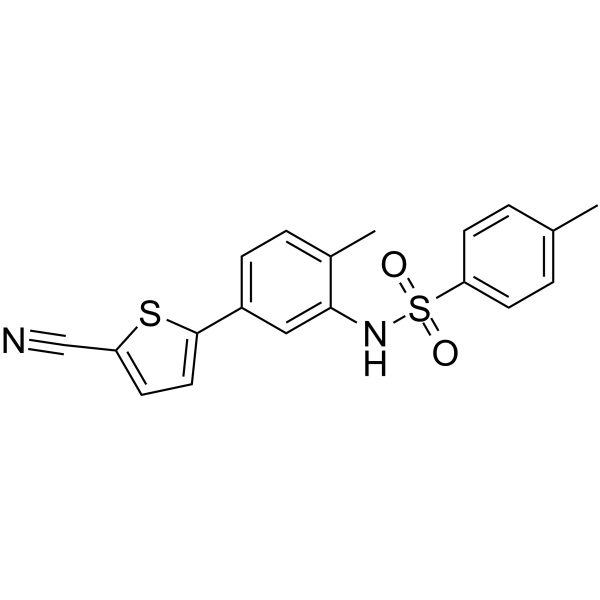
ELR510444 is an orally active tubulin inhibitor with an IC50 of 10 μM. ELR510444 binds to the colchicine-binding site on β-tubulin, inhibits tubulin assembly, depolymerizes microtubules and blocks HIF activity. ELR510444 induces cellular microtubule loss, abnormal mitotic spindle, mitotic arrest, apoptosis, morphological changes in tumor endothelial cells, and inhibits cancer cell proliferation, angiogenesis and tumor growth. ELR510444 can be used in research related to various cancers such as renal cell carcinoma .
loading...
    loading...
1
1 Cited Publications
Cat. No.: HY-N4208
CAS No.: 2230777-09-8
Target:  

Microtubule/Tubulin

Research Areas:  

Cancer

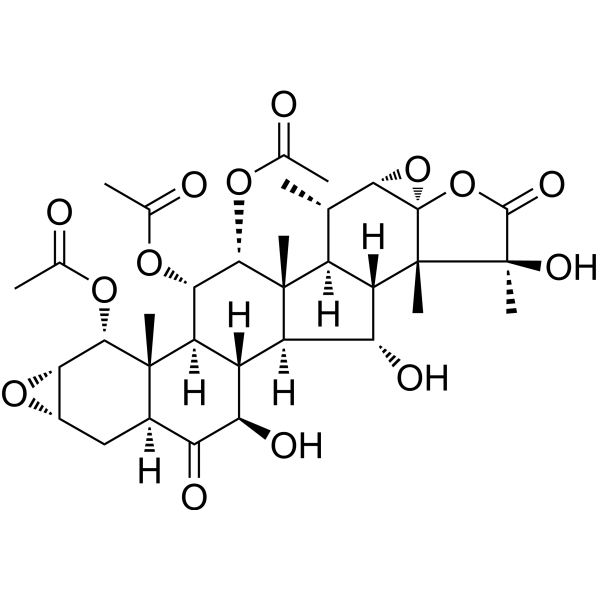
Taccalonolide AJ is a microtubule stabilizer and antiproliferative agent with an IC50 of 4.2 nM against β-tubulin (β-tubulin) D226. Taccalonolide AJ increases cellular microtubule density, induces microtubule bundling, triggers G2/M cell cycle arrest with abnormal mitotic spindles, and inhibits cancer cell proliferation. Taccalonolide AJ can be used in the research of oral cancer, breast cancer, solid tumors, as well as tumors resistant to Paclitaxel (HY-B0015) and Doxorubicin (HY-15142A) .
loading...
    loading...
Cat. No.: HY-146033
CAS No.: 331851-78-6
Target:  

HPV

Research Areas:  

Cancer

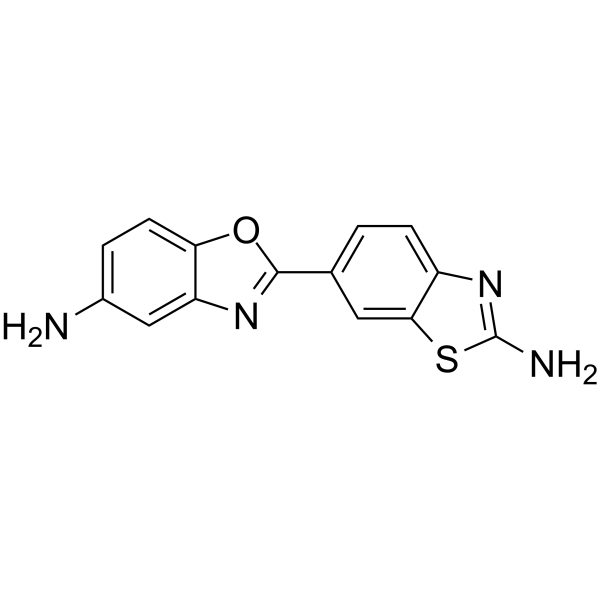
HPV18-IN-1 (Compound H1) is a potent inhibitor of HPV18. HPV18-IN-1 prevents cervical cancer cells from premature cell procession and abnormal proliferation. HPV18-IN-1 supresses E7-Rb-E2F cellular pathway and DNA methylation. HPV18-IN-1 has the potential for the research of cancer diseases .
loading...
    loading...
Cat. No.: HY-153421
CAS No.: 2242753-66-6
Research Areas:  

Cancer

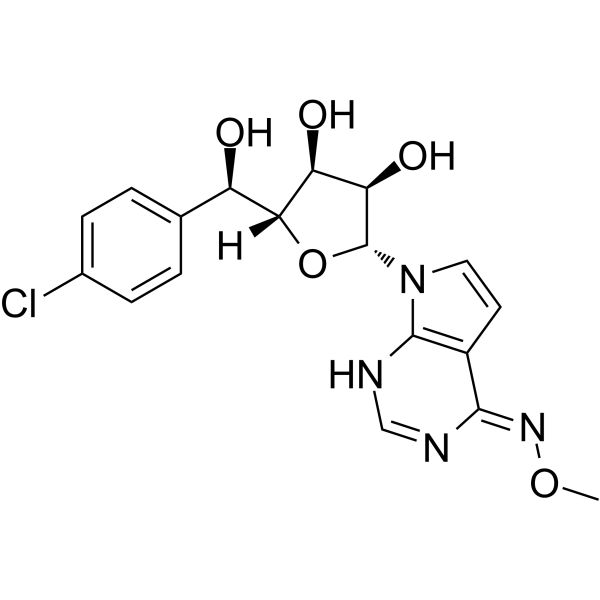
PRMT5-IN-28 (compound 36) is an inhibitor of protein arginine methyltransferase 5 (PRMT5) enzyme. Protein arginine methylation is a common post-translational modification involved in gene transcription, mRNA splicing, DNA repair, protein cellular localization, cell fate determination and signal transduction, etc. Abnormal PRMT5 can promote cancer cell proliferation, resist apoptosis, enhance invasion and metastasis, and affect immune escape .
loading...
    loading...

