


23 Results for "

amyloid-β plaques

" in MedChemExpress (MCE) Product Catalog:
Products (23)

23 Results for "amyloid-β plaques" in MCE Product Catalog:

1
1 Cited Publications
Cat. No.: HY-W017540
CAS No.: 35404-50-3
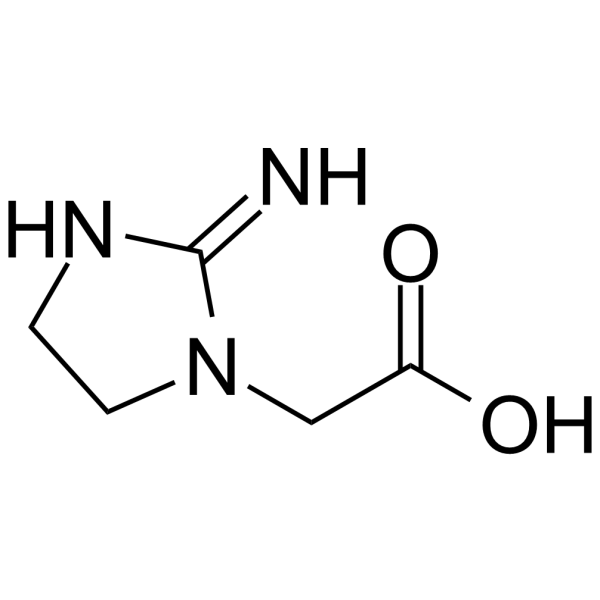
Cyclocreatine, a creatine analogue, acts as a brain-penetrant and potent bioenergetic protective agent by providing high levels of ATP. Cyclocreatine can be phosphorylated and dephosphorylated by creatine kinases. Cyclocreatine suppresses creatine metabolism ameliorating the cognitive, autistic and epileptic phenotype in a mouse model of creatine transporter defciency. Cyclocreatine protects against ischemic injury and enhances cardiac recovery during early reperfusion in dogs and rats. Cyclocreatine decreases plaque-adjacent neuronal dystrophy in TREM2-deficient mice with amyloid-β pathology. Cyclocreatine is proming for research of ischemic heart disease, cardiovascular diseases, Alzheimer’s disease and other neurodegenerative diseases associated with microglial dysfunction, prostate cancer .
loading...
    loading...
Cat. No.: HY-P99185
CAS No.: 648895-38-9
Synonyms: AAB-001
Research Areas:  

Neurological Disease

Bapineuzumab (AAB-001) is a humanized IgG1 monoclonal antibody that binds to the N-terminal region of amyloid beta in a helical conformation. Bapineuzumab induces microglial activation by upregulating CD11B, producing pro-inflammatory cytokines (IL-1β and TNFα), clearing plaques, and reducing insoluble and aggregated . Bapineuzumab can be used for research on Alzheimer's disease .
loading...
    loading...
Cat. No.: HY-176293
CAS No.: 1799626-16-6
Research Areas:  

Neurological Disease

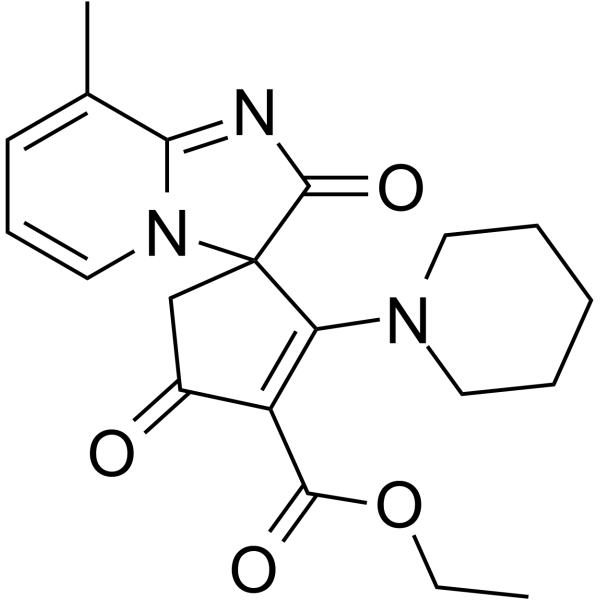
EP2 receptor antagonist-3 is a selective EP2 receptor antagonist (IC50: 8 nM in hEP2 SPA assay, 50 nM in hEP2 cAMP assay). EP2 receptor antagonist-3 increases the macrophage-mediated clearance of Amyloid-β plaques. EP2 receptor antagonist-3 can be used for the study of alzheimer’s diseases .
loading...
    loading...
Cat. No.: HY-P990078
CAS No.: 2571940-41-3
Synonyms: LY3372993

Target:  

Amyloid-β

Research Areas:  

Neurological Disease

Remternetug (LY3372993) is a monoclonal antibody that targets pyroglutamylated amyloid β fibrils (N3pG-Aβ). Remternetug specifically binds to N3pG-Aβ, thereby clearing amyloid plaques in the brain and reducing amyloid burden. Remternetug can be used in research related to Alzheimer's disease .
loading...
    loading...
Cat. No.: HY-120597
CAS No.: 1256269-87-0
Purity:  99.80%
Target:  

Calcium Channel

Research Areas:  

Neurological Disease

SAK3 is a potent T-type voltage-gated Ca 2+ channels (T-VGCCs) enhancer. SAK3 enhances Cav3.1 and Cav3.3 T-type Ca 2+ channel currents. Acute SAK3 administration improves memory deficits in olfactory-bulbectomized mice . SAK3 inhibits amyloid β plaque formation in APP-KI mice by activating the proteasome activity .
loading...
    loading...
Cat. No.: HY-123495
CAS No.: 1623747-97-6
Purity:  98.03%
Target:  

Fluorescent Dye

Research Areas:  

Neurological Disease

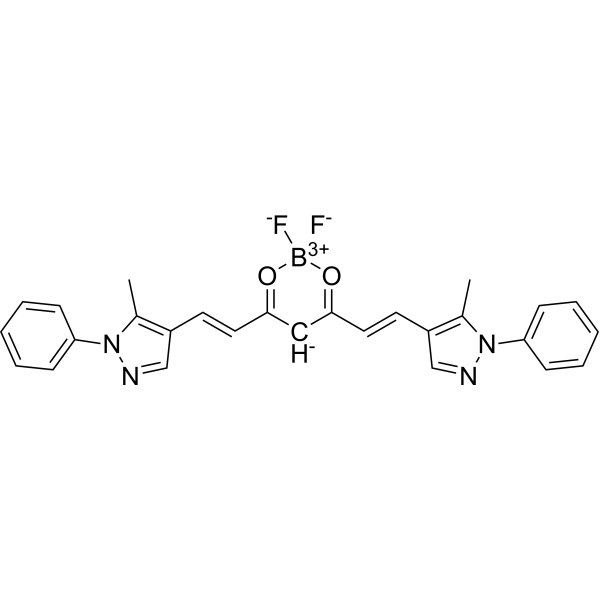
CRANAD-28 is a robust fluorescent compound for visualization of amyloid beta plaques .
loading...
    loading...
Cat. No.: HY-W611371
CAS No.: 61694-81-3
Target:  

TRP Channel iGluR

Research Areas:  

Neurological Disease

FP802 is an orally active potent TwinF interface inhibitor that disrupts and detoxifies the NMDAR/TRPM4 death complex. FP802 exerts powerful neuroprotective effects in the 5xFAD mouse model of Alzheimer’s disease (AD) by preventing cognitive decline, preserving neuronal structural integrity, reducing amyloid-β plaque formation, and mitigating mitochondrial pathology . FP802 stops loss of motor neurons, reduces serum neurofilament light chain (NfL) levels, improves motor performance, and extends life in a mouse model of amyotrophic lateral sclerosis (ALS). FP802 can be used for AD and ALS research .
loading...
    loading...
Cat. No.: HY-P11540
CAS No.: 2923120-30-1
CCKBR agonist-1 (Compound 3r1) is a Gq-protein-preferring cholecystokinin B receptor (CCKBR) agonist with an EC50 of 35 pM. CCKBR agonist-1 significantly increases the survival rate of neurons, with an EC50 of 37 pM. CCKBR agonist-1 can improve the cognitive decline in mice by upregulating α-secretase (ADAM10) and calcium signaling molecule PLCB4, reduce the number of amyloid β () plaques, and promote long-term potentiation (LTP). CCKBR agonist-1 can be used for the study of Alzheimer's disease .
loading...
    loading...
Cat. No.: HY-P4882
CAS No.: 183449-57-2
Target:  

Amyloid-β Tau Protein

Research Areas:  

Neurological Disease

(Pyr3)-Amyloid β-Protein (3-42) is an N-terminally truncated pyroglutamylated β-amyloid peptide. (Pyr3)-Amyloid β-Protein (3-42) forms stable β-sheet structures across different pH values, co-oligomerizes with Aβ1-42 to form cytotoxic oligomers, induces tau-dependent cytotoxicity and neuronal loss, inhibits hippocampal LTP, and exhibits stronger protease resistance. (Pyr3)-Amyloid β-Protein (3-42) exists in the brain tissues of human Alzheimer's disease patients, correlates with the pathogenesis of Alzheimer's disease, and follows a unique, faster oligomerization pathway. (Pyr3)-Amyloid β-Protein (3-42) can be used in Alzheimer's disease-related research .
loading...
    loading...
Cat. No.: HY-W611371A
CAS No.: 2490401-57-3
Target:  

TRP Channel iGluR

Research Areas:  

Neurological Disease

FP802 dihydrochloride is an orally active potent TwinF interface inhibitor that disrupts and detoxifies the NMDAR/TRPM4 death complex. FP802 dihydrochloride exerts powerful neuroprotective effects in the 5xFAD mouse model of Alzheimer’s disease (AD) by preventing cognitive decline, preserving neuronal structural integrity, reducing amyloid-β plaque formation, and mitigating mitochondrial pathology . FP802 dihydrochloride stops loss of motor neurons, reduces serum neurofilament light chain (NfL) levels, improves motor performance, and extends life in a mouse model of amyotrophic lateral sclerosis (ALS) . FP802 dihydrochloride can be used for AD and ALS research .
loading...
    loading...
Cat. No.: HY-N6619A
CAS No.: 21133-52-8
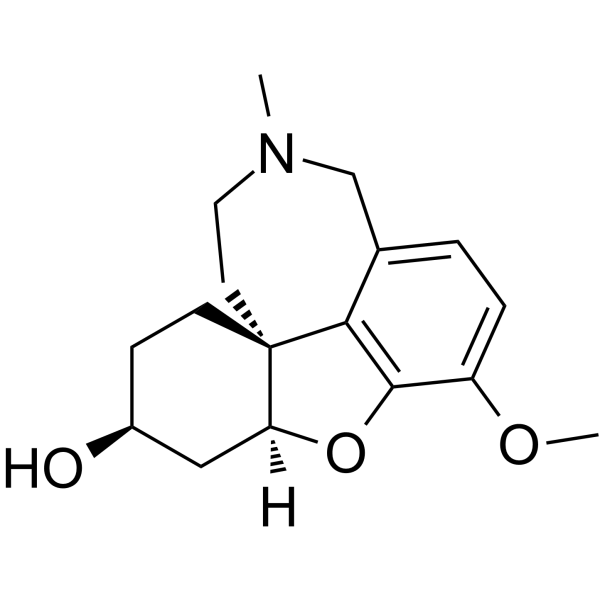
Lycoramine is a blood-brain barrier-penetrating Acetylcholinesterase inhibitor and Galanthamine (HY-76299) derivative. Lycoramine induces Amyloid-beta plaque clearance. Lycoramine induces reversal of cognitive decline and memory improvement. Lycoramine can be used for research on Alzheimer's disease and myasthenia gravis .
loading...
    loading...
Cat. No.: HY-W017540R
CAS No.: 35404-50-3
Cyclocreatine, a creatine analogue, acts as a brain-penetrant and potent bioenergetic protective agent by providing high levels of ATP. Cyclocreatine can be phosphorylated and dephosphorylated by creatine kinases. Cyclocreatine suppresses creatine metabolism ameliorating the cognitive, autistic and epileptic phenotype in a mouse model of creatine transporter defciency. Cyclocreatine protects against ischemic injury and enhances cardiac recovery during early reperfusion in dogs and rats. Cyclocreatine decreases plaque-adjacent neuronal dystrophy in TREM2-deficient mice with amyloid-β pathology. Cyclocreatine is proming for research of ischemic heart disease, cardiovascular diseases, Alzheimer’s disease and other neurodegenerative diseases associated with microglial dysfunction, prostate cancer .
loading...
    loading...
Cat. No.: HY-W841438
CAS No.: 5266-20-6
Target:  

Amyloid-β Tau Protein

Research Areas:  

Neurological Disease

Lithium orotate is an orally active lithium supplement with reduced binding that can bypass amyloid sequestration in AD mice models. Lithium orotate can prevent Aβ plaque deposition and phospho-tau accumulation and reverse AD pathology, neuroinflammatory changes and memory loss in AD mice models and ageing wild-type mice. Lithium orotate can be used for the research of alcoholism and Alzheimer’s disease .
loading...
    loading...
Cat. No.: HY-N6619
CAS No.: 89505-76-0
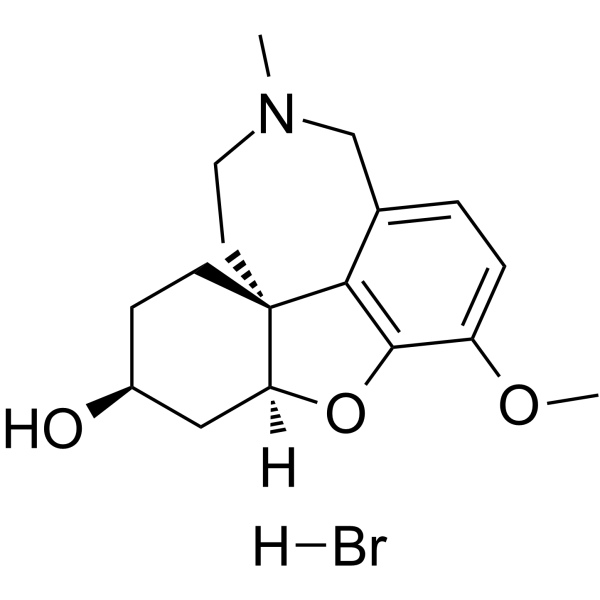
Lycoramine hydrobromide is a blood-brain barrier-penetrating Acetylcholinesterase inhibitor and Galanthamine (HY-76299) derivative. Lycoramine hydrobromide induces Amyloid-beta plaque clearance. Lycoramine hydrobromide induces reversal of cognitive decline and memory improvement. Lycoramine hydrobromide can be used for research on Alzheimer's disease and myasthenia gravis .
loading...
    loading...
Cat. No.: HY-W017540S
Cyclocreatine- 13C3 is the 13C-labeled Cyclocreatine (HY-W017540). Cyclocreatine, a creatine analogue, acts as a brain-penetrant and potent bioenergetic protective agent by providing high levels of ATP. Cyclocreatine can be phosphorylated and dephosphorylated by creatine kinases. Cyclocreatine suppresses creatine metabolism ameliorating the cognitive, autistic and epileptic phenotype in a mouse model of creatine transporter defciency. Cyclocreatine protects against ischemic injury and enhances cardiac recovery during early reperfusion in dogs and rats. Cyclocreatine decreases plaque-adjacent neuronal dystrophy in TREM2-deficient mice with amyloid-β pathology. Cyclocreatine is proming for research of ischemic heart disease, cardiovascular diseases, Alzheimer’s disease and other neurodegenerative diseases associated with microglial dysfunction, prostate cancer .
loading...
    loading...
Cat. No.: HY-100740A
CAS No.: 1383986-31-9
Synonyms: AZD-3293 hydrochloride; LY3314814 hydrochloride
Target:  

Beta-secretase

Research Areas:  

Neurological Disease

Lanabecestat (AZD3293; LY3314814) hydrochloride is a potent BACE1 inhibitor that has been investigated for its potential as a modifying treatment for Alzheimer's disease. Lanabecestat (hydrochloride) demonstrated significant dose- and time-dependent reductions in concentrations of amyloid beta peptides in plasma, cerebrospinal fluid, and brain. Lanabecestat (hydrochloride) was also shown to produce reductions in Aβ neuritic plaque burden without demonstrating clinical benefits or slowing the progression of Alzheimer's disease pathophysiology.
loading...
    loading...
Cat. No.: HY-P991654

Target:  

Amyloid-β

Research Areas:  

Neurological Disease

SAR228810 is a humanized IgG4 monoclonal antibody inhibitor targeting amyloid β (Aβ) with a KD? of ?0.43 ?nM for protofibrillar Aβ over monomeric Aβ. SAR228810 significantly inhibits the brain amyloid plaque formation and oligomer-induced synaptic dysfunction and neurite loss. SAR228810 has significant protection against Aβ-mediated neuritotoxicity. MINT1526A can be used for Alzheimer’s disease imaging and immunotherapy research .
loading...
    loading...
Cat. No.: HY-149219
CAS No.: 2716871-93-9
Target:  

Amyloid-β

Research Areas:  

Neurological Disease

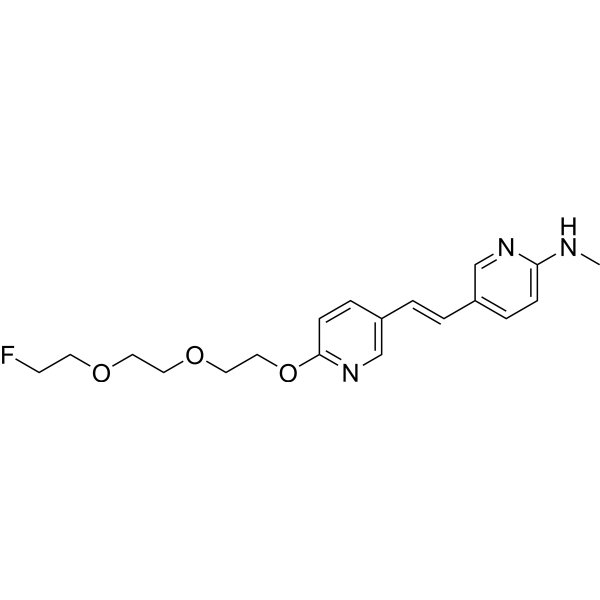
BIBD-124 binds amyloid beta (Aβ) plaque with an IC50 value of 9.51 nM. [18F]BIBD-124 can be used as radiotracer of Aβ plaques .
loading...
    loading...
Cat. No.: HY-182304
CAS No.: 1338489-62-5
CLR01 sodium is a blood-brain barrier-permeable anti-aggregation agent. CLR01 sodium inhibits the de novo aggregation of Amyloid-β 40/42, α-synuclein, IAPP, tau protein and SOD1. CLR01 sodium reduces amyloid plaque burden in the cortex of triple-transgenic mice and improves the memory and motor abilities of these mice. CLR01 sodium can be used in research related to Alzheimer's disease, Parkinson's disease, and amyotrophic lateral sclerosis (ALS) .
loading...
    loading...
Cat. No.: HY-184474
Target:  

LXR PPAR

Research Areas:  

Neurological Disease

AU403 is a potent, brain-penetrant, isoform-selective LXRβ/PPARδ dual agonist (EC50 ≈ 45 nM for LXRβ and EC50 ≈ 40 nM for PPARδ). AU403 is designed to bypass LXRα-driven hepatotoxicity. AU403 significantly improves cognitive functions and reduces amyloid-β plaque burden in 3xTg-AD mice. AU403 is a promising dual-acting agonist for the research of Alzheimer’s disease .
loading...
    loading...

