



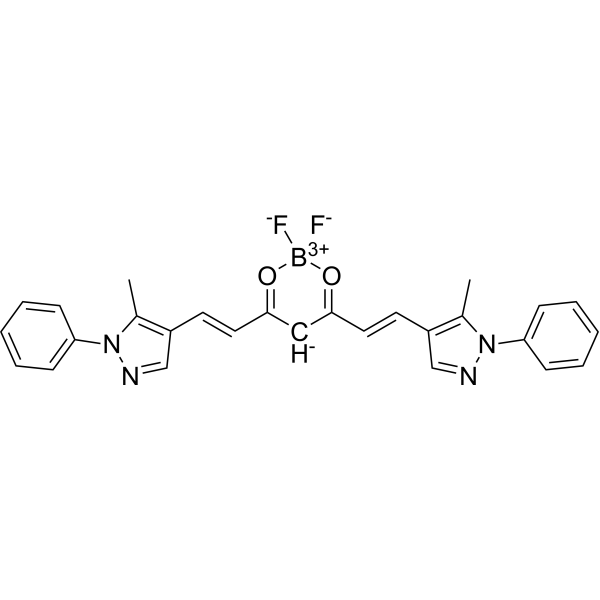
CRANAD-28

Based on 1 Customer Validation
CRANAD-28 is a robust fluorescent compound for visualization of amyloid beta plaques.
연구목적의 판매만을 진행합니다. 환자를 대상으로 한 판매는 하지 않습니다.
- Purity : 99.16%
- CAS No.: 1623747-97-6
- 화학식: C27H23BF2N4O2
- 분자량:484.30
-
보관:Powder -20°C, 3 years , 4°C, 2 years ; In solvent -80°C, 6 months , -20°C, 1 month

To place orders, for customer services and technical support, please contact: MedChemExpress USA
Tel: 609-228-6898 E-mail: [email protected] [email protected]


-
 Biological Activity
-
Chemical Information
-
용액&용해도
- Protocol
- 순도&문서
- References
-
 Help & FAQs


-
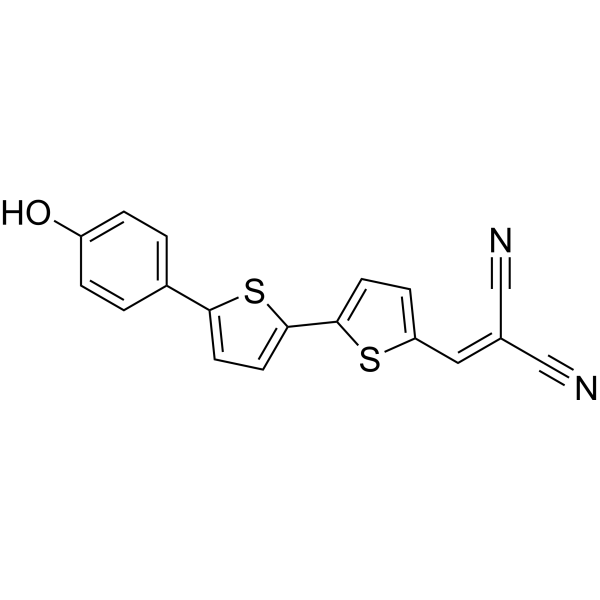
HY-111263
NIAD-4Amyloid-β Fluorophore -
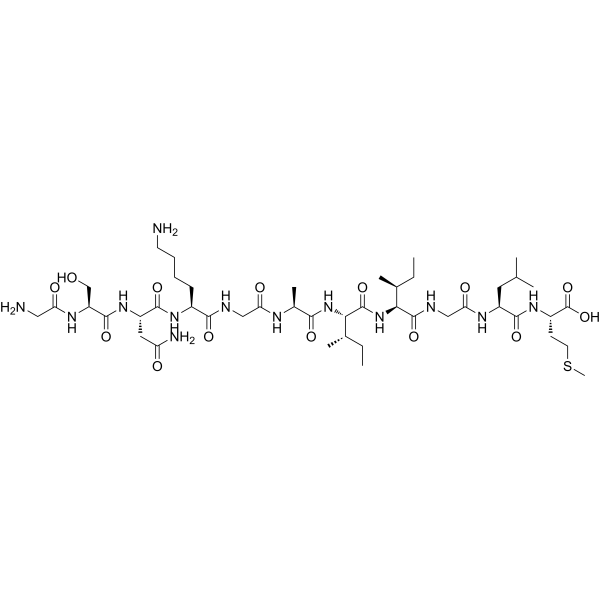
HY-P0128
β-Amyloid (25-35)Amyloid β Peptide -
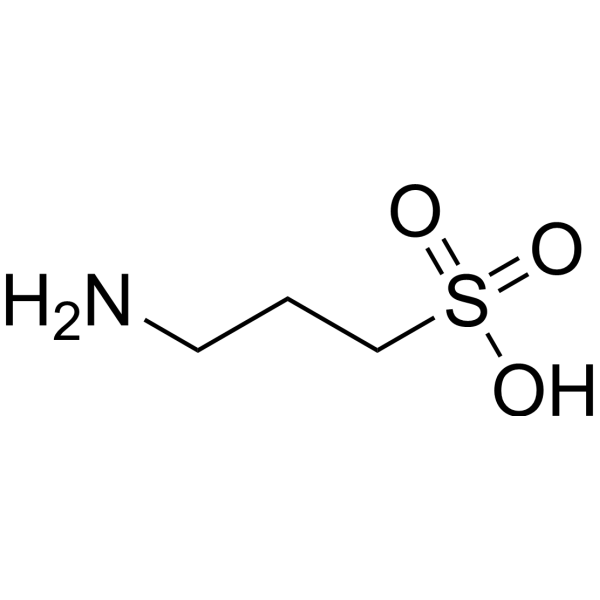
HY-14602
TramiprosateNeuroprotection Agent -

HY-P0128A
β-Amyloid (25-35), HFIP-treatedAmyloid β Peptide -
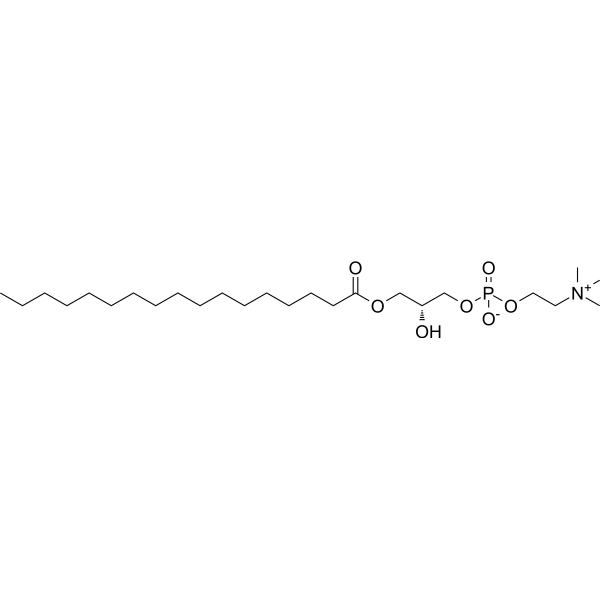
HY-141616
1-Heptadecanoyl-2-hydroxy-sn-glycero-3-phosphocholineEndogenous Metabolite -
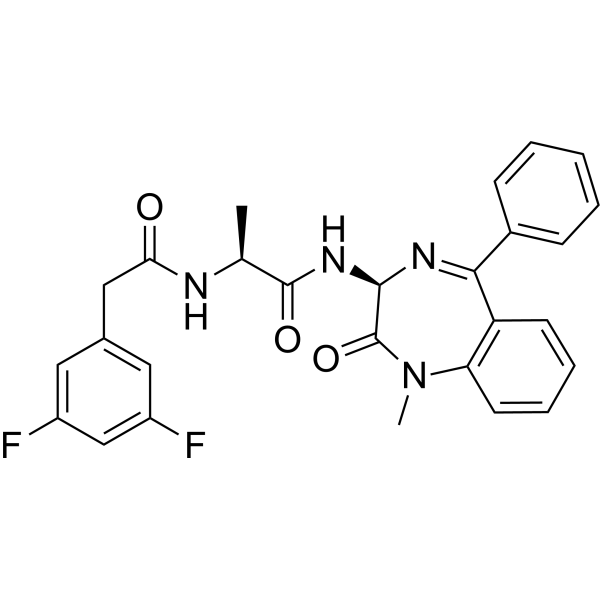
HY-14176
Compound Eγ-secretase Inhibitor -
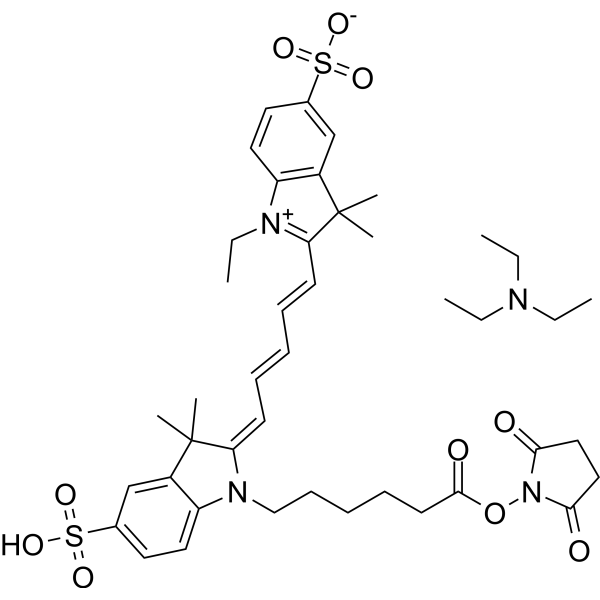
HY-D0819A
CY5-SE triethylamine saltFluorescent Probe -
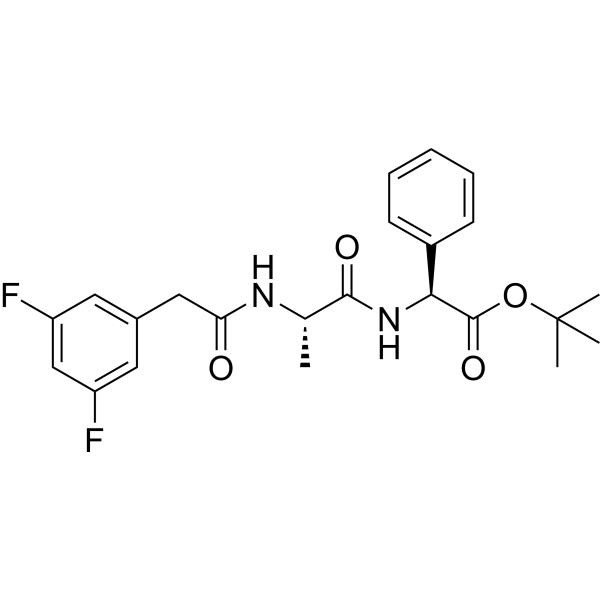
HY-13027
DAPTγ-secretase Inhibitor -
HY-10974
MK-0752 -
HY-111330
Hydroxyphenyl FluoresceinROS Probe -
HY-129420
WSP-5Fluorescent Probe -

HY-P1061
ColivelinNeuroprotectant/STAT3 Activator


Biological Activity
제품 설명


Chemical Information
-
CAS No. 1623747-97-6
-
Appearance Solid
-
분자량 484.30
-
화학식 C27H23BF2N4O2
-
Color Orange to red
-
SMILES
CC(N(C1=CC=CC=C1)N=C2)=C2/C=C/C([CH-]C(/C=C/C(C=NN3C4=CC=CC=C4)=C3C)=[O]5)=[O][B+3]5([F-])[F-]
-
선적
Room temperature in continental US; may vary elsewhere.
-
보관
Powder -20°C 3 years 4°C 2 years In solvent -80°C 6 months -20°C 1 month


용액&용해도
In Vitro:
DMSO : 5 mg/mL (10.32 mM; ultrasonic and warming and heat to 60°C; Hygroscopic DMSO has a significant impact on the solubility of product, please use newly opened DMSO)
Please refer to the solubility information to select the appropriate solvent. Once prepared, please aliquot and store the solution to prevent product inactivation from repeated freeze-thaw cycles.
Storage method and period of stock solution: -80°C, 6 months; -20°C, 1 month. When stored at -80°C, please use it within 6 months. When stored at -20°C, please use it within 1 month.
Please refer to the solubility information to select the appropriate solvent. Once prepared, please aliquot and store the solution to prevent product inactivation from repeated freeze-thaw cycles.
Storage method and period of stock solution: -80°C, 6 months; -20°C, 1 month. When stored at -80°C, please use it within 6 months. When stored at -20°C, please use it within 1 month.
Concentration (start) × Volume (start) = Concentration (final) × Volume (final)


순도&문서
-
Data Sheet (267 KB)
-
SDS (254 KB)
- English - EN (254 KB)
- Français - FR (254 KB)
- Deutsch - DE (254 KB)
- Norwegian - NO (254 KB)
- Español - ES (254 KB)
- Swedish - SV (254 KB)
- Italian - IT (254 KB)
- Korean - KR (254 KB)
- Portuguese - PT (254 KB)
-
Handling Instructions (2659 KB)
References


Complete Stock Solution Preparation Table
Please refer to the solubility information to select the appropriate solvent. Once prepared, please aliquot and store the solution to prevent product inactivation from repeated freeze-thaw cycles.
Storage method and period of stock solution: -80°C, 6 months; -20°C, 1 month. When stored at -80°C, please use it within 6 months. When stored at -20°C, please use it within 1 month.
| Optional Solvent | Concentration Solvent Mass | 1 mg | 5 mg | 10 mg | 25 mg |
|---|---|---|---|---|---|
| DMSO | 1 mM | 2.0648 mL | 10.3242 mL | 20.6484 mL | 51.6209 mL |
| 5 mM | 0.4130 mL | 2.0648 mL | 4.1297 mL | 10.3242 mL | |
| 10 mM | 0.2065 mL | 1.0324 mL | 2.0648 mL | 5.1621 mL |


CRANAD-28 Related Classifications
HY-123495 Related Classifications
 Powered by Bioz