



172 Results for "

amyloid-beta peptide

" in MedChemExpress (MCE) Product Catalog:
Products (172)

172 Results for "amyloid-beta peptide" in MCE Product Catalog:

45
45 Publications Verification
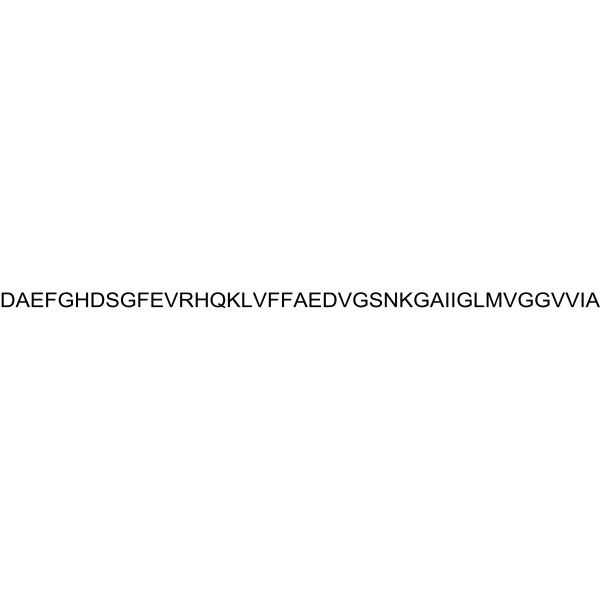
Cat. No.: HY-P0128
CAS No.: 131602-53-4
Synonyms: amyloid beta-peptide (25-35); Aβ25-35; β-amyloid peptide (25-35)
Target:  

Amyloid-β

Research Areas:  

Neurological Disease

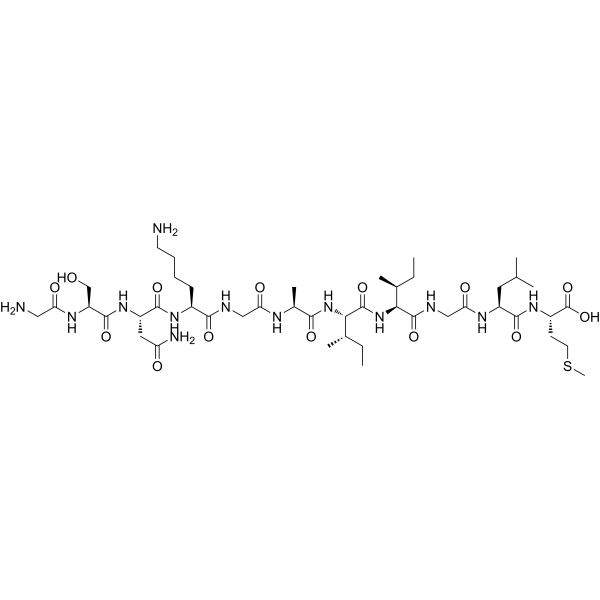
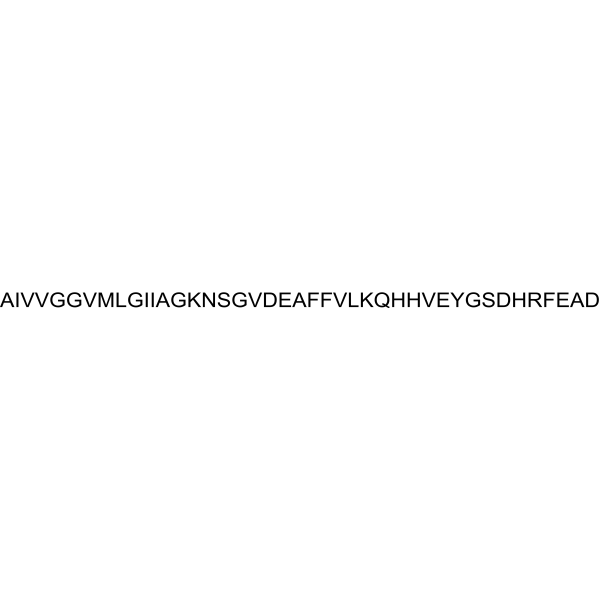
β-Amyloid (25-35) (Amyloid beta-peptide (25-35)) is the fragment Aβ(25-35) of the Alzheimer's amyloid β-peptide, has shown neurotoxic activities in cultured cells .
loading...
    loading...
45
45 Publications Verification
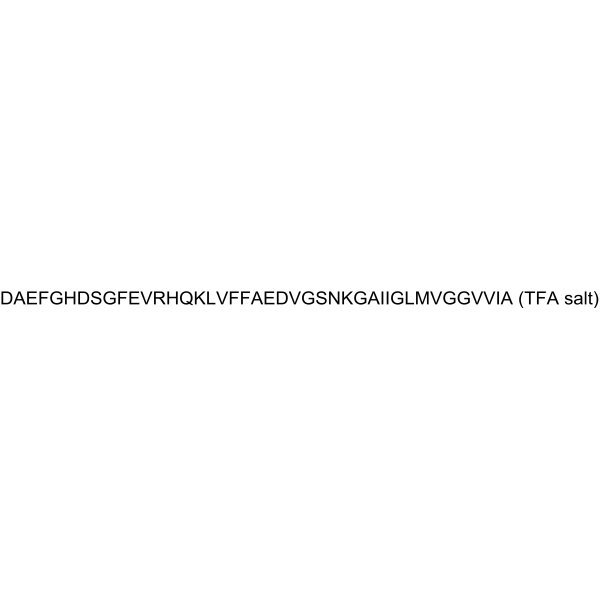
Cat. No.: HY-P0128A
CAS No.: 131602-53-4
Synonyms: amyloid beta-peptide (25-35), HFIP-treated; Aβ25-35, HFIP-treated; β-amyloid peptide (25-35), HFIP-treated
Target:  

Amyloid-β

Research Areas:  

Neurological Disease

β-Amyloid (25-35) (Amyloid beta-peptide (25-35)), HFIP-treated is a β-Amyloid (25-35) (HY-P0128) treated with HFIP. β-Amyloid (25-35) (Amyloid beta-peptide (25-35)) is the fragment Aβ(25-35) of the Alzheimer's amyloid β-peptide, has shown neurotoxic activities in cultured cells .
loading...
    loading...
27
27 Cited Publications
Cat. No.: HY-P1363A
CAS No.: 107761-42-2
Synonyms: amyloid β-peptide (1-42) (human)
Target:  

Amyloid-β

Research Areas:  

Neurological Disease

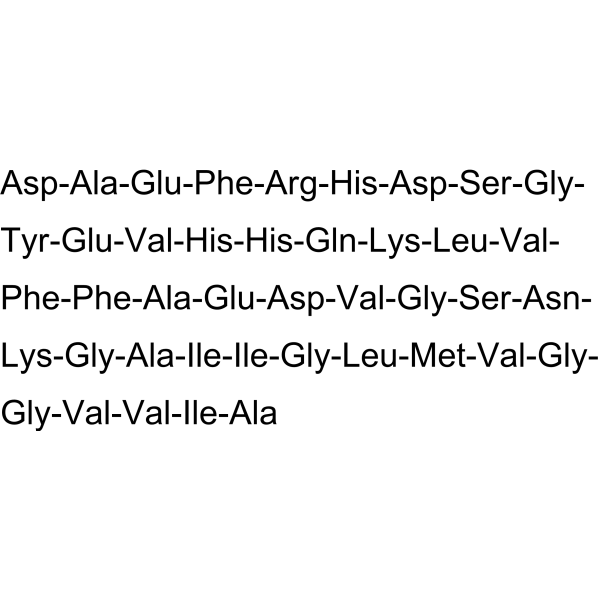
β-Amyloid (1-42) (Amyloid β-peptide (1-42)), human, a 42-amino acid peptide that has not been treated with HFIP, is a brain-penetrant amyloid protein fragment, which can be used in research on Alzheimer's disease and Down’s syndrome. β-Amyloid (1-42), human remaining as a monomer exhibits antioxidant and neuroprotective effects. β-Amyloid (1-42), human, after being monomericized by HFIP and dissolved in DMSO to form the stock solution, on the one hand, can form soluble oligomers (AβOs) when incubated at 4 °C, which have synaptic toxicity and neurotoxicity; on the other hand, it can be incubated at 37 °C to form insoluble fibrils, with lower neurotoxicity, and participating in the oxidative damage process. Aβ42 oligomers bind to various neuronal surface receptors (such as PrPc, mGluR5, NMDA receptors, etc.), triggering oxidative stress, calcium homeostasis imbalance, and synaptic toxicity via activating downstream signaling pathways, leading to neuronal dysfunction and death .
loading...
    loading...
27
27 Cited Publications
Cat. No.: HY-P1363
Synonyms: amyloid β-peptide (1-42) (human) TFA
Target:  

Amyloid-β

Research Areas:  

Neurological Disease

β-Amyloid (1-42) (Amyloid β-peptide (1-42), human TFA, a 42-amino acid peptide that has not been treated with HFIP, is a brain-penetrant amyloid protein fragment, which can be used in research on Alzheimer's disease and Down’s syndrome. β-Amyloid (1-42), human TFA remaining as a monomer exhibits antioxidant and neuroprotective effects. β-Amyloid (1-42), human TFA, after being monomericized by HFIP and dissolved in DMSO to form the stock solution, on the one hand, can form soluble oligomers (AβOs) when incubated at 4 °C, which have synaptic toxicity and neurotoxicity; on the other hand, it can be incubated at 37 °C to form insoluble fibrils, with lower neurotoxicity, and participating in the oxidative damage process. Aβ42 oligomers bind to various neuronal surface receptors (such as PrPc, mGluR5, NMDA receptors, etc.), triggering oxidative stress, calcium homeostasis imbalance, and synaptic toxicity via activating downstream signaling pathways, leading to neuronal dysfunction and death .
loading...
    loading...
27
27 Cited Publications
Cat. No.: HY-P1363B
CAS No.: 107761-42-2
Target:  

Amyloid-β

Research Areas:  

Neurological Disease

β-Amyloid (1-42), human, HFIP-treated, a 42-amino acid peptide that has been treated with HFIP from β-Amyloid (1-42), human (HY-P1363A), is a brain-penetrant amyloid protein fragment, which can be used in research on Alzheimer's disease and Down’s syndrome. β-Amyloid (1-42), human, HFIP-treated remaining as a monomer exhibits antioxidant and neuroprotective effects. β-Amyloid (1-42), human, HFIP-treated, after being dissolved in DMSO to form the stock solution, on the one hand, can form soluble oligomers (AβOs) when incubated at 4°C, which have synaptic toxicity and neurotoxicity; on the other hand, it can be incubated at 37°C to form insoluble fibrils, with lower neurotoxicity, and participating in the oxidative damage process. Aβ42 oligomers bind to various neuronal surface receptors (such as PrPc, mGluR5, NMDA receptors, etc.), triggering oxidative stress, calcium homeostasis imbalance, and synaptic toxicity via activating downstream signaling pathways, leading to neuronal dysfunction and death .
loading...
    loading...
14
14 Cited Publications
Cat. No.: HY-P1119
CAS No.: 878557-55-2
Research Areas:  

Neurological Disease

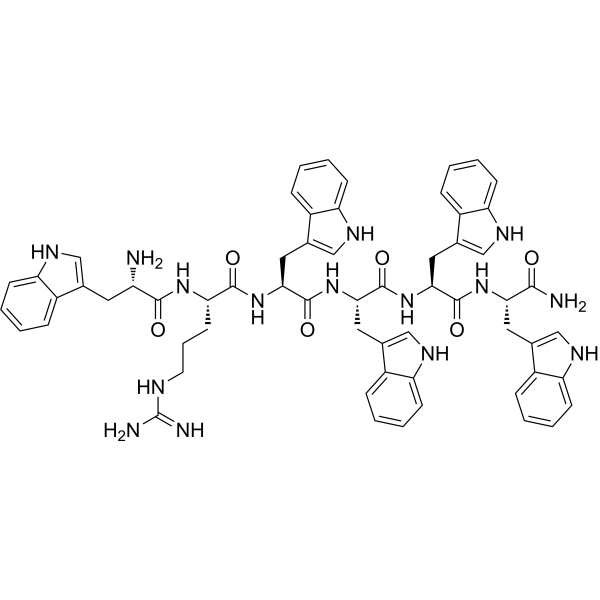
WRW4, a specific formyl peptide receptor-like 1 (FPRL1) antagonist, inhibits WKYMVm binding to FPRL1 with an IC50 of 0.23 μM. WRW4 specifically inhibits the increase in intracellular calcium by the FPRL1 agonists MMK-1, amyloid beta42 (Abeta42) peptide, and F peptide .
loading...
    loading...
11
11 Cited Publications
Cat. No.: HY-P0265A
Synonyms: amyloid β-peptide (1-40) (human) TFA; Aβ40 (human) TFA; Aβ(1-40) (human) TFA
Target:  

Amyloid-β

Research Areas:  

Neurological Disease

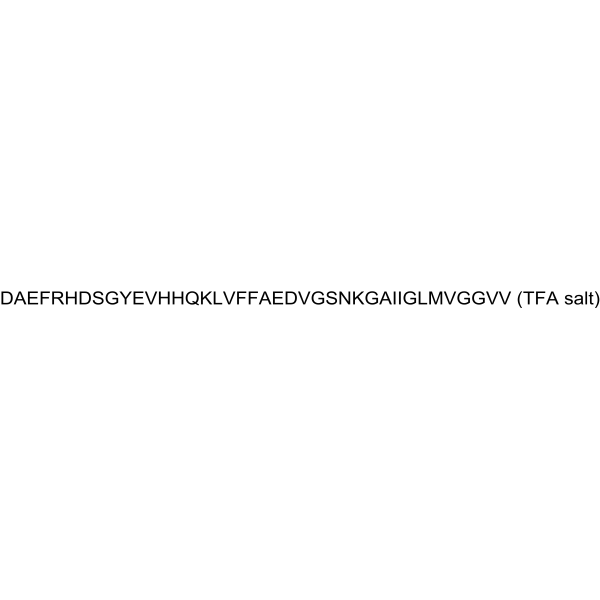
β-Amyloid (1-40) TFA is a primary protein in plaques found in the brains of patients with Alzheimer's disease .
loading...
    loading...
10
10 Cited Publications
Cat. No.: HY-B1588
CAS No.: 5697-56-3
Carbenoxolone is a blood-brain barrier-permeable Pannexin1 inhibitor, gap junction (Gap junction) blocker, and β-amyloid 42 inhibitor. Carbenoxolone modulates voltage-gated currents of wild-type and mutant Panx1, and inhibits stimulus-activated Panx1 channel function. Carbenoxolone interacts with stable residues of β-amyloid 42 peptides, fibrils and oligomers, thereby inhibiting their aggregation. Carbenoxolone alleviates liver fibrosis. Carbenoxolone exerts neuroprotective and nootropic effects. Carbenoxolone can be used in studies related to Alzheimer's disease and liver fibrosis .
loading...
    loading...
8
8 Cited Publications
Cat. No.: HY-P1388
CAS No.: 166090-74-0
Synonyms: amyloid β-peptide (1-42) (rat/mouse)
Target:  

Amyloid-β

Research Areas:  

Neurological Disease

β-Amyloid (1-42), (rat/mouse) is a 42-aa peptide, shows cytotoxic effect on acute hippocampal slices, and used in the research of Alzheimer's disease.
loading...
    loading...
8
8 Cited Publications
Cat. No.: HY-P1388A
Synonyms: amyloid β-peptide (1-42) (rat/mouse) TFA
Target:  

Amyloid-β

Research Areas:  

Neurological Disease

β-Amyloid (1-42), (rat/mouse) TFA is a 42-aa peptide, shows cytotoxic effect on acute hippocampal slices, and used in the research of Alzheimer's disease.
loading...
    loading...
4
4 Cited Publications
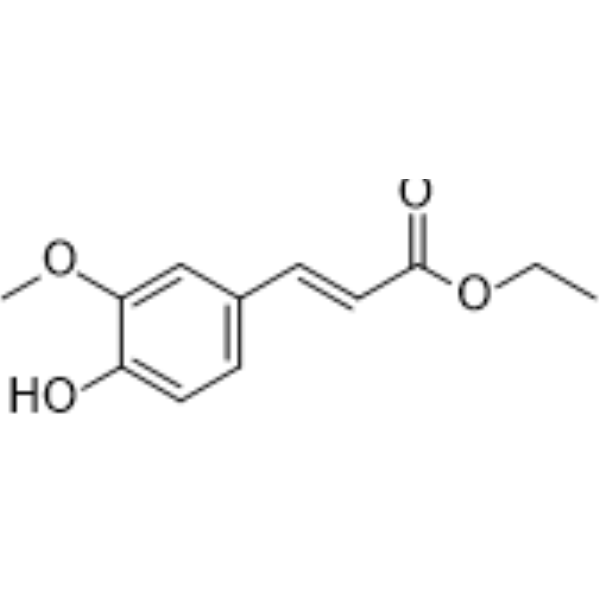
Cat. No.: HY-N0061
CAS No.: 4046-02-0
Ethyl ferulate, a naturally lipophilic derivative of ferulic acid originally derived from Rhizoma Chuanxiong, induces heme oxygenase-1 (HO-1) and protects rat neurons against oxidative stress . Ethyl ferulate also protects neurons against amyloid β peptide (1-42)-induced oxidative stress and neurotoxicity .
loading...
    loading...
2
2 Cited Publications
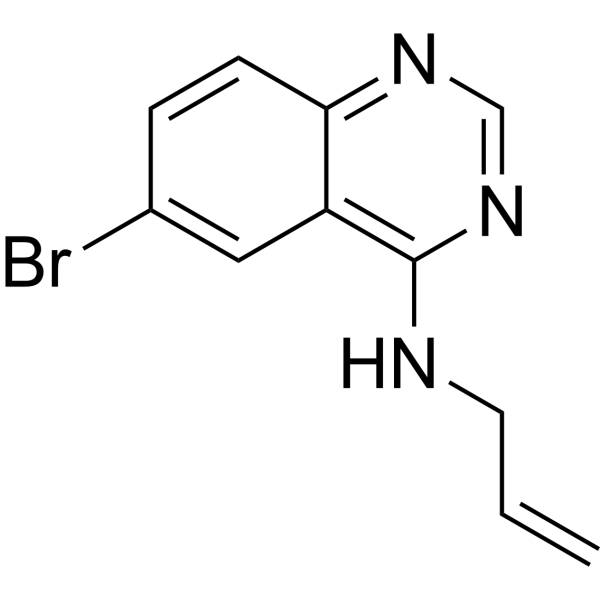
Cat. No.: HY-100200
CAS No.: 307538-42-7
Purity:  99.92%
Target:  

Autophagy

Research Areas:  

Cancer

SMER28 is a positive regulator of autophagy acting via an mTOR-independent mechanism. SMER28 prevents the accumulation of amyloid beta peptide.
loading...
    loading...
1
1 Cited Publications
Cat. No.: HY-P1362
CAS No.: 317366-82-8
Synonyms: amyloid β peptide (42-1)(human)
Target:  

Amyloid-β

Research Areas:  

Neurological Disease

β-Amyloid (42-1), human is the inactive form of Amyloid β Peptide (1-42). Its active form, β-Amyloid (1-42), may play a key role in the pathogenesis of Alzheimer's disease .
loading...
    loading...
1
1 Cited Publications
Cat. No.: HY-P704352
Purity:  ≥ 95%, as determined by reducing SDS-PAGE.
Synonyms: APP; PreA4; Prev. AD1; CVAP; Alzheimer Disease amyloid A4 Protein Homolog; beta-amyloid Precursor Protein; amyloid-beta Precursor Protein; Testicular Tissue Protein Li 2; amyloid Precursor Protein; beta-amyloid peptide(1-40); Alpha-SAPP; beta-amyloid Pept
Species:  
Human
Source:  
HEK293
loading...
    loading...
1
1 Cited Publications
Cat. No.: HY-P3908
Target:  

Amyloid-β

Research Areas:  

Neurological Disease

FITC-β-Ala-Amyloid β-Protein (1-42) ammonium is a FITC tagged Aβ1-42 peptide. Aβ1-42 plays a key role in the pathogenesis of Alzheimer’s disease .
loading...
    loading...
1
1 Cited Publications
Cat. No.: HY-P2497
CAS No.: 196109-27-0
Target:  

GCGR

Research Areas:  

Neurological Disease

Exendin (5-39) is a potent glucagon-like peptide 1 (GLP-1) receptor antagonist. Exendin (5-39) improves memory impairment in β-amyloid protein-treated rats .
loading...
    loading...
1
1 Cited Publications
Cat. No.: HY-N2319
CAS No.: 24730-10-7
Synonyms: DHEC mesylate
Target:  

Amyloid-β

Research Areas:  

Neurological Disease

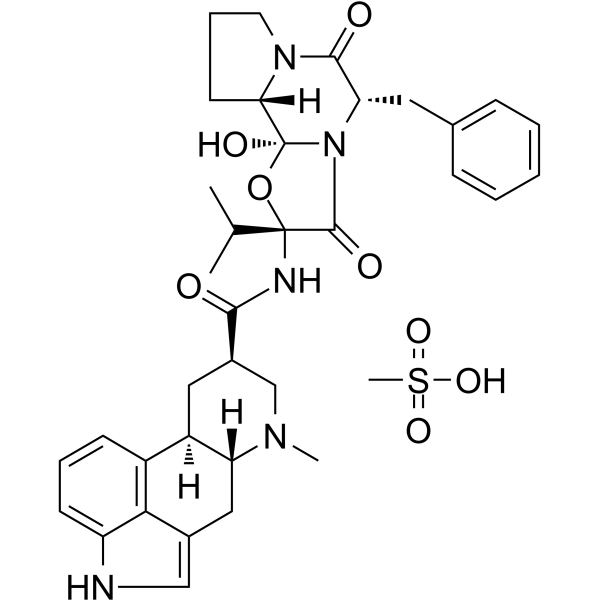
Dihydroergocristine mesylate (DHEC mesylate) is a inhibitor of γ-secretase (GSI), reduces the production of the Alzheimer's disease amyloid-β peptides, binds directly to γ-secretase and Nicastrin with equilibrium dissociation constants (Kd) of 25.7 nM and 9.8 μM, respectively .
loading...
    loading...
1
1 Cited Publications
Cat. No.: HY-113283
CAS No.: 451-13-8
Purity:  99.46%
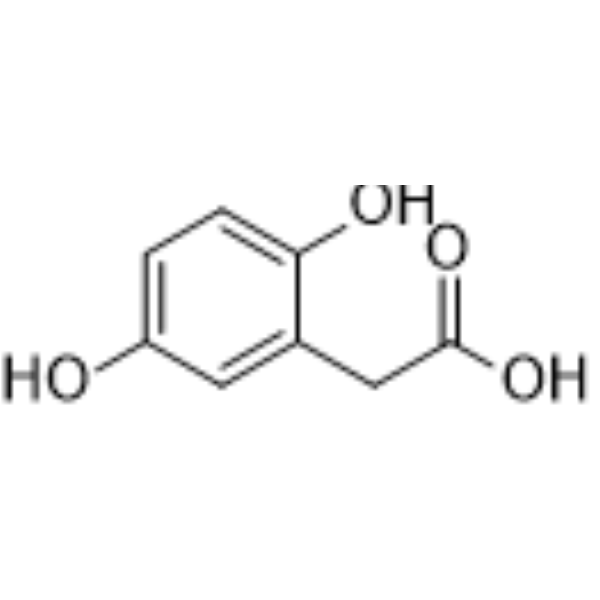
Homogentisic acid is an orally active, blood-brain barrier-permeable amyloidogenic compound that functions as both an amyloid component and a pigment precursor. Accumulation of homogentisic acid downregulates tight junction proteins (such as claudin-5, occludin, ZO-1) and impairs blood-brain barrier integrity. Homogentisic acid and its oxidation product benzoquinone acetic acid not only induce the aggregation and fibrosis of multiple proteins (such as Aβ1-42, α-synuclein, SAA, Transthyretin (TTR), atrial natriuretic peptide), but also trigger oxidative stress, damage to the Wnt/β-catenin pathway, and neurotoxicity, leading to ochronosis pigment deposition and synaptic dysfunction. At specific concentrations, homogentisic acid exerts no cytotoxicity or genotoxicity on human peripheral blood lymphocytes, and even counteracts the genotoxicity induced by Irinotecan (HY-16562). Homogentisic acid serves as an important tool molecule for investigating the mechanisms of diseases including ochronosis, secondary amyloidosis, Alzheimer's disease, and colorectal cancer .
loading...
    loading...
Cat. No.: HY-P1363F3
Synonyms: 5-FAM-amyloid β-peptide (1-42) (human) Tris
Target:  

Amyloid-β

Research Areas:  

Neurological Disease

5-FAM-β-Amyloid (1-42), human (5-FAM-Amyloid β-peptide (1-42) (human) Tris is a 5-FAM labeled β-Amyloid (1-42), human. β-Amyloid (1-42), human is a brain-penetrant amyloid protein fragment, which can be used in research on Alzheimer's disease and Down’s syndrome.
loading...
    loading...
Cat. No.: HY-P99317
CAS No.: 955085-14-0
Synonyms: LY-2062430

Target:  

Amyloid-β

Research Areas:  

Neurological Disease

Solanezumab (LY-2062430) is a humanized monoclonal IgG1 antibody directed against the mid-domain of the amyloid-β (Aβ) peptide. Solanezumab binds to the mid-domain of monomeric amyloid-beta to slow brain amyloid accumulation. Solanezumab can be used for the research of Alzheimer’s disease .
loading...
    loading...

