1. Search Result
Search Result
Results for "

anti-hyperalgesic effects

" in MedChemExpress (MCE) Product Catalog:

26

Inhibitors & Agonists

5

Natural
Products

2

Isotope-Labeled Compounds

1

Click Chemistry

Cat. No. Product Name Target Research Areas Chemical Structure
  • HY-N0013
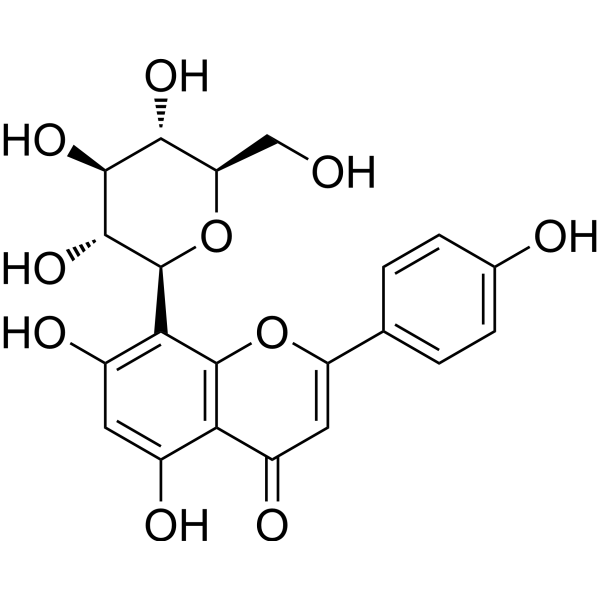
    Vitexin
    10+ Cited Publications

    Autophagy Cardiovascular Disease Neurological Disease Metabolic Disease Cancer
    Vitexin is a c-glycosylated flavone, and is found in various medicinal plants species such as Trigonella foenum-graecum Linn. Vitexin has a wide range of pharmacological effects, including anti-oxidant, anti-cancer, anti-inflammatory, anti-hyperalgesic, and neuroprotective effects .
    Vitexin
  • HY-N1500
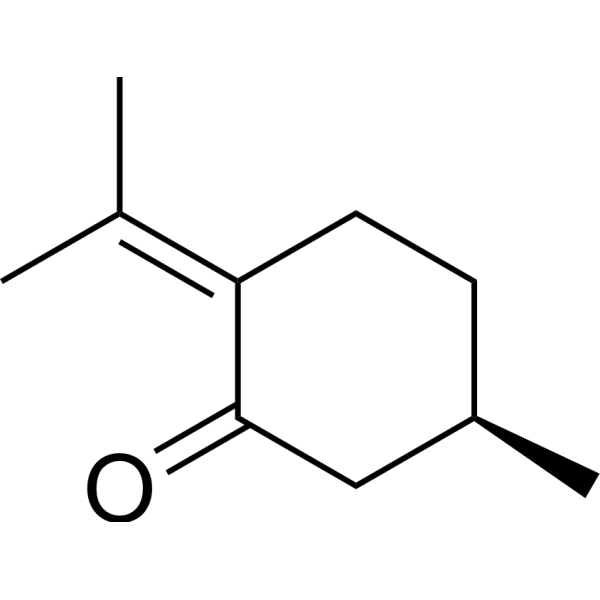
    Pulegone
    1 Publications Verification

    TRP Channel Bacterial Fungal NO Synthase COX NF-κB p38 MAPK Keap1-Nrf2 Heme Oxygenase (HO) PERK JNK Calcium Channel Infection Neurological Disease Inflammation/Immunology
    Pulegone is a monoterpene ketone compound widely present in the essential oils of many plants. Pulegone can also be used as a bird repellent. Pulegone has multiple activities such as anti-inflammatory, antibacterial, antifungal, and anti-hyperalgesic effects. Pulegone is particularly effective against bacteria of the Salmonella species .
    Pulegone
  • HY-117474
    MJN110
    5 Publications Verification

    MAGL Neurological Disease
    MJN110 is an orally active and selective monoacylglycerol lipase (MAGL) inhibitor with IC50s of 9.1 nM and 2.1 nM for hMAGL and 2-arachidonoylglycerol (2-AG), respectively . MJN110 produces opioid-sparing effects and displays strong antihyperalgesic activity .
    MJN110
  • HY-101202

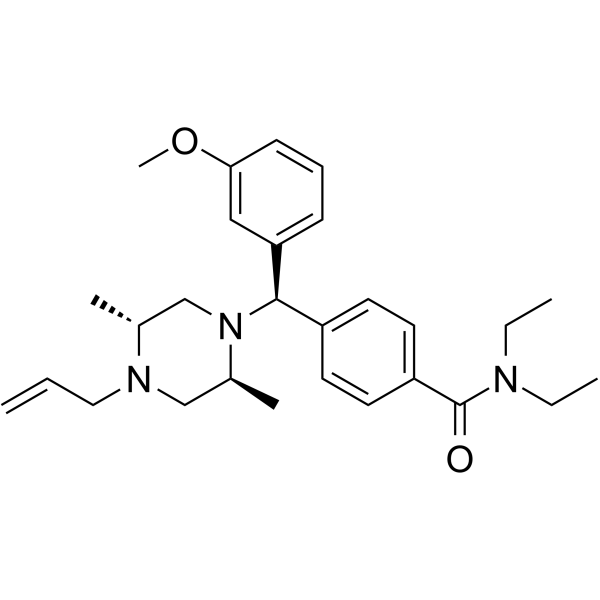
    NIH 10815

    Opioid Receptor Neurological Disease
    SNC80 (NIH 10815) is a potent, highly selective and non-peptide δ-opioid receptor agonist with a Ki of 1.78 nM and an IC50 of 2.73 nM. SNC80 also selectively activates μ-δ heteromer in HEK293 cells with an EC50 of 52.8 nM. SNC80 shows antinociceptive, antihyperalgesic and antidepressant‐like effects. SNC80 has the potential for multiple headache disorders treatment .
    SNC80
  • HY-18101A
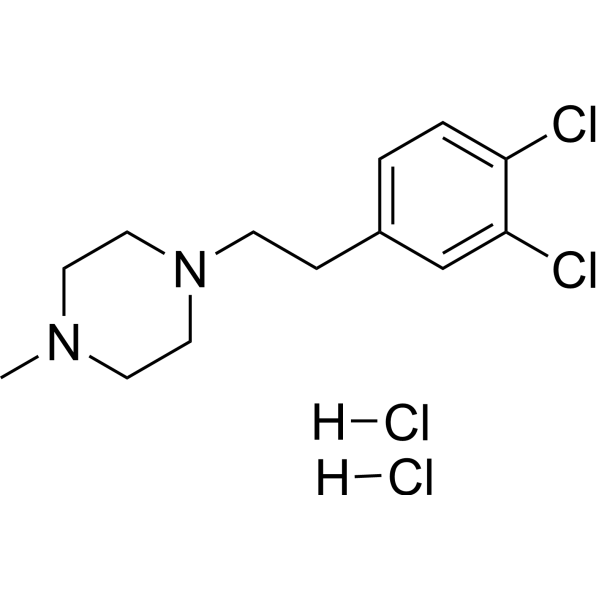
    BD-1063 dihydrochloride
    3 Publications Verification

    Sigma Receptor TRP Channel Neurological Disease
    BD-1063 dihydrochloride is a selective σ-1 receptor antagonist with inhibitory activity against TRPC5 and TRPM3. BD-1063 dihydrochloride exerts anti-hyperalgesic and anti-allodynic effects by inhibiting sustained calcium influx mediated by TRPC5 and TRPM3, and reverses the effects of Carrageenan (HY-125474). BD-1063 dihydrochloride also significantly reduces excessive ethanol self-administration behavior. BD-1063 dihydrochloride is widely used in studies on the mechanisms underlying neuropathic pain, inflammatory hyperalgesia, and alcohol abuse and dependence .
    BD-1063 dihydrochloride
  • HY-A0092

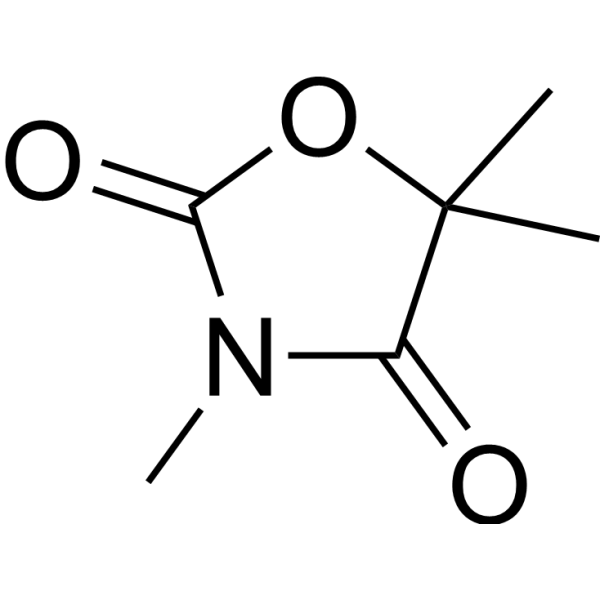
    3,5,5,-Trimethyloxazolidine-2,4-dione

    Calcium Channel Neurological Disease
    Trimethadione (3,5,5,-Trimethyloxazolidine-2,4-dione) is an oxazolidinedione anticonvulsant agent widely used against absences seizures. Trimethadione also is a T-type calcium channel blocker which has antihyperalgesic effects .
    Trimethadione
  • HY-122616

    Trk Receptor Neurological Disease
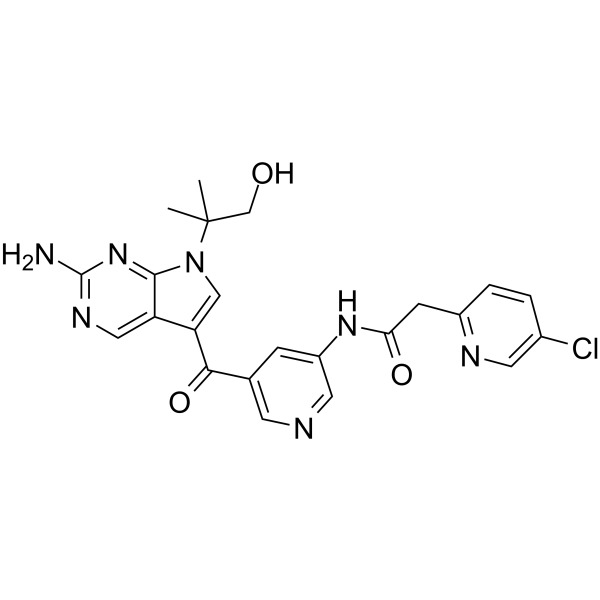
    PF-06273340 is a peripherally restricted pan-Trk inhibitor with IC50 values of 6, 4, 3 nM for TrkA, TrkB, and TrkC receptors. PF-06273340 binds in a DFG-out conformation, targeting less conserved kinase ligand binding domain regions outside the ATP binding pocket. PF-06273340 exhibits anti-hyperalgesic and analgesic effects. PF-06273340 can be used for the research of pain .
    PF-06273340
  • HY-118301

    GABA Receptor 5-HT Receptor Neurological Disease
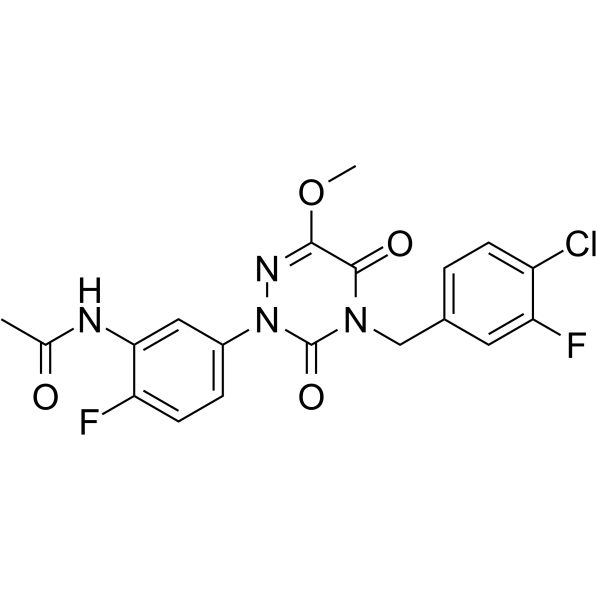
    ADX71441 is an orally active, blood-brain barrier penetrant positive allosteric modulator of GABAB receptor. ADX71441 potentiates the activity of endogenous GABA at GABAB receptor, with an EC50 of 96 nM. ADX71441 functionally inhibits adenosine transporters and 5-HT2B receptor. ADX71441 produces anxiolytic-like, analgesic, muscle relaxant, hypothermic and overactive bladder inhibitory effects, reduces acute locomotor activity levels, decreases voluntary intake of alcohol and saccharin, attenuates stress-induced neuronal activation, and exhibits anti-hyperalgesic activity .
    ADX71441
  • HY-107620

    MEK Neurological Disease
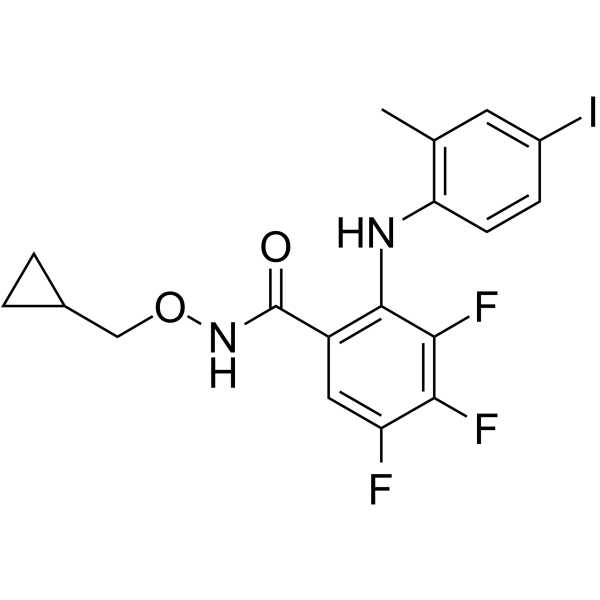
    PD 198306 is a selective MAPK/ERK-kinase (MEK) inhibitor. PD 198306 results in an observable reduction in the Streptozocin induced increase in the level of active ERK1 and 2. Antihyperalgesic effects .
    PD 198306
  • HY-13954
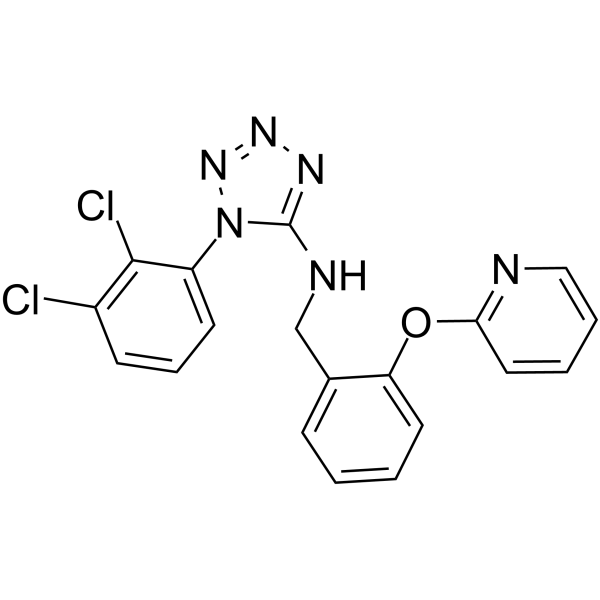
    A 839977
    1 Publications Verification

    P2X Receptor Neurological Disease Inflammation/Immunology
    A 839977 is a P2X7 selective antagonist; it blocks BzATP-evoked calcium influx at recombinant human, rat and mouse P2X7 receptors (IC50 values are 20 nM, 42 nM and 150 nM respectively) and reduces inflammatory and neuropathic pain in animal models; the antihyperalgesic effects of P2X7 receptor blockade are mediated by blocking the release of IL-1beta .
    A 839977
  • HY-19876

    Debio-0827

    Opioid Receptor Aminopeptidase Neprilysin Neurological Disease Metabolic Disease
    PL37 (Debio-0827) is an orally active Enkephalinase dual inhibitor (dual inhibition refers to the simultaneous inhibition of Neutral Endopeptidase and Aminopeptidase N activities). PL37 exerts its anti-hyperalgesic effects by activating μ-opioid receptors (µ-opioid receptors), with an ED50 value of 13.4 mg/kg for analgesic effects in mice. PL37 can be used to study diabetic neuropathic pain .
    PL37
  • HY-123249

    GABA Receptor Neurological Disease
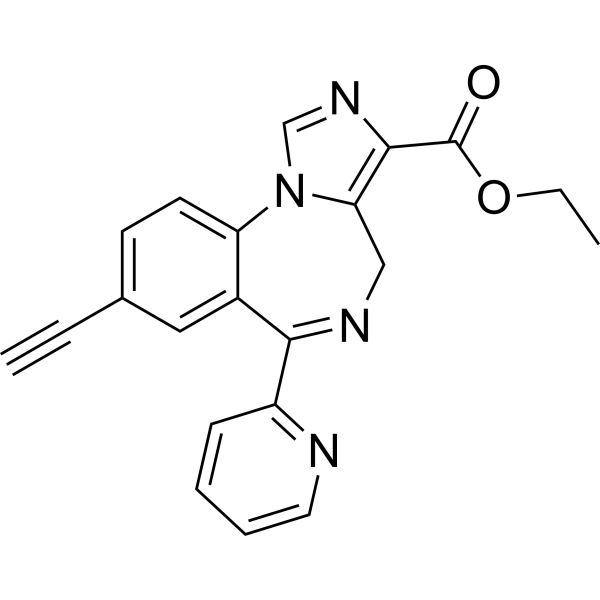
    HZ166 is a GABAA receptor subtype-selective benzodiazepine site agonist with preferential activity at α2- and α3-GABAA receptors. HZ166 shows anti-hyperalgesic effects . HZ166 is a click chemistry reagent, it contains an Alkyne group and can undergo copper-catalyzed azide-alkyne cycloaddition (CuAAc) with molecules containing Azide groups.
    HZ166
  • HY-N0013R

    Reference Standards Autophagy Cardiovascular Disease Neurological Disease Metabolic Disease Cancer
    Vitexin (Standard) is the analytical standard of Vitexin. This product is intended for research and analytical applications. Vitexin is a c-glycosylated flavone, and is found in various medicinal plants species such as Trigonella foenum-graecum Linn. Vitexin has a wide range of pharmacological effects, including anti-oxidant, anti-cancer, anti-inflammatory, anti-hyperalgesic, and neuroprotective effects .
    Vitexin (Standard)
  • HY-106010

    Cannabinoid Receptor Neurological Disease
    LBP1 is an orally active and low brain penetrant CB1 receptor agonist. LBP1 exhibits significant anti-allodynic and anti-hyperalgesic effects in rodent models of neuropathic pain .
    LBP1
  • HY-N7044

    Others Cardiovascular Disease Neurological Disease Metabolic Disease Cancer
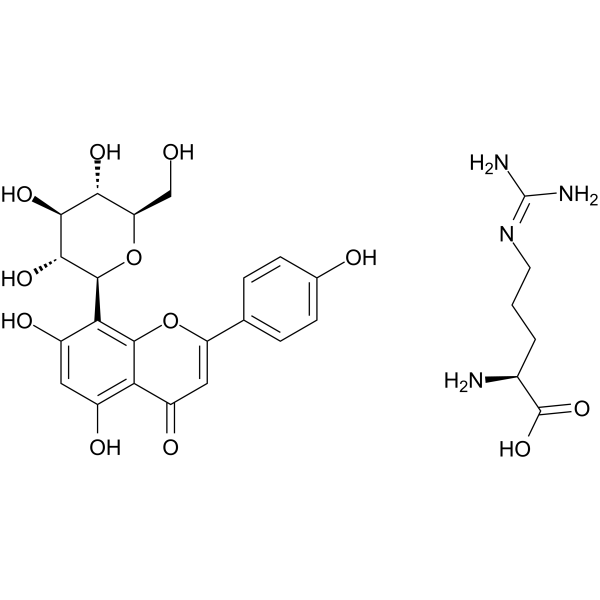
    Vitexin arginine is a c-glycosylated flavone, and is found in various medicinal plants species such as Ficus deltoid and Spirodela polyrhiza. Vitexin arginine has a wide range of pharmacological effects, including anti-oxidant, anti-cancer, anti-inflammatory, anti-hyperalgesic, and neuroprotective effects .
    Vitexin arginine
  • HY-N1500S1

    Isotope-Labeled Compounds TRP Channel NO Synthase Bacterial Fungal NF-κB COX p38 MAPK Keap1-Nrf2 PERK JNK Heme Oxygenase (HO) Calcium Channel Infection Neurological Disease Inflammation/Immunology
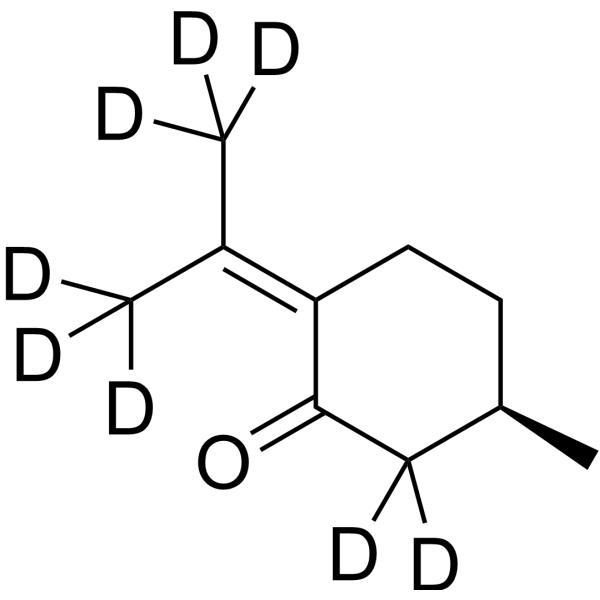
    Pulegone-d8 is deuterated labeled Pulegone (HY-N1500). Pulegone is a monoterpene ketone compound widely present in the essential oils of many plants. Pulegone can also be used as a bird repellent. Pulegone has multiple activities such as anti-inflammatory, antibacterial, antifungal, and anti-hyperalgesic effects. Pulegone is particularly effective against bacteria of the Salmonella species .
    Pulegone-d8
  • HY-N1500R

    Reference Standards TRP Channel Bacterial Fungal NO Synthase COX NF-κB p38 MAPK Keap1-Nrf2 Heme Oxygenase (HO) PERK JNK Calcium Channel Infection Neurological Disease Inflammation/Immunology
    Pulegone (Standard) is the analytical standard of Pulegone (HY-N1500). This product is intended for research and analytical applications. Pulegone is a monoterpene ketone compound widely present in the essential oils of many plants. Pulegone can also be used as a bird repellent. Pulegone has multiple activities such as anti-inflammatory, antibacterial, antifungal, and anti-hyperalgesic effects. Pulegone is particularly effective against bacteria of the Salmonella species .
    Pulegone (Standard)
  • HY-129931

    H-Phe-Phe-NH2

    Neurokinin Receptor Neurological Disease
    Phenylalanylphenylalanylamide (H-Phe-Phe-NH₂) is a ligand for the substance P 1–7 (SP1-7) binding site with a Ki value of 1.5 nM. Phenylalanylphenylalanylamide exerts significant anti-allodynic and anti-hyperalgesic effects in animal models of neuropathic pain following central administratio. Phenylalanylphenylalanylamide shows no distinct effect after peripheral (intraperitoneal) administration. Phenylalanylphenylalanylamide can be used for research on pain-related diseases .
    Phenylalanylphenylalanylamide
  • HY-A0092R

    3,5,5,-Trimethyloxazolidine-2,4-dione (Standard)

    Reference Standards Calcium Channel Neurological Disease
    Trimethadione (Standard) is the analytical standard of Trimethadione. This product is intended for research and analytical applications. Trimethadione (3,5,5,-Trimethyloxazolidine-2,4-dione) is an oxazolidinedione anticonvulsant agent widely used against absences seizures. Trimethadione also is a T-type calcium channel blocker which has antihyperalgesic effects .
    Trimethadione (Standard)
  • HY-101202A

    (Rac)-NIH 10815

    Opioid Receptor Neurological Disease
    (Rac)-SNC80 is a racemate of SNC80 (HY-101202). SNC80 (NIH 10815) is a potent, highly selective and non-peptide δ-opioid receptor agonist with a Ki of 1.78 nM and an IC50 of 2.73 nM. SNC80 shows antinociceptive, antihyperalgesic and antidepressant‐like effects. SNC80 has the potential for multiple headache disorders treatment .
    (Rac)-SNC80
  • HY-150192

    Adrenergic Receptor Neurological Disease Endocrinology
    Talsupram is a selective noradrenaline inhibitor that has a high affinity for the noradrenaline transporter. Talsupram exhibits anti-hyperalgesic effects. Talsupram can decrease ethanol intake to the levels prior to REM-induced deprivation in rat model .
    Talsupram
  • HY-18101

    Sigma Receptor TRP Channel Neurological Disease
    BD-1063 is a selective σ-1 receptor antagonist with inhibitory activity against TRPC5 and TRPM3. BD-1063 exerts anti-hyperalgesic and anti-allodynic effects by inhibiting sustained calcium influx mediated by TRPC5 and TRPM3, and reverses the effects of Carrageenan (HY-125474). BD-1063 also significantly reduces excessive ethanol self-administration behavior. BD-1063 is widely used in studies on the mechanisms underlying neuropathic pain, inflammatory hyperalgesia, and alcohol abuse and dependence .
    BD-1063
  • HY-18101S

    Isotope-Labeled Compounds Sigma Receptor TRP Channel Neurological Disease
    BD-1063-d8 dihydrochloride is the deuterium labeled BD1063 dihydrochloride (HY-18101A) . BD-1063 dihydrochloride is a selective σ-1 receptor antagonist with inhibitory activity against TRPC5 and TRPM3. BD-1063 dihydrochloride exerts anti-hyperalgesic and anti-allodynic effects by inhibiting sustained calcium influx mediated by TRPC5 and TRPM3, and reverses the effects of Carrageenan (HY-125474). BD-1063 dihydrochloride also significantly reduces excessive ethanol self-administration behavior. BD-1063 dihydrochloride is widely used in studies on the mechanisms underlying neuropathic pain, inflammatory hyperalgesia, and alcohol abuse and dependence .
    BD-1063-d8 dihydrochloride
  • HY-107620R

    Reference Standards MEK Neurological Disease
    PD 198306 (Standard) is the analytical standard of PD 198306 (HY-107620). This product is intended for research and analytical applications. PD 198306 is a selective MAPK/ERK-Kinase (MEK) inhibitor. PD 198306 results in an observable reduction in the Streptozocin induced increase in the level of active ERK1 and 2. Antihyperalgesic effects .
    PD 198306 (Standard)
  • HY-180189

    Carbonic Anhydrase Neurological Disease
    Carbonic anhydrase-IN-37 (compound 9a) is a potent and orally active carbonic anhydrase (CA) inhibitor with Kis of 9.7 and 1.0 nM for hCA VA and hCA VB, respectively. Carbonic anhydrase-IN-37 shows anti allodynic and antihyperalgesic effects on Paclitaxel (HY-B0015)-induced neuropathic pain in mice. Carbonic anhydrase-IN-37 can be used for neuropathic pain research .
    Carbonic anhydrase-IN-37
  • HY-101202R

    NIH 10815 (Standard)

    Opioid Receptor Reference Standards Neurological Disease
    SNC80 (Standard) is the analytical standard of SNC80 (HY-101202). This product is intended for research and analytical applications. SNC80 (NIH 10815) is a potent, highly selective and non-peptide δ-opioid receptor agonist with a Ki of 1.78 nM and an IC50 of 2.73 nM. SNC80 also selectively activates μ-δ heteromer in HEK293 cells with an EC50 of 52.8 nM. SNC80 shows antinociceptive, antihyperalgesic and antidepressant‐like effects. SNC80 has the potential for multiple headache disorders treatment .
    SNC80 (Standard)

Inquiry Online

Your information is safe with us. * Required Fields.

Salutation


Country or Region *

Applicant Name *


Organization Name *

Department *


Email Address *


Product Name *

Cat. No.


Requested quantity *

Phone Number *


Remarks

Inquiry Online

Inquiry Information

Product Name:
Cat. No.:
Quantity:
MCE Japan Authorized Agent:

