1. Search Result
Search Result
Results for "

antipsychotic activity

" in MedChemExpress (MCE) Product Catalog:

137

Inhibitors & Agonists

7

Natural
Products

15

Isotope-Labeled Compounds

Cat. No. Product Name Target Research Areas Chemical Structure
  • HY-14940
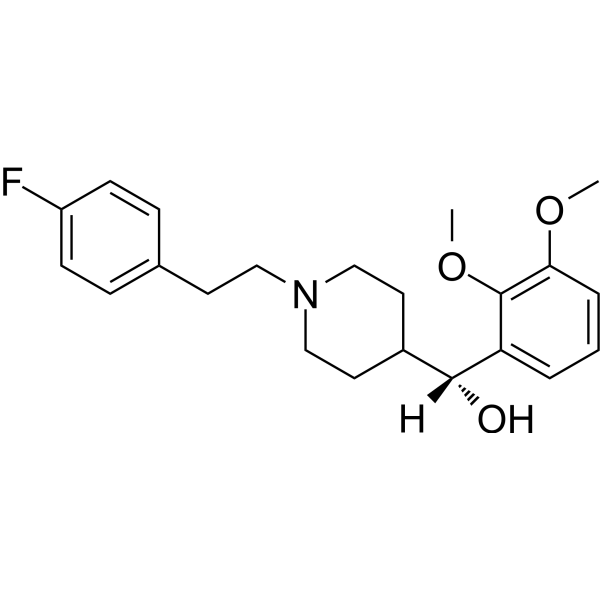
    Volinanserin
    5+ Cited Publications

    MDL100907; M 100907

    5-HT Receptor Neurological Disease
    Volinanserin is a potent and selective antagonist of 5-HT2 receptor, with a Ki of 0.36 nM, and shows 300-fold selectivity for 5-HT2 receptor over 5-HT1c, alpha-1 and DA D2 receptors. Volinanserin has antipsychotic activity.
    Volinanserin
  • HY-B0965
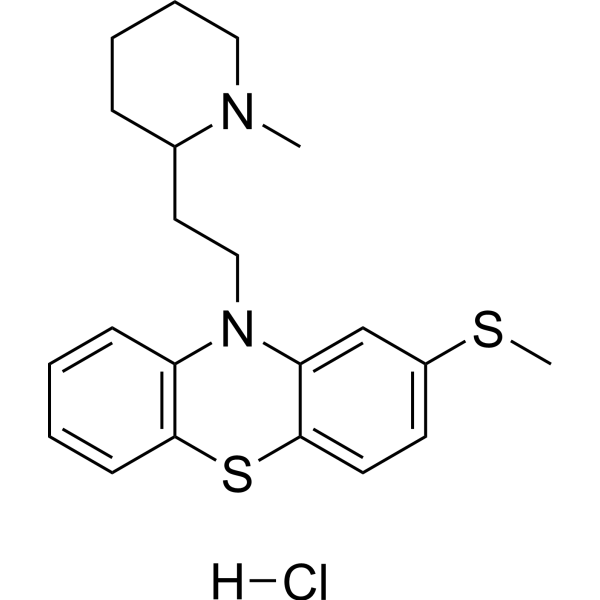
    Thioridazine hydrochloride
    5 Publications Verification

    Dopamine Receptor Apoptosis 5-HT Receptor Autophagy Bacterial Infection Neurological Disease Cancer
    Thioridazine hydrochloride, an orally active antagonist of the dopamine receptor D2 family proteins, exhibits potent anti-psychotic and anti-anxiety activities. Thioridazine hydrochloride is also a potent inhibitor of PI3K-Akt-mTOR signaling pathways with anti-angiogenic effect. Thioridazine hydrochloride shows antiproliferative and apoptosis induction effects in various types of cancer cells, with specificity on targeting cancer stem cells (CSCs) .
    Thioridazine hydrochloride
  • HY-105182A
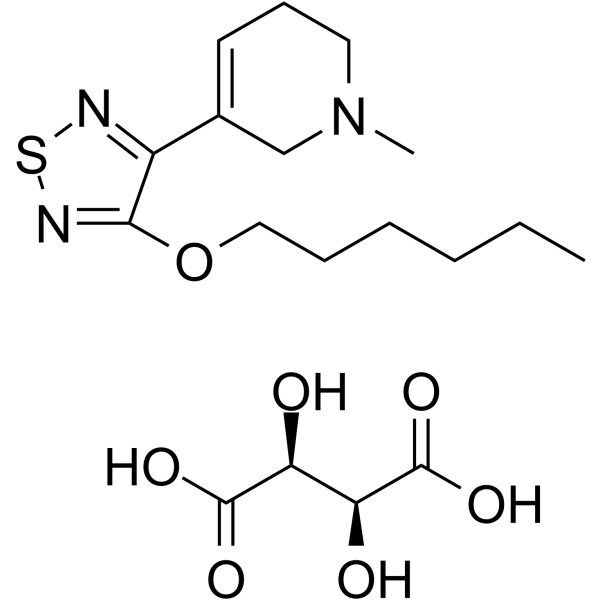
    Xanomeline tartrate
    5+ Cited Publications

    LY 246708 tartrate

    mAChR Neurological Disease
    Xanomeline (LY 246708) is the potent agonist of muscarinic M1/M4 receptor with antipsychotic-like activity. Xanomeline (LY 246708) increases neuronal excitability. Xanomeline (LY 246708) can be used for the research of schizophrenia .
    Xanomeline tartrate
  • HY-B0965A
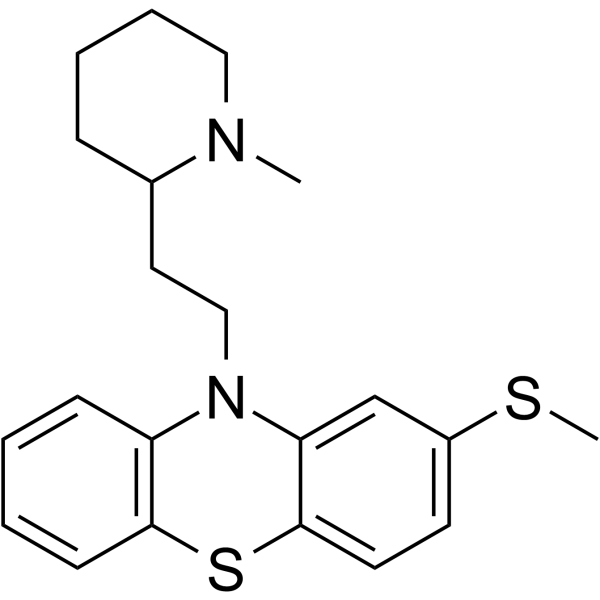
    Thioridazine
    5 Publications Verification

    Dopamine Receptor Apoptosis 5-HT Receptor Autophagy Bacterial Neurological Disease Cancer
    Thioridazine, an antagonist of the dopamine receptor D2 family proteins, exhibits potent anti-psychotic and anti-anxiety activities. Thioridazine is also a potent inhibitor of PI3K-Akt-mTOR signaling pathways with anti-angiogenic effect. Thioridazine shows antiproliferative and apoptosis induction effects in various types of cancer cells, with specificity on targeting cancer stem cells (CSCs) .
    Thioridazine
  • HY-14543
    Sertindole
    3 Publications Verification

    Lu 23-174

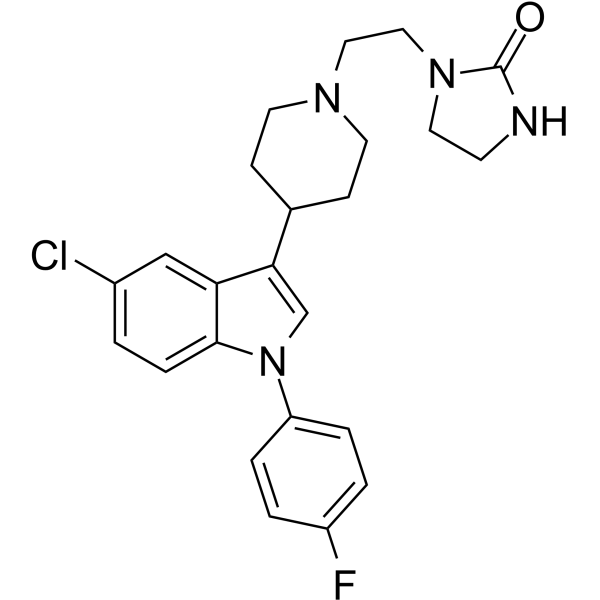
    5-HT Receptor Dopamine Receptor Adrenergic Receptor Autophagy Neurological Disease Cancer
    Sertindole (Lu 23-174) is an orally active 5-HT2A, 5-HT2C, dopamine D2, and αl-adrenergic receptors antagonist. Sertindole shows antipsychotic activity and anti-proliferative activity to multiple cancer cells .
    Sertindole
  • HY-101484A
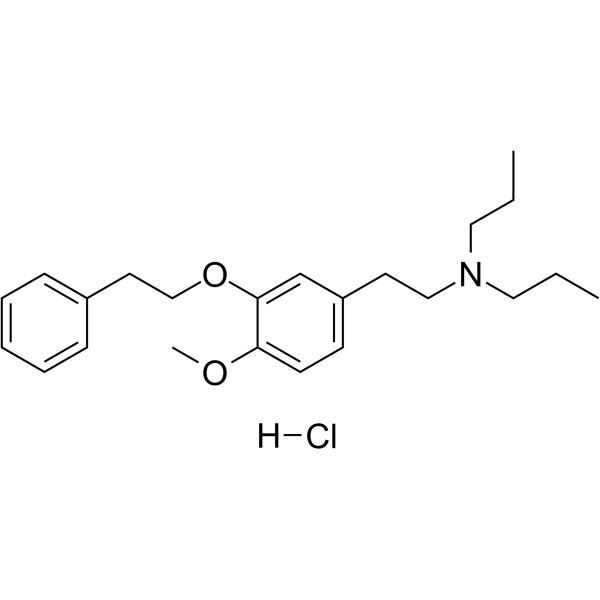
    NE-100 hydrochloride
    1 Publications Verification

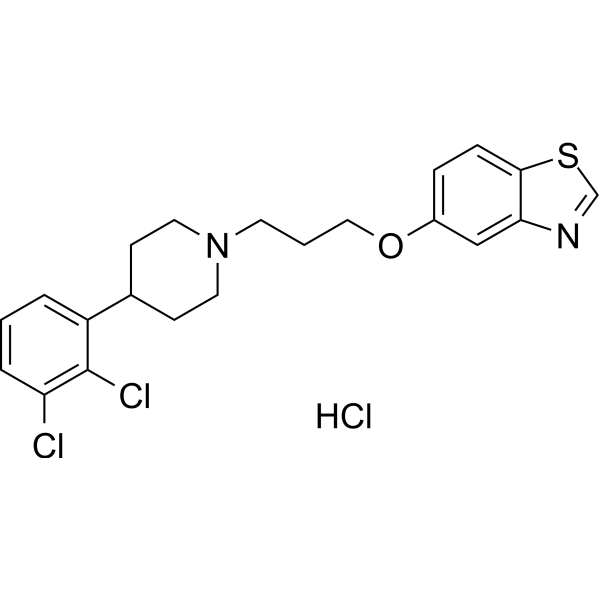
    Sigma Receptor ATF6 Neurological Disease
    NE-100 hydrochloride is an orally active and selective sigma-1 receptor antagonist with an IC50 of 4.16 nM. NE-100 hydrochloride can improve cognitive impairment and has neuroprotective and antipsychotic activities. NE-100 hydrochloride can be used for research on nervous system diseases .
    NE-100 hydrochloride
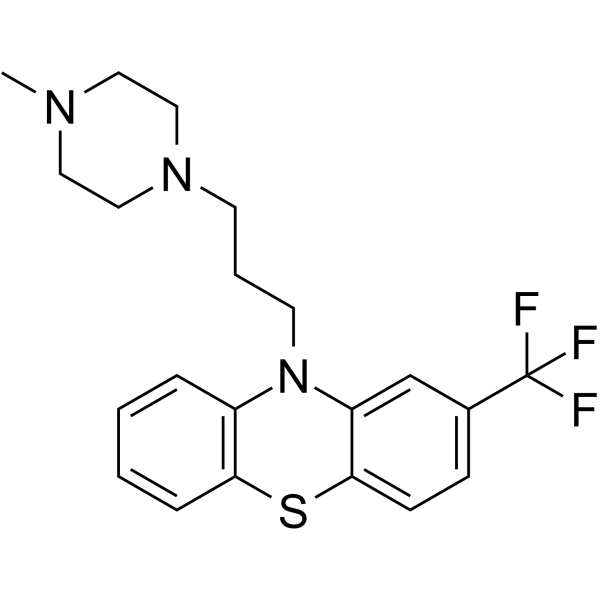
  • HY-B0532
    Trifluoperazine
    5+ Cited Publications

    Dopamine Receptor Adrenergic Receptor P-glycoprotein CaMK Influenza Virus Autophagy Neurological Disease
    Trifluoperazine, an antipsychotic agent, acts by blocking central dopamine receptors. Trifluoperazine is a potent α1-adrenergic receptor antagonist. Trifluoperazine is a potent NUPR1 inhibitor exerting anticancer activity. Trifluoperazine is a calmodulin inhibitor, and also inhibits P-glycoprotein. Trifluoperazine can be used for the research of schizophrenia. Trifluoperazine acts as a reversible inhibitor of influenza virus morphogenesis .
    Trifluoperazine
  • HY-17390A
    Loxapine succinate
    1 Publications Verification

    5-HT Receptor Dopamine Receptor Infection Neurological Disease
    Loxapine succinate is an orally active dopamine inhibitor, 5-HT receptor antagonist and also a dibenzoxazepine anti-psychotic agent. Loxapine can also suppresses bacterial efflux pump activity and inhibit intracellular multiple-antibiotic-resistant Salmonella enterica serovar Typhimurium in macrophages .
    Loxapine succinate
  • HY-B0532A
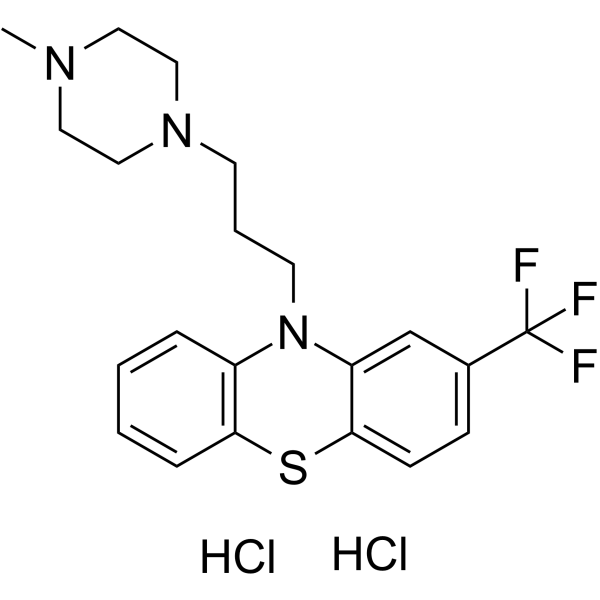
    Trifluoperazine dihydrochloride
    5+ Cited Publications

    Dopamine Receptor Adrenergic Receptor CaMK P-glycoprotein Influenza Virus Autophagy Neurological Disease Cancer
    Trifluoperazine dihydrochloride, an antipsychotic agent, acts by blocking central dopamine receptors. Trifluoperazine dihydrochloride is a potent α1-adrenergic receptor antagonist. Trifluoperazine dihydrochloride is a potent NUPR1 inhibitor exerting anticancer activity. Trifluoperazine dihydrochloride is a calmodulin inhibitor, and also inhibits P-glycoprotein. Trifluoperazine dihydrochloride can be used for the research of schizophrenia. Trifluoperazine dihydrochloride acts as a reversible inhibitor of influenza virus morphogenesis .
    Trifluoperazine dihydrochloride
  • HY-15793
    NBI-98782
    1 Publications Verification

    (+)-DTBZ; (+)-α-Dihydrotetrabenazine; (+)-α-DHTBZ

    Monoamine Transporter Neurological Disease
    NBI-98782 is a high affinity and selectivity vesicular monoamine transporter 2 (VMAT2) inhibitor with a Ki of 3 nM. NBI-98782 has antipsychotic activity .
    NBI-98782
  • HY-B0901
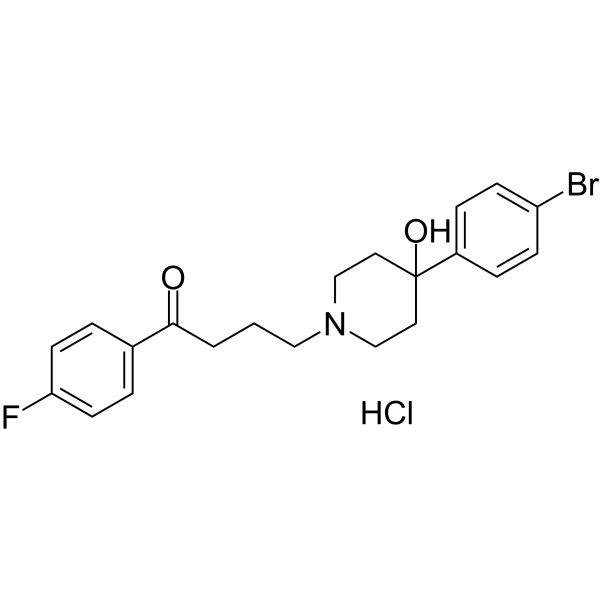
    Bromperidol
    2 Publications Verification

    R-11333

    Dopamine Receptor Bacterial Infection Neurological Disease
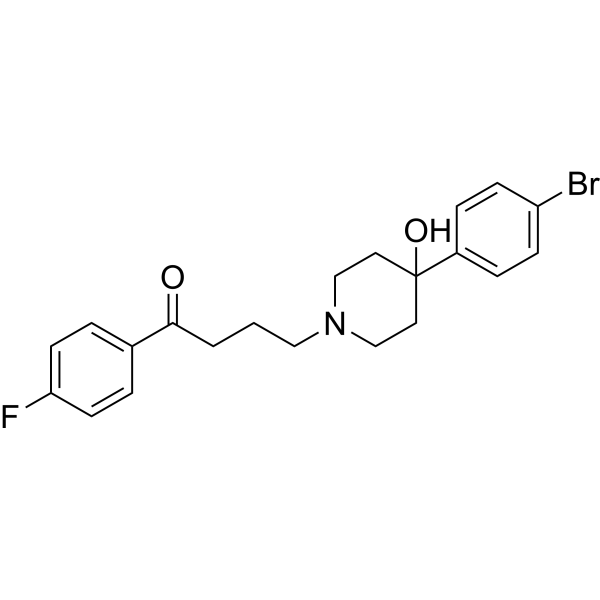
    Bromperidol (R-11333) possesses antipsychotic activity, with a high affinity for central dopamine receptors D2. Bromperidol can kill Mycobacteria in a synergistic manner with Spectinomycin .
    Bromperidol
  • HY-B0274
    Chlorprothixene
    2 Publications Verification

    Dopamine Receptor Histamine Receptor Bacterial Neurological Disease
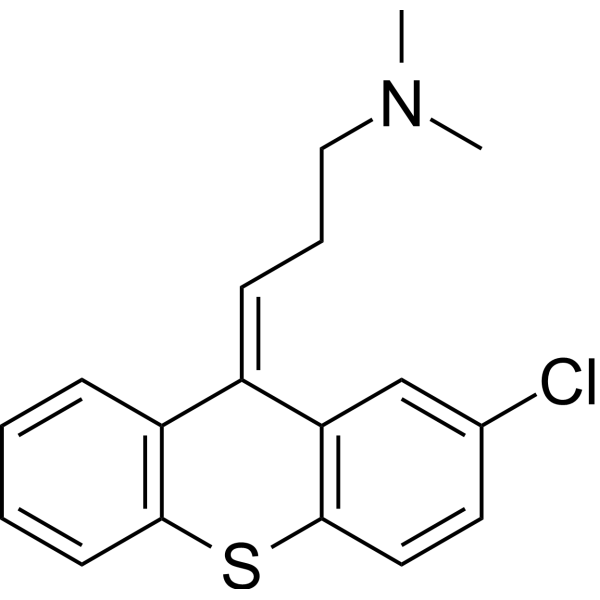
    Chlorprothixene is a dopamine and histamine receptors antagonist with Kis of 18 nM, 2.96 nM, 4.56 nM, 9 nM and 3.75 nM for hD1, hD2, hD3, hD5 and hH1 receptors, respectively. Antipsychotic activity .
    Chlorprothixene
  • HY-B0274A
    Chlorprothixene hydrochloride
    2 Publications Verification

    Dopamine Receptor Histamine Receptor Bacterial Neurological Disease
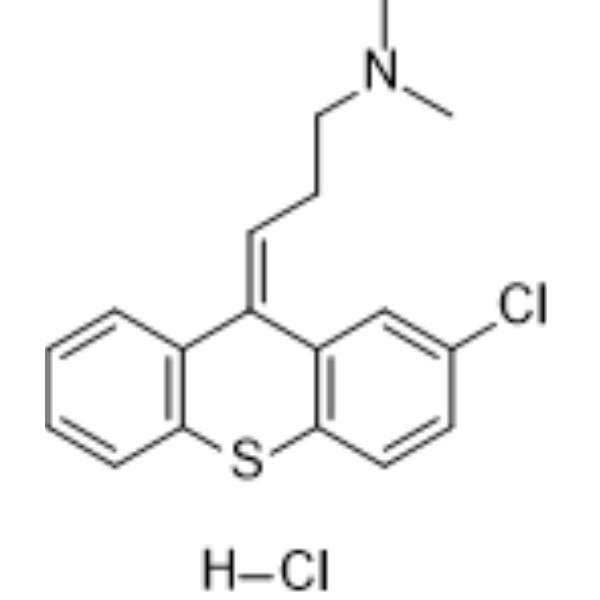
    Chlorprothixene hydrochloride is a dopamine and histamine receptors antagonist with Kis of 18 nM, 2.96 nM, 4.56 nM, 9 nM and 3.75 nM for hD1, hD2, hD3, hD5 and hH1 receptors, respectively. Antipsychotic activity .
    Chlorprothixene hydrochloride
  • HY-107969

    Dopamine Receptor COX NO Synthase Neurological Disease Cancer
    Haloperidol decanoate is a depot preparation of haloperidol, a commonly used butyrophenone derivative with antipsychotic activity. Haloperidol decanoate can increase the striatal D2 receptor in rat. Haloperidol decanoate can improve conditions of psychoses (mainly schizophrenia). Haloperidol decanoate can lead to increased accumulation of the dopamine metabolites homo-vanillic acid. Haloperidol decanoate can reduce intestinal transport, increase gastric emptying and reduce acid output in rat model .
    Haloperidol decanoate
  • HY-B2117

    Epoxide Hydrolase EBV Infection Neurological Disease
    Valpromide is an amide derivative of Valproic acid (HY-10585) and an orally active epoxide hydrolase inhibitor that can cross the blood-brain barrier. Valpromide has antiepileptic, anticonvulsant, and antipsychotic effects. Valpromide also exhibits antiviral activity and can inhibit the reactivation of the EBV lytic cycle .
    Valpromide
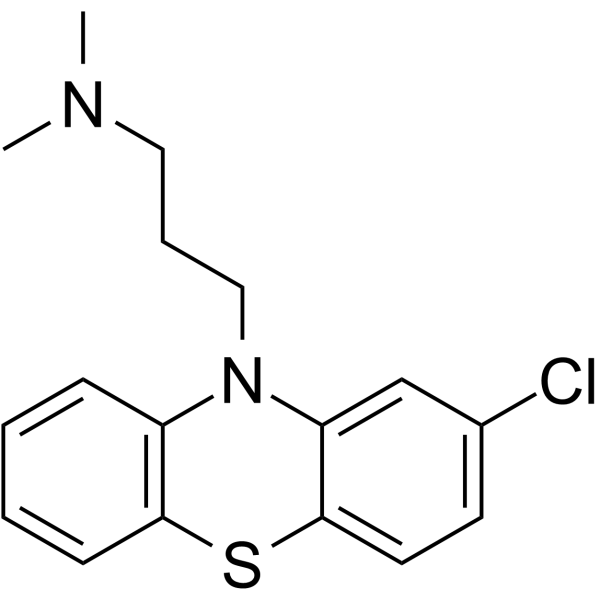
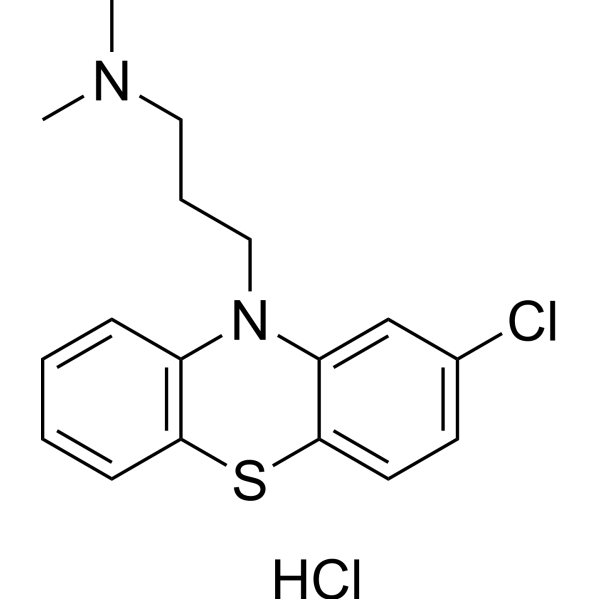
  • HY-14264

    5-HT Receptor Neurological Disease
    Cyamemazine is a neuroleptic agent that contains the phenothiazine chromophore. Cyamemazine is often used as an anxiolytic. Cyamemazine is a potent 5-HT3 (Ki of 12 nM), 5-HT2A (Ki = 1.5 nM) and 5-HT2C (Ki of 75 nM) receptors antagonist with antipsychotic activity .
    Cyamemazine
  • HY-B1152
    Piperacetazine
    1 Publications Verification

    Dopamine Receptor CD276/B7-H3 FOXO Neurological Disease Cancer
    Piperacetazine is an orally active dopamine receptor antagonist and phenothiazine antipsychotic. Piperacetazine can directly bind to the PAX3::FOXO1 fusion protein and inhibit its transcriptional activity. Piperacetazine also exhibits antitumor activity with an IC50 of 7.627 μM against PANC-1 cells. Piperacetazine can be used for the research of diseases such as schizophrenia and pancreatic cancer and other tumors .
    Piperacetazine
  • HY-13058
    ADX-47273
    1 Publications Verification

    mGluR Neurological Disease
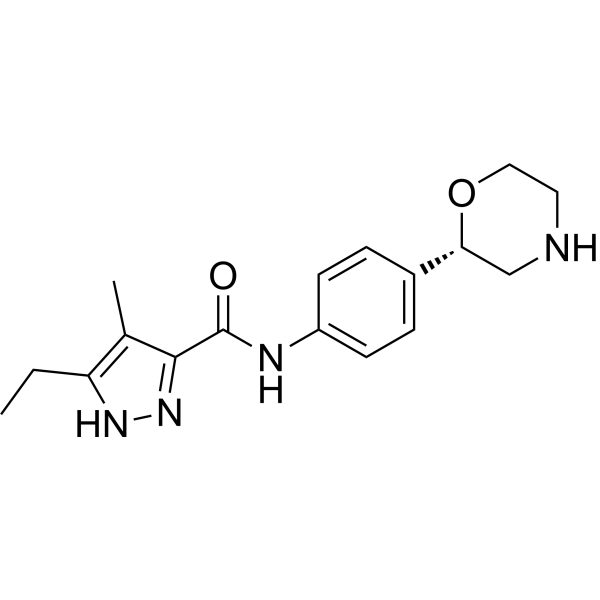
    ADX-47273 is a potent, selective and brain-penetrant mGluR5 positive allosteric modulator (PAM), with an EC50 of 0.17 μM for potentiation of glutamate (50 nM) response. ADX-47273 has antipsychotic and procognitive activities .
    ADX-47273
  • HY-122015

    Potassium Channel Neurological Disease
    ASP2905 is an orally active potassium channel Kv12.2 inhibitor encoded by the Kcnh3/BEC1 gene. ASP2905 can cross the blood-brain barrier and has antipsychotic activities .
    ASP2905
  • HY-B1017

    EN-1733A

    Dopamine Receptor Neurological Disease
    Molindone hydrochloride (EN-1733A) is an orally active and brain-penetrant dopamine D2/D5 receptor antagonist. Molindone hydrochloride shows antipsychotic and antidepressant-like activities. Molindone hydrochloride suppresses spontaneous locomotion, and antagonizes apomorphine-induced emesis. Molindone hydrochloride can be used for the research of neurological disease .
    Molindone (hydrochloride)
  • HY-111385
    UNC9994 hydrochloride
    2 Publications Verification

    Dopamine Receptor 5-HT Receptor Arrestin Neurological Disease
    UNC9994 hydrochloride is a functionally selective, β-arrestin–biased dopamine D2 receptor (D2R) agonist that selectively activates β-arrestin recruitment and signaling. UNC9994 hydrochloride shows a binding affinity with a Ki of 79 nM for D2R. UNC9994 hydrochloride is also an antagonist of Gi-regulated cAMP production and partial agonist for D2R/β-arrestin-2 interactions. UNC9994 hydrochloride shows antipsychotic-like activity .
    UNC9994 hydrochloride
  • HY-100703

    Floropipamide; McN-JR 3345; R 3345

    5-HT Receptor Dopamine Receptor Neurological Disease
    Pipamperone (Floropipamide) is a butyrophenone derivative and high-affinity antagonist of 5-HT2A receptor (pKi=8.2) and D4 receptor (pKi=8.0). Pipamperone is also a low-affinity antagonist of D2 receptor (pKi=6.7). Pipamperone affects neurotransmitter functions and exerts antipsychotic activity. Pipamperone is used in the research of mental disorders such as autism-related behavioral disorders and Alzheimer's disease .
    Pipamperone
  • HY-100665
    Dehydroaripiprazole
    1 Publications Verification

    OPC-14857; DM-14857

    5-HT Receptor Dopamine Receptor Neurological Disease
    Dehydroaripiprazole (OPC-14857) is an active metabolite of Aripiprazole (HY-14546) and dopamine D2/D3 receptor partial agonist. Dehydroaripiprazole also has certain affinity for serotonin 5-HT1A, 5-HT2A and 5-HT2B receptors. Dehydroaripiprazole has antipsychotic activity equivalent to Aripiprazole .
    Dehydroaripiprazole
  • HY-W009247

    N-Demethylolanzapine; LY170055

    Endogenous Metabolite Neurological Disease
    N-Desmethylolanzapine is an antipsychotic drug. The formation of N-Desmethylolanzapine correlates with the level and activity of human liver flavin-containing monooxygenase (FMO3). N-Desmethylolanzapine can be used in the study of antipsychotic drugs .
    N-Desmethylolanzapine
  • HY-102062A
    Nω-Propyl-L-arginine hydrochloride
    1 Publications Verification

    N-omega-Propyl-L-arginine hydrochloride

    NO Synthase Neurological Disease
    Nω-Propyl-L-arginine (N-omega-Propyl-L-arginine) hydrochloride is a potent, competitive, and highly selective inhibitor of neuronal nitric oxide synthase (nNOS), with a Ki of 57 nM. Nω-Propyl-L-arginine hydrochloride displays a 149-fold selectivity for nNOS over endothelial NOS (eNOS) .
    Nω-Propyl-L-arginine hydrochloride
  • HY-102062
    Nω-Propyl-L-arginine
    1 Publications Verification

    N-omega-Propyl-L-arginine

    NO Synthase Neurological Disease
    Nω-Propyl-L-arginine (N-omega-Propyl-L-arginine) is a potent, competitive, and highly selective inhibitor of neuronal nitric oxide synthase (nNOS), with a Ki of 57 nM. Nω-Propyl-L-arginine displays a 149-fold selectivity for nNOS over endothelial NOS (eNOS) .
    Nω-Propyl-L-arginine
  • HY-131255

    Ziprasidone Impurity C; Ziprasidone open ring impurity

    5-HT Receptor Dopamine Receptor Neurological Disease
    Ziprasidone amino acid (Ziprasidone Impurity C) is an impurity of Ziprasidone. Ziprasidone is a combined 5-HT (serotonin) and dopamine receptor antagonist. Ziprasidone exhibits potent effects of antipsychotic activity .
    Ziprasidone amino acid
  • HY-109157
    Ralmitaront
    2 Publications Verification

    RO6889450

    Trace Amine-associated Receptor (TAAR) 5-HT Receptor Dopamine Receptor Neurological Disease
    Ralmitaront (RO6889450) is an orally active agonist of trace amine-associated receptor 1 (TAAR1) with a EC50 value of 110.4 nM. Ralmitaront has antipsychotic, cognitively improvement, and antidepressant activity in rodents. Ralmitaront can be used as a neurosuppressant in the study of neuro-related diseases, such as schizophrenia (SCZ), schizoaffective disorder .
    Ralmitaront
  • HY-108512
    PD 144418
    1 Publications Verification

    Sigma Receptor Neurological Disease
    PD 144418 is a highly affinity, potent and selective sigma 1 (σ1) receptor ligand (Ki values of 0.08 nM and 1377 nM for σ1 and σ2 respectively). PD 144418 devoids of any significant affinity for other receptors, ion channels and enzymes. PD 144418 shows potential antipsychotic activity .
    PD 144418
  • HY-117829
    UNC9994
    2 Publications Verification

    Dopamine Receptor 5-HT Receptor Histamine Receptor Arrestin Neurological Disease
    UNC9994, an analog of Aripiprazole, is a functionally selective β-arrestin-biased dopamine D2 receptor (D2R) agonist with EC50 <10 nM for β-arrestin-2 recruitment to D2 receptors. UNC9994 is simultaneously partial agonists of β-arrestin-2 translocation and antagonists of Gi-regulated cAMP production. Antipsychotic Activity .
    UNC9994
  • HY-147395

    GPR52 Neurological Disease
    GPR52 agonist-1 is a potent, orally active and blood-brain barrier (BBB) penetrant GPR52 agonist with an pEC50 value of 7.53. GPR52 agonist-1 affects cAMP accumulation through direct interaction with GPR52. GPR52 agonist-1 can significantly suppress Methamphetamine-induced hyperactivity in mice. Antipsychotic activity .
    GPR52 agonist-1
  • HY-112432

    GlyT Neurological Disease
    GlyT1 Inhibitor 1 is a potent and selective GlyT1 inhibitor with an IC50 of 38 nM for rGlyT1 . Antipsychotic activity .
    GlyT1 Inhibitor 1
  • HY-W077477

    5-HT Receptor Neurological Disease
    IHCH-7113 (Compound 166) is an agonist of 5-HT2A serotonin receptor with antidepressant activity. IHCH-7113 is promising for research of antipsychotic agent .
    IHCH-7113
  • HY-A0151
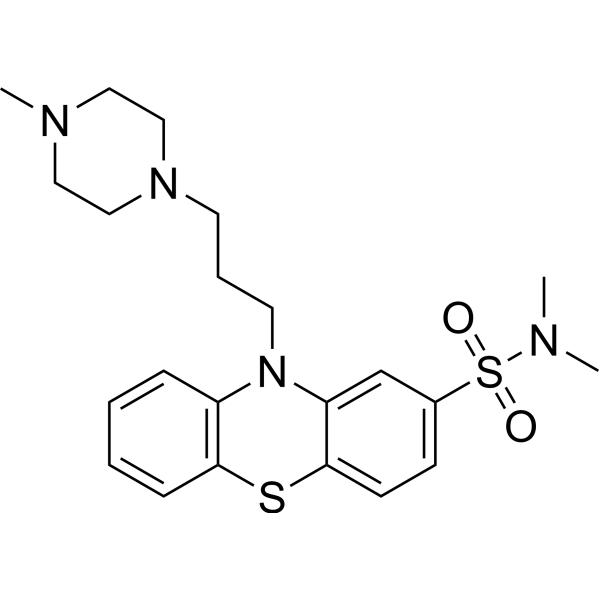
    Thioproperazine
    2 Publications Verification

    RP 7843; SKF 5883; Thioperazine

    Dopamine Receptor Neurological Disease
    Thioproperazine (RP 7843) is an orally active antipsychotic agent with calming, antiemetic activity. Thioproperazine is effective in promoting the release of dopamine in rat striatum. Thioproperazine can be used in studies of schizophrenia and bipolar disorder .
    Thioproperazine
  • HY-14940S

    MDL100907-d4 hydrochloride; M 100907-d4 hydrochloride

    5-HT Receptor Neurological Disease
    Volinanserin-d4 (hydrochloride) is the deuterium labeled Volinanserin hydrochlorid. Volinanserin is a potent and selective antagonist of 5-HT2 receptor, with a Ki of 0.36 nM, and shows 300-fold selectivity for 5-HT2 receptor over 5-HT1c, alpha-1 and DA D2 receptors. Volinanserin has antipsychotic activity .
    Volinanserin-d4 hydrochloride
  • HY-108512A
    PD 144418 oxalate
    1 Publications Verification

    Sigma Receptor Neurological Disease
    PD 144418 oxalate is a highly affinity, potent and selective sigma 1 (σ1) receptor ligand (Ki values of 0.08 nM and 1377 nM for σ1 and σ2 respectively). PD 144418 oxalate devoids of any significant affinity for other receptors, ion channels and enzymes. PD 144418 oxalate shows potential antipsychotic activity .
    PD 144418 oxalate
  • HY-106100A

    EMD 38362

    Dopamine Receptor Serotonin Transporter Neurological Disease
    Roxindole hydrochloride (EMD 38362), an indot-alkyl-pipenidine, is a potent agonist at dopamine autoreceptors, with an affinity for the D2-like subtype in the low nanomolar range. Roxindole can be used for the research of positive and negative schizophrenic symptoms. Roxindole is a 5-HT1A agonist and 5-HT uptake inhibitor with high affinity for 5-HT1A (IC50=0.9 nM). Antipsychotic and antidepressant activities .
    Roxindole hydrochloride
  • HY-115447

    Histamine Receptor Neurological Disease
    Clobenpropit is a potent histamine H3-receptor antagonist. Clobenpropit decreases dopamine release and increases histamine levels in the hypothalamus. Clobenpropit shows antipsychotic-like activities. Clobenpropit causes a resuscitating effect in rats subjected to the hemorrhagic shock .
    Clobenpropit
  • HY-136281

    Sigma Receptor Neurological Disease
    DuP 734 is a sigma receptor antagonist. DuP 734 is a selective and potent sigma and 5-HT2 receptor ligand with weak affinity for D2 receptors. DuP 734 may have antipsychotic activity without the liability of motor side effects typical of neuroleptics .
    DuP 734
  • HY-17390AR

    Reference Standards 5-HT Receptor Dopamine Receptor Infection Neurological Disease
    Loxapine (succinate) (Standard) is the analytical standard of Loxapine (succinate). This product is intended for research and analytical applications. Loxapine succinate is an orally active dopamine inhibitor, 5-HT receptor antagonist and also a dibenzoxazepine anti-psychotic agent. Loxapine can also suppresses bacterial efflux pump activity and inhibit intracellular multiple-antibiotic-resistant Salmonella enterica serovar Typhimurium in macrophages .
    Loxapine succinate (Standard)
  • HY-14940A

    (S)-MDL100907; (S)-M 100907

    5-HT Receptor Neurological Disease
    (S)-Volinanserin is an isform of Volinanserin (HY-14940). Volinanserin is a potent and selective antagonist of 5-HT2 receptor, with a Ki of 0.36 nM, and shows 300-fold selectivity for 5-HT2 receptor over 5-HT1c, alpha-1 and DA D2 receptors. Volinanserin has antipsychotic activity.
    (S)-Volinanserin
  • HY-100971

    AMI-193

    5-HT Receptor Dopamine Receptor Neurological Disease
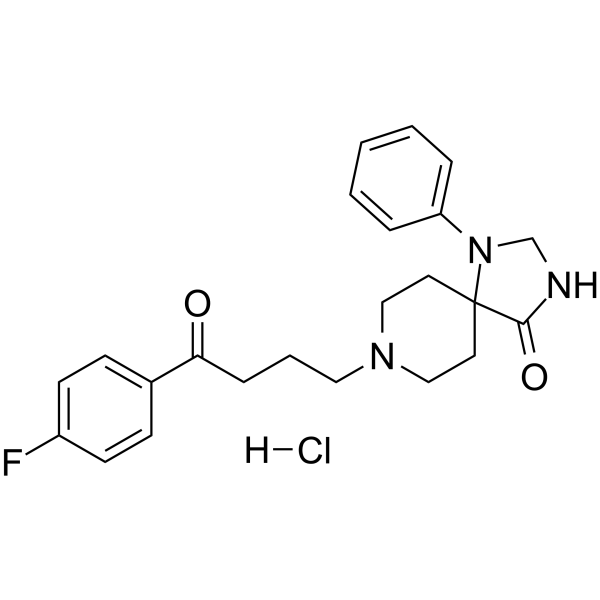
    Spiramide (AMI-193) is a potent and selective antagonist of 5-HT2 and dopamine D2 receptor, with Kis of 2 nM and 3 nM, respectively. Spiramide has >2000-fold selectivity for 5-HT2 versus 5-HT1C (Ki=4300 nM) receptors. Spiramide exhibits antipsychotic activity .
    Spiramide
  • HY-156532

    5-HT Receptor Neurological Disease
    5-HT2C agonist-3 ((+)-19) is a selective 5-HT2C agonist (EC50: 24 nM, Ki: 78 nM). 5-HT2C agonist-3 has antipsychotic drug-like activity. 5-HT2C agonist-3 blocks Amphetamine-induced hyperactivity .
    5-HT2C agonist-3
  • HY-W648166

    Dopamine Receptor Neurological Disease
    Dopamine D2 receptor antagonist-3 (Example 17) is an orally active and selective dopamine D2 receptor antagonist with a pIC50 of 5.52. Dopamine D2 receptor antagonist-3 exhibits antipsychotic activity in the Apomorphine (HY-12723) induced agitation in rats. Dopamine D2 receptor antagonist-3 can be used for psychiatric and neurological disorders research .
    Dopamine D2 receptor antagonist-3
  • HY-B0965AS

    Dopamine Receptor Apoptosis 5-HT Receptor Autophagy Bacterial Neurological Disease
    Thioridazine-d3 (hydrochloride) is the deuterium labeled Thioridazine. Thioridazine, an antagonist of the dopamine receptor D2 family proteins, exhibits potent anti-psychotic and anti-anxiety activities. Thioridazine is also a potent inhibitor of PI3K-Akt-mTOR signaling pathways with anti-angiogenic effect. Thioridazine shows antiproliferative and apoptosis induction effects in various types of cancer cells, with specificity on targeting cancer stem cells (CSCs) .
    Thioridazine-d3 hydrochloride
  • HY-116855

    mGluR Neurological Disease
    TASP0433864 is a selective positive allosteric modulator (PAM) of metabotropic glutamate 2 (mGlu2) receptor with EC50 values of 199 nM and 206 nM against human and rat mGlu2 receptors, respectively. TASP0433864 has antipsychotic activity .
    TASP0433864
  • HY-137525

    Neurotensin Receptor Neurological Disease
    NTRC-808 is a nonpeptide selective GPCR neurotensin receptor type 2 (NTS2) partial agonist with an EC50 of 14 nM and Ki of 88 nM. NTRC-808 has higher selectivity for NTS2 than for NTS1. NTRC-808 has antipsychotic and analgesic activity .
    NTRC-808
  • HY-127120

    Dopamine Receptor Neurological Disease
    Timiperone has a strong affinity for cerebral dopamine D2 receptor. Timiperone has antipsychotic activity, and inhibits stereotyped behaviour. Timiperone can be used for research of schizophrenia .
    Timiperone
  • HY-172425

    Isotope-Labeled Compounds Dopamine Receptor 5-HT Receptor Neurological Disease
    Deulumateperone is a deuterium labeled Lumateperone (HY-17637). Lumateperone is the orally active 5-HT2A receptor antagonist (Ki = 0.54 nM) and the modulator for dopamine receptor that exhibits antipsychotic and antineoplastic activities .
    Deulumateperone
  • HY-14458

    Phosphodiesterase (PDE) Neurological Disease
    SCH-1518291 (Compound 27) is an orally active PDE10A inhibitor. SCH-1518291 exhibits antipsychotic activity in an ADHD rat model. SCH-1518291 can be used in research on neurological disorders such as psychosis .
    SCH-1518291

Inquiry Online

Your information is safe with us. * Required Fields.

Salutation


Country or Region *

Applicant Name *


Organization Name *

Department *


Email Address *


Product Name *

Cat. No.


Requested quantity *

Phone Number *


Remarks

Inquiry Online

Inquiry Information

Product Name:
Cat. No.:
Quantity:
MCE Japan Authorized Agent:

