
Search Result
Results for "
anxiolyticlike
" in MedChemExpress (MCE) Product Catalog:
1
Isotope-Labeled Compounds
| Cat. No. |
Product Name |
Target |
Research Areas |
Chemical Structure |
-
- HY-13206
-
|
|
mGluR
|
Neurological Disease
|
|
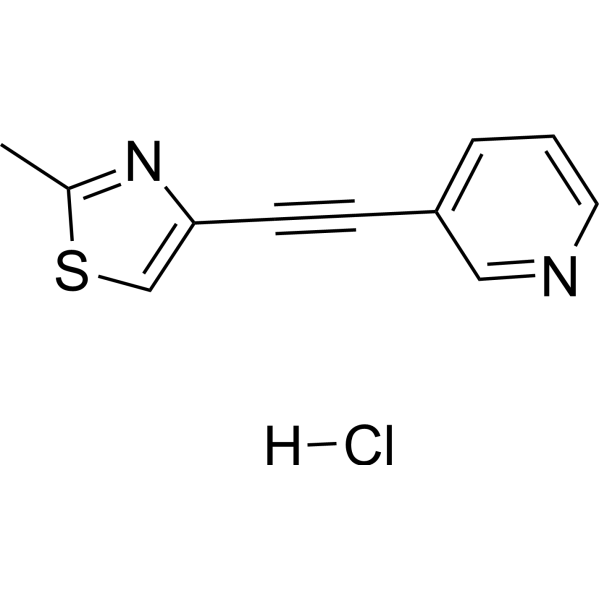
MTEP hydrochloride is a potent, non-competitive and highly selective mGluR5 antagonist, with an IC50 of 5 nM and a Ki of 16 nM. MTEP hydrochloride shows antidepressant and anxiolytic-like effects. MTEP hydrochloride can be used for Parkinson's disease research .
|
-
-
- HY-N0152
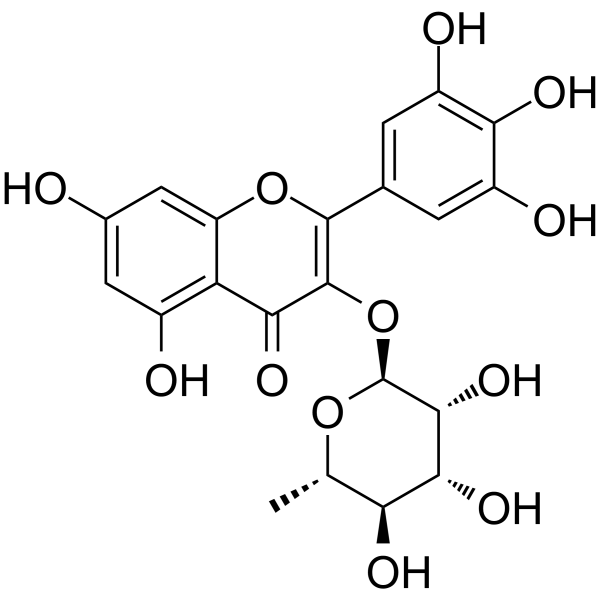
-
-
-
- HY-100834
-
|
5,7-DCKA
|
iGluR
|
Neurological Disease
|
|
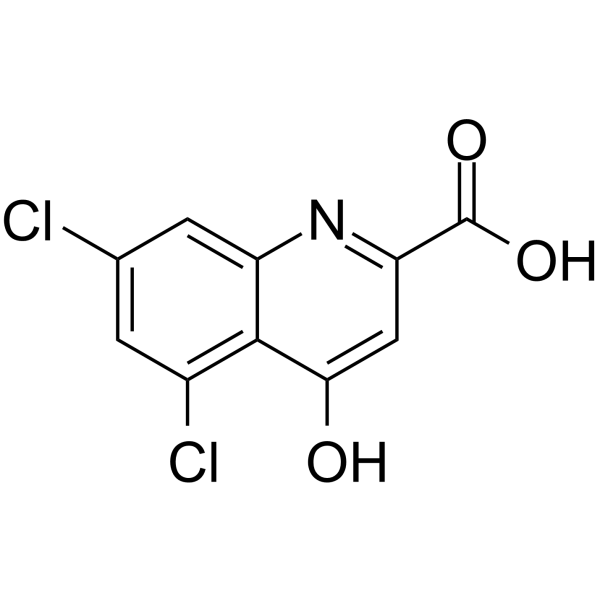
5,7-Dichlorokynurenic acid (5,7-DCKA) is a selective and competitive antagonist of the glycine site on NMDA receptor with a KB of 65 nM. 5,7-Dichlorokynurenic acid reduces NMDA-induced neuron injury. 5,7-Dichlorokynurenic acid increases social interaction time, increases open arm exploration time, disinhibits suppressed conflict responding in rodent models. 5,7-Dichlorokynurenic acid exhibits anxiolytic-like activity in rodent models and supports exploration of glycine’s role in NMDA receptor-mediated synaptic transmission .
|
-
-
- HY-13206A
-
MTEP
3 Publications Verification
|
mGluR
|
Neurological Disease
|
|
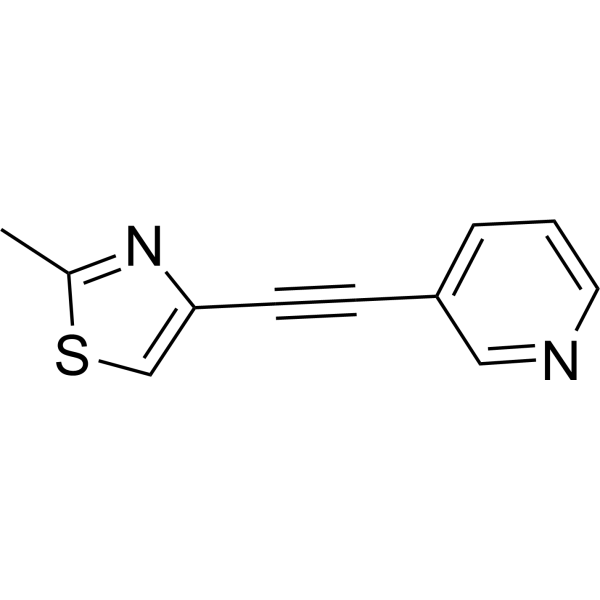
MTEP is a potent, non-competitive and highly selective mGluR5 antagonist, with an IC50 of 5 nM and a Ki of 16 nM. MTEP shows antidepressant and anxiolytic-like effects. MTEP can be used for Parkinson's disease research . MTEP is a click chemistry reagent, it contains an Alkyne group and can undergo copper-catalyzed azide-alkyne cycloaddition (CuAAc) with molecules containing Azide groups.
|
-
-
- HY-101369
-
|
|
5-HT Receptor
|
Cardiovascular Disease
Neurological Disease
|
|
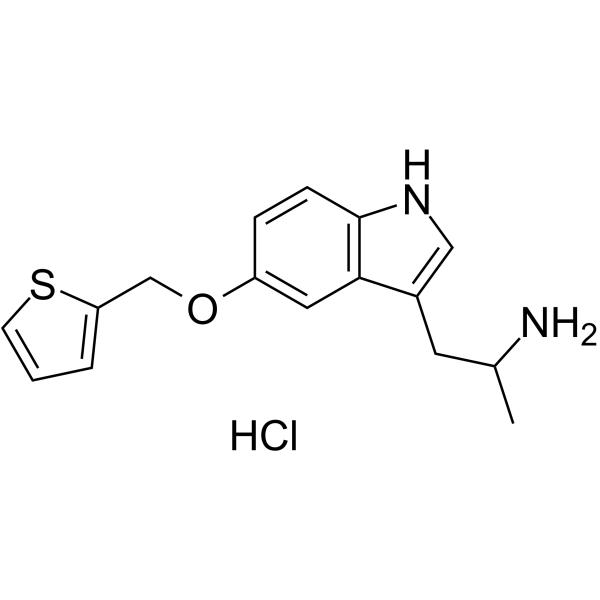
BW-723C86 is an orally active and a selective 5-HT2B receptor agonist. BW-723C86 exhibits anxiolytic-like actions. BW-723C86 also causes hyperphagia and reduced grooming in rats. BW-723C86 dilates pulmonary arteries and inhibits liquid meal-induced gastric accommodation .
|
-
-
- HY-W677042
-
|
5α-Androst-16-en-3α-ol
|
GABA Receptor
|
Neurological Disease
|
|
α-Androstenol (5α-Androst-16-en-3α-ol) is a steroid pheromone that has been found in boar testes and male axillary sweat. α-Androstenol is also a positive allosteric modulator of GABAA receptors, which enhances GABA-activated currents in primary mouse cerebellar granule cells (EC50 of 0.4 μM). α-Androstenol produces anxiolytic-like, antidepressant-like, and anticonvulsant effects in mice. α-Androstenol can be used for the research of seizures .
|
-
-
- HY-19505
-
|
|
GABA Receptor
|
Neurological Disease
|
|
TPA-023B is a high-affinity and orally active GABAA receptor α2/α3 subtype (Kis of 0.73 nM/2 nM) partial agonist and a α1 subtype (Ki of 1.8 nM) antagonist. TPA-023B has non-sedating anxiolytic-like properties .
|
-
-
- HY-19490
-
|
AQW-051
|
nAChR
|
Neurological Disease
|
|
VQW-765 (AQW-051) is a selective and orally active alpha-7 nicotinic acetylcholine receptor (α7-nAChR) agonist with a pKD value of 7.56 to recombinantly expressed human α7-nAChR. VQW-765 shows anxiolytic-like effect in vivo. VQW-765 can be used for the research of anxiety disorder and acute performance anxiety .
|
-
-
- HY-P1117
-
MMK1
1 Publications Verification
|
Formyl Peptide Receptor (FPR)
Calcium Channel
|
Neurological Disease
Inflammation/Immunology
|
|
MMK1 is a potent and selective human formyl peptide receptor like-1 (FPRL-1/FPR2) agonist with EC50s of <2 nM and >10000 nM for FPRL-1 and FPR1, respectively. MMK1 is a potent chemotactic and calcium-mobilizing agonist. MMK1 potently activates phagocytic leukocytes and enhances Pertussis Toxin-sensitive production by human monocytes of proinflammatory cytokines IL-1b and IL-6. MMK1 exerts anxiolytic-like activity .
|
-
-
- HY-118301
-
|
|
GABA Receptor
5-HT Receptor
|
Neurological Disease
|
|
ADX71441 is an orally active, blood-brain barrier penetrant positive allosteric modulator of GABAB receptor. ADX71441 potentiates the activity of endogenous GABA at GABAB receptor, with an EC50 of 96 nM. ADX71441 functionally inhibits adenosine transporters and 5-HT2B receptor. ADX71441 produces anxiolytic-like, analgesic, muscle relaxant, hypothermic and overactive bladder inhibitory effects, reduces acute locomotor activity levels, decreases voluntary intake of alcohol and saccharin, attenuates stress-induced neuronal activation, and exhibits anti-hyperalgesic activity .
|
-
-
- HY-120511
-
KNT-127
1 Publications Verification
|
Opioid Receptor
|
Neurological Disease
|
|
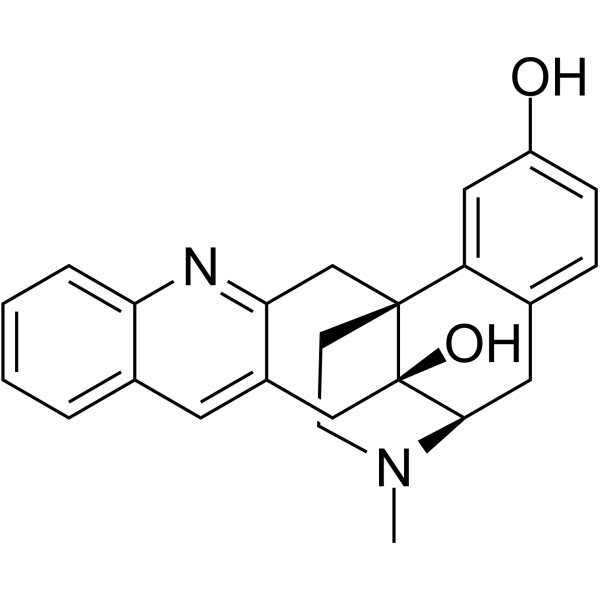
KNT-127 is a selective and BBB-penetrant δ-opioid receptor (DOR) agonist (Ki = 0.16 nM). KNT-127 is highly selective to the δ receptor, with Ki values of 0.16, 21.3 and 153 nM for δ, μ and κ receptors, respectively. KNT-127 acts as a biased ligand that mainly activates cyclic adenosine monophosphate (cAMP) signaling with lower beta-arrestin signaling activation. KNT-127 increases the release of dopamine and L-glutamate in the striatum, nucleus accumbens, and prefrontal cortex. KNT-127 exhibits antidepressant- and anxiolytic-like effects. KNT-127 can be studied in research on neurological diseases .
|
-
-
- HY-101358
-
|
AH-002
|
Melatonin Receptor
|
Neurological Disease
|
|
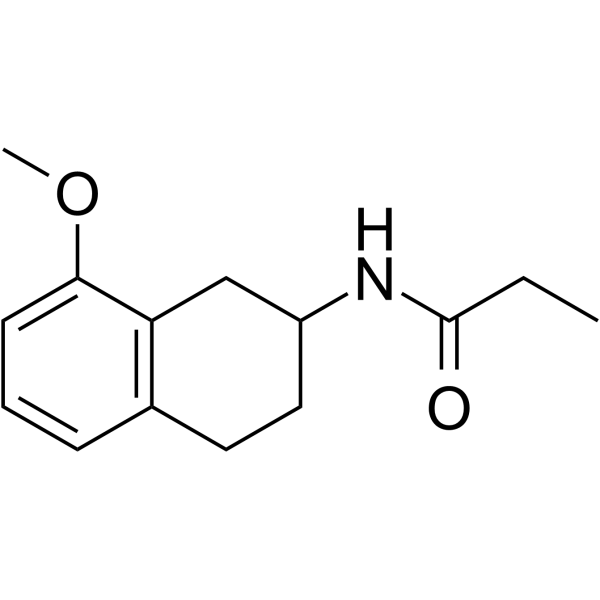
8-M-PDOT (AH-002) is a selective melatonin MT2 receptor agonist. 8-M-PDOT is 5.2-fold selective for MT2 over MT1 receptors. 8-M-PDOT binds human recombinant MT2 and MT2 receptors with pKi values of 8.23 and 8.95 respectively. 8-M-PDOT has anxiolytic-like activity .
|
-
-
- HY-107691
-
|
|
Neurokinin Receptor
|
Neurological Disease
Endocrinology
Cancer
|
|
GR 159897 is a highly potent, selective, competitive, brain-penetrated non-peptide neurokinin 2 (NK2) receptor antagonist. GR 159897 has little or no affinity for NK1 and NK3 receptors. GR 159897 inhibits binding of [ 3H]GR100679 to human NK2 (hNK2)-CHO cells and rat colon membranes with pKis of 9.51 and 10, respectively. Antagonizes bronchoconstriction. Anxiolytic-like and anti-tumor effects .
|
-
-
- HY-P10397
-
|
rALP-2, Rubisco anxiolytic-like peptide 2
|
iGluR
|
Neurological Disease
Metabolic Disease
|
|
YHIEPV (rALP-2, Rubisco anxiolytic-like peptide 2) is a potent and orally active peptide. YHIEPV shows anxiolytic effects. YHIEPV increases leptin sensitivity to exert its anti-obesity effects .
|
-
-
- HY-100936
-
|
SQ 20009; EHT 0202 hydrochloride
|
Phosphodiesterase (PDE)
GABA Receptor
|
Neurological Disease
Inflammation/Immunology
|
|
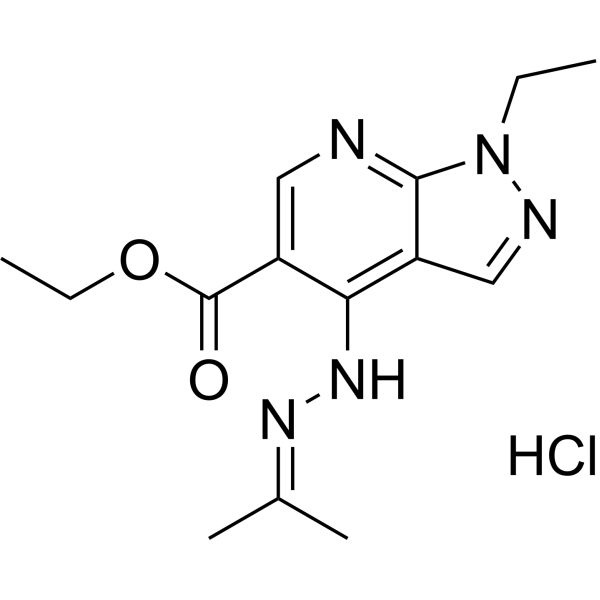
Etazolate hydrochloride (SQ 20009) is an orally active, selective inhibitor of type 4 phosphodiesterase (PDE4) with an IC50 of 2 μM. Etazolate hydrochloride is a γ-aminobutyric acid A (GABAA) receptor regulator. Etazolate hydrochloride is an α-secretase activator and induced the production of soluble amyloid precursor protein (sAPPα). Etazolate hydrochloride, a pyrazolopyridine class derivative, increases cAMP levels. Etazolate hydrochloride has anxiolyticlike, antidepressant-like and anti-inflammatory effects .
|
-
-
- HY-107722
-
|
|
Opioid Receptor
|
Neurological Disease
|
|
SCH 221510 is a potent, orally active and selective NOP (nociceptin opioid receptor) agonist, with an EC50 of 12 nM and Ki of 0.3 nM. SCH 221510 shows an anxiolytic-like effect .
|
-
-
- HY-101316
-
|
|
NO Synthase
|
Neurological Disease
|
|
TRIM is a potent nitric oxide synthase inhibitor. TRIM inhibits mouse cerebellar nNOS and rat lung iNOS in vitro with IC50 values of 28.2 and 27.0 µM, respectively. Antidepressant- and anxiolytic-like effects .
|
-
-
- HY-110146
-
|
|
mGluR
|
Neurological Disease
|
|
XAP044 is a potent and selective antagonist of mGlu7. The metabotropic glutamate receptor subtype 7 (mGlu7) is an important presynaptic regulator of neurotransmission in the mammalian CNS. XAP044 demonstrates good brain exposure and wide spectrum anti-stress and antidepressant- and anxiolytic-like efficacy in rodent behavioral paradigms .
|
-
-
- HY-141795
-
|
Co 134444
|
Drug Derivative
|
Neurological Disease
|
|
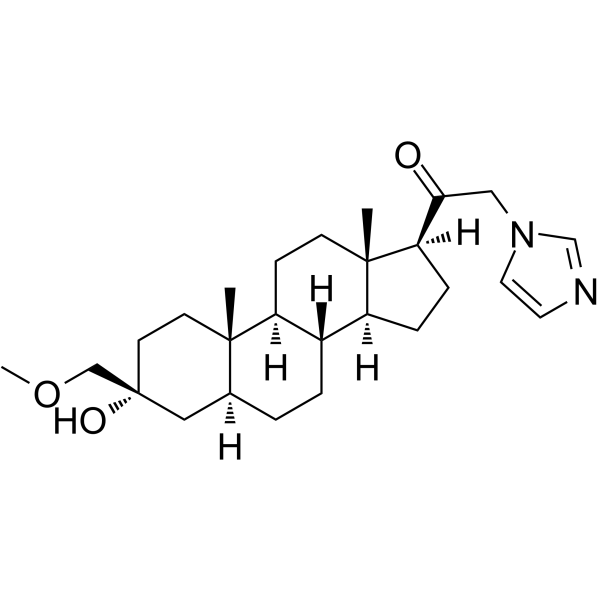
Posovolone (Co 134444) is an orally active, neuroactive steroid. Posovolone has anticonvulsant and anxiolytic-like activity as well as ataxic effects .
|
-
-
- HY-103571
-
|
|
mGluR
|
Neurological Disease
|
|
VU0285683 is a selective mGluR5 positive allosteric modulator (PAM). VU0285683 has anxiolytic-like activity in rodent models for anxiety .
|
-
-
- HY-101387
-
|
|
mGluR
|
Neurological Disease
|
|
rel-ACPT-I is an agonist of group III mGluRs with diverse biological activities including neuroprotective, anticonvulsant, and anxiolytic-like effects .
|
-
-
- HY-103133
-
|
|
5-HT Receptor
|
Neurological Disease
|
|
WAY 208466 dihydrochloride is a potent and selective 5-HT6 receptor agonist (EC50=7.3 nM for the human 5-HT6 receptor). WAY-208466 dihydrochloride elevates cortical GABA levels in rat frontal cortex . WAY 208466 dihydrochloride exhibits antidepressant and anxiolytic-like effects .
|
-
-
- HY-103135
-
|
|
5-HT Receptor
|
Neurological Disease
|
|
SB 206553 hydrochloride is a high affinity, selective and orally active 5-HT2B / 5-HT2C receptor antagonist (rat 5-HT2B pA2 = 8.89, human 5-HT2C pKi = 7.92) . SB 206553 possesses anxiolytic-like properties .
|
-
-
- HY-120738
-
|
|
5-HT Receptor
|
Neurological Disease
|
|
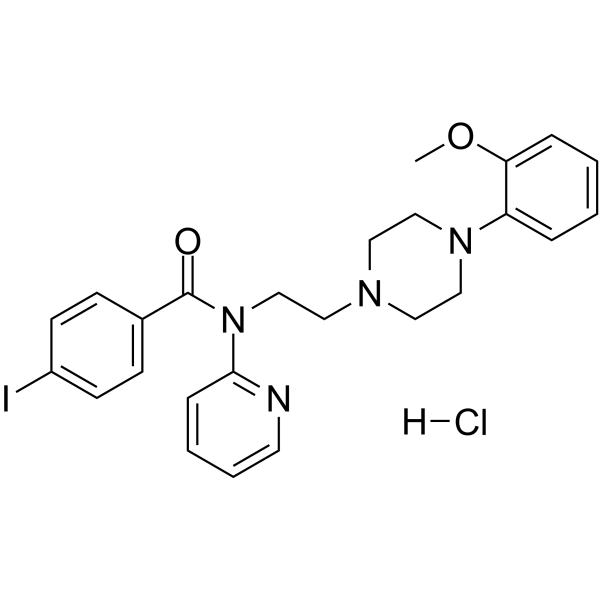
p-MPPI hydrochloride is a selective 5-HT1A receptor antagonist with high affinity for 5-HT1A receptors. p-MPPI hydrochloride can crosses the blood-brain barrier, and has clear antidepressant and anxiolytic-like effects .
|
-
-
- HY-138693
-
|
|
FAAH
|
Neurological Disease
|
|
ST4070 is a potent, orally active, and selective reversible fatty acid amide hydrolase (FAAH) inhibitor. ST4070 increases endocannabinoid (eCB) brain levels and counteracts neuropathic pain in animal models. ST4070 enhances the endogenous eCB tone in specific brain regions engaged in emotional control, and induces remarkable anxiolytic-like behaviours in rodents. ST4070 can be used for neuropathic pain and anxiety disorders research .
|
-
-
- HY-101322A
-
|
|
5-HT Receptor
|
Neurological Disease
|
|
MM 77 dihydrochloride is a potent postsynaptic antagonist of the 5-HT1A receptor. MM 77 dihydrochloride exhibits anxiolytic-like activity .
|
-
-
- HY-107702
-
|
|
iGluR
|
Neurological Disease
|
|
CGP 37849 is a potent, competitive and orally active N-methyl-D-aspartate (NMDA) receptor antagonist. CGP 37849 is an anticonvulsant in rodents and has antidepressant and anxiolytic-like effects .
|
-
-
- HY-160887
-
|
|
5-HT Receptor
|
Neurological Disease
|
|
FPT, a 2-Aminotetralin, is an efficacious partial agonist at 5-HT1AR, a full agonist at 5-HT1BR and 5-HT1DR with EC50s of 39.3 nM, 1.2 nM, 0.5 nM, respectively. FPT is a weak agonist at 5-HT7R. FPT shows in vivo efficacy as an antiepileptic in Fmr1 knockout mice and has anxiolytic-like and prosocial effects in Fmr1 knockout mice and other mouse models .
|
-
-
- HY-W150182
-
|
|
Environmental Pollutants
|
Neurological Disease
Inflammation/Immunology
|
|
p-Cymen-8-ol is an alcohol. p-Cymen-8-ol can be used to make essential oils. Essential oils containing p-Cymen-8-ol exhibit immunomodulatory activity. p-Cymen-8-ol, when used in combination with other substances to make essential oils, exerts an anxiolytic-like effect and reduces hepatic lipid peroxidation levels in ICR mice. p-Cymen-8-ol may be used in research on anxiolytic and other neurological and immune system disorders .
|
-
-
- HY-100936R
-
|
SQ 20009 (Standard); EHT 0202 hydrochloride (Standard)
|
Reference Standards
Phosphodiesterase (PDE)
GABA Receptor
|
Neurological Disease
Inflammation/Immunology
|
|
Etazolate (hydrochloride) (Standard) is the analytical standard of Etazolate (hydrochloride). This product is intended for research and analytical applications. Etazolate hydrochloride (SQ 20009) is an orally active, selective inhibitor of type 4 phosphodiesterase (PDE4) with an IC50 of 2 μM. Etazolate hydrochloride is a γ-aminobutyric acid A (GABAA) receptor regulator. Etazolate hydrochloride is an α-secretase activator and induced the production of soluble amyloid precursor protein (sAPPα). Etazolate hydrochloride, a pyrazolopyridine class derivative, increases cAMP levels. Etazolate hydrochloride has anxiolyticlike, antidepressant-like and anti-inflammatory effects .
|
-
-
- HY-101387A
-
|
|
mGluR
|
Neurological Disease
|
|
ACPT-II is an antagonist of group III mGluRs with diverse biological activities including neuroprotective, anticonvulsant, and anxiolytic-like effects .
|
-
-
- HY-118008A
-
|
|
5-HT Receptor
|
Neurological Disease
|
|
Lesopitron hydrochloride is a 5-HT receptor agonist with potent anxiolytic-like effects. Lesopitron hydrochloride inhibits forskolin-stimulated adenylate cyclase activity with an IC50 value of 125 nM .
|
-
-
- HY-103357
-
-
-
- HY-118008
-
|
|
5-HT Receptor
|
Neurological Disease
|
|
Lesopitron (E-4424) is a 5-HT receptor agonist with potent anxiolytic-like effects. Lesopitron inhibits forskolin-stimulated adenylate cyclase activity with an IC50 value of 125 nM .
|
-
-
- HY-176436S
-
-
-
- HY-13206R
-
|
|
mGluR
|
Neurological Disease
|
|
MTEP (hydrochloride) (Standard) is the analytical standard of MTEP (hydrochloride). This product is intended for research and analytical applications. MTEP hydrochloride is a potent, non-competitive and highly selective mGluR5 antagonist, with an IC50 of 5 nM and a Ki of 16 nM. MTEP hydrochloride shows antidepressant and anxiolytic-like effects. MTEP hydrochloride can be used for Parkinson's disease research .
|
-
-
- HY-120810
-
|
DDP-225 hydrate hydrochloride
|
5-HT Receptor
|
Neurological Disease
|
|
MCI-225 (DDP-225) hydrate hydrochloride is a selective and orally active noradrenaline (NA) reuptake inhibitor with 5-HT3 receptor antagonism. MCI-225 hydrate hydrochloride has antidepressant-like and anxiolytic-like properties. MCI-225 hydrate hydrochloride can be used for the study of anxiety disorder .
|
-
-
- HY-N0152R
-
-
-
- HY-117955
-
|
WAY 141839; Co 2-6749
|
GABA Receptor
|
Neurological Disease
|
|
GMA-839 is a selective modulator of the γ-aminobutyric acid A receptor (GABAA) with an IC50 value of 230 nM. GMA-839 exhibits potent anxiolytic-like activity, demonstrating significant dose-dependent anxiolytic effects in animal models, with an effective oral dose of 1.6 mg/kg. Significant increases in punished responding were observed in squirrel monkeys and pigeons. GMA-839 shows promise for research in the field of anxiolytics .
|
-
-
- HY-130176
-
|
|
Opioid Receptor
ERK
Adenylate Cyclase
|
Neurological Disease
|
|
UFP-512 is a selective and potent σ-opioid receptor (DOP receptor) peptidic agonist with antidepressant- and anxiolytic-like effects. UFP-512 exhibits as a potent agonist on adenylyl cyclase inhibition and Erk1/2 activation. UFP-512 induces phosphorylation of DOP receptors on Ser 363 with a low desensitization of the cAMP pathway. UFP-512 is promising for research of mood disorders .
|
-
-
- HY-100834A
-
|
5,7-DCKA sodium
|
iGluR
|
Neurological Disease
|
|
5,7-Dichlorokynurenic acid (5,7-DCKA) sodium is a selective and competitive antagonist of the glycine site on NMDA receptor with a KB of 65 nM. 5,7-Dichlorokynurenic acid sodium reduces NMDA-induced neuron injury. 5,7-Dichlorokynurenic acid sodium increases social interaction time, increases open arm exploration time, disinhibits suppressed conflict responding in rodent models. 5,7-Dichlorokynurenic acid sodium exhibits anxiolytic-like activity in rodent models and supports exploration of glycine’s role in NMDA receptor-mediated synaptic transmission .
|
-
-
- HY-P1117A
-
|
|
Formyl Peptide Receptor (FPR)
Calcium Channel
|
Neurological Disease
Inflammation/Immunology
|
|
MMK1 TFA is a potent and selective human formyl peptide receptor like-1 (FPRL-1/FPR2) agonist with EC50s of <2 nM and >10000 nM for FPRL-1 and FPR1, respectively. MMK1 TFA is a potent chemotactic and calcium-mobilizing agonist. MMK1 TFA potently activates phagocytic leukocytes and enhances Pertussis Toxin-sensitive production by human monocytes of proinflammatory cytokines IL-1b and IL-6. MMK1 TFA exerts anxiolytic-like activity .
|
-
-
- HY-163150
-
|
|
5-HT Receptor
|
Neurological Disease
|
|
5-HT6R antagonist 3 (compound 15) is a potent, selective and brain-penetrant 5-HT6R antagonist with Ki values of 14 nM, 3533 nM, 35 nM, 1449 nM for 5-HT6, 5-HT1A, 5-HT2A, 5-HT7, respectively. 5-HT6R antagonist 3 shows anxiolytic-like and properties neuroprotective and procognitive-like effects. 5-HT6R antagonist 3 has the potential for the research of Alzheimer’s Disease .
|
-
-
- HY-100834R
-
|
5,7-DCKA (Standard)
|
Reference Standards
iGluR
|
Neurological Disease
|
|
5,7-Dichlorokynurenic acid (Standard) is the analytical standard of 5,7-Dichlorokynurenic acid (HY-100834). This product is intended for research and analytical applications. 5,7-Dichlorokynurenic acid (5,7-DCKA) is a selective and competitive antagonist of the glycine site on NMDA receptor with a KB of 65 nM. 5,7-Dichlorokynurenic acid reduces NMDA-induced neuron injury. 5,7-Dichlorokynurenic acid increases social interaction time, increases open arm exploration time, disinhibits suppressed conflict responding in rodent models. 5,7-Dichlorokynurenic acid exhibits anxiolytic-like activity in rodent models and supports exploration of glycine’s role in NMDA receptor-mediated synaptic transmission .
|
-
-
- HY-107722R
-
|
|
Reference Standards
Opioid Receptor
|
Neurological Disease
|
|
SCH 221510 (Standard) is the analytical standard of SCH 221510 (HY-107722). This product is intended for research and analytical applications. SCH 221510 is a potent, orally active and selective NOP (nociceptin opioid receptor) agonist, with an EC50 of 12 nM and Ki of 0.3 nM. SCH 221510 shows an anxiolytic-like effect .
|
-
-
- HY-101358R
-
|
AH-002 (Standard)
|
Melatonin Receptor
Reference Standards
|
Neurological Disease
|
|
8-M-PDOT (Standard) is the analytical standard of 8-M-PDOT (HY-101358). This product is intended for research and analytical applications. 8-M-PDOT (AH-002) is a selective melatonin MT2 receptor agonist. 8-M-PDOT is 5.2-fold selective for MT2 over MT1 receptors. 8-M-PDOT binds human recombinant MT2 and MT2 receptors with pKi values of 8.23 and 8.95 respectively. 8-M-PDOT has anxiolytic-like activity .
|
-
-
- HY-15080
-
|
LY 293606
|
iGluR
|
Cardiovascular Disease
Neurological Disease
|
|
GYKI 53405 is a non-competitive, orally active AMPA receptor antagonist. GYKI 53405 shows no significant binding affinity for GABAA, GABAB or benzodiazepine receptors. GYKI 53405 increases self-grooming behavior, induces wet dog-like shakes, reduces spontaneous activity, produces anxiolytic-like behavior, reverses the anxiogenic effect induced by mCPP, inhibits locomotor activity, suppresses sound-induced and maximal electroshock-induced seizures, prolongs survival in global cerebral ischemia models, and exhibits sustained anticonvulsant effects at doses below the sedation threshold. GYKI 53405 can be used in research related to absence epilepsy, anxiety disorders and global cerebral ischemia .
|
-
-
- HY-101369R
-
|
|
5-HT Receptor
Reference Standards
|
Cardiovascular Disease
Neurological Disease
|
|
BW-723C86 (Standard) is the analytical standard of BW-723C86 (HY-101369). This product is intended for research and analytical applications. BW-723C86 is an orally active and a selective 5-HT2B receptor agonist. BW-723C86 exhibits anxiolytic-like actions. BW-723C86 also causes hyperphagia and reduced grooming in rats. BW-723C86 dilates pulmonary arteries and inhibits liquid meal-induced gastric accommodation .
|
-
| Cat. No. |
Product Name |
Target |
Research Area |
-
- HY-P1117
-
MMK1
1 Publications Verification
|
Formyl Peptide Receptor (FPR)
Calcium Channel
|
Neurological Disease
Inflammation/Immunology
|
|
MMK1 is a potent and selective human formyl peptide receptor like-1 (FPRL-1/FPR2) agonist with EC50s of <2 nM and >10000 nM for FPRL-1 and FPR1, respectively. MMK1 is a potent chemotactic and calcium-mobilizing agonist. MMK1 potently activates phagocytic leukocytes and enhances Pertussis Toxin-sensitive production by human monocytes of proinflammatory cytokines IL-1b and IL-6. MMK1 exerts anxiolytic-like activity .
|
-
- HY-P10397
-
|
rALP-2, Rubisco anxiolytic-like peptide 2
|
iGluR
|
Neurological Disease
Metabolic Disease
|
|
YHIEPV (rALP-2, Rubisco anxiolytic-like peptide 2) is a potent and orally active peptide. YHIEPV shows anxiolytic effects. YHIEPV increases leptin sensitivity to exert its anti-obesity effects .
|
-
- HY-P1117A
-
|
|
Formyl Peptide Receptor (FPR)
Calcium Channel
|
Neurological Disease
Inflammation/Immunology
|
|
MMK1 TFA is a potent and selective human formyl peptide receptor like-1 (FPRL-1/FPR2) agonist with EC50s of <2 nM and >10000 nM for FPRL-1 and FPR1, respectively. MMK1 TFA is a potent chemotactic and calcium-mobilizing agonist. MMK1 TFA potently activates phagocytic leukocytes and enhances Pertussis Toxin-sensitive production by human monocytes of proinflammatory cytokines IL-1b and IL-6. MMK1 TFA exerts anxiolytic-like activity .
|
| Cat. No. |
Product Name |
Category |
Target |
Chemical Structure |
| Cat. No. |
Product Name |
Chemical Structure |
-
- HY-176436S
-
|
|
|
GW-117 is a 5-HT2C receptor antagonist and a melatonin (MT1/MT2) receptor agonist. GW-117 shows antidepressant-like and anxiolytic-like effects .
|
-
Your information is safe with us. * Required Fields.
Inquiry Information
- Product Name:
- Cat. No.:
- Quantity:
- MCE Japan Authorized Agent:

