202 Results for "

bio-conjugation

" in MedChemExpress (MCE) Product Catalog:
Products (202)

202 Results for "bio-conjugation" in MCE Product Catalog:

9
9 Publications Verification
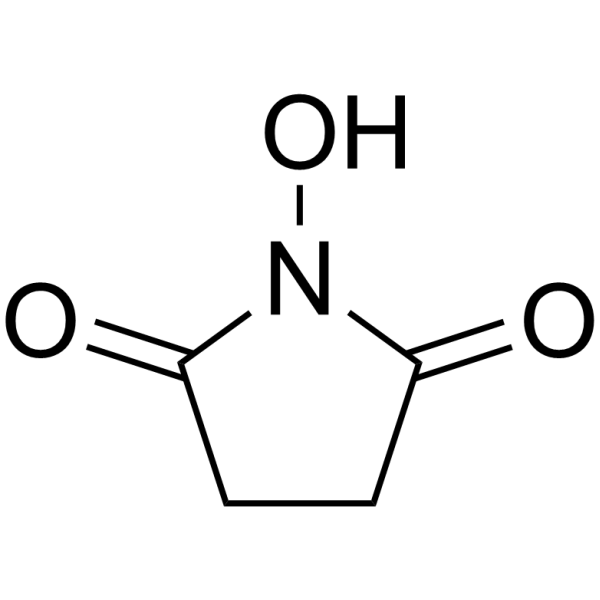
Cat. No.: HY-Y0623
CAS No.: 6066-82-6
Synonyms: HOSu; 1-Hydroxy-2,5-pyrrolidinedione
N-Hydroxysuccinimide (HOSu; 1-Hydroxy-2,5-pyrrolidinedione) is a covalent crosslinker commonly used in bioconjugation technology with a primary amine group. N-Hydroxysuccinimide reacts with amino groups (-NH2) to form a stable amide bond, which can modify amino-containing biomolecules. N-Hydroxysuccinimide can be used, for example, for protein labeling with fluorescent dyes and enzymes, surface activation of chromatography supports, microbeads, nanoparticles and microarray slides, and chemical synthesis of peptides. N-Hydroxysuccinimide has a wide range of applications in biomaterial synthesis (such as collagen, chitosan crosslinking), drug delivery systems (such as hydrogel preparation) and tissue engineering .
loading...
    loading...
8
8 Cited Publications
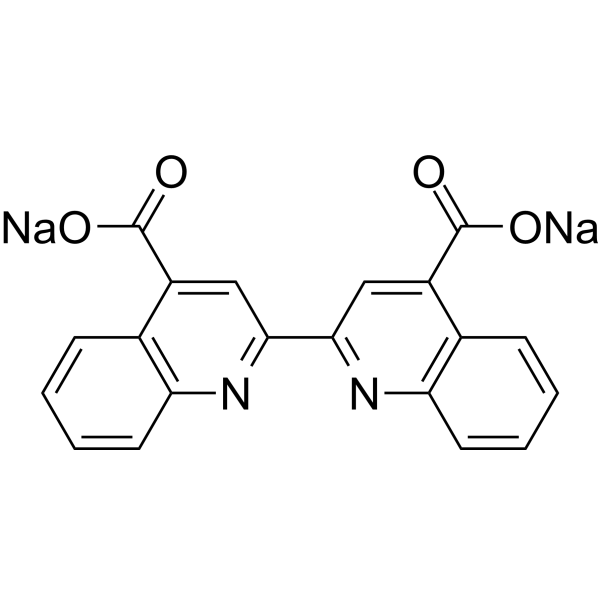
Cat. No.: HY-15908
CAS No.: 979-88-4
Purity:  99.52%
Synonyms: Disodium bicinchoninate
Research Areas:  

Others

BCA is a chelating agent targeting Cu I. BCA forms a water-soluble complex with Cu I at a 2:1 stoichiometric ratio, which not only inhibits its oxidation and disproportionation reactions, but also mediates the Cu I-catalyzed azide-alkyne cycloaddition click chemistry reaction to achieve bioconjugation of fluorophores or biotin with functionalized proteins. BCA chelates Cu + from proteins that reduce Cu 2+, forming a purple compound detectable by colorimetry, and thus is used to determine the total protein concentration in solution. BCA is a potential small-molecule candidate for AHAS inhibitors .
loading...
    loading...
8
8 Cited Publications
Cat. No.: HY-W004599
CAS No.: 1245-13-2
Research Areas:  

Others

Bicinchoninic acid is a chelating agent targeting Cu I. Bicinchoninic acid forms a water-soluble complex with Cu I at a 2:1 stoichiometric ratio, which not only inhibits its oxidation and disproportionation reactions, but also mediates the Cu I-catalyzed azide-alkyne cycloaddition click chemistry reaction to achieve bioconjugation of fluorophores or biotin with functionalized proteins. Bicinchoninic acid chelates Cu + from proteins that reduce Cu 2+, forming a purple compound detectable by colorimetry, and thus is used to determine the total protein concentration in solution. Bicinchoninic acid is a potential small-molecule candidate for AHAS inhibitors .
loading...
    loading...
8
8 Cited Publications
Cat. No.: HY-15908A
CAS No.: 63451-34-3
Research Areas:  

Others

Dipotassium [2,2'-biquinoline]-4,4'-dicarboxylate is a chelating agent targeting Cu I. Dipotassium [2,2'-biquinoline]-4,4'-dicarboxylate forms a water-soluble complex with Cu I at a 2:1 stoichiometric ratio, which not only inhibits its oxidation and disproportionation reactions, but also mediates the Cu I-catalyzed azide-alkyne cycloaddition click chemistry reaction to achieve bioconjugation of fluorophores or biotin with functionalized proteins. Dipotassium [2,2'-biquinoline]-4,4'-dicarboxylate chelates Cu + from proteins that reduce Cu 2+, forming a purple compound detectable by colorimetry, and thus is used to determine the total protein concentration in solution. Dipotassium [2,2'-biquinoline]-4,4'-dicarboxylate is a potential small-molecule candidate for AHAS inhibitors .
loading...
    loading...
1
1 Cited Publications
Cat. No.: HY-128676
CAS No.: 1428330-91-9
Purity:  99.80%
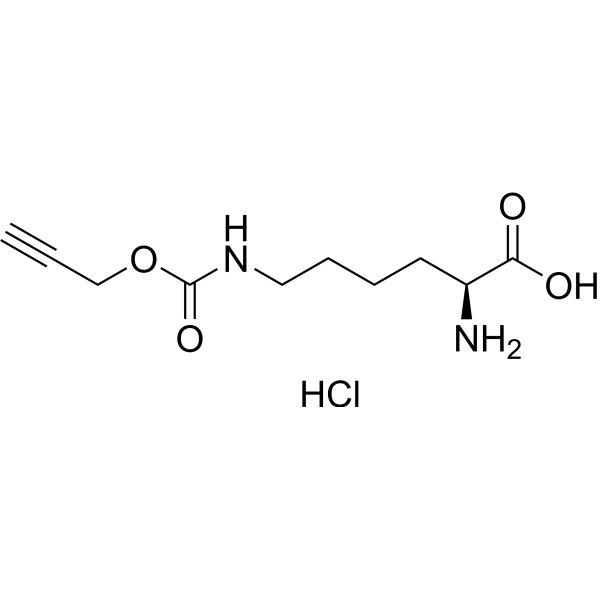
Synonyms: H-​L-​Lys(Poc)​-​OH hydrochloride
Research Areas:  

Cancer

N-ε-propargyloxycarbonyl-L-lysine (H-L-Lys(Poc)-OH) hydrochloride is a lysine-based unnatural amino acid (UAA). N-ε-propargyloxycarbonyl-L-lysine is widely used for bio-conjugation of fluorescent probes in diverse organisms from E. coli to mammalian cells even in animals . N-ε-propargyloxycarbonyl-L-lysine (hydrochloride) is a click chemistry reagent, it contains an Alkyne group and can undergo copper-catalyzed azide-alkyne cycloaddition (CuAAc) with molecules containing Azide groups.
loading...
    loading...
1
1 Cited Publications
Cat. No.: HY-139014
CAS No.: 1215204-46-8
Purity:  ≥98.0%
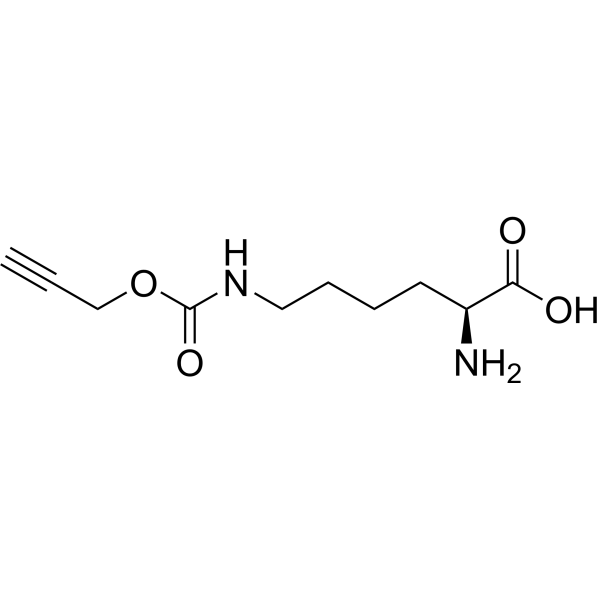
Synonyms: H-​L-​Lys(Poc)​-​OH
Target:  

Fluorescent Dye

Research Areas:  

Cancer

N-ε-propargyloxycarbonyl-L-lysine (H-L-Lys(Poc)-OH) is a lysine-based unnatural amino acid (UAA). N-ε-propargyloxycarbonyl-L-lysine is widely used for bio-conjugation of fluorescent probes in diverse organisms from E. coli to mammalian cells even in animals . N-ε-propargyloxycarbonyl-L-lysine is a click chemistry reagent, it contains an Alkyne group and can undergo copper-catalyzed azide-alkyne cycloaddition (CuAAc) with molecules containing Azide groups.
loading...
    loading...
Cat. No.: HY-166990
CAS No.: 99126-64-4
Synonyms: MeO-PEG5000-Mal
Methoxypolyethylene glycol maleimide 5000 (MeO-PEG-Mal) can serve as a PEGylation reagent for bioconjugation, playing a role in protein modification and drug delivery systems .
loading...
    loading...
Cat. No.: HY-140678
CAS No.: 80506-64-5
Purity:  ≥98.0%
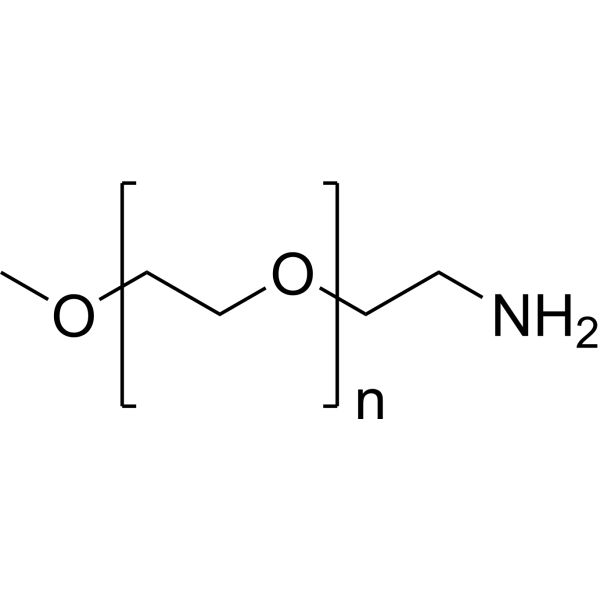
Synonyms: mPEG10000-NH2
Research Areas:  

Cancer

mPEG10000-amine (mPEG10000-NH2) is a monofunctional polyethylene glycol derivative-a linear PEG capped with a methoxy group at one end and a primary amino group at the other-commonly used as a hydrophilic linker in bioconjugation.
loading...
    loading...
Cat. No.: HY-160155
CAS No.: 1391826-58-6
Research Areas:  

Others

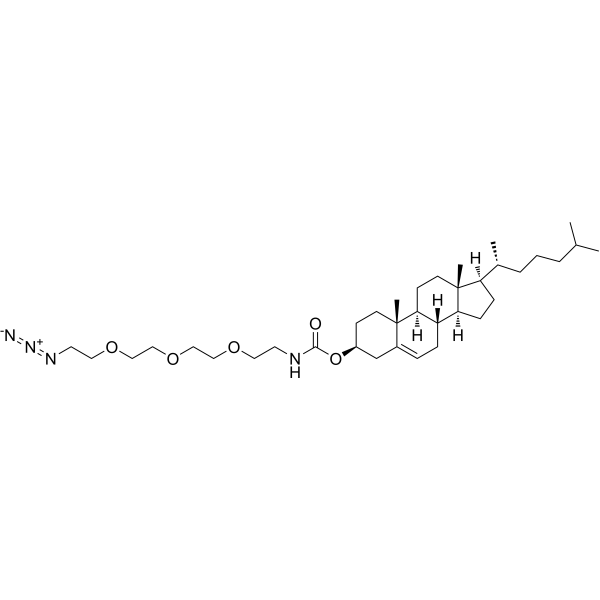
Cholesteryl-Teg azide is a cholesterol azide and can be used as a ligand for bioconjugation. Cholesteryl-Teg azide can modify RNA strands .
loading...
    loading...
Cat. No.: HY-166990A
CAS No.: 99126-64-4
Synonyms: MeO-PEG10000-Mal
Methoxypolyethylene glycol maleimide 10000 (MeO-PEG10000-Mal) can serve as a PEGylation reagent for bioconjugation, playing a role in protein modification and drug delivery systems .
loading...
    loading...
Cat. No.: HY-166990B
CAS No.: 99126-64-4
Synonyms: MeO-PEG2000-Mal
Methoxypolyethylene glycol maleimide 2000 (MeO-PEG2000-Mal) can serve as a PEGylation reagent for bioconjugation, playing a role in protein modification and drug delivery systems .
loading...
    loading...
Cat. No.: HY-125372
CAS No.: 16348-49-5
Purity:  99.85%
Synonyms: ABAO
Research Areas:  

Others

2-Amino benzamidoxime (ABAO) acts as a bioconjugation reagent precursor and a fluorescent probe precursor. 2-Amino benzamidoxime contains an aniline group for imine activation of aldehydes, as well as a nucleophilic group (Nu:) located at the ortho position of the amine, which is responsible for intramolecular cyclization. 2-Amino benzamidoxime reacts with glyoxal at the N-terminus of phage-displayed peptide libraries. Derivatives of 2-Amino benzamidoxime can be used for protein bioconjugation. Derivatives of 2-Amino benzamidoxime serve as fluorescent probes .\n


loading...
    loading...
Cat. No.: HY-W1123936B
Synonyms: DBCO-PEG1000-Folate
DBCO-PEG1000-FA (DBCO-PEG1000-Folate) is a multifunctional bioconjugation reagent, which is a copolymer of DBCO and Folic acid (FA) (HY-16637) and can target folate receptors (FR). Folate receptors are highly overexpressed on the surface of many cancer cells (such as lung cancer, nasopharyngeal cancer, ovarian cancer, etc.), but exhibit extremely low expression levels in normal tissues. DBCO-PEG-FA can be used for click chemistry conjugation via its DBCO terminal, and thus applies to various bioconjugation and drug delivery applications .
loading...
    loading...
Cat. No.: HY-W441004
CAS No.: 144735-82-0
Research Areas:  

Others

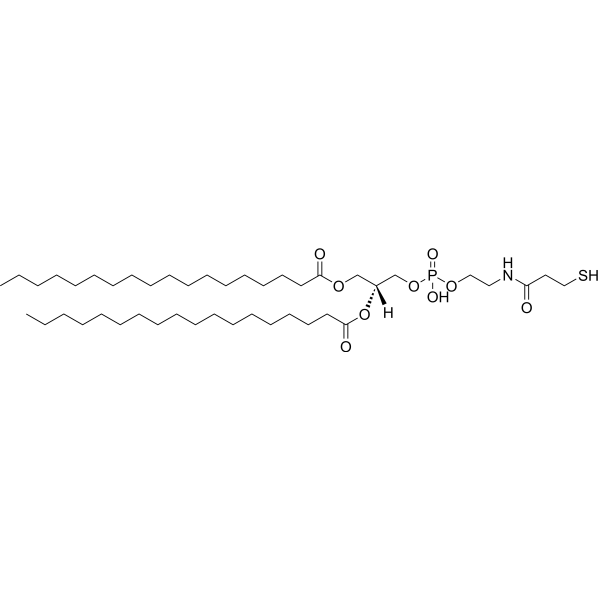
DSPE-Thiol is a modified phospholipid containing a reactive thiol group (-SH), featuring two saturated stearoyl chains, and used mainly for liposome and nanoparticle bioconjugation. DSPE-Thiol helps attach targeting ligands, stabilize membranes, and form covalent bonds .
loading...
    loading...
Cat. No.: HY-160098
CAS No.: 2566530-81-0
Research Areas:  

Cancer

BCN-linker-DXd 2 is a specialized antibody-drug conjugate (ADC) payload-linker complex carrying a derivative of the cytotoxic agent DXd (HY-13631D). BCN-linker-DXd 2 bears a BCN (bicyclononyne) group for click chemical bioconjugation, and can be used for ADC synthesis .
loading...
    loading...
Cat. No.: HY-160291
CAS No.: 2765060-22-6
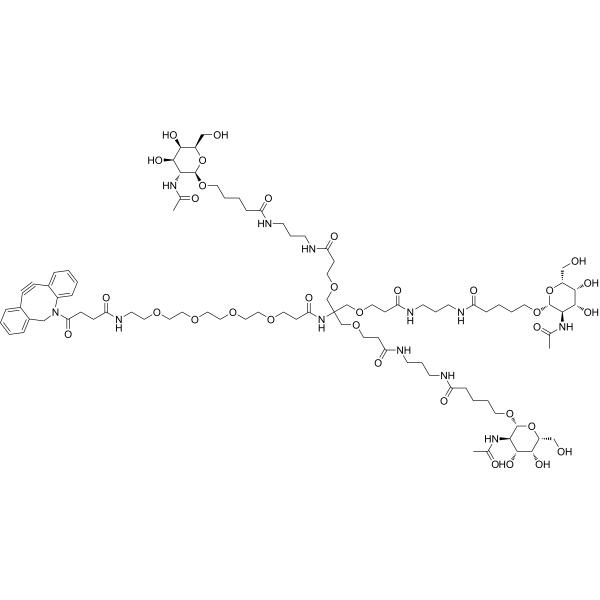
Trivalent GalNAc-DBCO is a bifunctional bioconjugation reagent. The trivalent GalNAc cluster binds to ASGPR with high affinity. Trivalent GalNAc-DBCO can be used for oligonucleotide conjugation .
loading...
    loading...
Cat. No.: HY-151675
CAS No.: 129960-90-3
Research Areas:  

Others

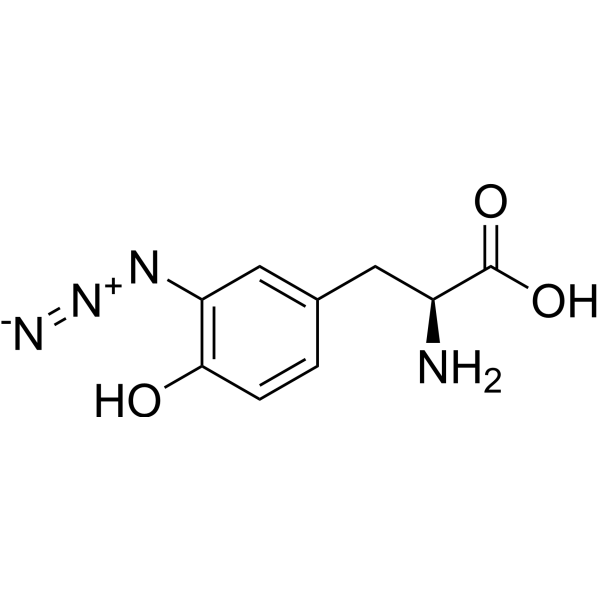
H-L-Tyr(3-N3)-OH is a non-canonical amino acid and click chemistry reagent. H-L-Tyr(3-N3)-OH contains a reactive azide group (N₃) used for bioconjugation and protein modification .
loading...
    loading...
Cat. No.: HY-W190824
CAS No.: 2363756-34-5
Research Areas:  

Others

Biotin-PEG8-azide is a bioconjugation reagent. Biotin-PEG8-azide consists of biotin, PEG8 linker and azide group and serves as a modifying linker in click reactions. Biotin-PEG8-azide can be used for research related to click chemistry .
loading...
    loading...
Cat. No.: HY-151752
CAS No.: 2027476-42-0
Target:  

ADC Linkers

Research Areas:  

Others

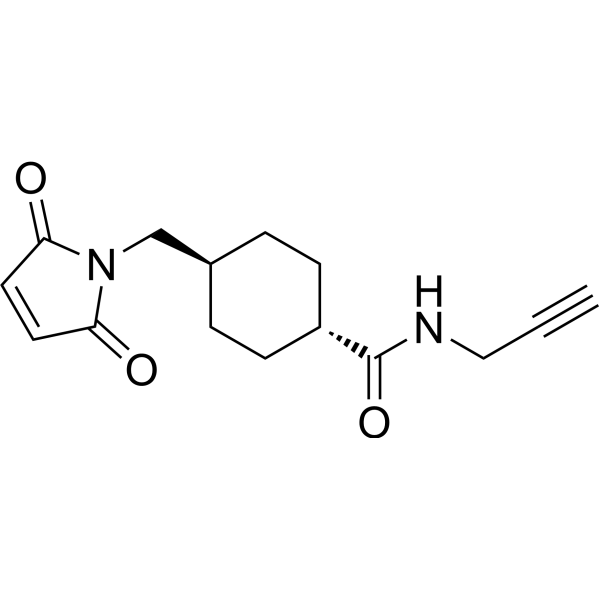
Mal-AMCHC-N-Propargylamide is a click chemistry reagent containing an azide group. Mal-AMCHC-N-Propargylamide can be a bio-conjugation reagent for antibody-agent-conjugate synthesis using Click-Chemistry .
loading...
    loading...
Cat. No.: HY-W588706
Tetrazine-PEG5-SS-NHS ester is a heterobifunctional crosslinking agent, a PEG derivative composed of NHS ester. NHS ester can bind to amino acids or other amino-containing molecules. Tetrazine-PEG5-SS-NHS ester is used in bioconjugation, bioorthogonal chemistry, and delivery.
loading...
    loading...