Search Result
Results for "
bradycardia
" in MedChemExpress (MCE) Product Catalog:
4
Isotope-Labeled Compounds
| Cat. No. |
Product Name |
Target |
Research Areas |
Chemical Structure |
-
- HY-B0468
-
|
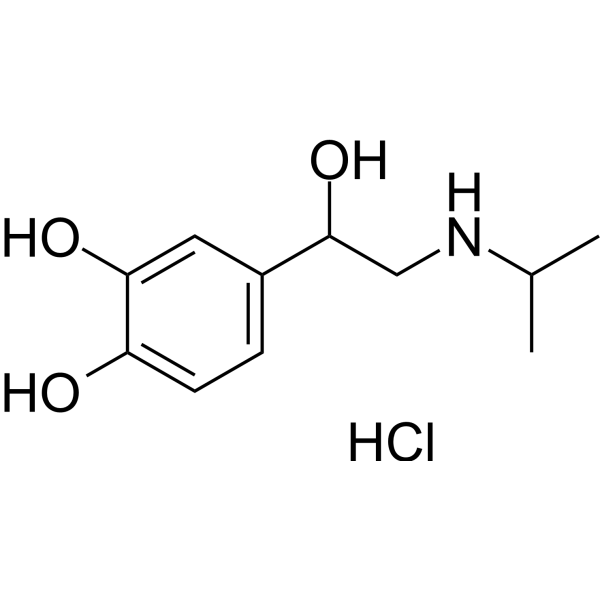
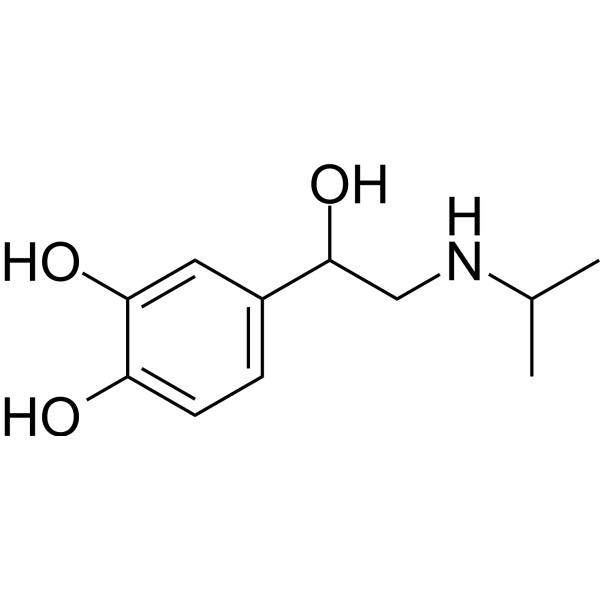
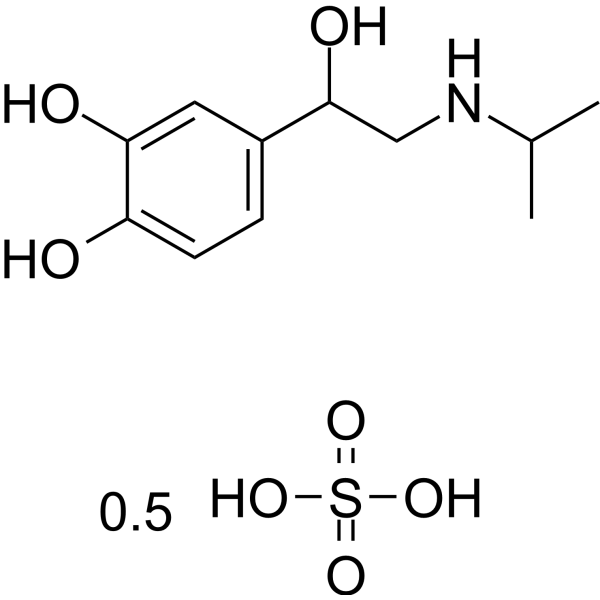
Isoproterenol hydrochloride
|
Adrenergic Receptor
Endogenous Metabolite
|
Cardiovascular Disease
Endocrinology
|
|
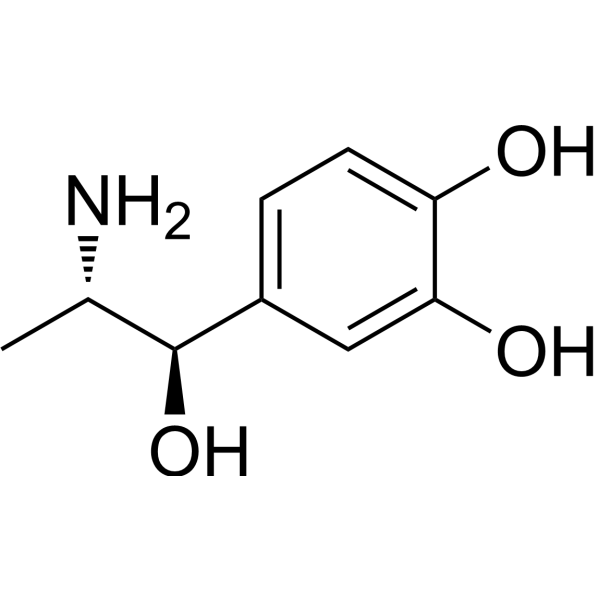
Isoprenaline (Isoproterenol) hydrochloride is a non-selective, orally active β-adrenergic receptor agonist. Isoprenaline has potent peripheral vasodilator, bronchodilator, and cardiac stimulating activities. Isoprenaline can be used for the research of bradycardia and bronchial asthma .
|
-
-
- HY-B1205
-
-
-
- HY-108353
-
-
-
- HY-B0394
-
|
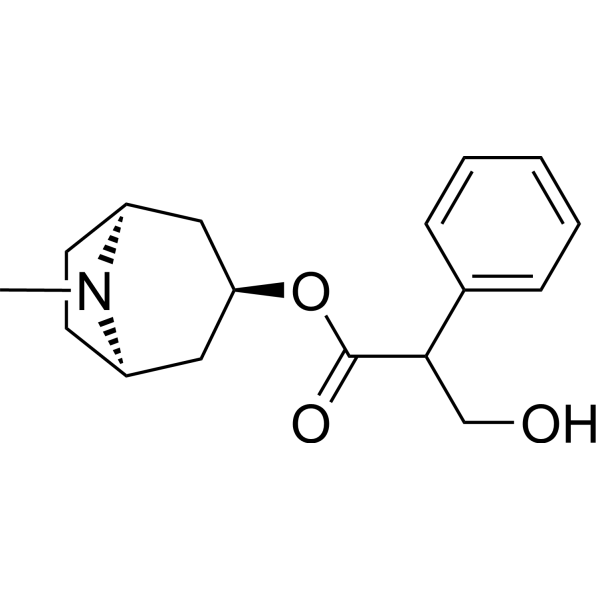
Tropine tropate sulfate monohydrate; DL-Hyoscyamine sulfate monohydrate
|
mAChR
|
Cardiovascular Disease
Neurological Disease
Cancer
|
|
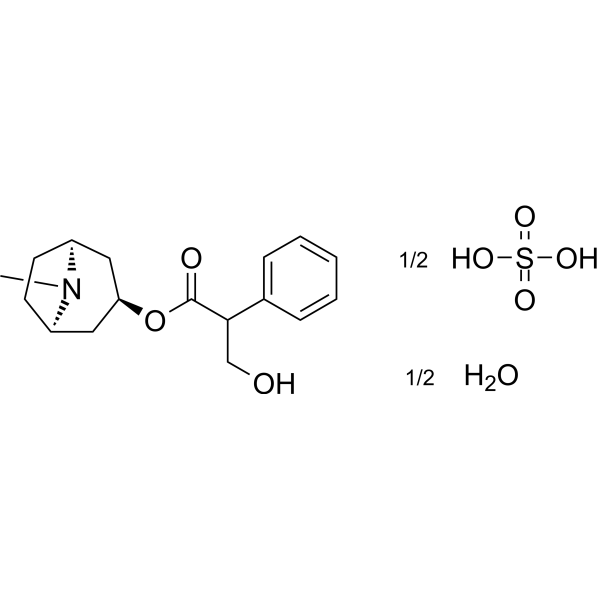
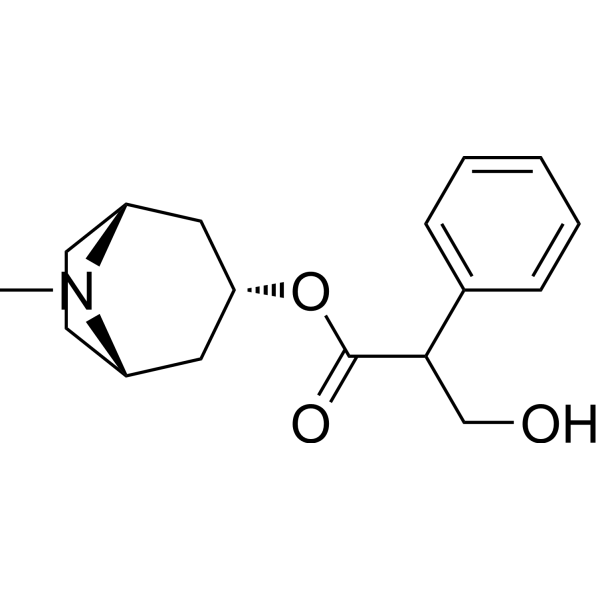
Atropine (Tropine tropate) sulfate monohydrate is a competitive muscarinic acetylcholine receptor (mAChR) antagonist with IC50 values of 0.39 and 0.71 nM for Human mAChR M4 and Chicken mAChR M4, respectively. Atropine sulfate monohydrate inhibits ACh-induced relaxations in human pulmonary veins. Atropine sulfate monohydrate can be used for research of anti-myopia and bradycardia .
|
-
-
- HY-B1277
-
|
|
mAChR
Cholinesterase (ChE)
|
Neurological Disease
|
|
Trihexyphenidyl hydrochloride is a selective and orally active M1 muscarinic receptor antagonist with an IC50 of 3.7 nM for rat cerebral cortex M1 muscarinic receptors. Trihexyphenidyl hydrochloride modulates cholinergic activity, countering acetylcholine supersensitivity in neural pathways. Trihexyphenidyl hydrochloride improves movement disorder, inhibits McN-A-343 (HY-107648)-induced pressor responses, vagally-induced bradycardia and vasodilatation. Trihexyphenidyl hydrochloride can be used for the research of Parkinson's disease. .
|
-
-
- HY-B1205A
-
|
Tropine tropate sulfate; DL-Hyoscyamine sulfate; Sulfatropinol
|
mAChR
|
Cardiovascular Disease
Neurological Disease
Cancer
|
|
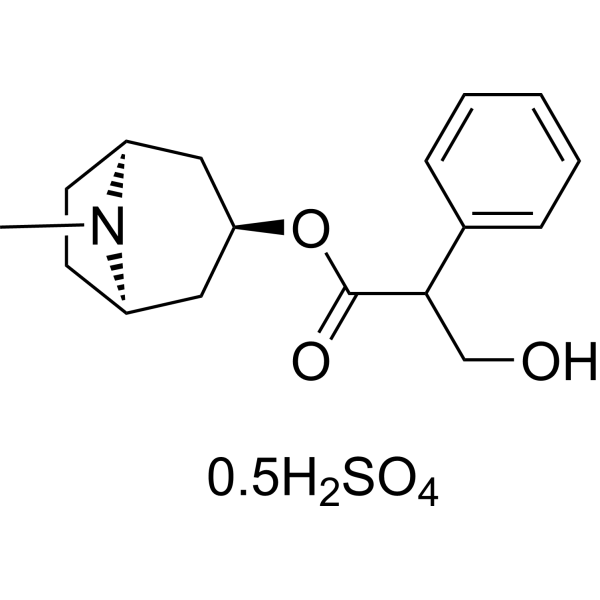
Atropine (Tropine tropate) sulfate is a competitive muscarinic acetylcholine receptor (mAChR) antagonist with IC50 values of 0.39 and 0.71 nM for Human mAChR M4 and Chicken mAChR M4, respectively. Atropine sulfate inhibits ACh-induced relaxations in human pulmonary veins. Atropine sulfate can be used for research of anti-myopia and bradycardia .
|
-
-
- HY-16734A
-
|
MT-1303 hydrochloride
|
LPL Receptor
|
Cardiovascular Disease
Inflammation/Immunology
|
|
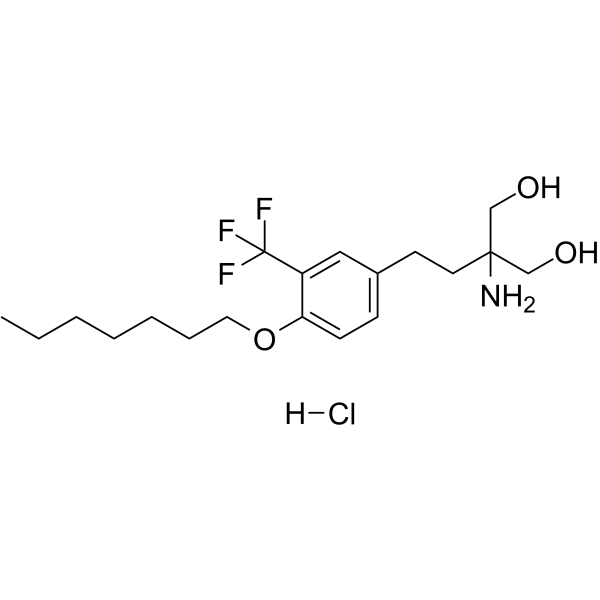
Amiselimod (MT-1303) hydrochloride is converted to its active metabolite Amiselimod phosphate by sphingosine kinases in vivo. Amiselimod hydrochloride is an orally active and high selectivity sphingosine 1-phosphate receptor-1 (S1P1) agonist, designed to reduce the bradycardia effects associated with fingolimod and other S1P receptor modulators. Amiselimod hydrochloride inhibits chronic colitis via inhibiting infiltration of colitogenic Th1 and Th17 cells into the colon. Amiselimod hydrochloride inhibits lupus nephritis by reducing the infiltration of autoreactive T cells into the kidneys. Amiselimod hydrochloride is promising for research of autoimmune diseases .
|
-
-
- HY-B1470
-
|
R-1929
|
Dopamine Receptor
Adrenergic Receptor
|
Neurological Disease
|
|
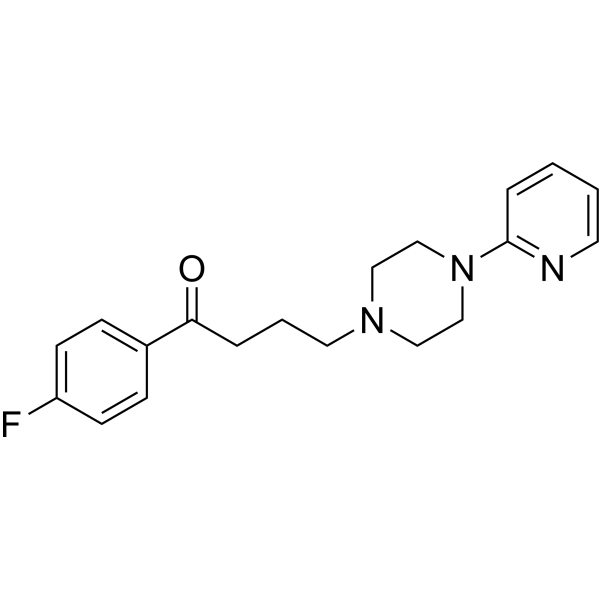
Azaperone is an antagonist of dopamine D2 receptor (Dopamine D2 Receptor) and α-adrenergic receptor (AR). Azaperone reduces vasomotor tone, mean arterial pressure, hematocrit, hemoglobin concentration, and etorphine-induced duration; induces transient tachycardia followed by bradycardia, splenic uptake of red blood cells, and sedation; alters animal behaviors; and produces sedation with distinct onset and duration in foals. Azaperone is used for sedation and tranquilization in various animals to reduce stress and aggressive behaviors, and serves as a preanesthetic agent .
|
-
-
- HY-A0066A
-
|
Imidaline hydrochloride; NSC35110 hydrochloride
|
Adrenergic Receptor
|
Cardiovascular Disease
Endocrinology
|
|
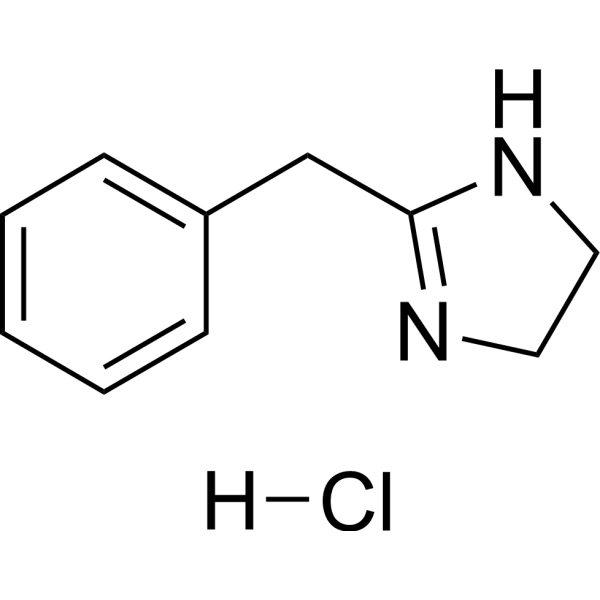
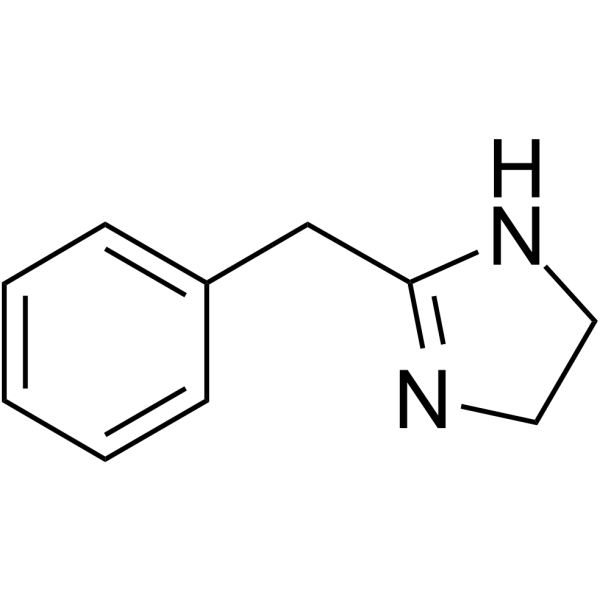
Tolazoline hydrochloride (Imidaline hydrochloride) is an α-adrenergic receptor antagonist. Tolazoline hydrochloride inhibits Noradrenaline (HY-13715)-induced cell contraction, modulates vascular resistance, increases arterial pressure, and reverses bradycardia and tachypnea. Tolazoline hydrochloride can be used to study erectile dysfunction, α2-adrenergic receptor agonist-related poisoning, and skin vascular disease research .
|
-
-
- HY-116294A
-
|
|
mAChR
|
Cardiovascular Disease
|
|
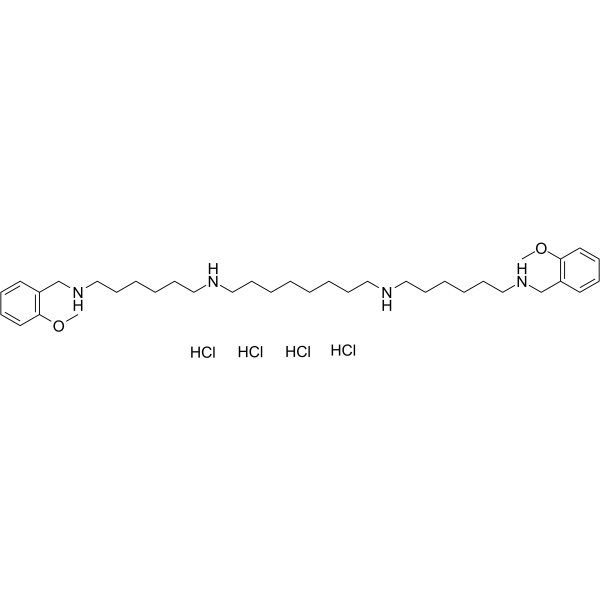
Methoctramine tetrahydrochloride is a potent and cardioselectivity antagonist of M2 muscarinic receptor. Methoctramine tetrahydrochloride can inhibit Muscarine (HY-121404)-induced bradycardia in vivo. Methoctramine tetrahydrochloride can be used in the study of cardiovascular diseases .
|
-
-
- HY-107915
-
|
(-)-Cobefrin; (-)-α-Methylnoradrenaline; (-)-Nordefrin
|
Adrenergic Receptor
|
Cardiovascular Disease
|
Levonordefrin ((-)-Cobefrin; (-)-α-Methylnoradrenaline; (-)-Nordefrin) is an α-adrenergic receptor agonist with blood pressure regulatory properties. Levonordefrin is a key metabolite responsible for the hypotensive effect of α-methyldopa. By stimulating central α-adrenergic receptors in the nucleus tractus solitarius region of the medulla oblongata, Levonordefrin induces centrally mediated hypotension and bradycardia. When administered intravenously, Levonordefrin increases mean arterial blood pressure in a dose-dependent manner. Levonordefrin is applicable for research on the pathophysiology of hypertension and drug metabolism .
|
-
-
- HY-A0066
-
|
Imidaline; NSC35110
|
Adrenergic Receptor
|
Cardiovascular Disease
Endocrinology
|
|
Tolazoline (Imidaline) is an α-adrenergic receptor antagonist. Tolazoline inhibits Noradrenaline (HY-13715)-induced cell contraction, modulates vascular resistance, increases arterial pressure, and reverses bradycardia and tachypnea. Tolazoline can be used to study erectile dysfunction, α2-adrenergic receptor agonist-related poisoning, and skin vascular disease research .
|
-
-
- HY-105090
-
|
|
5-HT Receptor
|
Cardiovascular Disease
Neurological Disease
|
|
Lerisetron is a potent 5-HT3 antagonists and possess high-affinity binding for the 5-HT3 receptors with pKi value of 9.2. Lerisetron has a potent ability to inhibit the 5-HT-evoked reflex bradycardia in urethane-anesthetized rats .
|
-
-
- HY-103174
-
|
|
Adenosine Receptor
|
Cardiovascular Disease
|
|
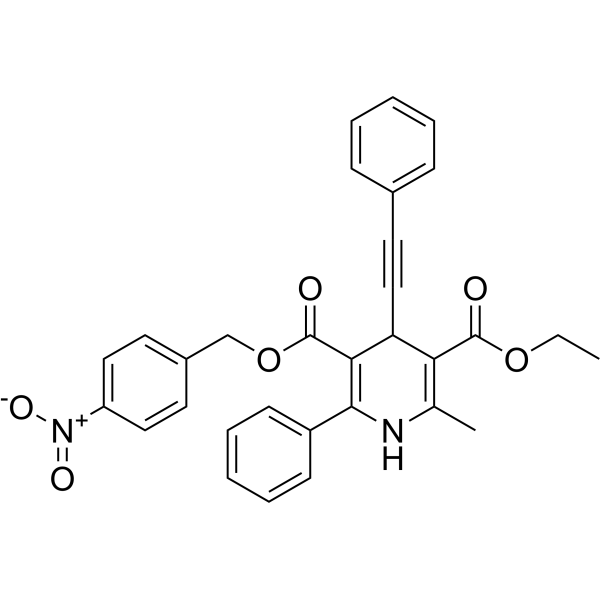
MRS1334 is a potent and selective human adenosine A3 receptor antagonist with Kis of 2.69 nM, >100 nM, >100 nM for hA3, rA1, rA2A, respectively. MRS1334 blocks the protective effect of Cl-IB-MECA leading to significant bradycardia and elevated ST segment . MRS1334 is a click chemistry reagent, it contains an Alkyne group and can undergo copper-catalyzed azide-alkyne cycloaddition (CuAAc) with molecules containing Azide groups.
|
-
-
- HY-B1205R
-
|
Tropine tropate (Standard); DL-Hyoscyamine (Standard)
|
Reference Standards
mAChR
Endogenous Metabolite
|
Cardiovascular Disease
Neurological Disease
|
|
Atropine (Standard) is the analytical standard of Atropine. This product is intended for research and analytical applications. Atropine (Tropine tropate) is a competitive muscarinic acetylcholine receptor (mAChR) antagonist with IC50 values of 0.39 and 0.71 nM for Human mAChR M4 and Chicken mAChR M4, respectively. Atropine inhibits ACh-induced relaxations in human pulmonary veins. Atropine can be used for research of anti-myopia and bradycardia .
|
-
-
- HY-12355A
-
|
BAF-312 hemifumarate
|
LPL Receptor
Potassium Channel
|
Neurological Disease
Inflammation/Immunology
|
|
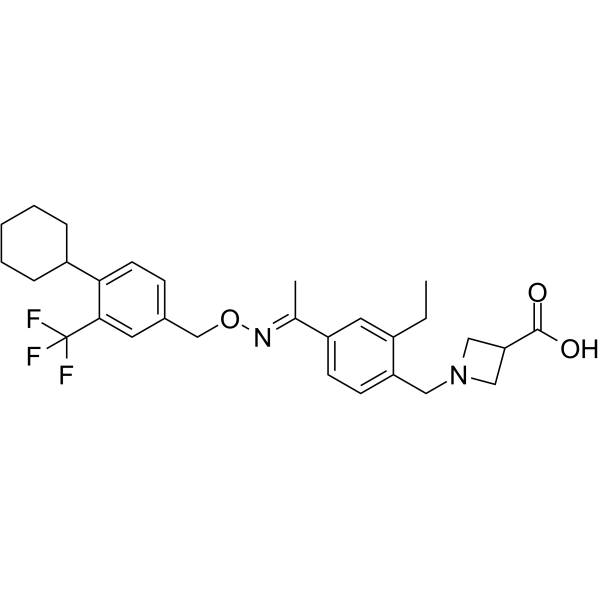
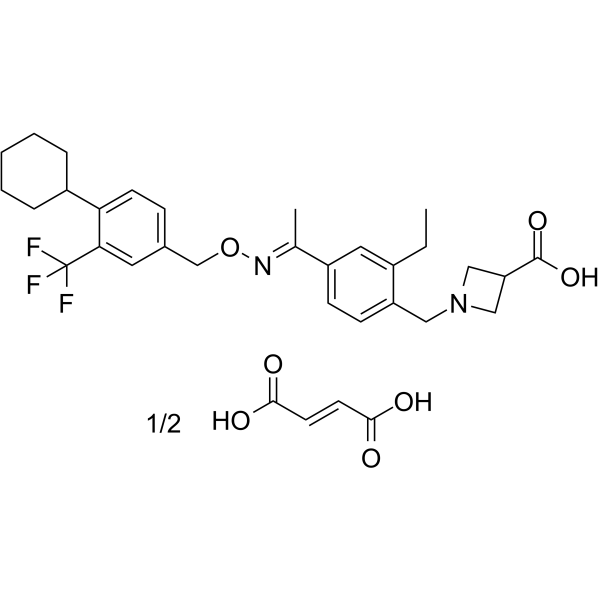
Siponimod (BAF-312) hemifumarate is an orally active, blood-brain barrier penetrant dual agonist of S1P1/S1P5, with EC50 values of 0.39 nM and 0.98 nM, respectively. Siponimod hemifumarate induces S1P1 internalization, activates GIRK channels, inhibits lymphocyte egress, reduces peripheral lymphocyte counts, triggers transient bradycardia, prevents synaptic neurodegeneration, promotes remyelination, alleviates demyelination, and prevents the loss of GABAergic interneurons. Siponimod hemifumarate can be used in research related to multiple sclerosis .
|
-
-
- HY-108353A
-
-
-
- HY-B1205AR
-
|
Tropine tropate sulfate (Standard); DL-Hyoscyamine sulfate (Standard); Sulfatropinol (Standard)
|
Reference Standards
mAChR
|
Cardiovascular Disease
Neurological Disease
|
|
Atropine (sulfate) (Standard) is the analytical standard of Atropine (sulfate). This product is intended for research and analytical applications. Atropine (Tropine tropate) sulfate is a competitive muscarinic acetylcholine receptor (mAChR) antagonist with IC50 values of 0.39 and 0.71 nM for Human mAChR M4 and Chicken mAChR M4, respectively. Atropine sulfate inhibits ACh-induced relaxations in human pulmonary veins. Atropine sulfate can be used for research of anti-myopia and bradycardia .
|
-
-
- HY-B1277A
-
|
|
mAChR
Cholinesterase (ChE)
|
Cardiovascular Disease
Neurological Disease
|
|
Trihexyphenidyl is a selective and orally active M1 muscarinic receptor antagonist with an IC50 of 3.7 nM for rat cerebral cortex M1 muscarinic receptors. Trihexyphenidyl modulates cholinergic activity, countering acetylcholine supersensitivity in neural pathways. Trihexyphenidyl improves movement disorder, inhibits McN-A-343 (HY-107648)-induced pressor responses, vagally-induced bradycardia and vasodilatation. Trihexyphenidyl can be used for the research of Parkinson's disease. .
|
-
-
- HY-121311
-
|
|
Serotonin Transporter
Adrenergic Receptor
|
Cardiovascular Disease
|
|
Metrenperone is an inhibitor for 5-HT2 receptor. Metrenperone exhibits α1 and α2 antagonist activity as well as anti-H1 and anti-dopaminergic efficacy. Metrenperone can lower the blood pressure, enhances bradycardia in peripheral ischemia, inhibits serotonin-induced platelet aggregation, and antagonizes serotonin-mediated vasoconstriction. Metrenperone promotes the repair of acutely damaged collagen tissue .
|
-
-
- HY-106928
-
|
|
5-HT Receptor
|
Neurological Disease
|
|
U93385 is a 5-HT₁A receptor agonist. U93385 exhibits no significant α₂ adrenergic, D₂ dopamine, or other receptor activities. U93385 has a heart rate regulating effect, stimulating the vagus nerve to induce bradycardia. U93385 can be used to study the 5-HT₁A receptor-mediated vagal nerve tolerance mechanism .
|
-
-
- HY-16734
-
|
MT-1303
|
LPL Receptor
|
Cardiovascular Disease
Inflammation/Immunology
|
|
Amiselimod (MT-1303) is converted to its active metabolite Amiselimod phosphate by sphingosine kinases in vivo. Amiselimod is an orally active and high selectivity sphingosine 1-phosphate receptor-1 (S1P1) agonist, designed to reduce the bradycardia effects associated with fingolimod and other S1P receptor modulators. Amiselimod inhibits chronic colitis via inhibiting infiltration of colitogenic Th1 and Th17 cells into the colon. Amiselimod inhibits lupus nephritis by reducing the infiltration of autoreactive T cells into the kidneys. Amiselimodis promising for research of autoimmune diseases .
|
-
-
- HY-B0468R
-
|
Isoproterenol hydrochloride (Standard)
|
Reference Standards
Adrenergic Receptor
Endogenous Metabolite
|
Cardiovascular Disease
Endocrinology
|
|
Isoprenaline (hydrochloride) (Standard) is the analytical standard of Isoprenaline (hydrochloride). This product is intended for research and analytical applications. Isoprenaline (Isoproterenol) hydrochloride is a non-selective, orally active β-adrenergic receptor agonist. Isoprenaline has potent peripheral vasodilator, bronchodilator, and cardiac stimulating activities. Isoprenaline can be used for the research of bradycardia and bronchial asthma .
|
-
-
- HY-122489A
-
|
|
Opioid Receptor
GABA Receptor
|
Cardiovascular Disease
Neurological Disease
|
|
(S)-Laudanosine is an alkaloid that can be found in poppies and is the S-enantiomer of Laudanosine. Laudanosine acts on the central nervous system and cardiovascular system, inhibiting low-affinity GABA receptors with an IC50 value of 10 μM, and can cause seizures, hypotension, and bradycardia. Additionally, Laudanosine exerts analgesic effects by competitively binding to the opioid Mu-1 receptor (Ki = 2.7 μM) .
|
-
-
- HY-B1470S
-
|
R-1929-d4
|
Isotope-Labeled Compounds
Dopamine Receptor
Adrenergic Receptor
|
Neurological Disease
|
|
Azaperone-d4 (R-1929-d4) is the deuterium labeled Azaperone (HY-B1470). Azaperone is an antagonist of dopamine D2 receptor (Dopamine D2 Receptor) and α-adrenergic receptor (AR). Azaperone reduces vasomotor tone, mean arterial pressure, hematocrit, hemoglobin concentration, and etorphine-induced duration; induces transient tachycardia followed by bradycardia, splenic uptake of red blood cells, and sedation; alters animal behaviors; and produces sedation with distinct onset and duration in foals. Azaperone is used for sedation and tranquilization in various animals to reduce stress and aggressive behaviors, and serves as a preanesthetic agent.
|
-
-
- HY-155297
-
|
FLA-136
|
Histamine Receptor
|
Cardiovascular Disease
|
|
Nebidrazine is a centrally-acting hypotensive agent compared to clonidine, demonstrating weaker cardiovascular effects in rats. It induces dose-dependent hypotension and bradycardia when administered intracerebroventricularly (i.c.v.), with significantly lower sedative potential than clonidine in conscious rats. Yohimbine attenuates the cardiovascular effects of both Nebidrazine and clonidine, suggesting involvement of central alpha-autoreceptors sensitive to yohimbine. Unlike clonidine, Nebidrazine does not affect peripheral alpha-adrenoceptors in pithed rats, indicating a selective central mechanism. Chemical sympathectomy reduces Nebidrazine's cardiovascular effects more than clonidine's, and metiamide diminishes responses to both drugs, implicating central histamine receptors. These findings highlight Nebidrazine's distinct pharmacological profile and potential therapeutic application in managing hypertension through central alpha-autoreceptor stimulation .
|
-
-
- HY-105090R
-
|
|
Reference Standards
5-HT Receptor
|
Cardiovascular Disease
Neurological Disease
Cancer
|
|
Lerisetron (Standard) is the analytical standard of Lerisetron. This product is intended for research and analytical applications. Lerisetron is a potent 5-HT3 antagonists and possess high-affinity binding for the 5-HT3 receptors with pKi value of 9.2. Lerisetron has a potent ability to inhibit the 5-HT-evoked reflex bradycardia in urethane-anesthetized rats .
|
-
-
- HY-B1205B
-
|
Tropine tropate hydrobromide; DL-Hyoscyamine hydrobromide
|
mAChR
|
Cardiovascular Disease
Neurological Disease
Cancer
|
|
Atropine (Tropine tropate) hydrobromide is a competitive muscarinic acetylcholine receptor (mAChR) antagonist with IC50 values of 0.39 and 0.71 nM for Human mAChR M4 and Chicken mAChR M4, respectively. Atropine hydrobromide inhibits ACh-induced relaxations in human pulmonary veins. Atropine hydrobromide can be used for research of anti-myopia and bradycardia .
|
-
-
- HY-B0394R
-
|
Tropine tropate sulfate monohydrate (Standard); DL-Hyoscyamine sulfate monohydrate (Standard)
|
Reference Standards
mAChR
|
Cardiovascular Disease
Neurological Disease
|
|
Atropine (sulfate monohydrate) (Standard) is the analytical standard of Atropine (sulfate monohydrate). This product is intended for research and analytical applications. Atropine (Tropine tropate) sulfate monohydrate is a competitive muscarinic acetylcholine receptor (mAChR) antagonist with IC50 values of 0.39 and 0.71 nM for Human mAChR M4 and Chicken mAChR M4, respectively. Atropine sulfate monohydrate inhibits ACh-induced relaxations in human pulmonary veins. Atropine sulfate monohydrate can be used for research of anti-myopia and bradycardia .
|
-
-
- HY-103214A
-
|
|
Adrenergic Receptor
|
Cardiovascular Disease
|
|
Bucindolol hydrochloride is a β-adrenergic receptor antagonist with activity in preventing new-onset atrial fibrillation. Bucindolol hydrochloride can reduce heart rate and the occurrence of bradycardia in patients with heart failure and atrial fibrillation .
|
-
-
- HY-107644
-
|
|
mAChR
|
Cardiovascular Disease
|
|
AQ-RA 741 is a potent and selective M 2 antagonist. AQ-RA 741 inhibits the vagally or agonist-induced bradycardia in rats, cats and guinea-pigs. AQ-RA 741 is used in bradycardiac disorders research .
|
-
-
- HY-B0468S
-
|
Isoproterenol-d7 hydrochloride
|
Isotope-Labeled Compounds
Endogenous Metabolite
Adrenergic Receptor
|
Cardiovascular Disease
|
|
Isoprenaline-d7 (hydrochloride) is a deuterated labeled Isoprenaline (hydrochloride) . Isoprenaline (Isoproterenol) hydrochloride is a non-selective, orally active β-adrenergic receptor agonist. Isoprenaline has potent peripheral vasodilator, bronchodilator, and cardiac stimulating activities. Isoprenaline can be used for the research of bradycardia and bronchial asthma .
|
-
-
- HY-123196
-
|
|
Adenosine Receptor
|
Cardiovascular Disease
|
|
CVT-2759 is a potent inhibitor of A1-ADOR, with the IC50 values of 0.18 μM and 9.5 μM to reduce the binding of [3H]CPX in the absence and presence of 1 mM GTP. CVT-2759 plays an important role in slowing AV nodal conduction and thereby ventricular rate without causing AV block, bradycardia, atrial arrhythmias, or vasodilation .
|
-
-
- HY-105449A
-
|
KB 6806 maleate
|
5-HT Receptor
|
Cardiovascular Disease
|
|
KB R6933 (KB 6806 maleate) is a potent, selective and orally active 5-HT3 receptor antagonist. KB R6933 can inhibit the diarrhea induced by 5-HT (HY-B1473A), but not that by Castor Oil (HY-107799) or prostaglandin E2 (PGE2) (HY-101952). KB R6933 can inhibit 5-HT-induced bradycardia .
|
-
-
- HY-B1277AS
-
|
|
Isotope-Labeled Compounds
mAChR
Cholinesterase (ChE)
|
Neurological Disease
|
|
Trihexyphenidyl-d5 is deuterium labeled Trihexyphenidyl (HY-B1277A). Trihexyphenidyl is a selective and orally active M1 muscarinic receptor antagonist with an IC50 of 3.7 nM for rat cerebral cortex M1 muscarinic receptors. Trihexyphenidyl modulates cholinergic activity, countering acetylcholine supersensitivity in neural pathways. Trihexyphenidyl improves movement disorder, inhibits McN-A-343 (HY-107648)-induced pressor responses, vagally-induced bradycardia and vasodilatation. Trihexyphenidyl can be used for the research of Parkinson's disease. .
|
-
-
- HY-A0066R
-
|
Imidaline (Standard); NSC35110 (Standard)
|
Adrenergic Receptor
Reference Standards
|
Cardiovascular Disease
Endocrinology
|
|
Tolazoline (Standard) is the analytical standard of Tolazoline. This product is intended for research and analytical applications. Tolazoline (Imidaline) is an α-adrenergic receptor antagonist. Tolazoline inhibits Noradrenaline (HY-13715)-induced cell contraction, modulates vascular resistance, increases arterial pressure, and reverses bradycardia and tachypnea. Tolazoline can be used to study erectile dysfunction, α2-adrenergic receptor agonist-related poisoning, and skin vascular disease research .
|
-
-
- HY-106909A
-
|
KAE-393
|
5-HT Receptor
|
Cardiovascular Disease
|
|
YM114 (KAE-393) is a highly potent and selective (5-HT)3-receptor antagonist that does not affect Veratridine (HY-N6691)- or electrical stimulation-induced bradycardia in anesthetized rats. YM114 inhibits 2-methyl-5-HT (HY-19358)-induced Bezold-Jarisch reflex, which originates from (5-HT)3-receptor located on the endings of vagal afferent nerves in the heart .
|
-
-
- HY-B1277S
-
|
|
Isotope-Labeled Compounds
mAChR
Cholinesterase (ChE)
|
Neurological Disease
|
|
Trihexyphenidyl-d5 hydrochloride is deuterium labeled Trihexyphenidyl hydrochloride (HY-B1277). Trihexyphenidyl hydrochloride is a selective and orally active M1 muscarinic receptor antagonist with an IC50 of 3.7 nM for rat cerebral cortex M1 muscarinic receptors. Trihexyphenidyl hydrochloride modulates cholinergic activity, countering acetylcholine supersensitivity in neural pathways. Trihexyphenidyl hydrochloride improves movement disorder, inhibits McN-A-343 (HY-107648)-induced pressor responses, vagally-induced bradycardia and vasodilatation. Trihexyphenidyl hydrochloride can be used for the research of Parkinson's disease. .
|
-
-
- HY-A0066AR
-
|
Imidaline hydrochloride (Standard); NSC35110 hydrochloride (Standard)
|
Reference Standards
Adrenergic Receptor
|
Cardiovascular Disease
Endocrinology
|
|
Tolazoline (hydrochloride) (Standard) is the analytical standard of Tolazoline hydrochloride (HY-A0066A). This product is intended for research and analytical applications. Tolazoline hydrochloride (Imidaline hydrochloride) is an α-adrenergic receptor antagonist. Tolazoline hydrochloride inhibits Noradrenaline (HY-13715)-induced cell contraction, modulates vascular resistance, increases arterial pressure, and reverses bradycardia and tachypnea. Tolazoline hydrochloride can be used to study erectile dysfunction, α2-adrenergic receptor agonist-related poisoning, and skin vascular disease research .
|
-
-
- HY-B1277R
-
|
|
Reference Standards
mAChR
Cholinesterase (ChE)
|
Neurological Disease
|
|
Trihexyphenidyl hydrochloride (Standard) is the analytical standard of Trihexyphenidyl hydrochloride (HY-B1277). This product is intended for research and analytical applications. Trihexyphenidyl is a selective and orally active M1 muscarinic receptor antagonist with an IC50 of 3.7 nM for rat cerebral cortex M1 muscarinic receptors. Trihexyphenidyl modulates cholinergic activity, countering acetylcholine supersensitivity in neural pathways. Trihexyphenidyl improves movement disorder, inhibits McN-A-343 (HY-107648)-induced pressor responses, vagally-induced bradycardia and vasodilatation. Trihexyphenidyl can be used for the research of Parkinson's disease. .
|
-
-
- HY-107915R
-
|
(-)-Cobefrin (Standard); (-)-α-Methylnoradrenaline (Standard); (-)-Nordefrin (Standard)
|
Reference Standards
Adrenergic Receptor
|
Others
|
|
Levonordefrin (Standard) is the analytical standard of Levonordefrin. This product is intended for research and analytical applications. Levonordefrin ((-)-Cobefrin; (-)-α-Methylnoradrenaline; (-)-Nordefrin) is an α-adrenergic receptor agonist with blood pressure regulatory properties. Levonordefrin is a key metabolite responsible for the hypotensive effect of α-methyldopa. By stimulating central α-adrenergic receptors in the nucleus tractus solitarius region of the medulla oblongata, Levonordefrin induces centrally mediated hypotension and bradycardia. When administered intravenously, Levonordefrin increases mean arterial blood pressure in a dose-dependent manner. Levonordefrin is applicable for research on the pathophysiology of hypertension and drug metabolism .
|
-
-
- HY-B1470R
-
|
R-1929 (Standard)
|
Reference Standards
Dopamine Receptor
Adrenergic Receptor
|
Neurological Disease
|
|
Azaperone (R-1929) (Standard) is the analytical standard of Azaperone (HY-B1470). This product is intended for research and analytical applications. Azaperone is an antagonist of dopamine D2 receptor (Dopamine D2 Receptor) and α-adrenergic receptor (AR). Azaperone reduces vasomotor tone, mean arterial pressure, hematocrit, hemoglobin concentration, and etorphine-induced duration; induces transient tachycardia followed by bradycardia, splenic uptake of red blood cells, and sedation; alters animal behaviors; and produces sedation with distinct onset and duration in foals. Azaperone is used for sedation and tranquilization in various animals to reduce stress and aggressive behaviors, and serves as a preanesthetic agent.
|
-
-
- HY-116294
-
|
|
mAChR
|
Cardiovascular Disease
|
|
Methoctramine is a potent and cardioselectivity antagonist of M2 muscarinic receptor. Methoctramine can inhibit Muscarine (HY-121404)-induced bradycardia in vivo. Methoctramine can be used in the study of cardiovascular diseases .
|
-
-
- HY-118390
-
|
|
Adrenergic Receptor
Drug Derivative
|
Cardiovascular Disease
|
|
Jingsongling is a Xylazine analog and anesthetic agent. Jingsongling causes bradycardia and hypertension by mediating α2-adrenoceptors. Jingsongling inhibits canine gastric motility through mediation of α1 and α2 adrenergic receptors .
|
-
-
- HY-112014
-
|
Methylglucamine metrizoate
|
Biochemical Assay Reagents
|
Cardiovascular Disease
Neurological Disease
|
|
Meglumine Metrizoate (Methylglucamine metrizoate) is an ionic water-soluble contrast medium. Meglumine Metrizoate has a good imaging effect in cerebral angiography. Compared with the non-ionic contrast medium Metrizamide (HY-W000133), Meglumine Metrizoate has a higher probability of causing adverse effects such as EEG deterioration and bradycardia .
|
-
-
- HY-N8421
-
|
|
Potassium Channel
|
Cardiovascular Disease
|
|
Tabernanthine is a negative chronotropic and negative inotropic agent that selectively acts on sinoatrial node receptors, regulating heart rhythm and myocardial contractility. Tabernanthine exhibits atropine resistance and direct non-cholinergic binding properties, acting directly on the sinoatrial node rather than relying on vagal nerve or cholinergic pathways to exert its key activity of slowing heart rate and weakening myocardial contractility. Tabernanthine is useful in cardiovascular pharmacology research, particularly in the areas of sinoatrial node function regulation, mechanisms related to bradycardia, and studies of cardiac receptor subtype differences .
|
-
| Cat. No. |
Product Name |
Category |
Target |
Chemical Structure |
-
- HY-B0468
-
-
-
- HY-B1205
-
-
-
- HY-108353
-
-
-
- HY-A0066A
-
-
-
- HY-B1205R
-
|
Tropine tropate (Standard); DL-Hyoscyamine (Standard)
|
Atropa belladonna Linn.
Solanaceae
Plants
Endogenous metabolite
Source Classification
|
Reference Standards
mAChR
Endogenous Metabolite
|
|
Atropine (Standard) is the analytical standard of Atropine. This product is intended for research and analytical applications. Atropine (Tropine tropate) is a competitive muscarinic acetylcholine receptor (mAChR) antagonist with IC50 values of 0.39 and 0.71 nM for Human mAChR M4 and Chicken mAChR M4, respectively. Atropine inhibits ACh-induced relaxations in human pulmonary veins. Atropine can be used for research of anti-myopia and bradycardia .
|
-
-
- HY-108353A
-
-
-
- HY-B1205AR
-
|
Tropine tropate sulfate (Standard); DL-Hyoscyamine sulfate (Standard); Sulfatropinol (Standard)
|
Alkaloids
Structural Classification
Other Alkaloids
Atropa belladonna Linn.
Solanaceae
Plants
Source Classification
|
Reference Standards
mAChR
|
|
Atropine (sulfate) (Standard) is the analytical standard of Atropine (sulfate). This product is intended for research and analytical applications. Atropine (Tropine tropate) sulfate is a competitive muscarinic acetylcholine receptor (mAChR) antagonist with IC50 values of 0.39 and 0.71 nM for Human mAChR M4 and Chicken mAChR M4, respectively. Atropine sulfate inhibits ACh-induced relaxations in human pulmonary veins. Atropine sulfate can be used for research of anti-myopia and bradycardia .
|
-
-
- HY-B0468R
-
-
-
- HY-122489A
-
|
|
Alkaloids
Microorganisms
Isoquinoline Alkaloids
Source Classification
|
Opioid Receptor
GABA Receptor
|
|
(S)-Laudanosine is an alkaloid that can be found in poppies and is the S-enantiomer of Laudanosine. Laudanosine acts on the central nervous system and cardiovascular system, inhibiting low-affinity GABA receptors with an IC50 value of 10 μM, and can cause seizures, hypotension, and bradycardia. Additionally, Laudanosine exerts analgesic effects by competitively binding to the opioid Mu-1 receptor (Ki = 2.7 μM) .
|
-
-
- HY-B0394R
-
|
Tropine tropate sulfate monohydrate (Standard); DL-Hyoscyamine sulfate monohydrate (Standard)
|
Alkaloids
Structural Classification
Other Alkaloids
Atropa belladonna Linn.
Solanaceae
Plants
Source Classification
|
Reference Standards
mAChR
|
|
Atropine (sulfate monohydrate) (Standard) is the analytical standard of Atropine (sulfate monohydrate). This product is intended for research and analytical applications. Atropine (Tropine tropate) sulfate monohydrate is a competitive muscarinic acetylcholine receptor (mAChR) antagonist with IC50 values of 0.39 and 0.71 nM for Human mAChR M4 and Chicken mAChR M4, respectively. Atropine sulfate monohydrate inhibits ACh-induced relaxations in human pulmonary veins. Atropine sulfate monohydrate can be used for research of anti-myopia and bradycardia .
|
-
-
- HY-A0066AR
-
|
Imidaline hydrochloride (Standard); NSC35110 hydrochloride (Standard)
|
Alkaloids
Other Alkaloids
Alpinia officinarum Hance
Plants
Source Classification
Zingiberaceae
|
Reference Standards
Adrenergic Receptor
|
|
Tolazoline (hydrochloride) (Standard) is the analytical standard of Tolazoline hydrochloride (HY-A0066A). This product is intended for research and analytical applications. Tolazoline hydrochloride (Imidaline hydrochloride) is an α-adrenergic receptor antagonist. Tolazoline hydrochloride inhibits Noradrenaline (HY-13715)-induced cell contraction, modulates vascular resistance, increases arterial pressure, and reverses bradycardia and tachypnea. Tolazoline hydrochloride can be used to study erectile dysfunction, α2-adrenergic receptor agonist-related poisoning, and skin vascular disease research .
|
-
-
- HY-N8421
-
|
|
Apocynaceae
Structural Classification
Alkaloids
Plants
Indole Alkaloids
Tabernanthe iboga Baill.
Source Classification
|
Potassium Channel
|
|
Tabernanthine is a negative chronotropic and negative inotropic agent that selectively acts on sinoatrial node receptors, regulating heart rhythm and myocardial contractility. Tabernanthine exhibits atropine resistance and direct non-cholinergic binding properties, acting directly on the sinoatrial node rather than relying on vagal nerve or cholinergic pathways to exert its key activity of slowing heart rate and weakening myocardial contractility. Tabernanthine is useful in cardiovascular pharmacology research, particularly in the areas of sinoatrial node function regulation, mechanisms related to bradycardia, and studies of cardiac receptor subtype differences .
|
-
| Cat. No. |
Product Name |
Chemical Structure |
-
- HY-B1470S
-
|
|
|
Azaperone-d4 (R-1929-d4) is the deuterium labeled Azaperone (HY-B1470). Azaperone is an antagonist of dopamine D2 receptor (Dopamine D2 Receptor) and α-adrenergic receptor (AR). Azaperone reduces vasomotor tone, mean arterial pressure, hematocrit, hemoglobin concentration, and etorphine-induced duration; induces transient tachycardia followed by bradycardia, splenic uptake of red blood cells, and sedation; alters animal behaviors; and produces sedation with distinct onset and duration in foals. Azaperone is used for sedation and tranquilization in various animals to reduce stress and aggressive behaviors, and serves as a preanesthetic agent.
|
-
-
- HY-B0468S
-
|
|
|
Isoprenaline-d7 (hydrochloride) is a deuterated labeled Isoprenaline (hydrochloride) . Isoprenaline (Isoproterenol) hydrochloride is a non-selective, orally active β-adrenergic receptor agonist. Isoprenaline has potent peripheral vasodilator, bronchodilator, and cardiac stimulating activities. Isoprenaline can be used for the research of bradycardia and bronchial asthma .
|
-
-
- HY-B1277AS
-
|
|
|
Trihexyphenidyl-d5 is deuterium labeled Trihexyphenidyl (HY-B1277A). Trihexyphenidyl is a selective and orally active M1 muscarinic receptor antagonist with an IC50 of 3.7 nM for rat cerebral cortex M1 muscarinic receptors. Trihexyphenidyl modulates cholinergic activity, countering acetylcholine supersensitivity in neural pathways. Trihexyphenidyl improves movement disorder, inhibits McN-A-343 (HY-107648)-induced pressor responses, vagally-induced bradycardia and vasodilatation. Trihexyphenidyl can be used for the research of Parkinson's disease. .
|
-
-
- HY-B1277S
-
|
|
|
Trihexyphenidyl-d5 hydrochloride is deuterium labeled Trihexyphenidyl hydrochloride (HY-B1277). Trihexyphenidyl hydrochloride is a selective and orally active M1 muscarinic receptor antagonist with an IC50 of 3.7 nM for rat cerebral cortex M1 muscarinic receptors. Trihexyphenidyl hydrochloride modulates cholinergic activity, countering acetylcholine supersensitivity in neural pathways. Trihexyphenidyl hydrochloride improves movement disorder, inhibits McN-A-343 (HY-107648)-induced pressor responses, vagally-induced bradycardia and vasodilatation. Trihexyphenidyl hydrochloride can be used for the research of Parkinson's disease. .
|
-
Your information is safe with us. * Required Fields.
Inquiry Information
- Product Name:
- Cat. No.:
- Quantity:
- MCE Japan Authorized Agent:

