29 Results for "

brown adipocytes

" in MedChemExpress (MCE) Product Catalog:
Products (29)

29 Results for "brown adipocytes" in MCE Product Catalog:

28
28 Publications Verification
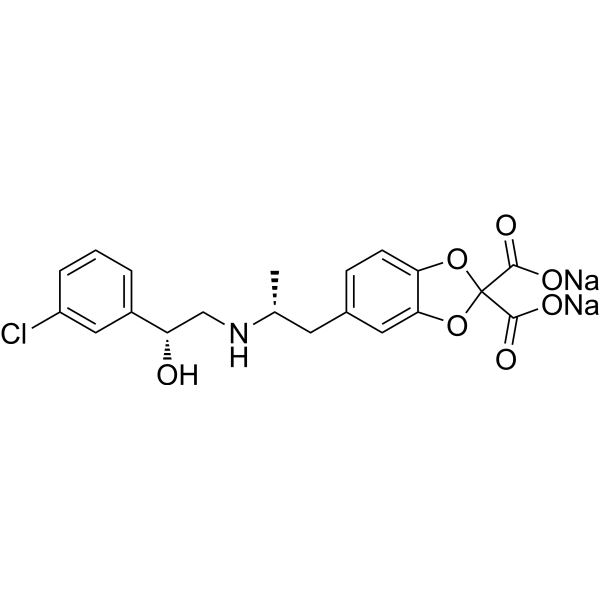
Cat. No.: HY-116771A
CAS No.: 138908-40-4
Purity:  99.98%
Target:  

Adrenergic Receptor

Research Areas:  

Metabolic Disease

CL316243 is a highly potent selective β3-adrenoceptor agonist with a EC50 of 3 nM, but is an extremely poor to β1/2- receptors .CL316243 is a effective stimulant of adipocyte lipolysis and increases brown adipose tissue thermogenesis and metabolic rate . CL316243 has the potential for the treatment obesity, diabetes and urge urinary incontinence .
loading...
    loading...
28
28 Publications Verification
Cat. No.: HY-116771
CAS No.: 183720-02-7
Purity:  99.37%
Target:  

Adrenergic Receptor

Research Areas:  

Metabolic Disease

CL316243 free acid is a highly potent selective β3-adrenoceptor agonist with a EC50 of 3 nM, but is an extremely poor to β1/2- receptors. CL316243 free acid is a effective stimulant of adipocyte lipolysis and increases brown adipose tissue thermogenesis and metabolic rate. CL316243 free acid has the potential for the treatment obesity, diabetes and urge urinary incontinence .
loading...
    loading...
12
12 Cited Publications
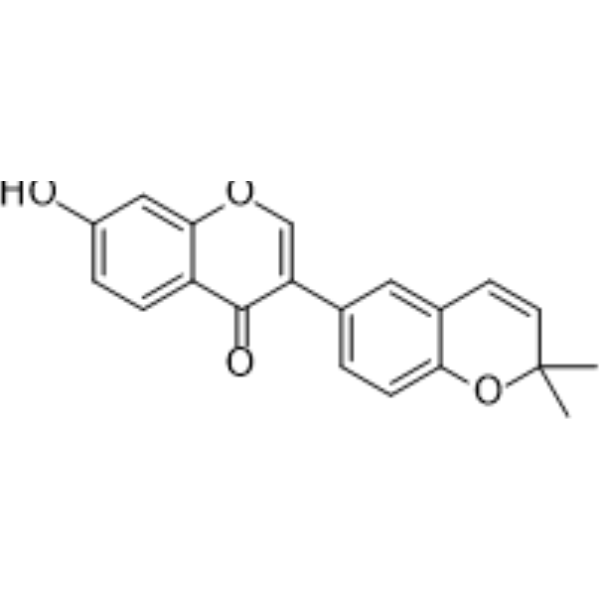
Cat. No.: HY-N0236
CAS No.: 53947-92-5
Corylin is an orally active flavonoid anti-inflammatory and osteogenic agent that inhibits IL-6-induced STAT3 promoter activity and STAT3 phosphorylation. Corylin also has anticancer, antiatherosclerotic, and ameliorating activity in hyperlipidemia and insulin resistance, inducing adipocyte browning and lipolysis through SIRT1 or β3-AR-dependent pathways .
loading...
    loading...
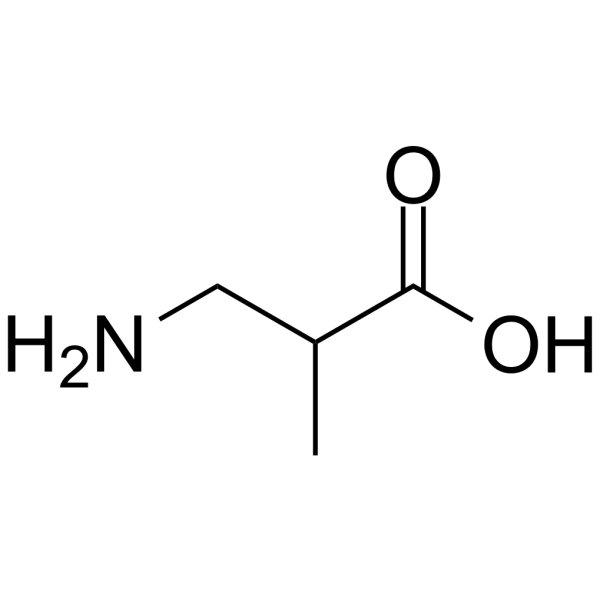
Cat. No.: HY-W012974
CAS No.: 144-90-1
Synonyms: β-Aminoisobutyric acid; BAIBA
3-Aminoisobutyric acid (β-Aminoisobutyric acid) has anti-inflammatory and antioxidant effects. 3-Aminoisobutyric acid increases the expression of brown adipocyte-specific genes in white adipose tissue and fatty acid β-oxidation in hepatocytes. 3-Aminoisobutyric acid attenuates insulin resistance and inflammation induced by palmitate or a high fat diet via an AMPK-PPARδ-dependent pathway in mice. 3-Aminoisobutyric acid is a catabolic metabolite of thymine and valine in skeletal muscle .
loading...
    loading...
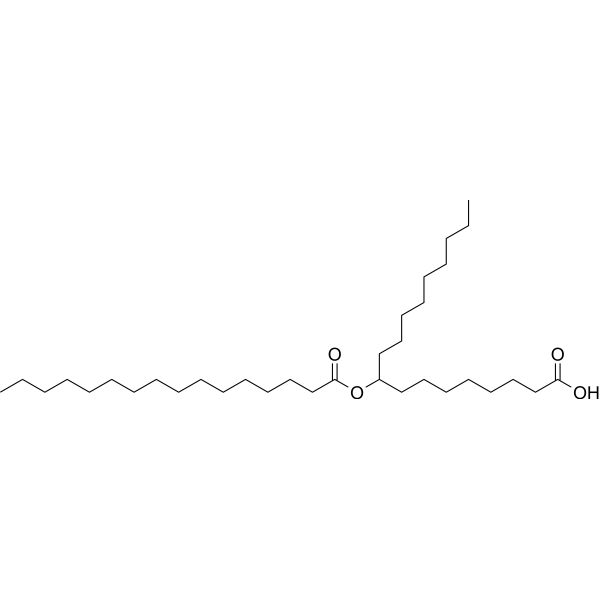
Cat. No.: HY-120657
CAS No.: 1481636-31-0
Purity:  99.88%
9-PAHSA is an orally active endogenous GPR120 agonist (EC50=18 μM). 9-PAHSA significantly inhibits LPS-induced inflammatory responses by blocking the NF-κB pathway. 9-PAHSA induces adipocyte browning, enhances glucose uptake and reduces lipid accumulation, while improving mitochondrial function and the survival rate of steatotic hepatocytes. In terms of neuroprotection, 9-PAHSA regulates the expression of REST and BDNF in the prefrontal cortex of diabetic mice, and effectively prevents spatial working memory deficits and abnormal social behaviors. 9-PAHSA does not directly regulate insulin secretion or improve systemic insulin sensitivity, and possesses specific anti-inflammatory, metabolic regulatory and neuroprotective properties. 9-PAHSA can be used in the research of diabetes-related cognitive impairment, obesity and non-alcoholic fatty liver disease .
loading...
    loading...
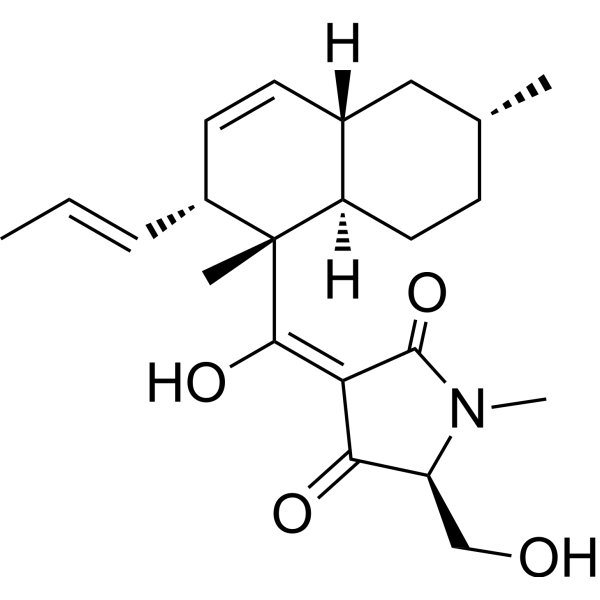
Cat. No.: HY-N6711
CAS No.: 57749-43-6
Equisetin is an N-methylserine-derived acyl tetramic acid, quorum sensing inhibitor (QSI), herbicides and antibiotics. Equisetin specifically inhibits the anionic carriers of substrates in the inner mitochondrial membrane. Equisetin inhibits the activity of HIV-1 integrase, 11β-HSD1, and 2,4-dinitrophenol (Dnp)-stimulated ATPase (IC50 = ~8 nmol per mg of protein). Equisetin exhibits growth inhibition of bacteria, anti-inflammatory, amelioration of lipid-associated disorders, and cytotoxic effects .
loading...
    loading...
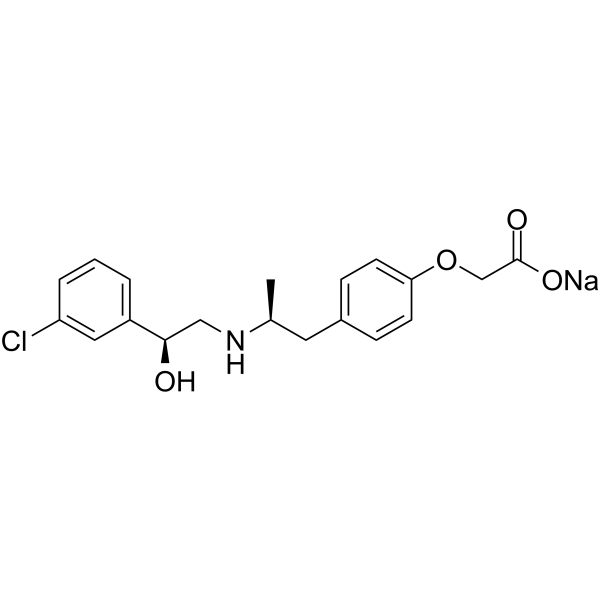
Cat. No.: HY-101325
CAS No.: 127299-93-8
Purity:  99.90%
(S,S)-BRL-37344 sodium is an isomer of BRL-37344 (HY-101325B). BRL-37344 is a β-adrenoceptor agonist with EC50 values of 5.3, 18 and 570 nM for β3, β2 and β1. BRL-37344 induces concentration-dependent increases in atria1 rate, relaxation of guinea pig trachea and lipolysis of brown adipocytes .
loading...
    loading...
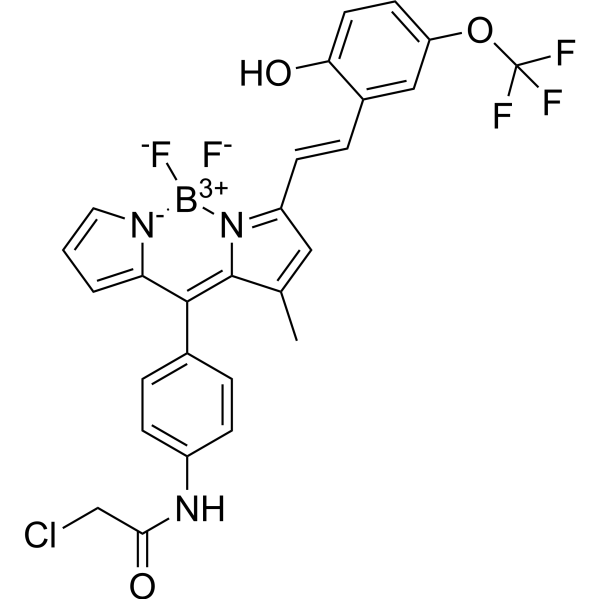
Cat. No.: HY-D1422
CAS No.: 1445108-32-6
Synonyms: BDNCA-346
Target:  

Fluorescent Dye

Research Areas:  

Others

ER Tracker Yellow (BDNCA-346) is a Fluorescent probe for targeted visualization of temperature at the endoplasmic reticulum. Its detection mechanism depends on temperature, with fluorescence intensity decreasing at higher temperatures due to preferential non-radiative processes; this intensity reversibly returns to baseline when cooled, provided the probe does not precipitate or degrade. It localizes specifically to the endoplasmic reticulum, where it may covalently attach to biomacromolecules via a thiol-reactive moiety, and its fluorescence remains stable after cell fixation; its fluorescence intensity is unaffected by physiological pH ranges of 5.0–8.0 and free Ca²⁺ concentrations of 0–800 μM. Its excitation/emission wavelength is Ex/Em = 559/581 nm[1].
loading...
    loading...
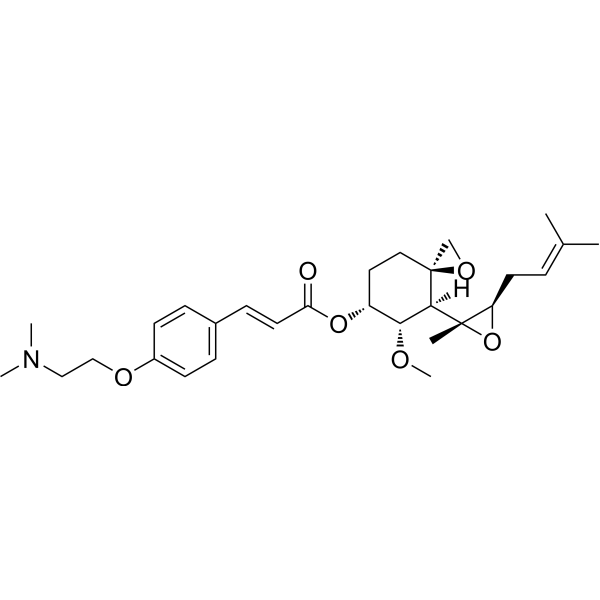
Cat. No.: HY-14811
CAS No.: 251111-30-5
Synonyms: ZGN-440; CKD-732 free base
Target:  

MetAP NF-κB

Research Areas:  

Metabolic Disease

Beloranib (ZGN-440; CKD-732 free base) is a selective, irreversible inhibitor of methionine aminopeptidase MetAP2 that suppresses appetite and increases energy expenditure. Beloranib blocks the enzymatic cleavage of N-terminal methionine from nascent proteins by forming a covalent bond with MetAP2, thereby regulating fatty acid metabolism, adrenergic signaling, and hypothalamic NF-κB expression. Beloranib significantly reduces food intake, body weight, and fat accumulation, while improving glucose tolerance, insulin sensitivity, and lipid metabolism. Beloranib also elevates energy expenditure and fat oxidation levels, without affecting body temperature, spontaneous activity, or the inflammatory cytokine IL-1β. Beloranib can be used in research on obesity and hypothalamic obesity .
loading...
    loading...
Cat. No.: HY-153813
CAS No.: 852222-94-7
Purity:  98.13%
Research Areas:  

Others

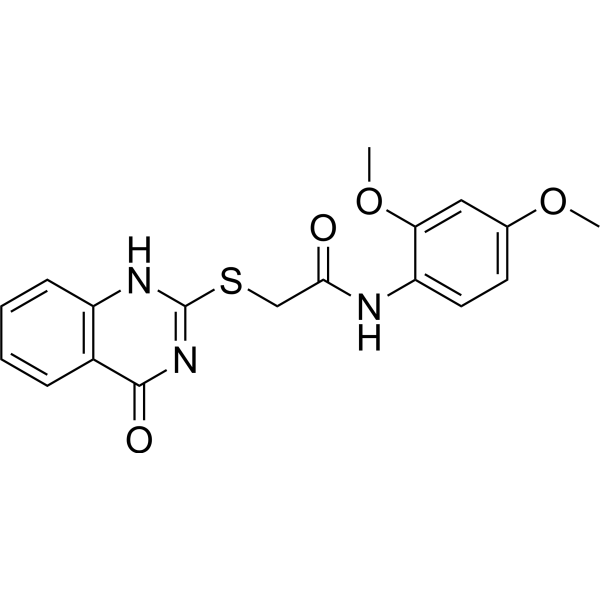
Z16078526 induces endogenous Ucp1 expression, promotes p38 MAPK phosphorylation and lipolysis in primary mouse brown adipocytes. Z16078526 activates thermogenic gene expression and mitochondrial activity (uncoupled respiration) in mouse brown adipocytes. Z16078526 also stimulates thermogenesis in the mouse .
loading...
    loading...
Cat. No.: HY-101325A
CAS No.: 90730-96-4
(S,S)-BRL-37344 is an isomer of BRL-37344 (HY-101325B). BRL-37344 is a β-adrenoceptor agonist with EC50 values of 5.3, 18 and 570 nM for β3, β2 and β1. BRL-37344 induces concentration-dependent increases in atria1 rate, relaxation of guinea pig trachea and lipolysis of brown adipocytes .
loading...
    loading...
Cat. No.: HY-14811A
CAS No.: 529511-79-3
Synonyms: ZGN-440 hemioxalate; ZGN-433 hemioxalate; CDK732 hemioxalate
Target:  

NF-κB MetAP

Research Areas:  

Metabolic Disease

Beloranib (ZGN-440; CKD-732 free base) hemioxalate is a selective, irreversible inhibitor of methionine aminopeptidase MetAP2 that suppresses appetite and increases energy expenditure. Beloranib hemioxalate blocks the enzymatic cleavage of N-terminal methionine from nascent proteins by forming a covalent bond with MetAP2, thereby regulating fatty acid metabolism, adrenergic signaling, and hypothalamic NF-κB expression. Beloranib hemioxalate significantly reduces food intake, body weight, and fat accumulation, while improving glucose tolerance, insulin sensitivity, and lipid metabolism. Beloranib hemioxalate also elevates energy expenditure and fat oxidation levels, without affecting body temperature, spontaneous activity, or the inflammatory cytokine IL-1β. Beloranib hemioxalate can be used in research on obesity and hypothalamic obesity .
loading...
    loading...
Cat. No.: HY-W770410
CAS No.: 2748638-71-1
9-PAHSA- 13C4 is 13C-labeled 9-PAHSA. 9-PAHSAis an orally active endogenous GPR120 agonist (EC50=18 μM). 9-PAHSAsignificantly inhibits LPS-induced inflammatory responses by blocking the NF-κB pathway. 9-PAHSAinduces adipocyte browning, enhances glucose uptake and reduces lipid accumulation, while improving mitochondrial function and the survival rate of steatotic hepatocytes. In terms of neuroprotection, 9-PAHSAregulates the expression of REST and BDNF in the prefrontal cortex of diabetic mice, and effectively prevents spatial working memory deficits and abnormal social behaviors. 9-PAHSAdoes not directly regulate insulin secretion or improve systemic insulin sensitivity, and possesses specific anti-inflammatory, metabolic regulatory and neuroprotective properties. 9-PAHSAcan be used in the research of diabetes-related cognitive impairment, obesity and non-alcoholic fatty liver disease .
loading...
    loading...
Cat. No.: HY-153812
CAS No.: 675197-89-4
Synonyms: AST070
Target:  

Anion Exchangers

Research Areas:  

Metabolic Disease

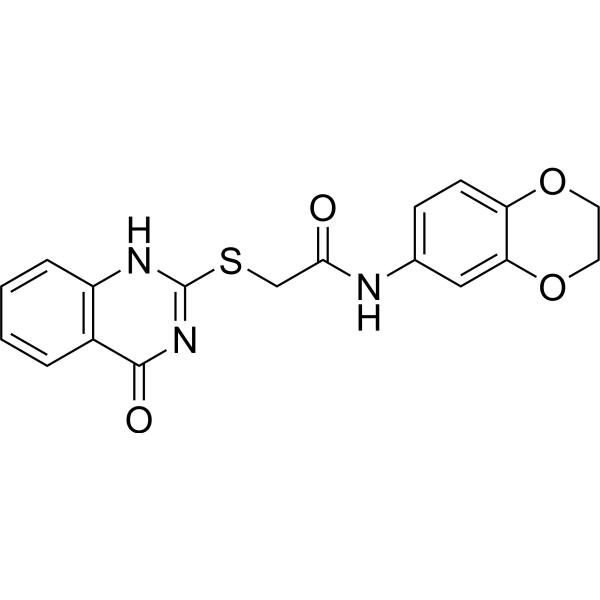
AST 7062601 (AST070) is a Ucp1 inducer that strongly induces endogenous Ucp1 expression in primary mouse brown adipocytes. Ucp1 refers to uncoupling protein, found in brown and beige fat cells. In mammals, UCP1 oxidizes fatty acids and uncouples ATP production in mitochondria to promote energy dissipation as heat. AST 7062601 can be used to study thermogenic, uncoupled respiration .
loading...
    loading...
Cat. No.: HY-120657S
CAS No.: 2704278-85-1
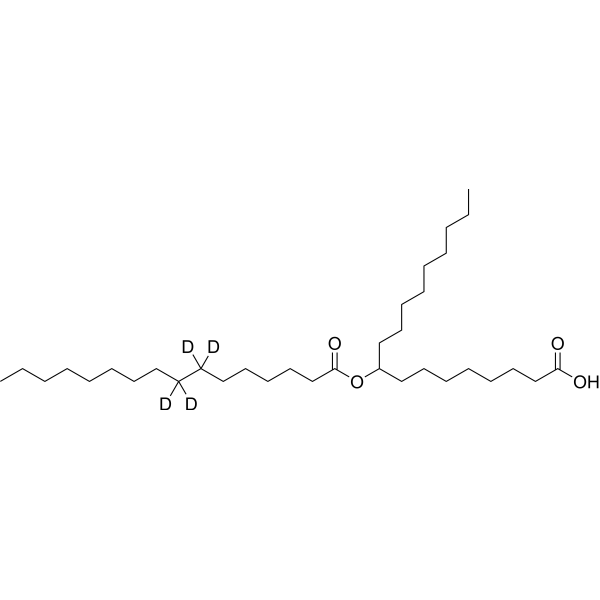
9-PAHSA-d4 is the deuterium labeled 9-PAHSA. 9-PAHSA is an orally active endogenous GPR120 agonist (EC50=18 μM). 9-PAHSA significantly inhibits LPS-induced inflammatory responses by blocking the NF-κB pathway. 9-PAHSA induces adipocyte browning, enhances glucose uptake and reduces lipid accumulation, while improving mitochondrial function and the survival rate of steatotic hepatocytes. In terms of neuroprotection, 9-PAHSA regulates the expression of REST and BDNF in the prefrontal cortex of diabetic mice, and effectively prevents spatial working memory deficits and abnormal social behaviors. 9-PAHSA does not directly regulate insulin secretion or improve systemic insulin sensitivity, and possesses specific anti-inflammatory, metabolic regulatory and neuroprotective properties. 9-PAHSA can be used in the research of diabetes-related cognitive impairment, obesity and non-alcoholic fatty liver disease .
loading...
    loading...
Cat. No.: HY-118397
CAS No.: 1830320-32-5
Target:  

PPAR

Research Areas:  

Others

RB394 is a potent dual sEH/PPARγ modulator isoform that promotes adipocyte browning and exhibits cardioprotective activity, and can be used to suppress metabolic syndrome.
loading...
    loading...
Cat. No.: HY-176148
CAS No.: 3068828-64-5
Research Areas:  

Metabolic Disease

ZGL-18 is an uncoupling protein 1 (UCP1)-inspired mitochondrial uncoupler. ZGL-18 activates brown adipocytes and reduces mitochondrial membrane potential .
loading...
    loading...
Cat. No.: HY-N12515
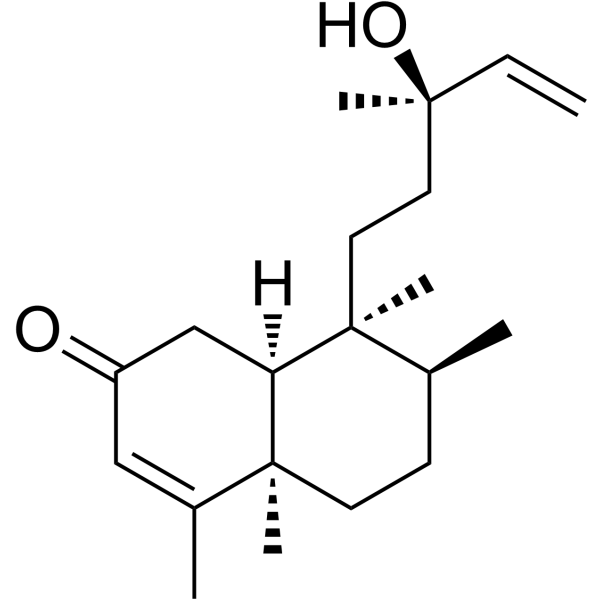
Pinuseldarone (compound 1), extracted from Pinus eldarica needles regulats brown adipogenesis and thermogenesis .
loading...
    loading...
Cat. No.: HY-183094
CAS No.: 931619-99-7
Target:  

PGC-1α

Research Areas:  

Metabolic Disease

AM73 is a PGC-1α1 stabilizer. AM73 increases the expression levels of Ucp1 and Cidea in brown adipocytes, and enhances basal mitochondrial respiration and uncoupled respiration. AM73 regulates hypoxia, brown adipocyte differentiation, carbohydrate metabolism and insulin signaling pathways in brown adipocytes. AM73 alters the thermogenic process of white adipocytes. AM73 is applicable to the research of obesity and related metabolic disorders .
loading...
    loading...
Cat. No.: HY-165098
CAS No.: 84796-61-2
Synonyms: β-Aminoisobutyric acid sodium salt; BAIBA sodium salt
3-Aminoisobutyric acid (β-Aminoisobutyric acid) sodium salt has anti-inflammatory and antioxidant effects. 3-Aminoisobutyric acid sodium salt increases the expression of brown adipocyte-specific genes in white adipose tissue and fatty acid β-oxidation in hepatocytes. 3-Aminoisobutyric acid sodium salt attenuates insulin resistance and inflammation induced by palmitate or a high fat diet via an AMPK–PPARδ-dependent pathway in mice. 3-Aminoisobutyric acid sodium salt is a catabolic metabolite of thymine and valine in skeletal muscle .
loading...
    loading...

