

1. Search Result
Search Result
Results for "

cGMP phosphodiesterase

" in MedChemExpress (MCE) Product Catalog:

60

Inhibitors & Agonists

17

Natural
Products

5

Recombinant Proteins

6

Isotope-Labeled Compounds

1

Antibodies

Targets Recommended:
Cat. No. Product Name Target Research Areas Chemical Structure
  • HY-B0442
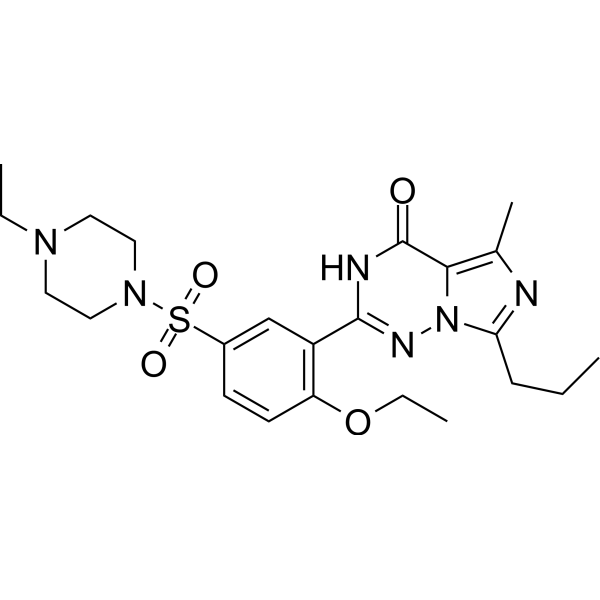
    Vardenafil
    5 Publications Verification

    Phosphodiesterase (PDE) Endogenous Metabolite Metabolic Disease Inflammation/Immunology Endocrinology Cancer
    Vardenafil is a selective and orally active inhibitor of phosphodiesterase-5 (PDE5), with an IC50 of 0.7 nM. Vardenafil shows inhibitory towards PDE1, PDE6 with IC50s of 180 nM, and 11 nM, while IC50s are >1000 nM for PDE3 and PDE4 . Vardenafil competitively inhibits cyclic guanosine monophosphate (cGMP) hydrolysis and thus increases cGMP levels . Vardenafil can be used for the research of erectile dysfunction, hepatitis, diabetes [1]-[6].
    Vardenafil
  • HY-B1816
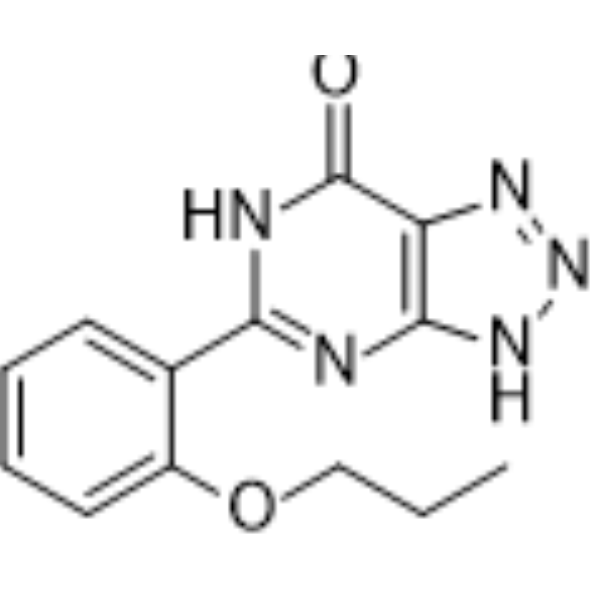
    Zaprinast
    3 Publications Verification

    M&B 22948

    Phosphodiesterase (PDE) GPR35 Cardiovascular Disease Neurological Disease Endocrinology
    Zaprinast (M&B 22948) is a selective inhibitor of cGMP-selective Phosphodiesterase (PDE5). Zaprinast causes a significant increase in cGMP levels in myocytes. Zaprinast is a G protein-coupled receptor 35 (GPR35) agonist which activates rat GPR35 strongly and activates human GPR35 moderately. Zaprinast reduces vessel remodeling through antiproliferative and proapoptotic effects .
    Zaprinast
  • HY-103160A
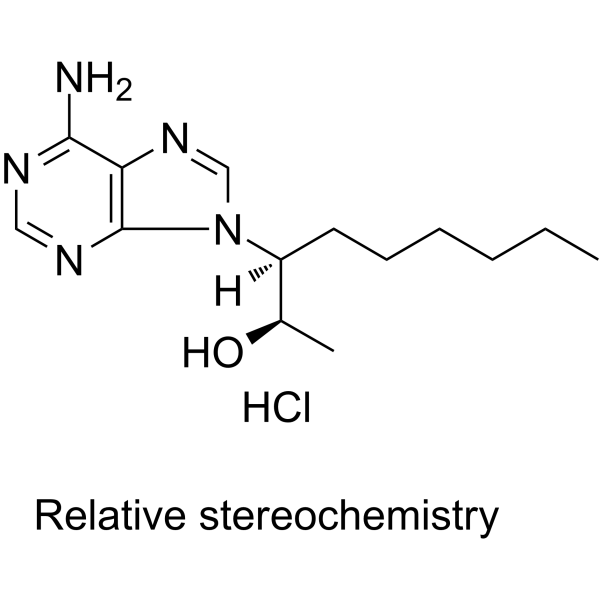
    EHNA hydrochloride
    5 Publications Verification

    Adenosine Deaminase Phosphodiesterase (PDE) Influenza Virus Infection Cardiovascular Disease Neurological Disease Cancer
    EHNA hydrochloride is a potent and selective dual inhibitor of cyclic nucleotide phosphodiesterase 2 (PDE2)(IC50=4 μM) and adenosine deaminase (ADA). EHNA hydrochloride exerts a concentration inhibition of the cGMP-stimulated PDE II (cGs-PDE)(IC50:0.8 μM (human), 2 μM (porcine myocardium)), but has smaller inhibitory effect on the unstimulated PDE2 activity. EHNA hydrochloride play roles in mediating diverse pharmacological responses, including antiviral, antitumour and antiarrhythmic effects .
    EHNA hydrochloride
  • HY-18252
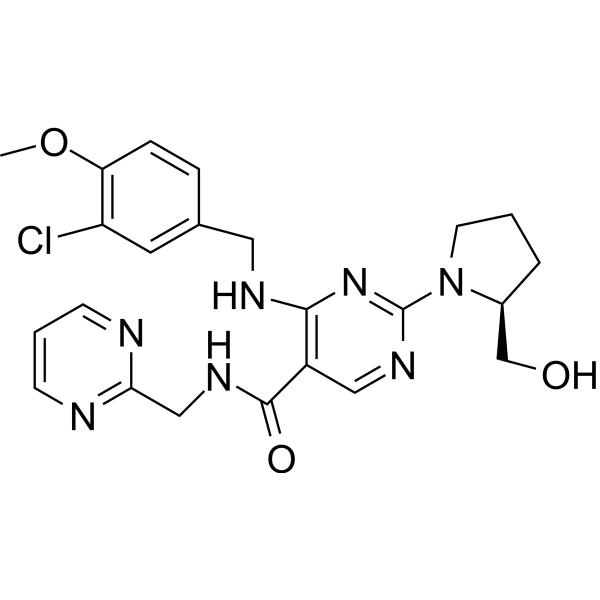
    Avanafil
    1 Publications Verification

    TA1790

    Phosphodiesterase (PDE) NO Synthase Endogenous Metabolite Cardiovascular Disease Endocrinology
    Avanafil (TA-1790) is a potent and selective phosphodiesterase-5 (PDE-5) inhibitor with IC50 values of 5.2 nM, 630 nM, 5700 nM, 6200 nM, 12000 nM, 27000 nM, 51000 nM and 53000 nM for PDE-5, PDE-6, PDE-4, PDE-10, PDE-8, PDE-7, PDE-2 and PDE-1, respectively. Avanafil activates NO/cGMP/PKG signaling-pathway to decrease loss in BMD, bone atrophy, and oxidative stress. Avanafil inhibits cyclic guanosine monophosphate (cGMP) hydrolysis and thus increases cGMP levels. Avanafil can be used for the research of erectile dysfunction and osteoporosis .
    Avanafil
  • HY-B0442A
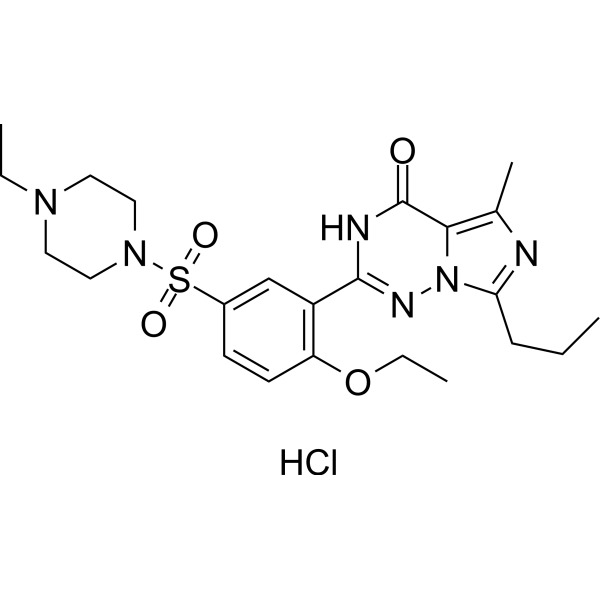
    Vardenafil hydrochloride
    5 Publications Verification

    Phosphodiesterase (PDE) Endogenous Metabolite Metabolic Disease Inflammation/Immunology Endocrinology Cancer
    Vardenafil hydrochloride is a selective and orally active inhibitor of phosphodiesterase-5 (PDE5), with an IC50 of 0.7 nM. Vardenafil hydrochloride shows inhibitory towards PDE1, PDE6 with IC50s of 180 nM, and 11 nM, while IC50s are >1000 nM for PDE3 and PDE4 . Vardenafil hydrochloride competitively inhibits cyclic guanosine monophosphate (cGMP) hydrolysis and thus increases cGMP levels . Vardenafil hydrochloride can be used for the research of erectile dysfunction, hepatitis, diabetes [1]-[6].
    Vardenafil hydrochloride
  • HY-18253

    DA8159

    Phosphodiesterase (PDE) Endocrinology Cancer
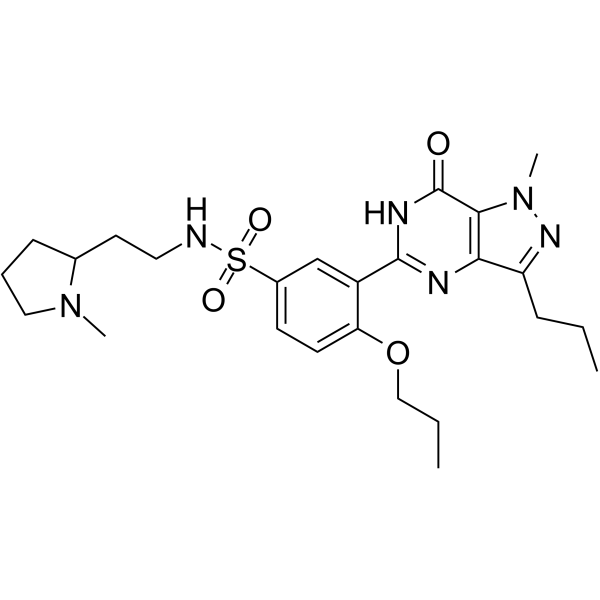
    Udenafil (DA8159) is a potent, selective and orally active phosphodiesterase type 5 (PDE5) inhibitor. Udenafil also inhibits cGMP hydrolysis and can be used for erectile dysfunction research .
    Udenafil
  • HY-B0442B
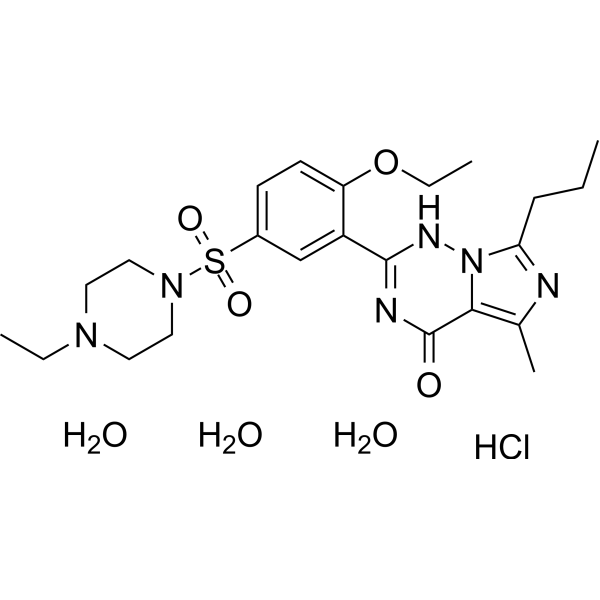
    Vardenafil hydrochloride trihydrate
    5 Publications Verification

    Endogenous Metabolite Phosphodiesterase (PDE) Metabolic Disease Inflammation/Immunology Endocrinology
    Vardenafil hydrochloride trihydrate is a selective and orally active inhibitor of phosphodiesterase-5 (PDE5), with an IC50 of 0.7 nM. Vardenafil hydrochloride trihydrate shows inhibitory towards PDE1, PDE6 with IC50s of 180 nM, and 11 nM, while IC50s are >1000 nM for PDE3 and PDE4 . Vardenafil hydrochloride trihydrate competitively inhibits cyclic guanosine monophosphate (cGMP) hydrolysis and thus increases cGMP levels . Vardenafil hydrochloride trihydrate can be used for the research of erectile dysfunction, hepatitis, diabetes [1]-[6].
    Vardenafil hydrochloride trihydrate
  • HY-N1860

    Phosphodiesterase (PDE) NO Synthase Infection Neurological Disease Inflammation/Immunology
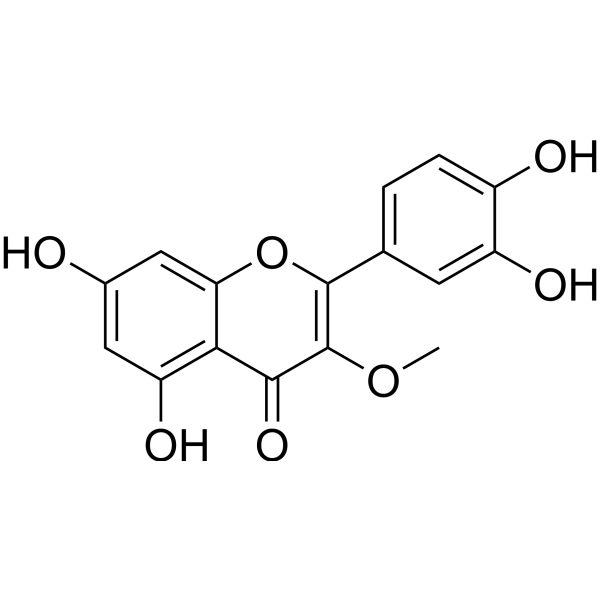
    3-O-Methylquercetin is an inhibitor of cAMP and CGMP-phosphodiesterase (PDE) with IC50 at 13.8 μM and 14.3 μM, respectively. 3-O-Methylquercetin is an inhibitor of β-secretase with an IC50 of 6.5 μM. 3-O-Methylquercetin has a neuroprotective effect against neuronal death caused by oxidative damage. 3-O-Methylquercetin has strong antiviral activity against poliovirus, coxsackie virus and human rhinovirus. 3-O-Methylquercetin has anti-inflammatory and trachea-relaxing effects and can be used in the study of inflammatory diseases and asthma .
    3-O-Methylquercetin
  • HY-P2878
    Phosphodiesterase I
    1 Publications Verification

    PDE

    Phosphodiesterase (PDE) Neurological Disease Cancer
    Phosphodiesterase I (PDE) is an enzyme that can catalyze the hydrolysis of the 3' ring phosphate bond of cyclic nucleotides, and is often used in biochemical research. Phosphodiesterase I acts as an important regulator of signal transduction mediated by the second messenger molecules cAMP and cGMP. According to their specificity to cyclic nucleotides, they can also be divided into different types, such as PDE1-PDE11, which also have certain potential in various diseases .
    Phosphodiesterase I
  • HY-B1639

    Phosphodiesterase (PDE) Cardiovascular Disease Inflammation/Immunology
    Enoximone is an inotropic vasodilating agent and a selective and orally active phosphodiesterase III (PDE3) inhibitor with an IC50 of 5.9 μM. Enoximone induces vasodilatation and increases intracellular levels of cAMP by inhibiting cGMP-inhibited PDE. Enoximone also exhibits PDE4 inhibitory effect with an IC50 of 21.1 μM for myocardial PDE4A. Enoximone has the potential for congestive heart failure research and has bronchodilatory, antiasthma and anti-inflammatory effects .
    Enoximone
  • HY-114672

    Phosphodiesterase (PDE) Cardiovascular Disease
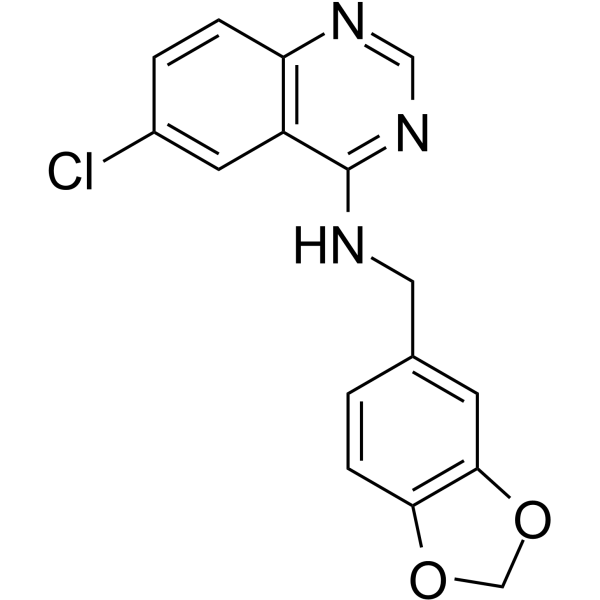
    MBCQ is a potent and selective cGMP-specific phosphodiesterase (PDE V; PDE5) inhibitor with an IC50 of 19 nM. MBCQ lacks inhibitory activity toward other PDE isozymes (all IC50s>100 μM). MBCQ dilates coronary arteries via specific inhibition of cGMP-PDE .
    MBCQ
  • HY-108548

    Rp-8-Bromo-PET-cGMPS

    PKG Inflammation/Immunology
    Rp-8-Br-PET-cGMPS sodium (Rp-8-Bromo-PET-cGMPS) is an analog of cyclic GMP (cGMP). It is a cell permeable, competitive, and reversible inhibitor of cGMP-dependent protein kinases (cGKs) that blocks activation of cGKI and cGKII by cGMP (Kis=35 and 30 nM). It less potently inhibits protein kinase A (Ki=11 μM) and cGMP-induced activation of cyclic nucleotide-gated channels (IC50=25 μM). In the absence of cGMP stimulation, Rp-8-bromo-PET-cGMPS can act as a partial agonist of cGKI (Ki=1 μM). Rp-8-bromo-PET-cGMPS is resistant to hydrolysis by phosphodiesterase 11.
    Rp-8-Br-PET-cGMPS sodium
  • HY-108619

    UK 369003-26

    Phosphodiesterase (PDE) Neurological Disease
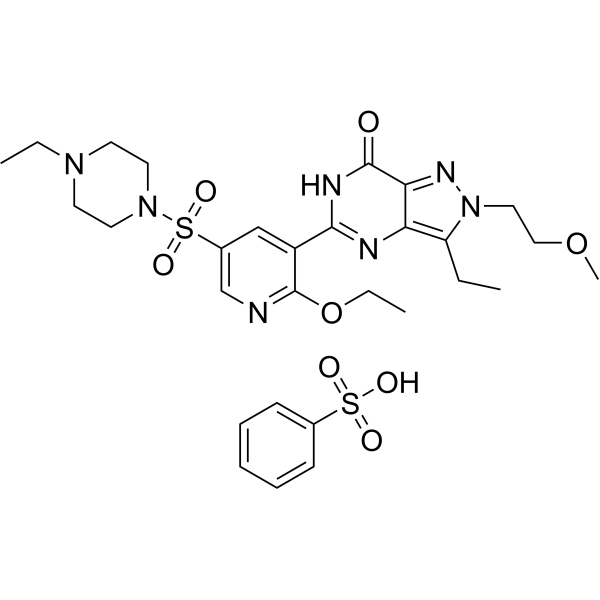
    Gisadenafil besylate (UK 369003-26) is a specific, orally active phosphodiesterase 5 (PDE5) inhibitor with an IC50 of 3.6 nM and prevents degradation of cyclic guanosine monophosphate (cGMP) .
    Gisadenafil besylate
  • HY-P2867

    3′-Exonuclease

    Phosphodiesterase (PDE) Neurological Disease
    Phosphodiesterase II (EC 3.1.16.1), namely phosphodiesterase 2, is mainly involved in the hydrolysis of the important second messengers cyclic adenosine monophosphate (cAMP) and cyclic guanosine monophosphate (cGMP), and is often used in biochemical research. Phosphodiesterase II is expressed in a variety of tissues, such as the adrenal medulla, brain, heart, platelets, macrophages and endothelial cells, and is involved in the regulation of many different intracellular processes .
    Phosphodiesterase II, Bovine Spleen
  • HY-137108

    PKA PKG Neurological Disease
    Sp-8-pCPT-cGMPS is a potent cyclic guanosine monophosphate-gated channel agonist and a lipophilic activator of protein kinase G (types I α, I β, and II) and protein kinase A type II with excellent cell membrane permeability and phosphodiesterase stability. Sp-8-pCPT-cGMPS can be used to study the role of cGMP in neural plasticity and synaptic transmission .
    Sp-8-pCPT-cGMPS
  • HY-121381

    Phosphodiesterase (PDE) Others
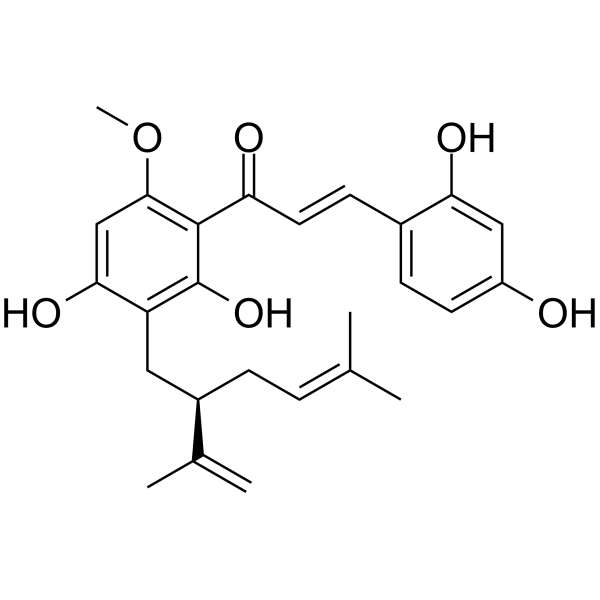
    Kuraridine is a prenylated flavonol extract from the roots of Sophora flavescens. Kuraridine has an inhibitory effect on cGMP specific phosphodiesterase type 5 (PDE5) (IC50=0.64 μM) .
    Kuraridine
  • HY-B0442AS

    Endogenous Metabolite Phosphodiesterase (PDE) Isotope-Labeled Compounds Metabolic Disease Inflammation/Immunology Endocrinology
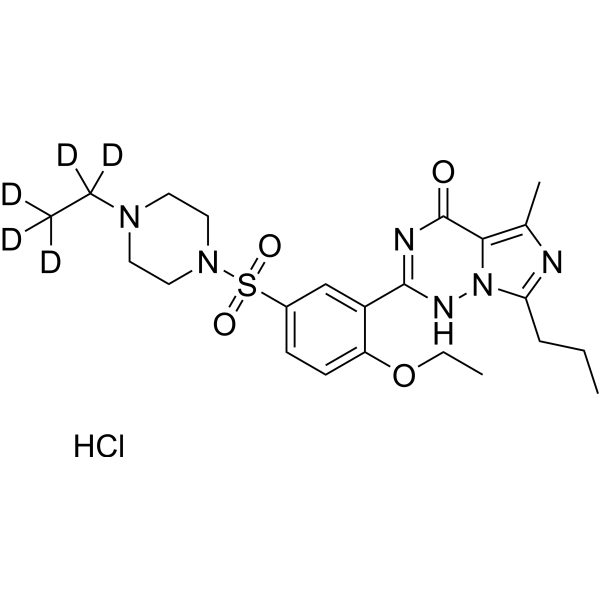
    Vardenafil-d5 hydrochloride is deuterated labeled Vardenafil hydrochloride (HY-B0442A). Vardenafil hydrochloride is a selective and orally active inhibitor of phosphodiesterase-5 (PDE5), with an IC50 of 0.7 nM. Vardenafil hydrochloride shows inhibitory towards PDE1, PDE6 with IC50s of 180 nM, and 11 nM, while IC50s are >1000 nM for PDE3 and PDE4 . Vardenafil hydrochloride competitively inhibits cyclic guanosine monophosphate (cGMP) hydrolysis and thus increases cGMP levels . Vardenafil hydrochloride can be used for the research of erectile dysfunction, hepatitis, diabetes [1]-[6].
    Vardenafil-d5 hydrochloride
  • HY-131764

    2′-O-Monobutyryl-cGMP sodium

    Phosphodiesterase (PDE) Others
    2'-O-MB-cGMP (2′-O-Monobutyryl-cGMP) sodium is a cyclic GMP-specific phosphodiesterase inhibitor with an I50 value of 35 µM. 2'-O-MB-cGMP (2′-O-Monobutyryl-cGMP) sodium inhibits Ca 2+ dependent phosphodiesterase hydrolysis using cAMP or cGMP as substrate .
    2'-O-MB-cGMP sodium
  • HY-136520A

    Phosphodiesterase (PDE) Metabolic Disease
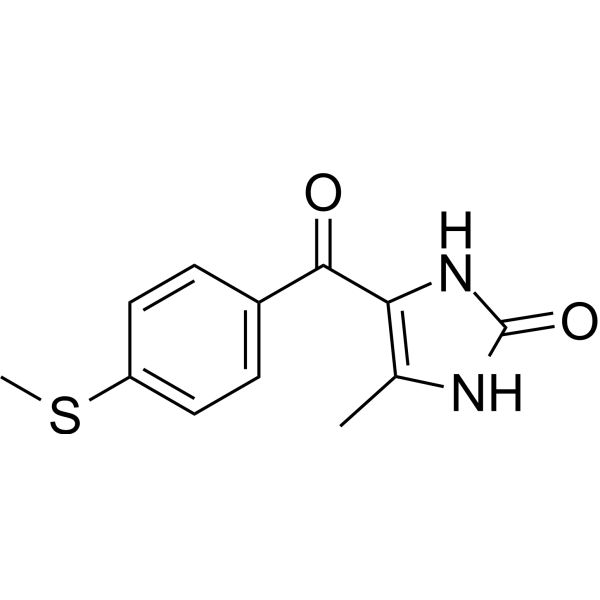
    (R)-Xanthoanthrafil is a phosphodiesterase-5 (PDE5) inhibitor. (R)-Xanthoanthrafil selectively inhibits PDE5, increasing cyclic guanosine monophosphate (cGMP) levels, leading to smooth muscle relaxation and promoting penile erection. (R)-Xanthoanthrafil can be used to study erectile dysfunction .
    (R)-Xanthoanthrafil
  • HY-14841

    UK-369003

    Phosphodiesterase (PDE) Neurological Disease
    Gisadenafil (UK-369003) is a specific, orally active phosphodiesterase 5 (PDE5) inhibitor with an IC50 of 3.6 nM and prevents degradation of cyclic guanosine monophosphate (cGMP) .
    Gisadenafil
  • HY-114218

    Phosphodiesterase (PDE) Cardiovascular Disease Inflammation/Immunology
    BL-122 is a selective phosphodiesterase-5 (PDE-5) inhibitor. BL-122 can increase the level of cGMP in the tissue, promote the expression of nitric oxide (NO), and mediate the relaxation of smooth muscle. BL-122 can be used for the researches of inflammation, immunology and cardiovascular disease, such as asthma and hypertension .
    BL-122
  • HY-18252A

    TA1790 dibenzenesulfonate

    Phosphodiesterase (PDE) NO Synthase Endogenous Metabolite Cardiovascular Disease Endocrinology
    Avanafil (TA-1790) dibenzenesulfonate is a potent and selective phosphodiesterase-5 (PDE-5) inhibitor with IC50 values of 5.2 nM, 630 nM, 5700 nM, 6200 nM, 12000 nM, 27000 nM, 51000 nM and 53000 nM for PDE-5, PDE-6, PDE-4, PDE-10, PDE-8, PDE-7, PDE-2 and PDE-1, respectively. Avanafil dibenzenesulfonate activates NO/cGMP/PKG signaling-pathway to decrease loss in BMD, bone atrophy, and oxidative stress. Avanafil dibenzenesulfonate inhibits cyclic guanosine monophosphate (cGMP) hydrolysis and thus increases cGMP levels. Avanafil dibenzenesulfonate can be used for the research of erectile dysfunction and osteoporosis .
    Avanafil dibenzenesulfonate
  • HY-107022

    Phosphodiesterase (PDE) Neurological Disease
    BMS-341400 is an orally active selective phosphodiesterase 5 (PDE5) inhibitor with an IC50 value of 0.3 nM. BMS-341400 reduces the degradation of cyclic guanosine monophosphate (cGMP), thereby enhancing nitric oxide (NO)-mediated relaxation of the smooth muscle of the corpus cavernosum and promoting erection. BMS-341400 can be used to study erectile dysfunction.
    BMS-341400
  • HY-117390

    Phosphodiesterase (PDE) Cardiovascular Disease Metabolic Disease
    FR-181074 is a selective and orally active PDE V inhibitor. FR-181074 can specifically block PDE V to inhibit the degradation of cyclic guanosine monophosphate (cGMP) in order to relax smooth muscle. FR-181074 can be used for the researches of cardiovascular disease and endocrinology, such as hypertension and erectile dysfunction .
    FR-181074
  • HY-N7648

    Atherospermine

    Parasite Phosphodiesterase (PDE) Infection
    Atherosperminine (Atherospermine) is a phosphodiesterase inhibitor. Atherosperminine inhibits growth of chloroquine-resistant Plasmodium falciparum. Atherosperminine scavenges DPPH free radicals, exhibits ferric reducing power, and chelates metal ions. Atherosperminine can be used for the research of malaria .
    Atherosperminine
  • HY-103160B

    Adenosine Deaminase Phosphodiesterase (PDE) Influenza Virus Infection Cardiovascular Disease Neurological Disease Cancer
    EHNA is a potent and selective dual inhibitor of cyclic nucleotide phosphodiesterase 2 (PDE2)(IC50=4 μM) and adenosine deaminase (ADA). EHNA exerts a concentration inhibition of the cGMP-stimulated PDE II (cGs-PDE)(IC50:0.8 μM (human), 2 μM (porcine myocardium)), but has smaller inhibitory effect on the unstimulated PDE2 activity. EHNA play roles in mediating diverse pharmacological responses, including antiviral, antitumour and antiarrhythmic effects .
    EHNA
  • HY-105349

    Phosphodiesterase (PDE) Neurological Disease
    T-0156 is a potent and selective phosphodiesterase type 5 (PDE5) inhibitor. T-0156 specifically inhibits the hydrolysis of cyclic guanosine monophosphate (cGMP) by PDE5 in a competitive manner (IC50=0.23 nM). T-0156 inhibits PDE6 (IC50=56 nM) and has low potencies against PDE1, PDE2, PDE3, and PDE4 (IC50>10 μM). T-0156 enhances the nitric oxide (NO)/cGMP pathway .
    T-0156
  • HY-164685

    Phosphodiesterase (PDE) Neurological Disease
    T-0156 free base is a potent and selective phosphodiesterase type 5 (PDE5) inhibitor. T-0156 free base specifically inhibits the hydrolysis of cyclic guanosine monophosphate (cGMP) by PDE5 in a competitive manner (IC50=0.23 nM). T-0156 free base inhibits PDE6 (IC50=56 nM) and has low potencies against PDE1, PDE2, PDE3, and PDE4 (IC50>10 μM). T-0156 free base enhances the nitric oxide (NO)/cGMP pathway .
    T-0156 free base
  • HY-120684

    Phosphodiesterase (PDE) Others
    PDE10-IN-6 is a phosphodiesterase-10 inhibitor that inhibits the breakdown of cAMP and cGMP, thereby slowing or halting their hydrolysis.
    PDE10-IN-6
  • HY-137633

    PKG Neurological Disease
    Sp-8-Br-PET-cGMPS is a membrane-permeable PKG agonist and a membrane-permeable inhibitor of retinal-type cGMP-gated ion channels, as well as an activator of cGMP-dependent protein kinases I α and I β. Sp-8-Br-PET-cGMPS is resistant to mammalian cyclic nucleotide-dependent phosphodiesterases, has no metabolic side effects, and is more lipophilic and permeable than Sp-8-pCPT-cGMPS. Sp-8-Br-PET-cGMPS can be used to study the role of cGMP signaling pathways in the nervous system .
    Sp-8-Br-PET-cGMPS
  • HY-B0442C

    Endogenous Metabolite Phosphodiesterase (PDE) Metabolic Disease Inflammation/Immunology Endocrinology Cancer
    Vardenafil dihydrochloride is a selective and orally active inhibitor of phosphodiesterase-5 (PDE5), with an IC50 of 0.7 nM. Vardenafil dihydrochloride shows inhibitory towards PDE1, PDE6 with IC50s of 180 nM, and 11 nM respectively, while IC50s are >1000 nM for PDE3 and PDE4. Vardenafil dihydrochloride competitively inhibits cyclic guanosine monophosphate (cGMP) hydrolysis and thus increases cGMP levels. Vardenafil dihydrochloride can be used for the research of erectile dysfunction, hepatitis, diabetes - .
    Vardenafil dihydrochloride
  • HY-B0442S

    Isotope-Labeled Compounds Phosphodiesterase (PDE) Endogenous Metabolite Endocrinology
    Vardenafil-d5 is deuterium labeled Vardenafil. Vardenafil is a selective, orally active, potent inhibitor of phosphodiesterase-5 (PDE5), with an IC50 of 0.7 nM. Vardenafil shows selectivity over PDE1 (180 nM), PDE6 (11 nM), PDE2, PDE3, and PDE4 (>1000 nM). Vardenafil competitively inhibits cyclic guanosine monophosphate (cGMP) hydrolysis and thus increases cGMP levels. Vardenafil can be used for the research of erectile dysfunction .
    Vardenafil-d5
  • HY-114643

    (Rac)-IMR-687

    Phosphodiesterase (PDE) Cardiovascular Disease
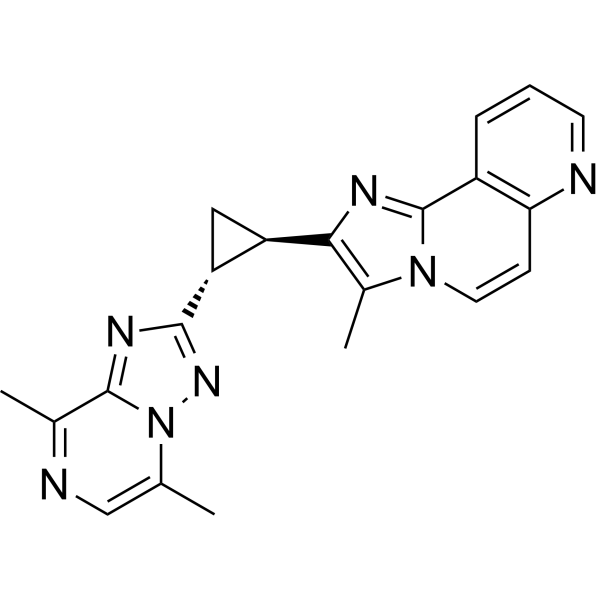
    (Rac)-Tovinontrine ((Rac)-IMR-687) is a phosphodiesterase 9 (PDE9) inhibitor that increases cyclic guanosine monophosphate (cGMP) levels. (Rac)-Tovinontrine is promising for research of thalassemia .
    (Rac)-Tovinontrine
  • HY-129210

    Phosphodiesterase (PDE) Potassium Channel Cardiovascular Disease
    KMUP-4, as a xanthine derivative with cGMP-enhancing activity, induces aortic relaxation through endothelium-dependent and independent mechanisms. KMUP-4 increases cytoplasmic cyclic guanosine monophosphate (cGMP) and cyclic adenosine monophosphate (cAMP) levels by inhibiting phosphodiesterases (PDEs) and activating K + channels. KMUP-4 can be used in the study of cardiovascular diseases .
    KMUP-4
  • HY-18252R

    TA1790 (Standard)

    Reference Standards Phosphodiesterase (PDE) NO Synthase Endogenous Metabolite Cardiovascular Disease Endocrinology
    Avanafil (Standard) is the analytical standard of Avanafil. This product is intended for research and analytical applications. Avanafil (TA-1790) is a potent and selective phosphodiesterase-5 (PDE-5) inhibitor with IC50 values of 5.2 nM, 630 nM, 5700 nM, 6200 nM, 12000 nM, 27000 nM, 51000 nM and 53000 nM for PDE-5, PDE-6, PDE-4, PDE-10, PDE-8, PDE-7, PDE-2 and PDE-1, respectively. Avanafil activates NO/cGMP/PKG signaling-pathway to decrease loss in BMD, bone atrophy, and oxidative stress. Avanafil inhibits cyclic guanosine monophosphate (cGMP) hydrolysis and thus increases cGMP levels. Avanafil can be used for the research of erectile dysfunction and osteoporosis .
    Avanafil (Standard)
  • HY-B0442CR

    Reference Standards Endogenous Metabolite Phosphodiesterase (PDE) Metabolic Disease Inflammation/Immunology Endocrinology Cancer
    Vardenafil (dihydrochloride) (Standard) is the analytical standard of Vardenafil (dihydrochloride). This product is intended for research and analytical applications. Vardenafil dihydrochloride is a selective and orally active inhibitor of phosphodiesterase-5 (PDE5), with an IC50 of 0.7 nM. Vardenafil dihydrochloride shows inhibitory towards PDE1, PDE6 with IC50s of 180 nM, and 11 nM respectively, while IC50s are >1000 nM for PDE3 and PDE4. Vardenafil dihydrochloride competitively inhibits cyclic guanosine monophosphate (cGMP) hydrolysis and thus increases cGMP levels. Vardenafil dihydrochloride can be used for the research of erectile dysfunction, hepatitis, diabetes - .
    Vardenafil dihydrochloride (Standard)
  • HY-B0442AR

    Phosphodiesterase (PDE) Endogenous Metabolite Reference Standards Metabolic Disease Inflammation/Immunology Endocrinology Cancer
    Vardenafil (hydrochloride) (Standard) is the analytical standard of Vardenafil (hydrochloride). This product is intended for research and analytical applications. Vardenafil hydrochloride is a selective and orally active inhibitor of phosphodiesterase-5 (PDE5), with an IC50 of 0.7 nM. Vardenafil hydrochloride shows inhibitory towards PDE1, PDE6 with IC50s of 180 nM, and 11 nM, while IC50s are >1000 nM for PDE3 and PDE4 . Vardenafil hydrochloride competitively inhibits cyclic guanosine monophosphate (cGMP) hydrolysis and thus increases cGMP levels . Vardenafil hydrochloride can be used for the research of erectile dysfunction, hepatitis, diabetes - .
    Vardenafil hydrochloride (Standard)
  • HY-B0442R

    Reference Standards Phosphodiesterase (PDE) Endogenous Metabolite Metabolic Disease Inflammation/Immunology Endocrinology
    Vardenafil (Standard) is the analytical standard of Vardenafil. This product is intended for research and analytical applications. Vardenafil is a selective and orally active inhibitor of phosphodiesterase-5 (PDE5), with an IC50 of 0.7 nM. Vardenafil shows inhibitory towards PDE1, PDE6 with IC50s of 180 nM, and 11 nM, while IC50s are >1000 nM for PDE3 and PDE4 . Vardenafil competitively inhibits cyclic guanosine monophosphate (cGMP) hydrolysis and thus increases cGMP levels . Vardenafil can be used for the research of erectile dysfunction, hepatitis, diabetes [1]-[6].
    Vardenafil (Standard)
  • HY-W049735R

    Drug Metabolite Reference Standards Endogenous Metabolite Metabolic Disease
    Vardenafil (dihydrochloride) (Standard) is the analytical standard of Vardenafil (dihydrochloride). This product is intended for research and analytical applications. Vardenafil dihydrochloride is a selective and orally active inhibitor of phosphodiesterase-5 (PDE5), with an IC50 of 0.7 nM. Vardenafil dihydrochloride shows inhibitory towards PDE1, PDE6 with IC50s of 180 nM, and 11 nM respectively, while IC50s are >1000 nM for PDE3 and PDE4. Vardenafil dihydrochloride competitively inhibits cyclic guanosine monophosphate (cGMP) hydrolysis and thus increases cGMP levels. Vardenafil dihydrochloride can be used for the research of erectile dysfunction, hepatitis, diabetes - .
    N,N,O-Tridesmethylvenlafaxine (Standard)
  • HY-106477

    Ro 13-6438; Ro 13-6438/006

    Phosphodiesterase (PDE) MAPKAPK2 (MK2) Infection
    Quazinone is a selective inhibitor of cGMP-inhibited-phosphodiesterase (cGI-PDE, PDE3). Quazinone inhibits the phosphorylation of p42/p44 MAP kinase. Quazinone possesses antimitogenic effect .
    Quazinone
  • HY-B0442BR

    Reference Standards Endogenous Metabolite Phosphodiesterase (PDE) Metabolic Disease Inflammation/Immunology Endocrinology
    Vardenafil (hydrochloride trihydrate) (Standard) is the analytical standard of Vardenafil (hydrochloride trihydrate). This product is intended for research and analytical applications. Vardenafil hydrochloride trihydrate is a selective and orally active inhibitor of phosphodiesterase-5 (PDE5), with an IC50 of 0.7 nM. Vardenafil hydrochloride trihydrate shows inhibitory towards PDE1, PDE6 with IC50s of 180 nM, and 11 nM, while IC50s are >1000 nM for PDE3 and PDE4 . Vardenafil hydrochloride trihydrate competitively inhibits cyclic guanosine monophosphate (cGMP) hydrolysis and thus increases cGMP levels . Vardenafil hydrochloride trihydrate can be used for the research of erectile dysfunction, hepatitis, diabetes - .
    Vardenafil hydrochloride trihydrate (Standard)
  • HY-18252S3

    TA1790-13C5

    Isotope-Labeled Compounds Endogenous Metabolite Phosphodiesterase (PDE) NO Synthase Cardiovascular Disease Endocrinology
    Avanafil- 13C5 (TA1790- 13C5) is 13C labeled Avanafil. Avanafil (TA-1790) is a potent and selective phosphodiesterase-5 (PDE-5) inhibitor with IC50 values of 5.2 nM, 630 nM, 5700 nM, 6200 nM, 12000 nM, 27000 nM, 51000 nM and 53000 nM for PDE-5, PDE-6, PDE-4, PDE-10, PDE-8, PDE-7, PDE-2 and PDE-1, respectively. Avanafil activates NO/cGMP/PKG signaling-pathway to decrease loss in BMD, bone atrophy, and oxidative stress. Avanafil inhibits cyclic guanosine monophosphate (cGMP) hydrolysis and thus increases cGMP levels. Avanafil can be used for the research of erectile dysfunction and osteoporosis .
    Avanafil-13C5
  • HY-18252S1

    Endogenous Metabolite NO Synthase Phosphodiesterase (PDE) Isotope-Labeled Compounds Cardiovascular Disease Endocrinology
    Avanafil- 13C5, 15N,d2 is 15N and deuterated labeled Avanafil (HY-18252). Avanafil (TA-1790) is a potent and selective phosphodiesterase-5 (PDE-5) inhibitor with IC50 values of 5.2 nM, 630 nM, 5700 nM, 6200 nM, 12000 nM, 27000 nM, 51000 nM and 53000 nM for PDE-5, PDE-6, PDE-4, PDE-10, PDE-8, PDE-7, PDE-2 and PDE-1, respectively. Avanafil activates NO/cGMP/PKG signaling-pathway to decrease loss in BMD, bone atrophy, and oxidative stress. Avanafil inhibits cyclic guanosine monophosphate (cGMP) hydrolysis and thus increases cGMP levels. Avanafil can be used for the research of erectile dysfunction and osteoporosis .
    Avanafil-13C5,15N,d2
  • HY-101826A

    Phosphodiesterase (PDE) Cancer
    ER21355 hydrochloride is the hydrochloride form of ER21355 (HY-101826). ER21355 hydrochloride is an inhibitor for phosphodiesterase (PDE), which is potent for ameliorating benign prostatic hyperplasia (BPH) and prostatism through increasing levels of cAMP and cGMP, and resulting a relaxation of the smooth muscle cell .
    ER21355 hydrochloride
  • HY-18253S

    Isotope-Labeled Compounds Phosphodiesterase (PDE) Others Endocrinology
    Udenafil-d7 is the deuterium labeled Udenafil. Udenafil (DA8159) is a potent, selective and orally active phosphodiesterase type 5 (PDE5) inhibitor. Udenafil also inhibits cGMP hydrolysis and can be used for erectile dysfunction research .
    Udenafil-d7
  • HY-18253R

    DA8159 (Standard)

    Reference Standards Phosphodiesterase (PDE) Endocrinology Cancer
    Udenafil (Standard) is the analytical standard of Udenafil. This product is intended for research and analytical applications. Udenafil (DA8159) is a potent, selective and orally active phosphodiesterase type 5 (PDE5) inhibitor. Udenafil also inhibits cGMP hydrolysis and can be used for erectile dysfunction research .
    Udenafil (Standard)
  • HY-170431

    Phosphodiesterase (PDE) Parasite Infection
    SAL-0010042 is the inhibitor for Plasmodium phosphodiesterase β (PDEβ), that inhibits the hydrolysis of cAMP and cGMP (IC50=48.9 nM) in gametocytes, activates PKG, and inhibits the growth and development of Plasmodium (IC50 for 3D7 and Dd2 is 142 nM and 218 nM). SAL-0010042 inhibits hPDE5 and hPDE6 with IC50 of 632 nM and 73 nM .
    SAL-0010042
  • HY-107022A

    Phosphodiesterase (PDE) Neurological Disease
    BMS-341400 mesylate is a selective phosphodiesterase 5 (PDE5) inhibitor with an IC50 value of 0.3 nM. BMS-341400 mesylate reduces the degradation of cyclic guanosine monophosphate (cGMP), thereby enhancing nitric oxide (NO)-mediated relaxation of the smooth muscle of the corpus cavernosum and promoting erection. BMS-341400 mesylate can be used to study erectile dysfunction .
    BMS-341400 mesylate
  • HY-147946

    Phosphodiesterase (PDE) Calcium Channel Inflammation/Immunology
    PDE1-IN-4 (compound 2g) is a potent and selective PDE1 (phosphodiesterase-1) inhibitor, with IC50 values of 10, 145, and 354 nM for PDE1C, PDE1A, and PDE1B, respectively. PDE1-IN-4 inhibits myofibroblast differentiation of human lung fibroblasts induced by TGF-β1. PDE1-IN-4 shows anti-fibrosis effects through the regulation of cAMP (3′,5′-cyclic adenosine monophosphate) and cGMP (3′,5′-cyclic guanosine monophosphate). PDE1-IN-4 can be used for idiopathic pulmonary fibrosis (IPF) research .
    PDE1-IN-4
  • HY-173640

    Androgen Receptor Phosphodiesterase (PDE) Cancer
    ID11916 is an orally active androgen receptor (AR) antagonist and a phosphodiesterase 5 (PDE5) inhibitor. ID11916 blocks androgen binding to AR, nuclear translocation, and androgen-dependent transcriptional activity of AR, while increasing intracellular cGMP levels and activating PKG via inhibition. ID11916 shows potent anti-cancer effect in prostate cancer cell lines VCaP and 22Rv1 and in AR-positive breast cancer cell lines SK-BR-3 .
    ID11916

Inquiry Online

Your information is safe with us. * Required Fields.

Salutation


Country or Region *

Applicant Name *


Organization Name *

Department *


Email Address *


Product Name *

Cat. No.


Requested quantity *

Phone Number *


Remarks

Inquiry Online

Inquiry Information

Product Name:
Cat. No.:
Quantity:
MCE Japan Authorized Agent:

