20 Results for "

conjunctival

" in MedChemExpress (MCE) Product Catalog:
Products (20)

20 Results for "conjunctival" in MCE Product Catalog:

Cat. No.: HY-14277A
CAS No.: 79547-78-7
Purity:  99.3%
Synonyms: R 50547 hydrochloride
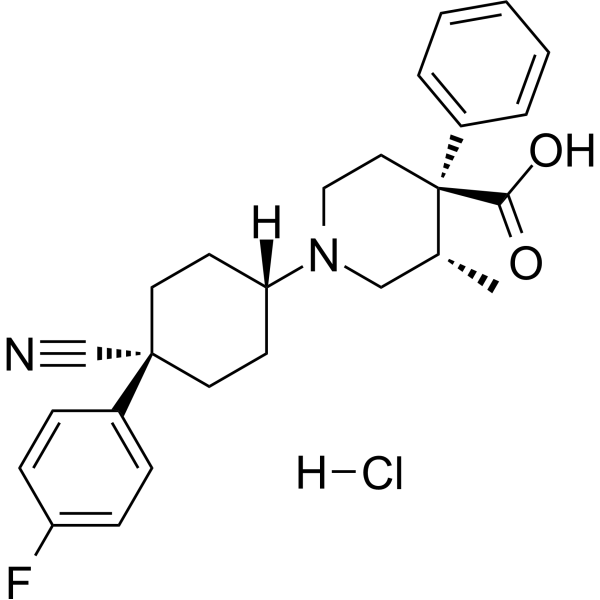
Levocabastine (R 50547) hydrochloride is a potent and selective histamine H1-receptor antagonist. Levocabastine hydrochloride is also a selective, high affinity neurotensin receptor subtype 2 (NTR2) antagonist, with a Ki of 17 nM for mNTR2. Levocabastine hydrochloride can act as a VLA-4 antagonist, interferes with conjunctival eosinophil infiltration in allergic conjunctivitis (AC) .
loading...
    loading...
Cat. No.: HY-172435
CAS No.: 1431754-15-2
Synonyms: AGN-232411; AG-80308; AGN-411
Research Areas:  

Neurological Disease

Rezuforimod (AGN-232411; AG-80308) is an ophthalmic solution targeting the formyl peptide receptor (FPR) pathway. Rezuforimod exerts anti-inflammatory effects by targeting the formyl peptide receptor pathway. Administered topically, Rezuforimod significantly reduces the corneal conjunctival staining score and improves ocular discomfort symptoms, with no serious adverse events reported and favorable overall safety profile. Rezuforimod shows remarkable potential to serve as a novel therapeutic option for dry eye disease .
loading...
    loading...
Cat. No.: HY-B0556A
CAS No.: 522-48-5
Synonyms: Tetryzoline hydrochloride
Target:  

Adrenergic Receptor

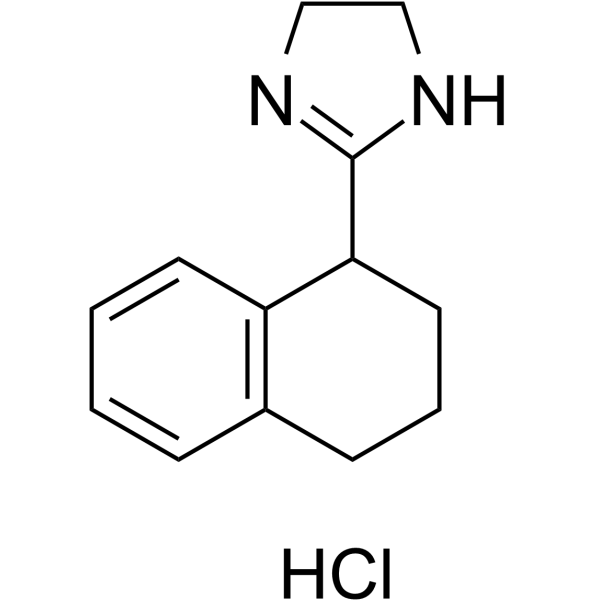
Tetrahydrozoline hydrochloride (Tetryzoline hydrochloride), a derivative of imidazoline, is an α-adrenergic agonist that causes vasoconstriction. Tetrahydrozoline hydrochloride is widely used for the research of nasal congestion and conjunctival congestion .
loading...
    loading...
Cat. No.: HY-106449
CAS No.: 203191-10-0
Purity:  ≥98.0%
Synonyms: DA-6034 free acid
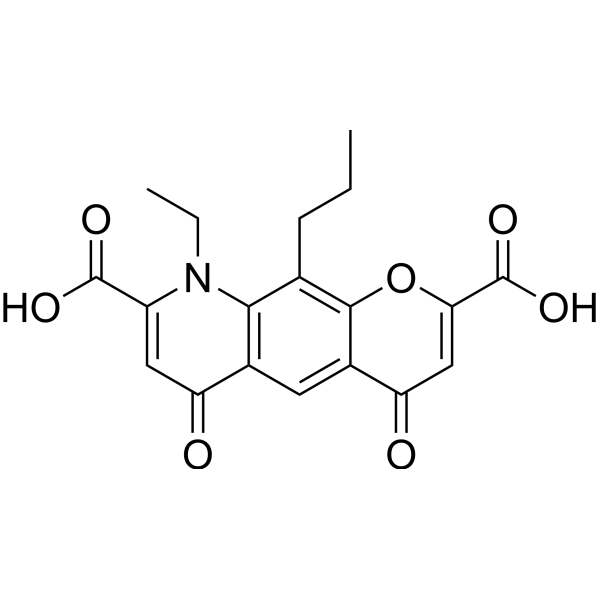
Recoflavone (DA-6034 (free acid)), a synthetic derivative of the flavonoid Eupatilin (HY-N0783), is orally active. Recoflavone can inhibit the NF-κB pathway and induce [Ca( 2+)]i increase in epithelial cells. Recoflavone exhibits activities such as anti-inflammation, anti-tumor effects, protection of gastric and intestinal mucosa, and promotion of secretion in the ocular surface and salivary glands. Recoflavone can be used for the research of diseases such as dry eye, gastric injury, and intestinal injury .
loading...
    loading...
Cat. No.: HY-14277
CAS No.: 79516-68-0
Synonyms: R 50547
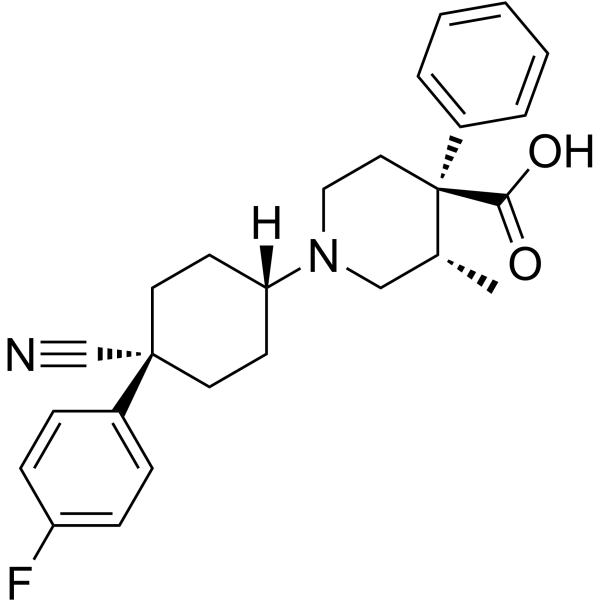
Levocabastine (R 50547) is a potent and selective histamine H1-receptor antagonist. Levocabastine hydrochloride is also a selective, high affinity neurotensin receptor subtype 2 (NTR2) antagonist, with a Ki of 17 nM for mNTR2. Levocabastine can act as a VLA-4 antagonist, interferes with conjunctival eosinophil infiltration in allergic conjunctivitis (AC) .
loading...
    loading...
Cat. No.: HY-116161A
CAS No.: 130209-76-6
Purity:  99.76%
Research Areas:  

Metabolic Disease

17-Phenyl trinor PGF2α isopropyl ester is a FP receptor agonist and intraocular pressure-lowering agent. 17-Phenyl trinor PGF2α isopropyl ester induces iris sphincter contraction, reduces intraocular pressure and pupil diameter, causes no ocular irritation, and only leads to mild conjunctival hyperemia. 17-Phenyl trinor PGF2α isopropyl ester is applicable to relevant research on glaucoma .
loading...
    loading...
Cat. No.: HY-B0556
CAS No.: 84-22-0
Synonyms: Tetryzoline
Target:  

Adrenergic Receptor

Research Areas:  

Cardiovascular Disease

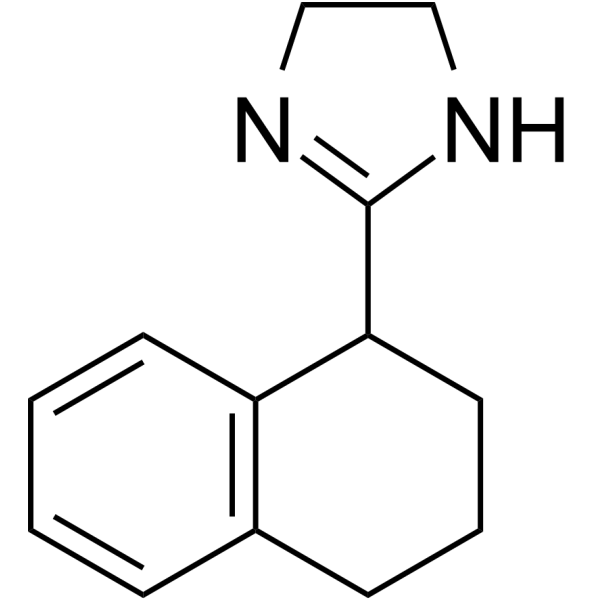
Tetrahydrozoline (Tetryzoline), a derivative of imidazoline, is an α-adrenergic agonist that causes vasoconstriction. Tetrahydrozoline is widely used for the research of nasal congestion and conjunctival congestion .
loading...
    loading...
Cat. No.: HY-B0556AS
CAS No.: 1246814-66-3
Synonyms: Tetryzoline-d4 hydrochloride
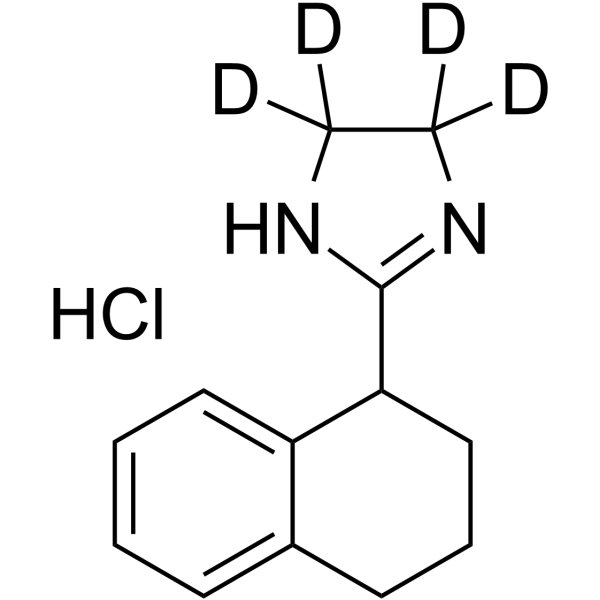
Tetrahydrozoline-d4 (hydrochloride) is the deuterium labeled Tetrahydrozoline hydrochloride. Tetrahydrozoline hydrochloride (Tetryzoline hydrochloride), a derivative of imidazoline, is an α-adrenergic agonist that causes vasoconstriction. Tetrahydrozoline hydrochloride is widely used for the research of nasal congestion and conjunctival congestion .
loading...
    loading...
Cat. No.: HY-117356A
CAS No.: 911391-37-2
Research Areas:  

Cancer

MRS2693 ammonium is a selective P2Y6 receptor agonist. MRS2693 ammonium exerts biological effects by activating the Gq-coupled P2Y6 receptor, the ERK1/2 pathway, and the P2RY6-PLCB3-CAMKK2-PRKAA1-ULK1 signaling cascade. MRS2693 ammonium attenuates TNFα-induced NF-κB activation, stabilizes XIAP via AKT-mediated phosphorylation, induces autophagy, and reactivates PRKAA1. MRS2693 ammonium can be used in research on diseases including skeletal muscle ischemia/reperfusion injury, TNFα-induced skeletal muscle apoptosis, chronic myelomonocytic leukemia, colorectal cancer, and dry eye disease .
loading...
    loading...
Cat. No.: HY-B0556B
CAS No.: 118201-38-0
Synonyms: Tetryzoline nitrate
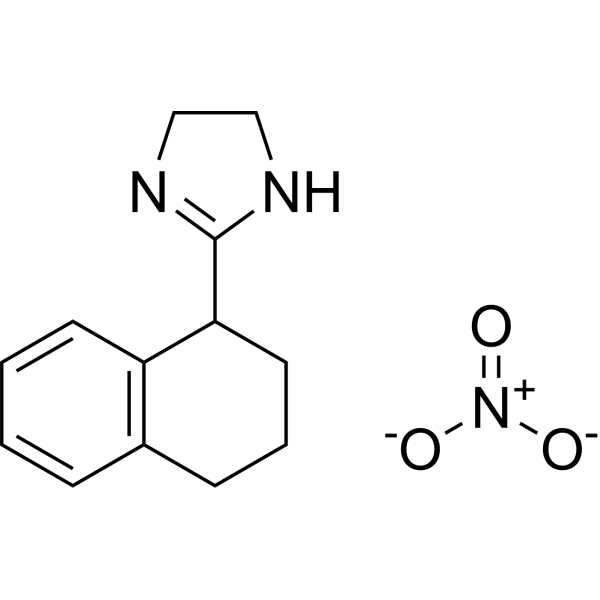
Tetrahydrozoline (Tetryzoline) nitrate , a derivative of imidazoline, is an α-adrenergic agonist that causes vasoconstriction. Tetrahydrozoline is widely used for the research of nasal congestion and conjunctival congestion .
loading...
    loading...
Cat. No.: HY-B0556AR
CAS No.: 522-48-5
Synonyms: Tetryzoline hydrochloride (Standard)
Tetrahydrozoline (hydrochloride) (Standard) is the analytical standard of Tetrahydrozoline (hydrochloride). This product is intended for research and analytical applications. Tetrahydrozoline hydrochloride (Tetryzoline hydrochloride), a derivative of imidazoline, is an α-adrenergic agonist that causes vasoconstriction. Tetrahydrozoline hydrochloride is widely used for the research of nasal congestion and conjunctival congestion .
loading...
    loading...
Cat. No.: HY-B0556R
CAS No.: 84-22-0
Synonyms: Tetryzoline (Standard)
Tetrahydrozoline (Standard) is the analytical standard of Tetrahydrozoline. This product is intended for research and analytical applications. Tetrahydrozoline (Tetryzoline), a derivative of imidazoline, is an α-adrenergic agonist that causes vasoconstriction. Tetrahydrozoline is widely used for the research of nasal congestion and conjunctival congestion .
loading...
    loading...
Cat. No.: HY-123195
CAS No.: 197917-10-5
Target:  

Interleukin Related

Research Areas:  

Cancer

CK-119 is a potent interleukin-1 blocker. CK-119 inhibits the cell growth of fibroblast-like corneal and conjunctival cells, mainly by inhibiting DNA and RNA syntheses .
loading...
    loading...
Cat. No.: HY-106037
CAS No.: 53764-90-2
Research Areas:  

Others

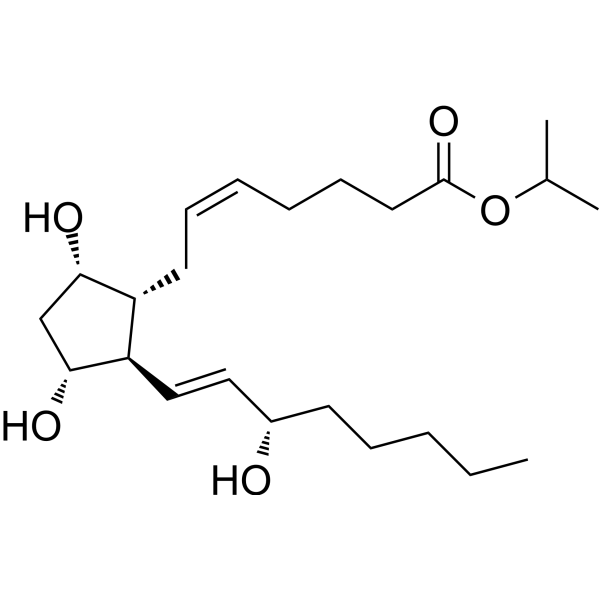
PGF2α-isopropyl ester is a Prostaglandin F2α (HY-12956) derivative, which is active in lowering the intraocular pressure (IOP) through increased uveoscleral outflow of aqueous humor. PGF2α-isopropyl ester causes side effects of conjunctival hyperemia and ocular irritation .
loading...
    loading...
Cat. No.: HY-14277AR
CAS No.: 79547-78-7
Synonyms: R 50547 hydrochloride (Standard)
Levocabastine (hydrochloride) (Standard) is the analytical standard of Levocabastine (hydrochloride). This product is intended for research and analytical applications. Levocabastine (R 50547) hydrochloride is a potent and selective histamine H1-receptor antagonist. Levocabastine hydrochloride is also a selective, high affinity neurotensin receptor subtype 2 (NTR2) antagonist, with a Ki of 17 nM for mNTR2. Levocabastine hydrochloride can act as a VLA-4 antagonist, interferes with conjunctival eosinophil infiltration in allergic conjunctivitis (AC) .
loading...
    loading...
Cat. No.: HY-176859
Target:  

Apoptosis

Research Areas:  

Cancer

[Ru(dpp)(bpy)(mtmp)](PF6)2 (Compound 5) is a trisheteroleptic ruthenium complex. [Ru(dpp)(bpy)(mtmp)](PF6)2 has a light-activated anticancer activity. [Ru(dpp)(bpy)(mtmp)](PF6)2 can selectively cleave off upon green light irradiation, thereby releasing a phototoxic ruthenium-based photoproduct that binds to nuclear DNA, induces DNA damage and apoptosis in cancer cells. [Ru(dpp)(bpy)(mtmp)](PF6)2 can be used for phototherapy of cancers like conjunctival melanoma research .
loading...
    loading...
Cat. No.: HY-109141
CAS No.: 1498299-91-4
Target:  

Sodium Channel

Research Areas:  

Neurological Disease

Voluloride is a conjunctival epithelial cell sodium channel (ENaC) blocker. Voluloride can be used for the study of eye diseases .
loading...
    loading...
Cat. No.: HY-106449R
CAS No.: 203191-10-0
Synonyms: DA-6034 free acid (Standard)
Recoflavone (Standard) is the analytical standard of Recoflavone (HY-106449). This product is intended for research and analytical applications. Recoflavone (DA-6034 (free acid)), a synthetic derivative of the flavonoid Eupatilin (HY-N0783), is orally active. Recoflavone can inhibit the NF-κB pathway and induce [Ca(2+)]i increase in epithelial cells. Recoflavone exhibits activities such as anti-inflammation, anti-tumor effects, protection of gastric and intestinal mucosa, and promotion of secretion in the ocular surface and salivary glands. Recoflavone can be used for the research of diseases such as dry eye, gastric injury, and intestinal injury .
loading...
    loading...
Cat. No.: HY-183076
CAS No.: 215778-00-0
Target:  

Bacterial

Research Areas:  

Infection

AW00718 is a Brachyspira pilosicoli glutamate racemase (Bp-MurI) inhibitor. AW00718 binds to Bp-MurI active site residues, forming stable hydrogen bonds and interactions with conserved amino acids in the enzyme’s binding cavity. AW00718 exerts antibacterial and bactericidal activity against Brachyspira pilosicoli in vitro. AW00718 can be used for the research of intestinal spirochaetosis .
loading...
    loading...
Cat. No.: HY-105789
CAS No.: 538-03-4
Target:  

HIV Bacterial

Research Areas:  

Infection Inflammation/Immunology

Oxophenarsine hydrochloride is an anti-syphilitic agent, and also has non-classical applications including treating chronic discoid lupus erythematosus, inhibiting HIV-1 protein synthesis, and prolonging the duration of insulin action . Oxophenarsine hydrochloride forms an unstable insulin complex via sulfhydryl groups or free amino groups, thereby prolonging the hypoglycemic effect of insulin. Oxophenarsine hydrochloride inhibits HIV-1-specific protein synthesis and virus production .
loading...
    loading...
  • 1

