44 Results for "

dermatological

" in MedChemExpress (MCE) Product Catalog:
Products (44)

44 Results for "dermatological" in MCE Product Catalog:

13
13 Publications Verification
Referencia número: HY-B0715
No. CAS: 6493-05-6
Synonyms: BL-191; PTX; Oxpentifylline
Pentoxifylline (BL-191), a haemorheological agent, is an orally active non-selective phosphodiesterase (PDE) inhibitor, with immune modulation, anti-inflammatory, hemorheological, anti-fibrinolytic and anti-proliferation effects. Pentoxifylline can be used for the research of peripheral vascular disease, cerebrovascular disease and a number of other conditions involving a defective regional microcirculation .
loading...
    loading...
4
4 Cited Publications
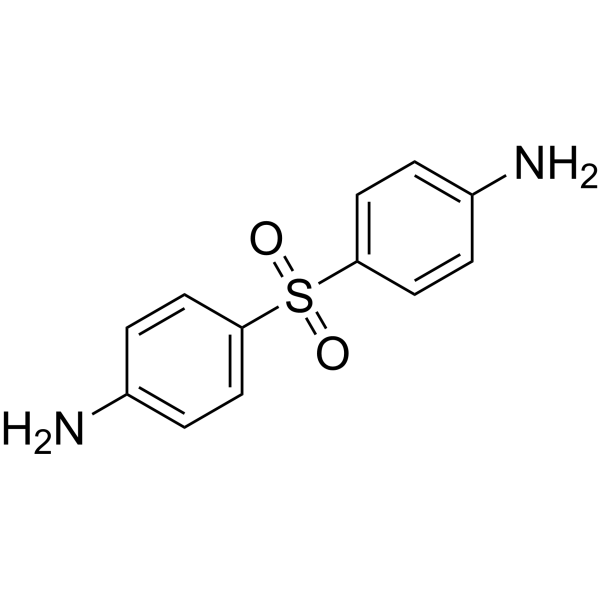
Referencia número: HY-B0688
No. CAS: 80-08-0
Synonyms: 4,4′-Diaminodiphenyl sulfone; DDS
Dapsone (4,4′-Diaminodiphenyl sulfone) is an orally active and blood-brain penetrant sulfonamide antibiotic with bacteriostatic, antimycobacterial and antiprotozoal activities . Dapsone?exerts effective antileprosy activity?and inhibits folate synthesis in cell extracts of?M. leprae. Dapsone is used for dermatologic disorder research, including leprosy, dermatitis herpetiformis, acne vulgaris et al .
loading...
    loading...
3
3 Cited Publications
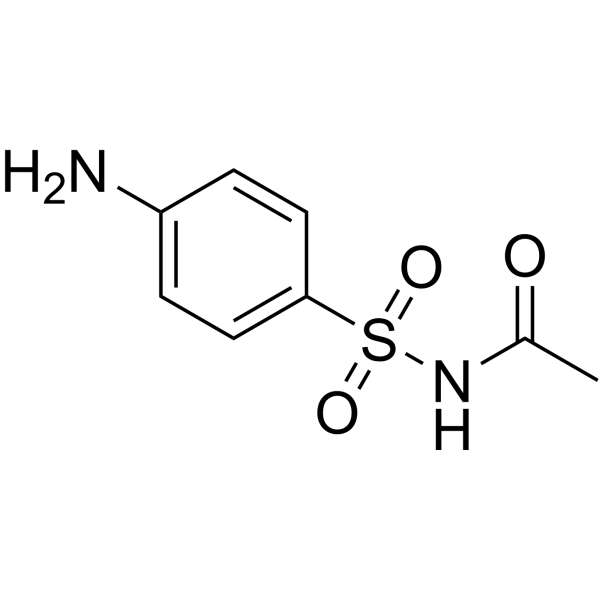
Referencia número: HY-N7123
No. CAS: 144-80-9
Synonyms: Sulphacetamide
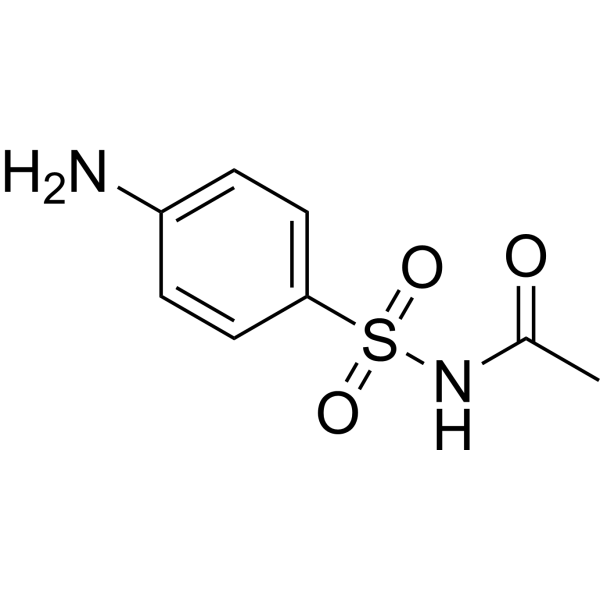
Sulfacetamide (Sulphacetamide) is a sulfonamide antibiotic. Sulfacetamide has antifungal and antibacterial activities. Sulfacetamide is employed as a topical formulation in various ophthalmic, dermatological, and hair solutions against bacterial infections, acne and scalp conditions. Sulfacetamide targets bacterial folic acid synthesis and is effective against various gram-positive and gram-negative bacteria. Sulfacetamide inhibits the synthesis of both dihydro-folic acid and para-aminobenzoic acid. Sulfacetamide can be used for the study of ocular infections .
loading...
    loading...
1
1 Cited Publications
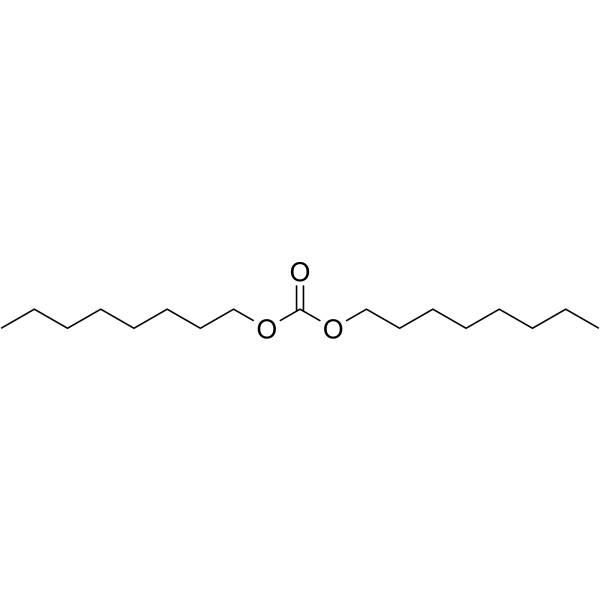
Referencia número: HY-135737
No. CAS: 1680-31-5
Pureza:  ≥98.0%
Synonyms: Dioctyl carbonate
Dicaprylyl carbonate, a solid, plant-derived fat, is a dry emollient. Dicaprylyl carbonate has excellent dermatological compatibility and a comprehensive performance profile, such as solubilizing and dispersing ability for sun-care filters .
loading...
    loading...
Referencia número: HY-B0633E
No. CAS: 9004-61-9
Synonyms: Hyaluronan, low endotoxin; Hyaluronate, low endotoxin
Hyaluronic acid, low endotoxin (Hyaluronan, low endotoxin) is a biopolymer composed of repeating disaccharide units containing low levels of endotoxin. Hyaluronic acid is a major component of the extracellular matrix (ECM). It is synthesized on the plasma membrane. Hyaluronic acid exerts its effects by binding to receptors CD44 and RHAMM. Hyaluronic acid activates PI3K-Akt signaling. Hyaluronic acid also enhances cell invasion and angiogenesis by promoting or stimulating the binding of proteolytic MMP-9 to the cell surface. Elevated hyaluronic acid levels are associated with tumor cell growth, adhesion, migration, invasion, and angiogenesis in digestive system cancers. Hyaluronic acid is involved in tissue remodeling and rapid cell proliferation in several physiological processes, including embryonic morphogenesis and wound healing. Hyaluronic acid can be used as a regulator of cancer-associated lymphangiogenesis. Hyaluronic acid can be used as a drug delivery carrier for sodium butyrate, enhancing its anti-proliferative activity against breast cancer cell lines. Hyaluronic acid can lubricate the corneal endothelium. Hyaluronic acid can improve tissue hydration and enhance the resistance of cells to mechanical damage. Hyaluronic acid has been conjugated with antibodies to ensure that the active compound continues to exert its effects at the site of inflammation. Hyaluronic acid can be used in research in the fields of osteoarthritis, ophthalmology, cosmetic dermatology, oncology, and liver diseases .
loading...
    loading...
Referencia número: HY-B0633D
No. CAS: 9067-32-7
Hyaluronic acid sodium (MW 200-1560) is a biopolymer composed of repeating disaccharide units, with a molecular weight of 200-1560. Hyaluronic acid sodium is a major component of the extracellular matrix (ECM). It is synthesized on the plasma membrane. Hyaluronic acid sodium exerts its effects by binding to receptors CD44 and RHAMM. Hyaluronic acid sodium activates PI3K-Akt signaling. Hyaluronic acid sodium also enhances cell invasion and angiogenesis by promoting or stimulating the binding of proteolytic MMP-9 to the cell surface. Elevated hyaluronic acid levels are associated with tumor cell growth, adhesion, migration, invasion, and angiogenesis in digestive system cancers. Hyaluronic acid sodium is involved in tissue remodeling and rapid cell proliferation in several physiological processes, including embryonic morphogenesis and wound healing. Hyaluronic acid sodium can be used as a regulator of cancer-associated lymphangiogenesis. Hyaluronic acid sodium can be used as a drug delivery carrier for sodium butyrate, enhancing its anti-proliferative activity against breast cancer cell lines. Hyaluronic acid sodium can lubricate the corneal endothelium. Hyaluronic acid sodium can improve tissue hydration and enhance the resistance of cells to mechanical damage. Hyaluronic acid sodium has been conjugated with antibodies to ensure that the active compound continues to exert its effects at the site of inflammation. Hyaluronic acid sodium can be used in research in the fields of osteoarthritis, ophthalmology, cosmetic dermatology, oncology, and liver diseases .
loading...
    loading...
Referencia número: HY-176949
No. CAS: 3092076-19-9
Target:  

STAT

Áreas de investigación:  

Inflammation/Immunology

STAT6-IN-10 is a STAT6 (signal transducer and activator of transcription 6) inhibitor with an EC50 of 2 nM. STAT6-IN-10 can inhibit the secretion of CCL17 in human peripheral whole blood. STAT6-IN-10 can be used in the research of dermatological and respiratory system diseases .
loading...
    loading...
Referencia número: HY-164159
No. CAS: 130603-71-3
Áreas de investigación:  

Inflammation/Immunology

α-Glucosylrutin, a flavonoid, is a potent antioxidant with free radical scavenging activity. α-Glucosylrutin reduces MMP-1 gene expression, protein expression, and enzyme activity, and reduces MMP-2 protein expression and enzyme activity in UVA-irradiated human dermal fibroblasts. α-Glucosylrutin prevents oxidative stress-induced intracellular tyrosine residue phosphorylation and counteracts intracellular thiol level depletion in human skin cells. α-Glucosylrutin is effective in the prevention of dermatologic diseases in which oxidative stress is of pathogenetic relevance, e.g. in polymorphous light eruption (PLE). α-Glucosylrutin can be used for the research of UV-induced skin photodamage/photoaging .
loading...
    loading...
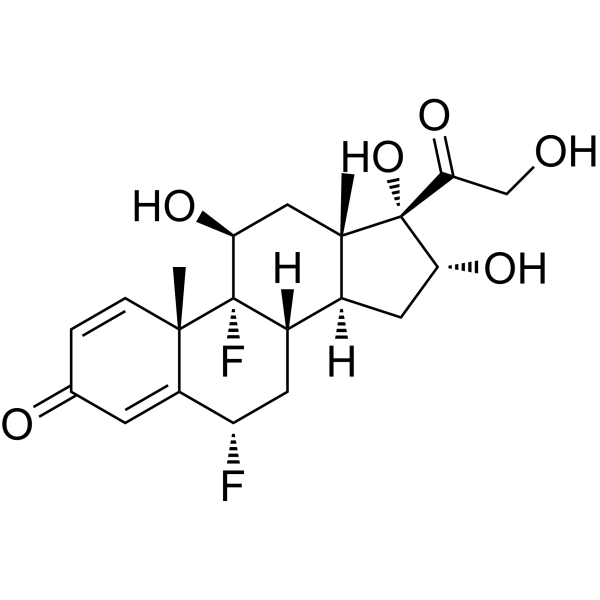
Referencia número: HY-136642
No. CAS: 807-38-5
Pureza:  99.66%
Áreas de investigación:  

Inflammation/Immunology

Fluocinolone is a potent steroid with highly selective glucocorticoid receptor agonist activity. Fluocinolone stabilizes the blood-retinal barrier by enhancing endothelial tight junctions, inhibiting the VEGF pathway and inflammatory factors. Fluocinolone has high lipophilicity, enabling long-term sustained release in the vitreous. Fluocinolone is used in research related to dermatological diseases, diabetic macular edema, uveitis and oral lichen planus .
loading...
    loading...
Referencia número: HY-116691
No. CAS: 74050-20-7
Pureza:  99.43%
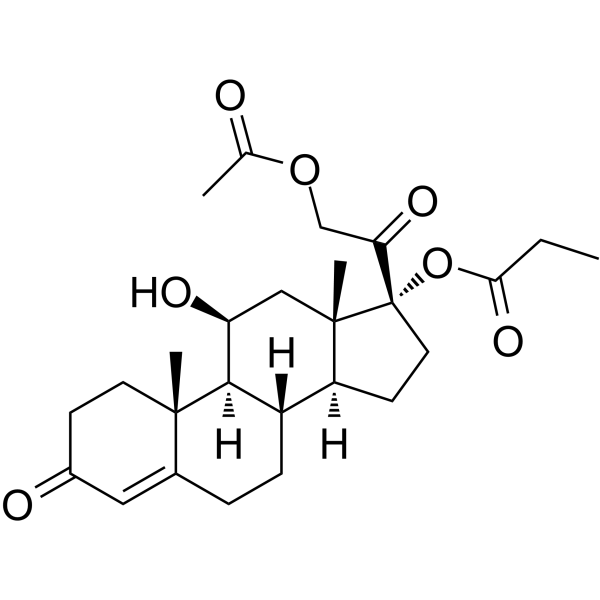
Synonyms: Hydrocortisone 17-propionate 21-acetate
Áreas de investigación:  

Neurological Disease Inflammation/Immunology

Hydrocortisone aceponate (Hydrocortisone 17-propionate 21-acetate) is a diester-based topical glucocorticoid. Hydrocortisone aceponate alleviates symptoms such as erythema, dryness/desquamation, pruritus, epidermal exfoliation, and exudation/crusting. Hydrocortisone aceponate causes extremely few adverse reactions. Hydrocortisone aceponate is applicable to various dermatological disease studies .
loading...
    loading...
Referencia número: HY-19443
No. CAS: 299460-62-1
Áreas de investigación:  

Inflammation/Immunology

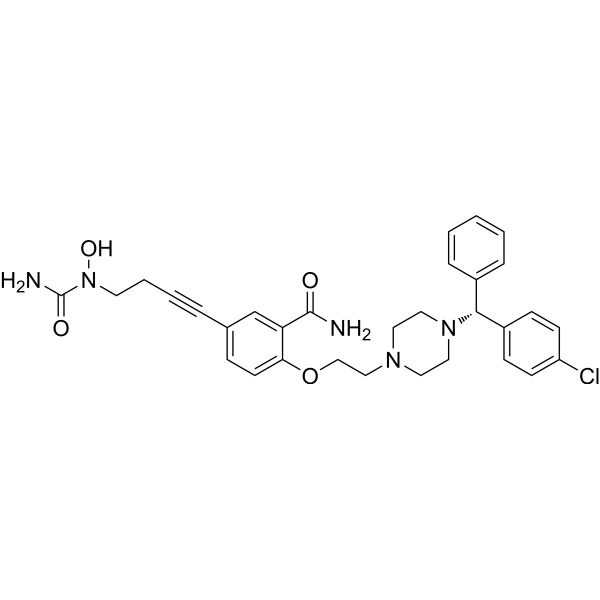
UCB-35440 is an orally active histamine H1 receptor antagonist and 5-lipoxygenase inhibitor. UCB-35440 can be used for the research of dermatologic inflammatory conditions .
loading...
    loading...
Referencia número: HY-P5898
No. CAS: 155026-49-6
Synonyms: Z-Val-Val-Nle-CHN2
Target:  

Cathepsin MHC

Áreas de investigación:  

Inflammation/Immunology

Z-Val-Val-Nle-diazomethylketone is a cathepsin S (CATS) inhibitor. Z-Val-Val-Nle-diazomethylketone significantly inhibits the IFNg-induced upregulation of the MHCII molecules HLA-DR and Ii-p33/35 with an increase of Ii-p10 protein level. Z-Val-Val-Nle-diazomethylketone can be used for dermatological diseases like psoriasis, atopic dermatitis and actinic keratosis research .
loading...
    loading...
Referencia número: HY-B0688S2
No. CAS: 1632119-29-9
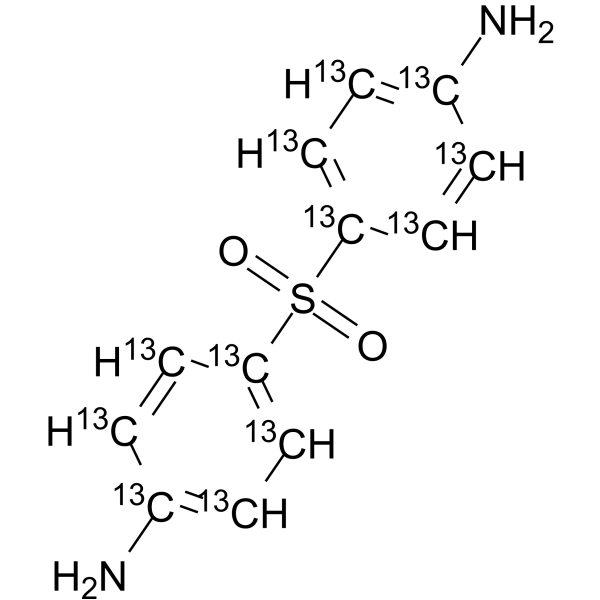
Synonyms: 4,4′-Diaminodiphenyl sulfone-13C12; DDS-13C12
Dapsone- 13C12 is the 13C12 labeled Dapsone (HY-B0688). Dapsone (4,4′-Diaminodiphenyl sulfone) is an orally active and blood-brain penetrant sulfonamide antibiotic with bacteriostatic, antimycobacterial and antiprotozoal activities. Dapsone exerts effective antileprosy activity and inhibits folate synthesis in cell extracts of M. leprae. Dapsone is used for dermatologic disorder research, including leprosy, dermatitis herpetiformis, acne vulgaris et al .
loading...
    loading...
Referencia número: HY-148400
No. CAS: 913541-96-5
Synonyms: TXC hydrochloride
Áreas de investigación:  

Metabolic Disease

Cetyl tranexamate (TXC) hydrochloride is an ester derivative of Tranexamic acid (HY-B0149). Cetyl tranexamate hydrochloride is an inhibitor of fibrinogen activation and can reduce the production of fibrinogen in keratinocytes induced by ultraviolet rays or damage, indirectly inhibiting the melanin production pathway. Cetyl tranexamate hydrochloride also targets melanin (dark spots) and hemoglobin (red spots), reducing vascular dilation and pigmentation by inhibiting inflammatory mediators (such as prostaglandins, platelet activating factors). Cetyl tranexamate hydrochloride can be used as a cosmetic ingredient and is suitable for epidermal pigment disorders such as photoaging, post-inflammatory hyperpigmentation (PIH), and melasma .
loading...
    loading...
Referencia número: HY-W013521
No. CAS: 6259-76-3
Hexyl salicylate is a type of salicylic acid ester fragrance component used in cosmetics, household cleaners and detergents, featuring a gentle, floral/herbaceous sweet scent .
loading...
    loading...
Referencia número: HY-107810
No. CAS: 71748-57-7
Target:  

RAR/RXR

Áreas de investigación:  

Cancer

Methyl 13-cis-4-oxoretinoate (Compound 4b) is a retinoic acid receptors (RARs) agonist. Methyl 13-cis-4-oxoretinoate is promising for research of dermatological diseases (e.g., disorders related to abnormal differentiation of keratinocytes) and cancers .
loading...
    loading...
Referencia número: HY-177077
No. CAS: 2379980-45-5
Áreas de investigación:  

Inflammation/Immunology

Davalomilast (Example 100) is an PDE4 inhibitor with anti-inflammatory property. Davalomilast can be studied in research for autoimmune diseases and dermatology research .
loading...
    loading...
Referencia número: HY-B0688S1
No. CAS: 1346602-12-7
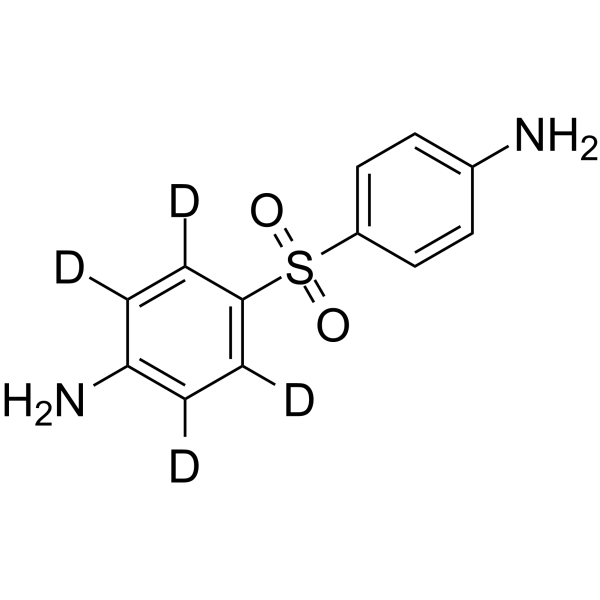
Synonyms: 4,4′-Diaminodiphenyl sulfone-d4; DDS-d4
Dapsone-d4 is the deuterium labeled Dapsone. Dapsone (4,4′-Diaminodiphenyl sulfone) is an orally active and blood-brain penetrant sulfonamide antibiotic with bacteriostatic, antimycobacterial and antiprotozoal activities . Dapsone?exerts effective antileprosy activity?and inhibits folate synthesis in cell extracts of?M. leprae. Dapsone is used for dermatologic disorder research, including leprosy, dermatitis herpetiformis, acne vulgaris et al .
loading...
    loading...
Referencia número: HY-116691R
No. CAS: 74050-20-7
Synonyms: Hydrocortisone 17-propionate 21-acetate (Standard)
Hydrocortisone aceponate (Hydrocortisone 17-propionate 21-acetate) Standard is the analytical standard of Hydrocortisone aceponate (HY-116691). This product is intended for research and analytical applications. Hydrocortisone aceponate (Hydrocortisone 17-propionate 21-acetate) is a diester-based topical glucocorticoid. Hydrocortisone aceponate alleviates symptoms such as erythema, dryness/desquamation, pruritus, epidermal exfoliation, and exudation/crusting. Hydrocortisone aceponate causes extremely few adverse reactions. Hydrocortisone aceponate is applicable to various dermatological disease studies .
loading...
    loading...
Referencia número: HY-N7123R
No. CAS: 144-80-9
Synonyms: Sulphacetamide (Standard)
Sulfacetamide (Standard) (Sulphacetamide (Standard)) is the analytical standard of Sulfacetamide (HY-N7123). This product is intended for research and analytical applications. Sulfacetamide (Sulphacetamide) is a sulfonamide antibiotic. Sulfacetamide has antifungal and antibacterial activities. Sulfacetamide is employed as a topical formulation in various ophthalmic, dermatological, and hair solutions against bacterial infections, acne and scalp conditions. Sulfacetamide targets bacterial folic acid synthesis and is effective against various gram-positive and gram-negative bacteria. Sulfacetamide inhibits the synthesis of both dihydro-folic acid and para-aminobenzoic acid. Sulfacetamide can be used for the study of ocular infections .
loading...
    loading...

