20 Results for "

diastolic blood pressure

" in MedChemExpress (MCE) Product Catalog:
Products (20)

20 Results for "diastolic blood pressure" in MCE Product Catalog:

8
8 Publications Verification
Cat. No.: HY-19870
CAS No.: 920014-72-8
Synonyms: RM-493; BIM-22493; IRC-022493
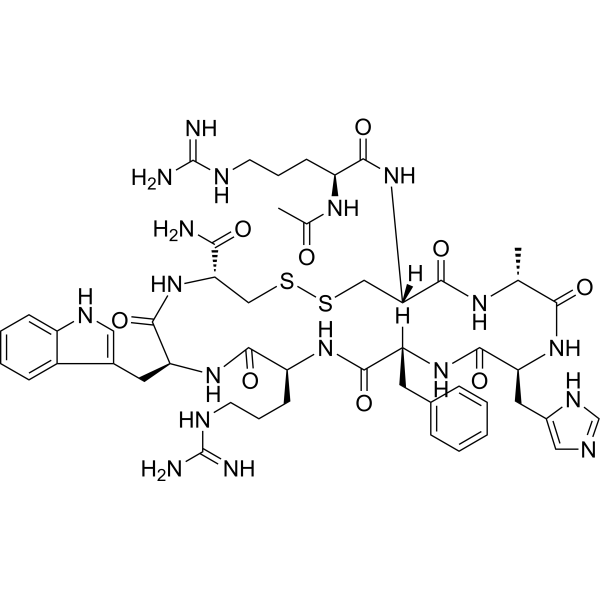
Setmelanotide (RM-493) is a blood-brain barrier-permeable, selective MC4R agonist with a Ki value of 2.1 nM for hMC4R. Setmelanotide activates the CaMKK2/AMPK signaling pathway. Setmelanotide mediates body weight homeostasis, feeding regulation and energy expenditure modulation; it reduces food intake, induces weight loss, decreases obesity severity, increases daytime activity and energy expenditure, lowers levels of leptin, triglycerides, fasting insulin and diastolic blood pressure, improves insulin sensitivity, glucose tolerance and fatty liver condition, and reverses respiratory depression. Setmelanotide is applicable to research related to obesity, hyperinsulinemia, fatty liver and respiratory depression .
loading...
    loading...
8
8 Publications Verification
Cat. No.: HY-19870C
CAS No.: 2759937-80-7
Synonyms: RM-493 monoacetate; BIM-22493 monoacetate; IRC-022493 monoacetate
Setmelanotide monoacetate (RM-493 monoacetate) is a blood-brain barrier-permeable, selective MC4R agonist with a Ki value of 2.1 nM for hMC4R. Setmelanotide monoacetate activates the CaMKK2/AMPK signaling pathway. Setmelanotide monoacetate mediates body weight homeostasis, feeding regulation and energy expenditure modulation; it reduces food intake, induces weight loss, decreases obesity severity, increases daytime activity and energy expenditure, lowers levels of leptin, triglycerides, fasting insulin and diastolic blood pressure, improves insulin sensitivity, glucose tolerance and fatty liver condition, and reverses respiratory depression. Setmelanotide monoacetate is applicable to research related to obesity, hyperinsulinemia, fatty liver and respiratory depression .
loading...
    loading...
3
3 Cited Publications
Cat. No.: HY-B2209
CAS No.: 13422-51-0
Synonyms: Vitamin B12a
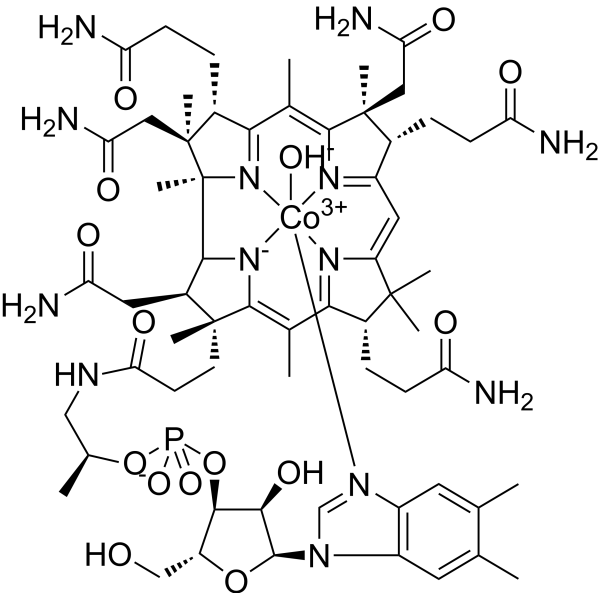
Hydroxocobalamin (Vitamin B12a) is a cyanide antidote. Hydroxocobalamin can decrease the cell and plasma cyanide concentrations and increase survival rate in acute cyanide poisoning. Hydroxocobalamin can improve newborn Cbl-C defect-induced metabolic profile and neurocognitive outcome. Hydroxocobalamin can normalize Vitamin B12 deficiency. Hydroxocobalamin can induce acute kidney injury. Hydroxocobalamin can be used for the researches of metabolic and neurological disease .
loading...
    loading...
2
2 Cited Publications
Cat. No.: HY-123268A
CAS No.: 250580-70-2
Purity:  95.16%
Target:  

Adrenergic Receptor

Research Areas:  

Cardiovascular Disease

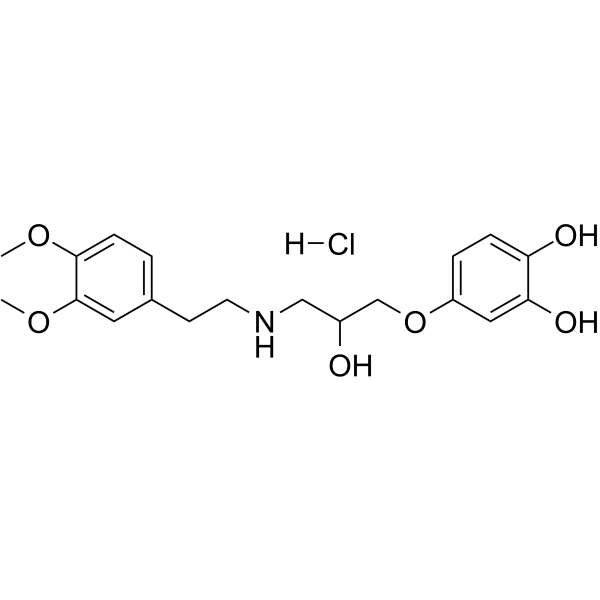
Ro 363 hydrochloride, an effective inotropic stimulant, is a potent and highly selective β1-adrenoceptor agonist. Ro 363 hydrochloride is a cardiovascular modulator that reduces diastolic blood pressure and pronounces increases in myocardial contractility .
loading...
    loading...
Cat. No.: HY-W005255
CAS No.: 621-54-5
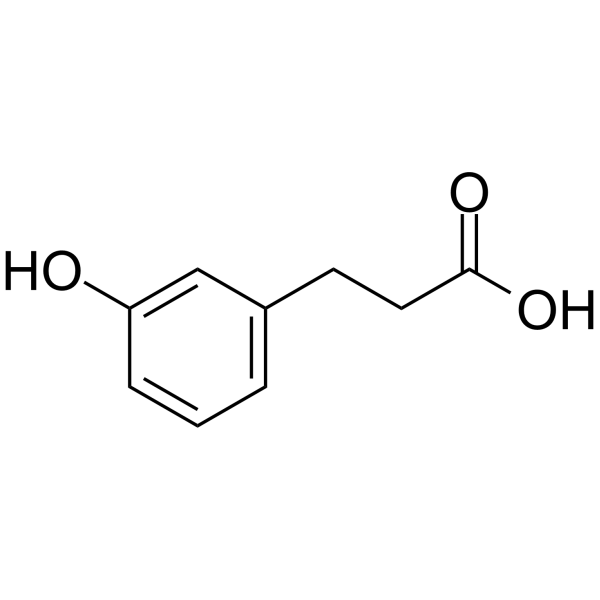
3-(3-Hydroxyphenyl)propionic acid (3HPPA) is an endothelium-dependent nitric oxide (NO) release promoter and endothelial nitric oxide synthase (eNOS) activator. 3-(3-Hydroxyphenyl)propionic acid activates eNOS to mediate vascular smooth muscle relaxation and enhances endothelial cell NO synthesis, inducing vasodilation and reducing peripheral vascular resistance. 3-(3-Hydroxyphenyl)propionic acid can dose-dependently reduce systolic and diastolic blood pressure in spontaneously hypertensive rats (SHR) without affecting cardiac contractility or heart rate. 3-(3-Hydroxyphenyl)propionic acid has antihypertensive and vascular protective effects and can be used in the prevention and treatment of cardiovascular diseases .
loading...
    loading...
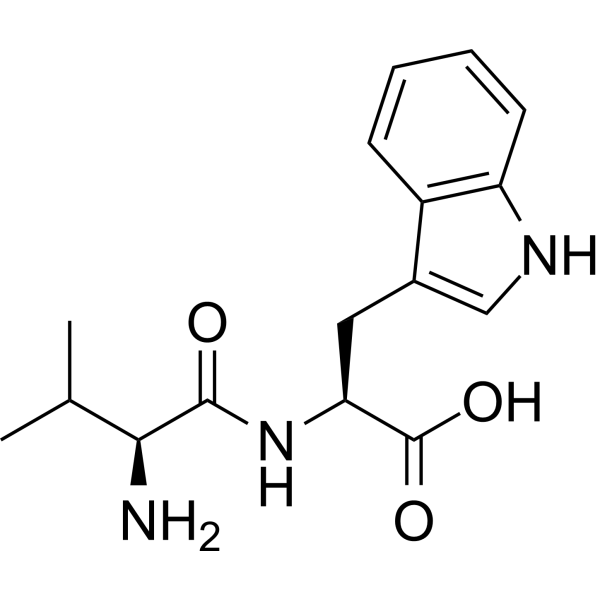
Cat. No.: HY-118060
CAS No.: 24587-37-9
Purity:  97.89%
Synonyms: N-Valyltryptophan; Val-Trp
Dipeptide 2 (N-Valyltryptophan) is an orally active, competitive angiotensin-converting enzyme (ACE) inhibitory peptide with an IC50 of 10.50 μM. Dipeptide 2 reduces intracellular Calcium ions. Dipeptide 2 significantly increases the content of NO, inhibits the production of ET-1, and induces the phosphorylation of eNOS. Dipeptide 2 decreases the systolic and diastolic blood pressure of spontaneously hypertensive rats .
loading...
    loading...
Cat. No.: HY-19664
CAS No.: 99522-79-9
Synonyms: OPC-13340
Research Areas:  

Cardiovascular Disease

Pranidipine (OPC-13340) is an orally active L-type voltage-dependent calcium channel (L-VDCC) blocker with a Ki value of 0.16 nM. Pranidipine inhibits calcium-induced contraction, suppresses slow-response action potentials, shortens action potential duration, reduces systolic and diastolic blood pressure, and exerts vasodilatory effects. Pranidipine enhances its vasodilatory effect by blocking NO decomposition. Pranidipine can be used in research related to essential hypertension, angina pectoris, myocardial infarction, and dilated cardiomyopathy .
loading...
    loading...
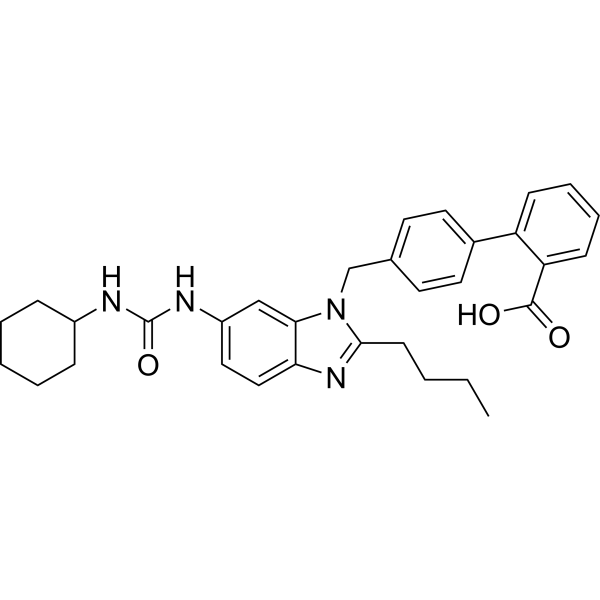
Cat. No.: HY-19732
CAS No.: 133085-33-3
Target:  

Angiotensin Receptor

Research Areas:  

Cardiovascular Disease

BIBS 39 is a non-peptide angiotensin II receptor antagonist with antihypertensive activity, with higher affinity for the AT1 receptor than for the AT2 receptor. BIBS 39 competitively blocks AT1-mediated vasoconstriction and pressor responses, and effectively inhibits the activity of the renin-angiotensin-aldosterone system. BIBS 39 reduces diastolic blood pressure and induces mild, transient reflex tachycardia, with no off-target functional activity on the norepinephrine, K +/Cl or vasopressin pathways. BIBS 39 can be used in research related to hypertension and renal hypertension [1][2 ][3].
loading...
    loading...
Cat. No.: HY-123268
CAS No.: 74513-77-2
Target:  

Adrenergic Receptor

Research Areas:  

Cardiovascular Disease

Ro 363, an effective inotropic stimulant, is a potent and highly selective β1-adrenoceptor agonist. RO 363 is a cardiovascular modulator that reduces diastolic blood pressure and pronounces increases in myocardial contractility .
loading...
    loading...
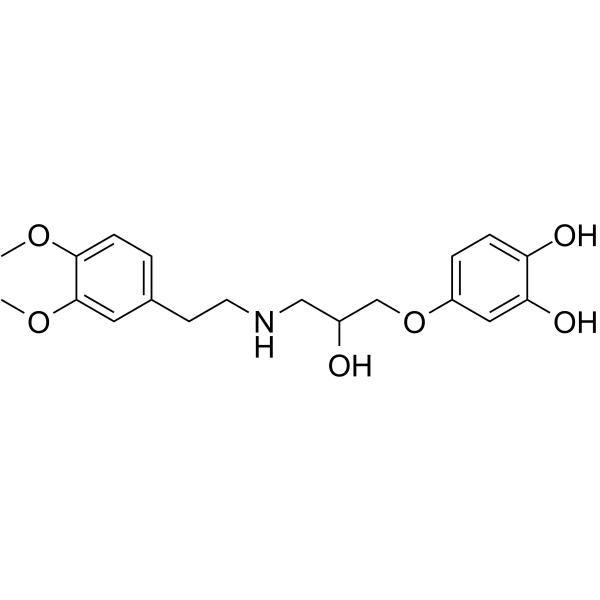
Cat. No.: HY-122215
CAS No.: 62774-96-3
Synonyms: N-696
Target:  

Adrenergic Receptor

Research Areas:  

Endocrinology

Tilisolol hydrochloride (N-696) is a non-selective β-adrenergic antagonist with vasodilatory and hypotensive activities. Tilisolol hydrochloride exerts its effects in canine coronary arteries by opening ATP-sensitive K+ channels. Tilisolol hydrochloride exhibits concentration-dependent relaxation in KCl-precontracted rat thoracic aorta. Tilisolol hydrochloride reduces diastolic blood pressure in a dose-dependent manner and slightly increases heart rate in spinal cord stimulated rats .
loading...
    loading...
Cat. No.: HY-Z7733
CAS No.: 72956-44-6
Synonyms: Desmethylcarvedilol; BM-14242
Target:  

Calcium Channel

Research Areas:  

Metabolic Disease

O-Desmethylcarvedilol (Desmethylcarvedilol) is an active metabolite of the non-selective β-adrenergic receptor (β-AR) antagonist Carvedilol (HY-B0006). O-Desmethylcarvedilol inhibits store-overload-induced calcium release in HEK293 cells expressing the ryanodine receptor 2 (RyR2) R4496C (RyR2 R4496C) mutation (IC50 = 7.62 µM). O-Desmethylcarvedilol reduces increases in heart rate and prevents decreases in diastolic blood pressure induced by Isoproterenol (HY-B0468) in conscious rabbits (ED50s = 32 and 5 µg/kg, respectively) .
loading...
    loading...
Cat. No.: HY-19870A
Synonyms: RM-493 TFA; BIM-22493 TFA; IRC-022493 TFA
Setmelanotide TFA (RM-493 TFA) is a blood-brain barrier-permeable, selective MC4R agonist with a Ki value of 2.1 nM for hMC4R. Setmelanotide TFA activates the CaMKK2/AMPK signaling pathway. Setmelanotide TFA mediates body weight homeostasis, feeding regulation and energy expenditure modulation; it reduces food intake, induces weight loss, decreases obesity severity, increases daytime activity and energy expenditure, lowers levels of leptin, triglycerides, fasting insulin and diastolic blood pressure, improves insulin sensitivity, glucose tolerance and fatty liver condition, and reverses respiratory depression. Setmelanotide TFA is applicable to research related to obesity, hyperinsulinemia, fatty liver and respiratory depression .
loading...
    loading...
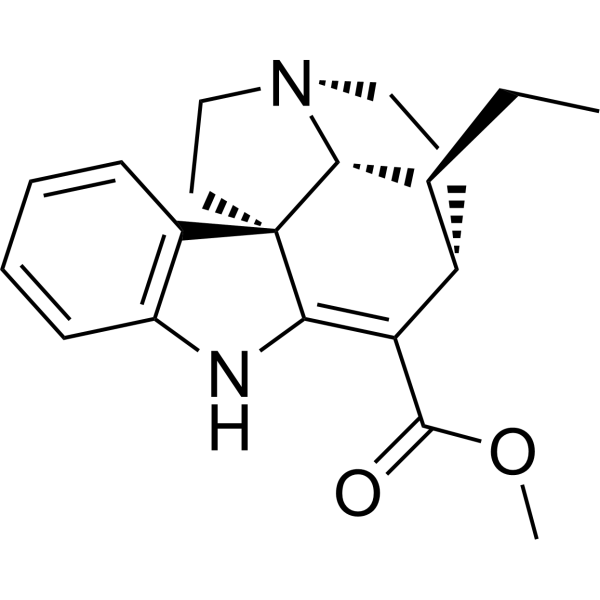
Cat. No.: HY-N1115
CAS No.: 6711-69-9
Synonyms: (+)-Tubotaiwine; NSC 306222; Tubotaiwin
Tubotaiwine ((+)-Tubotaiwine), an alkaloid, has beneficial effect on cadmium (Cd) induced hypertension in rats. Tubotaiwine regulates systolic, diastolic and mean arterial blood pressure of the Cd exposed rats. Tubotaiwine reduces arterial stiffness, inhibits of oxidative stress and increases vascular remodeling .
loading...
    loading...
Cat. No.: HY-W416440
CAS No.: 83356-60-9
Synonyms: ASL-8123 hydrochloride
Esmolol acid (ASL-8123) hydrochloride is a weak β-adrenergic receptor antagonist. Esmolol acid hydrochloride inhibits the heart rate and diastolic blood pressure response induced by Isoproterenol (HY-B0468) in a dose-dependent manner and can be used in studies of renal failure .
loading...
    loading...
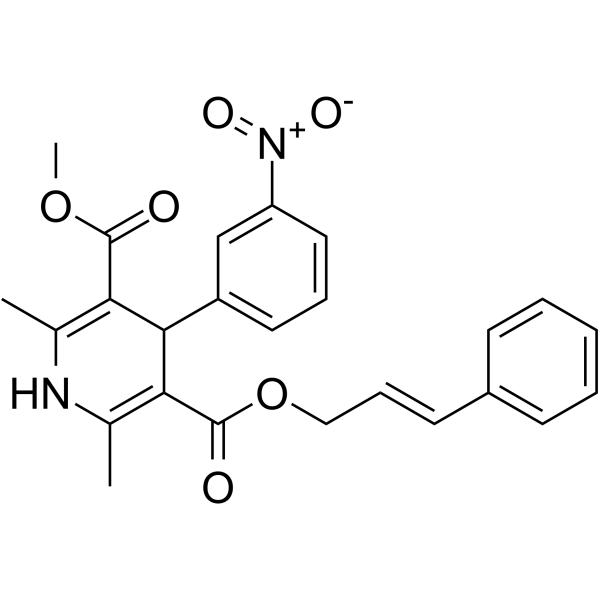
Cat. No.: HY-101390B
CAS No.: 102993-22-6
Target:  

Calcium Channel

Research Areas:  

Cardiovascular Disease

Niguldipine is a calcium channel blocker with activity in regulating cardiovascular function. Niguldipine can reduce systolic and diastolic blood pressure, thereby increasing heart rate and cardiac output. Niguldipine exhibits dose-dependent and sustained increases in coronary blood flow. Niguldipine also increases perfusion in the kidneys and femoral arteries, but the effect is temporary and to a lesser extent. The effect of Niguldipine on myocardial metabolism is not significant .
loading...
    loading...
Cat. No.: HY-129706
CAS No.: 57184-68-6
Target:  

Others

Research Areas:  

Cardiovascular Disease

LY127210 free base is an orally active peripheral arterial vasodilating antihypertensive agent. LY127210 free base interferes with the baroreflex mechanism, exerts direct myocardial bradycardic activity, has no α or β receptor blocking properties, and acts via all conventional administration routes. LY127210 free base reduces vascular resistance, cardiac output, heart rate, left ventricular end-diastolic pressure, regional vascular resistance, as well as blood flow in the skin and cerebral cortex. LY127210 free base can be used in research related to hypertension .
loading...
    loading...
Cat. No.: HY-166478S
CAS No.: 1794817-24-5
Synonyms: Desmethylcarvedilol-d5; BM-14242-d5
O-Desmethyl carvedilol-d5 (Desmethylcarvedilol-d5) is deuterium labeled O-Desmethylcarvedilol. O-Desmethylcarvedilol (Desmethylcarvedilol) is an active metabolite of the non-selective β-adrenergic receptor (β-AR) antagonist Carvedilol (HY-B0006). O-Desmethylcarvedilol inhibits store-overload-induced calcium release in HEK293 cells expressing the ryanodine receptor 2 (RyR2) R4496C (RyR2 R4496C) mutation (IC50 = 7.62 μM). O-Desmethylcarvedilol reduces increases in heart rate and prevents decreases in diastolic blood pressure induced by Isoproterenol (HY-B0468) in conscious rabbits (ED50s = 32 and 5 μg/kg, respectively) .
loading...
    loading...
Cat. No.: HY-111259
CAS No.: 81228-35-5
Target:  

Endogenous Metabolite

Research Areas:  

Cardiovascular Disease

Ro 31-1118 Free base is a compound exhibiting weak antihypertensive activity in patients with mild hypertension. Ro 31-1118 Free base demonstrated a reduction in heart rates and blood pressure post-exercise at varying doses. Ro 31-1118 Free base exhibited linear pharmacokinetics within the 10-80 mg dose range. Ro 31-1118 Free base showed no significant impact on diastolic blood pressure or adverse effects during the study.
loading...
    loading...
Cat. No.: HY-113858A
CAS No.: 3026677-28-8
Synonyms: Brefanolol hydrochloride
Target:  

Adrenergic Receptor

Research Areas:  

Cardiovascular Disease

Brefonalol (Brefanolol) hydrochloride is an orally active, non-selective β-adrenergic receptor blocker with vasodilatory properties. Brefonalol hydrochloride exhibits an optimal balance between β-blockade and vasodilatory effects at low doses: it reduces blood pressure and slows heart rate, while increasing stroke volume instead of decreasing it, causing no significant elevation in peripheral resistance and increasing reactive hyperemia; at high doses, the β-blockade effect dominates. Brefonalol hydrochloride can be used in the research of arterial hypertension .
loading...
    loading...
Cat. No.: HY-W343043
CAS No.: 60398-24-5
Synonyms: PZG
Target:  

Drug Derivative

Pyrazinoylguanidine (PZG) is an analogue of the potassium sparing diuretic, Amiloride (HY-B0285). Pyrazinoylguanidine can lower the systolic and diastolic blood pressure of patients with primary hypertension, has a certain effect on reducing heart rate, and does not affect the concentrations of electrolytes such as sodium, potassium, and chloride in the blood serum. Pyrazinoylguanidine can reduce the hyperglycemia and hyperinsulinemia in type 2 diabetes, reduce the levels of triglycerides, cholesterol, and free fatty acids, and reverse the hyperglycemia and hyperlipidemia induced by thiazide diuretics, such as Hydrochlorothiazide (HY-B0252). Pyrazinoylguanidine ican nhibit the reabsorption of urea by the renal tubules, thereby increasing the clearance rate and excretion volume of urea, reducing the serum urea concentration, and minimizing its toxic accumulation .
loading...
    loading...
  • 1

