
1. Search Result
Search Result
Results for "

double-strand breaks (DSB)

" in MedChemExpress (MCE) Product Catalog:

25

Inhibitors & Agonists

1

Peptides

1

Natural
Products

1

Isotope-Labeled Compounds

Cat. No. Nombre del producto Target Áreas de investigación Chemical Structure
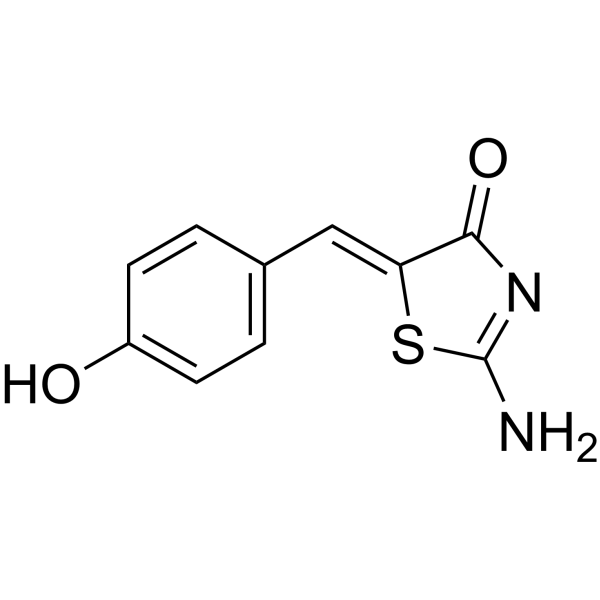
  • HY-19959
    Mirin
    Maximum Cited Publications
    9 Publications Verification

    ATM/ATR Apoptosis Cancer
    Mirin is a potent Mre11-Rad50-Nbs1 (MRN) complex inhibitor. Mirin prevents MRN-dependent activation of ATM (IC50=12 μM) without affecting ATM protein kinase activity, and it inhibits Mre11-associated exonuclease activity. Mirin abolishes the G2/M checkpoint and homology-dependent repair in mammalian cells. Mirin prevents ATM activation in response to DNA double-strand breaks (DSBs) and blocks homology-directed repair (HDR) in mammalian cells .
    Mirin
  • HY-110111
    T2AA
    2 Publications Verification

    DNA/RNA Synthesis Cancer
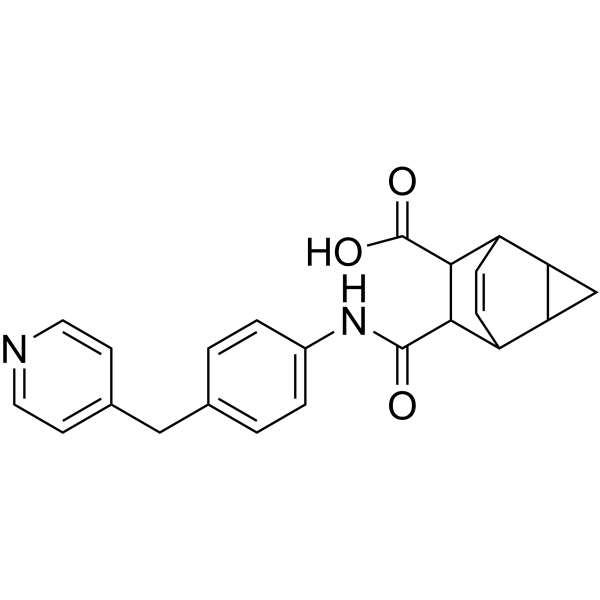
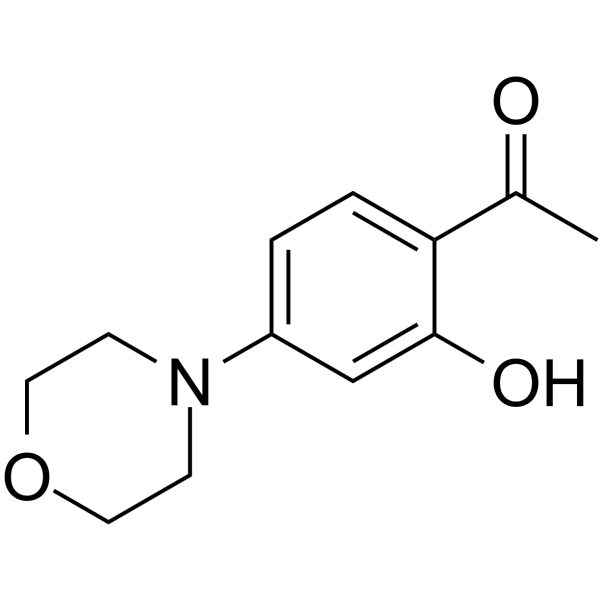
    T2AA is a monoubiquitinated proliferating cell nuclear antigen (PCNA) inhibitor that prevents DNA repair, increases double-strand break (DSB) formation and promotes necroptosis and cell cycle arrest in G1 phase .
    T2AA
  • HY-110185
    NSC 617145
    3 Publications Verification

    DNA/RNA Synthesis Cancer
    NSC 617145 is a selective werner syndrome helicase (WRN) helicase inhibitor with an IC50 value of 230 nM. NSC 617145 inhibits WRN ATPase, and induces double-strand breaks (DSB) and chromosomal abnormalities. NSC 617145 shows selective for WRN over BLM, FANCJ, ChlR1, RecQ, and UvrD helicases .
    NSC 617145
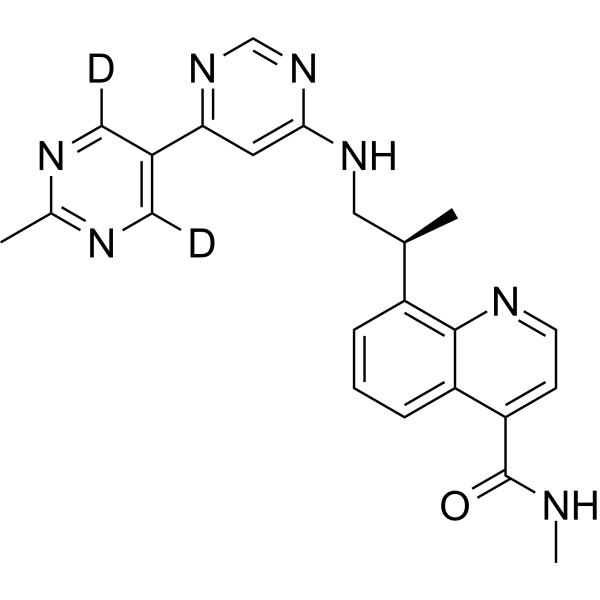
  • HY-19939S
    VX-984
    4 Publications Verification

    M9831

    DNA-PK Cancer
    VX-984 is an orally active, potent, selective and BBB-penetrated DNA-PK inhibitor. VX-984 efficiently inhibits NHEJ (non-homologous end joining) and increases DSBs (DNA double-strand breaks). VX-984 can be used for glioblastomas (GBM) and non-small cell lung cancer (NSCLC) research. VX-984 is a de novo deuterium .
    VX-984
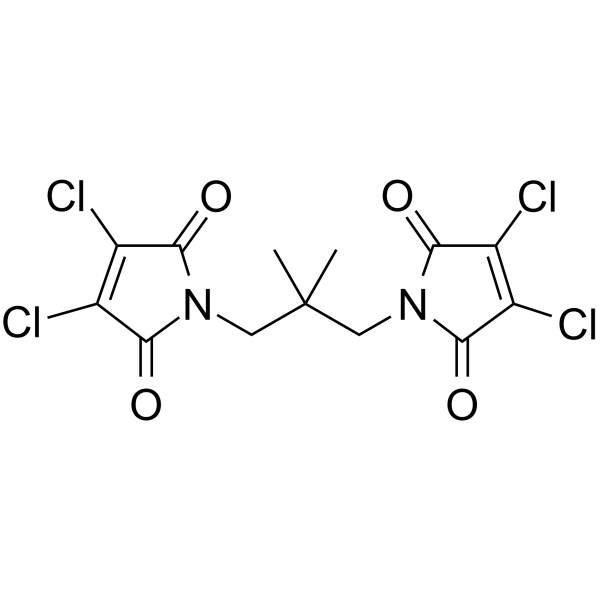
  • HY-160096

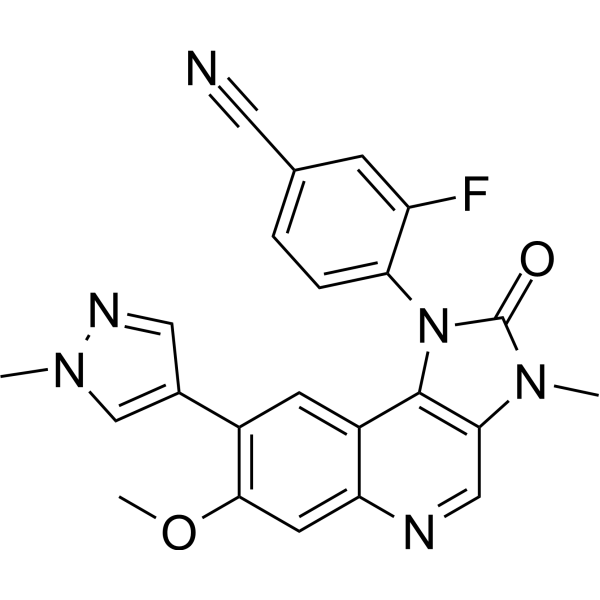
    ATM/ATR Cancer
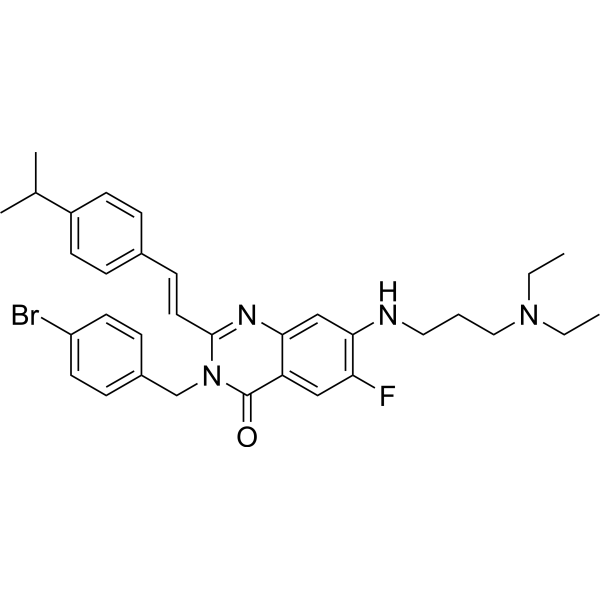
    M3541 is a potent, ATP-competitive and selective ATM inhibitor with an IC50 of 0.25 nM. M3541 shows remarkable selectivity against other protein kinases. M3541 suppresses double-strand breaks (DSB) repair and has antitumor activities .
    M3541
  • HY-13703A
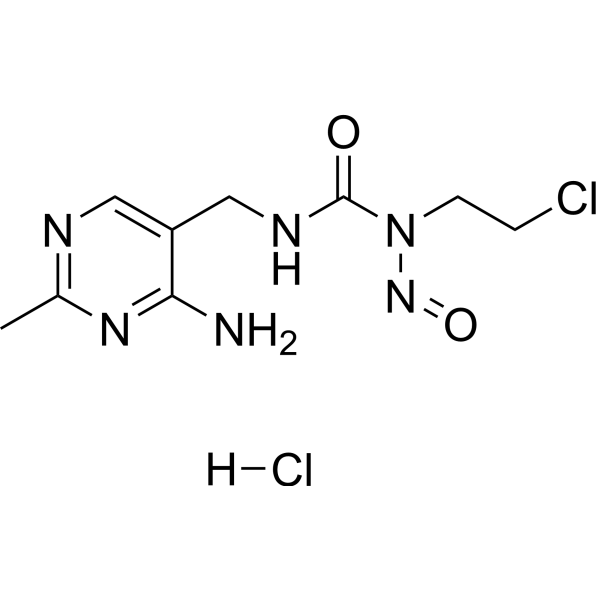
    Nimustine hydrochloride
    1 Publications Verification

    ACNU

    DNA Alkylator/Crosslinker DNA/RNA Synthesis Apoptosis p38 MAPK JNK AP-1 Cancer
    Nimustine hydrochloride (ACNU) is the hydrochloride salt form of Nimustine (HY-13703). Nimustine hydrochloride is an alkylating agent, which induces DNA double-strand breaks (DSBs) and inter-strand crosslinks (ICLs), thereby activating the DNA damage response (DDR) signaling pathway. Nimustine hydrochloride activates p38 MAPK/JNK signaling pathway, and exhibits antitumor activity .
    Nimustine hydrochloride
  • HY-111183
    Neocarzinostatin (solution)
    1 Publications Verification

    Zinostatin; Vinostatin

    DNA/RNA Synthesis Bacterial Apoptosis Antibiotic Infection Cancer
    Neocarzinostatin (solution), a potent DNA-damaging, anti-tumor antibiotic, recognizes double-stranded DNA bulge and induces DNA double strand breaks (DSBs). Neocarzinostatin induces apoptosis. Neocarzinostatin has potential for EpCAM-positive cancers treatment .
    Neocarzinostatin (solution)
  • HY-100705

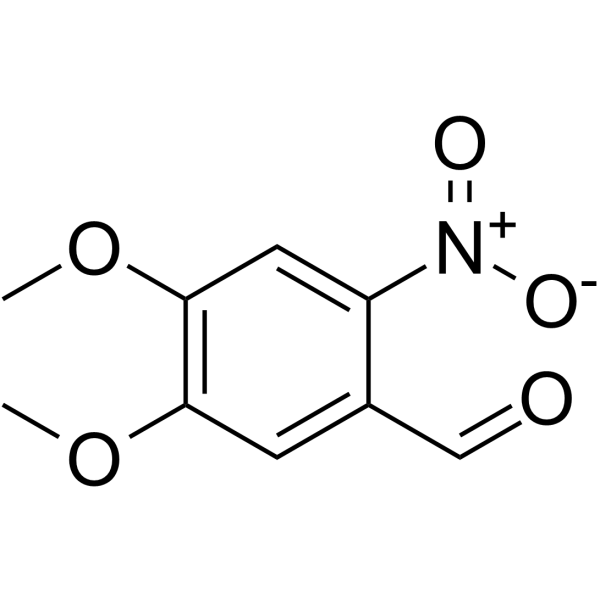
    6-Nitroveratraldehyde

    Drug Intermediate Neurological Disease
    DMNB (6-Nitroveratraldehyde) is a photolabile proton donor that releases acidic substances when excited at a wavelength of 405 nM. DMNB can be used for the synthesis of no-carrier-added 6-[18F]fluoro-L-DOPA (6-FDOPA). DMNB is also applicable to the preparation of o-nitroaryl-bis (5-methylfur-2-yl) methanes and the synthesis of alpha-asarone (HY-N0700). DMNB is an enzyme involved in the non-homologous end joining (NHEJ) pathway responsible for DNA double-strand break (DSB) repair. DMNB can be used in PET studies of the dopaminergic system .
    DMNB
  • HY-121862

    DNA/RNA Synthesis Cancer
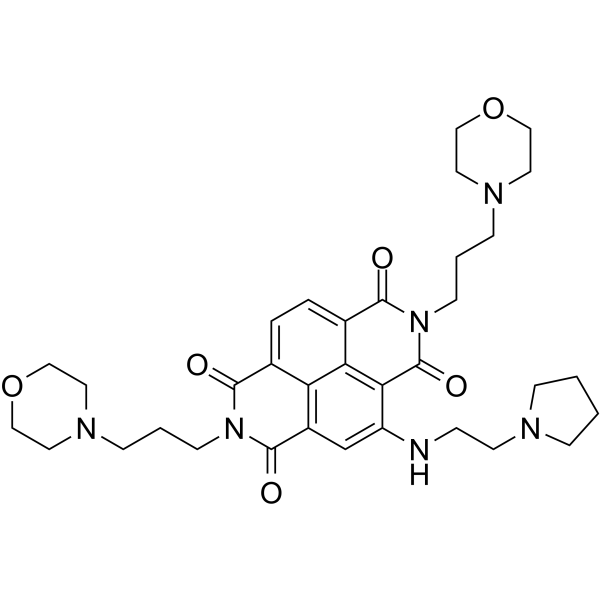
    CM03 is a potent DNA G-quadruplexes (G4s) ligand. CM03 can stabilise G4s, downregulating more G4-containing genes as well as increasing incidence of double-strand break events (DSBs) due to torsional strain on DNA and chromatin structure. CM03 has selective potency for pancreatic cancer cells .
    CM03
  • HY-113064
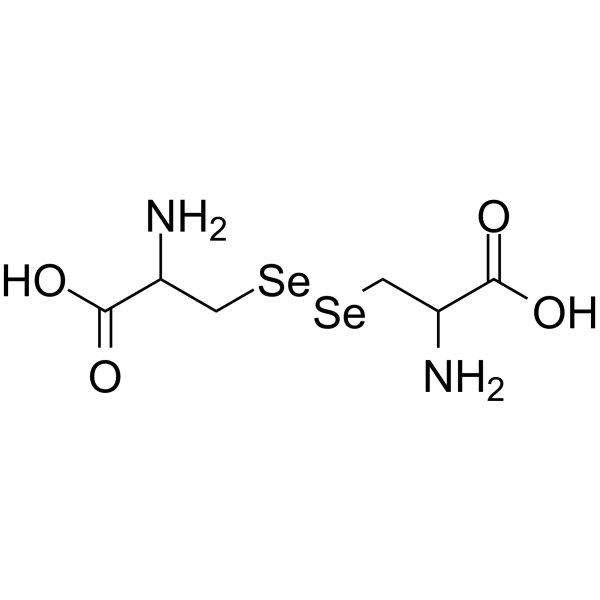
    Selenocystine
    1 Publications Verification

    Endogenous Metabolite Cancer
    Selenocystine is a broad-spectrum anti-cancer agent. Selenocystine induces DNA damage in HepG2 cells, particularly in the form of DNA double strand breaks (DSBs). Selenocystine exhibits great promise as a therapeutic or adjuvant agent targeting DNA repair for cancer treatment .
    Selenocystine
  • HY-115531

    DNA/RNA Synthesis Cancer
    UNC-2170 is a functionally active, fragment-like ligand for 53BP1 (IC50=29 µM; Kd=22 µM). UNC-2170 shows at least 17-fold selectivity for 53BP1 as compared to nine other methyl-lysine (Kme) reader proteins. 53BP1 is a Kme binding protein that plays a central role in DNA Damage Repair (DDR) pathways and is recruited to sites of double-strand breaks (DSB) .
    UNC-2170
  • HY-Q04764

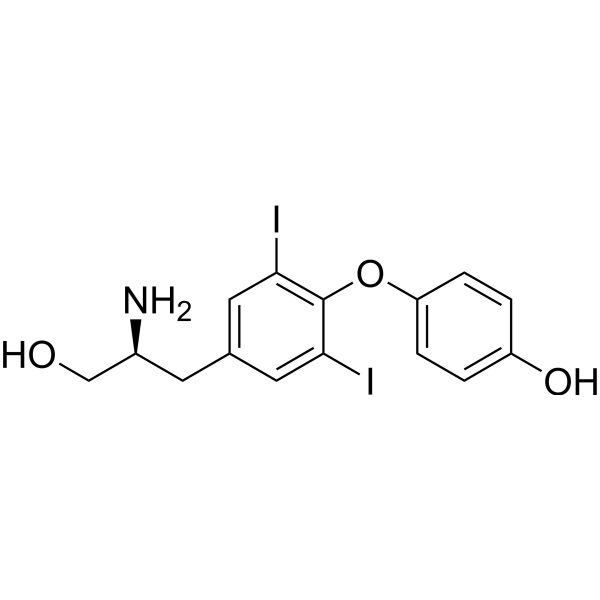
    Thyroid Hormone Receptor Apoptosis Cancer
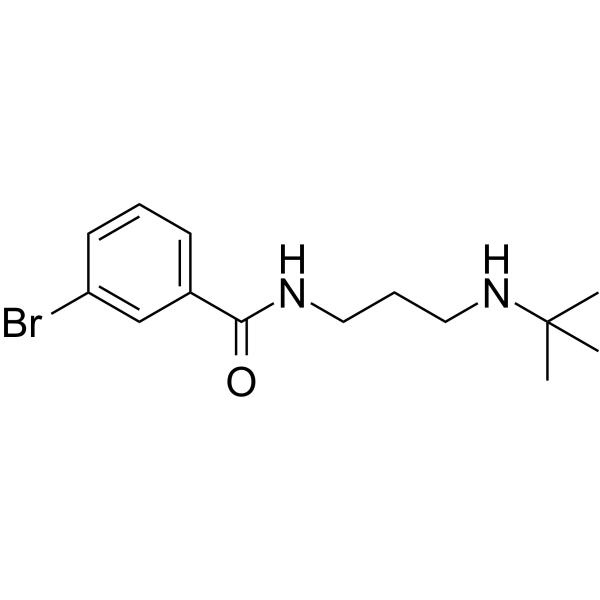
    TI17 is an inhibitor of the thyroid hormone receptor-interacting protein Trip13 and has anticancer activity. TI17 effectively inhibits multiple myeloma (MM) cell proliferation and induces cell cycle arrest and apoptosis. Trip13 is an AAA-ATPase that mediates double-strand break (DSB) repair; TI17 inhibits Trip13 function and increases DNA damage .
    TI17
  • HY-115552

    PARP Cancer
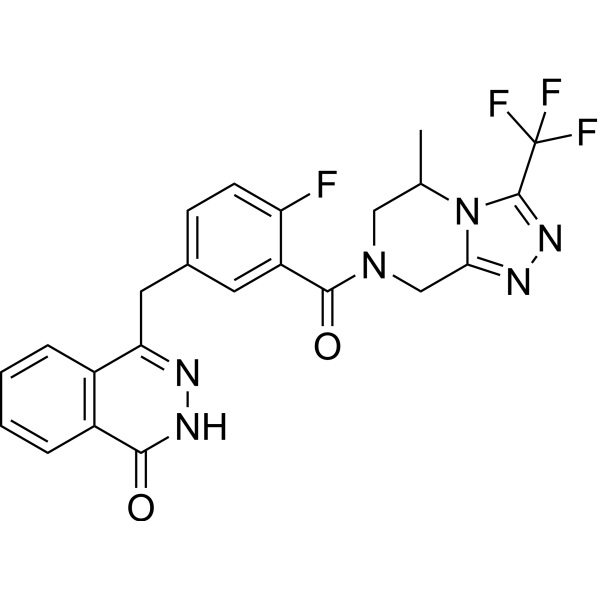
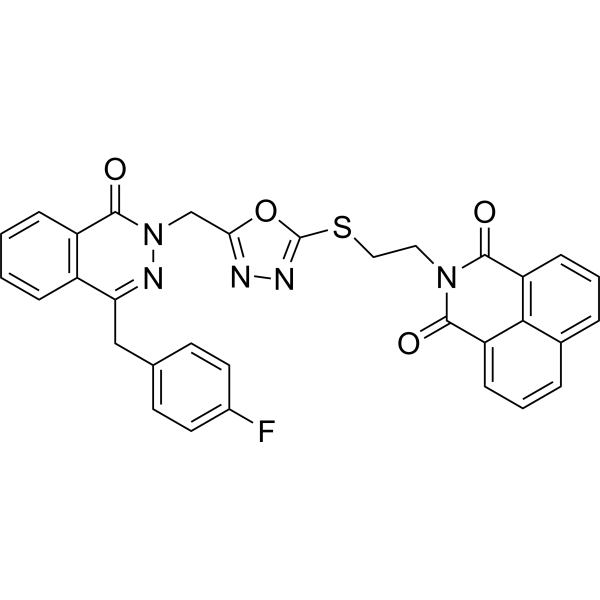
    Simmiparib is a highly potent and orally active PARP1 and PARP2 inhibitor with IC50 values of 1.75 nM and 0.22 nM, respectively. Simmiparib has more potent PARP1/2 inhibition than its parent Olaparib (HY-10162). Simmiparib induces DNA double-strand breaks (DSB) accumulation and G2/M arrest in homologous recombination repair (HR)-deficient cells, thereby inducing apoptosis. Simmiparib exhibits remarkable anticancer activities in cells and nude mice bearing xenografts .
    Simmiparib
  • HY-176165

    CDK Histone Methyltransferase Cancer
    CDK9/EZH2-IN-1 (Compound D16) is a CDK9/EZH2 dual-target inhibitor (IC50: 83.9/108.6 nM). CDK9/EZH2-IN-1 induces apoptosis and DNA double-strand breaks (DSBs). CDK9/EZH2-IN-1 inhibits the proliferation activity of MKN45, MDA-MB-453 and SW620 cancer cells (IC50 values are 136.3, 171.3 and 315.7 nM, respectively) .
    CDK9/EZH2-IN-1
  • HY-149348

    Topoisomerase PARP Apoptosis Cancer
    DiPT-4 is a dual TOP1/PARP1 inhibitor that induces massive DNA double-strand breaks (DSBs), cell cycle arrest, and apoptosis in cancer cells. DiPT-4 has the potential to overcome cancer drug resistance .
    DiPT-4
  • HY-100707

    DNA-PK Apoptosis Inflammation/Immunology Cancer
    IC 86621 is a potent DNA-dependent protein kinase (DNA-PK) inhibitor, with an IC50 of 120 nM. IC 86621 also acts as a selective and reversible ATP-competitive inhibitor.IC 86621 inhibits DNA-PK mediated cellular DNA double-strand break (DSB) repair (EC50=68 µM). IC 86621 increases DSB-induced antitumor activity without cytotoxic effects. IC 86621 can protects rheumatoid arthritis (RA) T cells from apoptosis .
    IC 86621
  • HY-151939

    DNA/RNA Synthesis Apoptosis Cancer
    BLM-IN-2 is a Bloom's Syndrome Protein (BLM) inhibitor with an IC50 value of 0.8 μM. BLM-IN-2 effectively suppresses the proliferation, invasion, cell cycle arrest and apoptosis of CRC cells. BLM-IN-2 can be used for the reserarch of colorectal cancer (CRC) .
    BLM-IN-2
  • HY-13703

    Apoptosis DNA Alkylator/Crosslinker DNA/RNA Synthesis p38 MAPK JNK AP-1 Cancer
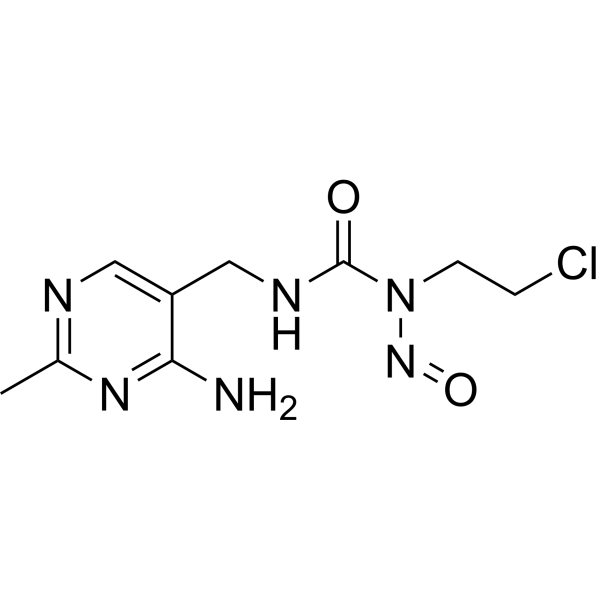
    Nimustine is an alkylating agent, which induces DNA double-strand breaks (DSBs) and inter-strand crosslinks (ICLs), thereby activating the DNA damage response (DDR) signaling pathway. Nimustine activates p38 MAPK/JNK signaling pathway, and exhibits antitumor activity .
    Nimustine
  • HY-123232

    PARP Cancer
    KU-0058684 is a potent PARP inhibitor, with an IC50 of 3.2 nM for PARP-1. KU-0058684 significantly reduces DNA double strand break (DSB) repair .
    KU-0058684
  • HY-118897

    DNA/RNA Synthesis Cancer
    UNC-2170 maleate is the maleate salt form of UNC-2170 (HY-115531). UNC-2170 maleate is a selective inhibitor for the methyl-lysine binding protein 53BP1, with IC50 of 29 µM and Kd of 22 µM. UNC-2170 maleate shows at least 17-fold selectivity for 53BP1 as compared to nine other methyl-lysine (Kme) reader proteins. 53BP1 is a Kme binding protein that plays a central role in DNA Damage Repair (DDR) pathways and is recruited to sites of double-strand breaks (DSB) .
    UNC-2170 maleate
  • HY-178503

    Apoptosis Cancer
    dA-NHbenzylSCF 3 is a radiosensitizer. dA-NHbenzylSCF 3 has low toxicity to cancer cells and normal cells, but can significantly enhance cancer cell death in the presence of ionizing radiation (IR). dA-NHbenzylSCF 3 promotes cell apoptosis by capturing electrons and inducing DNA double strand breaks (DSBs). dA-NHbenzylSCF 3 is often used in the research of cancer, such as prostate cancer and breast cancer .
    dA-NHbenzylSCF 3
  • HY-175466

    PARP DNA/RNA Synthesis Apoptosis Cancer
    BER-IN-1 is a base excision repair (BER) inhibtor, targeting DNA abasic sites. BER-IN-1 cleaves abasic sites via β- and β,δ-elimination mechanisms, disrupts the base excision repair (BER) pathway and leads to DNA double-strand breaks (DSBs). BER-IN-1 can enhance the effectiveness of the PARP inhibitor Olaparib (HY-10162) in homologous recombination (HR)-proficient cancer cells (MDA-MB-231, HeLa, and SKOV3). BER-IN-1 induces an S-phase arrest and apoptosis companied with Olaparib (HY-10162). BER-IN-1 can be used for the research of cancer, such as breast, cervical and ovarian cancer .
    BER-IN-1
  • HY-150765

    PARP Apoptosis Cancer
    PARP1-IN-12 is a potent PARP1 inhibitor with an IC50 of 2.99 nM. PARP1-IN-12 exhibits antiproliferative activity, can induce cell apoptosis and cause cycle arrest at G2/M phase. PARP1-IN-12 also can induce DNA double strand breaks (DSBs) in BRCA-deficient cells .
    PARP1-IN-12
  • HY-146194

    Reactive Oxygen Species (ROS) Cancer
    NHEJ inhibitor-1 (Compound C2) is a trifunctional Pt(II) complex, alleviates the non-homologous end connection (NHEJ)/homologous recombination (HR)-related double strand breaks (DSBs) repairs to evade Cisplatin-resistance in non-small cell lung cancer (NSCLC). NHEJ inhibitor-1 inhibits the damage repair proteins Ku70 and Rad51 to make tumors re-sensitive to Cisplatin. NHEJ inhibitor-1 also induces ROS generation and MMP deduction .
    NHEJ inhibitor-1
  • HY-181254

    PARP NAMPT DNA/RNA Synthesis Apoptosis Cancer
    PARP1/NAMPT-IN-1 is a potent and dual PARP1 and NAMPT inhibitor with IC50 values of 1.2 nM and 6.7 nM, respectively. PARP1/NAMPT-IN-1 can disrupt the homologous recombination repair (HRR) pathway, leading to the accumulation of DNA double-strand breaks (DSBs), inducing cell cycle arrest and apoptosis, and also has antimigratory effects. PARP1/NAMPT-IN-1 exhibits excellent antitumor effects in a breast cancer xenograft model. PARP1/NAMPT-IN-1 can be used for the study of triple-negative breast cancer (TNBC) .
    PARP1/NAMPT-IN-1

Consulta en línea

Your information is safe with us. * Required Fields.

Saludo


Country or Region *

Nombre del solicitante *


Nombre de la Organizaciòn *

Department *


Direcciòn del E-mail *


Nombre del producto *

Cat. No.


Requested quantity *

Número de teléfono *


Observaciones

Consulta en línea

Inquiry Information

Nombre del producto:
Cat. No.:
Cantidad:
MCE Japan Authorized Agent:

