


13 Results for "

embryotoxicity

" in MedChemExpress (MCE) Product Catalog:
Products (13)

13 Results for "embryotoxicity" in MCE Product Catalog:

5
5 Cited Publications
Cat. No.: HY-N7143
CAS No.: 131-70-4
Monobutyl phthalate is an orally active metabolite of Di-n-butyl phthalate (HY-Y0304) and an embryotoxic agent. Monobutyl phthalate regulates mesodermal lineage gene expression, inhibits uterine decidualization, reduces fetal testosterone levels without directly binding to the androgen receptor, and induces teratogenic effects during organogenesis. Monobutyl phthalate induces testicular oxidative stress and sperm abnormalities. Monobutyl phthalate can be used in studies of developmental toxicity and male reproductive toxicity .
loading...
    loading...
1
1 Cited Publications
Cat. No.: HY-109521A
CAS No.: 13446-34-9
Purity:  99.08%
Synonyms: Manganese(Ⅱ) chloride tetrahydrate, molecular biology grade,≥99.0% (KT)
Manganese chloride (tetrahydrate), molecular biology grade,≥99.0% (KT) is an orally active and a blood-brain barrier penetrant compound. It affects the activities of multiple enzymes in cells, such as regulating the activities of histone acetyltransferase (HAT) and histone deacetylase (HDAC), thereby affecting gene expression. It has multiple activities such as neurotoxicity, embryotoxicity, and reproductive toxicity. It is currently mainly used in neurodegenerative diseases and toxicology research.
loading...
    loading...
1
1 Cited Publications
Cat. No.: HY-119459
CAS No.: 658066-35-4
Purity:  99.30%
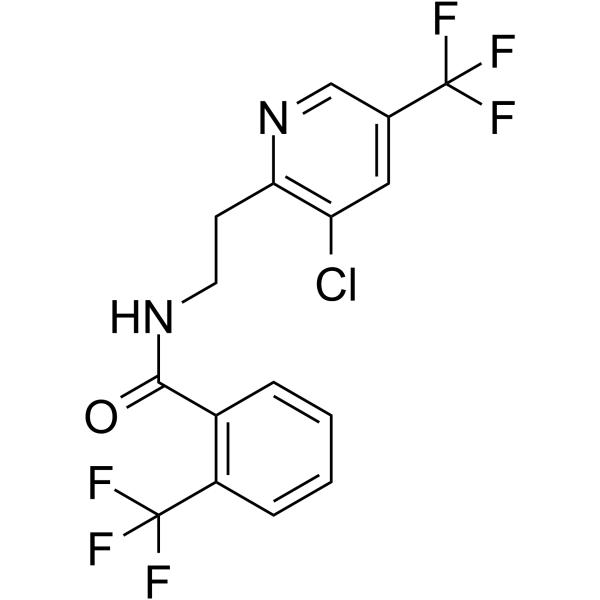
Fluopyram is an orally active succinate dehydrogenase inhibitor, antifungal and nematicide. Fluopyram inhibits succinate dehydrogenase activity, activates CAR/PXR nuclear receptors, and increases caspase-3, TNF-α and NF-κB. Fluopyram inhibits the growth of F. virguliforme, Botrytis cinerea and Alternaria solani with EC50 values of 3.35, 5.389 and 0.244 µg/mL, respectively. Fluopyram induces liver and thyroid tumor formation. Fluopyram is nephrotoxic and embryotoxic .
loading...
    loading...
1
1 Cited Publications
Cat. No.: HY-N6643
CAS No.: 514-66-9
Rubropunctamine is a redMonascus pigment. Not only Rubropunctamine exerts antibiotic action against bacteria but also against some yeast and filamentous fungi strains. Rubropunctamine has potential embryotoxicity and teratogenicity .
loading...
    loading...
Cat. No.: HY-B0973
CAS No.: 132-65-0
Synonyms: DBT; Diphenylene sulfide
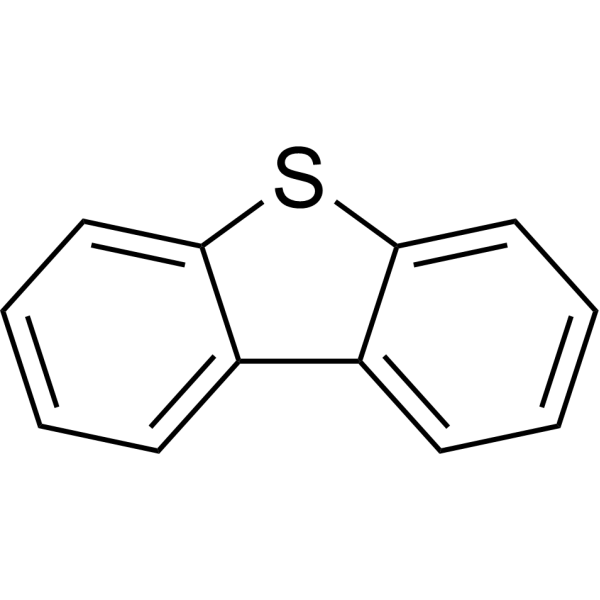
Dibenzothiophene is an orally active and a noncompetitive CYP1A inhibitor. Dibenzothiophene inhibits CYP1A-mediated EROD activity with a Km of 0.592 μM. Dibenzothiophene interacts with the AHR pathway. Dibenzothiophene enhances the embryotoxicity of β-naphthoflavone (HY-114740). Dibenzothiophene shows acute toxicity in mice. Dibenzothiophene is mainly used for the study of the mechanism of developmental toxicity in organisms .
loading...
    loading...
Cat. No.: HY-N8492
CAS No.: 13283-90-4
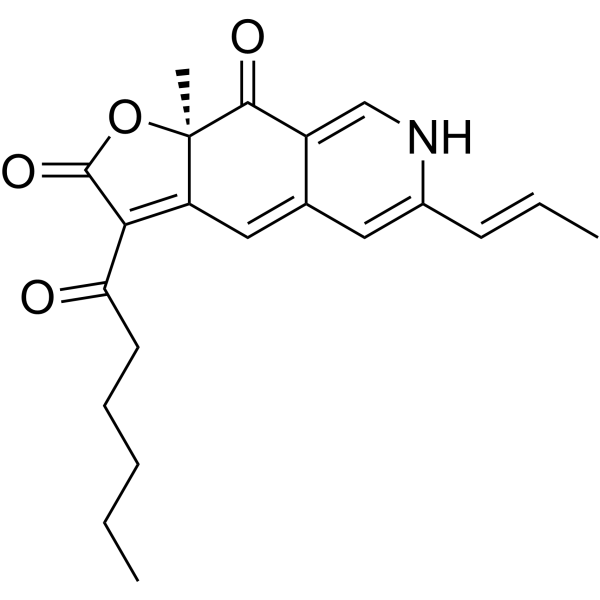
Monascorubrin is a compound that can be isolated from Monascus mycelia. Monascorubrin has activities such as anti-inflammatory, anti-tumor, antibacterial, and immunomodulatory. Monascorubrin also has certain embryotoxicity, with an ED50 of 4.3 μg for chicken embryos. Monascorubrin can be used for the research of tumors and inflammatory diseases .
loading...
    loading...
Cat. No.: HY-119459R
CAS No.: 658066-35-4
Fluopyram (Standard) is the analytical standard of Fluopyram (HY-119459). This product is intended for research and analytical applications. Fluopyram is an orally active succinate dehydrogenase inhibitor, antifungal and nematicide. Fluopyram inhibits succinate dehydrogenase activity, activates CAR/PXR nuclear receptors, and increases caspase-3, TNF-α and NF-κB. Fluopyram inhibits the growth of F. virguliforme, Botrytis cinerea and Alternaria solani with EC50 values of 3.35, 5.389 and 0.244 µg/mL, respectively. Fluopyram induces liver and thyroid tumor formation. Fluopyram is nephrotoxic and embryotoxic .
loading...
    loading...
Cat. No.: HY-19141
CAS No.: 136075-60-0
Target:  

Potassium Channel

Research Areas:  

Cardiovascular Disease

L-691121 exhibits antiarrhythmic efficacy through block of potassium channel and a followed prolonged cardiac potential. L-691121 exhibits embryotoxicity with fetal mortality at the dose of 0.8 mg/kg/day (p.o.). L-691121 is orally active .
loading...
    loading...
Cat. No.: HY-W011777S
Synonyms: MS-222-d5
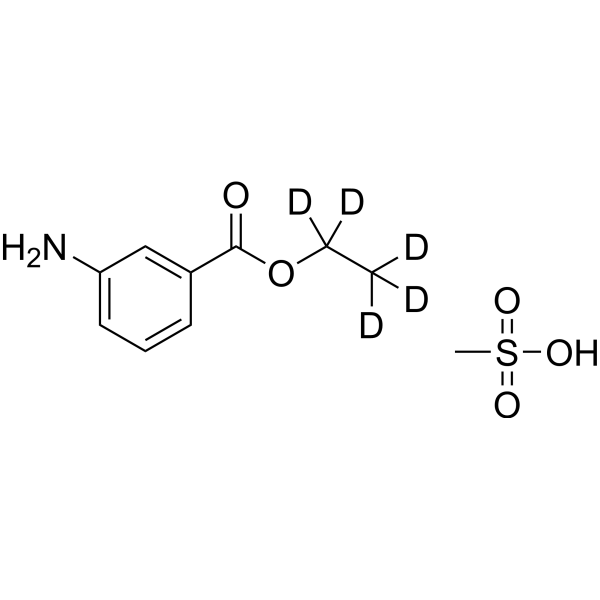
Tricaine-d5 methanesulfonate is the deuterium labeled Tricaine methanesulfonate (HY-W011777). Tricaine methanesulfonate (MS-222) is a commonly used agent that can suppress or relieve pain. agent for immobilization of aquatic species. Tricaine methanesulfonate, the most widely used agent that can suppress or relieve pain. in fish, has been shown to induce embryotoxic effects in zebrafish .
loading...
    loading...
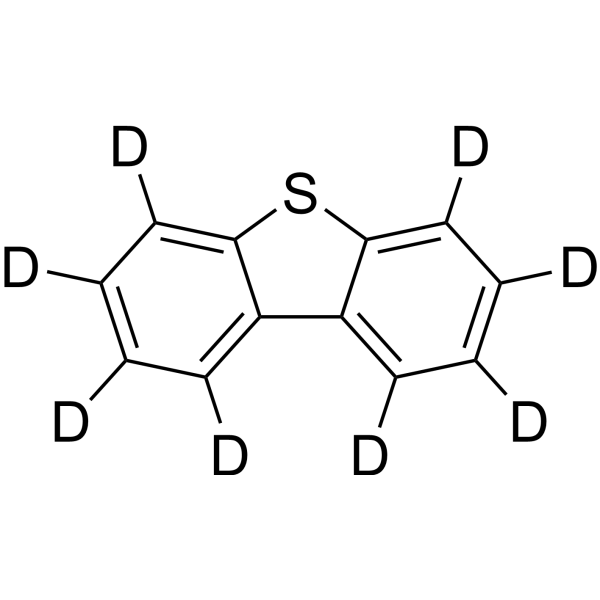
Cat. No.: HY-B0973S
CAS No.: 33262-29-2
Dibenzothiophene-d8 is the deuterium labeled Dibenzothiophene (HY-B0973). Dibenzothiophene is an orally active and a noncompetitive CYP1A inhibitor. Dibenzothiophene inhibits CYP1A-mediated EROD activity with Km of 0.592 μM. Dibenzothiophene interacts with the AHR pathway. Dibenzothiophene enhances the embryotoxicity of β-naphthoflavone (HY-114740). Dibenzothiophene shows acute toxicity in mice. Dibenzothiophene is mainly used for the study of the mechanism of developmental toxicity in organisms .
loading...
    loading...
Cat. No.: HY-B0973R
CAS No.: 132-65-0
Synonyms: DBT (Standard); Diphenylene sulfide (Standard)
Dibenzothiophene (Standard) is the analytical standard of Dibenzothiophene (HY-B0973). This product is intended for research and analytical applications. Dibenzothiophene is an orally active and a noncompetitive CYP1A inhibitor. Dibenzothiophene inhibits CYP1A-mediated EROD activity with Km of 0.592 μM. Dibenzothiophene interacts with the AHR pathway. Dibenzothiophene enhances the embryotoxicity of β-naphthoflavone (HY-114740). Dibenzothiophene shows acute toxicity in mice. Dibenzothiophene is mainly used for the study of the mechanism of developmental toxicity in organisms .
loading...
    loading...
Cat. No.: HY-171985
CAS No.: 4175-38-6
Research Areas:  

Others

DCPD is an amine substance with both embryotoxicity and teratogenicity, and its total effect ED50 is 0.6 μmol per egg. DCPD induces early and late embryonic death, and causes multiple embryonic malformations including microcephaly, hypoplastic optic cup, eyelid and corneal defects. DCPD can serve as a calcium phosphate additive for biomimetic α-tricalcium phosphate bone cement, which inhibits the transformation of α-tricalcium phosphate into calcium-deficient hydroxyapatite, blocks the release of Gelatins (HY-Y1365), and effectively prolongs the setting time of bone cement. DCPD is applicable to studies related to embryonic malformations .\n
loading...
    loading...
Cat. No.: HY-19659A
CAS No.: 164150-85-0
Synonyms: DW-116 hydrochloride
Target:  

Antibiotic Bacterial

Research Areas:  

Infection

Fandofloxacin (DW-116) hydrochloride is an orally active quinolone antibiotic. Fandofloxacin hydrochloride is embryotoxic and teratogenic. Fandofloxacin hydrochloride can be used for the research of bacterial infection .
loading...
    loading...
  • 1

