




1. Search Result
Search Result
Results for "

eosinophilic asthma

" in MedChemExpress (MCE) Product Catalog:

22

Inhibitors & Agonists

2

Peptides

8

Inhibitory Antibodies

1

Isotope-Labeled Compounds

1

Oligonucleotides

Cat. No. Product Name Target Research Areas Chemical Structure
  • HY-P9945

    SB 240563

    Interleukin Related Cardiovascular Disease Inflammation/Immunology
    Mepolizumab (SB 240563) is a humanized monoclonal antibody that binds to and neutralizes interleukin-5 (IL-5), the major cytokine involved in eosinophil proliferation, activation, and survival. Mepolizumab can be used for the research of eosinophilic granulomatosis with polyangiitis (EGPA) and severe eosinophilic asthma .
    Mepolizumab
  • HY-P9945A

    Interleukin Related Inflammation/Immunology
    Mepolizumab (anti-IL5) is a humanized monoclonal antibody that binds to and neutralizes interleukin-5 (IL-5), the major cytokine involved in eosinophil proliferation, activation, and survival. Mepolizumab can be used for the research of eosinophilic granulomatosis with polyangiitis (EGPA) and severe eosinophilic asthma .
    Mepolizumab (anti-IL5)
  • HY-P9923A
    Benralizumab (anti-IL5RA )
    1 Publications Verification

    MEDI-563 (anti-IL5RA ); BIW-8405 (anti-IL5RA )

    Interleukin Related Apoptosis Inflammation/Immunology
    Benralizumab (anti-IL5RA ) (MEDI-563 (anti-IL5RA ); BIW-8405 (anti-IL5RA)) is an interleukin-5 receptor α (IL-5Rα)-directed cytolytic monoclonal antibody that induces direct, rapid and nearly complete depletion of eosinophils via enhanced antibody-dependent cell-mediated cytotoxicity. Benralizumab can be used for severe eosinophilic asthma study .
    Benralizumab (anti-IL5RA )
  • HY-17355A
    Dexpramipexole dihydrochloride
    2 Publications Verification

    (R)-Pramipexole dihydrochloride; R-(+)-Pramipexole dihydrochloride; KNS-760704 dihydrochloride

    ATP Synthase Sodium Channel Glutathione Peroxidase NOD-like Receptor (NLR) Mitophagy Ferroptosis PINK1/Parkin Autophagy Apoptosis Reactive Oxygen Species (ROS) Cardiovascular Disease Neurological Disease Inflammation/Immunology
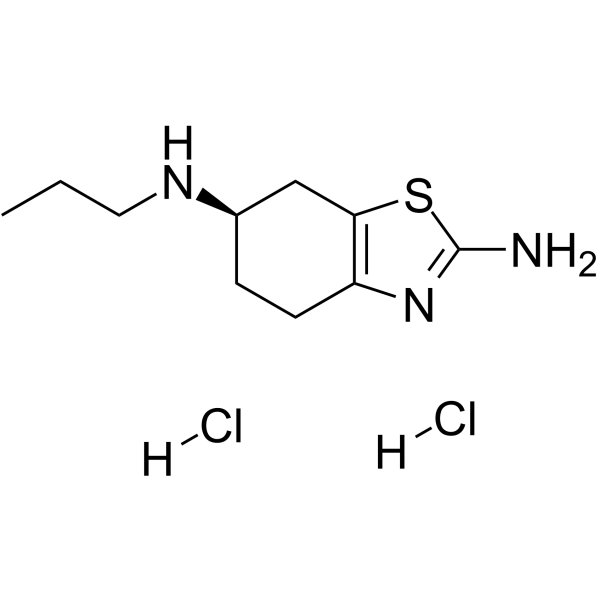
    Dexpramipexole ((R)-Pramipexole) dihydrochloride is an orally active, blood-brain barrier permeable mitochondrial protective agent. Dexpramipexole dihydrochloride upregulates the expression of Parkin, PINK1, GPX4 and FSP1; binds to mitochondrial F1/Fo-ATP synthase; blocks the Nav1.8 sodium channel; and inhibits the activation of the NLRP3 inflammasome. Dexpramipexole dihydrochloride induces mitophagy, inhibits ferroptosis, pyroptosis, apoptosis, neuroinflammation and eosinophilopoiesis; maintains mitochondrial function and redox homeostasis; reduces reactive oxygen species production; and decreases myocardial infarct size. Dexpramipexole dihydrochloride is applicable to studies on eosinophilic asthma, myocardial ischemia/reperfusion injury, sepsis-associated encephalopathy, analgesia, and more .
    Dexpramipexole dihydrochloride
  • HY-P99496
    Cendakimab
    1 Publications Verification

    RPC 4046; ABT 308; CC-93538

    Interleukin Related Inflammation/Immunology
    Cendakimab (RPC4046; ABT 308; CC-93538) is a selective, humanized, recombinant monoclonal antibody against the IL-13 molecule. Cendakimab has a high affinity and potency for both human wild-type and variant IL-13 and blocks binding of IL-13 to both IL-13Rα1 and IL-13Rα2 with IC50s of 352 pM and 631 pM by ELISA, respectively. Cendakimab recognizes both wild-type human IL-13 and the common polymorphic variant R110Q, with binding affinities of 52 and 50 pM, respectively. Cendakimab has the potential for IL-13-related allergic/inflammatory diseases (e.g., asthma and eosinophilic esophagitis) .
    Cendakimab
  • HY-P990735

    Interleukin Related Inflammation/Immunology
    Donzakimig is a trispecific anti-IL-13/IL-22/HSA antibody. Donzakimig adopts a Fab-scFv-scFv structural format (without an Fc region), in which the Fab domain is linked to the scFv domains via a S (G4S)2 linker. Donzakimig binds to and inhibits the activities of IL-13 and IL-22, thereby blocking the signal transduction of these two cytokines. Donzakimig can extend its serum half-life by binding to human serum albumin, enhancing its in vivo stability and achieving long-acting efficacy. Donzakimig can be used in research on moderate-to-severe atopic dermatitis, moderate-to-severe asthma (especially eosinophilic type), psoriasis, inflammatory bowel disease, and other conditions .
    Donzakimig
  • HY-P9923
    Benralizumab
    1 Publications Verification

    MEDI-563; BIW-8405; KHK4563

    Interleukin Related Apoptosis Inflammation/Immunology Cancer
    Benralizumab (MEDI-563) is an interleukin-5 receptor α (IL-5Rα)-directed cytolytic monoclonal antibody that induces direct, rapid and nearly complete depletion of eosinophils via enhanced antibody-dependent cell-mediated cytotoxicity. Benralizumab can be used for severe eosinophilic asthma .
    Benralizumab
  • HY-P9949

    Sch 55700; CDP-835; JES1-39D10

    Interleukin Related Inflammation/Immunology
    Reslizumab (Sch 55700) is humanized monoclonal antibodies that target interleukin-5 (IL-5) for the treatment of eosinophilic asthma. Reslizumab is effective in neutralizing the function of IL-5. Reslizumab has high binding affinity for human IL-5, with KD values of 109 pM and 4.3 pM in the the Biacore surface plasmon resonance and Kinetic Exclusion Assay, respectively .
    Reslizumab
  • HY-P1111

    Src Interleukin Related Inflammation/Immunology
    Lyn peptide inhibitor (YGYRLRRKWEEKIPNP-NH2) is a potent, cell-permeable Lyn kinase inhibitor that inhibits Lyn-coupled signaling pathways associated with the IL-5 receptor while preserving the integrity of other signals. Lyn peptide inhibitor blocks the activation of Lyn and inhibits the binding of Lyn tyrosine kinase to the βc subunit of the IL-3/GM-CSF/IL-5 receptor. Lyn peptide inhibitor can be used in the research of eosinophilic diseases such as asthma and allergy .
    Lyn peptide inhibitor
  • HY-107051
    GW 766994
    2 Publications Verification

    GW 994

    CCR Inflammation/Immunology Endocrinology
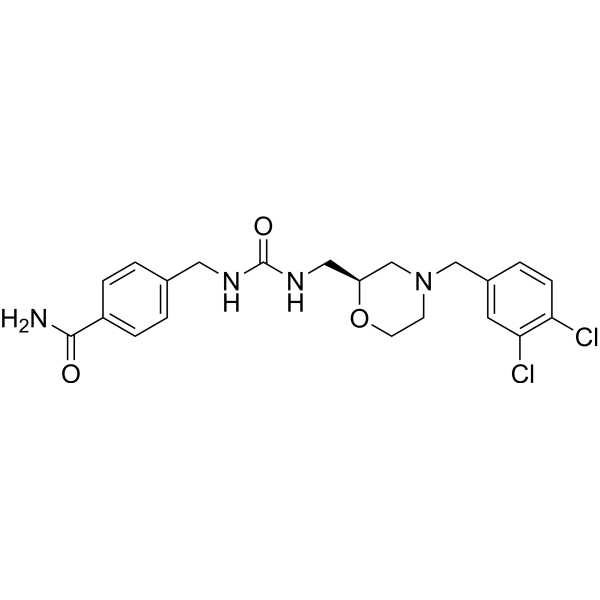
    GW 766994 (GW 994) is an orally active and specific chemokine receptor-3 (CCR3) antagonist. GW 766994 has the potential for asthma and eosinophilic bronchitis research .
    GW 766994
  • HY-17355B
    Dexpramipexole
    2 Publications Verification

    (R)-Pramipexole; R-(+)-Pramipexole; KNS-760704

    PINK1/Parkin Glutathione Peroxidase Sodium Channel ATP Synthase NOD-like Receptor (NLR) Mitophagy Ferroptosis Autophagy Apoptosis Reactive Oxygen Species (ROS) Cardiovascular Disease Neurological Disease Inflammation/Immunology
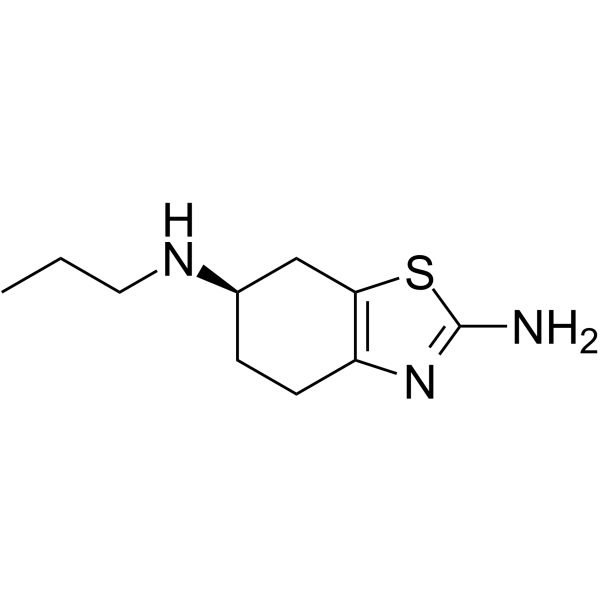
    Dexpramipexole ((R)-Pramipexole) is an orally active, blood-brain barrier permeable mitochondrial protective agent. Dexpramipexole upregulates the expression of Parkin, PINK1, GPX4 and FSP1; binds to mitochondrial F1/Fo-ATP synthase; blocks the Nav1.8 sodium channel; and inhibits the activation of the NLRP3 inflammasome. Dexpramipexole induces mitophagy, inhibits ferroptosis, pyroptosis, apoptosis, neuroinflammation and eosinophilopoiesis; maintains mitochondrial function and redox homeostasis; reduces reactive oxygen species production; and decreases myocardial infarct size. Dexpramipexole is applicable to studies on eosinophilic asthma, myocardial ischemia/reperfusion injury, sepsis-associated encephalopathy, analgesia, and more .
    Dexpramipexole
  • HY-12369
    GGTI-2133
    1 Publications Verification

    GGTase Inflammation/Immunology
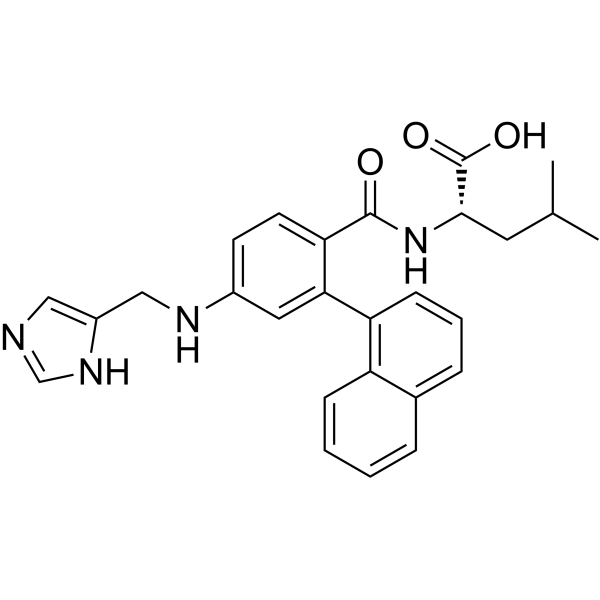
    GGTI-2133, a peptidomimetic, is a selective geranylgeranyltransferase I (GGTase-I) inhibitor with an IC50 of 38 nM. GGTI-2133 shows 140-fold selectivity over farnesyltransferase (FTase) (IC50 of 5.4 μM). GGTI-2133 inhibits the geranylation of Rap-1A with an IC50 of 10 μM. GGTI-2133 can be used for the study of eosinophilic airway inflammation such as asthma .
    GGTI-2133
  • HY-175876

    MMP Interleukin Related Inflammation/Immunology
    ADAM17-IN-1 is a selective inhibitor of ADAM17. ADAM17-IN-1 inhibits ADAM17 activity to reduce metabolic activity of dendritic cells (DCs), impair DC antigen-presenting function, suppress allergen-specific Th2 cell polarization, and reduce Th2 cytokine (IL-4, IL-5, IL-13) secretion. ADAM17-IN-1 demonstrates protective efficacy against house dust mite (HDM)-induced type 2/eosinophilic airway inflammation in mice. ADAM17-IN-1 can be used for the study of type 2-high allergic asthma .
    ADAM17-IN-1
  • HY-12369A

    GGTase Inflammation/Immunology
    GGTI-2133 TFA, a peptidomimetic, is a selective geranylgeranyltransferase I (GGTase-I) inhibitor with an IC50 of 38 nM. GGTI-2133 TFA shows 140-fold selectivity over farnesyltransferase (FTase) (IC50 of 5.4 μM). GGTI-2133 TFA inhibits the geranylation of Rap-1A with an IC50 of 10 μM. GGTI-2133 TFA can be used for the study of eosinophilic airway inflammation such as asthma .
    GGTI-2133 TFA
  • HY-17355BS

    (R)-Pramipexole-d3 dihydrochloride; R-(+)-Pramipexole-d3 dihydrochloride; KNS-760704-d3 dihydrochloride

    Isotope-Labeled Compounds ATP Synthase Sodium Channel Glutathione Peroxidase NOD-like Receptor (NLR) Mitophagy Ferroptosis PINK1/Parkin Autophagy Apoptosis Reactive Oxygen Species (ROS) Cardiovascular Disease Neurological Disease Inflammation/Immunology
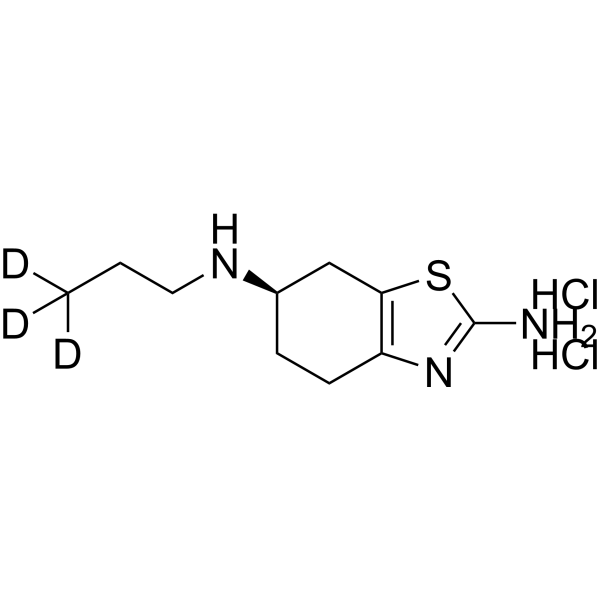
    Dexpramipexole-d3 ((R)-Pramipexole-d3) dihydrochloride is the deuterium labeled Dexpramipexole. Dexpramipexole ((R)-Pramipexole) dihydrochloride is an orally active, blood-brain barrier permeable mitochondrial protective agent. Dexpramipexole dihydrochloride upregulates the expression of Parkin, PINK1, GPX4 and FSP1; binds to mitochondrial F1/Fo-ATP synthase; blocks the Nav1.8 sodium channel; and inhibits the activation of the NLRP3 inflammasome. Dexpramipexole dihydrochloride induces mitophagy, inhibits ferroptosis, pyroptosis, apoptosis, neuroinflammation and eosinophilopoiesis; maintains mitochondrial function and redox homeostasis; reduces reactive oxygen species production; and decreases myocardial infarct size. Dexpramipexole dihydrochloride is applicable to studies on eosinophilic asthma, myocardial ischemia/reperfusion injury, sepsis-associated encephalopathy, analgesia, and more.
    Dexpramipexole-d3 dihydrochloride
  • HY-P1111A

    Src Interleukin Related Inflammation/Immunology
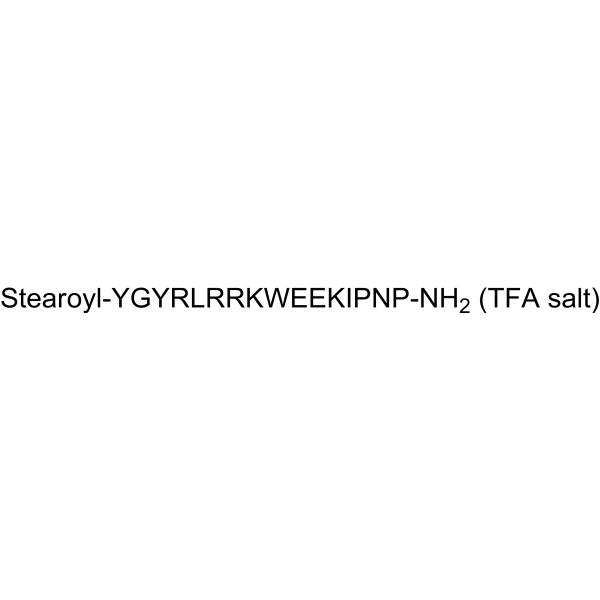
    Lyn peptide inhibitor TFA is a potent and cell-permeable inhibitor of Lyn-coupled IL-5 receptor signaling pathway, while keeping other signals intact. Lyn peptide inhibitor TFA blocks Lyn activation and inhibits the binding of Lyn tyrosine kinase to βc subunit of IL-3/GM-CSF/IL-5 receptors. Lyn peptide inhibitor TFA can be used for study of  asthma, allergic, and other eosinophilic disorders .
    Lyn peptide inhibitor TFA
  • HY-P991599

    Interleukin Related Inflammation/Immunology
    SHR-1703 is a long-acting humanized anti-IL-5 IgG1 monoclonal antibody. SHR-1703 can selectively recognize and bind to IL-5, blocking the binding of IL-5 to the α chain of the receptor on the surface of eosinophils, thereby inhibiting the proliferation, activation, and migration of eosinophils, and ultimately reducing eosinophil-mediated inflammation and damage. SHR-1703 can be used in the research of eosinophil-related diseases, such as eosinophilic asthma. Recommend Isotype Controls: Human IgG1 kappa, Isotype Control (HY-P99001) .
    SHR-1703
  • HY-17355AR

    (R)-Pramipexole dihydrochloride (Standard); R-(+)-Pramipexole dihydrochloride (Standard); KNS-760704 dihydrochloride (Standard)

    Reference Standards ATP Synthase Sodium Channel Glutathione Peroxidase NOD-like Receptor (NLR) Mitophagy Ferroptosis PINK1/Parkin Autophagy Apoptosis Cardiovascular Disease Neurological Disease Inflammation/Immunology
    Dexpramipexole ((R)-Pramipexole) dihydrochloride (Standard) is the analytical standard of Dexpramipexole (dihydrochloride). This product is intended for research and analytical applications. Dexpramipexole dihydrochloride is an orally active, blood-brain barrier permeable mitochondrial protective agent. Dexpramipexole dihydrochloride upregulates the expression of Parkin, PINK1, GPX4 and FSP1; binds to mitochondrial F1/Fo-ATP synthase; blocks the Nav1.8 sodium channel; and inhibits the activation of the NLRP3 inflammasome. Dexpramipexole dihydrochloride induces mitophagy, inhibits ferroptosis, pyroptosis, apoptosis, neuroinflammation and eosinophilopoiesis; maintains mitochondrial function and redox homeostasis; reduces reactive oxygen species production; and decreases myocardial infarct size. Dexpramipexole dihydrochloride is applicable to studies on eosinophilic asthma, myocardial ischemia/reperfusion injury, sepsis-associated encephalopathy, analgesia, and more.
    Dexpramipexole dihydrochloride (Standard)
  • HY-182439

    Histamine Receptor CCR Inflammation/Immunology
    AZD3778 (Compound 8) is an inhibitor of CCR3 and histamine H1 receptor (histamine H1 receptor), with IC50 values of 8.1 nM and 40 nM, respectively. AZD3778 inhibits the binding of eosinophil chemokines to CCR3, as well as the binding of histamine to histamine H1 receptor. AZD3778 exhibits anti-eosinophilic activity. AZD3778 alleviates symptoms associated with allergic rhinitis. AZD3778 can be used in research related to allergic rhinitis and asthma .
    AZD3778
  • HY-174771

    mRNA Inflammation/Immunology
    Human CCL11 mRNA encodes the human C-C motif chemokine ligand 11 (CCL11) protein, a member of the CC subfamily. CCL11 is thought to be involved in eosinophilic inflammatory diseases such as atopic dermatitis, allergic rhinitis, asthma and parasitic infections.
    Human CCL11 mRNA
  • HY-107051R

    GW 994 (Standard)

    Reference Standards CCR Inflammation/Immunology Endocrinology
    GW 766994 (Standard) (GW 994 (Standard)) is the analytical standard of GW 766994 (HY-107051). This product is intended for research and analytical applications. GW 766994 (GW 994) is an orally active and specific chemoKine receptor-3 (CCR3) antagonist. GW 766994 has the potential for asthma and eosinophilic bronchitis research .
    GW 766994 (Standard)
  • HY-207120

    Interleukin Related Inflammation/Immunology
    TSLP-IN-1 is a potent thymic stromal lymphopoietin (TSLP) inhibitor. TSLP-IN-1 disrupts TSLP-TSLPR protein-protein interaction, and downregulates IL-4 and IL-13. TSLP-IN-1 can be used for the research of inflammation diseases, such as skin disease, asthma, and allergies .
    TSLP-IN-1

Inquiry Online

Your information is safe with us. * Required Fields.

Salutation


Country or Region *

Applicant Name *


Organization Name *

Department *


Email Address *


Product Name *

Cat. No.


Requested quantity *

Phone Number *


Remarks

Inquiry Online

Inquiry Information

Product Name:
Cat. No.:
Quantity:
MCE Japan Authorized Agent:

