19 Results for "

ferroptotic cell death

" in MedChemExpress (MCE) Product Catalog:
Products (19)

19 Results for "ferroptotic cell death" in MCE Product Catalog:

573
573 Publications Verification
Cat. No.: HY-100218A
CAS No.: 1219810-16-8
Purity:  99.90%
Synonyms: (1S,3R)-RSL3
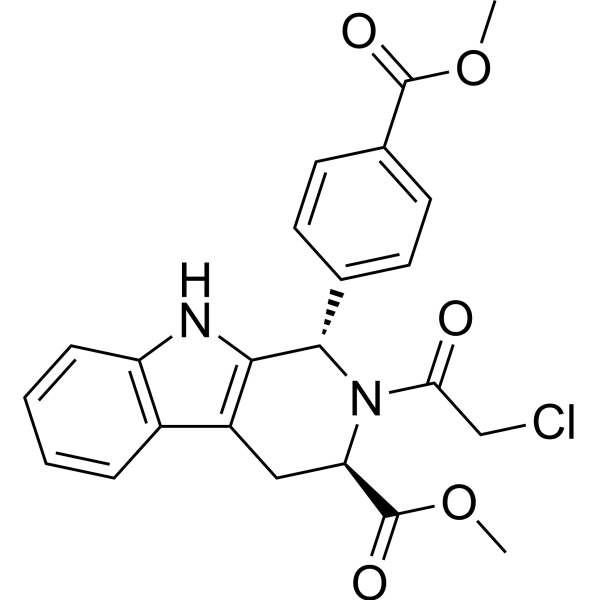
RSL3 ((1S,3R)-RSL3) is an inhibitor of glutathione peroxidase 4 (GPX4) (ferroptosis activator), reduces the expression of GPX4 protein, and induces ferroptotic death of head and neck cancer cell. RSL3 increases the expression of p62 and Nrf2 and inactivates Keap1 in HN3-rslR cells .
loading...
    loading...
262
262 Cited Publications
Cat. No.: HY-12726
CAS No.: 950455-15-9
Purity:  99.70%
Target:  

Ferroptosis

Research Areas:  

Cancer

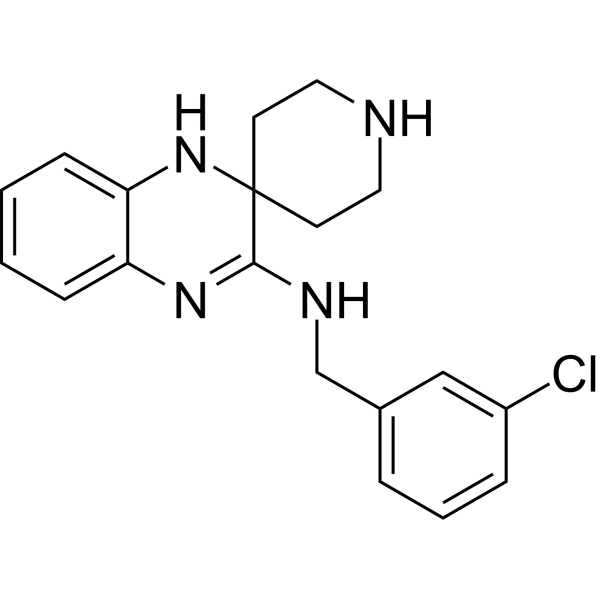
Liproxstatin-1 is a potent ferroptosis inhibitor and inhibits ferroptotic cell death (IC50=22 nM) .
loading...
    loading...
262
262 Cited Publications
Cat. No.: HY-12726A
CAS No.: 2250025-95-5
Purity:  99.31%
Target:  

Ferroptosis

Research Areas:  

Cancer

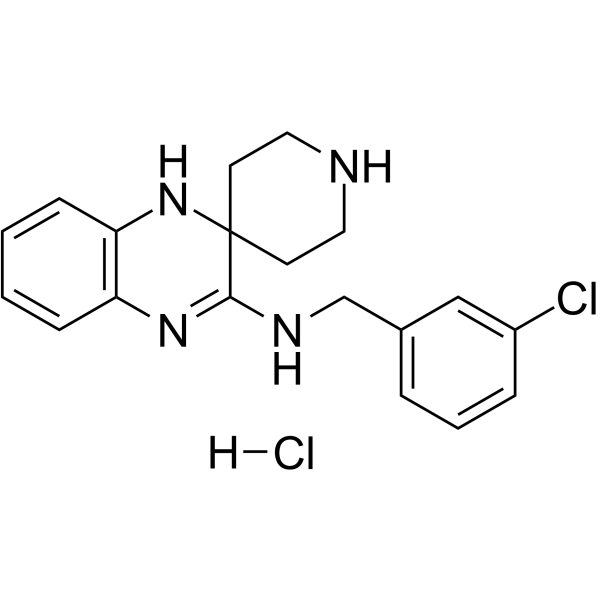
Liproxstatin-1 hydrochloride is a potent ferroptosis inhibitor and inhibits ferroptotic cell death (IC50=22 nM) .
loading...
    loading...
3
3 Cited Publications
Cat. No.: HY-100218C
CAS No.: 1219810-15-7
Purity:  99.52%
Target:  

Drug Isomer Ferroptosis

Research Areas:  

Cancer

(1R,3R)-RSL3 is an isomer of RSL3 (HY-100218A). RSL3 ((1S,3R)-RSL3) is an inhibitor of glutathione peroxidase 4 (GPX4) (ferroptosis activator), reduces the expression of GPX4 protein, and induces ferroptotic death of head and neck cancer cell. RSL3 increases the expression of p62 and Nrf2 and inactivates Keap1 in HN3-rslR cells .
loading...
    loading...
1
1 Cited Publications
Cat. No.: HY-W009300
CAS No.: 3131-23-5
Synonyms: 4-OHE1
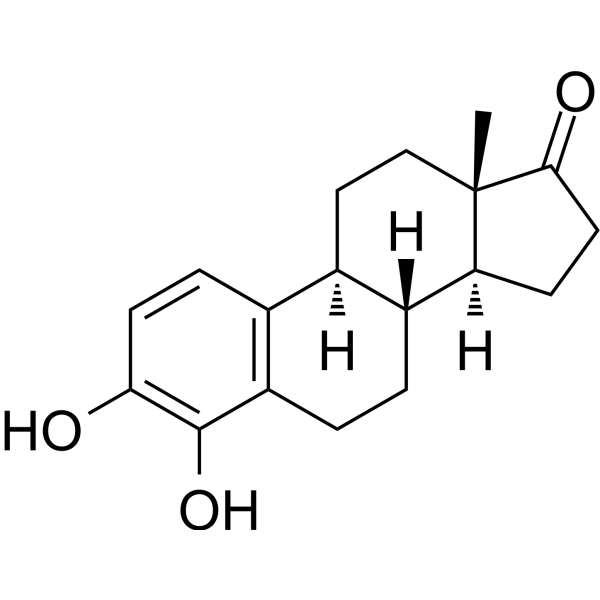
4-Hydroxyestrone (4-OHE1) is a brain-penetrant estrogen metabolite. 4-Hydroxyestrone shows neuroprotective effects involving increased cytoplasmic localization of p53 resulting from SIRT1-mediated p53 deacetylation. 4-Hydroxyestrone relies on PDI to mediate its protective effect against chemically induced ferroptosis in estrogen receptor-negative cancer cells. 4-Hydroxyestrone inhibits lipid peroxidation and lipid-ROS accumulation. 4-Hydroxyestrone blocks preovulatory luteinizing hormone surges in Rattus norvegicus. 4-Hydroxyestrone can be used for the researches of neurodegeneration, breast cancer and endocrine disease .
loading...
    loading...
Cat. No.: HY-161928
CAS No.: 1030098-18-0
GPX4 activator 1 is an allosteric activator of glutathione peroxidase 4 (GPX4) with a Kd value of 5.86 μM. GPX4 activator 1 binds to a specific region of GPX4 to alter protein binding kinetics and counteract ferroptosis (EC50 = 19.19 μM). GPX4 activator 1 inhibits lipid peroxidation, rescues ferroptotic cell death and maintains cell viability. GPX4 activator 1 can be used in studies related to Doxorubicin (HY-15142A)-induced myocardial injury .
loading...
    loading...
Cat. No.: HY-175327
Target:  

ACSL Family Ferroptosis

Research Areas:  

Neurological Disease Cancer

LIBX-A402 is a selective, ATP-dependent inhibitor of ACSL4 (hACSL4, IC50=0.33 μM, Kd=3.3 μM) and an inhibitor of ferroptosis. LIBX-A402 targets the fatty acid-binding pocket of ACSL4 and prevents cells from undergoing ferroptosis. LIBX-A402 can be used in the research of cancer and Parkinson's disease .
loading...
    loading...
Cat. No.: HY-115701
CAS No.: 154436-49-4
Synonyms: 1-Stearoyl-2-15(S)-HpETE-sn-glycero-3-phosphoethanolamine; 15(S)-HpETE-SAPE; 15(S)-hydroperoxyeicostetraenoic acid-SAPE
Target:  

Ferroptosis

Research Areas:  

Inflammation/Immunology

1-Stearoyl-2-15(S)-HpETE-sn-glycero-3-Pe is a phospholipid that contains stearic acid (HY-B2219) at the sn-1 position and 15(S)-HpETE at the sn-2 position. It is produced via oxidation of 1-stearoyl-2-arachidonoyl-sn-glycero-3-Pe (SAPE) by 15-lipoxygenase (15-LO). 1-Stearoyl-2-15(S)-HpETE-sn-glycero-3-Pe (0.6 and 0.9 μM) increases ferroptotic cell death in wild-type and Acsl4 knockout Pfa1 mouse embryonic fibroblasts (MEFs) treated with the GPX4 inhibitor RSL3.
loading...
    loading...
Cat. No.: HY-N8198
CAS No.: 112766-96-8
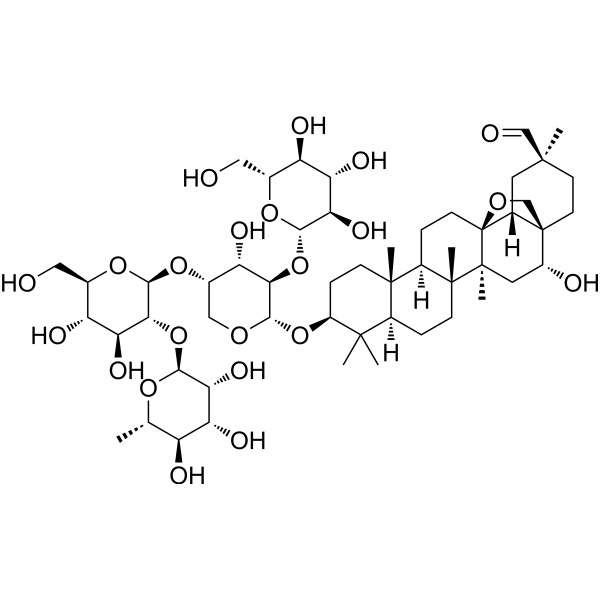
Ardisiacrispin B displays cytotoxic effects in multi-factorial agent resistant cancer cells via ferroptotic and apoptotic cell death .
loading...
    loading...
Cat. No.: HY-139826
CAS No.: 68341-12-8
Purity:  ≥95.0%
Target:  

Ferroptosis

Research Areas:  

Neurological Disease

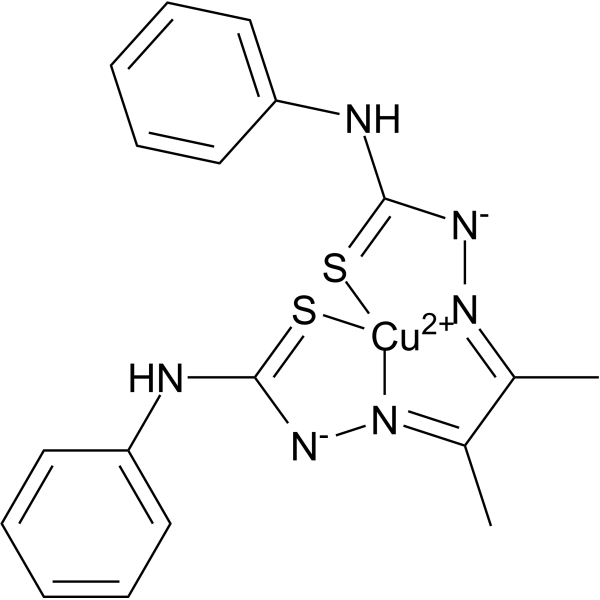
CuATSP, a potent inhibitor of ferroptotic cell death, is almost 20-fold more potent than CuATSM.
loading...
    loading...
Cat. No.: HY-12726S1
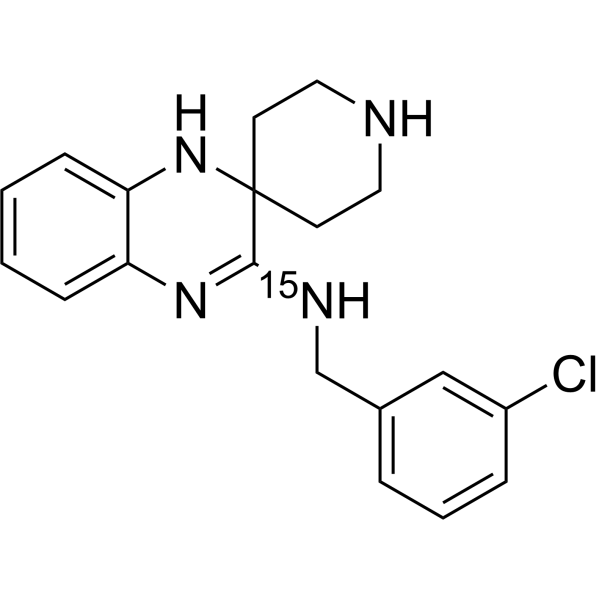
Liproxstatin-1- 15N is the 15N labled Liproxstatin-1 (HY-12726). Liproxstatin-1 is a potent ferroptosis inhibitor and inhibits ferroptotic cell death (IC50=22 nM) .
loading...
    loading...
Cat. No.: HY-163287
CAS No.: 2738332-94-8
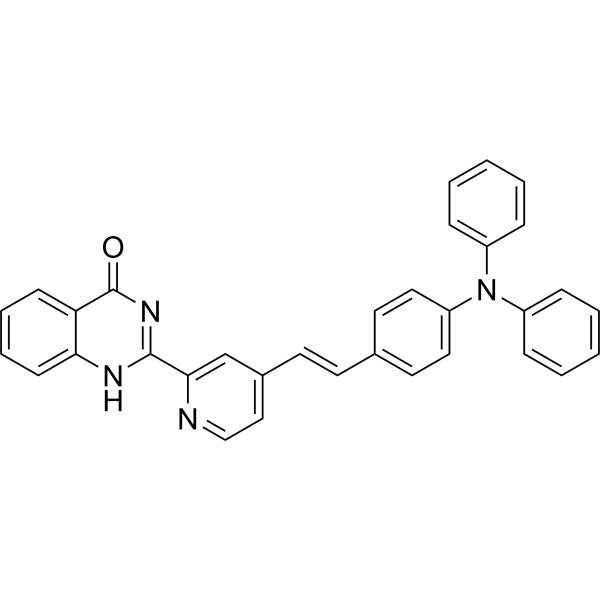
QPy-TPA is a lipopjilc probes, which induces non-ferroptotic cell death and lipid dynamic regularion in B16 and HepG2 cells upon light irradiation. QPy-TPA reveals a maximum absorption wavelength of 400 nm and a maximum emission wavelength of 590 nm .
loading...
    loading...
Cat. No.: HY-12726S
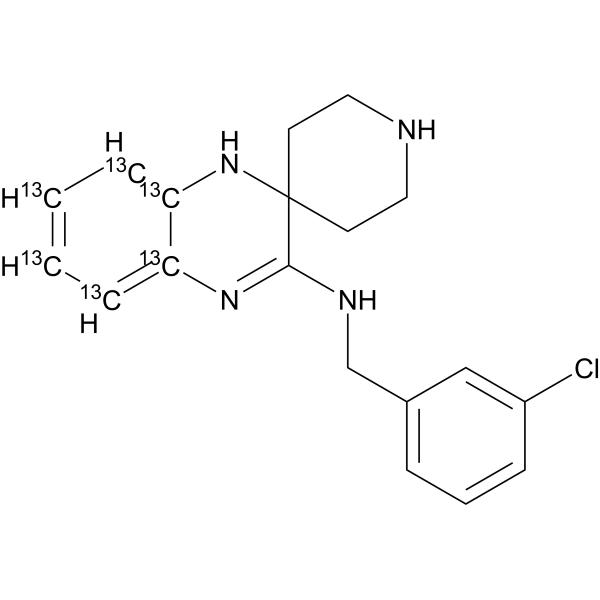
Liproxstatin-1- 13C6 is the 13C labled Liproxstatin-1 (HY-12726). Liproxstatin-1 is a potent ferroptosis inhibitor and inhibits ferroptotic cell death (IC50=22 nM) .
loading...
    loading...
Cat. No.: HY-12726R
CAS No.: 950455-15-9
Research Areas:  

Cancer

Liproxstatin-1 (Standard) is the analytical standard of Liproxstatin-1 (HY-12726). This product is intended for research and analytical applications. Liproxstatin-1 is a potent ferroptosis inhibitor and inhibits ferroptotic cell death (IC50=22 nM) .
loading...
    loading...
Cat. No.: HY-100218AR
CAS No.: 1219810-16-8
Synonyms: (1S,3R)-RSL3 (Standard)
RSL3 (Standard) is the analytical standard of RSL3 (HY-100218A). This product is intended for research and analytical applications. RSL3 ((1S,3R)-RSL3) is an inhibitor of glutathione peroxidase 4 (GPX4) (ferroptosis activator), reduces the expression of GPX4 protein, and induces ferroptotic death of head and neck cancer cell. RSL3 increases the expression of p62 and Nrf2 and inactivates Keap1 in HN3-rslR cells .
loading...
    loading...
Cat. No.: HY-184508
Target:  

Ligands for E3 Ligase

Research Areas:  

Cancer

E3 ligase Ligand 81 is a VHL E3 ubiquitin ligase ligand and constitutes the VHL ligand moiety of R4VPL3-1 (HY-184506). R4VPL3-1 is a PROTAC-like bifunctional degrader linking RNF4 and VHL; it binds to and modifies GPX4, thereby inhibiting its anti-ferroptotic function. R4VPL3-1 induces iron-dependent lipid peroxidation and rapid ferroptosis-mediated cell death in cancer cells. E3 ligase Ligand 81 can be used in research related to targeted protein degradation and tumors such as melanoma .
loading...
    loading...
Cat. No.: HY-100218CR
CAS No.: 1219810-15-7
Research Areas:  

Cancer

(1R,3R)-RSL3 (Standard) is the analytical standard of (1R,3R)-RSL3 (HY-100218C). This product is intended for research and analytical applications. (1R,3R)-RSL3 is an isomer of RSL3 (HY-100218A). RSL3 ((1S,3R)-RSL3) is an inhibitor of glutathione peroxidase 4 (GPX4) (ferroptosis activator), reduces the expression of GPX4 protein, and induces ferroptotic death of head and neck cancer cell. RSL3 increases the expression of p62 and Nrf2 and inactivates Keap1 in HN3-rslR cells .
loading...
    loading...
Cat. No.: HY-184507
CAS No.: 2975257-92-0
Target:  

Ligands for E3 Ligase

Research Areas:  

Cancer

(R,R,R)-AHPC is an E3 ubiquitin ligase ligand and serves as one of the E3 ligands for R4VPL3-1 (HY-184506). R4VPL3-1 is a molecular glue targeting RNF4 and VHL, which binds to and modifies GPX4 to inhibit its anti-ferroptosis function. R4VPL3-1 induces iron-dependent lipid peroxidation and ferroptosis-mediated rapid cell death in cancer cells. R4VPL3-1 can be used for cancer-related research .
loading...
    loading...
Cat. No.: HY-184266
CAS No.: 2926699-71-8
Synonyms: ONO-6428513
Target:  

Ferroptosis

Research Areas:  

Cancer

GCLCi0 (ONO-6428513) is a glutamate-cysteine ligase catalytic subunit (GCLC) inhibitor and ferroptosis inducer that blocks the rate-limiting step of glutathione synthesis and exerts anti-tumor activity. GCLCi0 specifically targets SMARCB1-deficient cancer cells, induces reactive oxygen species production and lipid peroxidation. In addition, GCLCi0 shows a significant synergistic effect with SLC7A11 inhibitors and Telaglenastat (HY-12248). GCLCi0 can be used in the research of smarcb1-deficient malignant rhabdoid tumors and smarcb1-deficient epithelioid sarcomas .
loading...
    loading...
  • 1

