
Search Result
Results for "
fluorescence resonance energy transfer
" in MedChemExpress (MCE) Product Catalog:
-
- HY-15943
-
6-TAMRA
1 Publications Verification
6-Carboxytetramethylrhodamine
|
Fluorescent Dye
|
Others
|
|
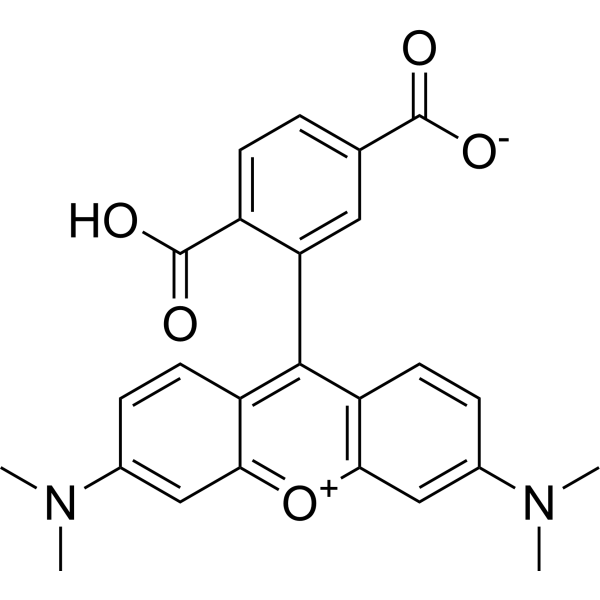
6-TAMRA (6-Carboxytetramethylrhodamine) is a fluorescent dye. 6-TAMRA is often used in combination with 6-FAM (HY-66021) as an acceptor or fluorescence quencher for fluorescence resonance energy transfer (FRET) in biochemical studies such as potassium ion detection and ribonuclease activity assays .
|
-
-
- HY-101027
-
-
-
- HY-152231
-
|
|
Fluorescent Dye
Ligands for E3 Ligase
|
Others
|
|
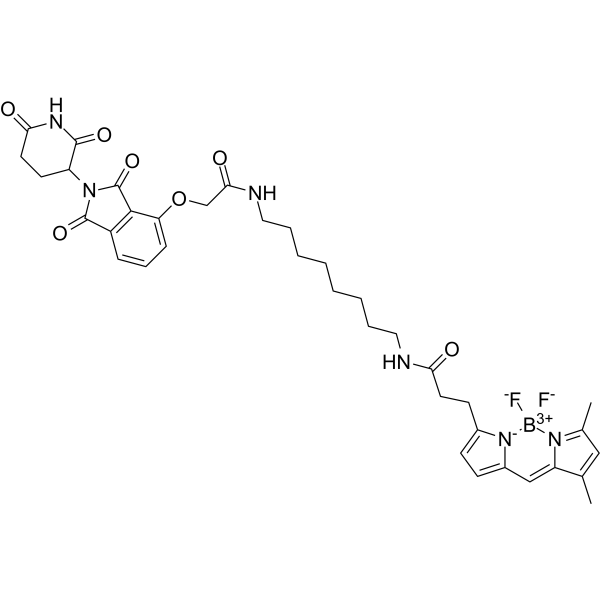
BODIPY FL thalidomide is a high-affinity and selective human cereblon (CRBN)-targeting fluorescent probe with a Kd of 3.6 nM. BODIPY FL thalidomide enables use as a probe in time-resolved fluorescence resonance energy transfer (TR-FRET) binding assays for cereblon ligands. BODIPY FL thalidomide supports development of highly sensitive, selective, stable cereblon TR-FRET binding assays (Ex/Em = 502/510 nm) .
|
-
-
- HY-D1725
-
|
|
Fluorescent Dye
DNA Stain
|
Others
|
|
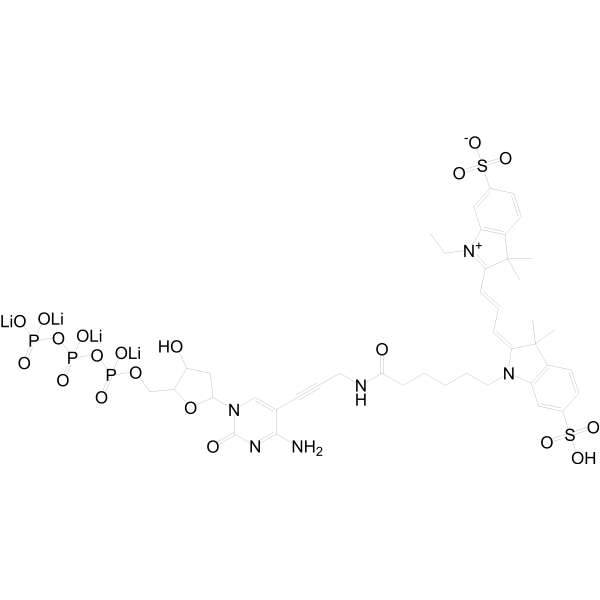
Cy3-dCTP is a directly fluorescently labeled deoxyribonucleotide, in which Cy3 is a cyanine fluorescent dye. Cy3-dCTP is used for direct enzymatic labeling of DNA and cDNA: with the aid of DNA polymerases, this modified nucleotide is incorporated into the extending DNA strand during processes such as reverse transcription, PCR, nick translation or random primer labeling .
|
-
-
- HY-P3722
-
|
|
Fluorescent Dye
MMP
|
Others
|
|
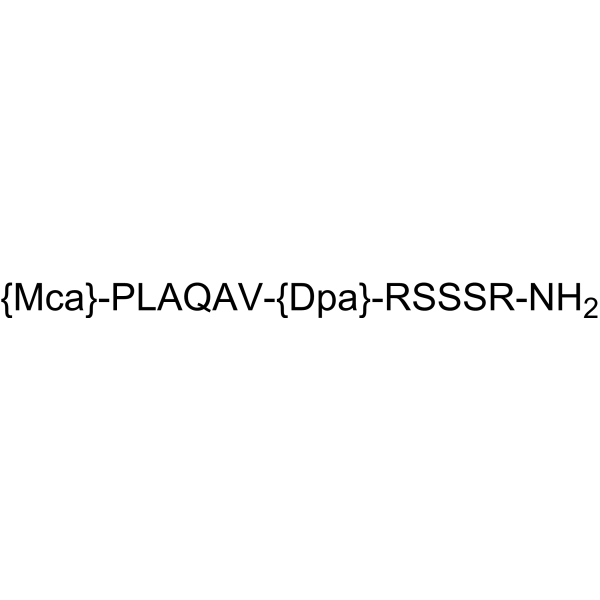
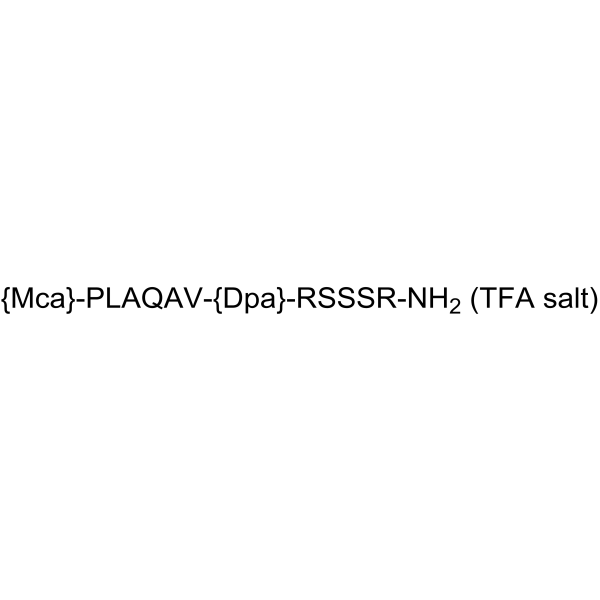
Mca-PLAQAV-Dpa-RSSSR-NH2 is a fluorescent substrate peptide that can be used to detect ADAM9, ADAM10, and tumor necrosis factor-α converting enzyme (TACE/ADAM17). Mca-PLAQAV-Dpa-RSSSR-NH2 is a fluorescence resonance energy transfer-based substrate, and its activity can be determined by changes in fluorescence intensity upon cleavage (Ex = 320 nm
; Em = 405 nm) .
|
-
-
- HY-P99900
-
|
MSL-109
|
CMV
|
Infection
|
|
Sevirumab (MSL-109) is a human IgG1 neutralizing monoclonal antibody against cytomegalovirus (CMV). Sevirumab recognizes CMV gH complexes and inhibits CMV replication with an EC50 of 0.3 μg/mL .
|
-
-
- HY-101027A
-
-
-
- HY-D1703
-
|
|
Fluorescent Dye
|
Others
|
|
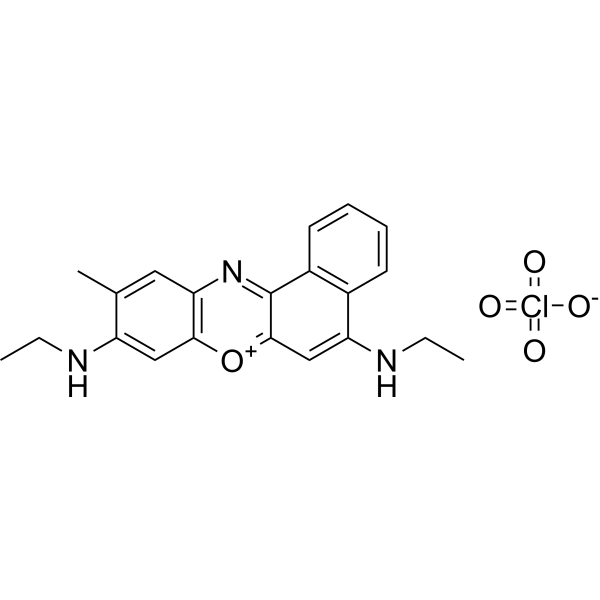
Oxazine 170 perchlorate is a laser dye with a wide excitation spectrum range (300−550 nm), which strongly absorbs light with a wavelength greater than 550 nm, and it emits fluorescence with a wavelength of about 645 nm .
|
-
-
- HY-D1682
-
|
|
Fluorescent Dye
|
Others
|
|
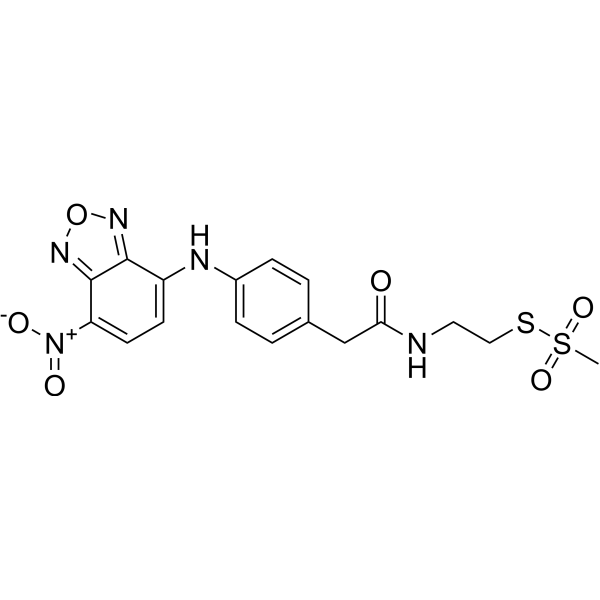
NFQ1 is a non-fluorescent quencher (absorption wavelength: 474 nm), and is used for a new type of One Sample Fluorescence Resonance Energy Transfer (OS-FRET) method. OS-FRET enable measurement of unquenched donor emission in the same sample. NFQ1 shows broad absorption spectrum ensuring its utility as a dark acceptor for many donors .
|
-
-
- HY-P3722A
-
|
|
Fluorescent Dye
MMP
|
Others
|
|
Mca-PLAQAV-Dpa-RSSSR-NH2 TFA is a fluorescent substrate peptide that can be used to detect ADAM9, ADAM10, and tumor necrosis factor-α converting enzyme (TACE/ADAM17). Mca-PLAQAV-Dpa-RSSSR-NH2 TFA is a fluorescence resonance energy transfer-based substrate, and its activity can be determined by changes in fluorescence intensity upon cleavage (Ex = 320 nm
; Em = 405 nm) .
|
-
-
- HY-42984
-
|
|
Biochemical Assay Reagents
|
Others
|
|
BHQ-2 NHS is a dark quencher with no native emission due to the polyaromatic-azo backbone and a terminal NHS ester. UBHQ-2 NHS has a wide and intense quenching range from 560-670 nm, which makes it useful as an acceptor in fluorescence resonance energy transfer (FRET) applications in conjunction with orange to far-red emitting dyes. The NHS ester can be applied to label the primary amines (-NH2) of proteins, amine-modified oligonucleotides, and other amine-containing molecules.
|
-
-
- HY-D1773
-
|
|
Fluorescent Dye
DNA Alkylator/Crosslinker
|
Others
|
|
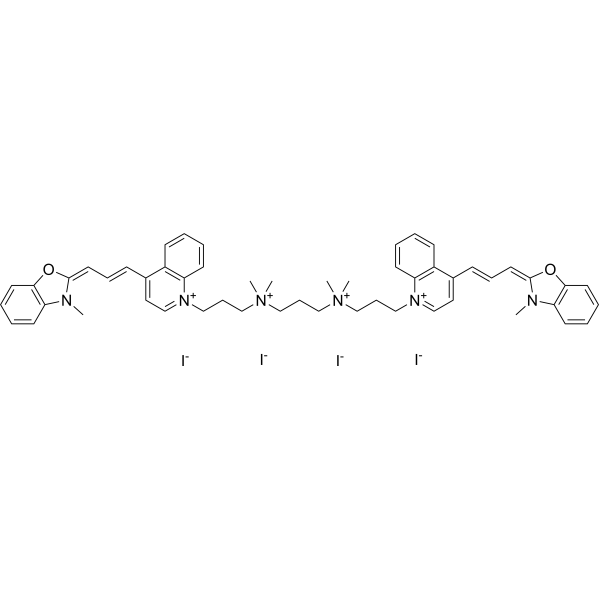
YOYO-3 is a trimethine cyanine homodimer dye. YOYO-3 intercalates into AF488-tagged dsDNA molecules at the single-molecule level. YOYO-3 has a greater affinity for DNA than do EB and other Cyanine dyes .
|
-
-
- HY-P4920
-
|
|
Fluorescent Dye
|
Others
|
|
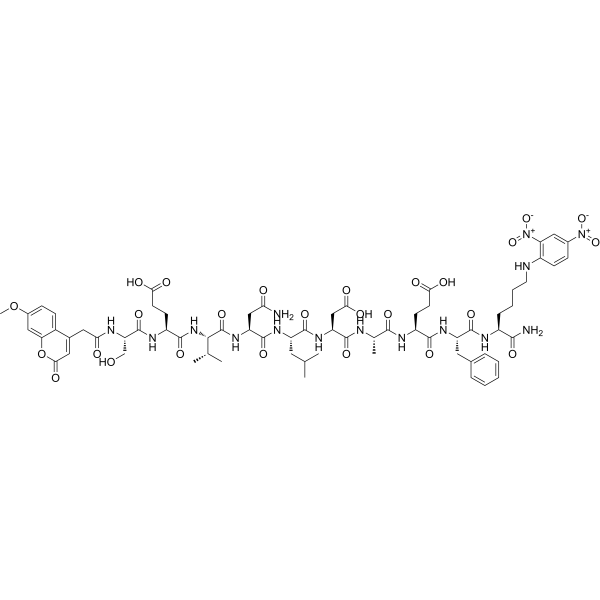
Mca-SEVNLDAEFK(Dnp)-NH2 contains a highly fluorescent 7-methoxycoumarin group that is efficiently quenched by resonance energy transfer to the 2,4-dinitrophenyl group. It can be used to measure the activities of peptidases that are capable of cleaving an amide bond between the fluorescent group and the quencher group, causing an increase in fluorescence, such as can be used to measure the activity of BACE-1 .
|
-
-
- HY-P5485
-
|
|
Bacterial
|
Others
|
|
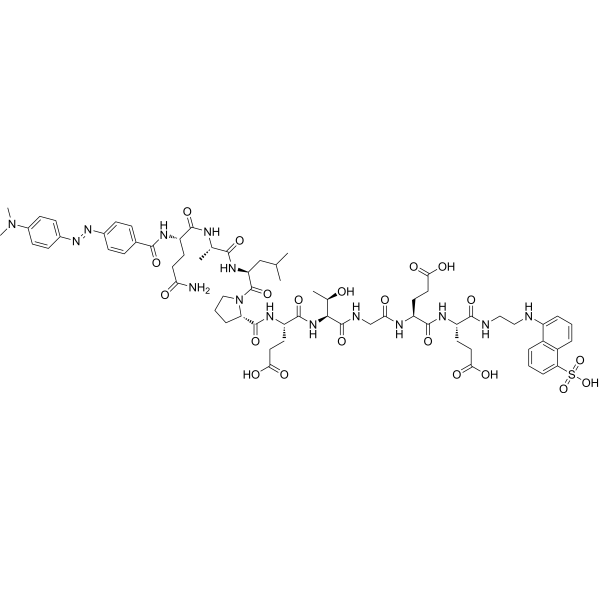
Dabcyl-QALPETGEE-Edans is a synthetic peptide substrate for fluorescence resonance energy transfer (FRET) detection of Sortase A (SrtA) enzymatic activity. Dabcyl-QALPETGEE-Edans is labeled at both ends with the fluorescent group Edans (donor) and the quencher Dabcyl (acceptor), respectively. Dabcyl-QALPETGEE-Edans's central sequence contains a conserved motif specifically recognized by SrtA. Dabcyl-QALPETGEE-Edans demonstrates high sensitivity in vitro assays, enabling precise determination of the half-maximal inhibitory concentration of SrtA .
|
-
-
- HY-D2413
-
|
BODIPY FL PEG4-VH032
|
Fluorescent Dye
|
Others
|
|
BODIPY FL VH032 is a high-affinity VHL fluorescent probe with a Kd value of 3.01 nM. BODIPY FL VH032 consists of von Hippel-Lindau (VHL) ligand VH032 (HY-120217) and BODIPY FL (HY-43520). BODIPY FL VH032 can be used for time-resolved fluorescence resonance energy transfer (TR-FRET) detection for high-throughput identification and characterization of VHL ligands with maximum excitation emission wavelength: 504/520 nm .
|
-
-
- HY-157558
-
|
8SGE
|
Ligands for E3 Ligase
|
Others
|
|
KDRLKZ-1 is a KLHDC2 ligand (Kd = 0.36 μM), with IC50s of 0.21 μM and 0.31 μM in alphaLISA and time-resolved fluorescence resonance energy transfer (TR-FRET) displacement assays .
|
-
-
- HY-173308
-
|
|
Fluorescent Dye
|
Others
|
|
QSY-21 is a fluorescence quencher. QSY-21 possesses broad absorption in far red and NIR range, and can quench fluorescence of dyes that emit in this region. This is a carboxylic acid derivative. QSY-21 has intense absorption maximum at 661 nm, making it useful as an acceptor in fluorescence resonance energy transfer (FRET) applications. It is a common quencher for Cyanine5, Cyanine5.5, AF 647, or other spectrally similar fluorescent dyes.
|
-
-
- HY-W324458
-
|
|
Fluorescent Dye
|
Others
|
|
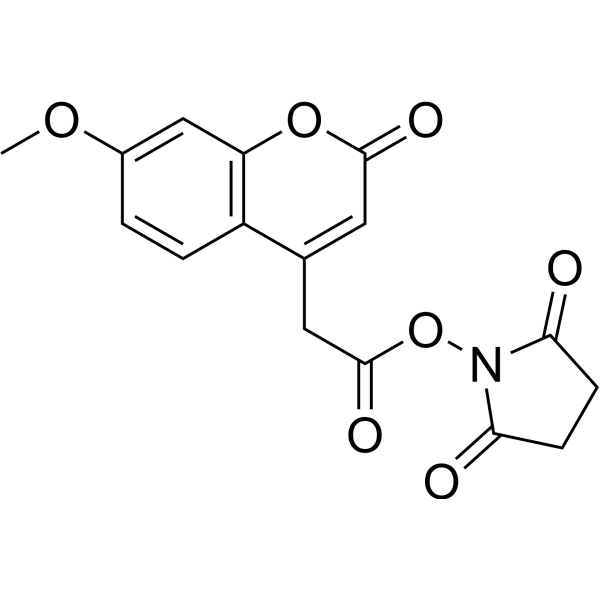
MCA succinimidyl ester is a derivative of MCA (HY-W027544). MCA succinimidyl ester has succinimidyl ester can react selectively with amines. MCA succinimidyl ester can be used as peptide substrate for fluorescence resonance energy transfer .
|
-
-
- HY-P10344
-
|
|
Fluorescent Dye
|
Infection
|
|
MCA-AVLQSGFR-Lys(Dnp)-Lys-NH2 is a fluorescent substrate used for fluorescence resonance energy transfer (FRET) protease assays. This substrate is employed to measure the activity of SARS-CoV-2 3CLpro .
|
-
-
- HY-D2735
-
|
|
Fluorescent Dye
|
Others
|
|
QSY-9-succinimidyl ester is a nonfluorescent acceptor molecule with a terminal NHS ester group. QSY-9-succinimidyl ester has a wide and intense quenching range from 500-600 nm that makes it useful as an acceptor in fluorescence resonance energy transfer (FRET) applications in conjunction with fluorescent dyes at 500 nm to 600 nm. The NHS ester can be applied to label the primary amines (-NH2) of proteins, amine-modified oligonucleotides, and other amine-containing molecules.
|
-
-
- HY-172309
-
|
|
Fluorescent Dye
|
Others
|
|
UBQ-3 NHS Ester is a fluroescent agent with a terminal NHS ester group. UBQ-3 NHS Ester has a wide quenching range from 620-730 nm, which makes the compound useful as an acceptor in fluorescence resonance energy transfer (FRET) applications in conjunction with far-red to near-IR emitting dyes such as Cy5, Cy5.5, Alexa Fluor 633, 647, 700. The NHS ester can be applied to label the primary amines (-NH2) of proteins, amine-modified oligonucleotides, and other amine-containing molecules.
|
-
-
- HY-146578
-
|
|
Keap1-Nrf2
|
Inflammation/Immunology
|
|
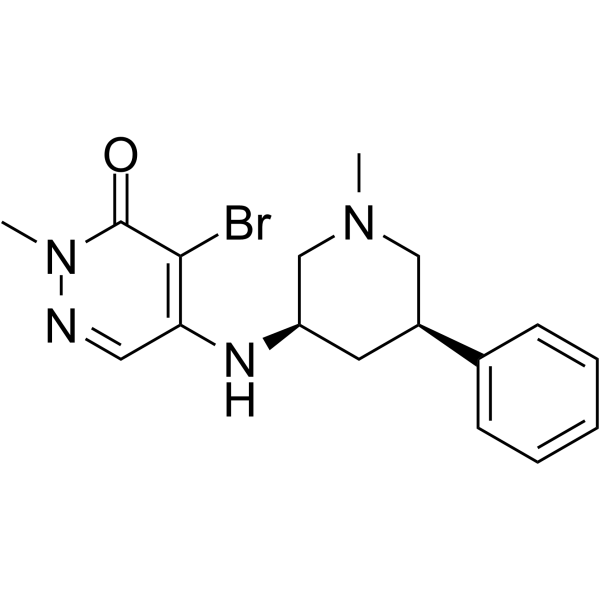
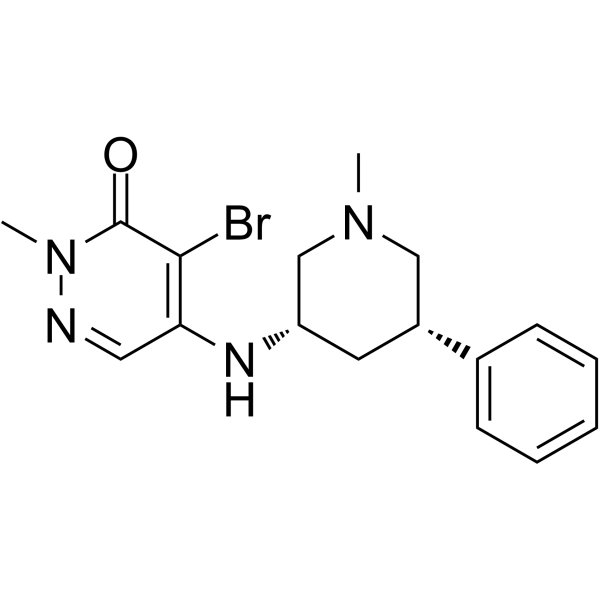
Keap1-Nrf2-IN-8 (compound 12d) is a potent Keap1-Nrf2 PPI (Keap1-Nrf2 protein−protein interaction) inhibitor with IC50s of 64.5 nM and 14.2 nM for FP and TR-FRET assays, respectively. Keap1-Nrf2-IN-8 significantly increases the mRNA levels of Nrf2 downstream genes, GSTM3, HMOX2 and NQO1 .
|
-
-
- HY-D3328
-
|
|
Fluorescent Dye
|
Others
|
|
APC-Cy5.5 is a tandem dye widely used in flow cytometry. It consists of the energy donor allophycocyanin (APC) and the energy acceptor Cy5.5, and operates via the fluorescence resonance energy transfer mechanism (Ex/Em = 650 nm/690 nm) .
|
-
-
- HY-D3275
-
|
|
Fluorescent Dye
|
Others
|
|
PE-Cy5.5 is a far-red emitting tandem dye designed based on the principle of fluorescence resonance energy transfer (FRET), and is widely used in multicolor flow cytometry. PE-Cy5.5 consists of phycoerythrin (PE) as the energy donor and the cyanine dye Cy5.5 as the energy acceptor. Upon excitation by blue or green laser light, PE absorbs energy and transfers it to Cy5.5 via FRET, ultimately resulting in Cy5.5 emitting characteristic far-red fluorescence (Ex/Em = 450-500 nm/698 nm) .
|
-
-
- HY-D3277
-
|
|
Fluorescent Dye
|
Others
|
|
PE-VF594 is a high-brightness fluorescent dye used in flow cytometry, primarily for labeling antibodies or streptavidin to help identify specific cell subpopulations. PE-VF594 is a tandem dye composed of two covalently linked fluorescent groups: one is phycoerythrin (PE), responsible for absorbing laser energy; the other is the receptor molecule VF594. Energy is transferred from PE to VF594 via fluorescence resonance energy transfer (FRET) mechanism (Ex/Em = 450-500 nm/614 nm) .
|
-
-
- HY-101027R
-
-
-
- HY-D3251
-
|
|
Fluorescent Dye
|
Cancer
|
|
LCP is a fluorescent probe applicable for subcellular localization. LCP responds to polarity changes in the cellular microenvironment via fluorescence resonance energy transfer, emitting blue fluorescence in low-polarity environments and red fluorescence in high-polarity environments. LCP enables dual-color visualization of dynamic changes in lysosomes and cytoplasmic membranes during drug-induced cell apoptosis, and monitors cell viability through localization and emission color changes. LCP can be used in cancer research .
|
-
-
- HY-101027AR
-
-
-
- HY-D3334
-
|
|
Fluorescent Dye
CD74
|
Others
|
|
PE-CF594 is a labeled monoclonal antibody conjugate that specifically binds to HLA-DR on the surface of monocytes and B cells, while acting as a signal attenuator. Through steric hindrance and a possible fluorescence resonance energy transfer mechanism, PE-CF594 specifically reduces the fluorescence intensity of PE-CD124 staining, but does not interfere with the staining of other PE-labeled antibodies such as CD40, CD4 or CD14. PE-CF594 can also be used to detect the emission signal of mt-Keima after excitation with a 561-nm laser, thereby effectively evaluating mitophagy activity .
|
-
-
- HY-15943
-
6-TAMRA
1 Publications Verification
6-Carboxytetramethylrhodamine
|
蛍光色素
|
|
6-TAMRA (6-Carboxytetramethylrhodamine) is a fluorescent dye. 6-TAMRA is often used in combination with 6-FAM (HY-66021) as an acceptor or fluorescence quencher for fluorescence resonance energy transfer (FRET) in biochemical studies such as potassium ion detection and ribonuclease activity assays .
|
-
- HY-D1725
-
|
|
蛍光色素
|
|
Cy3-dCTP is a directly fluorescently labeled deoxyribonucleotide, in which Cy3 is a cyanine fluorescent dye. Cy3-dCTP is used for direct enzymatic labeling of DNA and cDNA: with the aid of DNA polymerases, this modified nucleotide is incorporated into the extending DNA strand during processes such as reverse transcription, PCR, nick translation or random primer labeling .
|
-
- HY-D1703
-
|
|
蛍光色素
|
|
Oxazine 170 perchlorate is a laser dye with a wide excitation spectrum range (300−550 nm), which strongly absorbs light with a wavelength greater than 550 nm, and it emits fluorescence with a wavelength of about 645 nm .
|
-
- HY-D1682
-
|
|
蛍光色素
|
|
NFQ1 is a non-fluorescent quencher (absorption wavelength: 474 nm), and is used for a new type of One Sample Fluorescence Resonance Energy Transfer (OS-FRET) method. OS-FRET enable measurement of unquenched donor emission in the same sample. NFQ1 shows broad absorption spectrum ensuring its utility as a dark acceptor for many donors .
|
-
- HY-42984
-
|
|
蛍光色素
|
|
BHQ-2 NHS is a dark quencher with no native emission due to the polyaromatic-azo backbone and a terminal NHS ester. UBHQ-2 NHS has a wide and intense quenching range from 560-670 nm, which makes it useful as an acceptor in fluorescence resonance energy transfer (FRET) applications in conjunction with orange to far-red emitting dyes. The NHS ester can be applied to label the primary amines (-NH2) of proteins, amine-modified oligonucleotides, and other amine-containing molecules.
|
-
- HY-D1773
-
|
|
蛍光色素
|
|
YOYO-3 is a trimethine cyanine homodimer dye. YOYO-3 intercalates into AF488-tagged dsDNA molecules at the single-molecule level. YOYO-3 has a greater affinity for DNA than do EB and other Cyanine dyes .
|
-
- HY-D2413
-
|
BODIPY FL PEG4-VH032
|
蛍光色素
|
|
BODIPY FL VH032 is a high-affinity VHL fluorescent probe with a Kd value of 3.01 nM. BODIPY FL VH032 consists of von Hippel-Lindau (VHL) ligand VH032 (HY-120217) and BODIPY FL (HY-43520). BODIPY FL VH032 can be used for time-resolved fluorescence resonance energy transfer (TR-FRET) detection for high-throughput identification and characterization of VHL ligands with maximum excitation emission wavelength: 504/520 nm .
|
-
- HY-173308
-
|
|
蛍光色素
|
|
QSY-21 is a fluorescence quencher. QSY-21 possesses broad absorption in far red and NIR range, and can quench fluorescence of dyes that emit in this region. This is a carboxylic acid derivative. QSY-21 has intense absorption maximum at 661 nm, making it useful as an acceptor in fluorescence resonance energy transfer (FRET) applications. It is a common quencher for Cyanine5, Cyanine5.5, AF 647, or other spectrally similar fluorescent dyes.
|
-
- HY-W324458
-
|
|
蛍光色素
|
|
MCA succinimidyl ester is a derivative of MCA (HY-W027544). MCA succinimidyl ester has succinimidyl ester can react selectively with amines. MCA succinimidyl ester can be used as peptide substrate for fluorescence resonance energy transfer .
|
-
- HY-D2735
-
|
|
蛍光色素
|
|
QSY-9-succinimidyl ester is a nonfluorescent acceptor molecule with a terminal NHS ester group. QSY-9-succinimidyl ester has a wide and intense quenching range from 500-600 nm that makes it useful as an acceptor in fluorescence resonance energy transfer (FRET) applications in conjunction with fluorescent dyes at 500 nm to 600 nm. The NHS ester can be applied to label the primary amines (-NH2) of proteins, amine-modified oligonucleotides, and other amine-containing molecules.
|
-
- HY-D3328
-
|
|
蛍光色素
|
|
APC-Cy5.5 is a tandem dye widely used in flow cytometry. It consists of the energy donor allophycocyanin (APC) and the energy acceptor Cy5.5, and operates via the fluorescence resonance energy transfer mechanism (Ex/Em = 650 nm/690 nm) .
|
-
- HY-D3275
-
|
|
蛍光色素
|
|
PE-Cy5.5 is a far-red emitting tandem dye designed based on the principle of fluorescence resonance energy transfer (FRET), and is widely used in multicolor flow cytometry. PE-Cy5.5 consists of phycoerythrin (PE) as the energy donor and the cyanine dye Cy5.5 as the energy acceptor. Upon excitation by blue or green laser light, PE absorbs energy and transfers it to Cy5.5 via FRET, ultimately resulting in Cy5.5 emitting characteristic far-red fluorescence (Ex/Em = 450-500 nm/698 nm) .
|
-
- HY-D3277
-
|
|
蛍光色素
|
|
PE-VF594 is a high-brightness fluorescent dye used in flow cytometry, primarily for labeling antibodies or streptavidin to help identify specific cell subpopulations. PE-VF594 is a tandem dye composed of two covalently linked fluorescent groups: one is phycoerythrin (PE), responsible for absorbing laser energy; the other is the receptor molecule VF594. Energy is transferred from PE to VF594 via fluorescence resonance energy transfer (FRET) mechanism (Ex/Em = 450-500 nm/614 nm) .
|
-
- HY-D3251
-
|
|
蛍光色素
|
|
LCP is a fluorescent probe applicable for subcellular localization. LCP responds to polarity changes in the cellular microenvironment via fluorescence resonance energy transfer, emitting blue fluorescence in low-polarity environments and red fluorescence in high-polarity environments. LCP enables dual-color visualization of dynamic changes in lysosomes and cytoplasmic membranes during drug-induced cell apoptosis, and monitors cell viability through localization and emission color changes. LCP can be used in cancer research .
|
-
- HY-D3334
-
|
|
蛍光色素
|
|
PE-CF594 is a labeled monoclonal antibody conjugate that specifically binds to HLA-DR on the surface of monocytes and B cells, while acting as a signal attenuator. Through steric hindrance and a possible fluorescence resonance energy transfer mechanism, PE-CF594 specifically reduces the fluorescence intensity of PE-CD124 staining, but does not interfere with the staining of other PE-labeled antibodies such as CD40, CD4 or CD14. PE-CF594 can also be used to detect the emission signal of mt-Keima after excitation with a 561-nm laser, thereby effectively evaluating mitophagy activity .
|
-
- HY-P3722
-
|
|
Fluorescent Dye
MMP
|
Others
|
|
Mca-PLAQAV-Dpa-RSSSR-NH2 is a fluorescent substrate peptide that can be used to detect ADAM9, ADAM10, and tumor necrosis factor-α converting enzyme (TACE/ADAM17). Mca-PLAQAV-Dpa-RSSSR-NH2 is a fluorescence resonance energy transfer-based substrate, and its activity can be determined by changes in fluorescence intensity upon cleavage (Ex = 320 nm
; Em = 405 nm) .
|
-
- HY-P3722A
-
|
|
Fluorescent Dye
MMP
|
Others
|
|
Mca-PLAQAV-Dpa-RSSSR-NH2 TFA is a fluorescent substrate peptide that can be used to detect ADAM9, ADAM10, and tumor necrosis factor-α converting enzyme (TACE/ADAM17). Mca-PLAQAV-Dpa-RSSSR-NH2 TFA is a fluorescence resonance energy transfer-based substrate, and its activity can be determined by changes in fluorescence intensity upon cleavage (Ex = 320 nm
; Em = 405 nm) .
|
-
- HY-P4920
-
|
|
Fluorescent Dye
|
Others
|
|
Mca-SEVNLDAEFK(Dnp)-NH2 contains a highly fluorescent 7-methoxycoumarin group that is efficiently quenched by resonance energy transfer to the 2,4-dinitrophenyl group. It can be used to measure the activities of peptidases that are capable of cleaving an amide bond between the fluorescent group and the quencher group, causing an increase in fluorescence, such as can be used to measure the activity of BACE-1 .
|
-
- HY-P5485
-
|
|
Bacterial
|
Others
|
|
Dabcyl-QALPETGEE-Edans is a synthetic peptide substrate for fluorescence resonance energy transfer (FRET) detection of Sortase A (SrtA) enzymatic activity. Dabcyl-QALPETGEE-Edans is labeled at both ends with the fluorescent group Edans (donor) and the quencher Dabcyl (acceptor), respectively. Dabcyl-QALPETGEE-Edans's central sequence contains a conserved motif specifically recognized by SrtA. Dabcyl-QALPETGEE-Edans demonstrates high sensitivity in vitro assays, enabling precise determination of the half-maximal inhibitory concentration of SrtA .
|
-
- HY-P10344
-
|
|
Fluorescent Dye
|
Infection
|
|
MCA-AVLQSGFR-Lys(Dnp)-Lys-NH2 is a fluorescent substrate used for fluorescence resonance energy transfer (FRET) protease assays. This substrate is employed to measure the activity of SARS-CoV-2 3CLpro .
|
| 製品番号 |
製品名 |
Target |
研究分野 |
Image |
-
- HY-P99900
-
|
MSL-109
|
CMV
|
Infection
|
|
Sevirumab (MSL-109) is a human IgG1 neutralizing monoclonal antibody against cytomegalovirus (CMV). Sevirumab recognizes CMV gH complexes and inhibits CMV replication with an EC50 of 0.3 μg/mL .
|
-
(5)
-
- HY-D1725
-
|
|
|
Labeling and Fluorescence Imaging
|
|
Cy3-dCTP is a directly fluorescently labeled deoxyribonucleotide, in which Cy3 is a cyanine fluorescent dye. Cy3-dCTP is used for direct enzymatic labeling of DNA and cDNA: with the aid of DNA polymerases, this modified nucleotide is incorporated into the extending DNA strand during processes such as reverse transcription, PCR, nick translation or random primer labeling .
|
入力情報は安全に管理されます. ※ 必須入力項目.
Inquiry Information
- 製品名:
- 製品番号:
- 数量:
- MCE 日本正規代理店:

