

27 Results for "

hippocampal long-term potentiation

" in MedChemExpress (MCE) Product Catalog:
Products (27)

27 Results for "hippocampal long-term potentiation" in MCE Product Catalog:

50
50 Publications Verification
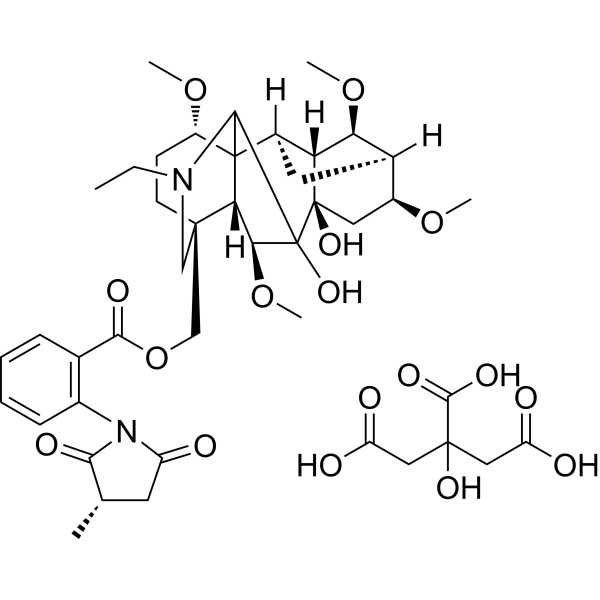
Cat. No.: HY-N2332A
CAS No.: 351344-10-0
Synonyms: MLA citrate
Methyllycaconitine (MLA) citrate is a blood-brain barrier-permeable antagonist of α7 nicotinic acetylcholine receptor (α7nAChR) with an IC50 of 2 nM. Methyllycaconitine citrate inhibits Aβ25-35-induced autophagy by restoring the mTOR pathway, and prevents reactive oxygen species (ROS) production, microglial activation, reduced dopamine uptake, loss of dopaminergic terminals and catecholamine secretion. Methyllycaconitine citrate induces hippocampal glutamate efflux, enhances long-term potentiation, and improves memory acquisition. Methyllycaconitine citrate can be used in research related to Alzheimer's disease, cerebral palsy, Parkinson's disease and schizophrenia .
loading...
    loading...
Cat. No.: HY-101955A
CAS No.: 1430202-69-9
Purity:  99.61%
Synonyms: (2R,6R)-HNK hydrochloride
Target:  

Drug Metabolite

Research Areas:  

Neurological Disease

(2R,6R)-Hydroxynorketamine ((2R,6R)-HNK) hydrochloride is an active ketamine metabolite with no NMDAR binding activity. (2R,6R)-Hydroxynorketamine hydrochloride rescues impaired dorsal hippocampal long-term potentiation and restores robust long-term potentiation in the hippocampal SC-CA1 pathway. (2R,6R)-Hydroxynorketamine hydrochloride can be used for research on depression .
loading...
    loading...
Cat. No.: HY-P5883
CAS No.: 2126166-03-6
Synonyms: tatM2NX
Target:  

TRP Channel

TAT-M2NX (tatM2NX) is a selective inhibitor targeting human TRPM2 channels and exerts inhibitory effects on ischemic stroke. TAT-M2NX reduces H2O2-induced calcium influx via TRPM2 channels. After traumatic brain injury in mice, TAT-M2NX preserves hippocampal long-term potentiation, improves memory function, and reduces infarct volume after middle cerebral artery occlusion, but it shows no effect on female mice. TAT-M2NX can be used in studies related to traumatic brain injury and ischemic stroke .
loading...
    loading...
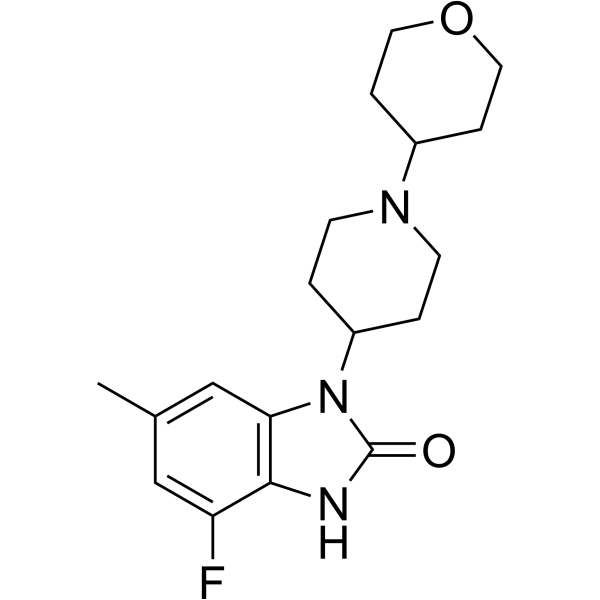
Cat. No.: HY-107111
CAS No.: 932373-87-0
Purity:  98.78%
Target:  

mAChR

Research Areas:  

Neurological Disease

GSK1034702 is an orally active and allosteric agonist of M1 mAChR (pEC50=8.1) that can cross the blood-brain barrier. GSK1034702 activates the Gq/11 protein-mediated signaling pathway, enhancing neuronal firing and long-term potentiation (LTP) in the CA1 region of the hippocampus. GSK1034702 can modulate hippocampal function, improve memory encoding in the nicotine withdrawal cognitive dysfunction model, and show pro-cognitive effects in rodents. GSK1034702 can be used for the study of the mechanisms of cognitive impairment diseases such as Alzheimer's disease, and has certain peripheral M receptor activation-related side effects (such as gastrointestinal reactions) .
loading...
    loading...
Cat. No.: HY-P3688A
Synonyms: Aβ (1-38) TFA; Aβ38 TFA
Target:  

Amyloid-β

Research Areas:  

Neurological Disease

β-Amyloid (1-38) (Aβ (1-38)) TFA is a β-Amyloid (Aβ) peptide. β-Amyloid (1-38) TFA interferes with the conversion of Aβ(1-42) to a β-sheet-rich aggregate. β-Amyloid (1-38)TFA reverses the negative impact of Aβ(1-42) on long-term potentiation in acute hippocampal slices and on membrane conductance in primary neurons, and mitigates an Aβ(1-42) phenotype in Caenorhabditis elegans .
loading...
    loading...
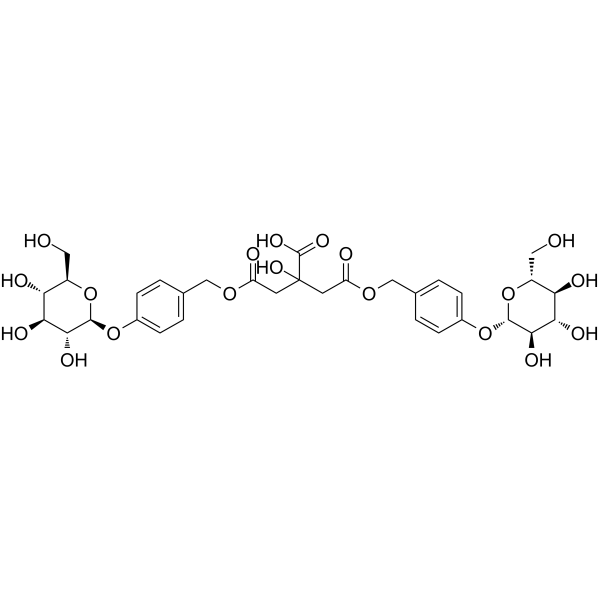
Cat. No.: HY-N2125
CAS No.: 174972-80-6
Parishin C is a brain-penetrant major bioactive component found in Gastrodia elata Blume. Parishin C is a 5-HT1A receptor agonist with an EC50 of 34 nM. Parishin C has antipsychotic and neuroprotective effects. Parishin C protects against Aβ-induced long-term potentiation damage and NMDA receptor current impairment. Parishin C reduces oxidative stress, pro-inflammatory cytokine levels, caspase activity, brain water content, and cerebral infarct volume; increases antioxidant enzyme activity and BDNF levels; improves nerve function and histopathological brain damage. Parishin C attenuates phencyclidine-induced immobility time increases, sociability deficits, and visual recognition memory impairment. Parishin C can be used for the research of ischemic stroke, Alzheimer's disease, and schizophrenia-like psychosis .
loading...
    loading...
Cat. No.: HY-164288
CAS No.: 2287331-29-5
Synonyms: TDI-006570
TDI-6570 (TDI-006570) is a blood-brain barrier-permeable, orally active cGAS inhibitor with an IC50 of 1.64 μM. TDI-6570 exhibits high gastrointestinal absorption and a long brain half-life in mice, and shows no toxicity to primary neurons. By inhibiting the cGAS-STING-IFN signaling pathway, TDI-6570 reduces STING levels and the activation of TBK1, blocks double-stranded DNA-induced cGAS activation and downstream interferon-stimulated gene expression, thereby reducing tau protein spread and improving synaptic loss. TDI-6570 reverses memory deficits, increases the amplitude of long-term potentiation, enhances the MEF2C transcriptional network, restores PSD-95 and vGAT punctate structures, and significantly improves cognitive resilience. TDI-6570 can be applied to the research of Alzheimer's disease, Parkinson's disease, systemic lupus erythematosus, as well as various central nervous system and autoimmune diseases .
loading...
    loading...
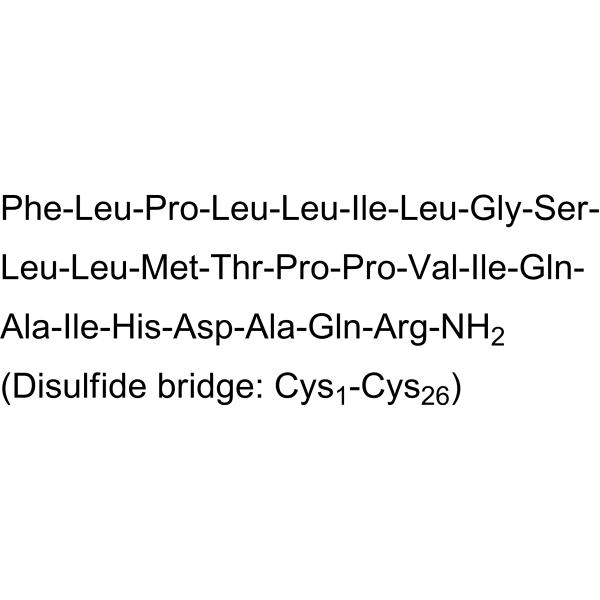
Cat. No.: HY-P10235
Target:  

Amylin Receptor

Research Areas:  

Neurological Disease

Cyclic AC253 is an antagonist for amylin receptor, with IC50 of 0.3 μM. Cyclic AC253 exhibits neuroprotective efficacy against Aβ toxicity and abrogates Aβ-induced impairment of hippocampal long-term potentiation. Cyclic AC253 penetrate blood-brain barrier (BBB) .
loading...
    loading...
Cat. No.: HY-135741
CAS No.: 2012536-16-0
Purity:  98.77%
NYX-2925 is an orally active, blood-brain barrier-permeable NMDAR modulator, with EC50 values of 55 pM, 28 fM, 11 pM and 55 pM against NR2A, NR2B, NR2C and NR2D, respectively . NYX-2925 enhances synaptic plasticity, long-term potentiation, metaplasticity, structural plasticity, learning ability, memory capacity and circadian rhythm amplitude. NYX-2925 regulates the signaling pathways of Src kinase, EIF2, mTOR, CDK5 and protein kinase A (PKA). NYX-2925 increases the levels of PSD-95, GluA1, activated Src and synaptic GluN2B . NYX-2925 is used in the research of neuropathic pain, fibromyalgia, painful diabetic peripheral neuropathy, post-traumatic stress disorder, cognitive impairment, depression, age-related cognitive decline and NMDAR-mediated central nervous system diseases .
loading...
    loading...
Cat. No.: HY-135525
CAS No.: 548-42-5
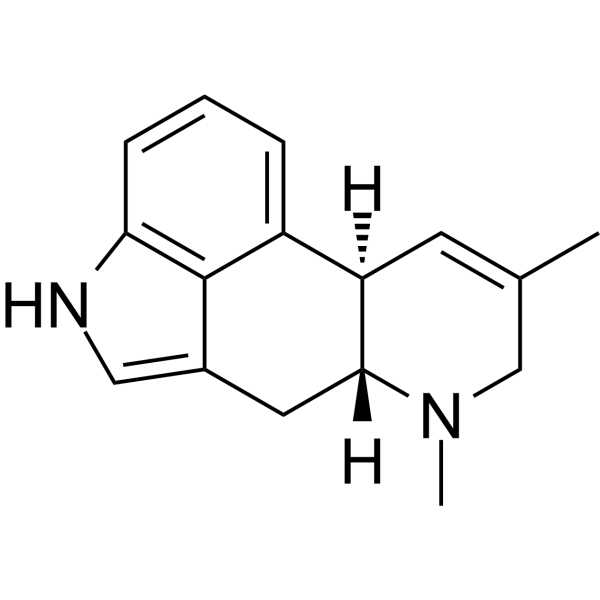
Agroclavine acts as an agonist of the D1-dopamine receptor and α1-adrenergic receptor. Agroclavine enhances the sensitivity of the brain to magnetic fields; it impairs spatial memory without affecting hippocampal long-term potentiation (LTP). Agroclavine exerts bidirectional regulatory effects on immune activity: it enhances NK cell activity with low toxicity under normal conditions, while it inhibits NK cell activity and exhibits significant cardiac and hepatic toxicity under stress conditions. Agroclavine can be used for research on neuroelectrophysiology, learning and memory, and immunoregulation .
loading...
    loading...
Cat. No.: HY-P3688
CAS No.: 131438-74-9
Synonyms: Aβ (1-38); Aβ38
Target:  

Amyloid-β

Research Areas:  

Neurological Disease

β-Amyloid (1-38) (Aβ (1-38)) is a β-Amyloid (Aβ) peptide. β-Amyloid (1-38) interferes with the conversion of Aβ(1-42) to a β-sheet-rich aggregate. β-Amyloid (1-38) reverses the negative impact of Aβ(1-42) on long-term potentiation in acute hippocampal slices and on membrane conductance in primary neurons, and mitigates an Aβ(1-42) phenotype in Caenorhabditis elegans .
loading...
    loading...
Cat. No.: HY-176036
CAS No.: 3070323-06-4
MS1262 is a blood-brain barrier-permeable, selective inhibitor of histone methyltransferases G9a (EHMT2) and GLP (EHMT1), with an IC50 of 19 nM and a Kd of 74 nM against G9a, and an IC50 of 6 nM and a Kd of 19 nM against GLP. MS1262 reduces the dimethylation level of histone H3 lysine 9 and decreases the size of plaques. MS1262 restores hippocampal long-term potentiation (LTP) and miniature excitatory postsynaptic current (sEPSC) frequency, ameliorates spatial memory deficits, and reverses anxiety-like and depression-like behaviors in AD model mice. MS1262 reverses the expression/phosphorylation levels of early AD biomarkers, providing support for stage-specific diagnosis of AD. MS1262 reduces the risk of thrombus rupture. MS1262 can be used in research related to Alzheimer's disease, colorectal cancer, and triple-negative breast cancer .
loading...
    loading...
Cat. No.: HY-148250
CAS No.: 3085030-47-0
Target:  

iGluR

Research Areas:  

Neurological Disease

TP-050, a chemical probe, is a potent, orally active and selective NMDAR agonist with an EC50 value of 0.51 μM and 9.6 μM for GluN2A and GluN2D, respecticely. TP-050 can cross the blood-brain barrier (BBB). TP-050 induces hippocampal long-term (LPT) potentiation enhancemen and enhances neuronal signal transmission .
loading...
    loading...
Cat. No.: HY-118646
CAS No.: 753500-02-6
NS-6740 is a silent agonist of α7 nicotinic acetylcholine receptor (α7 nAChR) with an IC50 of 3 nM. NS-6740 reduces LPS-induced TNF-α release and regulates the cholinergic anti-inflammatory pathway. NS-6740 exerts anti-inflammatory effects. NS-6740 reduces long-term potentiation in hippocampal brain slices. NS-6740 can be used in research related to neuroinflammation and schizophrenia .
loading...
    loading...
Cat. No.: HY-176866
CAS No.: 2222756-46-7
Target:  

HDAC

Research Areas:  

Neurological Disease

Rodin-A is an orally active, brain-penetrant and selective histone deacetylase (HDAC)-co-repressor of repressor element-1 silencing transcription factor (CoREST) complex inhibitor with an IC50 value of 1.80 μM for the CoREST complex, 0.15 μM for HDAC1, and 0.43 μM for HDAC2. Rodin-A increases the acetylation level of histone H3K9, upregulates the expression of neuron-related genes, thereby promoting the increase in dendritic spine density, the colocalization of synaptic proteins (SV2A and PSD95), and the improvement of hippocampal long-term potentiation (LTP), exerting synaptic protection and repair activity. Rodin-A is promising for research of neurodegenerative diseases related to synaptic dysfunction, especially Alzheimer’s disease .
loading...
    loading...
Cat. No.: HY-13325
CAS No.: 71939-12-3
Research Areas:  

Neurological Disease

Aβ aggregation modulator-1 is a stimulator of amyloid-β () fibrillogenesis. Aβ aggregation modulator-1 binds hydrophobic residues in peptides and stabilizes β-sheet-rich protofibrils and fibrils. Aβ aggregation modulator-1 accelerates polymerization and reduces concentrations of small, toxic oligomers in heterogeneous aggregation reactions. Aβ aggregation modulator-1 suppresses long-term potentiation (LTP) inhibition by oligomers in hippocampal brain slices. Aβ aggregation modulator-1 can be used for the study of Alzheimer's disease (AD) .
loading...
    loading...
Cat. No.: HY-107111A
CAS No.: 932373-86-9
Research Areas:  

Neurological Disease

GSK1034702 hydrochloride is an orally active and allosteric agonist of M1 mAChR (pEC50=8.1) that can cross the blood-brain barrier. GSK1034702 hydrochloride activates the Gq/11 protein-mediated signaling pathway, enhancing neuronal firing and long-term potentiation (LTP) in the CA1 region of the hippocampus. GSK1034702 hydrochloride can modulate hippocampal function, improve memory encoding in the nicotine withdrawal cognitive dysfunction model, and show pro-cognitive effects in rodents. GSK1034702 hydrochloride can be used for the study of the mechanisms of cognitive impairment diseases such as Alzheimer's disease, and has certain peripheral M receptor activation-related side effects (such as gastrointestinal reactions) .
loading...
    loading...
Cat. No.: HY-176867
Target:  

HDAC

Research Areas:  

Neurological Disease

Rodin-B is a selective histone deacetylase (HDAC)-co-repressor of repressor element-1 silencing transcription factor (CoREST) complex inhibitor with an IC50 value of 0.50 μM for the CoREST complex, 0.27 μM for HDAC1, and 0.28 μM for HDAC2. Rodin-B increases the acetylation level of histone H3K9, upregulates the expression of neuron-related genes, thereby promoting the increase in dendritic spine density, the colocalization of synaptic proteins (SV2A and PSD95), and the improvement of hippocampal long-term potentiation (LTP), exerting synaptic protection and repair activity. Rodin-B is promising for research of neurodegenerative diseases related to synaptic dysfunction, especially Alzheimer’s disease .
loading...
    loading...
Cat. No.: HY-116143
CAS No.: 1352011-38-1
Target:  

MAGL

Research Areas:  

Metabolic Disease

SAR127303 is an orally active, selective, competitive monoacylglycerol lipase (MAGL) covalent inhibitor with IC50s of 3.8 nM and 29 nM for mouse and human MAGL, respectively. SAR127303 potently elevates hippocampal levels of 2-AG in mice. SAR127303 decreased long term potentiation (LTP) of CA1 synaptic transmission and acetylcholine release in the hippocampus. SAR127303 produces antinociceptive effects in assays of inflammatory and visceral pain. SAR127303 slows down epileptogenesis .
loading...
    loading...
Cat. No.: HY-W720917
CAS No.: 41787-69-3
Junicedric acid is a diterpenoid compound that can be isolated from the resin of the Araucaria araucana tree. Junicedric acid exerts neuroprotective activity by increasing intracellular calcium levels in hippocampal neurons, activating PKC and calcium/calmodulin-dependent protein kinase (CaMKII), and preventing Amyloid-β oligomer-induced synaptic protein loss, apoptosis, and long-term potentiation (LTP) inhibition. Junicedric acid can be used in the study of the pathological mechanisms of neurodegenerative diseases such as Alzheimer's disease .
loading...
    loading...

