
36 Results for "

human THP-1 macrophages

" in MedChemExpress (MCE) Product Catalog:
Products (36)

36 Results for "human THP-1 macrophages" in MCE Product Catalog:

115
115 Publications Verification
Cat. No.: HY-10231
CAS No.: 685898-44-6
Purity:  ≥98.0%
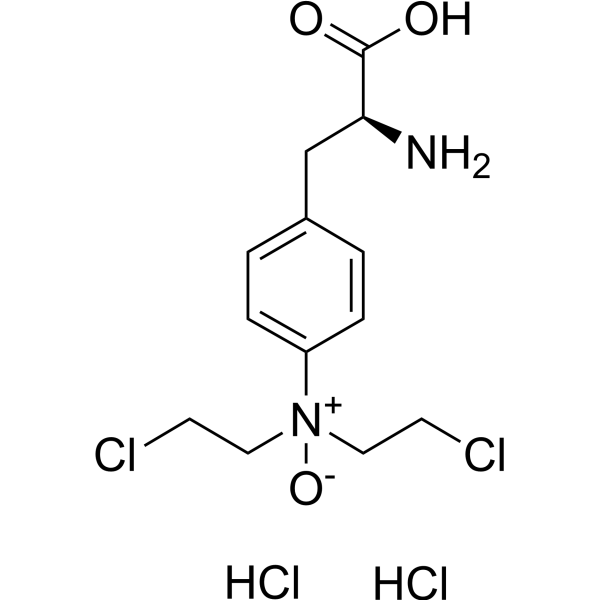
PX-478 is a multifunctional HIF-1α inhibitor with properties including radiosensitization, autophagy activation, and lipid accumulation inhibition. PX-478 also blocks hypoxia-induced VEGF production and regulates β-cell phenotypes under hypoxic conditions. PX-478 induces cell cycle arrest and DNA damage, restores autophagic function, reduces foam cell formation, and maintains glucose homeostasis. PX-478 is widely used in research on related diseases such as human tumors (e.g., prostate cancer), type 2 diabetes, and atherosclerosis .
loading...
    loading...
15
15 Cited Publications
Cat. No.: HY-123942
CAS No.: 2170867-89-5
Purity:  98.82%
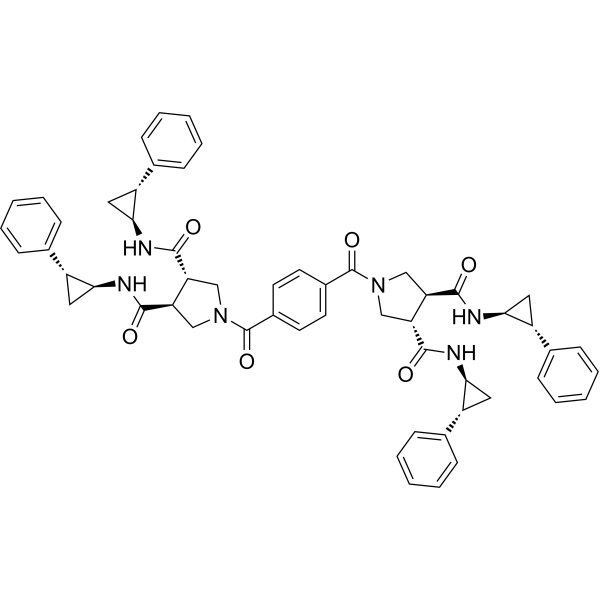
Diprovocim is a potent TLR1/TLR2 agonist. Diprovocim elicits full agonist activity in human THP-1 cells (EC50=110 pM). Diprovocim stimulates the release of TNF-α from mouse macrophages (EC50=1.3 nM). Diprovocim activates downstream MAPK and NF-κB signaling pathway. Diprovocim displays strong adjuvant activity in mice, particularly abetting cellular immune responses .
loading...
    loading...
7
7 Cited Publications
Cat. No.: HY-N7038
CAS No.: 9008-97-3
Synonyms: PHA-M
Phytohemagglutinin (PHA-M), the major seed lectin of the common bean, Phaseolus vulgaris, is a T-cell activator. Phytohemagglutinin stimulates human mononuclear leukocytes, inducing the expression of ChAT mRNA and potentiating ACh synthesis. Phytohemagglutinin induces dose- and time-dependent toxicity in THP-1 monocytes/macrophages, alters cellular morphology, causes organelle dysfunction, and increases the expression of NF-κB, COX2, IL-1β .
loading...
    loading...
2
2 Cited Publications
Cat. No.: HY-144223
CAS No.: 791840-86-3
Purity:  99.93%
NLRP3-IN-94 is a NLRP3-dependent Pyroptosis inhibitor with an IC50 of 0.2392 μM .
loading...
    loading...
Cat. No.: HY-D2919
CAS No.: 2177287-88-4
DMN-Tre is a conjugate of a solvatochromic fluorescent dye and trehalose. DMN-Tre takes advantage of the substrate promiscuity of the endogenous antigen 85 protein complex in mycobacteria to be metabolically integrated into the hydrophobic mycobacterial membrane. Once entering this hydrophobic environment, the linked DMN dye fluorescence is "turned on", enabling specific labeling . DMN-Tre can be used to reflect bacterial metabolic activity and support physiological studies of Mycobacterium tuberculosis .
loading...
    loading...
Cat. No.: HY-159069
CAS No.: 9010-72-4
Purity:  95.02%
Zymosan (ZM), 95% is a yeast cell wall-derived carbohydrate-rich preparation and immunomodulator. Zymosan (ZM), 95% binds to and activates TLR-2, TLR-4, and Dectin-1 receptor to trigger downstream signaling pathways. Zymosan (ZM), 95% upregulates TLR-2, TLR-4, and TNF-α mRNA expression, increases serum TNF-α levels, and stimulates splenocyte number and viability in mice. Zymosan (ZM), 95% attenuates melanoma growth progression, modulates macrophage marker gene expression, and mediates phagocytosis, ROS generation, and cytokine production. Zymosan (ZM), 95% reduces Connexin 43 protein and mRNA levels, inhibits gap junctional intercellular communication, and induces proinflammatory factor production in human corneal cells. Zymosan (ZM), 95% induces peritoneal inflammation in mice, functions as a drug carrier, and supports fibroblast cell attachment in hydrogel formulations. Zymosan (ZM), 95% can be used for the research of melanoma, tumors, fungal keratitis, ocular surface inflammatory disorders, and peritoneal inflammation .
loading...
    loading...
Cat. No.: HY-176497
CAS No.: 1713317-28-2
Synonyms: G297X
Target:  

Cytochrome P450

Research Areas:  

Metabolic Disease Cancer

GW273297X is a selective CYP27A1 inhibitor. GW273297X blocks 27-hydroxycholesterol biosynthesis and sterol product formation in human macrophages. GW273297X reduces cancer cells colonization by inhibiting pro-metastatic effects of 27-hydroxycholesterol. GW273297X can be used for the researches of cancer and metabolic disease, such as breast cancer .
loading...
    loading...
Cat. No.: HY-153932
CAS No.: 2550399-06-7
Research Areas:  

Infection Cancer

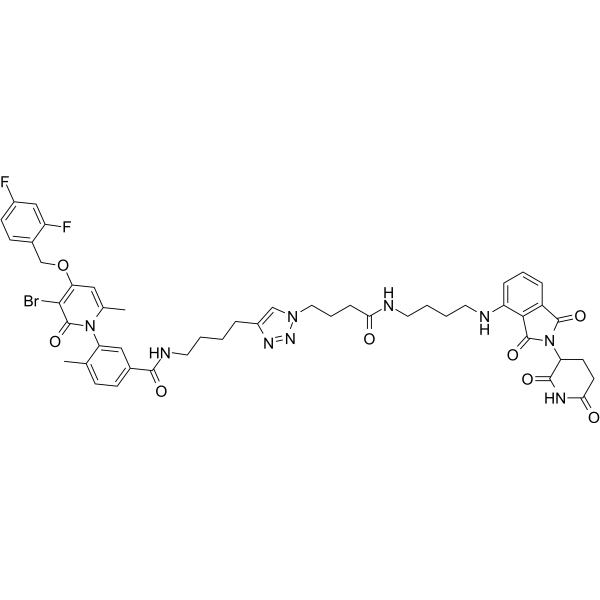
NR-7h is a selective p38α/p38β MAPK PROTAC degrader with multiple activities including anti-leishmanial, anti-malarial, and anti-Mayaro virus properties. NR-7h induces specific degradation of p38α/p38β isoforms and p38-MAPK via the ubiquitin-proteasome system. NR-7h reduces the load of Leishmania donovani, modulates the cytokine profile toward a pro-inflammatory phenotype, and enhances the oxidative burst of macrophages. NR-7h inhibits the growth of Plasmodium falciparum in human red blood cells and merozoite invasion. NR-7h reduces the replication of Mayaro virus and the expression of E1 protein in primary human dermal fibroblasts. NR-7h can be used in studies related to parasitic infections, viral infections, and breast cancer .
loading...
    loading...
Cat. No.: HY-171692
CAS No.: 2780391-08-2
Research Areas:  

Infection

G3-YSD is a cGAS agonist. G3-YSD directly interacts with cGAS to enhance its enzymatic activity, promote the conversion of ATP and GTP into cGAMP, and trigger STING-dependent IFN-α/β secretion. G3-YSD acts as a viral mimic to replace actual viral DNA . G3-YSD is applicable to research related to long COVID and type 1 human immunodeficiency virus infection .
loading...
    loading...
Cat. No.: HY-162465
CAS No.: 335401-44-0
Target:  

STING IFNAR

Research Areas:  

Cancer

BDW568 is a selective STING A230 agonist with an EC50 of 5.7 μM. BDW568 triggers the interferon signaling pathway and induces the expression of interferon-stimulated genes including MX1 and OAS1. BDW568 is applicable for cancer-related research .
loading...
    loading...
Cat. No.: HY-163032
CAS No.: 3053862-47-5
FABP4-IN-3 (compound C3) is a highly selective FABP4 inhibitor (FABP4 Ki = 25 ± 3 a nM, FABP3 Ki = 15.03 μM) which exhibits a 601-fold selectivity over FABP3. FABP4-IN-3 also shows metabolic stability and potent cellular anti-inflammatory activity, making it promising to get involved in the research of metabolic disease, cardiac dysfunction and inflammation-related disease .
loading...
    loading...
Cat. No.: HY-151132
CAS No.: 3032400-33-9
Purity:  98.21%
Synonyms: IsoQC-IN-1
Target:  

CD47

Research Areas:  

Cancer

Glutaminyl cyclases-IN-1 (IsoQC-IN-1) is a potent glutaminyl cyclases (QC) inhibitor with IC50 values of 12 nM and 73 nM for human QC and isoQC, respectively. Glutaminyl cyclases-IN-1 can selectively interfere with the interaction of CD47/SIRPα through isoQC inhibition, and enhances the increased phagocytic activity of both THP-1 and U937 macrophages .
loading...
    loading...
Cat. No.: HY-N3887
CAS No.: 522-11-2
Synonyms: Haplophytin B; Haplophytine B
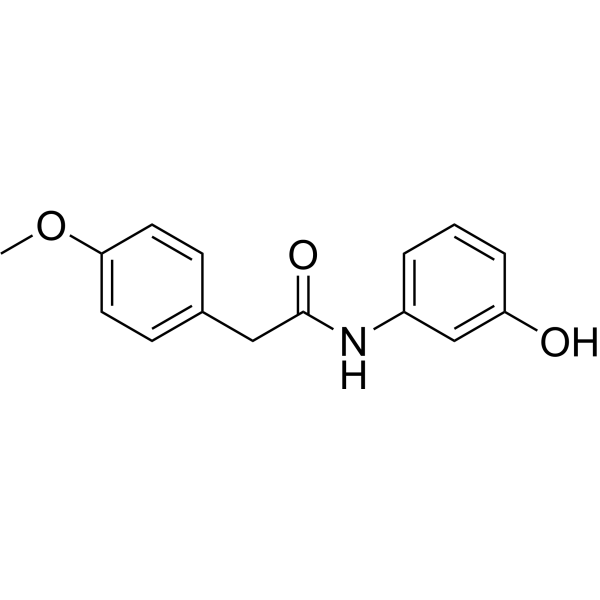
Evoxine (Haplophytin B) is a compound that selectively inhibits CO2-induced immunosuppression and has activity in inhibiting the expression of interleukin-6 and chemokine CCL2 in human THP-1 macrophages. Evoxine shows antimicrobial activity against a wide range of bacteria, especially performing well in minimum inhibitory concentration (MIC) tests against Escherichia coli, Bacillus subtilis, and Staphylococcus aureus. Evoxine extracts may find application in crude drug preparations in West Africa, provided that their in vivo toxicity results are negative .
loading...
    loading...
Cat. No.: HY-P10972
CAS No.: 957470-49-4
Synonyms: Glucose-dependent Insulinotropic Peptide (22-51) (human)
GIP (22-51) human (Glucose-dependent Insulinotropic Peptide (22-51) human) is a potent proatherosclerotic peptide hormone consisting of 30 amino acids. GIP (22-51) human can activate the NF-κB signaling pathway, promote the expression of MMP-8, and induce the expression of proinflammatory and proatherosclerotic proteins. GIP (22-51) human can also increase the level of intracellular free Ca 2+ in THP-1-induced macrophages. GIP (22-51) human can be used in the research of atherosclerosis .
loading...
    loading...
Cat. No.: HY-N3700
CAS No.: 54354-62-0
Synonyms: Rutaceline
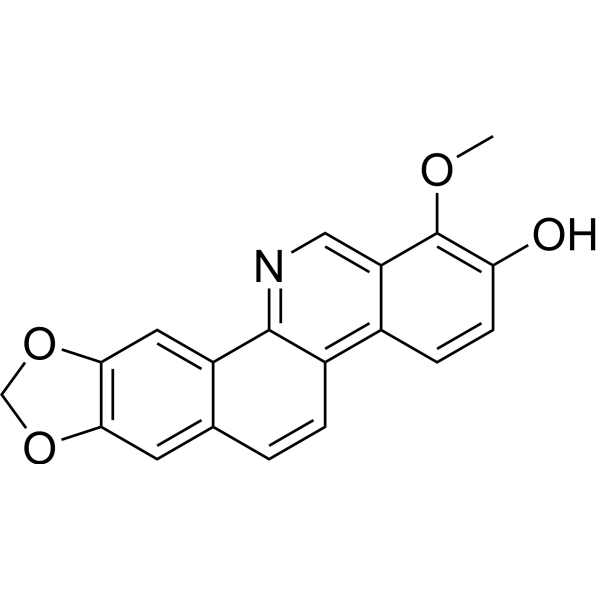
Decarine (Rutaceline) is a benzophenanthridine alkaloid found in Zanthoxylum species. Decarinewith shows anti-inflammatory, antimycobacterial, and anti-HIV activity. Decarine inhibits NO, TNF-α, IL-1β, IL-6, and IL-8 production in inflammatory cell models. Decarine inhibits growth of Mycobacterium tuberculosis strains, reduces intracellular Mycobacterium tuberculosis survival, and shows low cytotoxicity toward human macrophages. Decarine inhibits HIV replication in acutely infected lymphocytes. Decarine can be used for the researches of inflammation, tuberculosis, and HIV infection .
loading...
    loading...
Cat. No.: HY-174144
CAS No.: 2851993-73-0
Research Areas:  

Inflammation/Immunology

RJG-2036 is a potent covalent inhibitor of human prostaglandin reductase 2 (PTGR2)(IC50=100 nM). RJG-2036 inhibits NADPH-dependent reduction, significantly reducing secretion of proinflammatory cytokines like TNF-α and multiple eicosanoids in LPS-stimulated THP-1 macrophages. RJG-2036 is promising for research of inflammatory diseases .
loading...
    loading...
Cat. No.: HY-144220
CAS No.: 3033386-91-0
NLRP3/AIM2-IN-1 is an NLRP3/AIM2 inhibitor with an IC50 of 3.136 μM against NLRP3-dependent pyroptosis. NLRP3/AIM2-IN-1 inhibits IL-1β secretion triggered by NLRP3 inflammasome activation. NLRP3/AIM2-IN-1 exhibits moderate anti-pyroptotic activity. NLRP3/AIM2-IN-1 does not inhibit NLRC4 inflammasome activation. NLRP3/AIM2-IN-1 can be used for studying inflammasome-mediated inflammatory diseases .
loading...
    loading...
Cat. No.: HY-184797
Zp17 is a PROTAC degrader that targets the STING protein for degradation by recruiting cereblon, with a DC50 of 956 nM in THP-1 cells. Zp17 induces proteasome-dependent STING protein degradation and inhibits the activity of the STING signaling pathway. Zp17 alleviates renal function injury in a mouse model of acute kidney injury induced by Cisplatin (HY-17394). Zp17 exhibits STING-degrading activity in human monocytes and STING-inhibiting activity in mouse macrophage reporter cells. Zp17 can be used for research on inflammation and acute kidney injury .
loading...
    loading...
Cat. No.: HY-124693
CAS No.: 869767-86-2
Target:  

Apoptosis

Research Areas:  

Cancer

DB1055 is a HOXA9 inhibitor that competes with HOXA9 binding to DNA (blocking its DNA interaction activity). DB1055 induces in vitro cell growth reduction, cell apoptosis, and differentiation in human acute myeloid leukemia (AML) cells. DB1055 leads to monocyte-to-macrophage differentiation and exhibits antileukemic activities in a human THP-1 AML in vivo model. DB1055 does not impact human CD34+ bone marrow cells. DB1055 can be used for the research of acute myeloid leukemia[1].
loading...
    loading...
Cat. No.: HY-D3410
CAS No.: 2991899-29-5
CDr17 is a GLUT1 substrate and selective fluorescent dye staining M1 microphages. CDr17 utilizes the Gating-Oriented Live-cell Distinction (GOLD) mechanism to enter M1 macrophages (Ex/Em = 646/662 nm) .
loading...
    loading...

